
Reviewed · MUSEUMS
Private local tour of the archaeological site and museum of Olympia
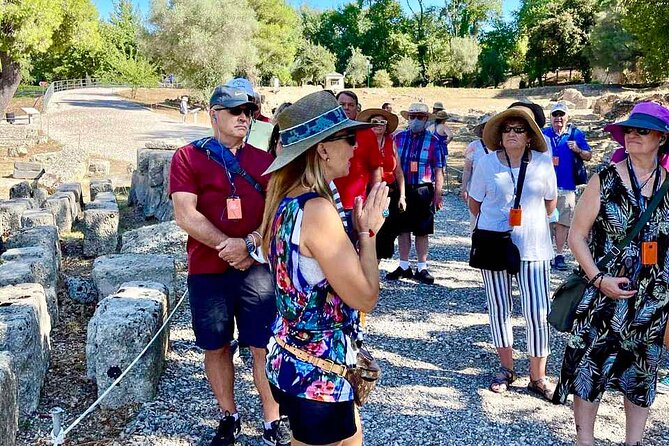
Olympia makes more sense with a human voice. This private 2.5-hour tour pairs the archaeological site with its museum, and I like the way the guide connects scattered stones to the ancient Olympic Games. I also like the personal pace: guides such as Zoe, Niki, Georgia, and S. have been praised for clear explanations, humor, and adapting their talks to families and people with disabilities. The main drawback is price: at $216.02 per person, plus a €20 entrance ticket, this is a serious splurge.
You will spend about 90 minutes outside among temples, gymnasiums, workshops, and the stadium, then one hour indoors with the statues and objects found there. Private transportation is not included, so you must arrange your own way to the meeting point in Ancient Olympia.
In This Review
- Key points at a glance
- Why Ancient Olympia benefits from a private guide
- Walking through the archaeological site in 90 minutes
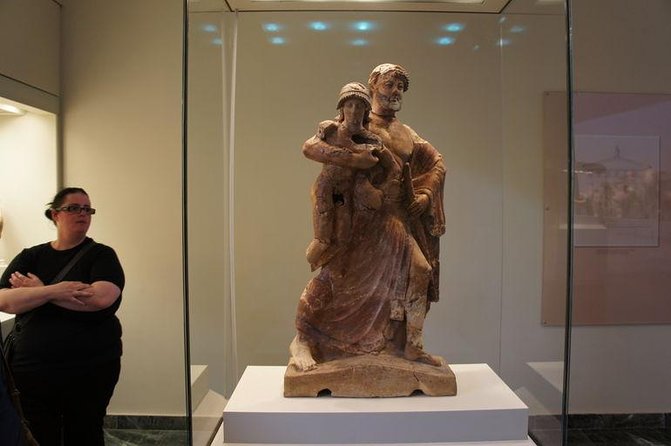
- The museum turns fragments into people and objects
- What the guide adds to the visit
- Is $216.02 per person a fair price?
- Timing, meeting point, and physical effort
- Who will get the most from this Olympia experience?
- Should you book the private Olympia tour?
- FAQ
- Where does the tour take place?
- How long does the experience last?
- Is the tour private?
- Is transportation included?
- Are entrance tickets included?
- What language is offered?
- What will I see at the archaeological site?
- What is displayed in the museum?
- What is the cancellation policy?
Key points at a glance
- Phidias’s workshop: See the place where the famous gold and ivory statue of Zeus was made, along with tools and a cup linked to the workshop.
- Ancient Olympic stadium: Walk through the remains of the place where the original athletic contests took place.
- Two-part route: The site comes first for about 90 minutes, followed by one hour in the Archaeological Museum of Olympia.
- Private guiding: Only your group takes part, making it easier to ask questions and request a slower or more family-friendly pace.
- Strong guide reports: Zoe, Niki, Georgia, and S. are singled out for making the ruins understandable, entertaining, and memorable.
- Extra cost to plan for: The €20 admission fee per person is not included in the tour price.
Why Ancient Olympia benefits from a private guide
Ancient Olympia is not difficult to walk through, but it can be difficult to read. Many buildings survive as foundations, scattered columns, partial walls, or low outlines in the grass. Without context, you may see attractive ruins and little more.
A good guide gives each area a purpose. The gymnasium becomes a training ground. The palaestra becomes a place where athletes practiced wrestling and other events. The workshop of Phidias becomes a rare link between an archaeological ruin and a famous work of art.
That explanation is the main reason to consider paying for a private tour. You are not simply looking at stones. You are learning how the site functioned, how the Olympic festival fit into Greek life, and why certain fragments matter.
The private format also gives you room to ask questions. If your group wants more detail about ancient sport, religion, architecture, or sculpture, you can follow that interest rather than staying with a fixed public script. If children are with you, Niki has been especially praised for getting them involved and helping the place feel real rather than remote.
This is also a useful format for a mixed group. One guide, Niki, adjusted her approach so people with disabilities could remain engaged throughout the visit. That does not remove the physical demands of an outdoor archaeological site, but it suggests that the guide can pay attention to the group instead of rushing through a standard route.
More things to do around Olympia:
- Olympia: Tour with Virtual Reality and Audio
★ 4.8 · 505 reviews - Katakolo Port: Transfer to Ancient Olympia and VR Audio Tour
★ 4.1 · 403 reviews - Ancient Olympia Half-Day Tour from Katakolo Cruise Port
★ 4.5 · 228 reviews
Walking through the archaeological site in 90 minutes
The outdoor portion lasts about an hour and a half. The site contains several major remains, so expect a steady sequence of stops rather than one single monument.
You will see the gymnasium and palaestra, two important places connected with athletic preparation. These buildings help explain that Olympia was not only a religious center or a stadium. It was also a place where athletes trained and prepared for public competition.
The round Philippeion adds a different note. It was an unusual circular building within the sanctuary, and its shape helps break up the mainly rectangular pattern of temples and training facilities. Your guide can give this monument a role in the wider story of Olympia instead of leaving it as an isolated architectural curiosity.
The workshop of Phidias is one of the most compelling stops. Phidias created the enormous gold and ivory statue of Zeus that was counted among the ancient world’s great wonders. The statue itself is gone, but seeing the workshop gives you a physical connection to its construction.
This is where the guide’s storytelling matters most. The remains alone cannot show you a finished statue or the full working process. The tools and cup displayed later in the museum help complete the picture, so pay attention to the connection between the outdoor stop and the indoor collection.
The route also includes the Temple of Zeus and the Temple of Hera. These were central to the sanctuary, and their remains help you understand Olympia as a sacred place as well as an athletic one. The site was not built simply to host races. Competition, worship, offerings, and public ceremony were tied together.
You will also see the altar where the Olympic torch is lit in modern times. This is a useful point of contact between ancient Olympia and the modern Olympic tradition. It is not the same event as the ancient festival, but the location gives the modern ceremony a powerful setting.
The final major highlight is the ancient Olympic stadium. Even in ruin, the stadium helps you picture the scale and purpose of the games. A guide can explain what you are seeing and place the athletic contests within the wider religious festival.
One practical point matters here: this is an archaeological site, not a restored theme park. Some remains are fragmentary. One visitor put it plainly, the ruins are pretty ruined, and credited Zoe with painting a picture of the original place through stories. That is exactly the bargain with Olympia. The stones may be incomplete, but the setting gains force when someone explains the missing pieces.
The museum turns fragments into people and objects
The Archaeological Museum of Olympia follows the outdoor visit and takes about one hour. This order works well. First you see the buildings in their original setting, then you encounter the objects excavated from them.
The collection includes bronze and clay offerings, such as tripods and figurines. These small objects reveal the personal side of the sanctuary. They were not grand temples, but offerings made by people who came to honor the gods or mark an important connection with Olympia.
You will also see armor, vases, tools, and weapons. Together, these objects widen the story beyond sport. Olympia connected religion, craftsmanship, warfare, ceremony, and athletic competition. A guide can help you understand why an object belongs in this setting and what it says about the people who used or offered it.
The tools and cup associated with Phidias’s workshop are especially important because they link directly to the outdoor remains. After standing in the workshop itself, you can see the practical objects connected with its work. That pairing gives the tour a satisfying sense of place.
The museum’s best-known works include the Hermes by Praxiteles and the Nike by Paionios. These are not merely names to tick off. They are reasons to allow enough time for the indoor stop. The museum also holds well-preserved classical statues from the pediments of the Temple of Zeus, which help you picture the artistic quality that once filled the sanctuary.
This is one area where a private guide can save you from drifting past important works without understanding them. Sculpture rewards time and attention, but museum labels alone may not tell you why a particular statue matters. Guides Zoe and Niki have been praised for making the collection lively and easy to follow, while S. was noted for answering questions in depth.
The museum is also a useful counterweight to the outdoor ruins. At the site, you work from foundations and fragments. Inside, you see objects and sculpture with much more visual impact. I would not skip the museum simply because you are eager to reach the stadium. The two parts belong together.
What the guide adds to the visit
The strongest reason to book this experience is not access. It is interpretation.
You do not receive private transportation, and the entrance tickets cost extra. The tour’s value rests almost entirely on the licensed guide service. Based on the guide praise attached to this experience, the provider has several strong personalities available.
- Zoe is described as both highly informed and personable. She has been praised for bringing the site to life and making sense of the museum’s collection.
- Niki is noted for humor, excellent English, and a quick read of the group. She has also been praised for engaging children and including people with disabilities.
- Georgia is described as fun to talk with and able to make the ruins feel alive through stories.
- S. is praised for answering detailed questions and explaining the site and museum with depth.
You cannot necessarily choose one of these guides when booking, so treat the names as examples of the provider’s guiding style rather than a guarantee. Still, the repeated praise points to a clear strength: the experience is personal, conversational, and focused on making ancient Olympia understandable.
The private setup is particularly useful for a group of five, a family, or friends with different levels of interest. A group that wants a lively overview can get one. A group that wants more detail about sculpture or ancient athletics can ask for it.
The tradeoff is that you are paying for that attention. If you already know Greek archaeology well, or if you prefer to wander alone with a guidebook, the extra cost may not feel justified. If the site is new to you, the interpretation is likely to be the part you remember.
More Museums in Olympia:
- Katakolo: Olympia Tour and Archeological Museum
★ 4.6 · 57 reviews - Athens: Acropolis, Parthenon & Acropolis Museum Guided Tour
★ 4.8 · 9,316 reviews - Athens: Mythology of Delphi, Museum and Arachova Guided Tour
★ 4.6 · 4,008 reviews - Athens: Acropolis, Parthenon & Acropolis Museum Guided Tour
★ 4.8 · 3,579 reviews
Is $216.02 per person a fair price?
The listed price is $216.02 per person, and the €20 admission ticket for the archaeological site and museum is separate. That means the true cost is higher than the headline figure, and you should budget for both parts before booking.
This is not a cheap way to see Olympia. It is a private guide service lasting approximately two and a half hours, not a full-day excursion with transportation, meals, or other stops. Since no private vehicle is included, you must also handle your own arrival and departure.
The value improves when you divide the experience among several people, especially if the group discount applies to your booking. A private guide can be expensive for one or two people but more reasonable for a larger family or group of friends. The format also avoids paying for a long transfer you may not need.
I would judge the price by your priorities. If you want a quick look at the stadium and a few photographs, this is more than you need. If you want the site explained, the museum connected to the ruins, and your questions answered without a large group around you, the cost becomes easier to defend.
The experience itself acknowledges that it is offering quality rather than bargain pricing. That seems fair, but you should still compare it with your own travel style and budget.
Timing, meeting point, and physical effort
The tour begins on an unnamed road in Ancient Olympia and ends at the Archaeological Museum of Olympia. The listed end point is useful because you finish near the museum rather than returning to a vehicle or another town.
Transportation is not included. The meeting point is near public transportation, but the exact transfer details are not supplied, so confirm how you will reach the start before setting the appointment. Confirmation is received at booking, which should give you the final meeting information.
The activity requires a moderate level of physical fitness. The outdoor site involves walking between ruins, and the tour lasts about two and a half hours overall. Wear practical shoes and prepare for an extended visit outside, although the supplied details do not specify the amount of shade or the surface conditions.
Service animals are allowed. The private format means only your group participates, which can make the pace easier to manage. Still, moderate fitness is part of the official guidance, so this is not a sit-down sightseeing experience.
The provider offers free cancellation up to 24 hours before the start time. Cancellations made less than 24 hours ahead are not refunded, and changes inside that period are not accepted. The cut-off follows local time in Greece.
Who will get the most from this Olympia experience?
I would recommend this tour most strongly to first-time visitors who want context. Olympia has enough major remains to reward a guide, but not every building is immediately obvious to the untrained eye.
It also suits families. Niki’s ability to engage children is a useful sign, and the private format lets the guide adjust explanations instead of delivering a long speech aimed at adults only.
History and art enthusiasts should also consider it. The workshop of Phidias, the Temple of Zeus sculptures, Hermes, Nike, and the offerings in the museum provide plenty to discuss. The tour is not only about the Olympics as a sporting event.
A private tour works well for people who dislike large groups or want to ask frequent questions. It may be less suitable for independent visitors who prefer silence, or for anyone seeking a low-cost introduction.
Should you book the private Olympia tour?
Book it if you want Ancient Olympia explained rather than simply seen. The combination of the ruins and museum is well chosen, and the strongest praise goes to the guides’ ability to make damaged buildings, scattered stones, and ancient objects feel connected.
The price is the clear caution. Add the €20 admission fee, arrange your own transportation, and make sure the private format fits your budget. But for a family or small group that values a personal pace and clear storytelling, this is a strong way to spend two and a half hours in Olympia.
FAQ
Where does the tour take place?
The tour takes place in Olympia, Greece. It visits the Archaeological Site of Olympia and the Archaeological Museum of Olympia.
How long does the experience last?
The experience lasts approximately 2 hours and 30 minutes. About 1 hour and 30 minutes is spent at the archaeological site, followed by about 1 hour in the museum.
Is the tour private?
Yes. Only your group participates in this private tour or activity.
Is transportation included?
No. Private transportation is not included. The tour begins at an unnamed road in Ancient Olympia and ends at the Archaeological Museum of Olympia.
Are entrance tickets included?
No. The entrance ticket for the archaeological site and museum costs €20 per person and is not included in the tour price.
What language is offered?
The tour is offered in English.
What will I see at the archaeological site?
You will see the gymnasium, palaestra, Philippeion, Phidias’s workshop, the Temples of Zeus and Hera, the altar used for lighting the modern Olympic torch, and the ancient Olympic stadium.
What is displayed in the museum?
The museum houses finds from the archaeological site, including bronze and clay offerings, armor, vases, weapons, tools and a cup from Phidias’s workshop, the Hermes by Praxiteles, the Nike by Paionios, and classical statues from the pediments of the Temple of Zeus.
What is the cancellation policy?
You can cancel up to 24 hours before the experience for a full refund. Cancellations or changes made less than 24 hours before the start time are not accepted, and the amount paid is not refunded.
Just added around Olympia
- Katakolon: Olympia Highlights Shore Excursion★ 4.3 · 43 reviews
- Katakolon Shore Ex: Olympic site & Kourouta Beach Escape★ 4.5 · 44 reviews
- Private Excursion to Ancient Olympia – bee farm & winery★ 4.5 · 49 reviews
- Katakolon 7hour tour : Olympia-Honey Farm-Winery-Beach★ 5.0 · 53 reviews
- Private Olympia tour (4.5 hours)★ 5.0 · 54 reviews
- Private Guided Tour of Ancient Olympia★ 5.0 · 56 reviews
- Half-Day Ancient Olympia VR Audio Tour from Katakolo Cruise Port★ 3.5 · 57 reviews
- Katakolo: Olympia Tour and Archeological Museum★ 4.6 · 57 reviews
Museums, compared.

Acropolis, Parthenon & Acropolis Museum Guided Tour
Read our review →
Mythology of Delphi, Museum and Arachova Guided Tour
Read our review →Acropolis, Parthenon & Acropolis Museum Guided Tour
Read our review →
Acropolis monuments & Parthenon Walking Tour with Optional Acropolis Museum
Read our review →
Athens All Included: Acropolis and Museum Guided Tour with Ticket
Read our review →
Acropolis Museum Ticket with optional Audio Guide
Read our review →
Small-Group Delphi, Museum & Arachova Day Trip
Read our review →
Parthenon & Acropolis Museum with Audio or Live Tour Option
Read our review →Browse the lists this tour appears in