
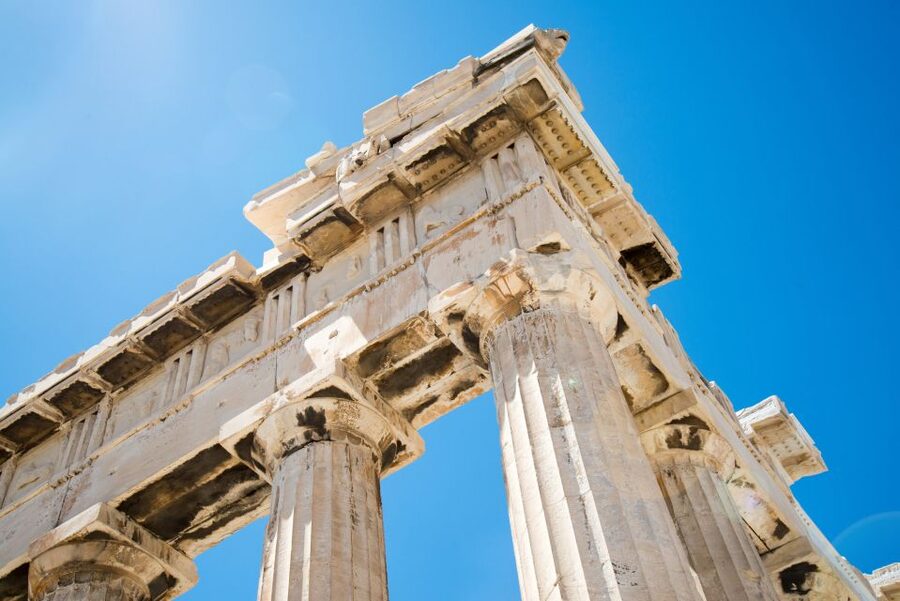
Reviewed · ACROPOLIS & PARTHENON TOURS
Athens: Acropolis, Parthenon & Acropolis Museum Guided Tour
Ancient Athens comes alive on foot. This tour links the Acropolis monuments with the Acropolis Museum, giving you the setting, stories, and archaeological clues needed to understand more than just the Parthenon. I especially like the archaeologist guides, who explain construction, mythology, and daily life rather than simply pointing out famous stones. I also like the route from the south slope, which includes the Theater of Dionysus and Odeon of Herodes Atticus before reaching the hilltop.
The main consideration is physical. You will walk uphill over uneven stone, climb and descend across exposed ground, and spend several hours on your feet. The museum portion adds real value, but some people may find the full visit information-heavy by the end.
In This Review
- Key points to know before booking
- Starting on Porinou Street
- The south slope and the Theater of Dionysus
- Odeon of Herodes Atticus and the old healing sanctuary
- The Propylaea and Temple of Athena Nike
- The Parthenon, the tour’s main moment
- The Erechtheion and the famous Caryatids
- Walking to the Acropolis Museum
- The glass floor and daily Athenian life
- What the guides add
- How demanding is the tour?
- Is $41 a good value?
- Who should book this experience?
- Should you book it?
- FAQ
- Where does the tour meet?
- What language is the tour conducted in?
- Are entrance tickets included?
- How long does the tour last?
- Does the tour include the Acropolis Museum?
- What should I bring?
- Is the tour suitable for wheelchair users?
Key points to know before booking
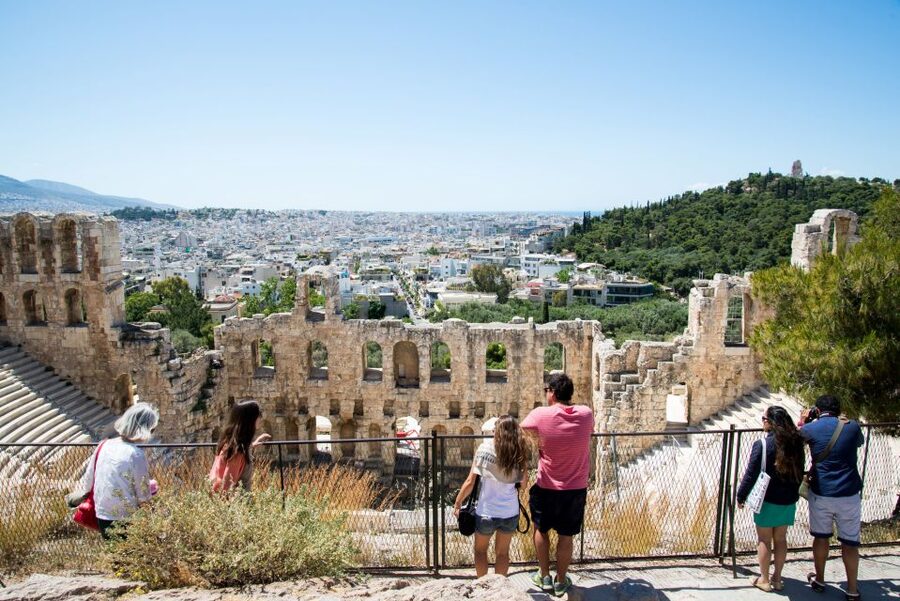
- The south-slope route adds context: You see the Theater of Dionysus, Odeon of Herodes Atticus, and ancient healing areas before reaching the main Acropolis.
- Archaeologist guides are the star: Guides such as Petros, Demos, Anna, Artemis, Lisa, and Aphrodite have been praised for clear explanations, humor, and strong command of Greek mythology and archaeology.
- The museum completes the picture: Statues, Caryatids, everyday objects, and the glass floor over excavations help explain what the hilltop ruins once meant.
- Skip-the-line tickets matter: The ticketed option avoids waiting in the regular entrance line, though you must choose the correct booking option.
- Expect a demanding walk: Comfortable shoes, a sun hat, and water are sensible. Large bags, strollers, pets, and smoking are not allowed.
- The pace is active but not rushed: Guides build in stops for photos, rest, and questions, although free time to wander alone is limited.
Starting on Porinou Street

The meeting point is the Athens Walks office at Porinou 5, on the ground floor. This is near the Acropolis and the Makrygianni area, so you are already in the right part of central Athens rather than waiting for a hotel transfer.
There is no pickup or drop-off service. You make your own way to the office, and the tour finishes near the Acropolis or Areopagus Hill. That arrangement works well if you plan to continue walking through Plaka or the Acropolis neighborhood afterward.
Arrive prepared for a walking tour, not a bus excursion. Bring an identification document, wear shoes with a firm sole, and carry sun protection. The Acropolis has little shade, and the stone can feel harsh under a strong Greek sun.
The company supplies wireless hearing devices. This is a useful detail in crowded areas, where a guide’s voice can disappear under the general noise. One practical point: the devices are returned at the end, so you do not need to bring special headphones.
More Museums in Athens
- Athens: Acropolis, Parthenon & Acropolis Museum Guided Tour
★ 4.8 · 9,316 reviews - Athens: Mythology of Delphi, Museum and Arachova Guided Tour
★ 4.6 · 4,008 reviews - Acropolis monuments & Parthenon Walking Tour with Optional Acropolis Museum
★ 5.0 · 2,678 reviews
The south slope and the Theater of Dionysus
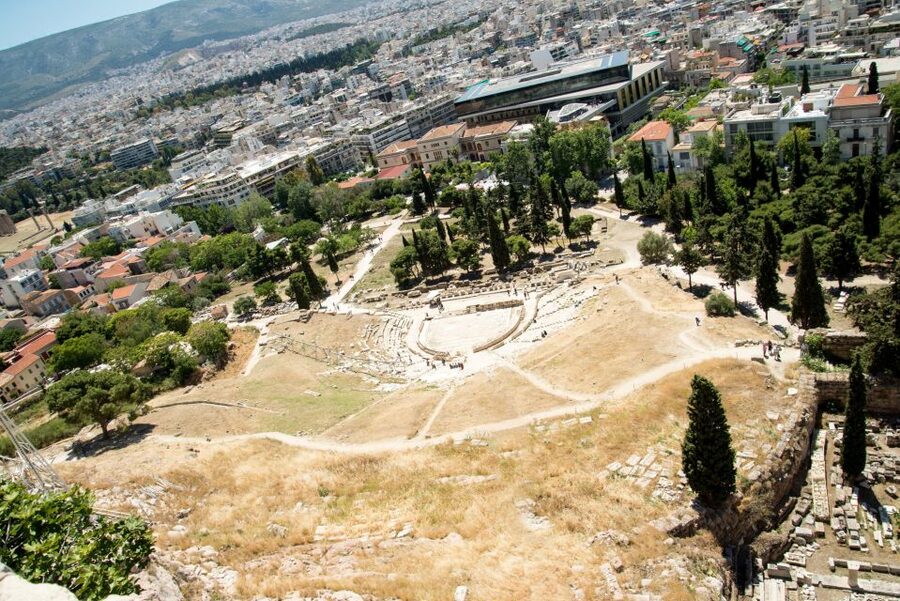
The route enters from the south slope of the Acropolis. I prefer this approach to a quick march straight to the Parthenon because it shows how the sacred hill functioned as a larger religious and civic center.
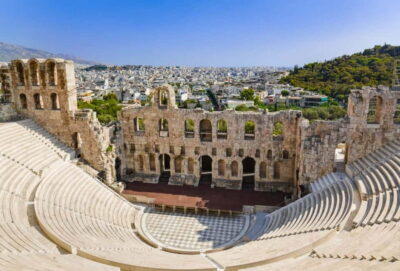
The first major stop is the Theater of Dionysus. Ancient Greek drama was performed here, and the stone seating gives you a chance to picture audiences watching works by Aeschylus, Sophocles, and Euripides. Your guide explains the theater’s purpose and helps connect the surviving structure to the development of performing arts.
This is not just a photo stop. A good guide uses the theater to explain ancient public life, festivals, and the importance of performance in Athens. You receive about 15 minutes of guided attention here, enough to understand the site without lingering so long that the rest of the Acropolis feels rushed.
The uneven ground begins early. You may perch on a stone seat, but this is not a place designed for easy modern walking. If you have trouble with steps, slopes, or rough paving, take the mobility warning seriously.
Odeon of Herodes Atticus and the old healing sanctuary
The next stop is the Odeon of Herodes Atticus, a dramatic theater built into the southern side of the hill. Unlike many ancient structures, it still has a modern role. The venue is used during the Athens Festival from May through October.
The guide explains the building and its later use, while you look down into one of Athens’ most striking performance spaces. The contrast is appealing: this is an ancient monument, but not a dead one. It remains connected to music, theater, and public events.
The route also passes an Asclepius, a healing sanctuary dedicated to the god of medicine. This quieter area offers a useful change of mood after the theaters. Here, the focus shifts from public spectacle to illness, recovery, and religious practice.
I like this part because it broadens the visit. The Acropolis is not only a temple complex for rulers and gods. It also touches ordinary needs: health, worship, entertainment, and community life.
The Propylaea and Temple of Athena Nike
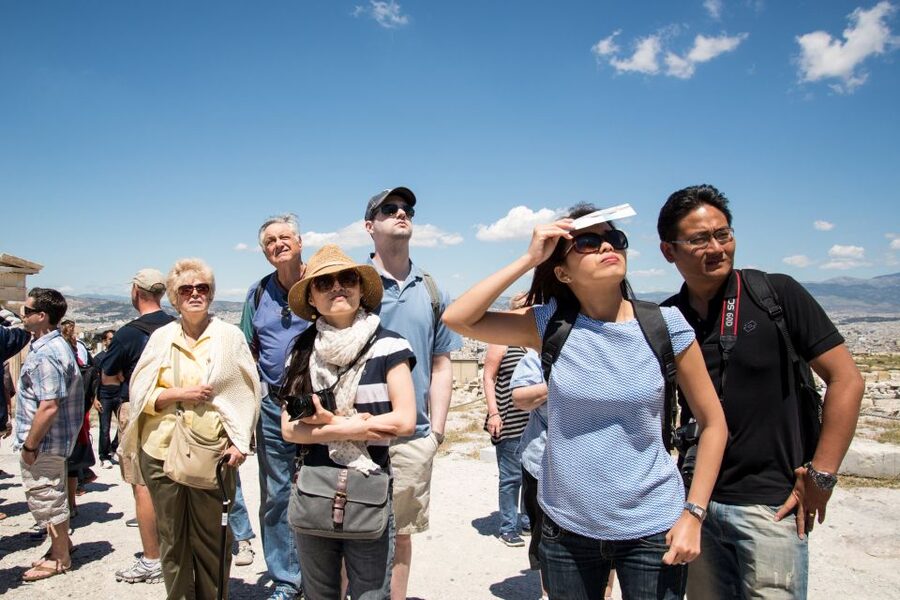
As you climb higher, the Propylaea comes into view. This monumental gateway formed the ceremonial entrance to the Acropolis, and its scale helps you understand that arrival at the hilltop was meant to feel impressive.
The path can be crowded, and the stone may be slippery. Guides help keep the group together and point out where to step. Several people have appreciated warnings about slick sections and reminders to protect personal belongings in crowded areas.
Near the gateway is the Temple of Athena Nike. Small compared with the Parthenon, it is easy to overlook, especially when the main temple is drawing everyone’s attention. Your guide gives it the attention it deserves, explaining its connection to Athena and the role of victory in Athenian identity.
The tour allows about 15 minutes for the Propylaea area and roughly five minutes for the Temple of Athena Nike. Those times are short, but the guide’s explanation makes them useful. You will also have chances to stop for photographs as the route opens toward Athens.
More ways to see the Acropolis:
- Athens: Acropolis & up to 5 Archaeological Sites Combo Pass
★ 4.4 · 12,619 reviews - Athens: Acropolis Ticket with Optional Audio or Live Guide
★ 4.2 · 11,055 reviews - Athens: Acropolis and Parthenon Guided Walking Tour
★ 4.6 · 5,882 reviews - Athens: Acropolis Ticket with Audio Guide
★ 4.0 · 3,575 reviews
The Parthenon, the tour’s main moment
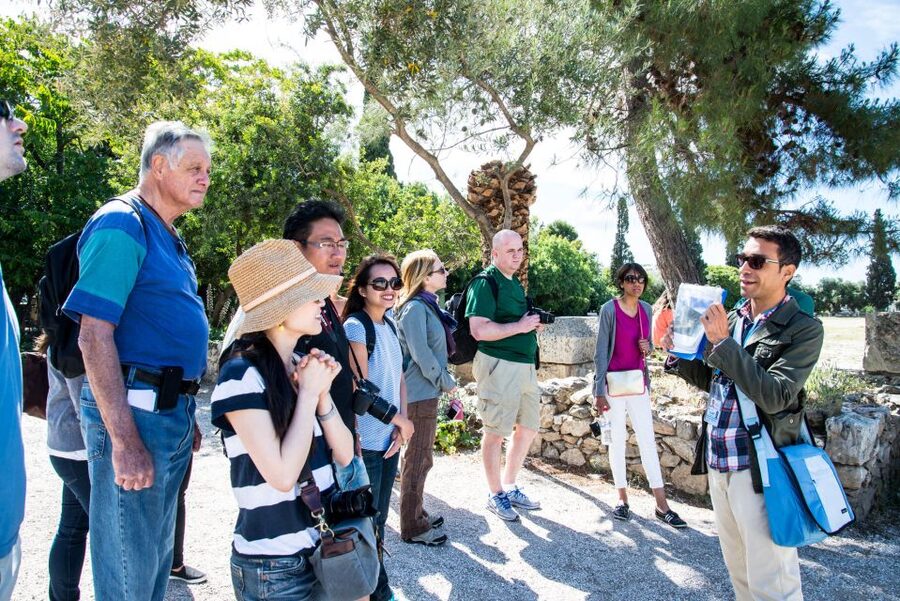
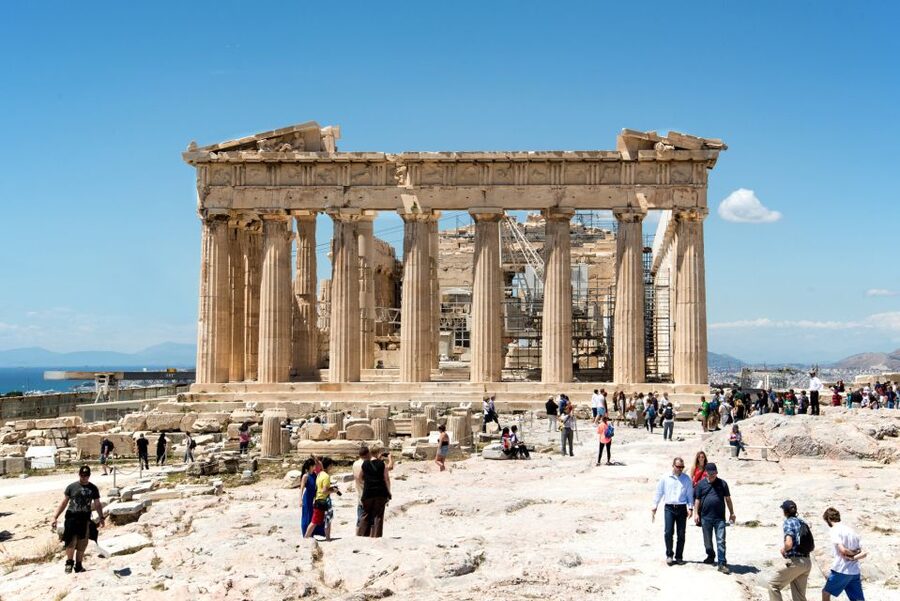
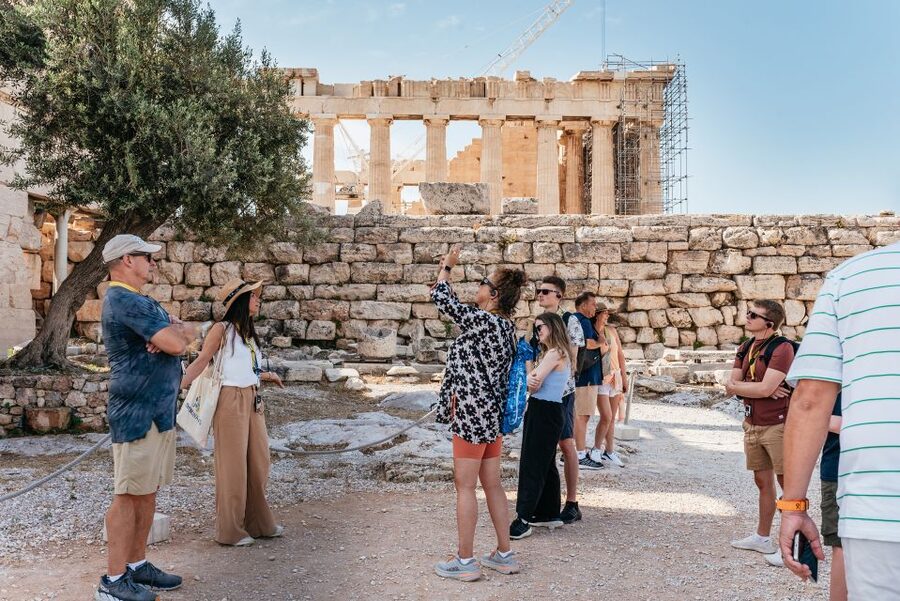
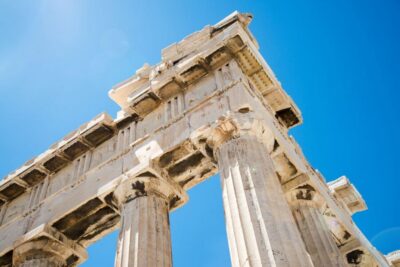
The Parthenon is the centerpiece, and nothing replaces seeing it from the Acropolis itself. You walk around the temple while the guide explains its design, dedication to Athena, and construction.
The value of a guide is especially clear here. Without context, you see columns, scaffolding, missing sculpture, and weathered stone. With context, you begin to read the building as a carefully planned statement about power, religion, civic pride, and artistic skill.
The guide also covers the damage and changes that shaped the Parthenon’s current appearance. Its condition is not simply the result of age. The building’s later history affected what remains, and this background helps you avoid the common mistake of thinking the monument was always an open ruin.
About 30 minutes are set aside for the Parthenon. That is enough for a focused explanation and photographs, but not enough for unlimited solo wandering. One visitor specifically valued the guidance but wished for more time alone, so set your expectations accordingly.
The views from the hilltop are a major reward. Athens spreads around you, and the city’s modern size becomes easier to grasp from above. Your guide may keep the group moving, but there is a dedicated break and photo period at the Acropolis.
The Erechtheion and the famous Caryatids
The Erechtheion is another essential stop. Its unusual design and multiple sacred associations make it less straightforward than the Parthenon, which is precisely why an explanation helps.
The temple is associated with Athena and other ancient traditions, and the tour points out the building’s special features. The Caryatids are the visual highlight for many people, though the original sculptures are displayed in the museum, where they can be examined more closely and protected from the elements.
The guided visit here lasts about 10 minutes. That may sound brief, but the stop fits naturally into the larger sequence. You see the main temples together, then later return to their sculpture and architectural details indoors.
The Acropolis portion ends with free time and photographs. This is your chance to look again at the Parthenon, take in Athens, or simply catch your breath before the walk down toward the museum.
Walking to the Acropolis Museum
From the hilltop, the group descends along Dionysiou Areopagitou. The walk takes about 15 minutes and provides a transition from open archaeological site to indoor museum.
The museum visit lasts about an hour and a half. That is a serious amount of time, but the collection deserves it. You see statues, architectural fragments, and objects connected with everyday life around the Acropolis.
The museum is particularly useful after the outdoor visit because it answers questions the ruins cannot. You can study the craftsmanship of Greek sculpture, understand how decoration was arranged, and see details that are difficult to appreciate from a distance on the hill.
A guide can also help separate what is original, what has been restored, and what has been reconstructed for display. The tour includes a recreated view of the Parthenon, as well as the Caryatid sculptures. Those displays make the outdoor monuments easier to read when you look back at them later.
The glass floor and daily Athenian life
One of the museum’s distinctive features is the glass floor in the Gallery of the Slopes of the Acropolis. In places, you can look down at archaeological excavations beneath the building.
This detail gives the museum a useful sense of depth. You are not only looking at objects removed from the ground. You are also seeing the layers of settlement and activity below the modern museum itself.
The galleries include more than grand religious sculpture. They also present objects linked to everyday life. This matters because the Acropolis can otherwise feel like a world made only for gods, heroes, and politicians.
A guide such as Elizabeth, who has been praised for explaining the evolution of the statues and walking the group through the Parthenon reconstruction, can bring these displays into one story. The museum is not simply an indoor add-on. It supplies the visual evidence that turns the outdoor ruins into a more complete experience.
You can take a brief break at the museum cafe, but food and drinks are not included. The order of the Acropolis and museum may change in poor weather. One tour group began at the museum during heavy rain, then went up to the Acropolis when conditions improved. That flexibility can make a real difference on an unpredictable day.
What the guides add
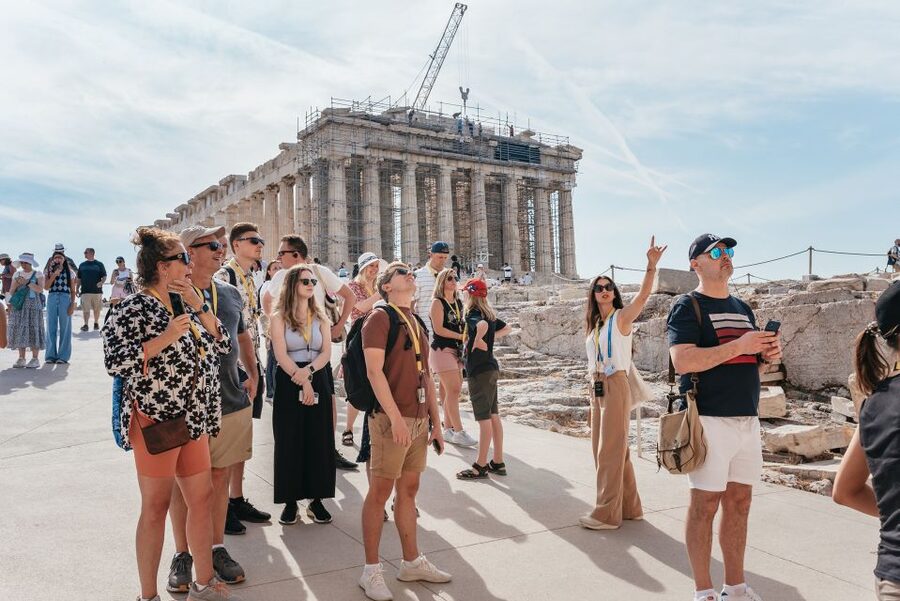
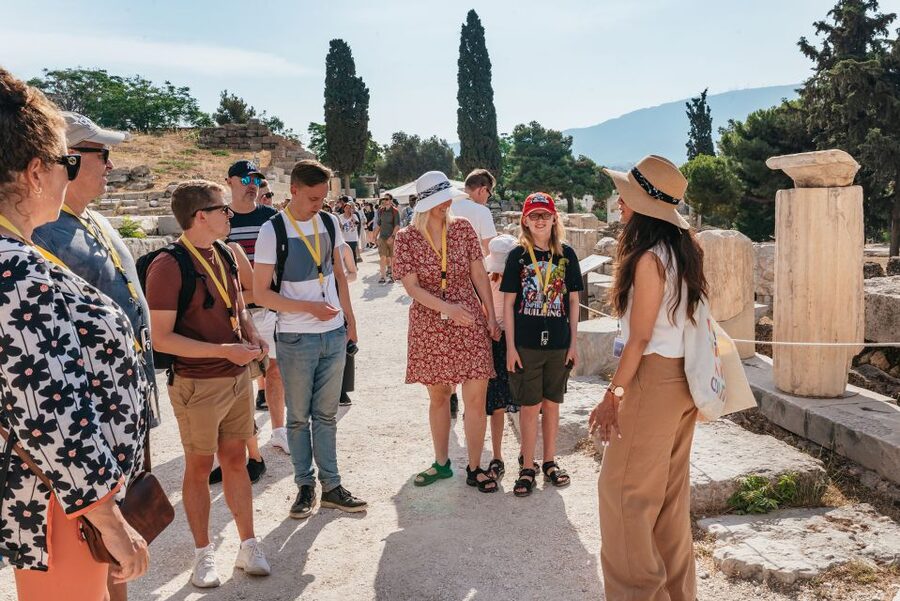
The best part of this experience is the guide-led storytelling. The company uses English-speaking archaeologist guides, and the strongest descriptions point to guides who mix solid facts with humor, myths, personal warmth, and time for questions.
Petros has been praised for treating the group warmly while explaining the monuments. Demos is noted for anecdotes and a lively presentation. Anna has been described as thorough, fun, and engaging, while Artemis has impressed families by keeping children interested during a long visit.
That range matters because four hours of ancient architecture can become tiring when presented as a lecture. The guides generally stop often, answer questions, and allow time for photos. Several people have also appreciated that the guides warn about slippery surfaces and manage the group through crowds.
Group size can vary. One group had around 15 people, while another had about 20. That is small enough to hear through the wireless devices, but not private-tour small. You should expect to share the guide’s attention.
How demanding is the tour?
This is a walking tour with hills, steps, uneven paving, and exposed areas. It is not suitable for wheelchair users or people with mobility impairments.
The advertised duration is two to four hours, depending on the starting time and format. The complete Acropolis and museum experience can feel closer to a full half-day, particularly if the guide gives detailed explanations or weather changes the order. One visitor described a five-hour version, so leave some space in your schedule.
The tour is best for people who want structure and interpretation. It is less suitable if you prefer to move quickly, skip explanations, or spend long periods alone at each monument.
Bring a hat and comfortable shoes. Large bags, oversize luggage, baby strollers, pets, and smoking are not allowed. Check the ticket option carefully before booking. If you select the option without Acropolis entrance tickets, you must arrange those tickets online before reaching the meeting point.
Is $41 a good value?
At about $41 per person, the price is reasonable for the combined guiding, museum visit, and possible skip-the-line access, provided you choose the ticket-included option when needed.
The value is not just admission. You are paying for a licensed guide who connects the Theater of Dionysus, healing sanctuary, gateway, temples, Parthenon, and museum into one story. Buying entry and walking alone may cost less, but you will need to organize the route and interpret the remains yourself.
The ticket option is particularly useful during crowded periods. It removes one practical worry and lets the group enter through a separate line. Still, check exactly what is included before paying, since the Acropolis elevator, food, drinks, transportation, and hotel pickup are not included.
The museum makes the price easier to justify. A short Acropolis-only visit can leave you with impressive photographs but many unanswered questions. The indoor galleries show the sculpture and detail needed to understand what the outdoor buildings once looked like.
Who should book this experience?
I would recommend this tour to a first-time visitor to Athens, anyone interested in archaeology, and families who want ancient history explained in a way that holds attention. The guides have been especially effective with children, and the wireless devices help everyone hear.
It also suits people with limited time. In one organized route, you see the main Acropolis monuments and the museum without having to plan the order yourself.
I would think twice if you have mobility limitations, dislike group tours, or want extensive free time. The pace is considerate, but the schedule is still guided. You will pause for photographs, not linger indefinitely at every viewpoint.
Should you book it?
Book this tour if you want the Acropolis to make sense, not merely appear in your camera roll. The strongest reason is the archaeologist guide, while the museum adds the sculpture, daily-life objects, and architectural context missing from the hilltop.
Choose the ticket-included option if you want the simplest arrival. Schedule it early if possible, since even early visits can be busy. Wear proper shoes, leave large bags behind, and allow up to half a day rather than squeezing the experience between tight appointments.
If you want a self-guided visit with complete freedom, buy your own tickets and explore at your pace. For most first visits, though, the guided combination is worth the extra structure and the $41 cost.
FAQ
Where does the tour meet?
The meeting point is the Athens Walks tour office on the ground floor at Porinou 5 in Athens.
What language is the tour conducted in?
The live tour guide speaks English.
Are entrance tickets included?
Entrance tickets are included only if you select the option with tickets. Skip-the-line entry to the Acropolis Museum is included, while visitors choosing the option without Acropolis entrance tickets must order those tickets online before arriving.
How long does the tour last?
The stated duration is two to four hours, depending on availability and the selected starting time. The complete visit can take longer in some cases, so leave extra time in your schedule.
Does the tour include the Acropolis Museum?
Yes. The tour includes a guided visit to the Acropolis Museum, with about one and a half hours allocated to the museum portion.
What should I bring?
Bring a passport or identification card, comfortable walking shoes, and a sun hat. Large bags, oversize luggage, baby strollers, pets, smoking, and luggage are not allowed.
Is the tour suitable for wheelchair users?
No. The experience is not suitable for wheelchair users or people with mobility impairments.
Just added around Athens
- Athens Hotels to Athens Airport Private Departure Transfer★ 5.0 · 40 reviews
- Private One-way Transfer between Athens International Airport and Athens Hotels★ 4.5 · 40 reviews
- Athens: Acropolis Museum Ticket with Self-Guided Audio tour App★ 3.5 · 40 reviews
- From Athens: Meteora Train Trip with Overnight Stay★ 4.8 · 40 reviews
- Athens Photography Tour★ 5.0 · 40 reviews
- Athens: Acropolis Visit and City Night Tour★ 4.7 · 40 reviews
- Delphi Full Day Private Trip From Athens With Lunch Overlooking the Sea★ 5.0 · 40 reviews
- Acropolis & Plaka Neighbourhood Private Tour with Licensed Expert★ 5.0 · 40 reviews
Acropolis & Parthenon Tours, compared.
Acropolis & up to 5 Archaeological Sites Combo Pass
Read our review →
Acropolis, Parthenon & Acropolis Museum Guided Tour
Read our review →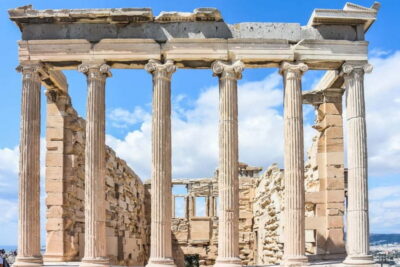


Acropolis: Acropolis and Parthenon Guided Walking Tour
Read our review →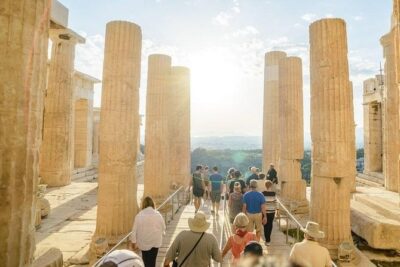
Acropolis monuments & Parthenon Walking Tour with Optional Acropolis Museum
Read our review →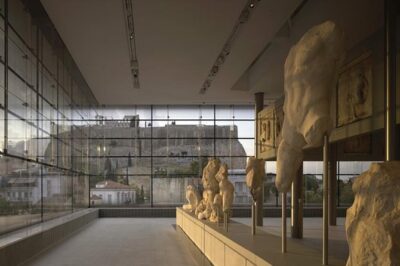
Athens All Included: Acropolis and Museum Guided Tour with Ticket
Read our review →Browse the lists this tour appears in