
Reviewed · METEORA MONASTERY TOURS
Meteora: Panoramic Morning Small Group Tour with Local Guide
Meteora makes an unforgettable first impression. This four-hour morning trip combines huge panoramic views with visits to three monasteries, while a local guide explains the rocks, faith, and stories behind them. I especially like the small air-conditioned minibus and the many photo stops. The main catch is that the €5 entry fee for each monastery is extra, and cash is required.
The early start is a smart choice because Meteora can become crowded later in the morning. I also like that you see all six active monasteries from the road, then have time to explore three inside at your own pace. The guide does not normally accompany you into the buildings, so some people may prefer a tour with more direct commentary at each interior.
In This Review
- Key details before you book
- Why this morning tour works so well at Meteora
- Pickup from Kalabaka or Kastraki
- The first views across the Meteora rocks
- St. Nicholas Anapavsa and the first monastery stop
- Great Meteor Monastery, the grandest visit
- Varlaam and Rousanou add variety
- Seeing the final three from the road
- How demanding is the walking?
- The real cost and value at $35
- Who should choose this experience?
- Should you book the Meteora morning tour?
- FAQ
- How long is the Meteora morning tour?
- Where does pickup take place?
- How many monasteries do you visit inside?
- Can I see all six monasteries?
- Are monastery entrance fees included?
- Is the guide allowed inside the monasteries?
- What languages does the audio guide support?
- What should I bring for the audio guide?
- What clothing is required?
- Is the tour suitable for people who do not walk easily?
Key details before you book
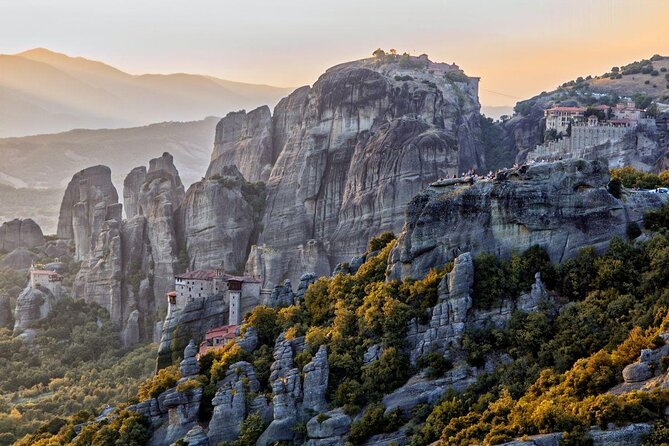
- All six monasteries in four hours: You see every active monastery from viewpoints and visit three of them inside.
- Morning timing helps: Starting earlier can mean cooler conditions and fewer crowds than later in the day.
- Local pickup included: Hotel and Airbnb pickup is available in Kalabaka and Kastraki.
- Small-group minibus: The group is generally kept below 20 people, with some departures much smaller.
- Extra cash needed: Entry costs €5 per monastery, or €15 if you enter all three.
- Steps are part of the deal: Some monasteries require around 120 steps, and the walking can be harder than expected.
Why this morning tour works so well at Meteora
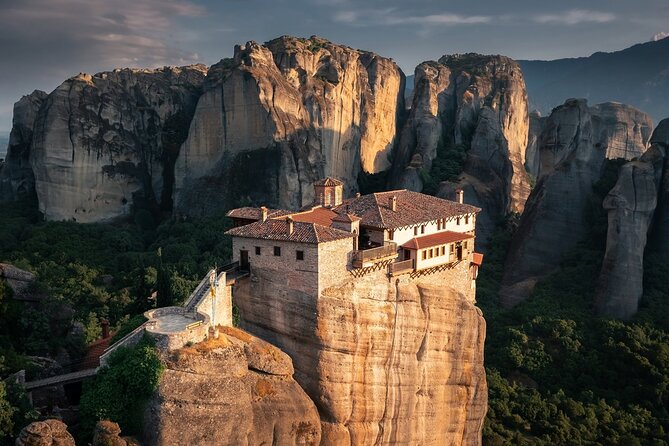
Meteora is not just a collection of monasteries. It is a striking meeting of geology and religion, with enormous rock pillars rising from the Thessalian plain and monasteries perched high above the towns of Kalabaka and Kastraki.
That combination is hard to appreciate from a quick roadside stop. You need time to look up, look across the valley, and understand why monks came here centuries ago. A local guide adds useful context during the short drives, pointing out the six monasteries and explaining how the community developed.
I like the balance of guided information and free time. You get a clear introduction from an English-speaking guide, then enter the monasteries without being tied to a group lecture. Cathy, who joined with a family group of eight, particularly liked having time to walk through each building at her own pace.
The morning schedule is one of the strongest reasons to choose this outing. Several people found the sites already busy by around 9:30 in summer, but later hours can be even more crowded. If you want the best chance of calmer photo stops and cooler walks, the morning departure makes sense.
The tour has a rating of 4.7 from 334 bookings, and the most consistent praise goes to the guides, drivers, transport, and value. Names that come up include Yannis, Giannis, Christos, Nicolas, John, Nancy, and Vavos. The guide you receive will vary, but the pattern is clear: the company relies on local staff who can explain Meteora with warmth and plenty of regional detail.
More Meteora monastery days:
- Meteora: Morning Half Day Sightseeing and Monasteries Tour
★ 4.7 · 478 reviews - Meteora: Majestic Sunset Tour & Monasteries with Local Guide
★ 4.7 · 359 reviews - Athens: Guided Tour to Meteora Monasteries & Hermit Caves
★ 4.7 · 211 reviews
Pickup from Kalabaka or Kastraki
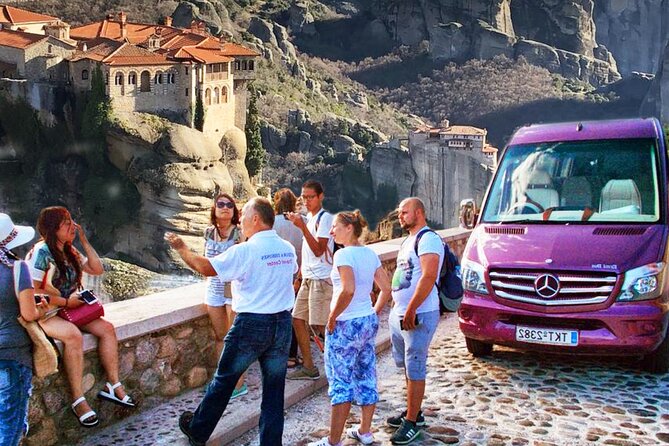
The day begins with pickup from your hotel or Airbnb in Kalabaka or Kastraki. This is useful because driving and parking around the monasteries can add needless stress, especially when you are still learning the winding roads.
The minibus ride to Meteora takes only about five minutes. The vehicles are air-conditioned, and several groups praised the clean, comfortable transport and careful driving. That matters in the warmer months, when walking between viewpoints and monastery entrances can leave you glad to return to a cool vehicle.
Group size varies. The activity is described as small group, and one family reported fewer than 20 people, while another had just seven. A small group gives the driver more room to stop for photographs and makes pickup less cumbersome than a full-size coach.
Trikala appears among the possible pickup and drop-off locations, but the included hotel and Airbnb service is specifically described for Kalabaka and Kastraki. If you are staying elsewhere, confirm the meeting point before paying.
Pickup confusion has happened occasionally, including one case where a hotel was outside the normal zone and the person walked about five minutes to a nearby location. Most pickups were reported as prompt, but I would still keep your phone available and verify the exact spot.
The first views across the Meteora rocks
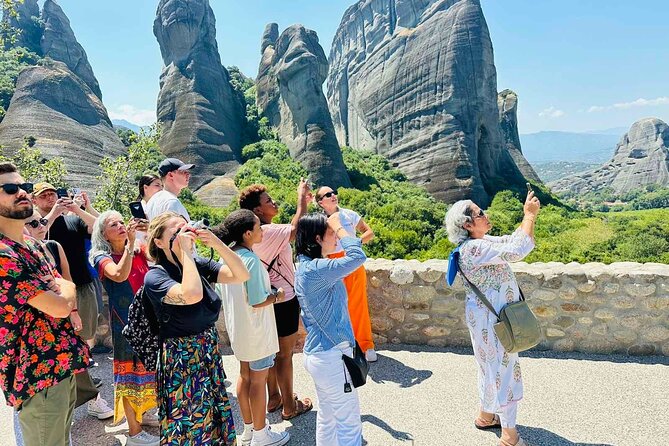
Once the minibus climbs into the Meteora area, the scenery becomes the main event. The rocks rise dramatically from the plain, with narrow roads threading between them and monasteries appearing on ledges above.
The guide uses the drive to explain the area’s Byzantine-era monastic tradition, the active religious communities, and the geology of the rock formations. Guides have also shared local information about Greece and the region’s more recent difficulties, giving the morning a broader sense of place than a simple sightseeing ride.
There are several short stops for photographs. These are not filler. At Meteora, the angle matters. A monastery that seems small from one bend in the road can appear impossibly high from another viewpoint.
You also stop near the Hermit Caves, which add another layer to the story. They help you picture how earlier religious figures sought solitude in the rock faces before the larger monasteries became the famous symbols of Meteora.
The tour includes a panoramic Meteora map, a practical little aid for keeping the six monasteries straight. The free WiFi is also useful if you need to check messages or load the audio guide.
St. Nicholas Anapavsa and the first monastery stop
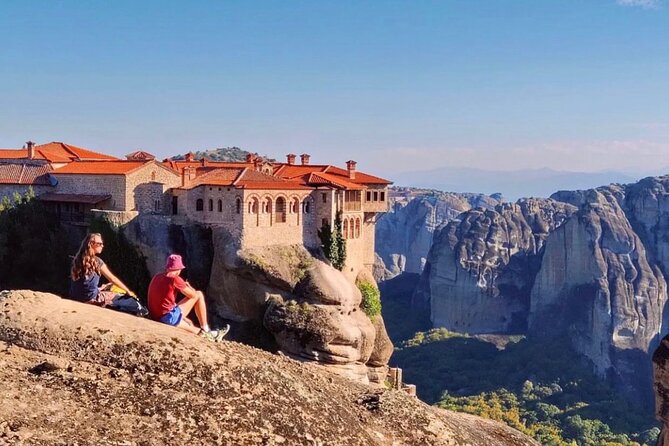
The Monastery of St. Nicholas Anapavsa is included as a photo and sightseeing stop on the standard route. You may not enter it as part of the three interior visits, but seeing its position on the rock helps show how tightly the buildings fit their surroundings.
This is a good place to listen to the guide rather than rush for another photograph. The monasteries are not arranged like a row of ordinary churches. Each occupies its own difficult perch, and the guide’s explanation helps you understand the practical challenge of reaching and building them.
The short stop also preserves time for the three monasteries you will enter. That is a sensible tradeoff during a four-hour outing, though anyone hoping to explore all six interiors will need more time independently.
More things to do around Meteora:
- Kalabaka: Meteora Small-Group Hiking Tour w/ Monastery Visit
★ 4.9 · 205 reviews - From Kalabaka/Kastraki: Meteora Monasteries Morning Tour
★ 4.8 · 178 reviews - Meteora: Sunset Small Size Tour with Monastery & Caves visit
★ 4.9 · 171 reviews - Athens to Meteora: Monasteries & Hidden Caves Bus Tour
★ 4.7 · 141 reviews
Great Meteor Monastery, the grandest visit
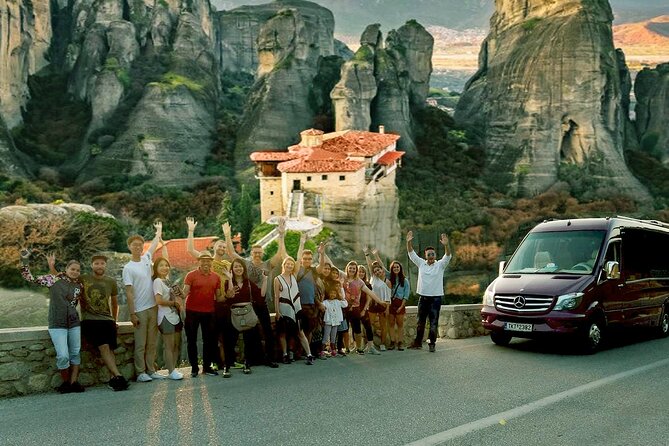
Great Meteor Monastery, also called the Monastery of the Transfiguration, is usually the centerpiece. It is the largest and most famous of the six, and the visit gives you the clearest sense of Meteora as a major religious center rather than only a scenic viewpoint.
You can expect a longer stop here, about an hour in the published schedule. That allows time to climb, look around the grounds, and see religious objects and artifacts inside. The route involves steps, so wear shoes that feel secure and avoid treating this as a purely bus-based excursion.
The free smart audio guide is important here. The live guide provides the broader story outside, but the audio guide helps you understand what you are seeing inside. It is available in English, Spanish, French, Italian, German, Dutch, Portuguese, Polish, Russian, Japanese, Korean, and Chinese.
Bring your own smartphone and earpads. The instructions specifically ask you to have both. Without them, you lose one of the most useful tools for making sense of the interiors.
Varlaam and Rousanou add variety
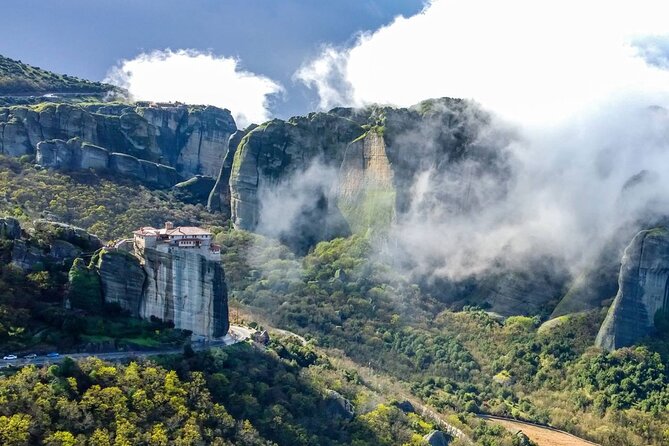
The Monastery of Varlaam is another major stop, with about 45 minutes allotted for the visit. Like Great Meteor, it requires walking and steps, but the time is long enough to explore without sprinting from room to room.
Varlaam helps show that Meteora is not one single monumental building. Each monastery has its own position, approach, and atmosphere. The repeated climbs are tiring, but they also make the setting feel real. These were not monasteries placed beside a convenient road for modern sightseeing.
The Monastery of Rousanou follows with about 30 minutes. It offers another view of how the religious buildings cling to the rocks, and the shorter visit keeps the whole tour within its four-hour limit.
The exact three monasteries may vary because one monastery closes on a different day of the week. Kathrin’s practical advice is worth following: check which monasteries are open on your date, and expect the company to adjust the interior visits accordingly.
One point deserves clear explanation. The guide usually remains outside while you explore the monastery buildings. Some people prefer this because they can move at their own pace, while others may miss having live commentary beside each chapel or display. The audio guide fills part of that gap, but it is not the same as a guide walking through the rooms with you.
Seeing the final three from the road
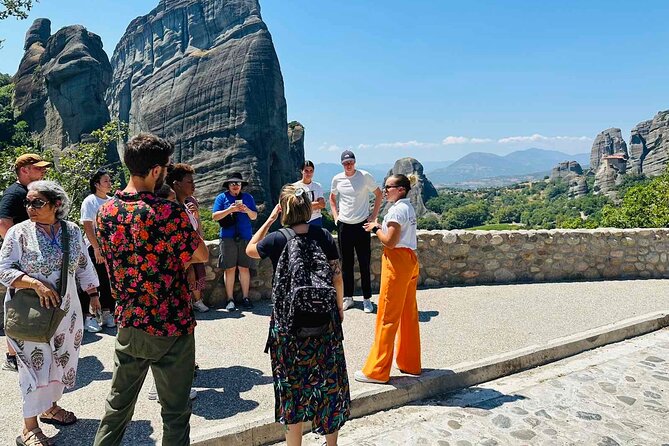
The route also stops for views of Holy Trinity and St. Stephen, while showing the remaining monasteries from scenic points. This is a key part of the tour, since the promise is to see all six, not to enter all six.
Holy Trinity is especially dramatic from the road because of its high position and steep approach. You get only a short photo stop, around 10 minutes in the stated schedule, so use that time for the view rather than trying to cover ground on foot.
St. Stephen receives a similar short stop. From the outside, you can appreciate its setting and add another monastery to your mental map. The stop is brief, but it prevents the common mistake of seeing three interiors and forgetting the other three altogether.
The road viewpoints also help you photograph the monasteries as part of the wider rock formation. Inside a monastery, you focus on icons, chapels, and stonework. From below, you understand the scale and isolation that made Meteora so remarkable.
How demanding is the walking?
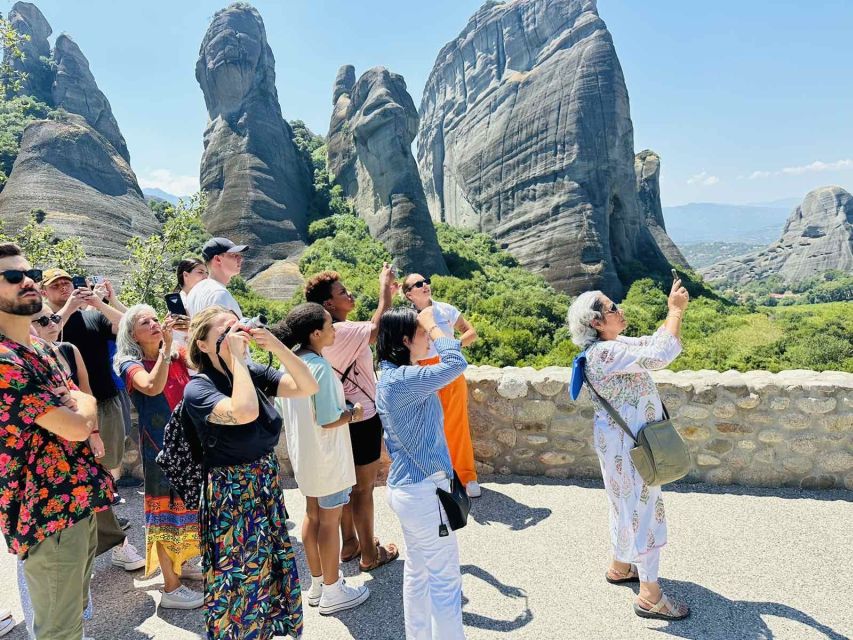
You should treat this as a sightseeing tour with real walking, not a relaxed drive with occasional steps. Two monasteries can involve roughly 120 steps, and one person found the climb more demanding than expected.
You do not need to be an athlete, but decent mobility helps. Children aged seven and ten managed the route with their family, while other accounts repeatedly stressed the amount of walking. The company allows time at each stop, so you are not expected to race upward, but uneven paths and staircases remain part of the visit.
Wear practical shoes. Bring water, since meals and drinks are not included, and protect yourself from the sun during warmer months. The air-conditioned minibus provides a useful break between walks.
Dress rules are strict because these are working religious sites. Women need knee-length or longer skirts and cannot wear pants, shorts, or sleeveless shirts. Men cannot wear shorts or sleeveless clothing. Pack suitable clothing before you leave your hotel rather than hoping to improvise at the entrance.
The real cost and value at $35
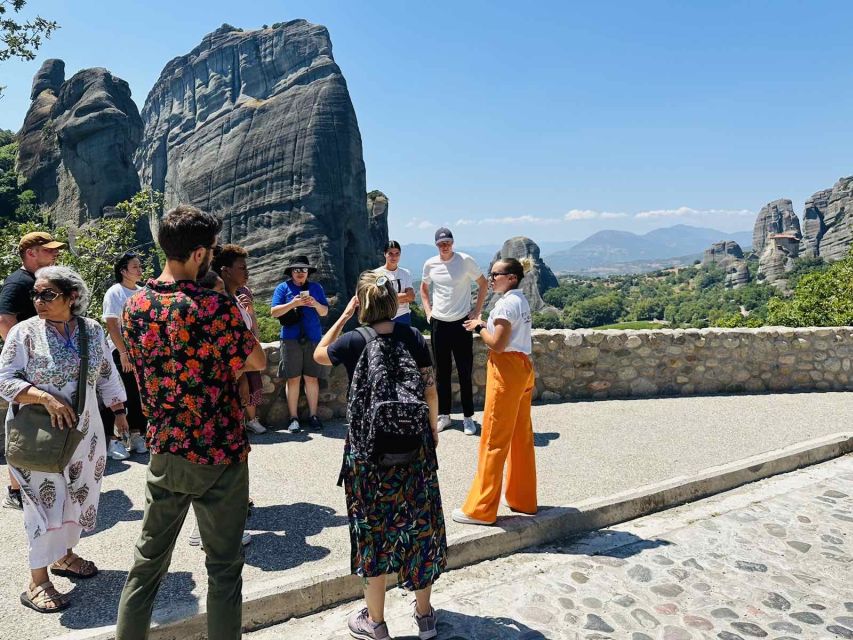
At $35 per person, this is a strong value if you have only half a day and want transport, interpretation, viewpoints, and three monastery visits in one package.
The advertised price does not include admission. Each monastery costs €5, payable in cash, so budget another €15 per person if you enter three. That still keeps the total reasonable for a four-hour outing, especially when you add hotel pickup, a driver, an English-speaking local guide, WiFi, a map, and the multilingual audio guide.
The value is strongest for people without a car. You avoid arranging transport, parking, and the uphill roads yourself. You also get the benefit of a driver who knows where to stop for photographs.
The price may feel less attractive if you only want exterior views or prefer long, quiet visits inside one monastery. In that case, a self-guided visit could offer more freedom, though you would give up the local explanations and easy transport.
A private group is available if you want more control. Recent groups praised the ability to choose preferred monasteries and adjust the timing, including one party that shortened the outing by an hour to reach its next destination.
Who should choose this experience?
I would choose this tour if you have one day in Kalabaka or Kastraki and want an efficient introduction to Meteora. It gives you enough context to understand what you are seeing, while leaving the rest of the day open for lunch, walking, or a second independent visit.
It also suits families and first-time visitors who do not want to drive. The minibus is comfortable, the route is organized, and the guide can answer questions about the monasteries, local culture, and geology.
It is less suited to you if stairs are difficult, if you need a fully accessible route, or if you want extensive time at every site. Four hours goes quickly once you include pickup, driving, climbs, interiors, and photo stops.
English is the live guide language. The audio guide covers 12 languages, but you need a smartphone and earpads. Some people found certain guides spoke too quickly, so the audio option is useful if you need to pause and listen at your own speed.
Should you book the Meteora morning tour?
Book it if you want the best overall introduction to Meteora for a fair price. The morning timing, local guide, small minibus, and broad coverage make it a practical choice, especially without a rental car.
Before you go, carry €15 per person in cash for monastery entry, dress according to the religious rules, and prepare for substantial walking. If you want a slower, more personal visit, consider the private option or return independently to explore the monasteries you only saw from the road.
For most visitors with limited time, this tour gets the important balance right: three interiors, six monastery views, local stories, and enough freedom to enjoy the place without spending the day figuring out the logistics.
FAQ
How long is the Meteora morning tour?
The tour lasts four hours, including pickup, transport, monastery visits, sightseeing, and photo stops.
Where does pickup take place?
Hotel and Airbnb pickup is included in Kalabaka and Kastraki. Trikala is also shown among possible pickup and drop-off locations, so confirm the exact arrangement if you are staying there.
How many monasteries do you visit inside?
You visit three of Meteora’s six active monasteries inside. The other three are seen from viewpoints and roadside photo stops.
Can I see all six monasteries?
Yes. The route provides views of all six active monasteries, although only three are entered during the standard four-hour tour.
Are monastery entrance fees included?
No. Entry costs €5 per monastery, payable in cash. Visiting three monasteries requires €15 per person.
Is the guide allowed inside the monasteries?
The live guide normally gives information outside and during the drive. You explore the interiors independently, using the free smart audio guide if you choose.
What languages does the audio guide support?
The audio guide is available in English, Spanish, French, Italian, German, Dutch, Portuguese, Polish, Russian, Japanese, Korean, and Chinese.
What should I bring for the audio guide?
Bring a smartphone and earpads so you can use the smart audio guide inside the monasteries and at 11 points of interest.
What clothing is required?
Women must wear knee-length or longer skirts and cannot wear pants, shorts, or sleeveless shirts. Men cannot wear shorts or sleeveless clothing.
Is the tour suitable for people who do not walk easily?
The tour includes stairs and short walks, with around 120 steps at two monasteries according to the supplied guidance. You should have decent mobility before booking.
More Morning in Kalabaka
- Crete: Sunset or Morning Quad with Local Products Tasting
★ 4.9 · 1,135 reviews - Athens: Early Morning Guided Tour to Acropolis and Museum
★ 4.6 · 821 reviews - Early Morning Acropolis & Old Athens Guided Walking Tour
★ 4.4 · 748 reviews - From Rhodes: Easy Morning Transfer to Lindos & 4 Hours Free Time
★ 4.5 · 730 reviews
Just added around Kalabaka
- Meteora Evening Tour with Breathtaking Sunset View★ 5.0 · 44 reviews
- Meteora Sunset Tour on E-bikes★ 5.0 · 54 reviews
- Meteora: Sunset Hike to Secret Caves★ 4.9 · 56 reviews
- Kalabaka: Meteora Monasteries Minibus Tour with Photo Stops★ 5.0 · 74 reviews
- Meteora: Monasteries Tour, Lunch, and Athens Transfer Option★ 4.8 · 102 reviews
- Athens to Meteora: Monasteries & Hidden Caves Bus Tour★ 4.7 · 141 reviews
- Meteora: Sunset Small Size Tour with Monastery & Caves visit★ 4.9 · 171 reviews
- From Kalabaka/Kastraki: Meteora Monasteries Morning Tour★ 4.8 · 178 reviews
Meteora Monastery Tours, compared.
Meteora Monasteries Day Trip with Caves and Lunch
Read our review →

Meteora Tour with Local Guide and Greek Lunch
Read our review →
Meteora Monasteries, Caves & Coastal Stopovers with Lunch
Read our review →
Meteora Monasteries & Caves DayTrip from Athens with Greek Lunch
Read our review →
4-Day Classical Greece Tour: Epidaurus, Mycenae, Olympia, Delphi, Meteora
Read our review →Browse the lists this tour appears in