
Reviewed · ACROPOLIS & PARTHENON TOURS
Early Morning Acropolis & Old Athens Guided Walking Tour
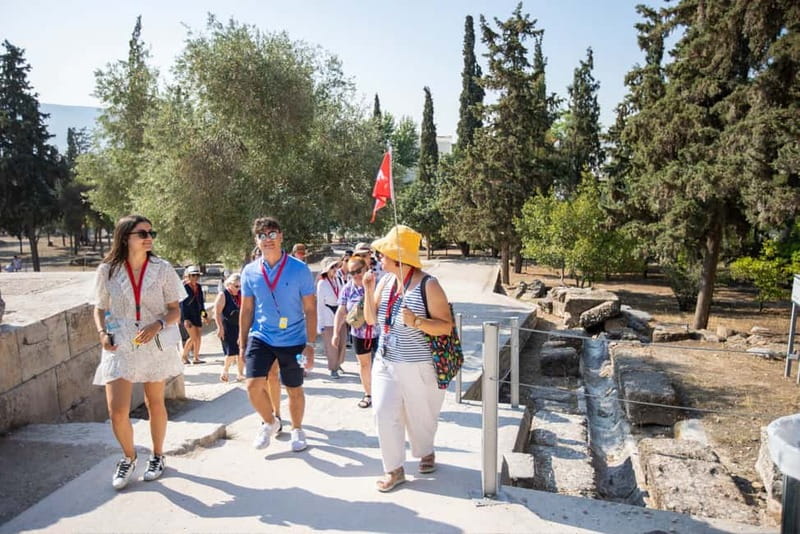
Beat Athens before the sun does. This 3.5-hour walk combines the Acropolis with Plaka, giving you early access to the Parthenon and a guided look at some of the city’s oldest streets. I like the cooler start and the clear wireless audio system, which helps you follow the guide even when other groups crowd the hill. The main drawback is the climb: this is a physically demanding walk, with little shade and no easy option for visitors with mobility limits.
I also like the strong guiding on offer. Guides such as Simon, Joanna, Christina, Tina, Katarina, Dimitri, and Stavros have been praised for lively storytelling, useful food tips, patience, and careful group management. The Plaka portion adds Roman ruins, old lanes, and the Bathhouse of the Winds, but you should know that the Acropolis takes most of the energy and attention. If you want a long, leisurely wander through Plaka, the time here may feel short.
In This Review
- Key points before you book
- Why the early start matters at the Acropolis
- Theatre of Dionysus: starting with ancient drama
- Odeon of Herodes Atticus and the climb uphill
- Propylaea and the Temple of Athena Nike
- The Parthenon: the tour’s central moment
- Erechtheion and free time on the summit
- Anafiotika: a quieter turn through Plaka
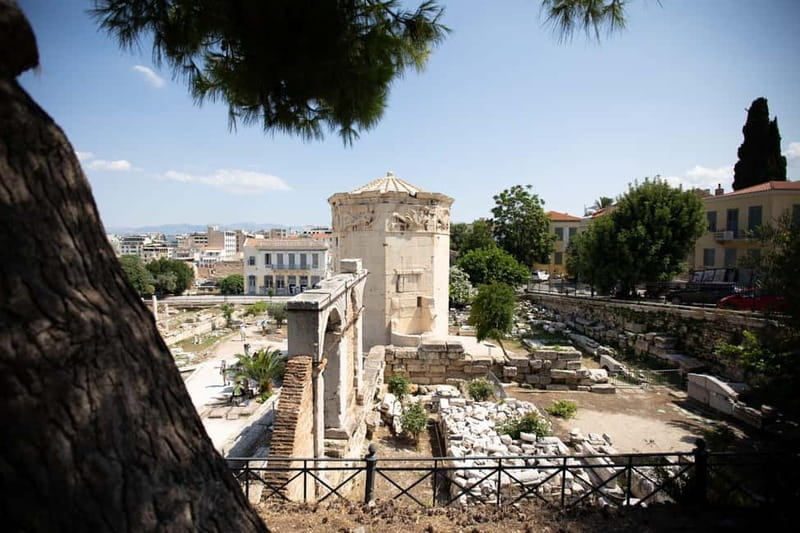
- Roman Forum and the Tower of the Winds
- Fethiye Mosque Museum and Hadrian’s Library
- Tzisdarakis Mosque and Monastiraki Square
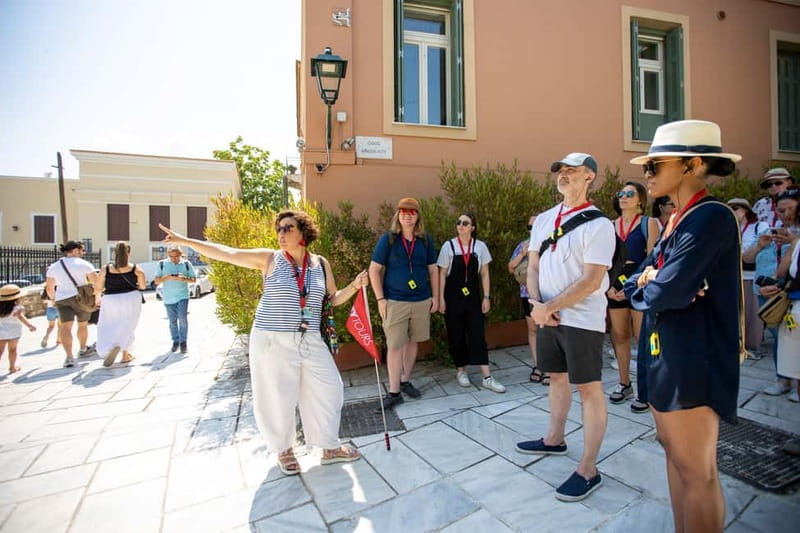
- Guides, group rhythm, and audio equipment
- What the $28.46 price really buys
- Who should choose this walk?
- FAQ
- How long does the tour last?
- Where does the tour begin?
- Where does the tour end?
- Is Acropolis admission included?
- Does the tour skip the ticket line?
- Which languages are available?
- What monuments are covered on the Acropolis?
- What does the Plaka walk include?
- Is the walk physically difficult?
- What should I bring?
- Should you book it?
Key points before you book
- Start early for cooler conditions: The first hours help you avoid the worst heat and some of the largest crowds, although the Acropolis can still be busy.
- See the essential monuments: The route includes the Theatre of Dionysus, Odeon of Herodes Atticus, Propylaea, Temple of Athena Nike, Parthenon, and Erechtheion.
- Expect a serious uphill walk: The ascent can be tough in summer, especially in temperatures above 30 degrees Celsius.
- Hear the guide clearly: Wireless audio devices let you listen while walking and taking photos.
- Plaka is more than souvenir streets: The route includes Anafiotika, the Roman Forum, Tower of the Winds, Fethiye Mosque Museum, Hadrian’s Library, and Monastiraki Square.
- Check your ticket option carefully: The Acropolis entrance ticket is included only with the option you select, so read the booking details before paying.
Why the early start matters at the Acropolis
Athens is a hot city, and the Acropolis offers little shade. An early morning departure is not just a scheduling choice. It can make the climb more manageable and give you a better chance of seeing the main monuments before the hill fills with tour groups and independent sightseers.
The start time varies, so you need to check availability for your date. Meet at the Key Tours office, not at your hotel. Hotel pickup and drop-off are not included, so allow enough time to reach the office before the scheduled departure.
The tour begins on foot and heads toward the south slope of the Acropolis. You will need comfortable shoes, water, sunglasses, and a sun hat. Large bags, luggage, baby strollers, and pets are not allowed, so pack lightly.
The physical effort should not be underestimated. The climb is described as moderate difficulty, but the summer heat can make it feel intense. If you have trouble with steep paths or prolonged walking, this is not a suitable choice. It is not designed for wheelchair users or people with mobility impairments.
More Walking Tours in Athens
- Athens: Acropolis and Parthenon Guided Walking Tour
★ 4.6 · 5,882 reviews - Greek Food Walking Tour in Athens
★ 5.0 · 4,740 reviews - Acropolis: Acropolis and Parthenon Guided Walking Tour
★ 4.7 · 3,442 reviews
Theatre of Dionysus: starting with ancient drama
The first major stop is the Theatre of Dionysus, reached after about 15 minutes of walking. Located on the southern slope, it connects the Acropolis to the beginnings of Western theater.
This is a good place for the guide to set the scene before the group reaches the summit. You are not simply walking toward a famous temple. You are moving through a hillside filled with religious, civic, and cultural meaning.
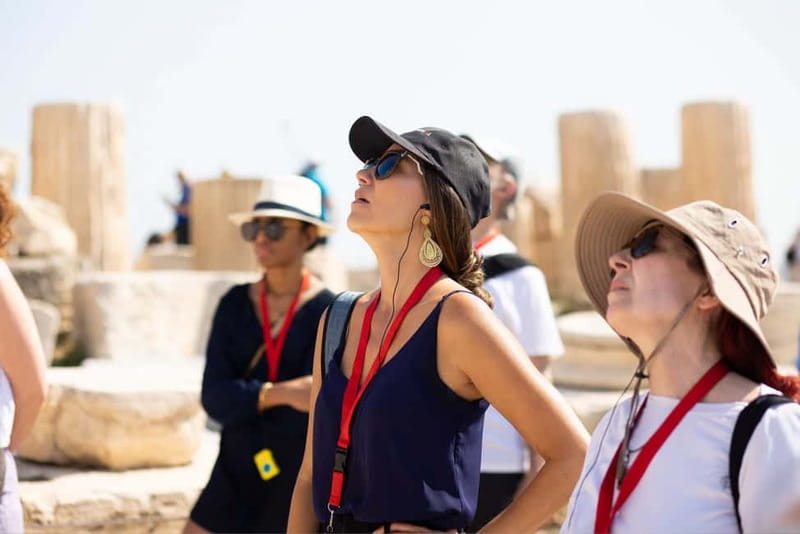
The guide provides commentary through the wireless audio system, allowing you to stand slightly apart for photographs without losing the explanation. That small detail matters on a busy archaeological site. Without an audio device, it is easy to miss half the talk while people move around you.
Odeon of Herodes Atticus and the climb uphill
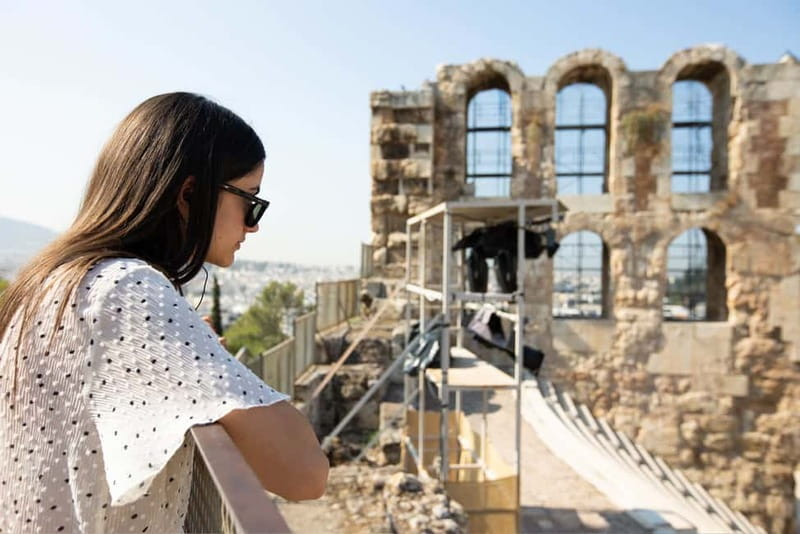
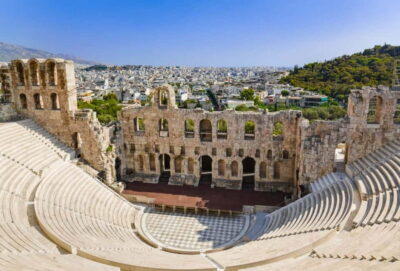
The path continues to the Odeon of Herodes Atticus, with roughly 10 minutes set aside for a guided stop. This ancient theater is still one of the most striking structures on the southern approach.
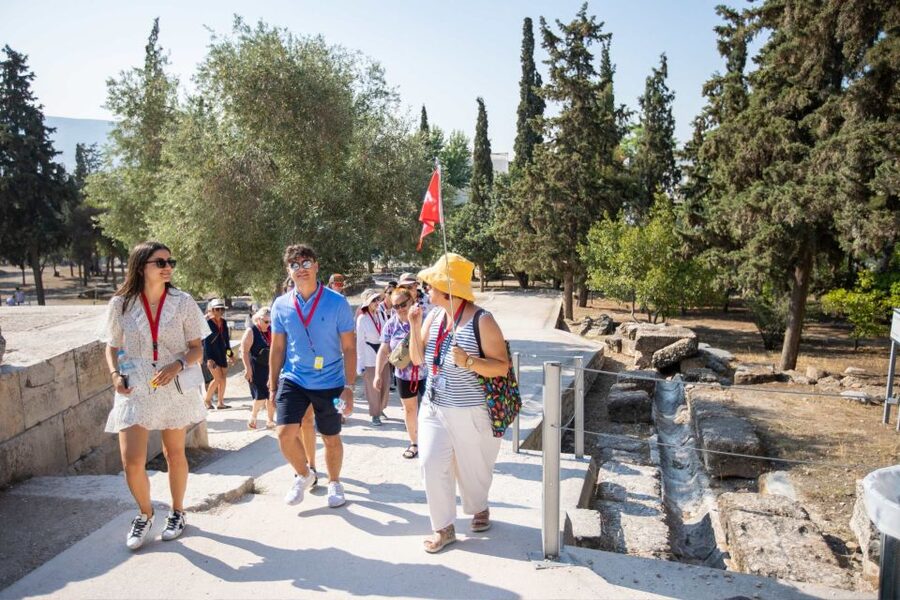
You will then continue upward toward the Propylaea, the grand entrance to the Acropolis. The route is not a flat city stroll. It includes an ascent over ancient and modern walking surfaces, and you may need to pause to catch your breath, especially in July or August.
The guides have been praised for keeping groups together, finding shade when possible, and adjusting the pace for families. Stavros was also praised for carrying a flag, which made it easier to follow the group in a crowded approach. Those practical touches can make a difference when several tour groups converge at the same point.
Propylaea and the Temple of Athena Nike
The Propylaea is the formal gateway to the Acropolis. Its scale helps you understand that the summit was meant to be approached as a grand ceremonial precinct, not as an isolated temple.
Nearby, the Temple of Athena Nike receives a separate guided stop of about 10 minutes. The small temple is easy to overlook when your eyes are fixed on the Parthenon, so having a guide point it out gives the approach more shape.
This is one advantage of taking a guided visit instead of walking through with only a map. The monuments are close together, but their purposes and dates are not identical. A good guide helps you understand the site as a sequence rather than a collection of famous stones.
More ways to see the Acropolis:
- Athens: Acropolis & up to 5 Archaeological Sites Combo Pass
★ 4.4 · 12,619 reviews - Athens: Acropolis Ticket with Optional Audio or Live Guide
★ 4.2 · 11,055 reviews - Athens: Acropolis, Parthenon & Acropolis Museum Guided Tour
★ 4.8 · 9,316 reviews - Athens: Acropolis, Parthenon & Acropolis Museum Guided Tour
★ 4.8 · 3,579 reviews
The Parthenon: the tour’s central moment
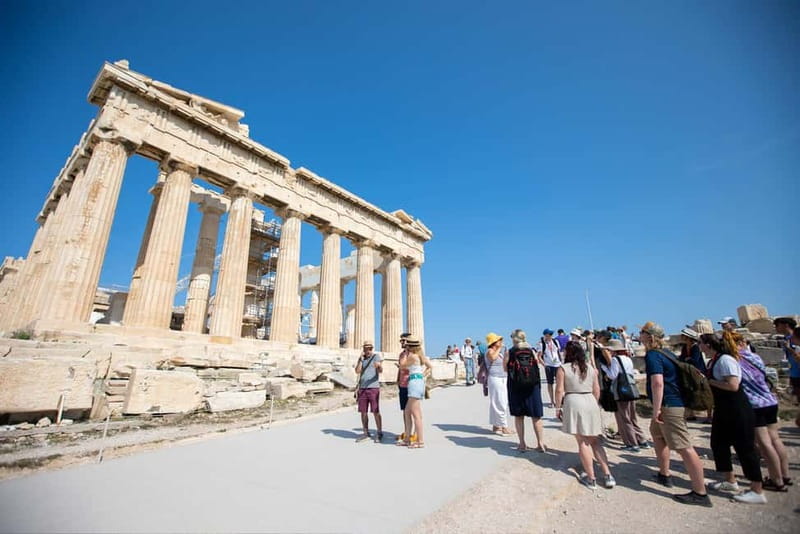
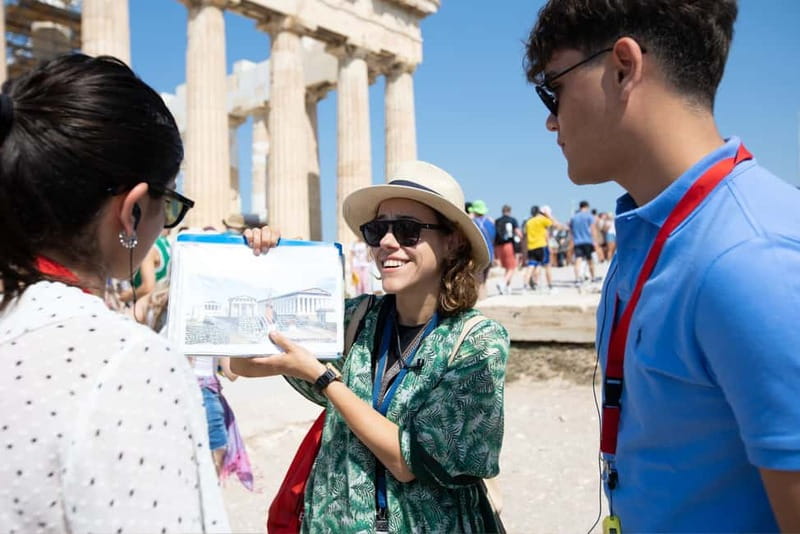
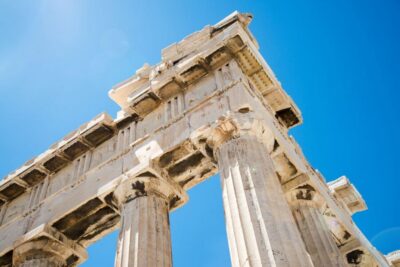
The Parthenon receives about 30 minutes of guided attention, making it the longest single stop in the Acropolis portion. You will have time to hear the main historical and architectural points, walk around the viewing areas, and take photographs.
The guide’s role is especially useful here. The building is instantly recognizable, but its meaning is harder to grasp from a quick photograph. The commentary covers the site’s ancient purpose and the stories connected with Athens, its gods, and its political power.
The group does not enter the Parthenon itself. You view it from the surrounding Acropolis area, along with the other monuments on the summit. Guides have been praised for recommending strong photo positions and allowing time for pictures without letting the group drift apart.
Do not expect solitude, even on the earliest departure. One person who took the first tour still found the site busy, but noted that crowds became much heavier later. That is the realistic promise here: early access improves the conditions, but it does not turn the Acropolis into a private monument.
Erechtheion and free time on the summit
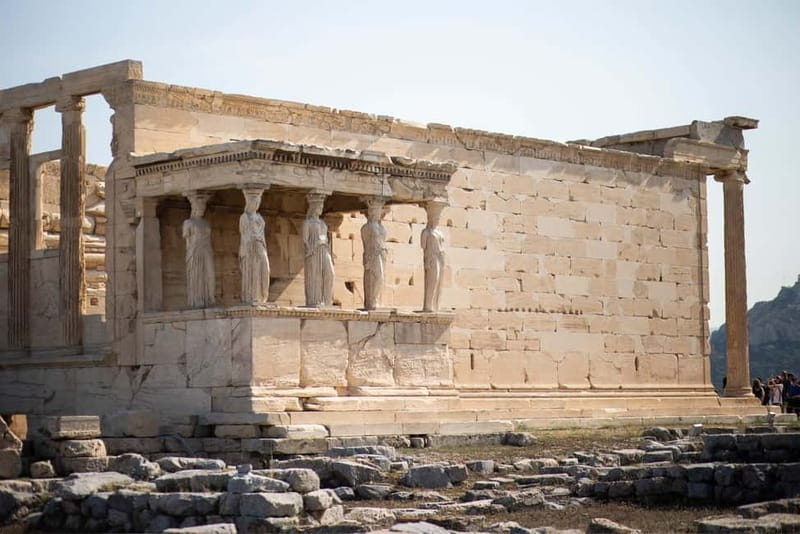
The Erechtheion receives about 15 minutes of guided attention. Its unusual design and famous Caryatid figures give the tour a different visual rhythm after the broad, symmetrical Parthenon.
After the main commentary, you have around 30 minutes at the Acropolis for photos and free time. This is valuable because guided explanations can be mentally full. You can pause, look back over Athens, and take in the setting at your own pace.
There is almost no reliable shade on the summit, so use the free time sensibly. Water and a hat are essential. A guide may seek out shaded stopping points on the route, but the main monuments are exposed.
The Acropolis section is the heart of the experience. If your priority is ancient Athens, the ticket and early timing make the tour a solid value at $28.46 per person, provided the selected option includes entrance. If the ticket is not included, you must arrange your own Acropolis ticket for the correct time slot before the tour begins. One booking option may require an additional payment of about €20 per person, so check the exact price before confirming.
Anafiotika: a quieter turn through Plaka

After leaving the Acropolis, the route heads downhill toward Plaka. The Anafiotika portion takes about 30 minutes and introduces a very different side of Athens.
Here, narrow lanes and small passages create a village-like feel below the ancient hill. The walk is less about major monuments and more about seeing how old Athens fits into the modern city.
The downhill direction is welcome after the summit climb, but it is still a walking tour, not a rest period. You will be on cobblestones and moving through compact streets. The guide may point out details that you would likely pass without noticing, including small architectural features and local stories.
This is also the section where the experience becomes less structured. The Acropolis has a clear sequence of major sights. Plaka is more atmospheric, and the pleasure comes from moving through its lanes with context.
Roman Forum and the Tower of the Winds
The route continues to the Roman Forum of Athens, followed by the Tower of the Winds. The Roman Forum shows how the city continued to serve as an important center after the classical period.
The Tower of the Winds is a short five-minute stop, but it is a useful one. The monument is compact and easy to miss if you are hurrying toward Monastiraki. A guide can explain why this small structure mattered and help you place it within the wider Roman-era district.
The tour does not linger at every stop for long. That keeps the full route within 3.5 hours, but it also means you should not expect extended independent exploration at each monument.
Fethiye Mosque Museum and Hadrian’s Library
The Fethiye Mosque Museum receives another brief guided stop. Its presence reflects the many periods layered into central Athens, where ancient, Roman, Byzantine, Ottoman, and modern elements sit close together.
Hadrian’s Library receives about 15 minutes. This is one of the more substantial later stops and helps extend the story beyond the classical Acropolis. You see how Roman Athens developed around the older Greek center.
The value of this part of the walk lies in the connections. You are not only seeing one famous hill and then a shopping district. You are following a route through several eras of the city, with the guide explaining how the pieces relate.
Tzisdarakis Mosque and Monastiraki Square
The final stops include the Tzisdarakis Mosque and Monastiraki Square. Each receives only a few minutes, so these are brief orientation points rather than full museum visits.
Monastiraki Square is a practical place to finish. From here, you can continue exploring on your own, find food, or return to the older streets later. The tour information identifies the Key Tours office as the meeting location and also says the activity ends back at the meeting point, while the route description places the finish at Monastiraki Square. Confirm the exact end arrangement when you book, especially if you have a timed reservation afterward.
The guide may also offer food and drink suggestions. Joanna was praised for sharing useful Athens recommendations along with her historical explanations, which can make the end of the tour more useful than a simple goodbye.
Guides, group rhythm, and audio equipment
The strongest part of this experience is the quality of the guiding. Joanna was praised for clear storytelling, humor, and the ability to make the past feel understandable. Christina received repeated praise for concise explanations and for linking major events with small, memorable details. Tina was noted for an efficient pace, while Dimitri and Stavros were praised for their historical insight and group care.
That does not mean every departure will feel identical. Some guides may be more theatrical, while others may focus on facts and structure. The available languages are English and Spanish, and the wireless audio devices are supplied so you can hear the commentary clearly.
The system is particularly helpful around the Acropolis, where groups gather close together and background noise can be high. You can take photographs or walk a few steps to the side without losing the guide’s voice.
Group size can vary. One small group had only ten people, while other departures had large summer groups. Large groups can slow the climb and make it harder to gather at narrow points, though the guides have been praised for using flags, checking on families, and keeping people together.
What the $28.46 price really buys
At $28.46 per person, the price is reasonable for a guided Acropolis visit if entrance is included in your chosen option. You are paying for a licensed guide, early access, audio equipment, and a route that continues through Plaka and central Athens.
The value is strongest if you want context. The Parthenon is free to admire from many viewpoints, but understanding the Acropolis requires time and explanation. A guide can point out the monuments in sequence, explain their roles, and help you avoid wandering through the site without a plan.
The value is weaker if you already have a strong background in ancient Athens and prefer to explore alone. You will follow a set route and keep to the group’s pace. The Plaka portion also gives you an introduction rather than hours to shop, eat, or explore independently.
Read the ticket wording carefully. The Acropolis entrance ticket is included only when that option is selected. If you choose the version without tickets, you must buy your own ticket before the activity at the correct departure time slot. That is the one detail most likely to cause trouble if overlooked.
Free cancellation up to 24 hours before the tour and the reserve-now, pay-later option add useful flexibility. Hotel transport is not included.
Who should choose this walk?
I would choose this tour if you want the Acropolis explained clearly, prefer an early start, and like combining major monuments with a neighborhood walk. It suits first-time visitors who want a firm introduction to central Athens in one morning.
It is also a good match for families with older children who can handle the climb. Guides have shown care with families and have adjusted pauses when needed, but the heat and uneven uphill route remain real factors.
I would not choose it for a wheelchair user or anyone with significant mobility limits. I would also skip it if your main goal is a slow Plaka morning with café stops and shopping. The Acropolis takes priority, and Plaka is covered at a steady pace.
FAQ
How long does the tour last?
The tour lasts 3.5 hours. Starting times vary, so check availability for your chosen date.
Where does the tour begin?
You meet at the Key Tours office. Hotel pickup and drop-off are not included.
Where does the tour end?
The route description places the end at Monastiraki Square, while the activity information also refers to returning to the meeting point. Confirm the exact arrangement when booking.
Is Acropolis admission included?
It is included only if you select the option with the entrance ticket. If you choose the option without tickets, you must buy your own ticket before the tour at the correct time slot.
Does the tour skip the ticket line?
The activity includes skip-the-line access when the required entrance ticket option is selected.
Which languages are available?
The tour is offered in English and Spanish.
What monuments are covered on the Acropolis?
The route includes the Theatre of Dionysus, Odeon of Herodes Atticus, Propylaea, Temple of Athena Nike, Parthenon, Erechtheion, and the wider Acropolis area.
What does the Plaka walk include?
The route includes Anafiotika, the Roman Forum, Tower of the Winds, Fethiye Mosque Museum, Hadrian’s Library, Tzisdarakis Mosque, and Monastiraki Square.
Is the walk physically difficult?
The tour is described as moderate difficulty. The climb to the Acropolis can require intense physical effort, especially in summer.
What should I bring?
Bring a passport or ID card, comfortable shoes, sunglasses, a sun hat, and water. Large bags, luggage, baby strollers, and pets are not allowed.
Should you book it?
Book this tour if you want the Acropolis before the worst heat, a guide who can explain the monuments in plain terms, and a useful introduction to Plaka and Roman Athens. The $28.46 starting price is fair when admission is included, and the audio devices make a real difference.
Choose the earliest available departure, bring more water than you think you need, and confirm the ticket option before paying. If you do those three things and can manage the uphill walk, this is an efficient and well-supported way to meet ancient Athens.
More Morning in Athens
- Athens: Early Morning Guided Tour to Acropolis and Museum
★ 4.6 · 821 reviews - Best Seller: Semi-Private Athens Morning Food Tour (15+ tastings)
★ 5.0 · 548 reviews - Athens: Half-Day Morning Catamaran Cruise with Meal & Drinks
★ 4.9 · 221 reviews - Super Saver Combo: Morning Acropolis, Museum and Afternoon Sounio
★ 4.0 · 206 reviews
Just added around Athens
- Athens Hotels to Athens Airport Private Departure Transfer★ 5.0 · 40 reviews
- Private One-way Transfer between Athens International Airport and Athens Hotels★ 4.5 · 40 reviews
- Athens: Acropolis Museum Ticket with Self-Guided Audio tour App★ 3.5 · 40 reviews
- From Athens: Meteora Train Trip with Overnight Stay★ 4.8 · 40 reviews
- Athens Photography Tour★ 5.0 · 40 reviews
- Athens: Acropolis Visit and City Night Tour★ 4.7 · 40 reviews
- Delphi Full Day Private Trip From Athens With Lunch Overlooking the Sea★ 5.0 · 40 reviews
- Acropolis & Plaka Neighbourhood Private Tour with Licensed Expert★ 5.0 · 40 reviews
Acropolis & Parthenon Tours, compared.
Acropolis & up to 5 Archaeological Sites Combo Pass
Read our review →
Acropolis, Parthenon & Acropolis Museum Guided Tour
Read our review →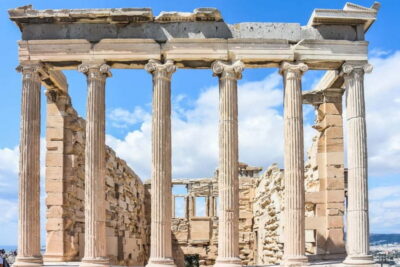
Acropolis, Parthenon & Acropolis Museum Guided Tour
Read our review →

Acropolis: Acropolis and Parthenon Guided Walking Tour
Read our review →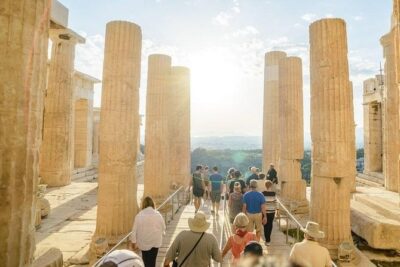
Acropolis monuments & Parthenon Walking Tour with Optional Acropolis Museum
Read our review →Browse the lists this tour appears in