
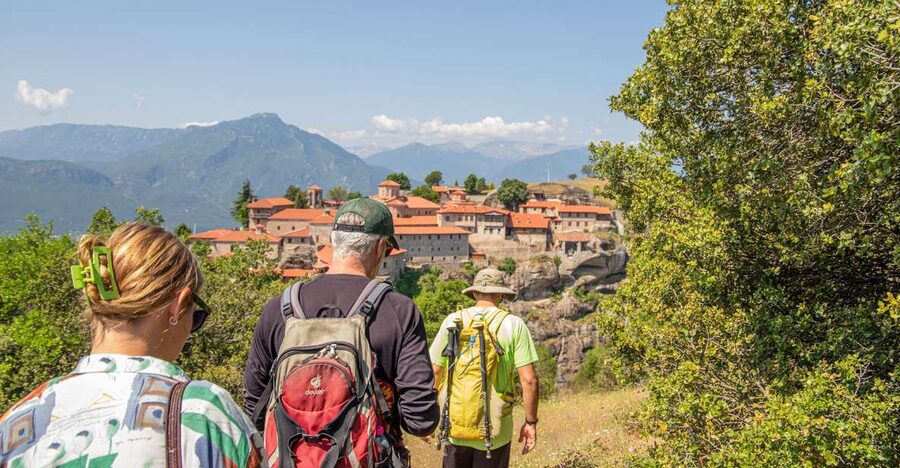
Reviewed · METEORA MONASTERY TOURS
Kalabaka: Meteora Small-Group Hiking Tour w/ Monastery Visit
Meteora rewards people who leave the road. This five-hour hike from Kalabaka brings you along old paths beneath the sandstone pillars, past hermit sites and ruined monasteries, then into either Great Meteoron or Varlaam. I especially like the close-up views of the rock formations and the chance to reach the monasteries on foot, away from the coach traffic. The main consideration is fitness: parts of the trail are steep, rocky, and tiring in hot weather.
I also like the strong local guiding. Guides such as Evan, Christos, Chris, and Dimitris have been praised for explaining the geology, plants, animals, legends, and religious history without turning the walk into a lecture. The route is often manageable for beginners, but it is not a flat stroll, and the descent from the monastery can be hard without proper shoes.
In This Review
- Key points at a glance
- Why walking is the right way to see Meteora
- From Kalabaka to Kastraki Square
- Dupiani Hermitage and the first rock paths
- Ypapanti Monastery and the ruins of St. Dimitrios
- Reaching Great Meteoron or Varlaam
- The descent and St. George the Madilas
- What the guides add to the experience
- How hard is the five-hour hike?
- Is $35 a good value?
- The best time to book this walk
- Who should book this Meteora hike?
- Should you book it?
- FAQ
- How long does the Meteora hiking tour last?
- Where does the hike begin?
- Which monastery will I visit?
- Is the monastery entrance fee included?
- What should I wear and bring?
- Is the hike suitable for beginners?
Key points at a glance
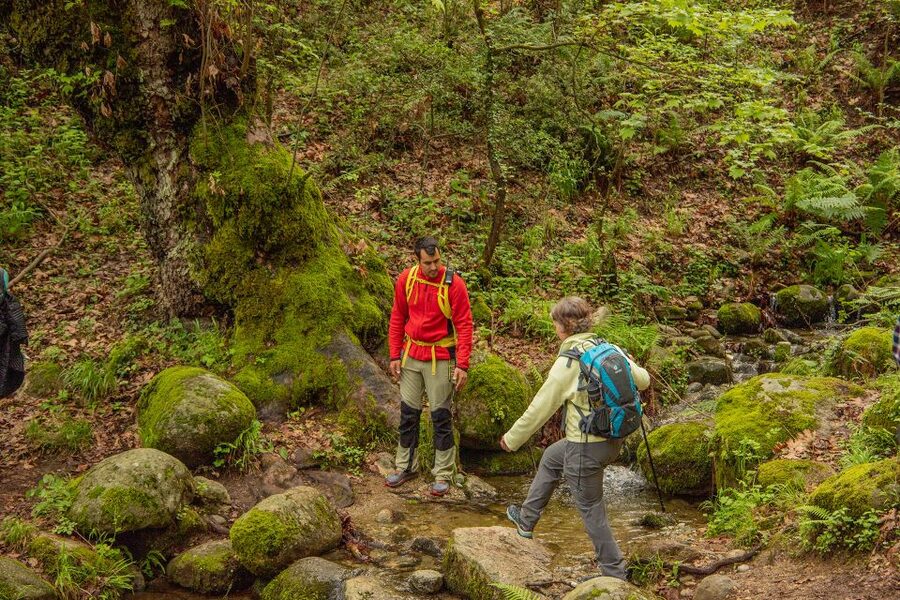
- The walk follows old Meteora paths: You pass Dupiani Hermitage, the ruined Pantokratoros Monastery, Ypapanti Monastery, and the remains of St. Dimitrios.
- You visit one working monastery: The stop is usually Great Meteoron or Varlaam, with about an hour to explore on your own.
- The best views come between the stops: The hike gives you broad views of the sandstone pillars, nearby hills, and several monasteries from outside.
- Local guides add real value: Evan, Christos, Chris, and Dimitris have all been praised for their clear explanations and friendly pace-setting.
- It costs $35 before admission: That includes transport, a guide, a map, and water, but monastery entry costs €5 per person.
- Good shoes are essential: Closed-toe footwear with a non-slip sole is required. Sandals and flip-flops are not suitable.
Why walking is the right way to see Meteora
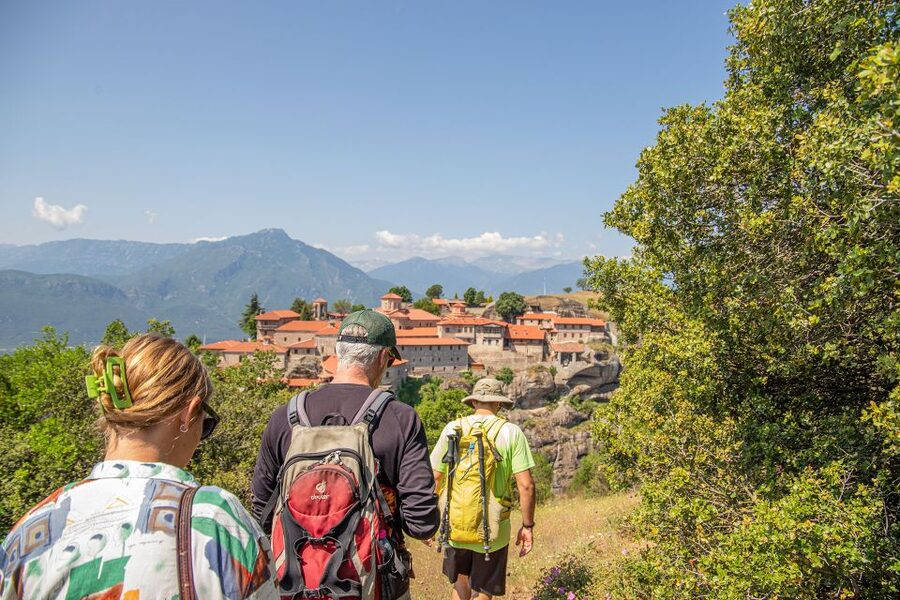
Meteora is famous for monasteries perched on tall sandstone pillars, but a road tour can flatten the experience into a series of bus windows and photo stops. On foot, you notice the rock surfaces, caves, narrow paths, plants, birds, and shifting views as you move around the pillars.
The trail also gives the place a better sense of scale. You are not simply looking up at a monastery from a parking area. You walk beneath the cliffs, pass older religious sites, and gradually work your way toward the high monasteries. That slow approach helps explain why monks chose these isolated rocks centuries ago.
This is a guided hike, not a technical climbing trip. Still, expect uneven ground, uphill walking, stone steps, and a descent that can test your knees. The route has been described as mostly easy or moderate, but that depends on your usual activity level, the weather, and how comfortable you are on rocky trails.
More Monastery Tours in Meteora
- Meteora: Morning Half Day Sightseeing and Monasteries Tour
★ 4.7 · 478 reviews - Meteora: Majestic Sunset Tour & Monasteries with Local Guide
★ 4.7 · 359 reviews - Athens: Guided Tour to Meteora Monasteries & Hermit Caves
★ 4.7 · 211 reviews
From Kalabaka to Kastraki Square
The morning begins with pickup in Kalabaka, also known as Kalampaka. Transport to the start takes about 10 minutes, so you avoid the hassle of finding the trailhead yourself. Pickup is available from a long list of hotels and guesthouses in Kalabaka and nearby Kastraki.
The hike starts at Kastraki Square, a useful point for getting your bearings before the trail heads into the rocks. The short transfer matters because you can save your energy for the walk rather than spending it on road navigation.
The tour is conducted in English, and the group format is designed to be small. One useful feature is the occasional split into two smaller groups, which can make it easier to hear the guide and keep a comfortable pace. Exact group size is not specified, so I would not book this expecting a private outing.
Dupiani Hermitage and the first rock paths
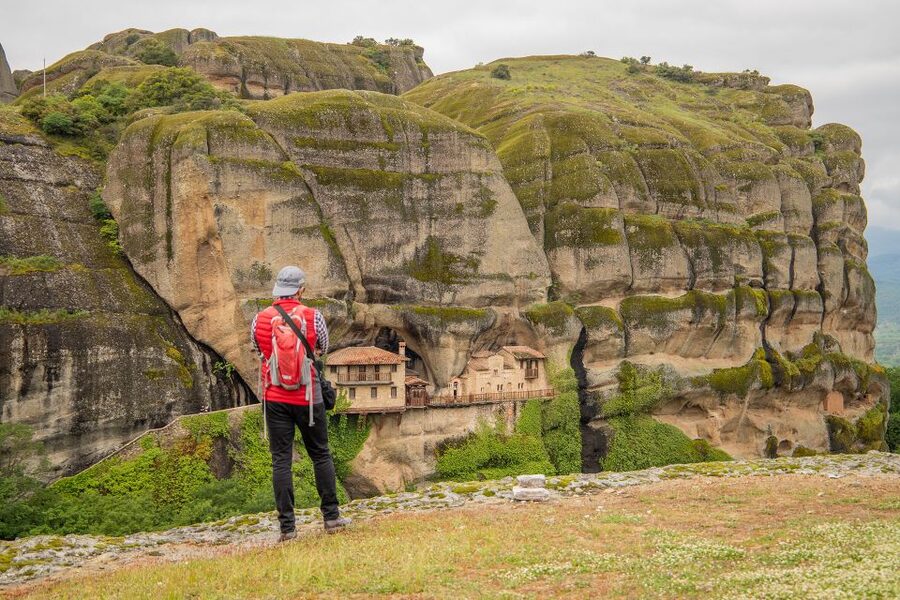
From Kastraki, the route continues toward Dupiani Hermitage. This part introduces the quiet side of Meteora, where small religious sites and rough paths sit below the better-known monasteries.
You pass beneath the ruined Pantokratoros Monastery on the north side of Dupiani Rock. The ruin is a reminder that Meteora was once filled with far more monastic communities than the six monasteries open today. Along the path, the guide explains local history, myths, plants, and animals, adding meaning to what might otherwise look like a simple walk through the hills.
This is also where the walking format begins to pay off. You can stop to study the strange patterns in the sandstone and look back toward Kastraki from changing angles. The view is not a single grand reveal. It keeps shifting as the trail bends around the rocks.
Ypapanti Monastery and the ruins of St. Dimitrios
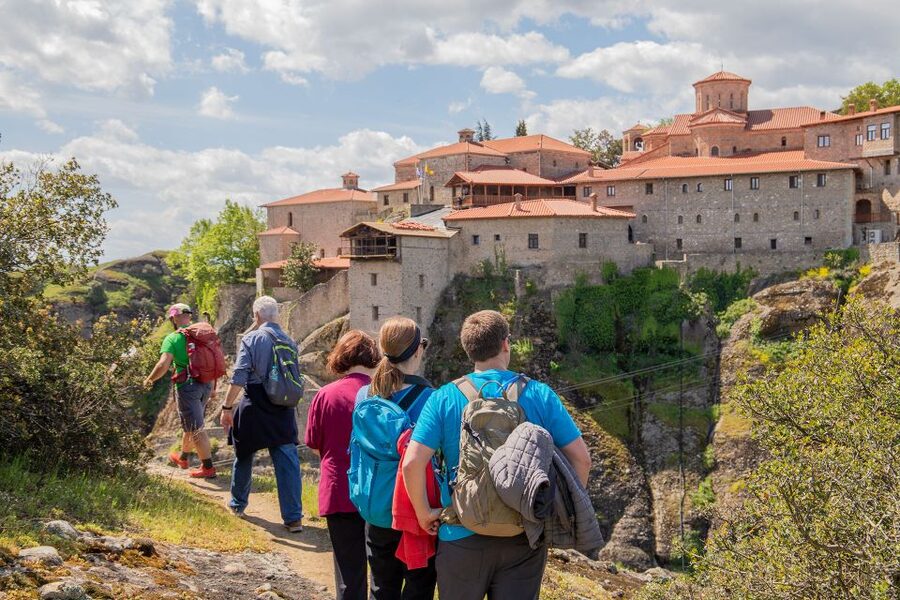
The path reaches Ypapanti Monastery and the ruins of St. Dimitrios. These sites are especially useful for understanding the older and more secluded side of Meteora.
St. Dimitrios was destroyed by the Ottomans in 1808 during a local uprising. You do not just see a preserved monastery interior here. You see remains along the trail, where the surrounding cliffs and rough terrain help explain the isolation that once protected these communities.
The guide’s role is important at this point. Without local context, a ruin can be easy to overlook. With explanations about the site, the regional conflicts, and the way people lived among the rocks, the stop becomes part of the larger story of Meteora.
The path from here rises toward the two major monastery choices. The uphill section is not described as difficult for people with some walking experience, but it can feel demanding in summer. Several people have appreciated guides who slow the pace, add rest stops, and offer walking sticks when needed.
More Meteora monastery days:
- Meteora: Panoramic Morning Small Group Tour with Local Guide
★ 4.7 · 334 reviews - From Kalabaka/Kastraki: Meteora Monasteries Morning Tour
★ 4.8 · 178 reviews - Meteora: Sunset Small Size Tour with Monastery & Caves visit
★ 4.9 · 171 reviews - Athens to Meteora: Monasteries & Hidden Caves Bus Tour
★ 4.7 · 141 reviews
Reaching Great Meteoron or Varlaam
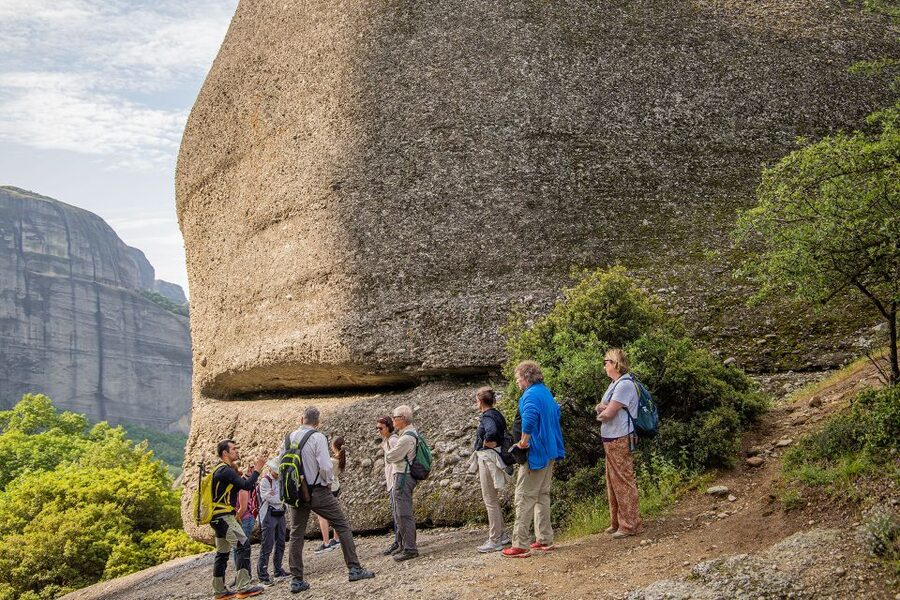
The route continues toward Great Meteoron and Varlaam, two of the six Eastern Orthodox monasteries in Meteora. Both are part of the UNESCO World Heritage Site, and the tour visits one of them.
The exact monastery can depend on the day’s arrangements. Great Meteoron is the larger and more famous choice, while Varlaam is another major monastery high among the pillars. The tour description identifies the monastery stop as either Great Meteoron or Varlaam, so check the current details when you book if one particular monastery matters to you.
You get about one hour at the monastery. This is a self-guided visit, not a guided tour inside. The mountain guide can point out what deserves attention and explain the setting, but you should not expect a detailed indoor presentation from the hiking guide.
Admission is not included. Allow €5 per person for the monastery entrance, and bring cash. That fee is modest, but it changes the true cost from $35 to $35 plus the entry charge. You will also need suitable clothing. Sleeveless shirts are not allowed under the stated rules, so dress with Orthodox monastery standards in mind.
One hour is a sensible compromise. It gives you time to see the grounds and interiors without turning a half-day hike into a full-day excursion. If your main goal is to visit several monasteries inside, this is not the right tour. If you want one interior visit combined with a much broader walk through Meteora, the balance works well.
The descent and St. George the Madilas
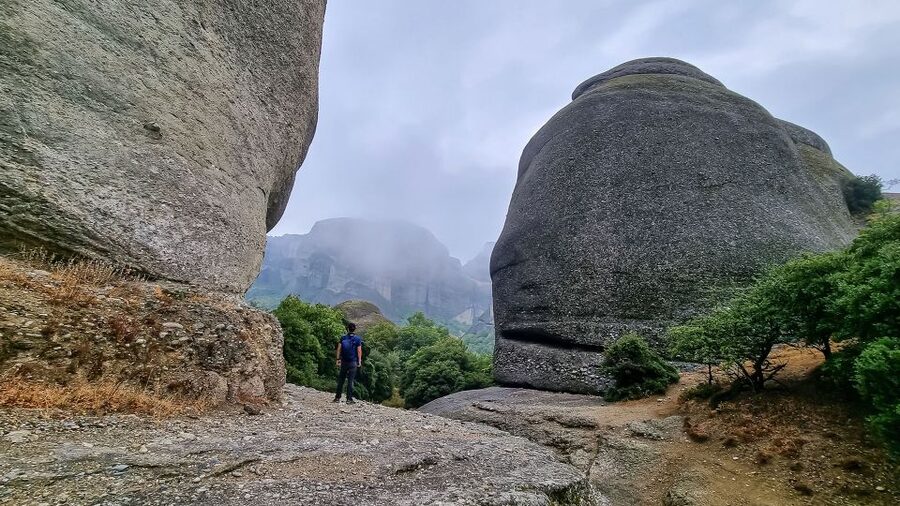
After the monastery visit, the trail heads down from Varlaam toward St. George the Madilas. This section can be harder than the uphill approach, especially on loose or uneven ground.
St. George the Madilas is a memorable stop because of its local climbing tradition. Children from the area climb with only a rope to make offerings to St. George. The site shows how religious practice in Meteora is tied not only to grand monasteries but also to small cliffside places and local customs.
The descent gives you another set of views, often from angles that bus passengers never see. It also provides a practical reminder: walking poles or a sturdy stick can help. One guide has been praised for carrying poles and making them available to people who needed extra support.
Expect the return walk to take about an hour before the short ride back to Kalabaka. The vehicle portion is listed at about 15 minutes, making the full outing close to five hours from pickup to return.
What the guides add to the experience
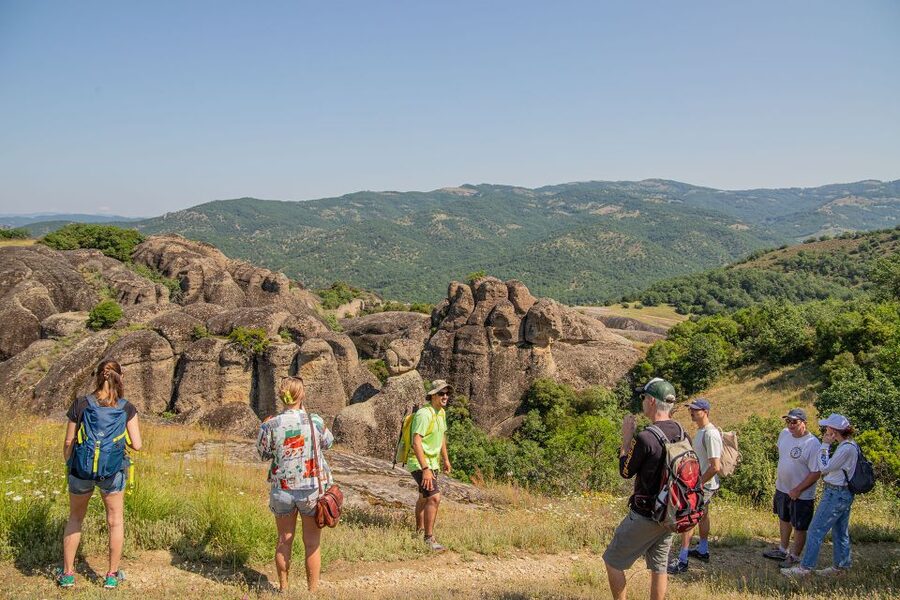
The guides are the strongest part of this tour. Evan is repeatedly described as friendly, clear, and good at keeping the walk interesting. Christos has been praised for his knowledge of the monasteries, geology, plants, and local climbing stories. Chris is known for mixing history, nature, and practical advice about what to notice inside the monastery.
Dimitris has also received praise for adjusting the pace to different fitness levels. That matters in a group hike, where one person may be comfortable on steep ground while another needs regular breaks. The best guides do not simply lead from the front. They watch the group, explain what you are seeing, and keep the mood relaxed.
You may hear about local animals and plants along the path. Past participants have spotted turtles and lizards, with the guide pointing them out. Sightings are never guaranteed, but the natural setting gives the walk more variety than a standard monument tour.
The commentary also covers myths and stories from the area. That is a good fit for Meteora, where the setting can feel almost unreal. The guides help connect the dramatic cliffs to ordinary local life rather than presenting the place as a distant postcard.
How hard is the five-hour hike?
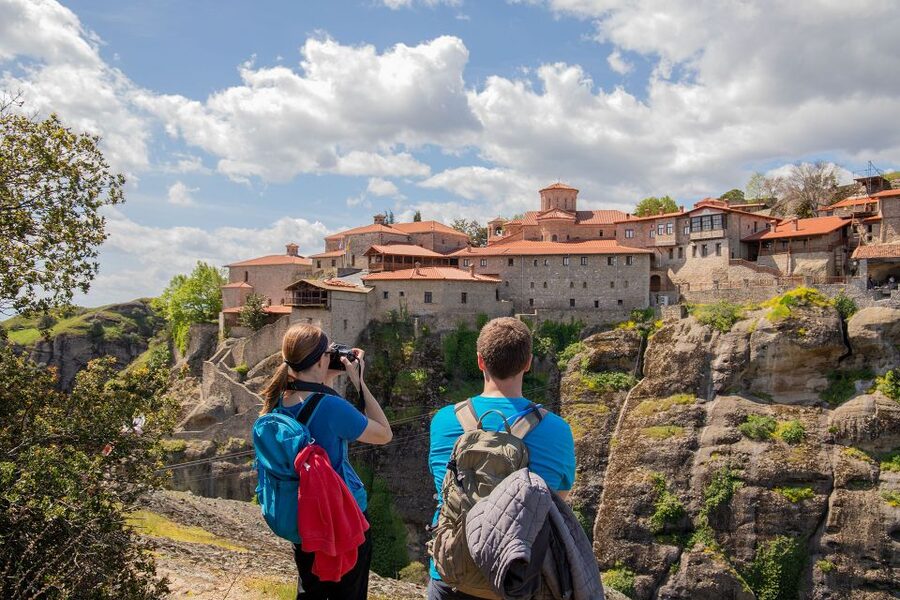
I would call this a moderate walking tour with some easier stretches and a few demanding sections. Several people with little guided-walking experience found it manageable, and even older hikers completed it with a steady pace and rest stops. Others found the descent challenging or the walking tough in warm weather.
Your footwear will make a major difference. Wear walking boots, trail shoes, or closed-toe sneakers with a strong, non-slip sole. Flip-flops and sandals are not allowed, and ordinary smooth-soled shoes may leave you sliding on rock.
Bring a hat, comfortable clothes, snacks, and cash. A bottle of water is provided, but snacks and other food are not included. The route is partly shaded according to several detailed accounts, though you should still prepare for sun and heat, especially in summer.
The tour is not suitable for children under seven, people with heart problems, people with limited mobility, people with low fitness, or people with visual impairments. That is not a judgment on the route. It simply reflects the uneven terrain and steep sections.
Is $35 a good value?
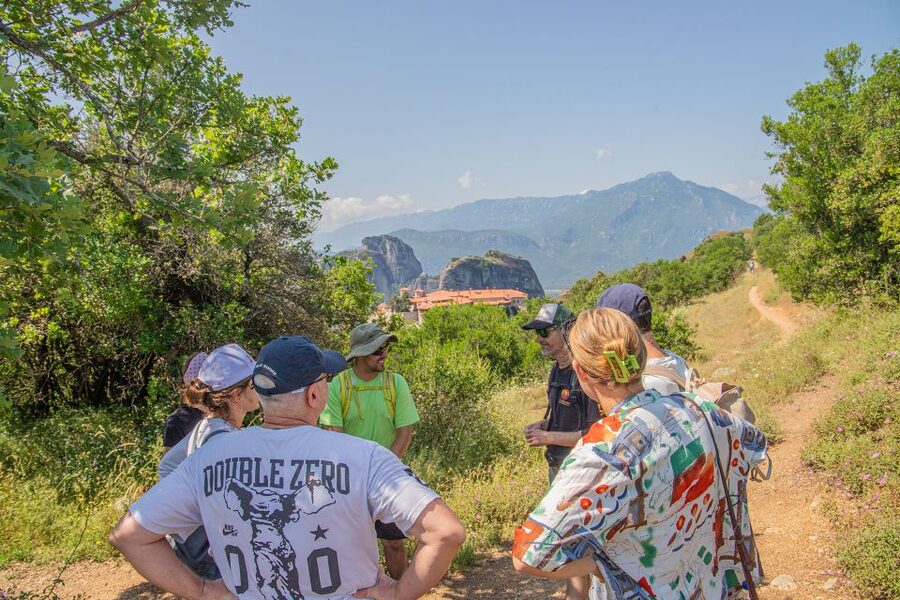
At $35 per person, this is a strong value for a five-hour outing. You receive hotel pickup and drop-off, transport to the trailhead, an English-speaking mountain guide, a map, and water. The guide is the key value: finding the lesser-known paths and understanding their history on your own would be difficult.
The extra monastery fee is €5 per person for the site you visit. Food and drinks beyond the supplied water are also your responsibility. Even after adding the admission, the price remains reasonable for a half-day experience that combines transport, exercise, several historic sites, and one monastery interior.
The trade-off is focus. You are paying for an active introduction to Meteora, not a long indoor monastery tour or a vehicle tour of all six monasteries. If you want to cover more ground without walking, another format may suit you better. If you want the most memorable views and a feel for the paths between the rocks, this price is hard to fault.
The best time to book this walk
Morning is a sensible time for Meteora. You get cooler conditions than later in the day, and the five-hour schedule leaves time afterward for lunch or further sightseeing in Kalabaka and Kastraki.
Weather can change the character of the walk. A rainy day may make the rocks slippery, but it can also reduce crowds and give the route a more dramatic feel. Do not treat rain as a guarantee that the tour will be canceled. The guide may still lead the hike, so bring suitable clothing and ask about conditions before setting out.
Summer heat is the main concern. Start with water, use the provided bottle carefully, wear a hat, and take the rest stops seriously. Spring, autumn, and cooler mornings are likely to feel more comfortable, but availability and starting times vary.
The tour allows free cancellation up to 24 hours ahead and offers a reserve-now, pay-later option. Those policies are useful if your route through Thessaly is still changing.
Who should book this Meteora hike?
I would choose this tour if you want to:
- See Meteora on foot rather than from a bus
- Visit one monastery while viewing several others from the trail
- Learn about local geology, wildlife, religious sites, and legends
- Walk at a guided pace with support on unfamiliar paths
- Get broad photo views without spending the entire day on a formal tour
- Keep the cost near $35 before monastery admission
I would choose something else if you want to enter several monasteries, avoid steep or rocky ground, travel with very young children, or spend most of your time seated. This is an active outing, even though much of the route is manageable for ordinary walkers.
Should you book it?
Yes, if you have reasonable fitness and want Meteora to feel like a place rather than a collection of viewpoints. The combination of old paths, ruined religious sites, sandstone pillars, one monastery visit, and excellent local guiding gives you far more context than a quick drive between parking lots.
Book with proper shoes, cash for the €5 entrance fee, modest clothing, and realistic expectations about the descent. If possible, aim for a cooler morning and tell the guide about any concerns with pace or footing. For a low-cost, active introduction to Meteora, this is one of the better ways to spend five hours in Kalabaka.
FAQ
How long does the Meteora hiking tour last?
The tour lasts five hours, including hotel pickup and drop-off, transport, hiking, sightseeing, and the monastery visit.
Where does the hike begin?
After pickup in Kalabaka, transport takes you to Kastraki Square, where the walking portion begins.
Which monastery will I visit?
The tour visits either Great Meteoron or Varlaam. The listed schedule specifically includes a visit to Great Meteor Monastery, but the tour description identifies both as possible monastery stops.
Is the monastery entrance fee included?
No. Entry costs €5 per person for each monastery, and the fee is not included in the tour price.
What should I wear and bring?
Wear comfortable clothes and closed-toe walking shoes with non-slip soles. Bring a hat, snacks, and cash. A bottle of water and a map are provided.
Is the hike suitable for beginners?
The route is often manageable for beginners who are comfortable walking uphill and on rocky paths. It is not suitable for people with low fitness, mobility impairments, heart problems, or visual impairments, and children under seven cannot join.
More Hiking Trips in Kalabaka
- Meteora: Sunset Hike to Secret Caves
★ 4.9 · 56 reviews - From Chania: Full-Day Samaria Gorge Trek Excursion & Guide
★ 4.6 · 3,191 reviews - From Rethymno: Samaria Gorge Full-Day Trek, Pickup & Guide
★ 4.5 · 1,610 reviews - From Chania/Rethymno: Samariá Gorge Guided Hike with Pickup
★ 4.5 · 1,010 reviews
More Monastery Tours in Kalabaka
- Meteora: Monasteries Tour, Lunch, and Athens Transfer Option
★ 4.8 · 102 reviews - Kalabaka: Meteora Monasteries Minibus Tour with Photo Stops
★ 5.0 · 74 reviews - Athens: Meteora Monasteries Day Trip with Caves and Lunch
★ 4.7 · 2,964 reviews - Athens: Meteora Monasteries Day Tour with Lunch
★ 4.8 · 2,196 reviews
Just added around Kalabaka
- Meteora Evening Tour with Breathtaking Sunset View★ 5.0 · 44 reviews
- Meteora Sunset Tour on E-bikes★ 5.0 · 54 reviews
- Meteora: Sunset Hike to Secret Caves★ 4.9 · 56 reviews
- Kalabaka: Meteora Monasteries Minibus Tour with Photo Stops★ 5.0 · 74 reviews
- Meteora: Monasteries Tour, Lunch, and Athens Transfer Option★ 4.8 · 102 reviews
- Athens to Meteora: Monasteries & Hidden Caves Bus Tour★ 4.7 · 141 reviews
- Meteora: Sunset Small Size Tour with Monastery & Caves visit★ 4.9 · 171 reviews
- From Kalabaka/Kastraki: Meteora Monasteries Morning Tour★ 4.8 · 178 reviews
Meteora Monastery Tours, compared.
Meteora Monasteries Day Trip with Caves and Lunch
Read our review →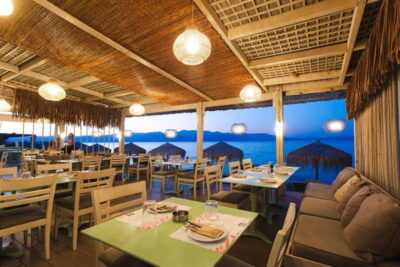

Meteora Tour with Local Guide and Greek Lunch
Read our review →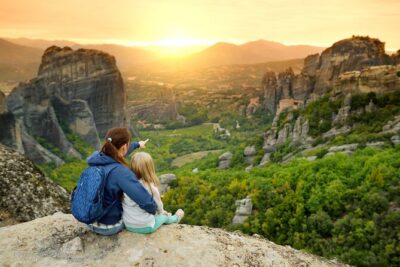
Meteora Monasteries, Caves & Coastal Stopovers with Lunch
Read our review →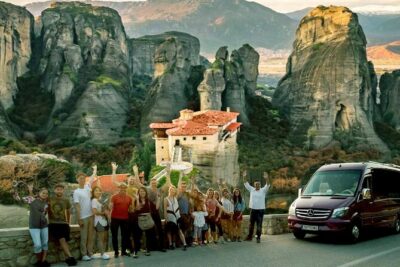
Meteora Monasteries & Caves DayTrip from Athens with Greek Lunch
Read our review →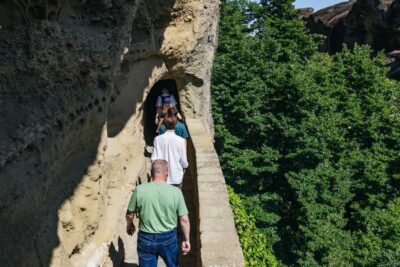
4-Day Classical Greece Tour: Epidaurus, Mycenae, Olympia, Delphi, Meteora
Read our review →Browse the lists this tour appears in