
Reviewed · MUSEUMS
Olympia: Archaeological Site & Museum E-Ticket & Audio Guide
Olympia rewards a slow look. This $41 ticket pairs entry to the archaeological site with three museums and a phone-based audio guide, making the ancient sanctuary easier to understand without tying you to a group. I like the freedom to move at your own pace, and I especially like the clear directions that lead you from the Gymnasium through the main ruins. The main drawback is simple: you must arrange your own transportation, phone, headphones, and shade for a site with little protection from the sun.
The audio tour is strongest when you want a self-guided visit with structure but no live guide. It lasts about an hour, according to one detailed user account, and works offline once downloaded. Still, the museum audio is not included, the activity is non-refundable, and the app takes a little getting used to if you walk faster or slower than its suggested route.
In This Review
- Key points to know before visiting Olympia
- What the $41 Olympia ticket actually gives you
- Getting to the site without a meeting point
- Starting at the Gymnasium and finding your route
- The Palestra, Prytaneion, and Philippeion
- The Temple of Hera and the religious heart of Olympia
- The Ancient Stadium and the Olympic setting
- Pheidias workshop and the end of the audio tour
- The Archaeological Museum: essential indoor context
- The Ancient Olympic Games Museum
- Using the app, audio, and phone correctly
- Access, heat, and what to carry
- Who should book this Olympia experience?
- Should you book the Olympia audio guide and ticket?
- FAQ
- How long is the Olympia audio tour?
- What attractions are included in the ticket?
- Is there a live guide?
- When can I enter the museums?
- Do I need internet access during the visit?
- What phone do I need?
- Is the site accessible for wheelchair users?
Key points to know before visiting Olympia
- Three admissions in one day: Your ticket covers the archaeological site, the Archaeological Museum of Ancient Olympia, and the Olympia Ancient Olympic Games Museum.
- The audio route starts at the Gymnasium: It guides you through the Palestra, Prytaneion, Philippeion, Temple of Hera, and other major remains before ending near the Pheidias workshop.
- Download everything before arrival: The app, narration, text, and maps require about 100 to 150 MB of phone storage.
- The museum has a timed entry: The Archaeological Museum is tied to the date and time slot you select, while the archaeological site and Olympic Games Museum can be visited anytime that day.
- Bring your own comfort kit: Comfortable shoes, a charged smartphone, headphones, hat, and sunscreen matter here.
- This suits independent visitors: You get historical context and a route to follow, but no guide is present to answer questions or adjust the visit.
What the $41 Olympia ticket actually gives you
At $41 per person, this is more than a simple entry ticket. You receive admission to the archaeological site and both museums, plus a downloadable audio tour for the ruins. That combination can be good value if you plan to see all three parts of the complex in one day.
The value depends on how you like to visit ancient sites. If you want a live guide, transport from a port or hotel, or a companion who handles the technology, this product will feel incomplete. If you prefer to set your own pace and already have a suitable phone, the package removes several small hassles.
The Archaeological Museum entry comes with a selected date and time slot. The archaeological site and the Ancient Olympic Games Museum are more flexible, with admission available anytime on the chosen date. That arrangement gives you a useful framework: visit the museum at its assigned time, then fit the outdoor ruins and second museum around it.
I would not treat the ticket as a full-day guided tour. The audio route itself takes roughly an hour, but you will want extra time for the museums, photographs, pauses, and the open-air ruins. Families may take longer, especially if children want to look closely at the remains or replay parts of the audio.
More Museums in Greece:
- Athens: Acropolis, Parthenon & Acropolis Museum Guided Tour
★ 4.8 · 9,316 reviews - Athens: Mythology of Delphi, Museum and Arachova Guided Tour
★ 4.6 · 4,008 reviews - Athens: Acropolis, Parthenon & Acropolis Museum Guided Tour
★ 4.8 · 3,579 reviews
Getting to the site without a meeting point
There is no meeting point and no transportation. You make your own way to Ancient Olympia, at Archaia Olympia 270 65. The easiest way to reach the site is by car, according to the practical directions supplied for the activity.
This matters if you are arriving from a cruise ship, staying outside Olympia, or planning a larger Peloponnese route. A taxi or private driver can work, but the cost is separate. One account describes taking a taxi for 90 euros, with the driver waiting for two hours. That arrangement may suit a small group, but it is not part of the $41 ticket and should not be confused with an included transfer.
Once you arrive, you use the supplier’s email instructions to access the ticket and audio tour. Download the app and audio before you set out. Mobile service can be uneven, and the offline function is one of the better features of this experience. The stored maps, written material, and narration mean you do not need to depend on a live connection once inside.
Allow time for the practical basics before entering. Charge your phone fully, connect your headphones, and make sure the audio plays. The app is reported to be easy to follow, but one person found it took time to work out how to move forward or back when walking at a different speed from the program.
Starting at the Gymnasium and finding your route
The self-guided tour begins at the Gymnasium inside the archaeological site. That starting point gives the route a clear shape rather than leaving you to wander among scattered stones with no idea what you are seeing.
The Gymnasium was part of the athletic side of Olympia, so it helps introduce the connection between sport, religion, and daily life at the sanctuary. Put on your headphones here and listen for the directions before moving onward. The audio uses short stories, facts, and anecdotes rather than a long academic lecture.
This format works well at an archaeological site. You can look at the remains while hearing why the building mattered, then pause the narration when you want a closer look. You can also repeat the tour before or after your visit, which is useful if the heat, crowds, or family interruptions make you miss something.
The route is designed to be chronological and easy to follow. One user praised the way the program always explained where to go next, reducing the chance of skipping a major stop. That guidance is especially helpful at Olympia, where several structures are spread across an open area and not every ruin is immediately obvious.
The Palestra, Prytaneion, and Philippeion
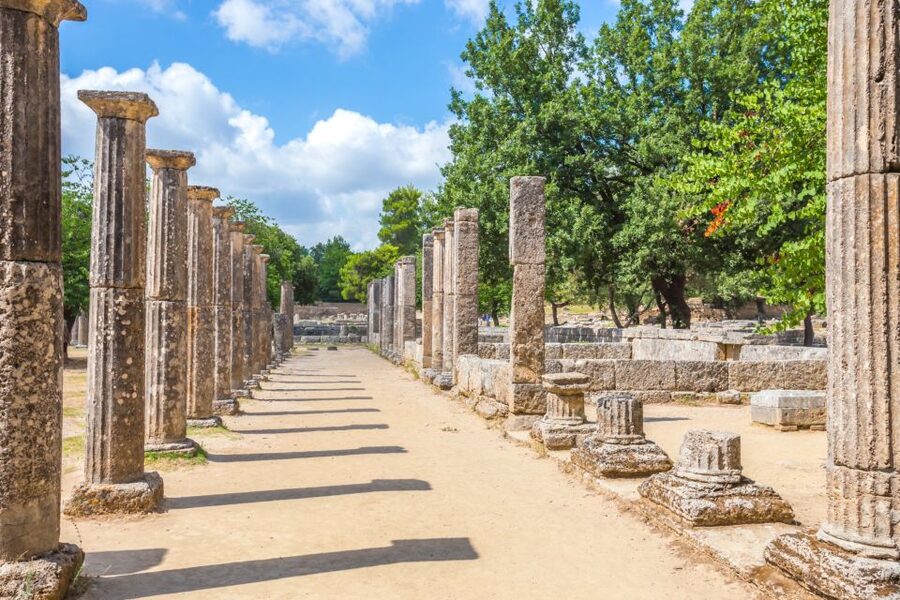
From the Gymnasium, the audio route continues to the Palestra. This was another athletic building, and together the Gymnasium and Palestra show that Olympia was not simply a stadium with a few temples nearby. Athletic training formed a major part of the sanctuary’s identity.
The Palestra is best appreciated with the audio running because the remains can look abstract at first glance. Columns, foundations, and partial walls require a little explanation before their original purpose becomes clear. The narration helps you picture the building as a working place rather than a collection of fallen stones.
The route then introduces the Prytaneion and Philippeion. Each stop adds another piece to Olympia’s civic and ceremonial life. The Prytaneion was connected with officials and sacred duties, while the Philippeion is linked to the Macedonian royal family and its founder, Philip II.
I like this section because it broadens the visit beyond the familiar Olympic Games story. You are not only following athletes toward a stadium. You are seeing a sanctuary shaped by worship, political power, public ceremony, and elite patronage.
The audio’s short format is useful here. Instead of burying you in dates and names, it gives you compact explanations that you can absorb while standing among the remains. If you want a scholarly, highly detailed account of every building, you may want a separate guidebook. For a first visit, the balance is more approachable.
More self guided tours in Greece:
- Athens: Acropolis Ticket with Optional Audio or Live Guide
★ 4.2 · 11,055 reviews - Athens: Cape Sounio & Poseidon Temple Trip with Audio Guide
★ 4.4 · 4,521 reviews - Athens: Acropolis Ticket with Audio Guide
★ 4.0 · 3,575 reviews - From Athens: Delphi Full Day V.R. Audio Guided Tour
★ 4.6 · 3,028 reviews
The Temple of Hera and the religious heart of Olympia
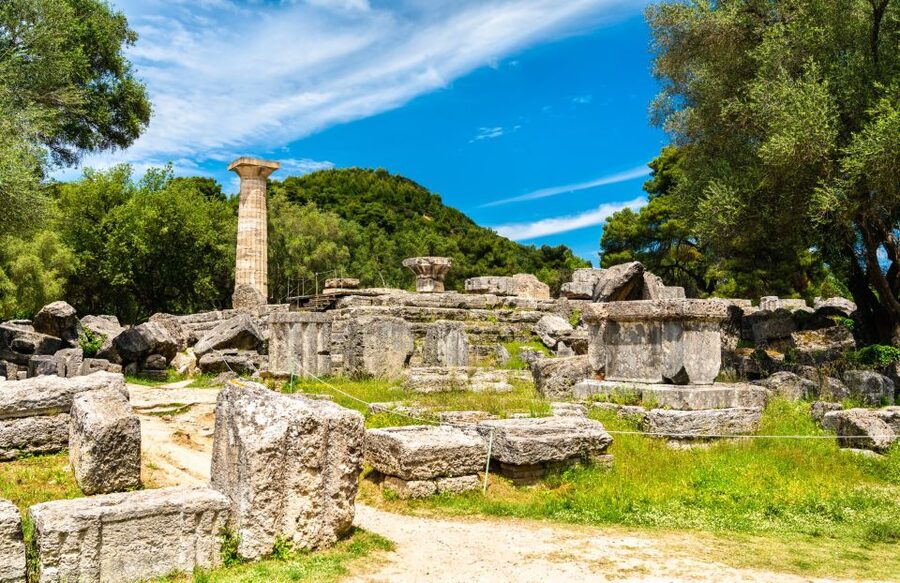
The Temple of Hera is one of the essential stops on the route. Olympia was a religious sanctuary dedicated primarily to Zeus, but Hera’s temple helps show the wider sacred setting and the importance of older traditions at the site.
You will hear the audio explain what you are looking at and guide you onward. The benefit is not just identifying the temple. It is understanding why a large athletic festival took place in a place filled with temples, offerings, ceremonies, and monuments.
The outdoor setting can be harsh. One person specifically wished for more shade from umbrellas or similar cover. Bring a hat and sunscreen, and do not assume that the archaeological site will provide frequent shelter. Comfortable shoes are just as important, since you will be walking over open ground and uneven surfaces.
The route ends at the entrance to the workshop of Pheidias, but that does not mean you must rush through the Temple of Hera or the other stops. You can pause the audio, take photographs, or replay a section. The ticket is valid for one day, and the program can be used again after the visit for review.
The Ancient Stadium and the Olympic setting
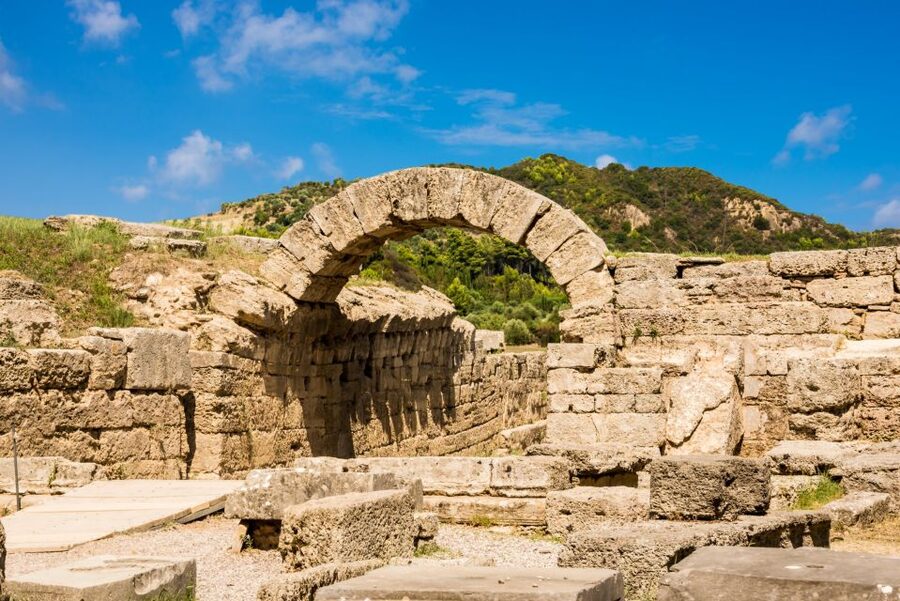
The Ancient Stadium is the stop most people picture before arriving at Olympia. It gives the ancient games a physical setting, rather than leaving them as a modern sporting tradition with an ancient label.
The stadium is also where the scale of the festival becomes easier to imagine. The open racing ground, the surrounding remains, and the route through the sanctuary help connect athletic competition with the religious ceremonies that gave the games their meaning.
The audio guide is particularly useful here because the bare remains do not explain themselves. You need context to understand how the stadium fitted into the wider complex and why visitors came to Olympia from across the Greek world.
Families can get good use from this part of the tour. Two children, aged 12 and 13, were able to access the audio on their own phones and follow the directions through the site. That does not make the visit automatically perfect for every child, but the combination of movement, short narration, and famous Olympic connections can hold younger attention better than a long indoor lecture.
Keep your expectations realistic about the technology. Each person needs access to a compatible smartphone, and the audio tour is not a live commentary delivered to the whole group. If your children share one device, you will need to stay close enough for everyone to hear.
Pheidias workshop and the end of the audio tour
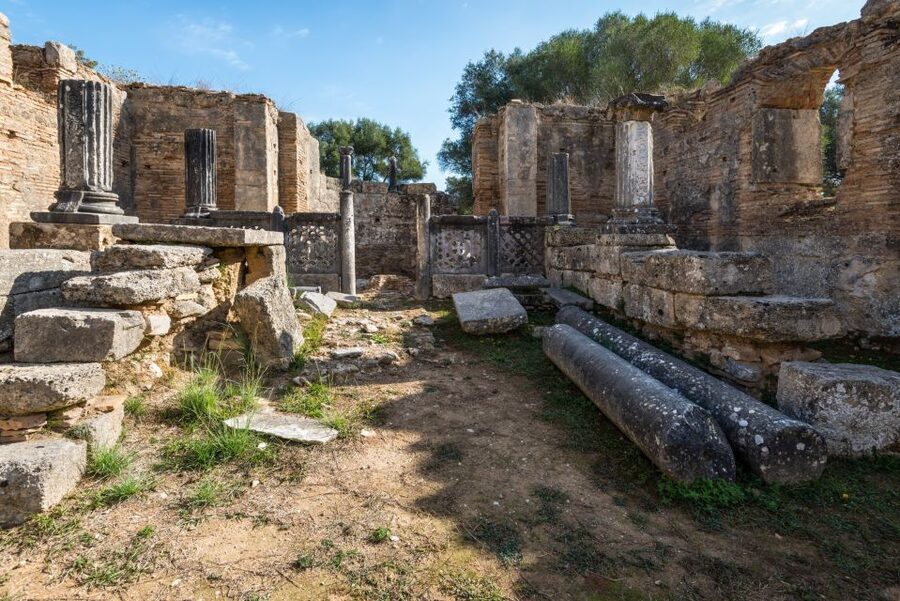
The final stop is the workshop of Pheidias. Pheidias was one of the great sculptors of the ancient Greek world, and the workshop is an unusually direct link between Olympia’s religious buildings and the people who created their sculpture.
Ending here gives the route a satisfying change of focus. You begin with athletic buildings and move through civic and religious spaces before finishing at a place tied to artistic production. The workshop helps you think about Olympia not just as a venue for games, but as a large working sanctuary that required builders, sculptors, priests, officials, and athletes.
The audio tour ends at the entrance to the workshop inside the archaeological site. You can continue looking around after the narration finishes, then visit the museums at the time that suits your schedule. You can also replay the audio later because the content remains available on your phone.
This is one of the better reasons to choose a downloadable tour instead of a single-use spoken presentation. If a name escapes you or you want to revisit the explanation of the Philippeion or Temple of Hera, you can listen again after leaving the site.
The Archaeological Museum: essential indoor context
The Archaeological Museum of Ancient Olympia is included, but its entry is tied to the time slot selected during booking. Pay close attention to that slot when planning the day. The outdoor site is flexible on your chosen date, but the museum visit has the firmer schedule.
The museum adds something the ruins cannot provide: objects and sculptures that make the sanctuary’s art and religious purpose easier to understand. The audio product does not include a separate self-guided audio tour for the museum, so you should not expect the same narrated route indoors.
That omission is worth noting before you buy. You receive the museum ticket, not museum commentary. You can still visit independently, read the displays, and connect what you see with the explanations from the outdoor tour.
One family found the combination of descriptive audio and direct museum access useful on a crowded day. The ticket helped them proceed to the museum entrance and bag checkpoint without spending time sorting out admission on site. Exact entrance procedures can vary, but prebooking is still helpful when you want the day to run on a schedule.
The Ancient Olympic Games Museum
The Ancient Olympic Games Museum is also included and can be entered anytime on the selected date. It provides another angle on the games, complementing the stadium and athletic buildings outdoors.
I would plan this museum around the heat. Visit the ruins earlier or later when possible, then use the museum as a cooler break. Since the ticket allows flexible entry to this museum during the day, you have more freedom than with the Archaeological Museum’s timed admission.
The package works best when you treat Olympia as three linked experiences. The ruins show the physical setting, the Archaeological Museum presents major finds from the sanctuary, and the Ancient Olympic Games Museum focuses on the sporting tradition. Seeing only the stadium leaves out much of the story.
Using the app, audio, and phone correctly
The audio guide is available in English, German, Italian, French, and Spanish. You need an Android phone running version 5.0 or later, or a compatible iPhone. It does not work with Windows Phones, iPhone 5 or 5C and older models, or older iPod Touch and iPad versions listed in the instructions.
The download uses around 100 to 150 MB of storage. Check this before leaving your hotel. A full phone, weak battery, or forgotten password can turn a simple self-guided visit into a frustrating one.
Headphones are recommended, but one person completed the tour using the phone’s speaker. I would still bring headphones, especially if the site is busy or you are visiting with family members who want to listen separately. The activity does not supply a smartphone or headphones.
The route is designed to tell you where to go next, but walk at a comfortable pace. If you move faster than the narration, pause it. If you stop for photographs or a long look at a ruin, use the app controls to move back and forward. A little preparation makes the technology far less noticeable once the visit begins.
Access, heat, and what to carry
Olympia is not a place for large bags. Oversize luggage and large bags are not allowed, so arrive with only what you need. A small day bag is more practical than a suitcase.
Wear shoes suited to walking on uneven ground. A hat and sunscreen are not optional extras in hot weather, since shade is limited across parts of the site. Carry water, although food and drinks are not included in the activity.
Parts of the archaeological site are not wheelchair accessible. The main entrance near the museum includes steps and can create a barrier for people with limited mobility. The information advises people with lesser mobility to use the other entrance, but you should make arrangements before arrival rather than assume every path will be accessible.
People under 18 and visitors with disabilities accompanied by one family member or helper are eligible for free admission under the stated rules. EU citizens aged 18 to 25 are entitled to a 50 percent discount. The supplier does not provide reduced or free tickets, so you must handle eligibility and ticket arrangements carefully before booking.
Who should book this Olympia experience?
I would choose this for independent visitors who want a clear route, historical explanation, and flexible timing. It is also a sensible option for families, since older children can use the audio on their own phones and follow the path without having to stay with a guide holding a flag.
It suits anyone who dislikes large groups or prefers to stop often. You can pause for photographs, slow down at the stadium, or replay the audio later. The five language choices make it useful for many international visitors.
I would look elsewhere if you need transportation, a live expert, museum narration, or help with access. The $41 price is reasonable only if you use the included admissions and value the audio structure. If you plan to see just the stadium and leave, a full combo ticket may not be the best match.
Also remember the non-refundable policy. Check your date, museum time slot, phone compatibility, and transport plan before paying. This is a small amount of preparation, but it protects you from the most likely problems.
Should you book the Olympia audio guide and ticket?
Book it if you want Olympia’s main ruins and both museums in one day, with an easy route and no fixed group schedule. The clear directions, offline content, and short storytelling are the strongest parts, and the audio adds much more meaning to foundations that can otherwise look confusing.
Skip it if you want a live guide, included transport, or a fully narrated museum visit. For the right visitor, $41 buys useful structure and three admissions. Just arrive prepared for sun, walking, and a little phone management, then give Olympia enough time to be more than a quick photograph at the stadium.
FAQ
How long is the Olympia audio tour?
The audio route takes about one hour, although you can spend much longer at the site, museums, and individual stops.
What attractions are included in the ticket?
The ticket includes the archaeological site of Ancient Olympia, the Archaeological Museum of Ancient Olympia, and the Olympia Ancient Olympic Games Museum. It also includes a self-guided audio tour for the archaeological site.
Is there a live guide?
No. This is a self-guided audio tour on your smartphone, with no live guide included.
When can I enter the museums?
The Archaeological Museum entry is for the date and time slot selected during booking. You can enter the archaeological site and the Ancient Olympic Games Museum anytime on the selected date.
Do I need internet access during the visit?
The audio tour includes offline text, narration, and maps. You should download the app and content before visiting.
What phone do I need?
You need an Android smartphone running version 5.0 or later, or a compatible iOS device. The tour is not compatible with Windows Phones, older iPhone models including the iPhone 5 and 5C, or several older iPad, iPad Mini, iPod Touch models listed in the instructions.
Is the site accessible for wheelchair users?
Parts of the site are not wheelchair accessible. The main entrance near the museum has steps, and visitors with limited mobility are advised to use the other entrance.
More Audio Tours in Greece
- Athens: Acropolis Museum Ticket with optional Audio Guide
★ 4.4 · 2,652 reviews - Athens: Acropolis Ticket & Optional Self-Guided Audio Tours
★ 4.1 · 2,542 reviews - Parthenon & Acropolis Museum with Audio or Live Tour Option
★ 4.1 · 2,446 reviews - Crete: Knossos Palace Entry Ticket with Optional Audio Guide
★ 3.9 · 2,251 reviews
Just added around Greece
- Lasithi –Plateau Traditional Vilages★ 5.0 · 40 reviews
- Athens Hotels to Athens Airport Private Departure Transfer★ 5.0 · 40 reviews
- The Palace of Knossos with Skip-the-Line Ticket★ 5.0 · 40 reviews
- Santorini 5 Hour Private Oia Tour & Lunch/Dinner at a Local Farm★ 5.0 · 40 reviews
- Chania Morning Catamaran Cruise with Premium Lunch & Drinks★ 5.0 · 40 reviews
- From Chania: Preveli Palm Beach Day Tour★ 4.3 · 40 reviews
- Private One-way Transfer between Athens International Airport and Athens Hotels★ 4.5 · 40 reviews
- From Thessaloniki: Meteora Small Group Day Trip★ 5.0 · 40 reviews
Museums, compared.

Acropolis, Parthenon & Acropolis Museum Guided Tour
Read our review →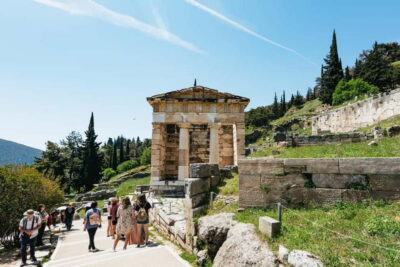
Mythology of Delphi, Museum and Arachova Guided Tour
Read our review →Acropolis, Parthenon & Acropolis Museum Guided Tour
Read our review →
Acropolis monuments & Parthenon Walking Tour with Optional Acropolis Museum
Read our review →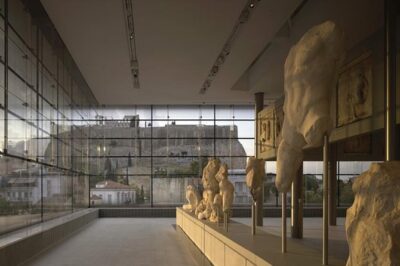
Athens All Included: Acropolis and Museum Guided Tour with Ticket
Read our review →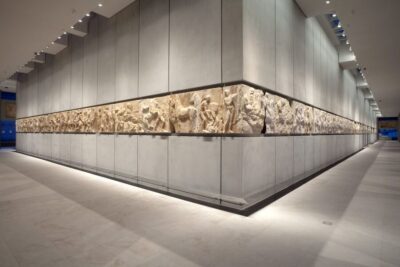
Acropolis Museum Ticket with optional Audio Guide
Read our review →
Small-Group Delphi, Museum & Arachova Day Trip
Read our review →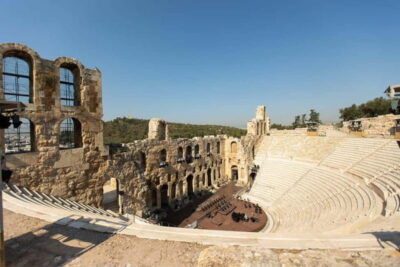
Parthenon & Acropolis Museum with Audio or Live Tour Option
Read our review →Browse the lists this tour appears in