
Reviewed · WINE TOURS
“YAMAS” – Winery tour &wine tasting
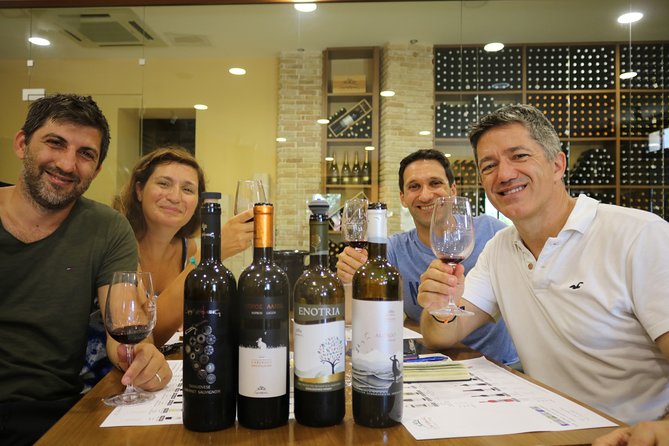
Taste Crete beyond the beach. This 80-minute visit to Douloufakis Winery gives you six estate-made wines, a look at the production area, and a clear introduction to Cretan grapes. I especially like the focus on indigenous varieties such as Vidiano and Liatiko, and I like that the tasting includes both traditional methods and modern winemaking. The main drawback is simple: you must arrange your own transport to Dafnes, and the short visit may feel rushed if you want a long winery tour.
The setting is practical rather than grand, but the experience earns its strong reputation through its hosts. Georgios has impressed many guests with his clear explanations and enthusiasm, while Catarina has been praised for her friendly, engaging approach. The tasting includes Cretan rusks, but cheese and charcuterie are not part of the listed package, so confirm the food options if pairing matters to you.
In This Review
- Key points to know before booking
- Why this winery visit matters in Crete
- Arriving at Douloufakis Winery in Dafnes
- The production area: from grape to bottle
- Six pours in the cellar
- Cretan rusks and the food question
- How the guides shape the experience
- Is $36.20 a fair price?
- Who should book this Crete wine tasting?
- Should you book Douloufakis Winery?
- FAQ
- Where does the wine tasting take place?
- How long does the experience last?
- How many wines are included?
- Which types of wine will I taste?
- Is transportation included?
- Is food included?
- Is the experience offered in English?
- Can I cancel for a full refund?
Key points to know before booking
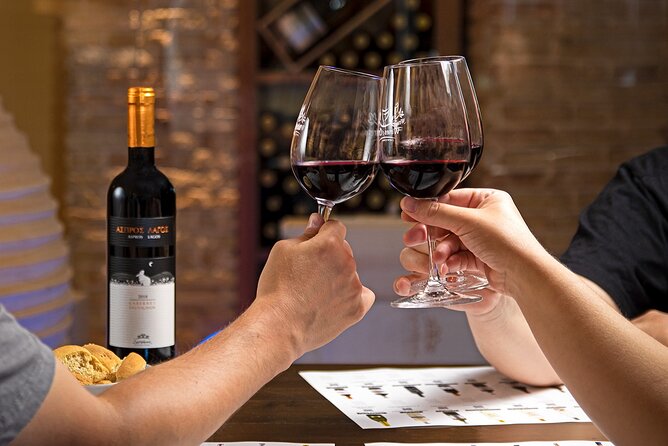
- Six wines in the cellar: You taste six 60 ml pours, including Cretan grapes and international varieties.
- Vidiano and Liatiko take center stage: These indigenous grapes offer a useful introduction to Crete’s own wine identity.
- Production is part of the visit: You tour the winery’s working area and learn about amphora, barrel fermentation, and bottling.
- The tasting lasts about 80 minutes: It is a compact stop, not a full-day wine outing.
- The price is $36.20 per person: With 360 ml of wine, water, rusks, and a guided tour included, the value is solid if you want instruction as well as sampling.
- Dafnes requires your own transport: The meeting and return point is the winery at Dafnes 700 11, Greece.
Why this winery visit matters in Crete
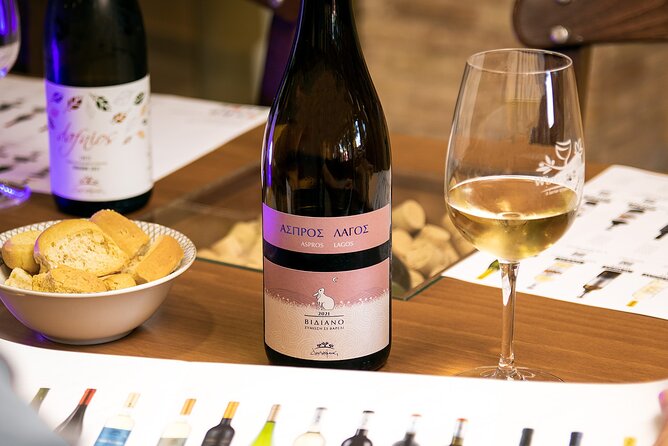
Crete is not only a place for olive oil, grilled meat, and strong coffee. It also has an old grape-growing tradition, and Douloufakis Winery gives you a manageable way to meet that side of the island.
The useful part is the attention to local grapes. Vidiano is presented as an elegant white variety, while Liatiko is an expressive red. You also taste international white and red grapes, which gives you a point of comparison. That matters because you can begin to separate the character of the grape from the style of the winemaker.
I like this format for a first Cretan wine experience. You are not asked to study a long wine list or pretend to recognize every aroma. Instead, the host explains what is in the glass, where it comes from, and how it was made. You can ask questions as you go, then decide which bottles suit your own taste.
Douloufakis is also a useful stop for anyone who has already tasted Greek wine but mostly knows Assyrtiko from Santorini. Crete offers a different set of grapes and a different point of reference. Vidiano and Liatiko help make the island feel like a wine region in its own right, rather than an extension of the better-known Greek islands.
More Food Tours in Crete
- Crete: Sunset or Morning Quad with Local Products Tasting
★ 4.9 · 1,135 reviews - Crete: Quad Safari, Olive Mill with Tasting & Ghost Village
★ 4.9 · 1,004 reviews - From Chania: Olive Oil, Wine, Cheese & Honey Tasting Tour
★ 4.6 · 490 reviews
Arriving at Douloufakis Winery in Dafnes
The experience starts and ends at Douloufakis Winery, Dafnes 700 11. Transportation is not included, so you need to plan the ride yourself. That is the biggest practical issue with the booking.
The information provided does not specify a transfer service, taxi arrangement, or pickup from Heraklion. You should sort out your route before booking, especially if you plan to taste all six wines. Driving yourself may be convenient, but it creates an obvious problem after the tasting. A taxi or organized ride makes more sense if wine is the main reason for the visit.
The winery accepts mobile tickets, and the experience is offered in English. Confirmation arrives when you book, which helps when you are arranging transport around a larger Crete itinerary. The activity averages about 21 days of advance booking, so I would not leave it until the final afternoon of your trip if the timing matters.
The maximum group size is 40 people. That is not a tiny private tasting, and the feel may depend on the number booked for your time slot. A smaller group should make questions easier. A full group could feel more like a formal presentation, though the hosts have been praised for keeping the mood warm and entertaining.
The production area: from grape to bottle
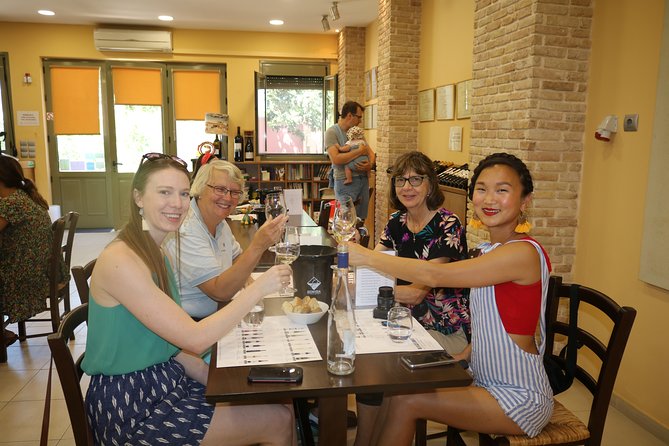
The first main part of the visit is a guided tour of the production area. This gives the tasting some useful context. You are not simply handed six glasses and asked to judge them. You see where the winery’s work happens and learn how the finished wine develops.
The tour explains the production process, including amphora and barrel fermentation. Those details are worth your attention because they show the range of tools used at the winery. Amphora connects the wine to older methods, while barrels bring a different effect in texture and flavor. The point is not that one method is always better. It is that the same grape can produce a different style depending on how it is handled.
One account also describes a look at the bottling plant, calling it a fascinating part of the visit. That detail is useful because bottling is easy to overlook when you think about winemaking. It is the final practical step before the wine reaches a shop, restaurant, or your suitcase.
The production tour may be the most rewarding part for people who already know a little about wine. You can ask how the winery handles fermentation, how local grapes behave, and why a particular wine is made in amphora rather than a barrel. The hosts, especially Georgios, have a reputation for answering questions clearly rather than hiding behind technical language.
The short duration sets a limit. At about 80 minutes, this is an introduction, not an exhaustive study of the winery. If you want vineyards, extended cellar time, or a long technical discussion, you may find the schedule brief. The published experience centers on the production area and cellar, while some individual visits have also included a vineyard portion. Do not assume every departure will have the same extras.
Six pours in the cellar
The tasting takes place in the cellar and includes six estate-crafted labels. Each pour is 60 ml, for a total of 360 ml of wine. That is enough to compare the wines properly without turning a short educational visit into a long drinking session.
The selection includes white and red wines. You should expect a mix of indigenous Cretan grapes and international varieties, rather than six versions of the same style. That range is one of the strongest reasons to book this experience. You get a quick tour through the winery’s approach, from local identity to broader wine styles.
Vidiano is one of the key whites to watch for. It is described as elegant, so pay attention to how it feels beside the international white on the table. Liatiko offers the red counterpart, with a more expressive profile. You do not need advanced tasting skills. The guide shows you how to look at the wine, smell it, taste it, and think about its character.
Georgios has been praised for explaining how to taste wine properly, and Catarina for giving clear information in a friendly way. Those names matter because a wine tasting is only as good as its guide. A bottle can be excellent, but a rushed or vague explanation leaves you with little to remember. Here, the human side is a major part of the appeal.
The tasting portions are generous enough for a serious comparison. They also make the price easier to assess. At $36.20 per person, the package includes six pours, water, Cretan rusks, the guided production tour, and the explanation of local grapes. You are paying for the instruction and access to the winery, not just for 360 ml of wine.
More Wine Tours in Crete
- Crete: Land Rover Safari with Sunset Viewing, Dinner, & Wine
★ 4.9 · 395 reviews - From Chania: Wine and Olive Oil Tasting Tour with Snacks
★ 4.8 · 354 reviews - Crete Wine and Olive Oil Tour
★ 5.0 · 272 reviews - Crete: Full-Day Cretan Wines, Olive Oil, Raki and Food Tour
★ 5.0 · 264 reviews
Cretan rusks and the food question

The listed food is simple: Cretan rusks. These dry, crisp breads are a traditional island staple and a sensible match for wine. They give you something to eat between pours without taking attention away from the wines.
Do not confuse the included rusks with a full meal. The standard details do not include cheese, meat, or a full tasting menu. Several accounts describe charcuterie boards, cheeses, smoked meats, fava beans, honey, and other local foods, but those additions are not listed as part of the basic package.
That distinction is important when you compare prices. If you want a wine-and-food experience, ask the winery about available add-ons before you arrive. One particularly useful tip is to request the charcuterie option if it is available for your visit. Local food can make the tasting more satisfying, but you should not assume it is included in the $36.20 price.
The food pairing also helps you judge the wines in a more realistic way. Wine rarely exists alone on a Cretan table. Rusks, cheese, smoked meat, beans, and honey can change how a wine tastes. Still, the basic experience remains wine focused, which suits anyone who wants education rather than lunch.
How the guides shape the experience
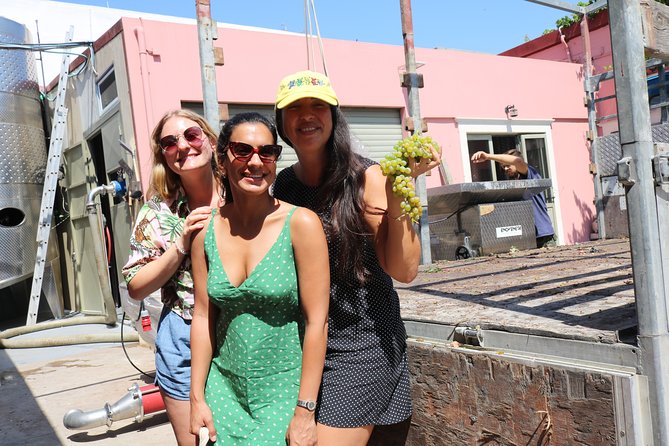
The strongest praise is directed at the hosts. Georgios is described as passionate about Cretan wine and its history, while Catarina is noted for her warmth, clarity, and ability to keep the tasting interesting. That combination is important for beginners.
You can ask about grape types, fermentation, aromas, and the steps between harvest and bottling. The explanations are presented in English, and the host’s role is not limited to pouring. You learn how to taste and why the wines differ.
The mood also seems to be part of the experience. Words such as warm, friendly, charismatic, and entertaining come up repeatedly in the descriptions of the visit. That suggests a relaxed presentation rather than a stiff lecture. If you are new to wine, that makes it easier to ask basic questions without feeling out of place.
Experienced wine drinkers should find enough variety to keep the tasting worthwhile. The winery works with local and international grapes, and the production discussion covers amphora and barrel methods. One couple who had visited wineries in several countries considered this among their best winery stops. That is a strong endorsement, though your enjoyment will still depend on how much time you want to spend on technical detail.
Is $36.20 a fair price?
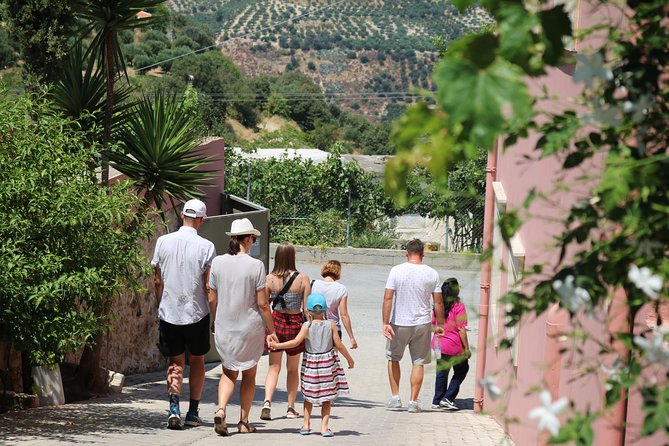
I consider the price reasonable for a guided winery visit in Crete. You receive six 60 ml pours, water, rusks, a production tour, and a host who explains the wines and winemaking process. The total wine volume is substantial for a tasting, and the experience is more useful than a simple bar flight.
The value improves if you care about local grapes. Vidiano and Liatiko are not just names on a menu. They give you a better sense of what makes Cretan wine different. If you only want a quick drink, the cost may feel high. If you want to understand what you are drinking and perhaps buy bottles afterward, it is easier to justify.
Several people have purchased wines after the tasting. That is a good reason to keep some room in your luggage, though the available information does not specify shipping options or prices. The experience can help you make a smarter purchase because you have tasted several styles instead of choosing a bottle at random.
The package is less attractive if you expect a full meal, extensive vineyard time, or included transport. Those are not part of the clearly stated offer. Think of it as a compact, guided winery lesson with six wines, not a whole afternoon of food and countryside touring.
Who should book this Crete wine tasting?

I would recommend it to you if you are staying near Heraklion or arranging a visit to Dafnes and want a focused introduction to Cretan wine. It suits couples, small groups of friends, and anyone who enjoys learning how local products are made.
It is also a good choice for people who normally feel uncertain at wine tastings. The host explains the process and gives you a way to taste rather than expecting you to arrive with expertise. The English-language format makes the presentation accessible to an international audience.
Food lovers should consider it, but only after checking whether a charcuterie or cheese option can be added. The included rusks are traditional and useful, yet they are not a replacement for a meal.
You may want a different activity if you dislike structured tastings, cannot arrange transport, or want a private, slow-paced winery day. A group of up to 40 can be larger than some wine enthusiasts prefer. The 80-minute format is efficient, but it leaves limited time for lingering.
The experience is generally accessible to most people, and service animals are allowed. Confirmation is provided at booking. Free cancellation is available up to 24 hours before the start time. Changes or cancellations inside that window are not accepted, and a minimum number of participants is required for the activity to run.
Should you book Douloufakis Winery?
Yes, if you want an affordable and well-organized introduction to Cretan wine rather than a grand food tour. The strongest reasons are the six-wine tasting, the emphasis on Vidiano and Liatiko, and the quality of the explanations from guides such as Georgios and Catarina.
Before paying, solve the transport question and ask about food add-ons if you want more than rusks. Book ahead if your schedule is tight, since the experience is often reserved about three weeks in advance.
I would choose this visit for a first taste of Crete’s wine culture, especially if you value clear teaching and a friendly welcome. I would skip it only if you expect transportation, a full meal, or a long private tour to be included.
FAQ
Where does the wine tasting take place?
It takes place at Douloufakis Winery in Dafnes 700 11, Greece. The activity begins and ends at the winery meeting point.
How long does the experience last?
The visit lasts approximately 1 hour and 20 minutes.
How many wines are included?
Six wines are included in the standard tasting. Each serving is 60 ml.
Which types of wine will I taste?
The selection includes white and red wines, indigenous Cretan varieties such as Vidiano and Liatiko, and international grape varieties.
Is transportation included?
No. You are responsible for getting to and from Douloufakis Winery.
Is food included?
Cretan rusks and water are included. Cheese, charcuterie, and other larger food pairings are not listed as part of the standard package.
Is the experience offered in English?
Yes. The experience is offered in English, and mobile tickets are accepted.
Can I cancel for a full refund?
Yes, if you cancel at least 24 hours before the experience start time. Cancellations or changes made less than 24 hours in advance are not accepted for a refund.
Just added around Crete
- Lasithi –Plateau Traditional Vilages★ 5.0 · 40 reviews
- The Palace of Knossos with Skip-the-Line Ticket★ 5.0 · 40 reviews
- From Chania: Preveli Palm Beach Day Tour★ 4.3 · 40 reviews
- Chania Morning Catamaran Cruise with Premium Lunch & Drinks★ 5.0 · 40 reviews
- Private South Crete Full-Day Tour-Spili, Kourtaliotiko & Preveli★ 5.0 · 40 reviews
- Stand-up Paddleboard Lazareta Experience Chania Crete (tour)★ 5.0 · 41 reviews
- Kissamos: Balos and Gramvousa Private Sailing Trip with Meal★ 4.8 · 41 reviews
- Knossos & Archaeological Museum Shared Guided Tour from Chania★ 5.0 · 41 reviews
Wine Tours, compared.
Santorini Wine Adventure with 12 Wine Tastings, Tapas and Sunset
Read our review →

Santorini Wine Stories: Sunset Tour with Tasting & Dinner
Read our review →
Classic Cooking Class with Market Visit and Wine
Read our review →
Food Market Visit and Cooking Class with Wine
Read our review →
Swimming Cruise with Lunch, Wine & Live DJ on Board
Read our review →
Greek Cuisine Cooking Class in Santorini with Recipes and Wine
Read our review →
Santorini Highlights Small-Group Tour with Wine Tasting option
Read our review →Browse the lists this tour appears in