
Reviewed · ANCIENT CORINTH TOURS
The Apostle Paul’s Missionary Journey in Athens and Corinth
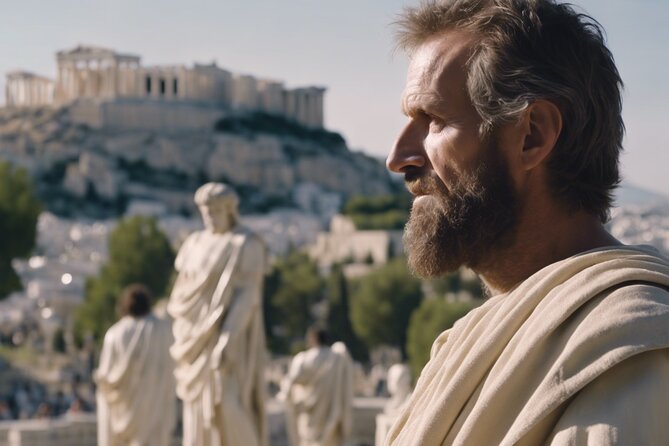
Walk through Paul’s Athens and Corinth. This private day trip links the Apostle Paul’s preaching in Athens with the places tied to his work in Corinth, while also giving you a useful look at Greek archaeology and classical life. I especially like the door-to-door transport and the chance to travel in a small private group, with Wi-Fi and water included. The main drawback is a long day with rough, uneven ground and extra entrance fees at some archaeological sites.
I also like the way the route moves beyond the famous Acropolis area. You visit the Agora, Areopagus, a church linked to Dionysius the Areopagite, the port of Kenchreai, Ancient Corinth, and Acrocorinth. Guides such as Ruslan, Yannis, Katerina, Kostas, George, Fortis, and Karas have been praised for clear explanations and thoughtful help, though your assigned guide may differ.
In This Review
- Key points to know before booking
- Why this Athens to Corinth route works
- Beginning where Paul debated in the Ancient Agora
- The Areopagus and Paul’s Athenian audience
- Saint Dionysius and Athens’ early Christian story
- Crossing the Corinth Canal
- Kenchreai, the port where the Corinth mission began
- Ancient Corinth and the Bema
- The Museum of Ancient Corinth fills in the missing pieces
- Acrocorinth brings the biggest views
- What $200.25 per person really buys
- Who should book this private Pauline tour
- Should you book it?
- FAQ
- How long does the tour take?
- Where can pickup take place?
- How will I identify the driver at the port?
- Is this a private tour?
- What type of vehicle is used?
- Is the tour offered in English?
- Are entrance fees included?
- Is lunch included?
- What should I wear or bring?
- Can I cancel for a full refund?
Key points to know before booking
- Paul’s Athens comes first: The Ancient Agora and Areopagus help you picture his public debates and speech to Athenian thinkers.
- Kenchreai adds a rare port-side connection: This is identified as the place where Paul arrived in Corinth in 51 A.D.
- Private transport makes the long route easier: Pickup and drop-off are offered at Athens hotels or the port, with airport pickup available for an extra charge.
- Acrocorinth is the physical high point: The views are impressive, but the climb and rough footing call for sturdy shoes.
- You pay about $200.25 per person: That price is easier to justify for a small private group than for a larger party of one or two.
- Plan for eight to nine hours: This is a full day, not a quick shore excursion, and the route works best when you want history with a biblical focus.
Why this Athens to Corinth route works
The tour is built around a simple idea: follow Paul through the places where his Greek mission took shape. That gives the day a clear thread, but the experience is not limited to church history. You also see political meeting places, marketplaces, ports, temples, Roman remains, and a fortified hilltop.
I like this approach because Paul did not work in isolated religious settings. He moved through cities shaped by trade, debate, Roman rule, local cults, and social pressure. The Agora and Corinthian marketplace help put his letters and preaching into everyday settings.
The day is private, so your group travels alone rather than joining a large coach. For one to four people, the company uses a sedan. That is a practical detail: you get a more personal ride, but a sedan gives you less room than a minivan if you are carrying bulky luggage.
Your English-speaking driver provides historical commentary, but the tour does not include a licensed guide inside the archaeological sites. That distinction matters. You should expect useful interpretation from the driver, yet not necessarily the same formal site guiding you would receive from an archaeologist or licensed guide. Past guides have included Ruslan, Yannis, Katerina, Kostas, George, Fortis, and Karas, with Ruslan receiving especially warm praise for his care, flexibility, and explanations.
More Ancient Corinth trips:
- From Athens: Ancient Corinth Day Trip with Canal & VR Guide
★ 4.6 · 1,073 reviews - Private Biblical Tour Ancient Corinth & Isthmus Canal from Athens
★ 5.0 · 762 reviews - Athens: Ancient Corinth & Nafplio Full Day Trip with Swim
★ 4.8 · 523 reviews
Beginning where Paul debated in the Ancient Agora
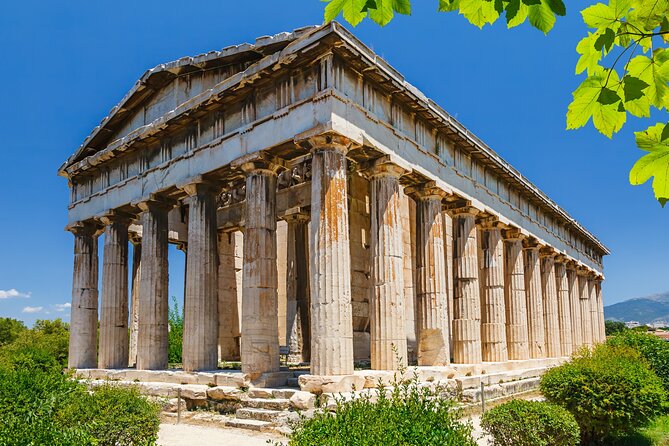
The Ancient Agora is a strong opening because it introduces Athens as a working city rather than just a collection of marble monuments. For about an hour, you look across the former center of politics, commerce, social life, and religion.
This is where Paul is associated with meeting philosophers and other thinkers. The value of the stop comes from imagining the setting as a public forum filled with argument and exchange, not from seeing a single monument directly tied to him.
You should allow time for uneven surfaces and outdoor walking. Admission is not included, so budget for the archaeological entrance fee. The site rewards visitors who enjoy context. If you want only a quick photograph of a famous ruin, the stop may feel slow. If you want to understand how Paul addressed a city shaped by competing ideas, it earns its place.
The nearby Temple of Hephaistos is also part of the visual experience around the Agora. Past commentary has included mythology, classical history, and biblical material, which helps keep the stop from becoming a narrow sermon or a dry list of dates.
The Areopagus and Paul’s Athenian audience
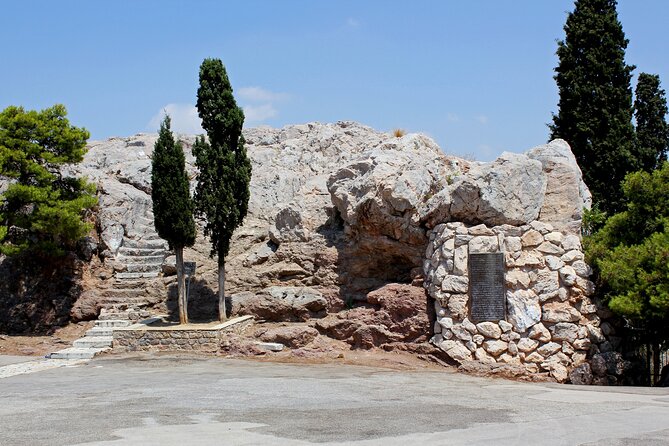
The Areopagus takes about 30 minutes and costs nothing to enter. This bare marble hill sits just northwest of the Acropolis and offers a direct connection to Paul’s encounter with Athens’ intellectual world.
The hill served as a judicial and political meeting place. It was also associated with debate and public discussion. Here, Paul presented his message before a council described as having 100 members, including philosophers, scholars, and former officials.
The site itself is simple. You will not find a grand building waiting at the top. Its importance comes from the view, the setting, and the conversation it prompts about how Paul spoke to people who already had their own religious and philosophical traditions.
Wear shoes with a firm sole. Smooth rock and uneven footing can make the short visit awkward in sandals. The stop is especially useful if your guide explains the setting before giving you time to look around. One strength of this private format is that you can ask questions without holding up a busload of people.
Saint Dionysius and Athens’ early Christian story
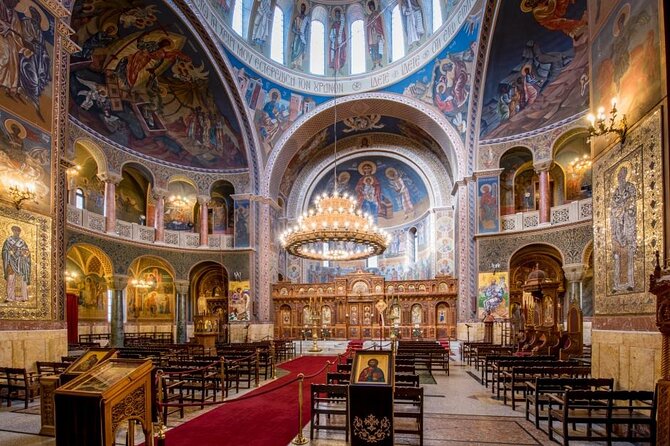
The Church of Saint Dionysius the Areopagite provides a change of pace after the open-air ruins. Located on Skoufa Street in the Kolonaki district, the church is dedicated to Athens’ patron saint.
According to the tradition presented on the tour, Dionysius was converted by Paul and later became the city’s first bishop. The 20-minute visit links the ancient debate on the Areopagus with the early Christian community that followed.
Admission is free. This is a brief stop, so you should not expect an extended church service or a long interior visit. Its purpose is symbolic and historical: it connects one of Paul’s Athenian listeners with the later Christian identity of the city.
The route may also include quick views or photo stops around Athens. Past departures have included the Academy, the University, the National Library, and the Olympic Stadium, although these are not listed as guaranteed stops in the core schedule. Treat them as possible additions rather than promises.
More things to do in Athens:
- Athens: Acropolis & up to 5 Archaeological Sites Combo Pass
★ 4.4 · 12,619 reviews - Athens: Acropolis Ticket with Optional Audio or Live Guide
★ 4.2 · 11,055 reviews - Athens: Acropolis, Parthenon & Acropolis Museum Guided Tour
★ 4.8 · 9,316 reviews - Athens: Cape Sounion & Poseidon Temple Sunset Half-Day Trip
★ 4.8 · 8,241 reviews
Crossing the Corinth Canal
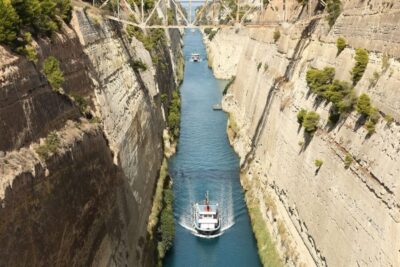
The drive toward Corinth changes the rhythm of the day. After Athens’ dense urban history, the Corinth Canal offers a short outdoor pause and a striking piece of modern engineering.
The canal cuts through the Isthmus of Corinth, linking the Gulf of Corinth with the Saronic Gulf. It separates the Peloponnese from mainland Greece, so the peninsula is effectively made into an island.
You spend about 20 minutes here, with free admission. The canal was built long after Paul’s lifetime, so it is not a biblical site. Its value is geographic. It shows why Corinth mattered as a passage between regions and why control of this narrow strip of land carried such weight.
Do not confuse this stop with Ancient Corinth. The canal is a scenic and engineering break along the route. Ancient Corinth provides the main archaeological and Pauline material later in the day.
Kenchreai, the port where the Corinth mission began
Kenchreai, also spelled Kechrees, was Corinth’s eastern port. This short 20-minute stop is one of the most distinctive parts of the experience because it takes you away from the better-known ruins and toward the maritime world that supported Corinth.
The site once handled trade and travel, especially during the Roman period. Much of the port is submerged or reduced to ruins, but you can still see traces of storerooms, breakwaters, a nymphaeum, sanctuaries, and a fourth-century A.D. Christian basilica.
The Pauline connection is direct in the tour’s historical account: Paul arrived here in 51 A.D. to begin his mission in Corinth. That detail helps you picture his movement through the region. He did not simply appear at the city’s marketplace. He came through a working port used by merchants, sailors, and other visitors.
There is no admission charge listed for the stop. Because the remains are scattered and less complete than those at Ancient Corinth, your guide’s explanation matters a great deal. I would treat Kenchreai as a place for atmosphere and historical connection rather than a major ruin complex.
Ancient Corinth and the Bema
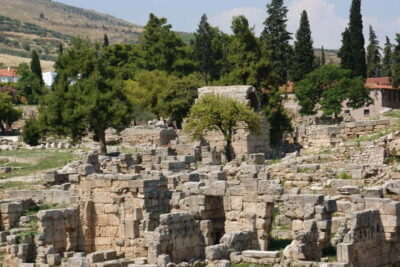
Ancient Corinth is the central stop for most people booking this tour. You spend about an hour among the remains of one of the classical world’s most powerful and prosperous cities.
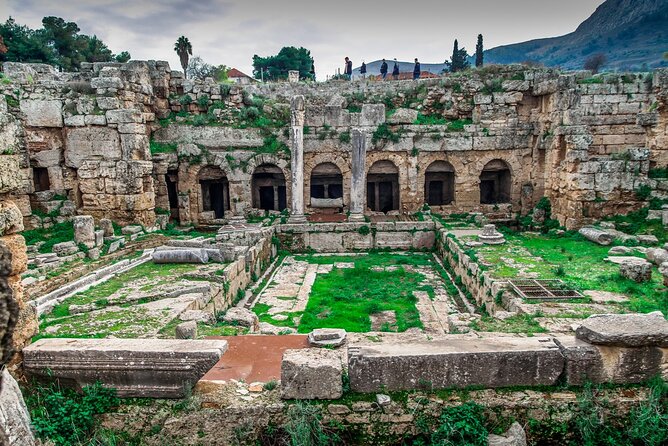
The Agora gives you a sense of the city’s daily activity. This was not only a backdrop for famous events. It was a place of business, movement, civic life, and public contact. When you stand among its ruins, Paul’s letters to the Corinthians feel connected to a real city with real pressures and routines.
The Bema is the key Pauline site. This raised platform in the middle of the city is associated with Paul’s address to the local community and his appearance before the Roman proconsul. It gives the biblical story a specific physical setting, even as you should remember that some historical associations are matters of tradition and interpretation.
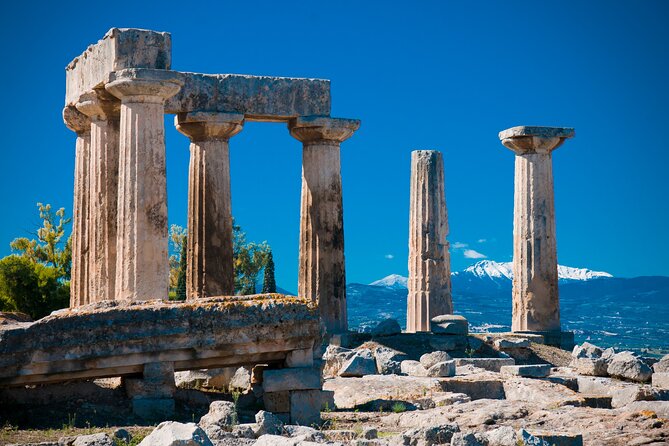
The Temple of Apollo provides the ancient religious counterpoint. Its surviving columns recall Corinth’s older pagan identity and the many religious systems Paul encountered. That contrast is one of the tour’s strongest features. You see Christian history not in isolation, but beside Greek and Roman beliefs, civic power, and public life.
Admission is not included. If the site is important to you, ask at booking or before departure which current entrance charges apply. Fees can change, and the general inclusions specifically exclude archaeological admissions and museum fees.
The ground is rough in places. One past participant described the day as full but rewarding and specifically advised comfortable shoes. That is good advice. The site is not suited to hurried walking in flimsy footwear.
The Museum of Ancient Corinth fills in the missing pieces
The Archaeological Museum of Corinth takes about 45 minutes. It is a useful follow-up to the outdoor ruins because objects can explain daily life in ways that broken walls cannot.
The museum was established in 1932 to protect finds from the surrounding area. Its displays cover prehistoric material, objects from the Sanctuary of Asklepios, religious practice, art, and ordinary life.
The schedule identifies admission here as free, while the tour conditions also say entrance fees are not included. Because those details do not fully match, confirm the current admission arrangement when you book. In either case, the museum is a valuable part of the route rather than a filler stop.
I like museums after archaeological sites because they sharpen your eye. After seeing the Agora and Temple of Apollo, you can better understand the objects that once belonged to homes, sanctuaries, and public spaces. The visit is short enough to keep the day moving, but long enough for a useful look.
Acrocorinth brings the biggest views
Acrocorinth is the final scheduled stop and the most demanding one physically. The fortified hill served as Corinth’s defensive acropolis and religious center. It also housed the Temple of Aphrodite, which tradition says had as many as 1,000 priestesses.
The 30-minute visit is brief for such a large hilltop complex. You may see only part of the ruins, depending on walking speed, weather, and how much time the group has already spent elsewhere. The panoramic views are a major reward, but the ascent and uneven ground can be tiring after a full day.
One past account described hiking Acrocorinth as a highlight and praised the views from the top. Another warned that the rough ground is not ideal for people with mobility problems. Take both points seriously. You do not need to be an experienced hiker to appreciate the site, but you should be comfortable walking on irregular surfaces.
Some departures have included lunch at Taverna Kastro near Acrocorinth. Lunch is not included in the tour price, and the restaurant stop is not guaranteed in the listed schedule. Still, the possibility is useful to know. One guide arranged a local meal and helped a couple choose food outside the main tourist pattern. If an authentic Greek lunch matters to you, ask whether time allows it and plan to pay separately.
What $200.25 per person really buys
At $200.25 per person, this is not the cheapest way to reach Corinth. You are paying for a private vehicle, hotel or port pickup, a full day of driving, bottled water, Wi-Fi, and a driver who provides historical commentary in English.
The value improves sharply for a group of three or four. A private sedan lets you avoid coordinating with strangers, and you can ask questions or adjust the pace within reason. For a couple, the cost is harder to justify unless the personal attention and door-to-door service matter more to you than saving money.
The price does not include archaeological entrance fees, a licensed guide inside the sites, lunch, or airport pickup. Airport collection costs extra. These are not minor details, so include them in your budget before booking.
The schedule is usually eight to nine hours. Pickup from an Athens hotel or the port removes a major hassle, especially on a cruise day. At the port, the driver waits in the arrival area with a sign bearing your name. At a hotel or apartment, the driver waits outside.
Complimentary Wi-Fi is useful during the long drive, though the main benefit is simply having someone else handle the road. Bottled water is a thoughtful inclusion in Greece’s hot, sunny weather.
Who should book this private Pauline tour
I would choose this experience if you want biblical sites explained within Greek and Roman history. It suits church groups, couples, families, and small parties who prefer a private day rather than a fixed large-group excursion.
It is also a good choice for cruise passengers because port pickup and drop-off are offered. Still, you should allow enough time before your ship’s departure and confirm the day’s timing directly with the operator.
You should think twice if you dislike long drives, outdoor ruins, or a tightly packed schedule. The tour covers a lot of ground. Mobility limitations may make the Areopagus, Ancient Corinth, and especially Acrocorinth difficult.
Bring comfortable walking shoes, a hat, sunscreen, and water-friendly clothing for the heat. A child seat is available upon request. Most people can participate, and no health restrictions are listed, but the uneven ground remains the practical concern.
Free cancellation is available until 24 hours before the start time. Changes or cancellations inside that window are not accepted, and poor weather can lead to a rescheduled date or full refund.
Should you book it?
Book this tour if you want to connect Paul’s mission with the actual civic, religious, and commercial world around him. The private format, door-to-door transport, and strong guide attention make the full-day price easier to accept, especially for three or four people.
I would not book it simply to collect quick photographs. The day is long, admissions are extra, and several stops depend on walking over uneven ground. But if the Areopagus, Kenchreai, the Corinthian Bema, and Acrocorinth all mean something to you, this route gives those places a clear human story. It is a thoughtful way to move beyond central Athens and see why Corinth mattered so much to Paul’s work.
FAQ
How long does the tour take?
The experience lasts approximately eight to nine hours.
Where can pickup take place?
Pickup and drop-off are offered at Athens hotels or apartments and at the port. Airport pickup is available for an additional cost.
How will I identify the driver at the port?
The driver waits in the arrival area holding a signboard with your name.
Is this a private tour?
Yes. Only your group participates, rather than joining a shared group.
What type of vehicle is used?
For groups of one to four people, the company uses a sedan. The vehicle is air-conditioned.
Is the tour offered in English?
Yes. The tour includes an English-speaking driver with historical knowledge.
Are entrance fees included?
No. Entrance fees to archaeological sites and museums are not included. The schedule identifies some stops as free, but you should confirm current charges before departure.
Is lunch included?
No. Lunch is not included. Some past departures have included an optional local restaurant stop, but you pay for that meal separately.
What should I wear or bring?
Wear comfortable shoes for uneven ground and walking. A hat and sunscreen are recommended because the weather can be hot and sunny. Bottled water is included.
Can I cancel for a full refund?
You can cancel at least 24 hours before the experience starts for a full refund. Cancellations or changes made less than 24 hours in advance are not accepted for a refund.
Just added around Athens
- Athens Hotels to Athens Airport Private Departure Transfer★ 5.0 · 40 reviews
- Private One-way Transfer between Athens International Airport and Athens Hotels★ 4.5 · 40 reviews
- Athens: Acropolis Museum Ticket with Self-Guided Audio tour App★ 3.5 · 40 reviews
- From Athens: Meteora Train Trip with Overnight Stay★ 4.8 · 40 reviews
- Athens Photography Tour★ 5.0 · 40 reviews
- Athens: Acropolis Visit and City Night Tour★ 4.7 · 40 reviews
- Delphi Full Day Private Trip From Athens With Lunch Overlooking the Sea★ 5.0 · 40 reviews
- Acropolis & Plaka Neighbourhood Private Tour with Licensed Expert★ 5.0 · 40 reviews
Ancient Corinth Tours, compared.
Ancient Corinth Day Trip with Canal & VR Guide
Read our review →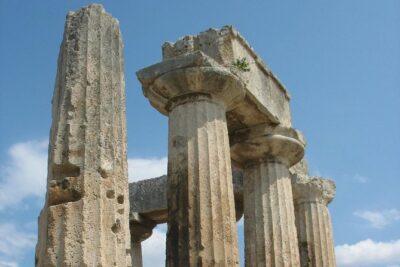
Private Biblical Tour Ancient Corinth & Isthmus Canal from Athens
Read our review →
Ancient Corinth & Nafplio Full Day Trip with Swim
Read our review →
Private Tour of Apostle Paul’s Footsteps in Ancient Corinth
Read our review →
Corinth Half-Day Trip from Athens with Entrance Tickets
Read our review →
Browse the lists this tour appears in