
Reviewed · OLIVE OIL TASTINGS
Rethymno: Olive Oil Tasting with Cretan Food Pairing
Olive oil tastes different under an olive tree. This three-hour outing from Rethymno combines a quiet walk through a 2,000-year-old olive grove with four olive oil tastings, a four-course Cretan food pairing, and a friendly lesson led by Aspassia. I especially like the small group of no more than eight people and the way the tasting turns a common kitchen ingredient into something you can actually understand. The main drawback is the meeting point: it can be tricky to find, and you need to arrange your own transfer to the grove.
I also like that this is more than a meal in a pretty setting. You learn how to taste, buy, store, cook, and fry olive oil, then test those ideas with food. Bring insect repellent, even outside the height of summer. Mosquitoes have been a real nuisance for some people during the food portion.
In This Review
- Key Points at a Glance
- What This Rethymno Olive Oil Experience Is Really Like
- The Walk Through the Ancient Olive Grove
- How the Four Olive Oils Are Tasted
- The Four-Course Cretan Food Pairing
- Cretan Olive Oil Culture Beyond the Tasting Table
- Aspassia and the Small-Group Format
- Is $107 a Good Value?
- Finding the Meeting Point and Planning Your Visit
- Who Will Enjoy This Olive Oil Tasting Most?
- Should You Book the Rethymno Olive Oil Tasting?
- FAQ
- Where does the olive oil tasting begin?
- Where does the activity end?
- How long does the experience last?
- How many olive oils will I taste?
- Is food included?
- Are drinks included?
- Is transportation included?
- What languages are available?
- Is the activity wheelchair accessible?
- What should I bring?
Key Points at a Glance
- Four oils, four food pairings: Compare different flavors and see how the same oil can work well with one food but poorly with another.
- A 2,000-year-old grove: Walk among ancient trees and hear about olive oil in Cretan culture, myth, farming, and daily life.
- A small group of eight: The setting and format suit questions, conversation, and a relaxed pace.
- Aspassia leads the experience: She is warm, clear, and well informed about olive oil and Cretan traditions.
- A practical kitchen lesson: You receive advice on choosing, preserving, cooking, and frying with olive oil.
- Plan your arrival carefully: Meet in front of the Valide Cooking Activities Building, then drive to the grove. Requested transfers cost extra.
What This Rethymno Olive Oil Experience Is Really Like
This is an out-of-town food activity rather than a standard Rethymno sightseeing tour. You begin in front of the Valide Cooking Activities Building, where your guide meets you before driving directly to the olive grove. The activity ends back at that same meeting point.
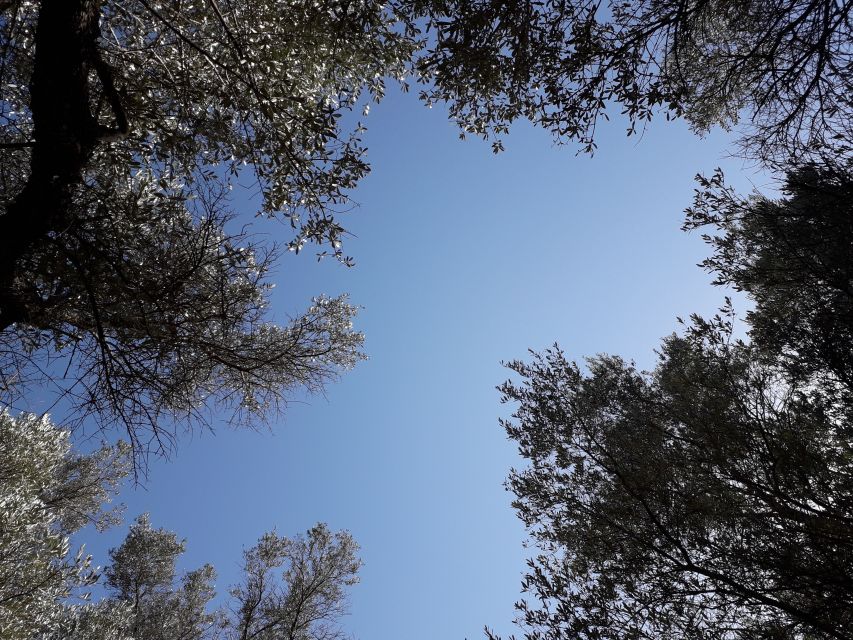
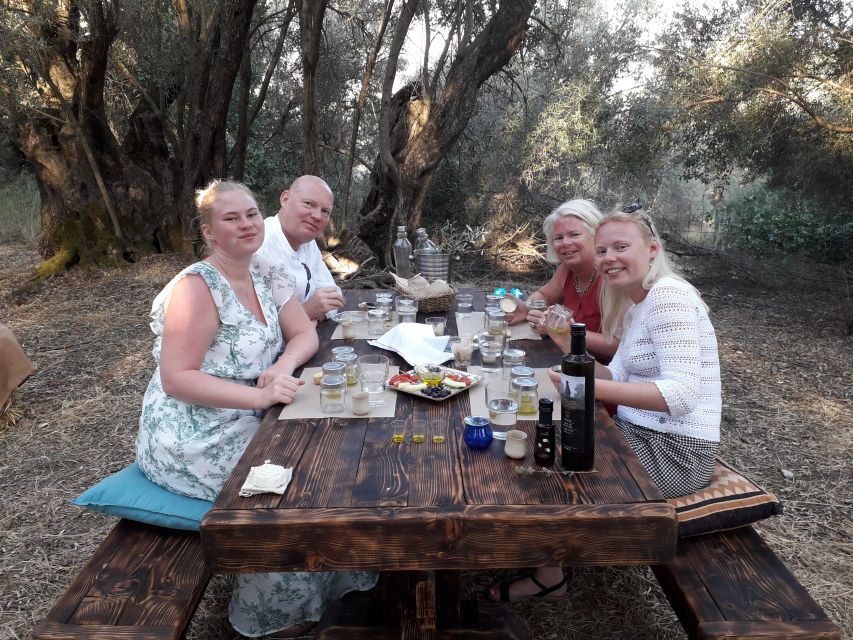
The grove provides much of the pleasure. Instead of sitting inside a tasting room, you spend the experience beneath olive trees, with the sounds and smells of the countryside around you. The setting is peaceful, and that slower pace fits the subject. Olive oil is tied to farming, seasons, family meals, and local customs, so learning about it beside the trees makes more sense than hearing the same lesson in a city restaurant.
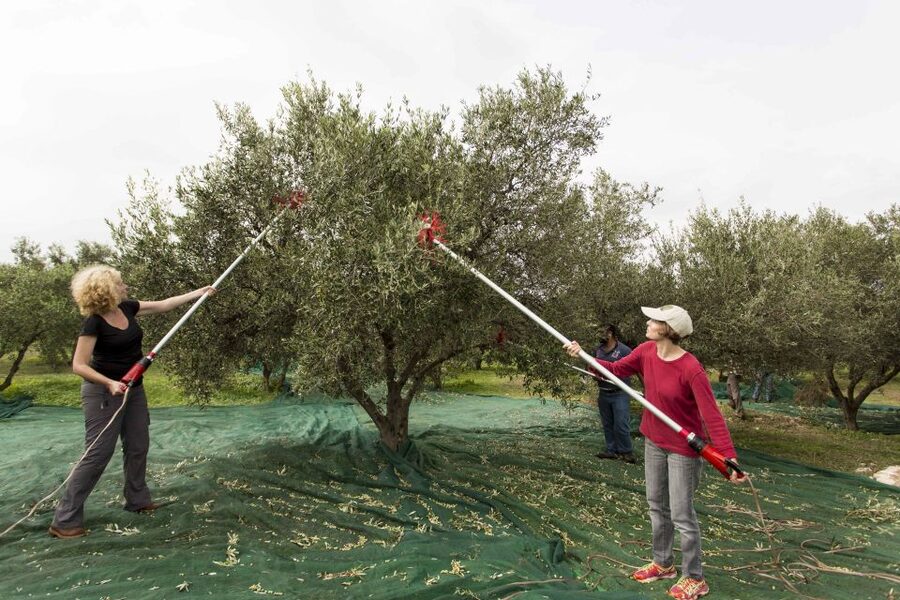
The grove is described as a monumental site with trees dating back around 2,000 years. You also walk through areas such as the holy Gethsemane Garden, where the focus turns to Cretan stories, religious connections, and the role of olives across the centuries. You should not expect a formal archaeological tour. The point is to connect the trees, the food, and the island’s long olive-growing tradition.
More Food Tours in Crete
- Crete: Sunset or Morning Quad with Local Products Tasting
★ 4.9 · 1,135 reviews - Crete: Quad Safari, Olive Mill with Tasting & Ghost Village
★ 4.9 · 1,004 reviews - From Chania: Olive Oil, Wine, Cheese & Honey Tasting Tour
★ 4.6 · 490 reviews
The Walk Through the Ancient Olive Grove
The walking portion is gentle and tied to the grove itself. You learn about olive trees, olives, harvesting, and the broad steps involved in making oil. This gives you useful context before the tasting begins.
The best part is the sense of place. You are not only hearing that olive oil matters in Crete. You are sitting among the trees that help explain why it matters. The setting has also included sheep, goats, and friendly kittens, adding a bit of everyday farm life to the visit.
Still, keep the expectations sensible. One person felt the explanation of actual extraction methods was lighter than expected and wanted more detail about what happens after harvest. The activity does cover harvesting and extraction, but this is primarily a tasting and food pairing, not a full technical tour of an olive press.
For comfort, wear shoes that can handle an uneven outdoor setting. A sun hat is useful, even under shade, and a light jacket is worth packing because the activity may run into a cooler evening. Insect repellent is the most important practical extra. Mosquitoes have caused problems even in mid-October.
How the Four Olive Oils Are Tasted
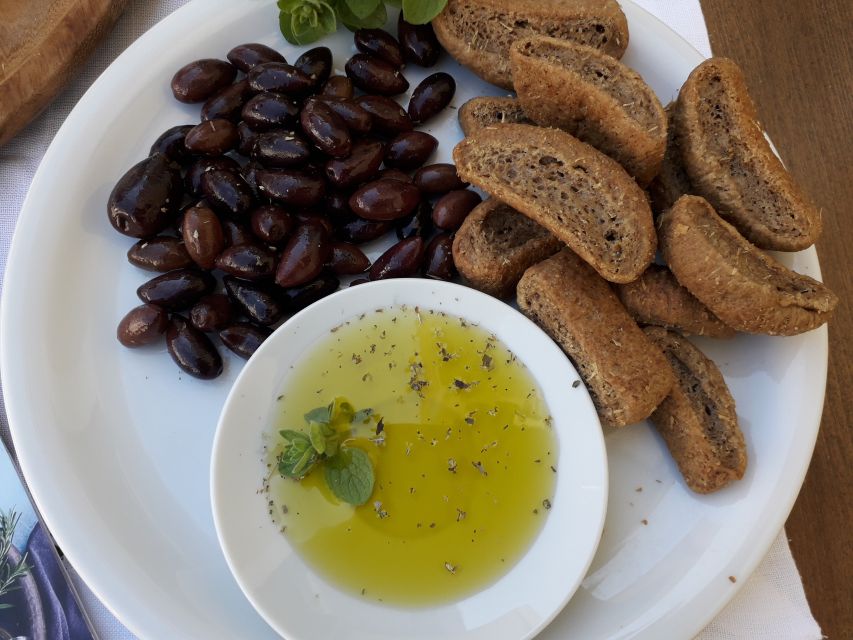
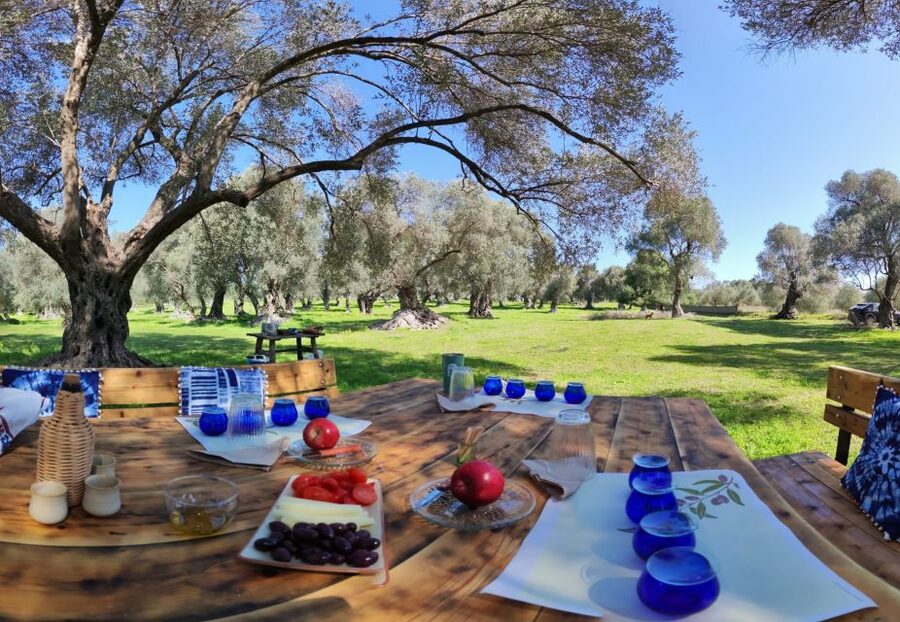
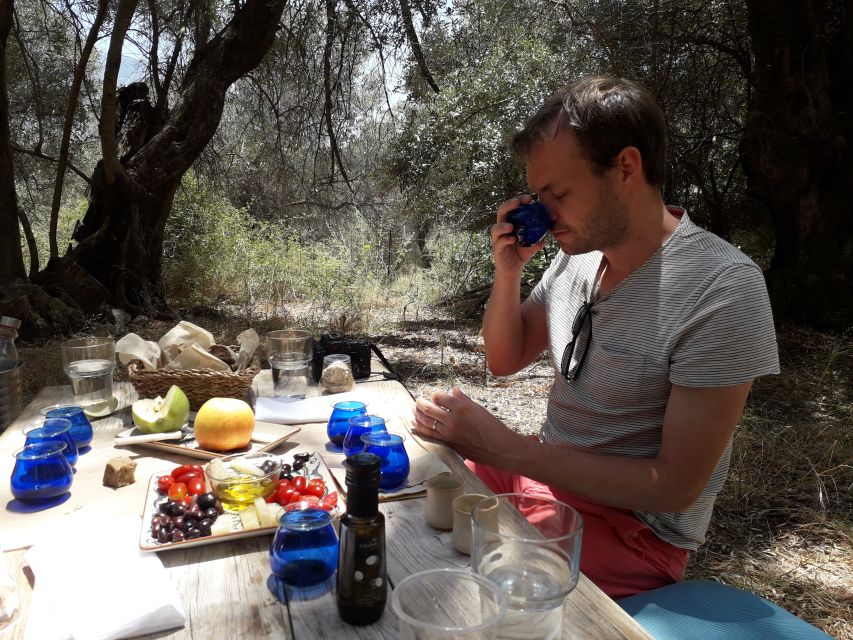
The tasting takes place at a table in the shade of the trees. You sample four different olive oils and learn how to assess them by smell and taste. The guide explains what to notice in each oil, including its flavor profile and how it behaves with food.
This is where the experience becomes genuinely useful. Olive oil labels and prices can be confusing, but tasting several oils side by side gives you a reference point. You begin to notice that oils are not all alike. Some may taste gentler, sharper, fruitier, or more forceful, and those differences affect how you use them.
Aspassia also explains how to choose and preserve olive oil. That matters once you get home. You learn what to consider when buying a bottle and how storage can affect quality. The session also covers cooking and frying, so the advice is not limited to using oil as a finishing touch on salad.
The tasting is informal rather than stiff. You can ask questions, compare impressions, and follow the guide’s explanations at a comfortable pace. With only eight people, the group size should make it easier to hear and take part without feeling lost at the table.
The Four-Course Cretan Food Pairing
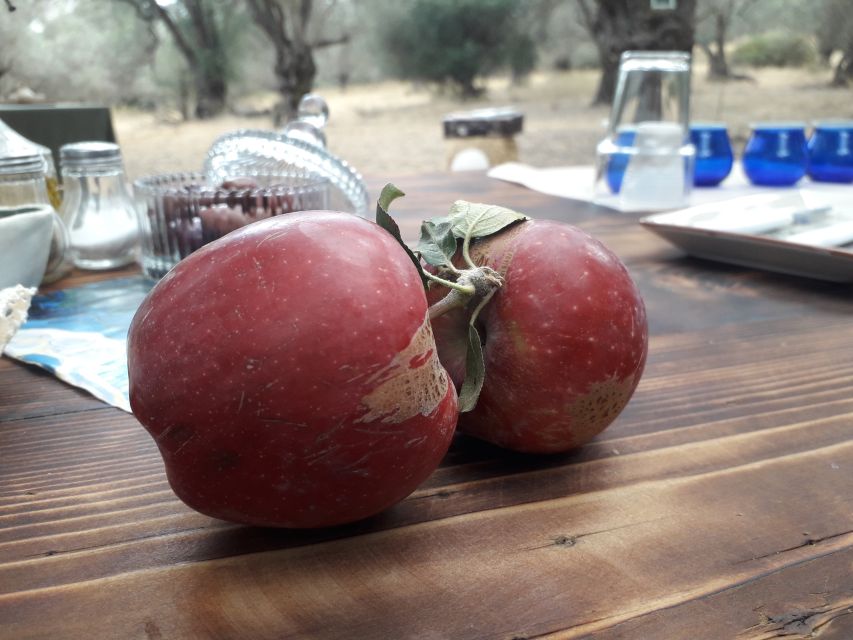
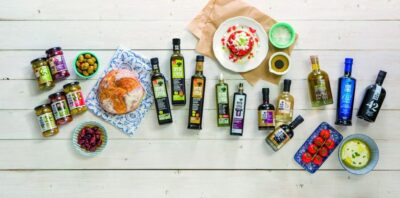
The olive oil is served with a four-course degustation menu based on local products. Water, soft drinks, and local spirits are included, so this is also a substantial food experience rather than a quick sample.
The clever part is the pairing. You do not simply taste oil on its own and then eat a meal. You try different oils with different foods to see how the combination changes. An oil that seems pleasant by itself may suit one dish better than another. That contrast helps explain why cooks choose different oils for different jobs.
The food pairing has been one of the strongest parts of the experience. The menu has also accommodated vegetarian options when requested, though you should communicate dietary needs before booking rather than relying on last-minute changes.
The meal is served outdoors beneath the trees. That makes the experience feel personal and connected to the grove, though it also means you are exposed to insects and changing weather. A hat, jacket, and repellent will make a real difference.
Local spirits are included, but take care if you are driving afterward. The meeting point is back in Rethymno, and any requested transfer is not included in the price.
More Olive Oil Tastings in Crete
- Knossos-Zeus Cave -Old Traditional Villages-Olive Oil Factory
★ 5.0 · 694 reviews - Zeus Cave, Lassithi Plateau, Olive Oil Factory, Kritza, Pottery
★ 5.0 · 362 reviews - From Chania: Wine and Olive Oil Tasting Tour with Snacks
★ 4.8 · 354 reviews - The Terra Creta Olive Oil Experience Tour
★ 4.7 · 344 reviews
Cretan Olive Oil Culture Beyond the Tasting Table
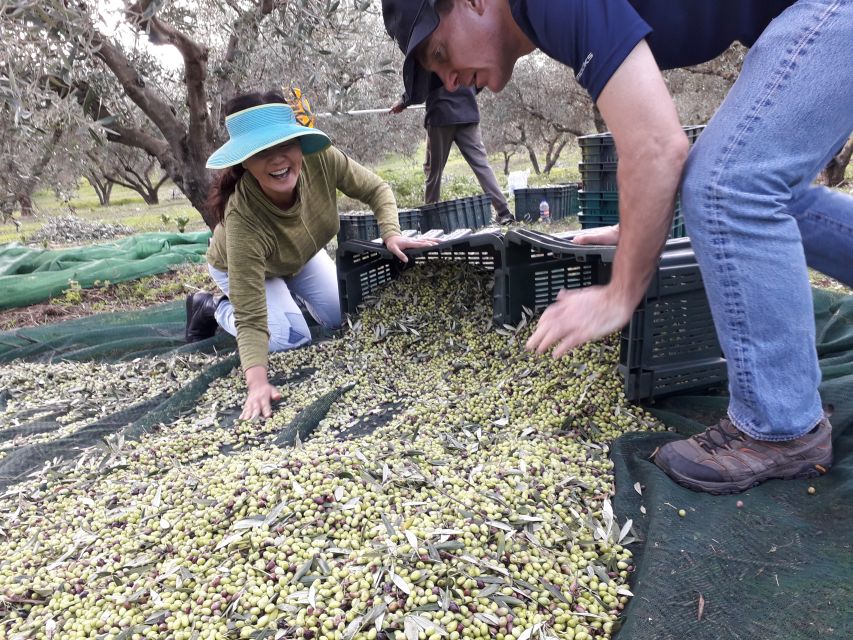
The lesson places olive oil within Cretan civilization, not just modern cooking. You hear about its place through the centuries, along with myths, flavors, aromas, and traditions linked to the island.
That cultural thread gives the meal more meaning. Olive oil is not treated as a luxury product separated from ordinary life. It is presented as part of Cretan food and family practice. The experience helps you see why olive trees appear so often in the island’s countryside and why oil remains central to local cooking.
I appreciate this approach because it avoids reducing Crete to a checklist of ruins and beaches. You spend time with a product that has shaped work, diet, trade, and custom. At the same time, the cultural material is presented in a relaxed way, so you are unlikely to feel trapped in a lecture.
The setting also allows the guide to connect the subject to what is around you. Ancient trees, quiet paths, farm animals, local food, and the smell of olive oil all reinforce the same lesson. It is a simple format, but it works.
Aspassia and the Small-Group Format
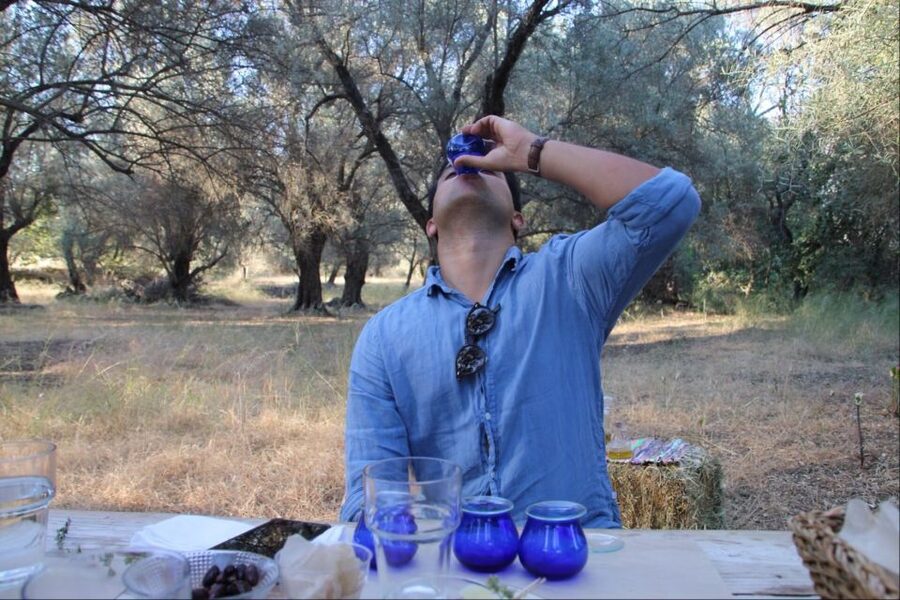
Aspassia is the guide named most often in connection with this activity. Her style is warm, friendly, and informative. She explains the subject clearly and gives the event a personal feel rather than delivering a rehearsed speech.
That personal approach matters in a tasting. Olive oil can sound technical if the guide only talks about production terms and quality grades. Here, the emphasis is on helping you understand what you smell, taste, and cook with. You can leave with information you will actually use at home.
The group is limited to eight people. That is a strong advantage for anyone who prefers conversation over a large organized outing. It also suits families, couples, and small groups of friends who want a calm evening outside town.
The small size does not make the activity private, however. You may share the table with other participants, and the four-course menu follows a set format. If you want a fully private meal or an in-depth technical course on olive oil production, this may feel too light.
Is $107 a Good Value?
At $107 per person, this is not a cheap tasting. The price makes more sense when you count the full three-hour format, the four-course menu, four oils, drinks, guide service, and the setting in a historic grove.
You are paying for several parts at once: a countryside outing, a cultural lesson, a guided tasting, and a meal. Compared with a short sample at a shop, this offers much more time and context. The small group also adds value because the guide can explain the food pairings and answer questions.
The price is less attractive if you mainly want to taste local oil and buy a bottle. You could likely find simpler tastings at a lower cost, but they would not provide the same combination of grove, history, food, and practical cooking advice.
Transfers are not included. You meet at the Valide Cooking Activities Building, then travel to the grove with the guide. If you do not have a car, you need to arrange a taxi or another ride to the meeting point and account for any additional transport costs. Opposite the Valide building, the football stadium has a free parking area for short-term parking.
Finding the Meeting Point and Planning Your Visit
The meeting point is in front of the Valide Cooking Activities Building. Use the supplied Google Maps location before leaving your accommodation, since the location has been difficult for some people to find. Allow extra time rather than arriving at the last second.
If you have a car, the arrangement is fairly straightforward. Short-term parking is available opposite the building at the football stadium. You then meet the guide and continue to the grove.
If you are staying in Rethymno, you can arrange a taxi to the meeting point. People staying in Chania have also used taxis for the outing, though the total transport cost will affect the value. The grove is outside the city, so this is not an activity you should treat as a walk-up Rethymno attraction.
Starting times vary, and the activity lasts three hours. Check the available time before booking, especially if you want to fit it around a beach visit, museum, or evening meal.
The activity is offered in English, French, and Greek. It is wheelchair accessible, though you may want to confirm the practical details of the outdoor route and vehicle arrangement in advance.
Who Will Enjoy This Olive Oil Tasting Most?
I would recommend this for anyone who enjoys food with a story. It is especially well suited to couples, families, siblings, and small groups who want a calm change from town sightseeing.
You will get the most from it if you are curious about cooking. The advice on buying, preserving, and using oil gives the experience value after you return home. The food pairings also make the lesson easier to remember than a simple spoken explanation.
It suits vegetarians, provided you request suitable options ahead of time. It also works for people who want an evening in the countryside without committing to a demanding hike or a full cooking class.
You may want to skip it if your schedule is tight, you dislike outdoor dining, or you want a detailed demonstration of industrial and traditional extraction. Mosquitoes can also be an issue, so anyone sensitive to bites should pack strong repellent and protective clothing.
Should You Book the Rethymno Olive Oil Tasting?
I would book this experience if you want a personal introduction to Cretan food culture, especially if you have already seen the main sights and want time in the countryside. The combination of ancient olive trees, four oils, local food, and Aspassia’s friendly teaching gives it a clear purpose.
Book it with realistic expectations. You are getting a thoughtful tasting and meal, not a full olive farm production tour. Confirm the meeting point, arrange transport, bring comfortable shoes, a hat, a jacket, and insect repellent.
The strongest reason to go is the pairing lesson. Once you see how different oils behave with different foods, the subject becomes practical instead of abstract. At $107, it is best value for people who want the complete three-hour experience, not just a quick taste.
FAQ
Where does the olive oil tasting begin?
You meet the guide in front of the Valide Cooking Activities Building. From there, you drive directly to the olive grove.
Where does the activity end?
The activity ends back at the original meeting point in front of the Valide Cooking Activities Building.
How long does the experience last?
The olive oil tasting and food pairing last three hours. Starting times vary, so check availability for the date you want.
How many olive oils will I taste?
You will taste four different olive oils during the guided tasting.
Is food included?
Yes. The experience includes a four-course degustation menu pairing local food with different olive oils.
Are drinks included?
Water, soft drinks, and local spirits are included.
Is transportation included?
Requested transfers are not included. You meet at the Valide Cooking Activities Building and then travel to the grove.
What languages are available?
The live guide is available in English, French, and Greek.
Is the activity wheelchair accessible?
Yes, the activity is listed as wheelchair accessible.
What should I bring?
Bring comfortable shoes, a sun hat, and a jacket. Strong insect repellent is also a smart addition because mosquitoes have been a problem during the outdoor tasting.
Just added around Crete
- Lasithi –Plateau Traditional Vilages★ 5.0 · 40 reviews
- The Palace of Knossos with Skip-the-Line Ticket★ 5.0 · 40 reviews
- Chania Morning Catamaran Cruise with Premium Lunch & Drinks★ 5.0 · 40 reviews
- From Chania: Preveli Palm Beach Day Tour★ 4.3 · 40 reviews
- Private South Crete Full-Day Tour-Spili, Kourtaliotiko & Preveli★ 5.0 · 40 reviews
- Stand-up Paddleboard Lazareta Experience Chania Crete (tour)★ 5.0 · 41 reviews
- Kissamos: Balos and Gramvousa Private Sailing Trip with Meal★ 4.8 · 41 reviews
- Knossos & Archaeological Museum Shared Guided Tour from Chania★ 5.0 · 41 reviews
Olive Oil Tastings, compared.
Knossos-Zeus Cave -Old Traditional Villages-Olive Oil Factory
Read our review →
The Governor’s Olive Mill Tour with Olive Oil Tasting
Read our review →

Zeus Cave, Lassithi Plateau, Olive Oil Factory, Kritza, Pottery
Read our review →
Knossos & Lasithi Plateau: Zeus Cave,Villages, Olive Oil Tour
Read our review →
Browse the lists this tour appears in