
Reviewed · WALKING TOURS
Rethymno: Old Town Walking Tour with Meal
Food opens doors in Rethymno. This four-hour walk links Cretan breakfast, tastings, and a garden meal with the city’s Venetian lanes, Ottoman courtyards, and everyday food customs. I like that it is not simply a list of monuments. You eat, talk, watch a master make phyllo, and learn how local ingredients fit into Cretan life.
I especially like the small-group feel and the way guides such as Vincent, Michael, Michalis, and Maria connect each dish to the town’s past. The meal is also a strong point: fresh local food served under lemon trees is a fine way to finish a morning. The main drawback is the price, $205 per person, which is a serious spend for four hours, particularly if you are not keen on a long meal or already have a good feel for Cretan food.
In This Review
- Five useful things to know before you book
- Why this four-hour walk works so well
- Starting at Gerakari 4 with a Cretan breakfast
- Learning to taste honey, olive oil, and raki
- Seeing phyllo made by hand in a 17th-century mansion
- Walking through Venetian streets and Ottoman corners
- A local bar and bakery add smaller tastes
- Lunch under lemon trees in an Ottoman-style garden
- What $205 per person really buys you
- Who should book this Rethymno food walk
- Practical details before you go
- Should you book it?
- FAQ
- Where does the tour start?
- How long does the walking tour last?
- Is hotel pickup included?
- What is served at breakfast?
- What foods and drinks are tasted?
- Will I see phyllo being made?
- Where does the main meal take place?
- Is there a vegetarian meal option?
- What languages are available?
- Is the tour private?
- Can I cancel for a full refund?
Five useful things to know before you book
- The tour begins with sfakianopita: You start at a Greek-style kafeneio with coffee or juice, a handmade cheese pie, and jam.
- Tasting is part of the lesson: Honey, olive oil, and raki are sampled with guidance on how to judge quality.
- The phyllo stop is unusually special: You watch Yorgos Hatziparaschos, who has made phyllo by hand for more than 63 years.
- Lunch takes place in an Ottoman-style garden: Traditional Cretan dishes arrive under lemon trees, with vegetarian and non-vegetarian choices.
- It is as much a town orientation as a food tour: Guides explain Venetian houses, Ottoman influence, Cretan customs, and present-day life.
- Plan for a relaxed pace: The food is plentiful, and the tour works best when you are ready to sit, taste, and talk rather than rush from stop to stop.
Why this four-hour walk works so well
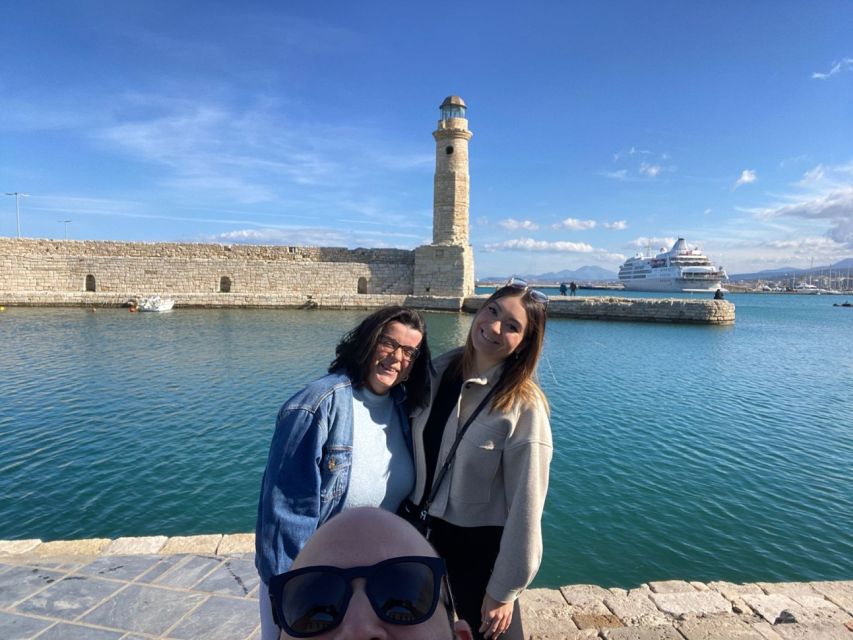
Rethymno’s Old Town can feel confusing at first. Narrow lanes twist between stone Venetian houses, old doorways, cafés, shops, and small squares. A guide gives those streets shape, helping you understand how different periods of Crete’s past appear in the buildings and in the food on your plate.
I like the mix of movement and sitting. You walk through the old center, then pause for breakfast, a tasting, a snack, a demonstration, and a full meal. That rhythm makes the history easier to remember because you are not standing in front of one more building while trying to keep your eyes open.
The strongest guides appear to be the people who treat the tour as a conversation rather than a lecture. Vincent is praised for learning names and keeping everyone involved. Michael is described as especially attentive to comfort on a hot day, while Maria is noted for useful advice about food and shopping. Michalis also receives praise for his easy command of the town and Cretan culture.
The exact guide matters on a personal tour, so you may not get one of those named guides. Still, the repeated pattern is clear: the experience depends heavily on the guide’s ability to connect food, history, and local life.
More Walking Tours in Crete
- Knossos: Knossos Palace Skip-the-Line Guided Walking Tour
★ 4.8 · 1,380 reviews - Walking “Food tasting tour” in the town of Chania
★ 5.0 · 297 reviews - Heraklion: Food Tastings Walking Tour
★ 5.0 · 136 reviews
Starting at Gerakari 4 with a Cretan breakfast
The meeting point is at Gerakari 4, where the walk begins at a local kafeneio. This is a good opening because it puts you into a distinctly Greek setting before the tour gets moving.
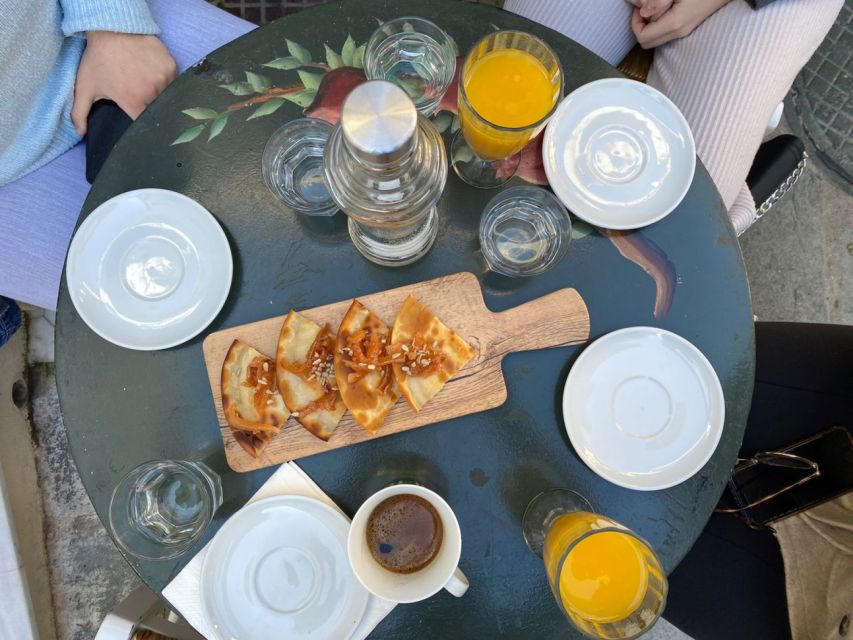
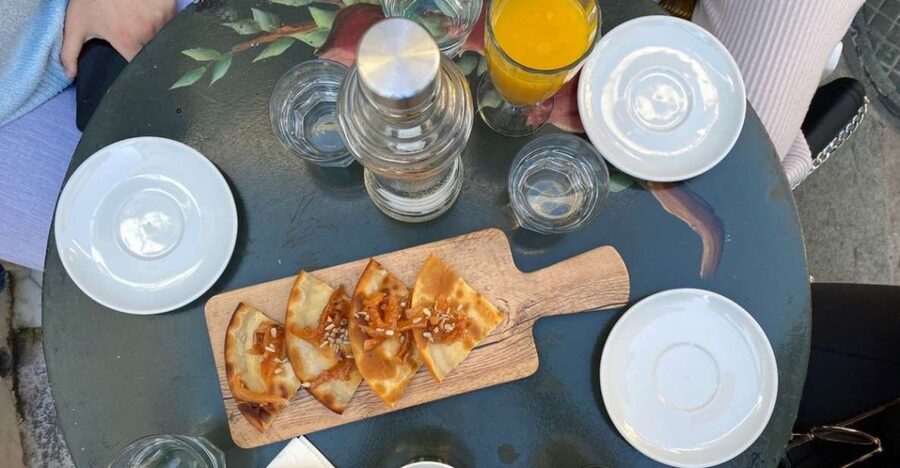
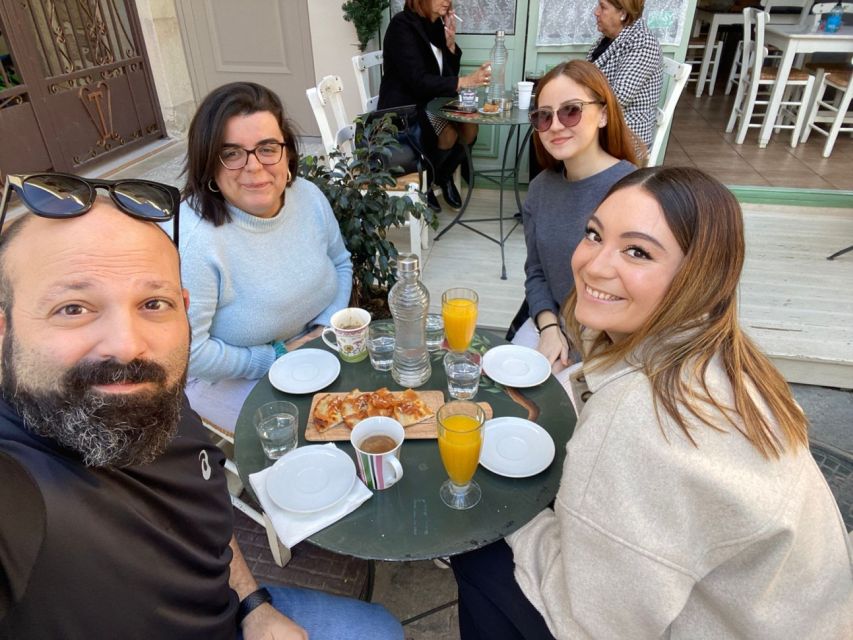
Breakfast includes a traditional Greek coffee or fresh juice and a handmade sfakianopita. The pie is filled with cheese and served with a layer of handmade jam, giving you a sweet and savory start rather than a standard hotel breakfast.
This stop is not just about filling your stomach. Your guide discusses local customs and the role food plays in Cretan life. You get context for ingredients that may otherwise seem simple, and you begin to notice how much of Cretan cooking depends on good raw materials rather than elaborate preparation.
If you normally eat a large breakfast, go easy beforehand. One useful tip from the experience is to arrive hungry but not stuffed, since the first course is followed by more tastings and a substantial meal. This is a food tour where restraint early on will reward you later.
Learning to taste honey, olive oil, and raki
The tasting session is one of the tour’s most useful parts. Honey, olive oil, and raki are not treated as quick samples to swallow and forget. You learn how to distinguish higher and lower quality, and your guide explains how these products connect to Cretan habits and hospitality.
Olive oil can be difficult to judge if you have only used it as a cooking ingredient. A guided tasting gives you a way to think about flavor and quality before you buy a bottle to take home. The same applies to honey, especially when attractive labels tell you little about what is inside.
Raki brings a social side to the stop. The drink is tied to Cretan hospitality, so the tasting helps explain more than its flavor. You learn how it fits into a meal and into the custom of offering a drink to visitors.
I would pay close attention here if you want practical knowledge rather than a simple snack break. The session can help you avoid buying something mediocre later, though the tour does not specify that products are included for purchase.
Seeing phyllo made by hand in a 17th-century mansion
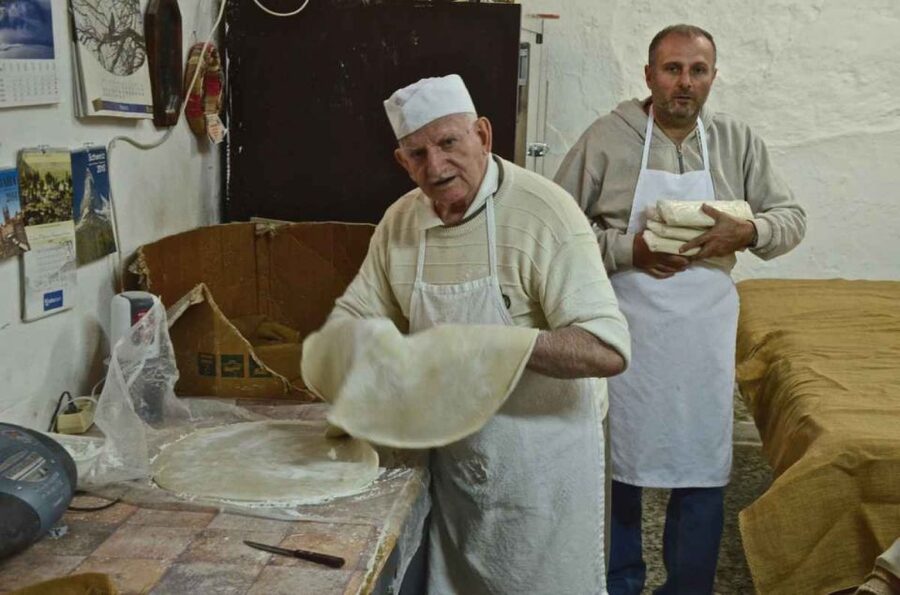
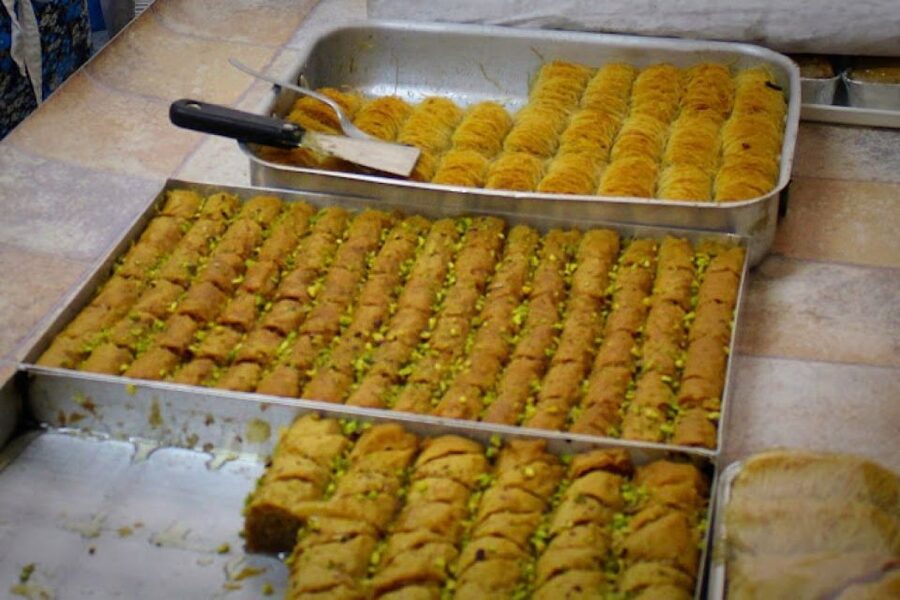
The phyllo demonstration is the most distinctive stop. You visit a 17th-century Venetian mansion associated with Yorgos Hatziparaschos, a master who has made phyllo by hand for more than 63 years.
The ingredients are basic: flour, water, and salt. The skill lies in turning them into paper-thin dough without tearing it. Watching that process gives you a new respect for Greek pastries such as baklava, where the pastry can look delicate and effortless only because someone has spent years mastering the work.
This is a welcome change from a typical bakery visit. You are not simply buying a pastry from a counter. You see the technique, the patience, and the human labor behind a familiar Cretan and Greek sweet.
The stop is also a good link between the town’s architecture and its food. A Venetian mansion, an old family craft, and a modern visitor experience all meet in one place. You get a sense of continuity without being asked to sit through a formal history lesson.
The demonstration may be less appealing if you want nonstop walking or a tour built around many different food samples. It is a focused stop, and the pleasure comes from watching the technique.
More things to do in Crete:
- From Kissamos Port: Boat Cruise to Balos Lagoon & Gramvousa
★ 4.2 · 6,755 reviews - Crete: Day Trip to Agios Nikolaos and Spinalonga Island
★ 4.6 · 4,416 reviews - From Chania: Full-Day Samaria Gorge Trek Excursion & Guide
★ 4.6 · 3,191 reviews - Agios Nikolaos: Boat Trip to Spinalonga with Swim Stop
★ 4.4 · 3,031 reviews
Walking through Venetian streets and Ottoman corners
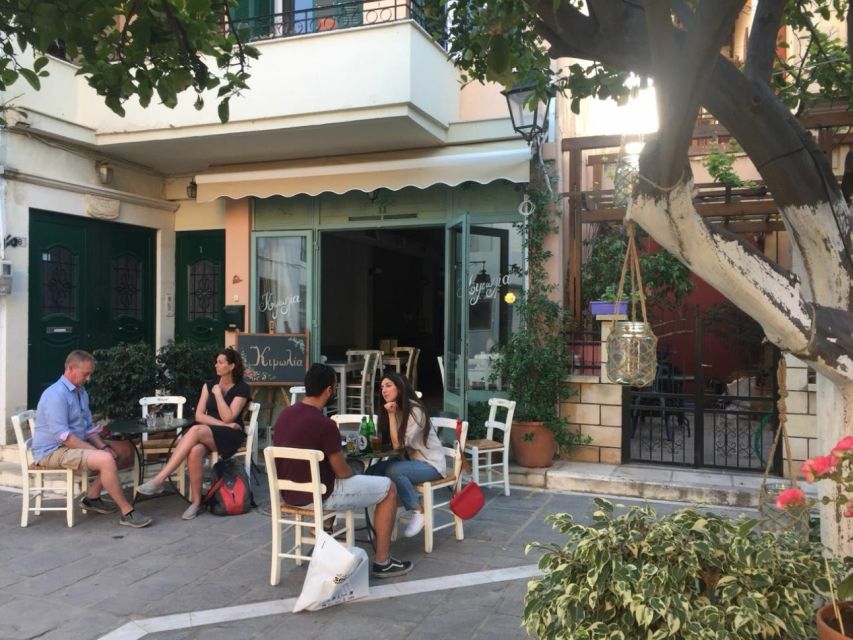
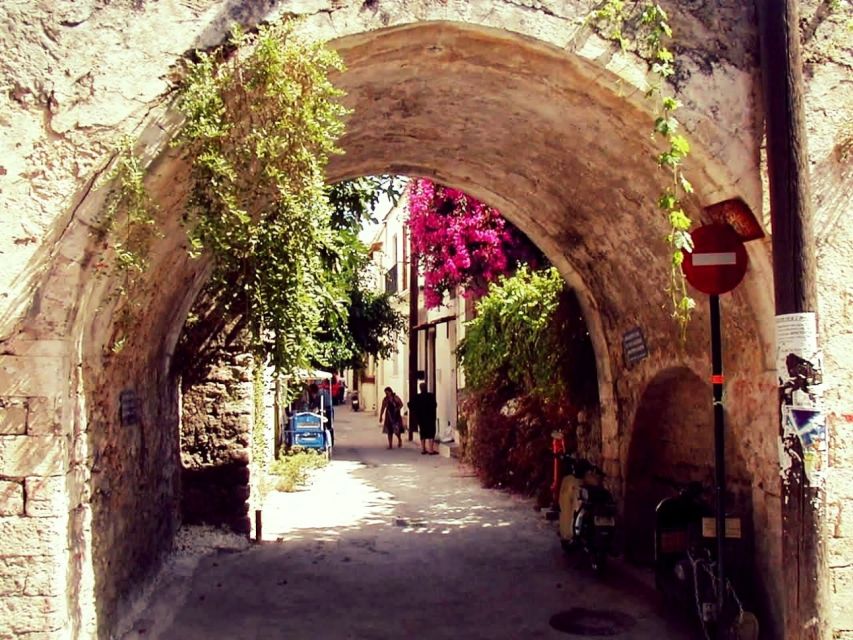
Between food stops, your guide leads you through the narrow streets of Rethymno’s Old Town. You see stone-built Venetian houses and hear how different periods of occupation shaped the town’s architecture and daily life.
The walk gives you a useful first look at Rethymno. Several people who took the tour early in a short stay found that it helped them understand the area and choose better places to eat and shop afterward. That is a real benefit, especially if you have only two days in town.
I also like the way the tour links architecture with Cretan identity. Venetian and Ottoman influences are not presented as isolated facts. Your guide explains how the town changed over time and how Cretan people responded to those changes.
The tour does not promise a long list of major sights or entry into monuments. Instead, its value comes from walking the streets with someone who can explain what you are seeing. If your main goal is detailed church interiors, museum visits, or archaeological sites, this is not the right format.
It suits you better if you want to understand the Old Town as a lived-in place. Keep your attention on doorways, stonework, courtyards, and the way old buildings sit alongside modern shops and restaurants.
A local bar and bakery add smaller tastes
The route includes a stop at a local bar for street food and another at a local bakery for local snacks. The available details do not name the exact dishes, so you should not book expecting a fixed menu of specific items at every stop.
That flexibility may be part of the appeal. A guide can explain what you are eating in context, and the stops break up the walk without turning it into a race from one tasting to the next.
The bar and bakery also show a different side of the food culture than the formal meal. You get quick, everyday bites alongside breakfast, tastings, and the final restaurant course. For me, that range is more useful than visiting only one polished dining room.
The tradeoff is that the smaller stops may feel brief. The stated timing gives about 40 minutes at the local bar and 20 minutes at the bakery, while the main meal takes about an hour and a half. If you want to linger at each place, ask questions, and take photographs, the four-hour schedule can feel full.
Lunch under lemon trees in an Ottoman-style garden
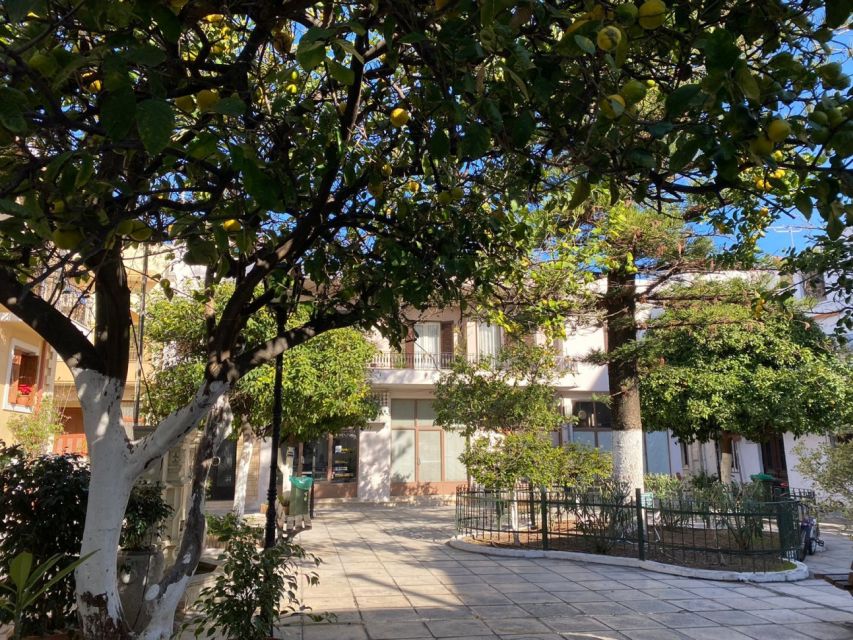
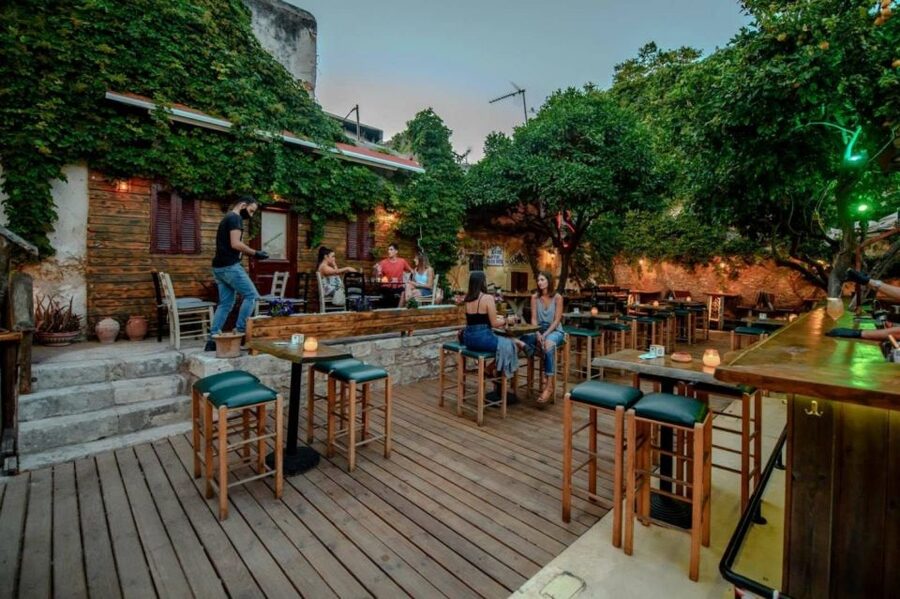
The final stop is a restaurant tucked into an Ottoman-style inner garden. You sit beneath lemon trees and eat a full Cretan meal made with fresh local ingredients, presented in a stylish modern way.
This is where the tour shifts from tasting to proper dining. The food is plentiful, and the long meal gives you time to talk with your guide about how older traditions fit modern Cretan life. Several guides have been praised for making this part feel relaxed and friendly, more like eating with people you have just met than attending a formal event.
You can choose a vegetarian or non-vegetarian meal. That is helpful, though the supplied details do not describe options for every dietary restriction. If you have specific needs, tell the operator before booking rather than assuming the standard menu can be changed.
The restaurant setting is a major part of the experience. You are not just checking off lunch as an included feature. You are given time to savor the food, ask questions, and reflect on what you have tasted earlier.
Still, the meal takes 90 minutes, so this is not ideal for anyone who dislikes extended dining. It also means the tour covers fewer streets than a fast-paced walking route. I see that as a strength for food lovers, but a limitation for sightseers who want maximum ground covered.
What $205 per person really buys you
At $205 per person, this is not a budget food walk. The price needs to be judged against the package: a private-group tour, a live guide, breakfast, traditional snacks, tastings, a phyllo demonstration, and a full lunch or dinner.
The meal is the biggest value factor. You are not paying for a single snack and a few samples. The food begins with breakfast and continues through several stops before ending with a substantial restaurant meal. People with a healthy appetite are likely to feel they received plenty of food.
The guide adds another layer of value. A good guide can save you time in the Old Town, explain which food customs matter, answer questions about Cretan life, and point you toward places to eat or shop afterward. That is especially useful if this is your first full day in Rethymno.
I would not recommend the tour solely for sightseeing at this price. I would book it if you place real value on food, conversation, and a personal introduction to the town. For a couple or small group celebrating a special day, the private format may make more sense than for a solo visitor watching every euro.
The rating is 4.9 from 73 reviews, with repeated praise for the food, guide quality, relaxed pace, and mix of history and gastronomy. That does not remove the price concern, but it does suggest the experience delivers well on its central promise.
Who should book this Rethymno food walk
I think it suits first-time visitors who want a useful introduction to the Old Town without a dry history lesson. You will learn enough about Venetian and Ottoman influence to make later walks more meaningful, while the food keeps the four hours lively.
It is also a good choice for food-focused visitors who want to understand olive oil, honey, raki, phyllo, and Cretan cooking. The phyllo demonstration alone gives the tour a character that many standard food walks lack.
Families can consider it too. One group with a baby found the tour manageable, and the relaxed structure is easier for families than a tightly timed route. A guide also adjusted for dietary restrictions in one case, though you should still communicate your needs in advance.
The tour may not suit you if you want strenuous walking, a large number of historic interiors, or a quick sequence of tiny tastings. It is also a poor match if you have already arranged several long meals and do not want another one.
Book it early in your stay if possible. The food advice, town orientation, and tips about avoiding mediocre places can help shape the rest of your time in Rethymno.
Practical details before you go
The experience lasts four hours and ends back at the meeting point. Hotel pickup and drop-off are not included, so you need to make your own way to Gerakari 4.
The tour is offered in English, French, or Spanish, with a live guide. The group type is private, although the size can vary by booking. Past groups have been as small as four or six people, which helps explain the personal feel described in the feedback.
Wear comfortable shoes for the Old Town’s narrow streets and uneven walking surfaces. The route includes several food stops, so eat lightly beforehand and bring an appetite for the final meal.
You can cancel up to 24 hours before the start for a full refund, and the reserve-now, pay-later option keeps your plans flexible. Starting times vary, so check availability when you choose your date.
Should you book it?
Book this tour if you want Rethymno explained through food, local stories, and a calm walk through the Old Town. The handmade phyllo demonstration, guided tastings, and lemon-tree meal give it more depth than a basic restaurant crawl.
Skip it if $205 feels too high for a four-hour activity or if your priority is visiting major monuments rather than eating and talking. For everyone else, especially first-time visitors with only a short stay, this is a thoughtful and filling way to get your bearings and learn what good Cretan food should taste like.
FAQ
Where does the tour start?
The tour starts at Gerakari 4 in Rethymno.
How long does the walking tour last?
The experience lasts four hours.
Is hotel pickup included?
No. Hotel pickup and drop-off are not included.
What is served at breakfast?
Breakfast includes a traditional Greek coffee or fresh juice and a handmade sfakianopita cheese pie with handmade jam.
What foods and drinks are tasted?
The experience includes tastings of honey, olive oil, and raki, along with traditional snacks and other food stops.
Will I see phyllo being made?
Yes. You visit a 17th-century Venetian mansion associated with Yorgos Hatziparaschos and watch handmade phyllo dough being prepared.
Where does the main meal take place?
The full meal is served at a restaurant in an Ottoman-style inner garden, beneath lemon trees.
Is there a vegetarian meal option?
Yes. A vegetarian and a non-vegetarian option are available for the full meal.
What languages are available?
The tour is offered with a live guide in English, French, or Spanish.
Is the tour private?
The group type is listed as a private group. Group size can vary by booking.
Can I cancel for a full refund?
Yes. You can cancel up to 24 hours in advance for a full refund.
Just added around Crete
- Lasithi –Plateau Traditional Vilages★ 5.0 · 40 reviews
- The Palace of Knossos with Skip-the-Line Ticket★ 5.0 · 40 reviews
- Chania Morning Catamaran Cruise with Premium Lunch & Drinks★ 5.0 · 40 reviews
- From Chania: Preveli Palm Beach Day Tour★ 4.3 · 40 reviews
- Private South Crete Full-Day Tour-Spili, Kourtaliotiko & Preveli★ 5.0 · 40 reviews
- Stand-up Paddleboard Lazareta Experience Chania Crete (tour)★ 5.0 · 41 reviews
- Kissamos: Balos and Gramvousa Private Sailing Trip with Meal★ 4.8 · 41 reviews
- Knossos & Archaeological Museum Shared Guided Tour from Chania★ 5.0 · 41 reviews
Walking Tours, compared.


Acropolis: Acropolis and Parthenon Guided Walking Tour
Read our review →
Acropolis monuments & Parthenon Walking Tour with Optional Acropolis Museum
Read our review →
Knossos: Knossos Palace Skip-the-Line Guided Walking Tour
Read our review →

Athens Authentic Greek Food Walking Tour (Small Group)
Read our review →
Early Morning Acropolis & Old Athens Guided Walking Tour
Read our review →Browse the lists this tour appears in