
Reviewed · ANCIENT CORINTH TOURS
Private Luxury Biblical Tour: Apostle Paul’s Footsteps – Corinth
Paul’s Corinth is closer than you think. This private half-day trip from Athens follows the apostle’s route through the Isthmus, Kenchreai, Ancient Corinth, and Acrocorinth, with a driver-guide, hotel or port pickup, and a relaxed pace for your own group. I especially like the private transportation and the chance to connect biblical passages with actual places. The free Wi-Fi, bottled water, and flexible pickup service are useful extras, too.
The main consideration is that your driver is not a licensed guide inside the archaeological sites. Entrance fees also cost about €20 per person, in addition to the listed price of $179.06 per person. Still, the tour offers strong value if you want door-to-door service and personal attention without joining a large coach group.
In This Review
- Key points to know before booking
- Why Corinth works so well as a biblical day trip
- Starting at the Isthmus and Corinth Canal
- Seeing the ancient Diolkos in ten minutes
- Following Paul to Kenchreai’s ancient harbor
- Ancient Corinth, Glauke Fountain, and the Roman forum
- The Temple of Apollo and Corinth’s older religious world
- Inside the Archaeological Museum of Corinth
- Acrocorinth brings the most dramatic views
- Ending at Apostle Paul Church
- Private cars, pickup service, and personal pacing
- Is $179.06 per person a fair price?
- Who should book this Corinth tour?
- Should you book it?
- FAQ
- Where does the tour begin?
- Can I be picked up from Piraeus?
- How long does the tour last?
- How many people can join the private tour?
- Is a licensed guide included?
- Are entrance fees included?
- Is airport pickup available?
- What should I bring?
- What is the cancellation policy?
Key points to know before booking
- Paul’s trial comes alive at the Bema: Visit the public platform linked with Paul’s appearance before Gallio, an event recorded in Acts 18:12-17.
- Kenchreai connects scripture with the coast: This eastern port is where Paul arrived in Corinth around 53 A.D.
- Acrocorinth adds the big view: The fortified hilltop brings Greek, Byzantine, Frankish, and Ottoman layers into one stop.
- Your group controls the pace: Private sedans carry one to four people, while groups of five to seven use a minivan.
- The driver-guides are a major part of the experience: Demetrios, Makis, George, Dimitrios, Pericles, and Demetris are praised for patience, Bible knowledge, flexibility, and friendly service.
- Budget for site fees: Archaeological admissions and the museum are not included, with total entrance costs listed at about €20 per person.
Why Corinth works so well as a biblical day trip
Corinth is a particularly rewarding side trip from Athens because it brings together three different stories. You get the practical world of ancient trade at the canal and ports, the political world of Roman Corinth at the forum, and the religious setting in which Paul preached.
The drive from Athens is part of the experience. You are not simply dropped at one ruin and left to wander. The route begins at the Isthmus, then moves toward the ancient ports and inland city, building the story in a sensible order.
I also like the private format for this subject. Paul’s time in Corinth can feel abstract if you only read Acts 18. Here, you can connect his arrival at Kenchreai with the city’s forum, tribunal, and church traditions. Your driver-guide can explain the setting as you go, and you can pause for photographs or spend less time at a stop that does not hold your interest.
The tour lasts roughly five to six hours, including driving between sites. That makes it a manageable addition to an Athens stay, though it is not a slow archaeological study. You will see many places in a single morning or afternoon, so comfortable shoes, a hat, and sunscreen matter.
More Ancient Corinth trips:
- From Athens: Ancient Corinth Day Trip with Canal & VR Guide
★ 4.6 · 1,073 reviews - Private Biblical Tour Ancient Corinth & Isthmus Canal from Athens
★ 5.0 · 762 reviews - Athens: Ancient Corinth & Nafplio Full Day Trip with Swim
★ 4.8 · 523 reviews
Starting at the Isthmus and Corinth Canal
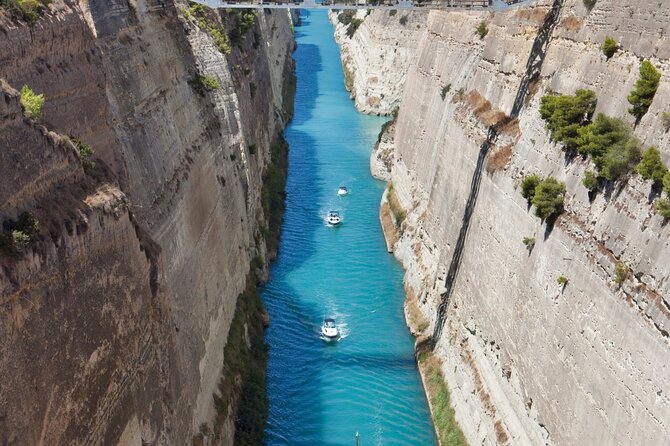
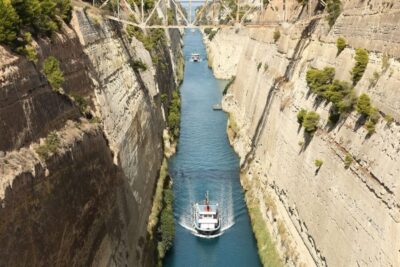
The first stop is the Isthmus of Corinth, a narrow strip of land joining mainland Greece with the Peloponnese. The modern Corinth Canal cuts through this point, giving ships a shortcut between the Gulf of Corinth and the Saronic Gulf.
You have about 20 minutes here, and admission is free. That is enough time to take in the canal, understand the geography, and snap photographs from the viewing area. This is a quick orientation stop rather than a long visit.
The canal is a good first lesson in why Corinth mattered. The city sat between major sea routes, yet ships faced the problem of moving around the Peloponnese. That location helped make Corinth a commercial power long before Paul arrived.
Do not expect a full canal cruise or an extended engineering tour. The value lies in seeing the narrow crossing with your own eyes before visiting the ancient roads and ports that made Corinth important.
Seeing the ancient Diolkos in ten minutes
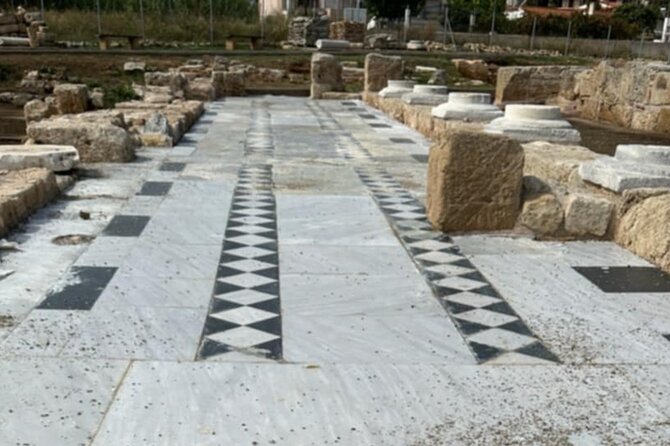
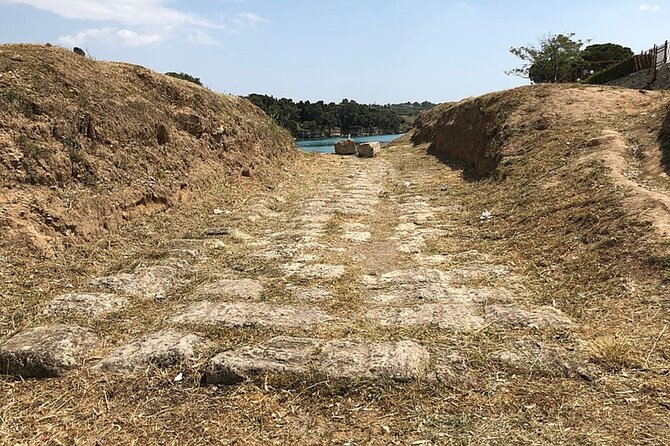
The Diolkos was an ancient paved route used to move ships overland across the Isthmus. It was an ambitious answer to a difficult geographic problem, and it helps explain how Corinth profited from controlling this passage.
The stop lasts about ten minutes and is free. That is brief, so your driver-guide’s explanation will be important. You will not be spending a long time examining a large, fully restored complex. Instead, this is a compact archaeological pause that adds practical context to the canal.
I find this stop worthwhile because it keeps the tour from becoming only a religious pilgrimage. Corinth was also a place of money, shipping, transport, and political power. Paul preached in a city shaped by those forces.
Following Paul to Kenchreai’s ancient harbor
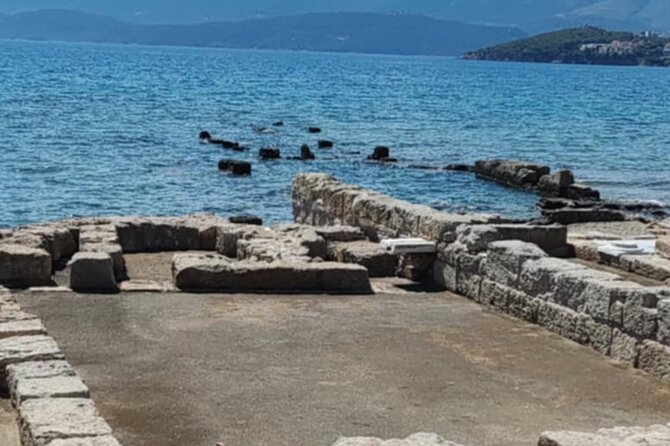
The tour then reaches Ancient Port of Kenchreai, the eastern harbor of Corinth. According to the tour’s historical account, Paul arrived here around 53 A.D. The port connects directly with the apostle’s movements and gives the biblical story a clear point of entry.
You have around 20 minutes at the site. The remains include Roman harbor facilities, temples, and early Christian structures. The setting helps you picture Corinth as a port city tied to wider trade routes, not an isolated inland settlement.
This stop may feel less dramatic than the main ruins at Ancient Corinth. There are not the same tall columns or large museum rooms. Its importance is more historical than theatrical, so listen closely to the explanation and use the time to connect the harbor with Paul’s arrival.
For anyone interested in Paul’s journeys, Kenchreai is one of the tour’s strongest stops. It gives physical shape to a detail that can otherwise pass quickly in the Book of Acts.
More things to do in Athens:
- Athens: Acropolis & up to 5 Archaeological Sites Combo Pass
★ 4.4 · 12,619 reviews - Athens: Acropolis Ticket with Optional Audio or Live Guide
★ 4.2 · 11,055 reviews - Athens: Acropolis, Parthenon & Acropolis Museum Guided Tour
★ 4.8 · 9,316 reviews - Athens: Cape Sounion & Poseidon Temple Sunset Half-Day Trip
★ 4.8 · 8,241 reviews
Ancient Corinth, Glauke Fountain, and the Roman forum
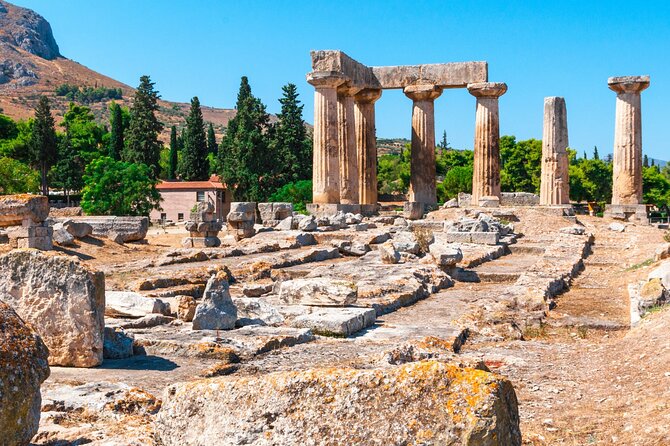
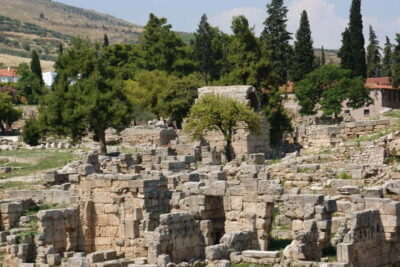
The central visit is Ancient Corinth, where the biblical, Greek, and Roman threads come together. The listed schedule gives about 25 minutes for the area around Glauke Fountain and Paul’s Column in the Roman Forum, followed by a separate 20-minute visit to the Temple of Apollo and ten minutes at the Bema.
That timing is fairly brisk. The archaeological site has enough material to reward a longer visit, but the private format lets you focus on the parts that matter most to you.
Glauke Fountain is carved into the hillside and tied to the myth of Glauke, daughter of King Creon. The legend says she sought refuge there after being poisoned by Medea. It is a small but memorable reminder that Corinth’s story includes Greek mythology as well as Christian history.
The Roman Forum is the key setting for Paul’s public appearance. The Bema, or raised platform, functioned as a place for public addresses and legal rulings. During the Roman period, it served as a tribunal where officials issued judgments.
According to Acts 18:12-17, Paul was brought before Gallio, the Roman proconsul, after accusations about his teaching. Gallio dismissed the case, allowing Paul to continue his work. Standing near the Bema gives that passage a strong sense of place.
You may also see Paul’s Column and modern mosaics connected with his trial and journey. These additions help visitors follow the biblical story, though the archaeological remains themselves are the main attraction.
The important practical point is that the driver-guide can explain the site, but a licensed guide is not included to accompany you inside. If you want a formal archaeological lecture, you would need to arrange that separately. If you prefer a private overview with time to look around on your own, the existing setup may suit you well.
The Temple of Apollo and Corinth’s older religious world
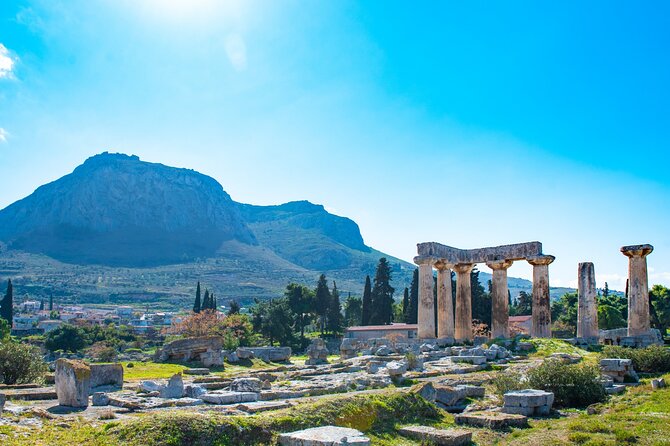
The Temple of Apollo is one of the oldest Doric temples in the Peloponnese. Its remaining columns give the site a strong visual anchor and show the religious setting Paul encountered in Corinth.
You have about 20 minutes here, with admission not included. The temple is important because it shifts your attention away from Paul and back toward the older pagan world. Corinth was not waiting for Christianity to arrive. It already had established gods, temples, customs, and civic traditions.
The itinerary lists the Temple of Apollo and the Bema as separate stops, even though both are within the Ancient Corinth visit. Think of this as a structured explanation of two nearby highlights rather than two completely separate destinations.
The Bema deserves its own moment. It was not originally a Christian platform. Its role was civic and judicial, which makes Paul’s appearance there especially meaningful. He was dealing with Roman law and local authority, not speaking in a quiet church setting.
Inside the Archaeological Museum of Corinth
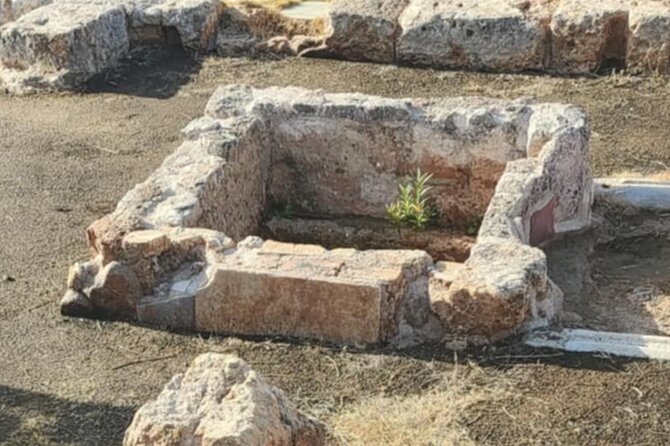
The Archaeological Museum gets about 45 minutes, making it the longest scheduled stop. That is sensible. After seeing stones and foundations outdoors, you can use the museum to understand the objects and people connected with the city.
The collection covers material from prehistoric times through the Roman period. Displays include statues, pottery, and objects from the Sanctuary of Asklepios. The museum adds detail that ruins alone cannot provide, especially if you want to understand daily life, religion, and artistic traditions.
Admission is not included. The total archaeological and museum fees are listed at approximately €20 per person, so include that in your budget from the start.
Forty-five minutes will give you a useful introduction, though not enough time for every display. I would keep the museum focused: look for the pieces that help explain Corinth as a working city, then save your remaining energy for Acrocorinth.
Acrocorinth brings the most dramatic views
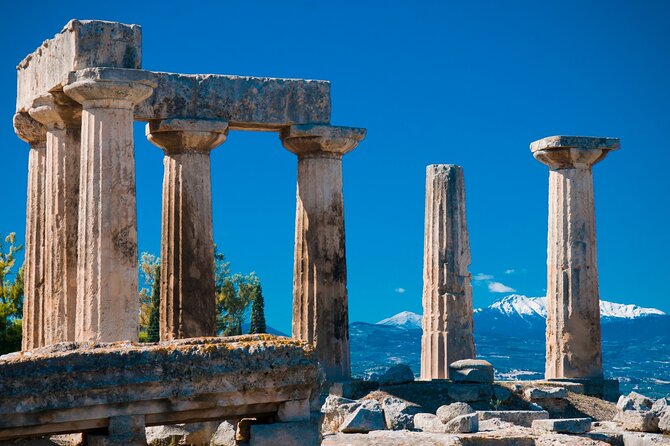
Acrocorinth is the fortified acropolis above Ancient Corinth. The stop lasts about 40 minutes and admission is listed as free, although conditions at individual sites can change, so confirm details when booking.
The hilltop includes remains from classical Greece as well as Byzantine, Frankish, and Ottoman fortifications. That layering is what makes Acrocorinth special. You are not looking at one period frozen in place. You are seeing a strong defensive position reused across centuries.
The views are a major reason to come. From above, the connection between Corinth, the Isthmus, and the surrounding region becomes easier to understand. The climb and uneven ground may make this the most physically demanding part of the tour, so wear proper walking shoes.
Forty minutes is enough for a taste, not a full exploration of every wall and pathway. If Acrocorinth is your priority, tell the driver-guide early. The private format may allow some flexibility, but the tour still needs to return to Athens within its planned duration.
Ending at Apostle Paul Church
The final stop is Apostolos Pavlos Church, a three-aisled basilica built in 1936 on the site of an earlier church associated with Paul. You have about 20 minutes here, and admission is free.
This is a quieter finish after the open-air ruins and hilltop fortress. It gives the tour a modern religious conclusion while keeping the focus on Paul’s place in Corinth’s Christian story.
The church should not be confused with an ancient building from Paul’s lifetime. Its value is commemorative and spiritual. I like that distinction because it lets you appreciate the site without treating every later structure as an original biblical-era monument.
Private cars, pickup service, and personal pacing
Pickup is available from designated hotels, apartments, and ports in Athens. At a hotel or apartment, the driver waits outside. At the port, you are met in the arrival area with a sign showing your name. Drop-off returns you to the original meeting point.
One useful feature is the possibility of arranging a port pickup and a different Athens drop-off, as long as the operator accepts the plan. This can help if you are arriving at Piraeus with luggage and moving to an Athens hotel afterward.
Groups of one to four use a luxury sedan. Groups of five to seven use a minivan. The vehicles are air-conditioned, and bottled water and Wi-Fi are included. Airport pickup is available for an extra charge.
The private setup is particularly useful for couples, families, and small groups with a shared interest in biblical sites. You avoid waiting for a large bus and can ask questions throughout the drive. The tradeoff is that your driver-guide may not provide the same specialized archaeological detail as a licensed guide.
The strongest personal-service comments focus on the drivers. Demetrios and Dimitrios are praised for patience, clear explanations, photo help, and flexibility. Makis is described as especially informed about Paul. George’s Christian Orthodox background made the biblical discussion feel natural for one couple, while Pericles is praised for making the day both informative and fun. Demetris is also noted for taking care with water and comfort.
One driver even added an ice-cream stop, and another took the group to an excellent lunch. Lunch is not listed as included, so treat such stops as optional and confirm any extra cost before ordering.
Is $179.06 per person a fair price?
At $179.06 per person, this is not the cheapest way to reach Corinth. You also need to add about €20 per person for archaeological and museum admissions, plus any tip and optional airport pickup.
The price makes more sense when you consider what is included: private transportation, hotel or port pickup and drop-off, an air-conditioned vehicle, Wi-Fi, bottled water, and a dedicated English-speaking driver-guide. For two people, that buys convenience and flexibility that a standard group excursion may not offer.
Value depends on your priorities. If you only want to see the canal and Ancient Corinth, public transport or a simpler transfer could cost less. If you want Kenchreai, the Diolkos, Acrocorinth, and the church in one organized route, the private service saves planning time.
The tour is also booked well ahead, on average about 50 days in advance. That suggests you should reserve early if your Athens dates are fixed, especially if you need a port pickup.
Who should book this Corinth tour?
I would recommend it for:
- Couples who want a private biblical and historical outing
- Families who need door-to-door transport
- Cruise passengers arriving at Piraeus
- Small groups of up to seven people
- Anyone who prefers a flexible pace over a large coach tour
- Visitors who want Paul’s story explained alongside Greek and Roman sites
I would hesitate if you want a full academic archaeological tour, a slow visit to every ruin, or a long hike around Acrocorinth. The schedule covers a lot in five to six hours, and the driver-guide is not a licensed site guide.
The tour is offered in English. Most people can participate, but you should be comfortable walking over uneven archaeological ground and in warm sun. Bring sturdy shoes, a hat, and sunscreen.
Should you book it?
Book this tour if Paul’s time in Corinth is central to your trip and you value comfort, privacy, and a flexible driver-guide. The Bema, Kenchreai, and Apostle Paul Church give the biblical story a clear shape, while the canal, museum, Temple of Apollo, and Acrocorinth keep the day from becoming too narrow.
I would call it a strong choice for a first visit to Corinth, especially from a hotel or cruise port. Just budget for entrance fees, clarify the pickup and drop-off plan, and remember that the included expert is a driver-guide rather than a licensed guide inside the ruins.
Free cancellation is available until 24 hours before the start time. Poor weather can also lead to a different date or a full refund. That policy gives you some protection, but Corinth is best enjoyed on a dry day when the views and outdoor ruins are at their best.
FAQ
Where does the tour begin?
Pickup is available from designated hotels, apartments, and ports in Athens. The driver waits outside a hotel or apartment, while port pickup takes place in the arrival area with a sign showing your name.
Can I be picked up from Piraeus?
Yes. Port pickup options are available during checkout. A past arrangement also allowed pickup at Piraeus and drop-off at a different location in Athens, but you should confirm your exact plan before booking.
How long does the tour last?
The experience lasts approximately five to six hours, including the time spent driving between locations.
How many people can join the private tour?
Groups of one to four people use a luxury sedan. Groups of five to seven people travel in a comfortable minivan. Only your own group participates.
Is a licensed guide included?
No. The tour includes an English-speaking driver-guide with historical knowledge, but a licensed guide to accompany you inside archaeological sites is not included.
Are entrance fees included?
No. Entrance fees for archaeological sites and museums are separate. The listed cost is approximately €20 per person.
Is airport pickup available?
Yes, airport pickup can be arranged for an additional cost.
What should I bring?
Wear comfortable footwear and bring a hat and sunscreen. The tour includes several outdoor archaeological locations and can involve walking in warm, sunny conditions.
What is the cancellation policy?
You can cancel at least 24 hours before the start time for a full refund. Cancellations or changes made less than 24 hours before the experience are not refunded or accepted. If poor weather causes cancellation, you will be offered another date or a full refund.
Just added around Athens
- Athens Hotels to Athens Airport Private Departure Transfer★ 5.0 · 40 reviews
- Private One-way Transfer between Athens International Airport and Athens Hotels★ 4.5 · 40 reviews
- Athens: Acropolis Museum Ticket with Self-Guided Audio tour App★ 3.5 · 40 reviews
- From Athens: Meteora Train Trip with Overnight Stay★ 4.8 · 40 reviews
- Athens Photography Tour★ 5.0 · 40 reviews
- Athens: Acropolis Visit and City Night Tour★ 4.7 · 40 reviews
- Delphi Full Day Private Trip From Athens With Lunch Overlooking the Sea★ 5.0 · 40 reviews
- Acropolis & Plaka Neighbourhood Private Tour with Licensed Expert★ 5.0 · 40 reviews
Ancient Corinth Tours, compared.
Ancient Corinth Day Trip with Canal & VR Guide
Read our review →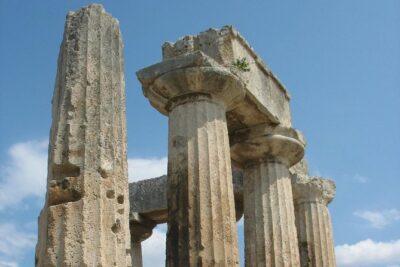
Private Biblical Tour Ancient Corinth & Isthmus Canal from Athens
Read our review →
Ancient Corinth & Nafplio Full Day Trip with Swim
Read our review →
Private Tour of Apostle Paul’s Footsteps in Ancient Corinth
Read our review →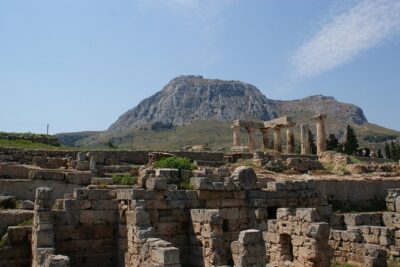
Corinth Half-Day Trip from Athens with Entrance Tickets
Read our review →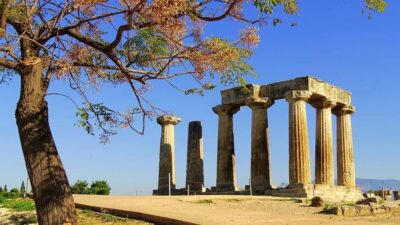
Browse the lists this tour appears in