
Reviewed · ANCIENT CORINTH TOURS
Private Luxury Biblical Tour: Apostle Paul in Athens & Corinth
Paul’s Athens is best read on foot. This private tour links the places tied to Apostle Paul in Athens and Corinth, from the Areopagus to the Bema where he faced Roman officials. I especially like the private car service and the chance to move between major sites without wrestling with Greek roads or public transport. I also like the flexible pace, which lets you spend more time at places that matter most to you.
The main point to understand is that this is a driver-led tour, not a standard guided archaeological tour. Your English-speaking driver can explain Paul’s journeys and Greek history, but a licensed guide to accompany you inside the sites costs extra. Entrance fees, lunch, and gratuities are also outside the advertised price.
In This Review
- Key points at a glance
- Why this Athens and Corinth tour works
- Ancient Agora and the setting of Paul’s Athenian speech
- Areopagus Hill and the Unknown God
- St. Dionysius and the first Athenian convert
- Crossing the Isthmus toward Corinth
- Kenchreai, the port where Paul arrived
- Ancient Corinth, Apollo, Glauke, and the Roman Forum
- Corinth’s museum and the story behind the ruins
- Acrocorinth and a traditional lunch stop
- The Apostle Paul Church in Ancient Corinth
- What the driver-led format is really like
- Cost, timing, and who gets the best value
- Should you book this Apostle Paul tour?
- FAQ
- How long does the tour last?
- Where can I be picked up?
- What type of vehicle is used?
- Is the tour private?
- Is an English-speaking guide included?
- Are entrance fees included?
- Is lunch included?
- What should I bring?
- What is the cancellation policy?
Key points at a glance
- Follow Paul from Athens to Corinth: Visit the Ancient Agora, Areopagus Hill, Kenchreai, Ancient Corinth, and the Bema.
- Private transport for up to seven people: Groups of one to four use a luxury sedan, while groups of five to seven travel by minivan.
- Comfort matters on this long day: Air conditioning, bottled water, WiFi, hotel or port pickup, and a cool car between stops make the schedule easier.
- The driver makes the difference: Periklis, Demetrios, Nick, Giorgos, Manos, and Makis are among the drivers praised for warmth, flexibility, storytelling, and historical insight.
- Budget for extras: The tour costs $250.90 per person, with about €36 per person for admissions, plus lunch and any tip.
- Expect a full day: The experience lasts about eight to nine hours, including the drives between Athens and Corinth.
Why this Athens and Corinth tour works
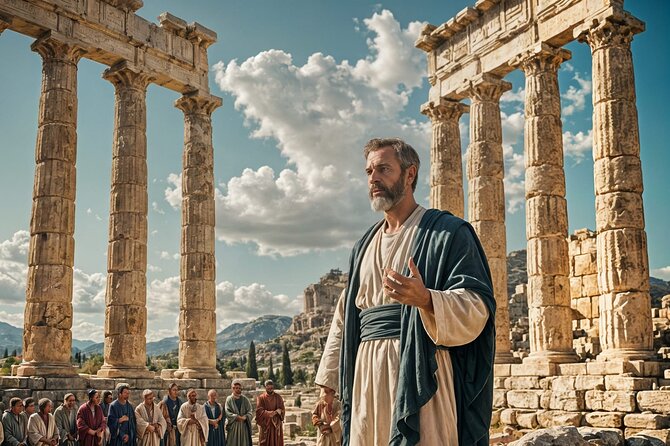
I see this as a focused history day rather than a general sightseeing tour. You are not simply checking off the Acropolis and a few famous ruins. You are tracing the setting of Paul’s time in Greece, then watching the story widen from Athens’ intellectual center to Corinth’s Roman commercial world.
The route also gives you a useful contrast. Athens brings philosophy, public debate, and religious competition. Corinth adds ports, trade, Roman law, temples, and the practical challenges of building an early Christian community. That combination gives the biblical story a physical setting.
The private format is a real advantage. Your driver collects you at your hotel or selected port location, and your group stays together throughout the day. For four people or fewer, the vehicle is a luxury sedan. Larger groups of five to seven use a minivan. Either way, you have air conditioning and a place to rest during a hot Greek afternoon.
The day is not cheap. At $250.90 per person, it makes the most sense for people who value a private vehicle, hotel or port pickup, and a route that would be awkward to arrange independently. Add the stated €36 admission cost per person, lunch, and a tip, and the total rises quickly.
Still, splitting the cost among several people improves the value. A private car also saves you the trouble of finding transport between Athens and the Corinth area, then coordinating several archaeological sites on your own.
More Ancient Corinth trips:
- From Athens: Ancient Corinth Day Trip with Canal & VR Guide
★ 4.6 · 1,073 reviews - Private Biblical Tour Ancient Corinth & Isthmus Canal from Athens
★ 5.0 · 762 reviews - Athens: Ancient Corinth & Nafplio Full Day Trip with Swim
★ 4.8 · 523 reviews
Ancient Agora and the setting of Paul’s Athenian speech
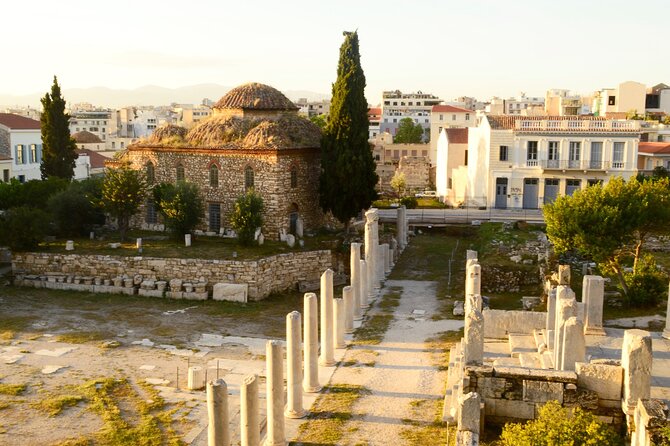
The Ancient Agora is your first major stop, with about 40 minutes to explore. This was the civic heart of Athens, where public life, politics, trade, philosophy, and religion met in one crowded setting.
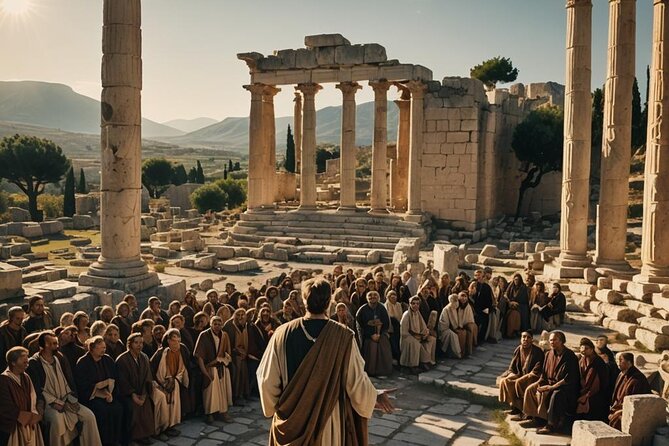
Paul’s speech to the Athenians is connected with this wider area and the Areopagus nearby. Walking among the remains helps you understand why Athens was such a demanding place for a new preacher. Paul was speaking in a city already filled with schools of thought, shrines, public debate, and established religious customs.
The archaeological site includes remains of temples, statues, and public buildings. Your admission ticket is not included, so plan on the additional €36 per person listed for archaeological sites and museums. Forty minutes gives you a useful introduction, but it is not enough for a slow archaeological study of every building.
If ancient architecture is your main interest, you may want to ask your driver how much time is practical here before setting off. The day covers a lot of ground, so each stop has a time limit.
Areopagus Hill and the Unknown God
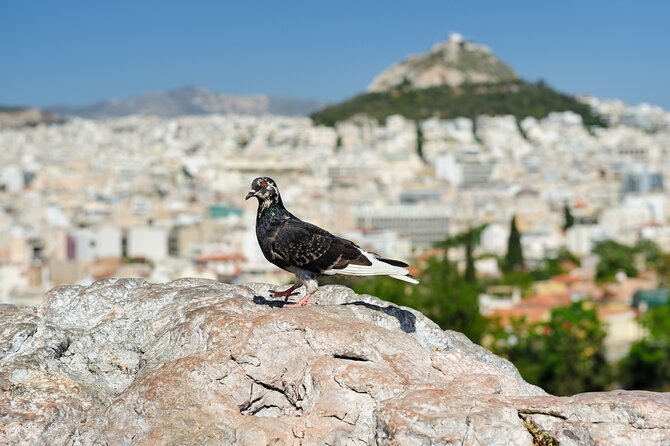
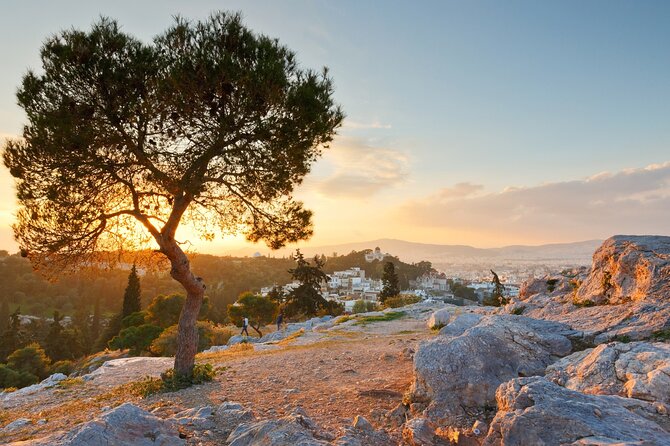
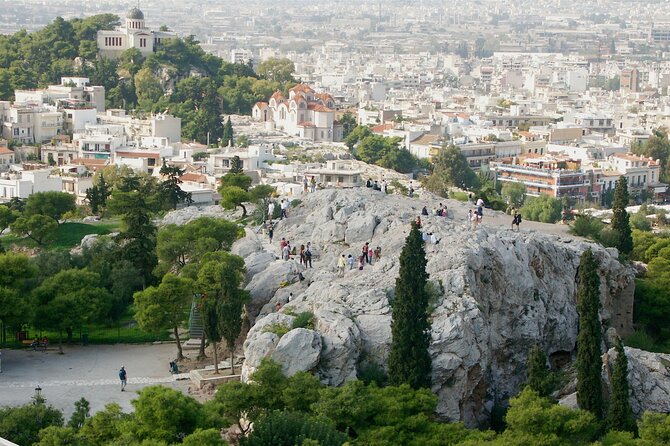
The Areopagus receives about 30 minutes and costs nothing to enter. This rocky rise offers wide views toward Athens and the Acropolis, but its main value is the biblical connection.
According to Acts, Paul addressed the Athenians here about the altar dedicated to an unknown god. The setting helps explain the tone of his message. He was speaking to people who already took religious questions seriously, but who understood the divine through a very different set of traditions.
The footing can be uneven, so wear sturdy shoes. A hat and sunscreen are sensible too, especially because much of the day takes place outdoors. I would treat this as a place for a short explanation, photographs, and quiet reflection rather than a long archaeological visit.
St. Dionysius and the first Athenian convert
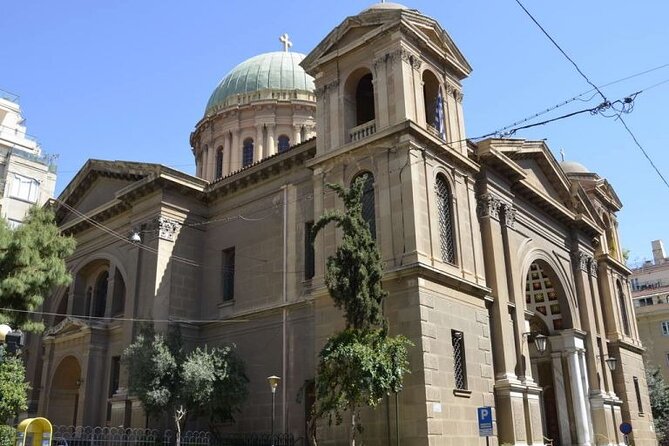
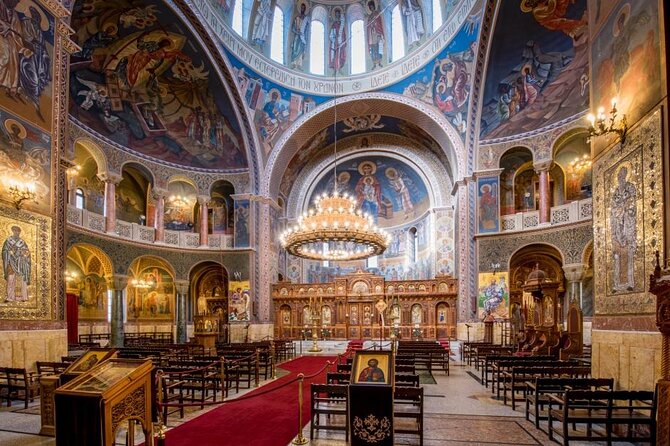
The Church of St. Dionysius the Areopagite is a brief 20-minute stop. It honors Dionysius, described in the tour as a judge of the Areopagus who became one of Paul’s early converts in Athens.
This visit adds a personal name to the story. Instead of thinking only about Paul addressing a crowd, you can consider the individual Athenians who responded to his teaching. The church provides a calmer pause after the open rock of the Areopagus.
The stop is free, and the short duration means you should not expect a full church-history visit. Its importance is mainly its connection with the early Christian community in Athens.
More things to do in Athens:
- Athens: Acropolis & up to 5 Archaeological Sites Combo Pass
★ 4.4 · 12,619 reviews - Athens: Acropolis Ticket with Optional Audio or Live Guide
★ 4.2 · 11,055 reviews - Athens: Acropolis, Parthenon & Acropolis Museum Guided Tour
★ 4.8 · 9,316 reviews - Athens: Cape Sounion & Poseidon Temple Sunset Half-Day Trip
★ 4.8 · 8,241 reviews
Crossing the Isthmus toward Corinth
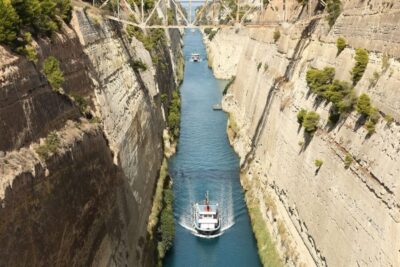
The drive to the Corinth area changes the scale of the day. At the Isthmus of Corinth, you stop for about 20 minutes to see the narrow land bridge joining mainland Greece with the Peloponnese.
The Corinth Canal cuts through this connection and reflects a much later period of engineering. The stop is not directly about Paul, but it gives you a strong geographical orientation. Corinth’s position between two seas helped make it commercially important, and the canal makes that location easy to understand at a glance.
This is also one of the points where the private vehicle earns its keep. You can step out, take in the view, and return to an air-conditioned car without dealing with a complicated local connection.
Kenchreai, the port where Paul arrived

At Ancient Kenchreai, you spend about 20 minutes near Corinth’s eastern port. The site is linked with Paul’s arrival in 53 AD and once served as an important Roman-era commercial harbor.
Today, the remains include parts of harbor facilities, temples, and early Christian structures. The ruins are less complete than the main archaeological site at Ancient Corinth, so your driver’s explanation matters here. Without context, you may see only scattered remains near the water.
This stop is best for understanding movement. Paul’s work in Greece was connected not just to city streets and public forums, but also to the ports that carried people, goods, and ideas around the ancient Mediterranean.
Ancient Corinth, Apollo, Glauke, and the Roman Forum
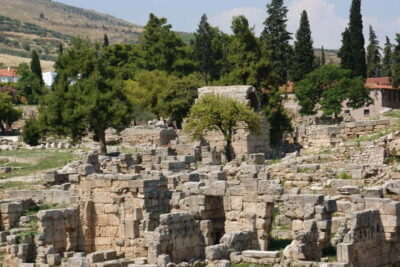
Ancient Corinth is the center of the day, with about an hour assigned to the main ruins. Admission is not included, and the ticket cost should be part of your planning.
The Temple of Apollo is one of the most recognizable sights. Its surviving Doric columns convey the age and importance of the city, even though the original complex is largely gone. It offers a clear reminder of the religious world Paul encountered.
The Glauke Fountain brings mythology into the route. It is associated with the story of Glauke, the daughter of King Creon, who sought refuge there after being poisoned by Medea. This is a useful change of pace from the strictly biblical material, since Corinth’s past includes both myth and documented Roman history.
The Roman Forum and Paul’s Column are more directly connected to Acts 18. The raised Bema served as a public platform and tribunal. Tradition places Paul before Gallio, the Roman proconsul, around 51 AD, after accusations that he was promoting a new religion.
The account is important because Gallio dismissed the case, allowing Paul to continue his work. You can see how Roman law, local politics, and religious disputes affected the early Christian mission.
The tour later gives another short 10-minute stop at the Bema itself. That may sound repetitive, but it can be useful if the first visit focuses on the wider ruins and the second on the biblical event. Ask your driver how the time will be divided so you know what to expect.
Corinth’s museum and the story behind the ruins
The Archaeological Museum of Corinth receives about an hour. This is one of the best places to add detail to what you have seen outside.
The collection covers prehistoric objects through the Roman period, including statues, pottery, and material from the Sanctuary of Asklepios. Museum displays can also help you make sense of ordinary life, worship, and public art in Corinth, subjects that are harder to grasp from broken walls alone.
This is another ticketed stop. If you want serious archaeological explanation inside the museum, remember that the included service is a driver with historical knowledge, not a licensed guide accompanying you through every room.
Acrocorinth and a traditional lunch stop
Acrocorinth receives about an hour and 10 minutes, making it one of the longer stops. This fortified acropolis rises above the ancient city and contains layers from classical Greek, Byzantine, Frankish, and Ottoman periods.
The views are a major part of the appeal. You can see why this high ground mattered for defense and control. The site also involves walking over uneven ground, so comfortable footwear is essential.
Lunch is scheduled at a nearby traditional taverna, but the meal is not included. The exact restaurant is not fixed in the information provided. Several people who took the tour praised the food, cold drinks, and views at the lunch stop, and Periklis was also praised for directing one group to a rooftop restaurant in Athens on another occasion.
That kind of personal help can be valuable, but you should still treat lunch as your own expense. If you have dietary needs, ask in advance what can be arranged.
The Apostle Paul Church in Ancient Corinth
The final stop is the Church of Apostle Paul, a three-aisled basilica built in 1936 on the site of an earlier church associated with Paul. You spend about 20 minutes here.
This is a modern place of worship rather than an ancient ruin, but it provides a fitting close to the day. After seeing the forum where Paul faced Roman officials and the port through which he arrived, the church connects those ancient events with continuing Christian memory in Corinth.
The stop is free. Depending on the day’s timing, it may feel like a quiet final reflection before the drive back to Athens.
What the driver-led format is really like
The most praised part of this experience is the person behind the wheel. Periklis is repeatedly described as friendly, flexible, entertaining, and strong on Paul’s story. Demetrios is praised for humor and warmth, while Nick receives credit for handling Athens’ narrow, crowded streets and adapting the schedule to what the group wanted.
Giorgos Kalantzis is praised for staying close while people explored independently, then having the cool car ready for the next leg. Manos is described as attentive and willing to check if the group needed anything. Makis is remembered for conversation about Greek culture and everyday life.
Names and assignments can change, so you cannot choose a particular driver unless the company confirms it. The pattern is clear, though: personal service is a major part of the experience.
You should also set your expectations correctly. The driver can offer historical and biblical discussion, but the tour does not include a licensed guide inside the archaeological sites. If you want detailed interpretation of every monument, arrange that extra service before the day begins.
Cost, timing, and who gets the best value
The price is $250.90 per person for an eight to nine-hour private experience. Included are private transport, air conditioning, bottled water, WiFi, hotel or cruise port pickup and drop-off, and an English-speaking driver.
The listed extras are important:
- Archaeological sites and museum admissions: €36 per person
- Lunch in Ancient Corinth
- Gratuity
- Airport pickup, if needed
The tour is strongest for couples, families, and small groups who want door-to-door service and a faith-focused route. It also suits cruise passengers who want an organized day from the port, provided the timing matches your ship schedule.
I would not choose it if you want a slow, specialist archaeological study or a fully guided museum experience. The schedule is long, the sites are spread out, and the heat can be tiring. Yet the ability to return to a clean, cool car between stops makes the day much more manageable.
Comfortable shoes, sunscreen, and a hat are practical essentials. Most people can take part, but the route includes outdoor ruins and uneven surfaces, especially around Acrocorinth.
Should you book this Apostle Paul tour?
Book it if you want to connect Athens and Corinth in one private day, especially if Paul’s story is central to your trip. The route is thoughtfully chosen, the transport removes much of the hassle, and a good driver can turn a long day into a personal conversation about scripture, Greek culture, and ancient history.
Before paying, confirm three things: the €36 admission cost, the lunch budget, and whether you want to add a licensed guide. If you are comfortable with a driver-led format, the tour offers a convenient and meaningful way to follow Paul’s footsteps. If detailed site interpretation matters most, pay for the additional guide or choose a tour built around one.
FAQ
How long does the tour last?
The experience lasts approximately eight to nine hours, including travel time between Athens, Corinth, and the return point.
Where can I be picked up?
Pickup is available from designated Athens hotels, apartments, and selected cruise port locations. Airport pickup is also available for an additional cost.
What type of vehicle is used?
Groups of one to four people travel in a luxury sedan. Groups of five to seven use a comfortable minivan.
Is the tour private?
Yes. Only your group participates in the activity.
Is an English-speaking guide included?
An English-speaking driver with historical knowledge is included. A licensed guide who accompanies you into archaeological sites is not included, but can be arranged for an additional cost.
Are entrance fees included?
No. Entrance fees for archaeological sites and museums are not included. The stated cost is €36 per person.
Is lunch included?
No. A lunch stop is scheduled near Ancient Corinth, but the cost of the meal is your responsibility.
What should I bring?
Wear comfortable footwear and bring a hat and sunscreen. Bottled water is provided, and the vehicle is air conditioned.
What is the cancellation policy?
You can cancel for a full refund up to 24 hours before the experience starts. Cancellations or changes made less than 24 hours before the start time are not refunded. If poor weather forces cancellation, you can choose another date or receive a full refund.
Just added around Athens
- Athens Hotels to Athens Airport Private Departure Transfer★ 5.0 · 40 reviews
- Private One-way Transfer between Athens International Airport and Athens Hotels★ 4.5 · 40 reviews
- Athens: Acropolis Museum Ticket with Self-Guided Audio tour App★ 3.5 · 40 reviews
- From Athens: Meteora Train Trip with Overnight Stay★ 4.8 · 40 reviews
- Athens Photography Tour★ 5.0 · 40 reviews
- Athens: Acropolis Visit and City Night Tour★ 4.7 · 40 reviews
- Delphi Full Day Private Trip From Athens With Lunch Overlooking the Sea★ 5.0 · 40 reviews
- Acropolis & Plaka Neighbourhood Private Tour with Licensed Expert★ 5.0 · 40 reviews
Ancient Corinth Tours, compared.
Ancient Corinth Day Trip with Canal & VR Guide
Read our review →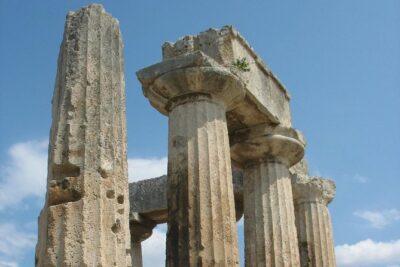
Private Biblical Tour Ancient Corinth & Isthmus Canal from Athens
Read our review →
Ancient Corinth & Nafplio Full Day Trip with Swim
Read our review →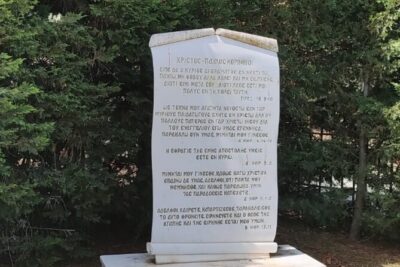
Private Tour of Apostle Paul’s Footsteps in Ancient Corinth
Read our review →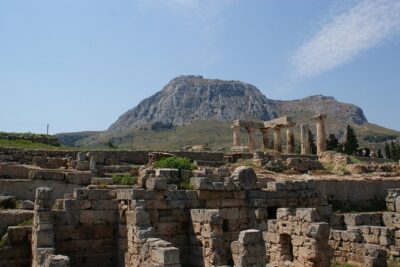
Corinth Half-Day Trip from Athens with Entrance Tickets
Read our review →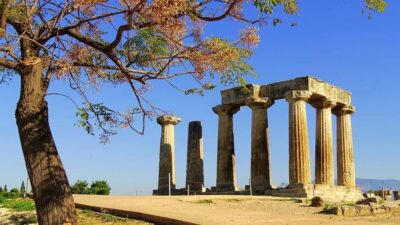
Browse the lists this tour appears in