
Reviewed · OLIVE OIL TASTINGS
Kalamata- Olive oil & Wine Tour with traditional lunch
Olive oil tastes different at its source. This half-day outing pairs hands-on olive oil tasting with wine, village food, and views from Androusa’s 13th-century castle. I especially like the mix of working sites and old traditions, plus the generous homemade lunch that turns a tasting into a full cultural experience. The main consideration is transport: you must make your own way to Androusa, about 10:00 am.
The setting between Kalamata and Messene gives the tour a strong sense of place. I also like the small-group format, listed at up to 16 people, with the experience designed around food, conversation, and practical lessons rather than a quick sample at a counter. Guides such as Athanasia and Dimitra have been praised for bringing energy and warmth, while Georgia is closely associated with the homemade meal.
In This Review
- Key points at a glance
- Starting at Androusa Castle
- Seeing how Greek wine is made
- Comparing a modern mill with a 1904 olive mill
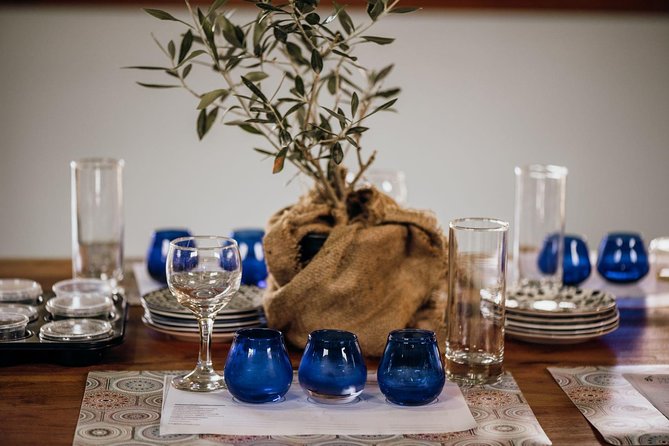
- Learning to taste olive oil properly
- Meze, local products, and the long lunch
- How the timing and group size affect the day
- Is $108.84 a fair price?
- Who will enjoy this Androusa experience?
- Useful booking and cancellation details
- Should you book the Kalamata olive oil and wine tour?
- FAQ
- Where does the Kalamata olive oil and wine tour start?
- What time does the tour begin?
- How long does the tour last?
- Does the tour include transportation from my hotel?
- Where does the tour end?
- How many people can join the tour?
- How many olive oils and wines are included in the tasting?
- What food is included with lunch?
- What happens if bad weather cancels the tour?
Key points at a glance
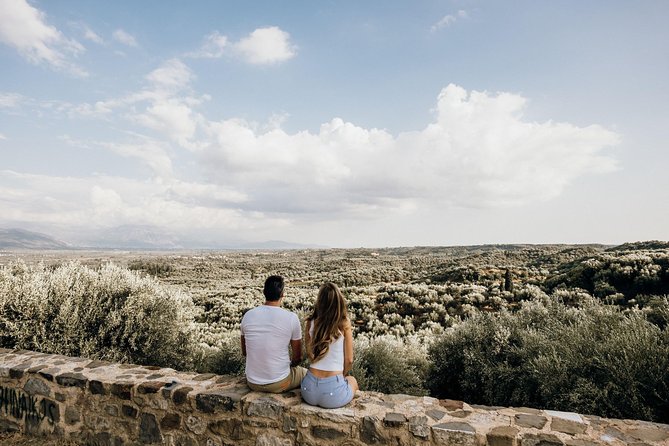
- Castle views before breakfast: Begin at the 13th-century Castle of Androusa, with wide views across the olive groves of Messinia.
- Three olive oils and three wines: The tasting puts Greek varieties side by side, helping you notice differences in aroma, flavor, and peppery finish.
- Two olive mills, two time periods: See a modern mill and visit a traditional mill founded in 1904.
- Food is part of the lesson: Greek meze, olive pairings, local wine, and lunch show how olive oil works at the table.
- A proper village lunch: Expect salads, cheeses, Kalamata olives, kagianas, smoked pork, sausage, local pie, lalagia, and dessert.
- Good value for food lovers: At $108.84 per person, the price covers a guided tour, tastings, lunch, wine, and a focused look at local food production.
Starting at Androusa Castle
The meeting point is on Epar.Od. Ellinoklissias-Androusa 26 in Androusa, with the tour beginning at 10:00 am. There is no hotel pickup, so you need to arrange your own transport from Kalamata or elsewhere in the Peloponnese.
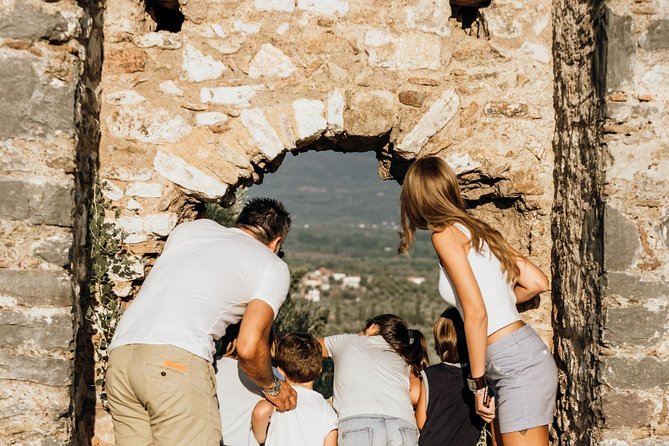
Starting at the 13th-century Castle of Androusa is a smart choice. It gives you a quick sense of the area before the food begins. From the castle, you can look over the long rows of olive trees and hear about local history, customs, and mythical stories tied to the region.
This opening also helps you understand that the tour is not only about buying a bottle of oil. Olive growing shapes the economy, meals, and identity of Messinia. The views provide the setting, while the stories connect the grove to the village and the people who work there.
The castle stop may be brief compared with the food and mill visits, so do not book this as a fortress tour. Its value is the outlook and the introduction to Androusa.
More Olive Oil Tastings in Greece:
- Knossos-Zeus Cave -Old Traditional Villages-Olive Oil Factory
★ 5.0 · 694 reviews - The Governor’s Olive Mill Tour with Olive Oil Tasting
★ 5.0 · 502 reviews - From Chania: Olive Oil, Wine, Cheese & Honey Tasting Tour
★ 4.6 · 490 reviews
Seeing how Greek wine is made
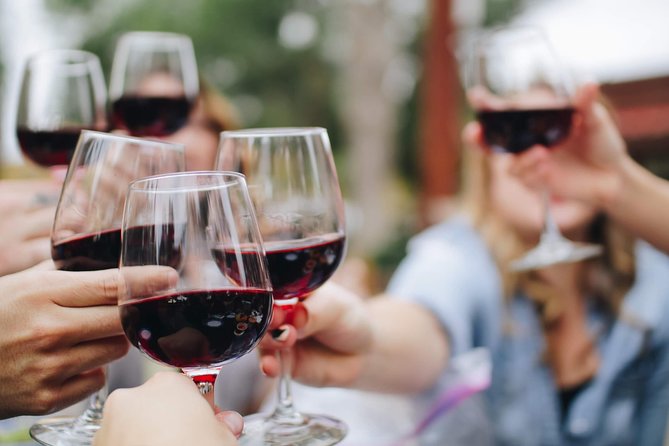
The winery visit gives the experience a second agricultural focus. You will observe how Greek wine is produced, then taste at least three wines with guidance on their aromas and flavors.
That guidance matters. A casual wine tasting can become a blur of glasses, especially when you are also thinking about lunch. Here, the tasting is meant to help you compare the wines and understand how each one differs. You do not need advanced wine knowledge. The point is to learn what you like and why.
The tour includes three wine varieties as part of the broader workshop. The exact wines can vary, so it is best to approach the tasting as a chance to discover local choices rather than expecting a fixed list.
You should also know that the wine stop is only one part of a four-hour program. This is not a long winery seminar. It is a balanced introduction that shares time with olives, food, village history, and lunch.
Comparing a modern mill with a 1904 olive mill
In Androusa Village, you visit a modern olive oil mill and see how olives are processed, extracted, and stored. The guide explains the steps and points out the quality factors that separate good extra virgin olive oil from lesser products.
This is one of the most useful parts of the outing because olive oil labels can be confusing. You learn why freshness, handling, extraction, and storage matter. The lesson gives you a better chance of choosing well in a shop later, instead of relying only on an attractive label.
The visit to the olive mill founded in 1904 adds a different mood. It connects today’s production to the long olive-growing tradition of the village. The contrast between old and modern methods makes the story easier to follow. You see that the region’s oil culture is not a recent tourism idea. It has been part of local life for generations.
The tour description presents both mills as important stops, but it does not promise a full technical factory tour. Expect a clear demonstration and explanation, not an engineering course.
Learning to taste olive oil properly
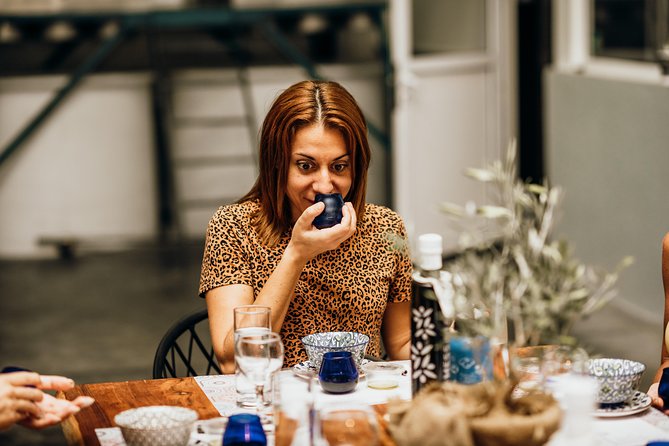
The olive oil workshop is led by a certified olive oil sommelier. You taste three different olive oils, consider different olive varieties, and learn the traits associated with extra virgin olive oil.
The practical lesson is the peppery sensation in the throat. Early harvest oil can have a strong, lively finish, and one particularly praised tasting featured a peppery early harvest oil that made a lasting impression. That sharpness is not automatically a fault. It can be a sign of freshness and the presence of natural compounds from the olives.
You will also work through food pairings with Greek meze. This is more useful than tasting oil from a spoon alone. Bread, vegetables, cheese, olives, and other small dishes show how the oil behaves with real food.
I like this approach because it keeps the tasting friendly. You are learning by smell, flavor, and comparison, not by memorizing technical terms. The session is serious enough to teach you something, but relaxed enough for couples, families, and friends with different levels of interest.
More Wine Tours in Greece:
- Santorini Wine Adventure with 12 Wine Tastings, Tapas and Sunset
★ 5.0 · 1,715 reviews - Tour and Wine Tasting in Mykonian Land
★ 5.0 · 1,357 reviews - Santorini Wine Stories: Sunset Tour with Tasting & Dinner
★ 5.0 · 1,285 reviews - Athens: Classic Cooking Class with Market Visit and Wine
★ 5.0 · 1,101 reviews
Meze, local products, and the long lunch
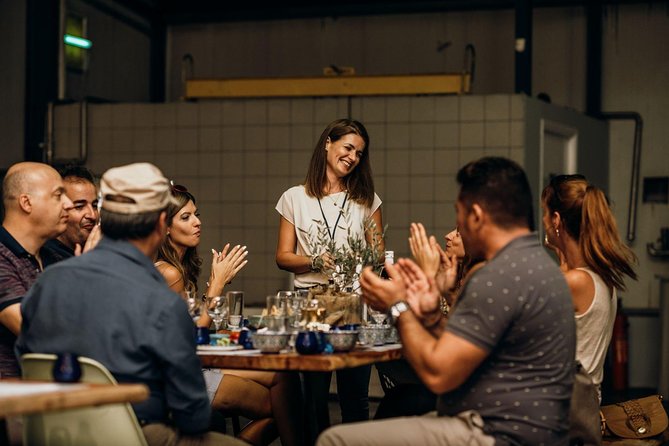
The meal is not a token sandwich after the tasting. It is a full spread of local dishes, wine, and dessert, and it forms the warmest part of the experience.
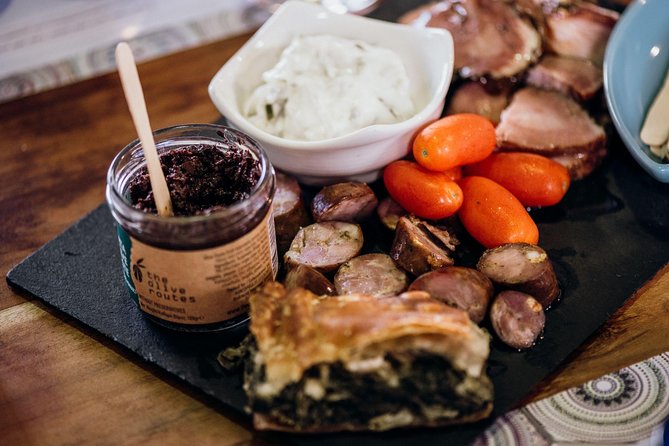
You can expect fresh salads and vegetables from the garden, tzatziki, feta, Greek Gruyère cheese, Kalamata olive tapenade, and Kalamata olives. Lalagia, fried bread sticks served with olive marmalade, adds a local touch. A pie made with fresh phyllo dough brings another homemade element to the table.
The main dishes include kagianas, a traditional preparation of eggs and tomatoes, along with smoked pork and sausage. Dessert is either halvas or yogurt with fruit. The exact meal may depend on what is available, but the menu gives you a broad taste of the region rather than one signature dish.
The food is paired with olive oils so you can see how different oils change the same meal. Local wine is included as well. That combination makes the lunch feel like the final lesson of the morning, but it is also simply a generous meal.
Georgia is associated with preparing the food, and the cooking has been praised as homemade and family-style. That personal quality matters. You are not just receiving a plate designed for speed. You are sitting down to food connected to the people hosting the experience.
How the timing and group size affect the day
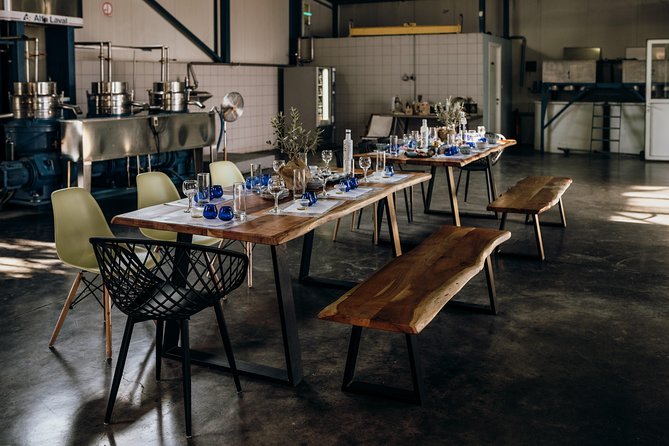
The tour lasts about four hours and starts at 10:00 am. That timing gives you enough room for the castle, winery, mills, tasting workshop, and lunch without taking up your entire day.
A morning start also makes sense for a food tour. You have time for the meal before the afternoon, and you can still plan other activities around Kalamata or Messene afterward. Since the tour ends back at the meeting point, your return transport is straightforward if you drove yourself.
The group size needs a small note. The highlights describe a group of no more than 12, while the additional information allows a maximum of 16. Plan for a small to medium group rather than a private tour. Even with 16 people, the hands-on format can feel personal, but you may not have unlimited time for individual questions at every stop.
Several guides are praised for making the group feel connected. Athanasia is described as lively and well informed, while Dimitra is known for an interactive, friendly approach. The mood seems to depend partly on the guide assigned that day, but the experience is clearly built around personal hosting rather than an impersonal audio explanation.
Is $108.84 a fair price?
At $108.84 per person, this is not the cheapest way to spend a morning in the Kalamata area. The value improves when you count what is included: two types of production visits, guided wine and olive oil tastings, meze, food pairing, a full lunch, local wine, dessert, and the guide’s instruction.
You are paying for access and context as much as for food. Buying a bottle of oil and a winery tasting separately would not give you the same comparison between olive varieties, production methods, and table pairings. The lunch also appears substantial enough to replace a separate midday meal.
The price makes the most sense if you enjoy food, wine, rural traditions, or cooking. If you only want a scenic drive or a quick sample of Kalamata olives, the tour may feel too detailed. For anyone who wants to understand why Messinia’s olive oil matters, it offers a fair package.
Remember that transport from your hotel is not included. Add that cost, and allow time to reach Androusa before the 10:00 am start.
Who will enjoy this Androusa experience?
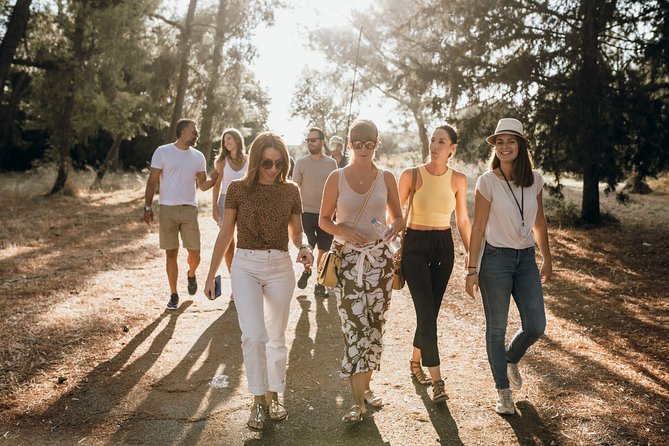
I would choose this tour for couples, food-focused families, and friends who want an easy introduction to Greek wine and olive oil. You do not need to be a serious cook or wine expert. The tasting is guided, and the explanations are designed to make unfamiliar flavors easier to recognize.
It also suits people who want a break from major archaeological sites. The castle, village, olive groves, mills, and lunch show a quieter side of the Peloponnese. The experience feels rooted in local production rather than built around a long list of sights.
The tour may be less suitable if you need hotel pickup, dislike group activities, or want a highly technical winery visit. The four-hour schedule is full, so visitors seeking a slow day with lots of free time may find it busy.
Service animals are allowed, and most people can participate. The experience requires good weather, so a poor-weather cancellation may lead to another date or a full refund.
Useful booking and cancellation details
Confirmation is provided when you book, and the ticket is mobile, which keeps arrival simple. The activity begins and ends at the same Androusa meeting point.
Free cancellation is available if you cancel at least 24 hours before the 10:00 am start. Changes or cancellations made inside that window are not accepted for a refund. The weather policy matters here because the experience takes place partly outdoors. If poor weather forces cancellation, you can choose a different date or receive a full refund.
One practical tip is to bring cash if you may want to buy wine after tasting it. Bottles are not included, and having money ready can save you a second visit or a hunt for a shop later.
Should you book the Kalamata olive oil and wine tour?
I would book it if you want food to be the center of your time in Messinia. The strongest features are the clear olive oil lesson, the comparison of modern and historic mills, the scenic start at Androusa Castle, and the homemade lunch with many dishes.
The experience is especially good value for someone who wants more than a tasting flight. You learn how the products are made, test them with food, and finish with a meal that feels tied to the village. Allow for your own transport, accept that the group may reach 16 people, and bring cash for any wine purchases.
Skip it if your main goal is a private tour, hotel pickup, or a long specialist wine session. For most food lovers visiting Kalamata, though, this is a thoughtful and satisfying half-day that connects the bottle on your table with the groves, mills, and people behind it.
FAQ
Where does the Kalamata olive oil and wine tour start?
The tour starts at Epar.Od. Ellinoklissias-Androusa 26, Androusa 240 13, Greece, at the 13th-century Castle of Androusa.
What time does the tour begin?
The experience begins at 10:00 am.
How long does the tour last?
The tour lasts approximately four hours.
Does the tour include transportation from my hotel?
No. Transport from and to your hotel is not included. You must reach the meeting point in Androusa yourself.
Where does the tour end?
The activity ends back at the meeting point in Androusa.
How many people can join the tour?
The maximum group size is listed as 16 people. The tour highlights also describe a smaller group of no more than 12, so the exact size may vary.
How many olive oils and wines are included in the tasting?
The workshop includes three different olive oil varieties and three wine varieties.
What food is included with lunch?
The meal includes salads and vegetables, tzatziki, feta, Greek Gruyère, Kalamata olives and tapenade, kagianas, smoked pork, sausage, local pie, lalagia with olive marmalade, dessert, and local wine.
What happens if bad weather cancels the tour?
If the experience is canceled because of poor weather, you can receive a full refund or choose a different date.
More Lunch Experiences in Greece
- All Day Cruise -3 Islands to Agistri,Moni, Aegina with lunch and drinks included
★ 5.0 · 4,958 reviews - From Athens: Hydra, Poros, and Aegina Day Cruise with Lunch
★ 4.1 · 4,305 reviews - Athens: Meteora Monasteries Day Trip with Caves and Lunch
★ 4.7 · 2,964 reviews - From Kos: 3-Island Pirate Cruise with Lunch and Waterslide
★ 4.5 · 2,564 reviews
Just added around Greece
- Lasithi –Plateau Traditional Vilages★ 5.0 · 40 reviews
- Athens Hotels to Athens Airport Private Departure Transfer★ 5.0 · 40 reviews
- Santorini 5 Hour Private Oia Tour & Lunch/Dinner at a Local Farm★ 5.0 · 40 reviews
- The Palace of Knossos with Skip-the-Line Ticket★ 5.0 · 40 reviews
- From Chania: Preveli Palm Beach Day Tour★ 4.3 · 40 reviews
- Private One-way Transfer between Athens International Airport and Athens Hotels★ 4.5 · 40 reviews
- Chania Morning Catamaran Cruise with Premium Lunch & Drinks★ 5.0 · 40 reviews
- From Thessaloniki: Meteora Small Group Day Trip★ 5.0 · 40 reviews
Olive Oil Tastings, compared.
Knossos-Zeus Cave -Old Traditional Villages-Olive Oil Factory
Read our review →
The Governor’s Olive Mill Tour with Olive Oil Tasting
Read our review →
Zeus Cave, Lassithi Plateau, Olive Oil Factory, Kritza, Pottery
Read our review →
Knossos & Lasithi Plateau: Zeus Cave,Villages, Olive Oil Tour
Read our review →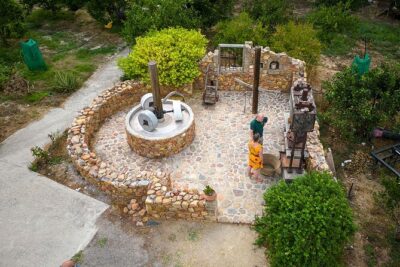
Browse the lists this tour appears in