Reviewed · ATHENS TOURS
From Athens: Explore Ancient Greece 4-Day Tour
Ancient Greece rewards travelers who slow down. This four-day circuit links Epidaurus, Mycenae, Olympia, Delphi, and Meteora, giving you a broad look at Greek mythology, archaeology, Orthodox culture, and mountain scenery without arranging several separate trips. I especially like the inclusion of both major archaeological sites and smaller stops such as Nafplio and Arachova. The air-conditioned bus, hotel stays, breakfasts, and dinners also make a demanding route easier to manage.
I also like the quality of the guiding reported on this tour. Guides including Christina Stamou, Dosia, Sofia, Angela, Stavros, and Panaiota received strong praise for their clear explanations and personal care. The main drawback is the pace: four days covers a large part of mainland Greece, so you spend long stretches on the road and may wish you had more time at some sites.
In This Review
- Key things to know before booking
- Why this four-day route works
- Day one: Epidaurus, Nafplio, and Mycenae
- Day two: Olympia and the road to Delphi
- Day three: A quieter morning at Delphi
- Day four: Meteora monasteries and the return to Athens
- The guide and driver can shape the whole trip
- Hotels, meals, and the real cost
- Who should book this Ancient Greece tour?
- Should you book it?
- FAQ
- What sites are included on the four-day tour?
- Are hotels included?
- Are meals included?
- How much is the hotel tax?
- What languages are available for the live guide?
- Is pickup available from Athens hotels?
- What clothing is required at the Meteora monasteries?
- Can wheelchair users take this tour?
- Can I book a single room?
Key things to know before booking
- Five major ancient sites in four days: You visit Epidaurus, Mycenae, Olympia, Delphi, and Meteora, with very different stories and settings at each stop.
- The guide can make or break the experience: Strong guides such as Christina Stamou, Dosia, and Angela added useful context about mythology, archaeology, and Greek culture.
- Meals are partly covered: Breakfast and dinner are included, while lunches, drinks, personal spending, and hotel tax are extra.
- Meteora requires suitable clothing: Short skirts are not allowed in the monasteries, and women are asked to wear long-sleeved tops.
- The bus ride is part of the bargain: You get a luxury air-conditioned coach, but the route involves substantial driving.
- A good choice for history-focused visitors: The tour suits you best if you prefer seeing many important sites rather than staying several nights in one town.
Why this four-day route works
At $742 per person, this is not a cheap day trip. It is a packaged journey through much of mainland Greece, with three nights in hotels, entrance fees, a guide, coach transport, breakfast, and dinner included. Once you account for the distance between Athens, the Peloponnese, Delphi, and Meteora, the price becomes easier to defend.
The biggest value is convenience. You do not need to work out how to reach remote archaeological sites, compare hotels in several towns, or arrange a new transfer every morning. You can also hear the story of each place as the route unfolds. That matters in Greece, where a column or broken wall can be hard to understand without some background.
The tradeoff is time. This is an overview of ancient Greece, not a slow study tour. You will see a lot, but some visits may feel short, especially if you prefer lingering in museums or walking every corner of a large site.
The transport has received strong marks for comfort. The bus has air conditioning and phone chargers, and drivers such as Evan, George, Leo, Theo, and Stelios were praised for careful driving. One practical point matters here: food and drinks are not allowed on the bus, so plan to eat properly during scheduled stops.
More things to do in Athens:
- Athens: Acropolis & up to 5 Archaeological Sites Combo Pass
★ 4.4 · 12,619 reviews - Athens: Acropolis Ticket with Optional Audio or Live Guide
★ 4.2 · 11,055 reviews - Athens: Acropolis, Parthenon & Acropolis Museum Guided Tour
★ 4.8 · 9,316 reviews
Day one: Epidaurus, Nafplio, and Mycenae
The first morning begins with a drive beside the Corinth Canal. This is a useful opening view of Greece, showing how a narrow cut through the land created a direct sea route between the Corinthian Gulf and the Saronic Gulf.
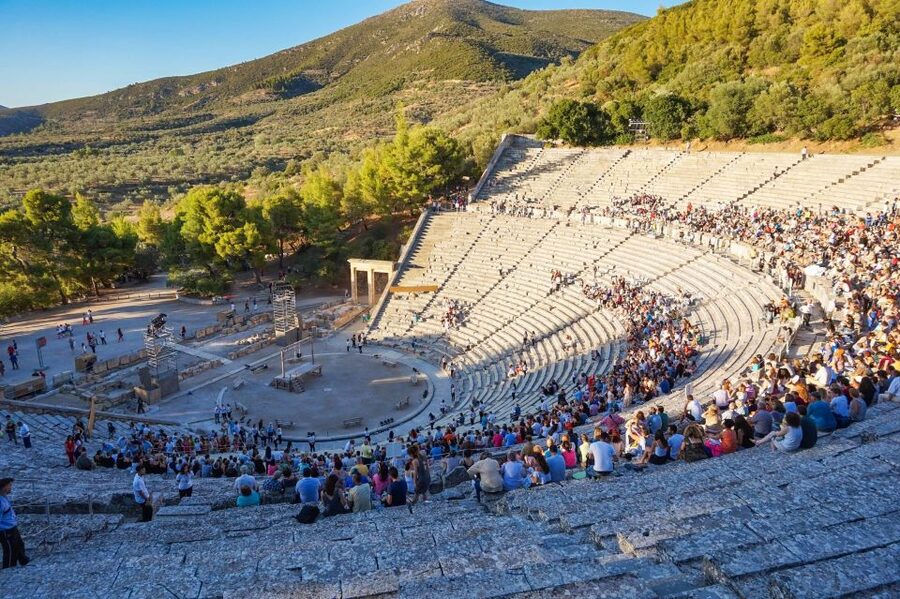
Epidaurus is the first major stop. The sanctuary was linked to Asclepius, the son of Apollo and the Greek god of healing. In antiquity, people came here seeking cures, and the site included religious buildings, treatment areas, and the famous theatre.
The theatre is the clear highlight. Its shape is remarkably balanced, and its acoustics are famous for a reason. You can test the sound from the stage and listen as your voice carries up through the rows. This is one of the few moments on the tour where you can interact directly with an ancient structure rather than simply look at it.
You should wear sensible shoes and expect open-air walking. The site does not require the same amount of time as Olympia or Delphi, but the theatre deserves a quiet pause before you move on.
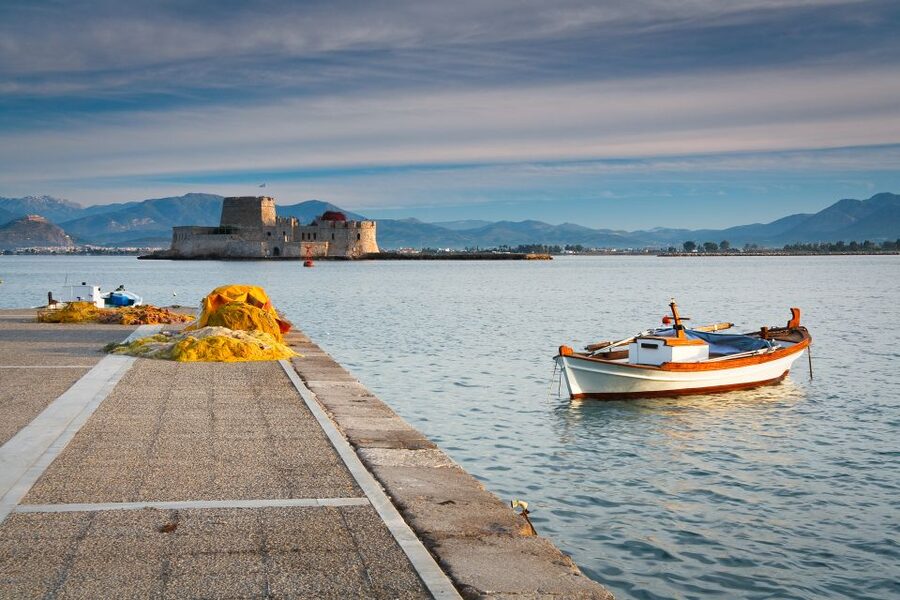
Next comes Nafplio, a seaport town used for a short stop. The schedule does not allow a full exploration, so think of this as a chance to stretch, take in the setting, and see a more relaxed side of the Peloponnese. If you want extended time in Nafplio, you would need a separate visit.
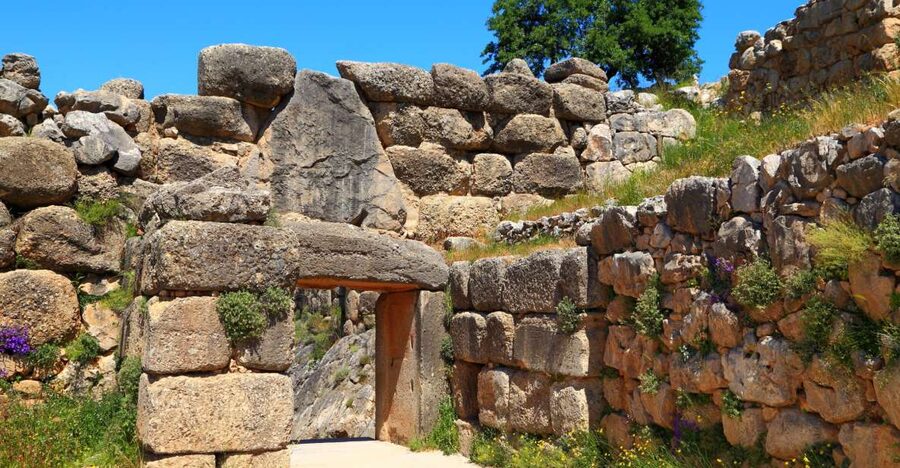
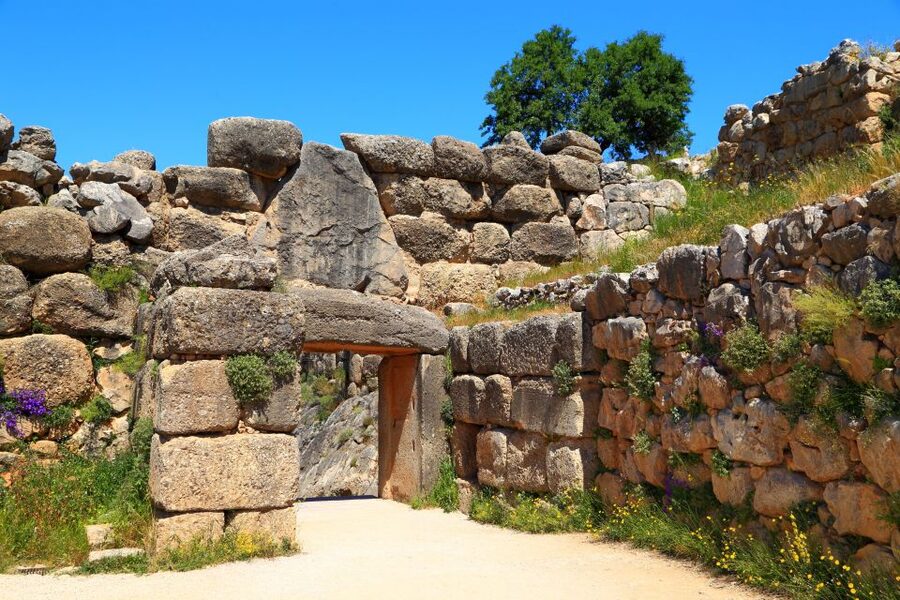
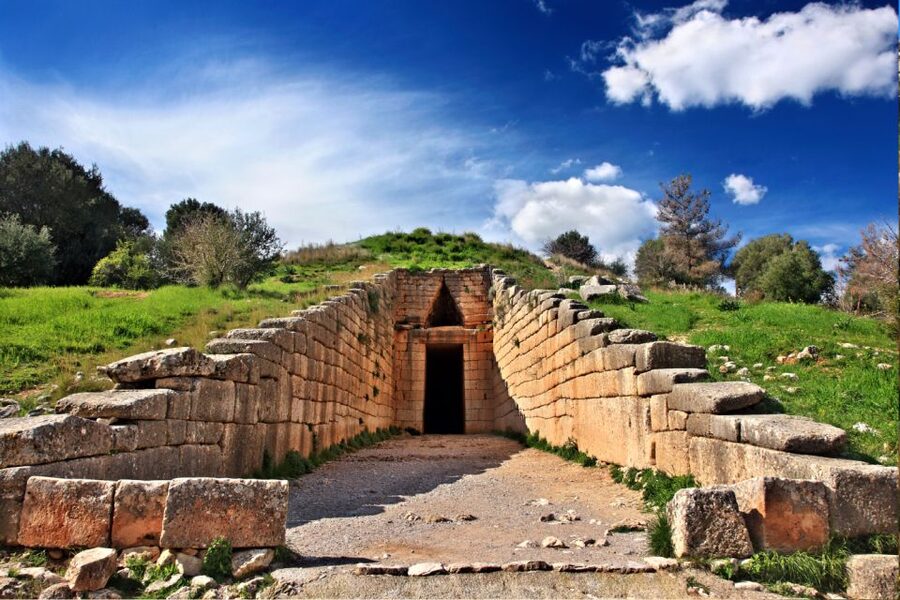
The route continues across the plain of Argos to Mycenae. This was a major centre of Bronze Age Greek civilization, and its hilltop ruins are tied to the legends of Agamemnon and the Trojan War. The famous Lion Gate gives the entrance a memorable sense of arrival, while the Tomb of Agamemnon shows the engineering and ceremony of the Mycenaean world.
Mycenae is more than a collection of stones. Its high position helps you understand why the settlement mattered, and the tomb makes the ancient royal world feel more tangible. Still, the terrain is uneven and exposed, so comfortable shoes, water for the stop, and sun protection are sensible.
The day ends with the journey toward Olympia and an overnight stay. It is a full opening day, with three important stops before the evening meal. You will probably appreciate having dinner arranged rather than searching for a restaurant after a long ride.
Day two: Olympia and the road to Delphi
Olympia is one of the most meaningful stops on the route. This was the home of the ancient Olympic Games, held in honor of Zeus. The site includes the temples of Hera and Zeus, the stadium area, and the altar connected with the Olympic flame.
The setting helps explain the power of the games. Ancient athletes did not compete in a modern stadium with a city skyline around it. They came to a sacred centre where sport, worship, politics, and prestige were closely connected.
The museum adds essential context. It helps you identify sculptures and architectural pieces that can otherwise look like disconnected fragments among the ruins. If your guide offers a focused route through the museum, follow it. A well-structured explanation can save you from wandering past important objects without understanding their place in the site.
Olympia also gives you one of the tour’s more memorable photo opportunities: imagining yourself as an original Olympic athlete and holding the flame high. It is a lighthearted moment, but it connects the modern symbol of the Olympics with its ancient setting.
After Olympia, the coach travels through Patras and crosses the Rio-Antirrio Bridge. The bridge is a striking piece of modern engineering and creates a sharp contrast with the temples and stadiums you have just seen. The route then passes Nafpaktos and follows a scenic coastal road toward Delphi.
This is where the journey becomes a real road trip. You get changing views from the bus, but you also spend a substantial part of the day seated. The tour works best if you see these transfers as part of the experience rather than as wasted time. They connect places that are difficult to combine independently in only four days.
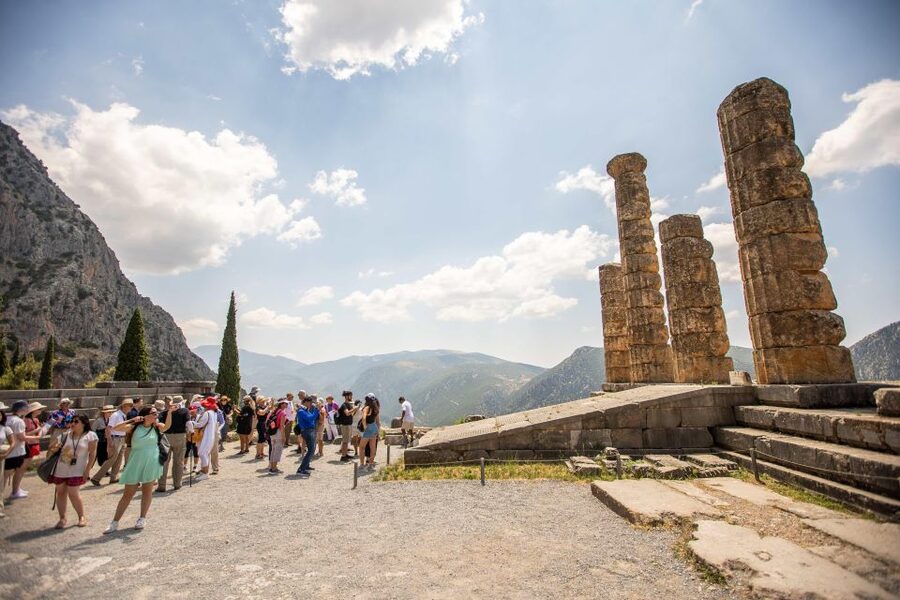
Delphi was considered by the ancient Greeks to be the centre of the world, or the navel of the world. The sanctuary was home to the oracle of Apollo, whose predictions influenced rulers, colonies, and military decisions.
An afternoon visit to Arachova adds a different mood. This mountain village is picturesque and gives you a short break from formal archaeological sites. You then return to Delphi for the night. Hotel quality can vary by stop, but the accommodation is generally described as pleasant, and several properties were praised for views, food, and comfortable surroundings.
Day three: A quieter morning at Delphi
The third morning gives you more time at Delphi, which is welcome after the long transfer from Olympia. The site is set on the slopes of Mount Parnassus, with views that help explain why the ancient sanctuary felt like a meeting point between the human and divine worlds.
The Sacred Way leads through the sanctuary toward the Temple of Apollo. Along the route, you encounter treasuries, monuments, and the theatre. The famous site museum brings together sculpture and architectural pieces from the sanctuary, making it easier to picture what Delphi looked like before earthquakes, weather, and time took their toll.
This is one of the places where a strong guide matters most. Angela, an archaeologist who has guided this route, was praised for helping visitors focus on the most important objects and using photographs to show how the ruins once appeared. Guides such as Dosia and Ivan were also praised for clear explanations of Greek mythology and the wider story of Greece.
Do not expect Delphi to feel like a quick photo stop. The ground is sloped, and the site asks for attention. You will get more from it if you take a moment to look beyond the individual columns and consider why people travelled so far to consult the oracle.
In the afternoon, you leave for Kalambaka, the town below Meteora. This is another long coach ride, but it sets up the final day well. You spend the night close to the monasteries instead of trying to visit Meteora on a rushed day trip from Athens.
The hotel arrangements come in three-star and four-star options. The three-star choice has been described as perfectly serviceable, with some hotels offering pools and pleasant views. The four-star option costs more through the selected package, but the exact difference in comfort depends on the property assigned at each stop.
A few more Athens trips worth weighing up
- 4-Day Classical Greece Tour: Epidaurus, Mycenae, Olympia, Delphi, Meteora
★ 4.5 · 732 reviews - 4-Day Tour of Mycenae, Epidaurus, Olympia, Delphi & Meteora
★ 4.8 · 168 reviews - 4-Day Greece Highlights Tour: Epidaurus, Mycenae, Olympia, Delphi and Meteora
★ 5.0 · 79 reviews
Day four: Meteora monasteries and the return to Athens
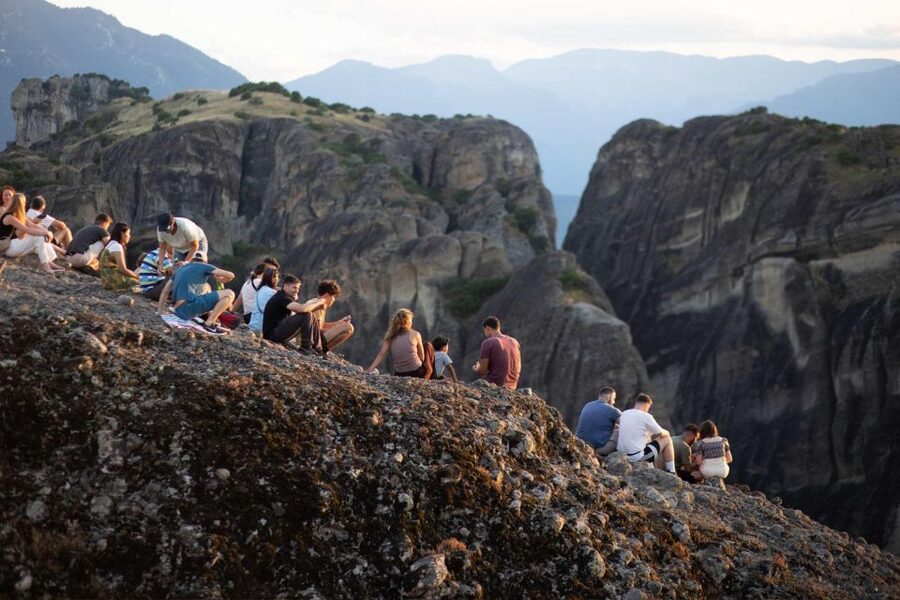
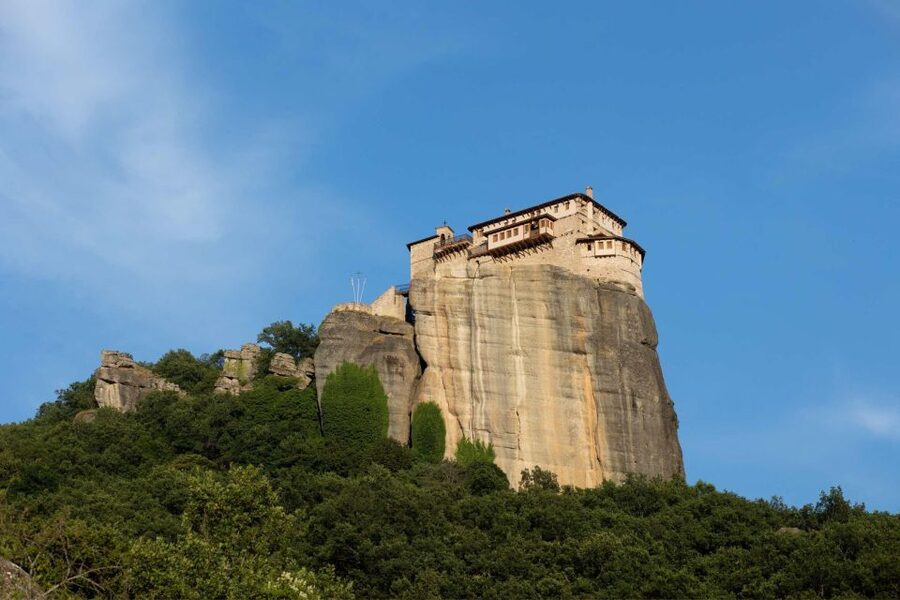
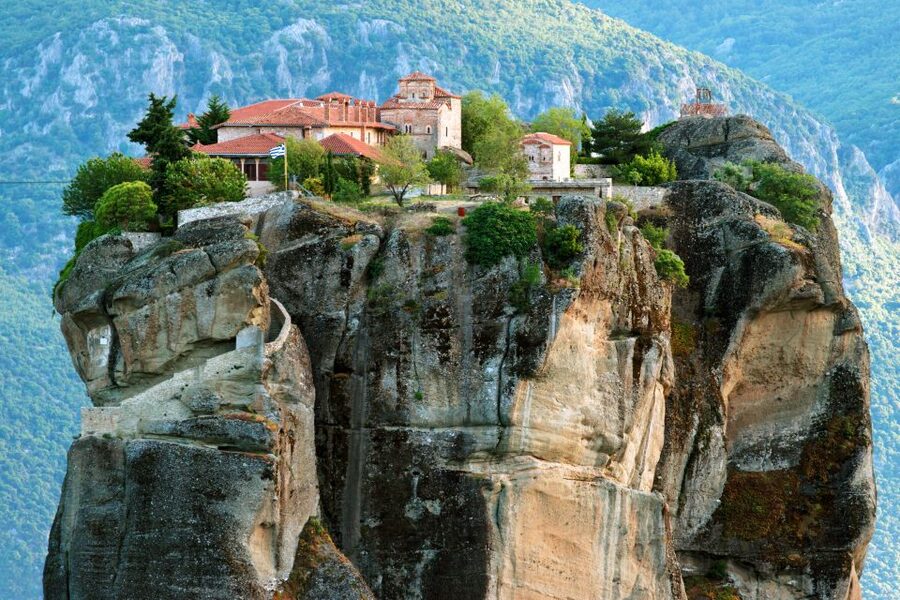
Meteora is the visual climax of the trip. Eastern Orthodox monasteries sit high on sandstone pillars above Kalambaka, surrounded by dramatic rock formations shaped by natural forces. The setting feels very different from Olympia or Delphi, but it belongs on this route because it shows how sacred Greek places continued to develop long after the classical age.
The monasteries are active religious sites, not only monuments. That means you need to dress respectfully. Shorts are not allowed, short skirts are not permitted, and women are asked to wear long-sleeved tops. If you arrive in unsuitable clothing, entry may be restricted, so treat this rule seriously.
The climb and uneven access can also be tiring. This tour is not suitable for wheelchair users, and Meteora may be difficult for anyone with limited mobility. The supplied information does not specify how many steps you will face at each monastery, so you should ask the operator for current access details if that is important to you.
Meteora can feel crowded or less relaxed if the group grows larger for this part of the tour. One smaller group experience was praised for its easy pace, while the expanded group at Meteora made it harder to walk around and hear the guide. That is a useful warning: the group may not feel identical on every day.
The return to Athens includes an optional stop at a factory producing Byzantine-style icons. The tour then passes the monument to Leonidas, the Spartan king associated with the Battle of Thermopylae, before arriving in Athens in the late afternoon.
You should not plan an important evening flight immediately after the tour. The listed arrival is late afternoon, and road conditions can affect the timing. A later hotel check-in or a relaxed final evening is the safer plan.
The guide and driver can shape the whole trip
The sites are the reason to book, but the guide determines how much you take away. The strongest guide praise went to people who combined facts with patience and a clear pace. Christina Stamou was singled out for keeping the group moving while still explaining the sites well. Panaiota was praised for being friendly, calm, and attentive to individual needs.
Sofia was described as approachable and full of information, while Stavros was praised for explaining both ancient Greece and Greece as a modern nation. Ivan’s command of mythology made the route especially memorable for visitors already interested in the subject.
The bus drivers also matter on a route with mountain roads and long transfers. Careful, gentle driving was repeatedly valued, and the air-conditioned coach with chargers adds comfort. You are still spending many hours on the bus, so bring a light layer, keep your daily essentials close, and use every stop to stretch.
The tour is conducted in English or Spanish. Pickup is available from most centrally located Athens hotels, usually about an hour before departure. You can also meet at the operator’s office 15 minutes before departure, which may be easier if you are staying outside the pickup area.
Hotels, meals, and the real cost
The package includes three-star or four-star hotel accommodation, depending on your selection. Breakfast and dinner are included, which is a welcome benefit when you are arriving in a different town each night. Dinner also removes one daily decision after a long day of sightseeing.
Lunch is not included, nor are drinks or personal expenses. Since food and drinks are not permitted on the bus, use the planned stops to buy lunch and water. The exact lunch arrangements are not specified, so do not assume a particular restaurant or meal style.
Hotel tax is paid directly to the hotel. The stated rate is €5 per room per night for three-star hotels and €10 per room per night for four-star hotels. This is a small extra compared with the total package, but you should budget for it.
Each booking covers a double or triple room. If you want a single room, a separate booking for one person is required. Solo visitors should confirm the arrangement before paying, since the advertised per-person price does not automatically mean a private room.
At $742 per person, I see the value in the transport, entrance fees, guide, three nights of accommodation, breakfasts, and dinners. I would not choose it for a slow, flexible holiday. I would choose it when I want to cover the major sites efficiently and avoid the work of connecting them myself.
Who should book this Ancient Greece tour?
I would recommend it most strongly if you:
- Want a broad introduction to Greek archaeology and mythology
- Prefer an organized route with hotels and dinners included
- Enjoy learning from a live guide rather than exploring every site alone
- Are comfortable with long coach journeys and a full sightseeing schedule
- Want to combine classical ruins with Meteora’s Orthodox monasteries
- Can walk on uneven archaeological ground and manage stairs
You may want a different plan if you prefer slow mornings, long stays in one town, or extensive time inside museums. You may also find the route tiring if long bus rides are difficult for you.
The tour uses sustainable practices intended to reduce its carbon footprint, which is a worthwhile feature on a route covering so many kilometres. It does not remove the reality of the driving, but shared transport is more efficient than arranging separate private transfers between each site.
Should you book it?

Book this four-day Ancient Greece tour if your priority is seeing the major mainland sites in one organized sweep. The strongest reasons are the range of places, included entrance fees, comfortable coach, and excellent guide reports, especially for visitors who want mythology and archaeology explained along the way.
Skip it if you want to linger in Nafplio, spend hours at each museum, or avoid long days on the road. For most history-minded visitors with limited time in Greece, the $742 price is reasonable once the hotels, meals, transport, guide, and admissions are counted. Just pack suitable clothing for Meteora, allow energy for the pace, and leave your final Athens evening free.
FAQ
What sites are included on the four-day tour?
The route includes Epidaurus, Nafplio, Mycenae, Olympia, Delphi, Arachova, Meteora, and the monument to Leonidas. It also includes views of the Corinth Canal, the Rio-Antirrio Bridge, Patras, and Nafpaktos during the drives.
Are hotels included?
Yes. Three nights in three-star or four-star hotels are included, depending on the option selected.
Are meals included?
Breakfast and dinner are included. Lunch, drinks, personal expenses, and hotel tax are not included.
How much is the hotel tax?
The hotel tax is paid directly to the property. It is €5 per room per night for three-star hotels and €10 per room per night for four-star hotels.
What languages are available for the live guide?
The tour is available with an English-speaking or Spanish-speaking guide.
Is pickup available from Athens hotels?
Complimentary pickup and drop-off are available from most centrally located Athens hotels. Pickup usually takes place about one hour before departure, or you can meet at the operator’s office 15 minutes before departure.
What clothing is required at the Meteora monasteries?
Shorts and short skirts are not allowed. Long-sleeved tops are requested for female visitors, and all visitors should dress appropriately for an active religious site.
Can wheelchair users take this tour?
No. The tour is not suitable for wheelchair users.
Can I book a single room?
Each booking covers a double or triple room. A person who wants a single room must make a separate booking for one person only.
Just added around Athens
- Athens Hotels to Athens Airport Private Departure Transfer★ 5.0 · 40 reviews
- Private One-way Transfer between Athens International Airport and Athens Hotels★ 4.5 · 40 reviews
- Athens: Acropolis Museum Ticket with Self-Guided Audio tour App★ 3.5 · 40 reviews
- From Athens: Meteora Train Trip with Overnight Stay★ 4.8 · 40 reviews
- Athens Photography Tour★ 5.0 · 40 reviews
- Athens: Acropolis Visit and City Night Tour★ 4.7 · 40 reviews
- Delphi Full Day Private Trip From Athens With Lunch Overlooking the Sea★ 5.0 · 40 reviews
- Acropolis & Plaka Neighbourhood Private Tour with Licensed Expert★ 5.0 · 40 reviews
Athens Tours, compared.
Acropolis & up to 5 Archaeological Sites Combo Pass
Read our review →

Acropolis, Parthenon & Acropolis Museum Guided Tour
Read our review →
Cape Sounion & Poseidon Temple Sunset Half-Day Trip
Read our review →

All Day Cruise -3 Islands to Agistri,Moni, Aegina with lunch and drinks included
Read our review →
Athens, Piraeus, and Coastline: Blue Hop-On Hop-Off Bus
Read our review →