
Reviewed · ACROPOLIS & PARTHENON TOURS
Athens: The Acropolis Museum Guided Tour
Ancient Athens comes alive indoors. This 75-minute Acropolis Museum tour gives you a clear path through more than 4,000 artifacts, from votive offerings to Athena to the famous Caryatids. I especially like the expert local guides, who explain the objects with humor and context, and the museum’s glass floors and Parthenon views, which connect the exhibits to the city outside. The main drawback is time: 75 minutes passes quickly, and some groups have started late when joining a longer Acropolis tour already in progress.
The museum makes the most sense before the Acropolis itself. You’ll understand the statues, religious customs, and artistic ideals better when you later stand among the ruins above Athens. Just remember that the $41 tour price does not include the approximately €20 adult museum entrance fee, and meet at the marked point near the start of the pedestrian walkway, not at the museum door.
In This Review
- Key points at a glance
- Why the Acropolis Museum deserves its own visit
- Meeting near Dionysiou Areopagitou Street
- Entering a museum built around archaeology
- The Archaic Gallery and its marble figures
- The Caryatids and the people behind the stone
- The Parthenon Gallery and views across Athens
- What the guide adds to the museum
- Is $41 plus the entrance fee good value?
- How to fit it around the Acropolis
- Who will enjoy this tour most?
- Small practical tips for a better visit
- FAQ
- How long is the Acropolis Museum guided tour?
- Is the museum entrance fee included?
- Where is the meeting point?
- What language is the tour conducted in?
- Is the tour wheelchair accessible?
- Can I bring luggage or a large bag?
- Should you book the Acropolis Museum tour?
Key points at a glance

- The Archaic Gallery uses natural light: Sunlight helps you see the marble figures as works of art rather than dusty fragments.
- A glass floor reveals an ancient neighborhood: You can look down at archaeological remains beneath the museum.
- The Caryatids receive proper context: Your guide explains why these sculpted women matter and how they relate to the Acropolis.
- The Parthenon Gallery aligns with the temple: The building’s design creates a direct visual link to the monument outside.
- A guide adds humor and structure: Guides such as Dimitris, Natasha, Niobe, Annie, and Kimon have been praised for clear explanations and lively storytelling.
- The tour is short and focused: It works well before visiting the Acropolis, but you may want extra time afterward to explore independently.
Why the Acropolis Museum deserves its own visit

Many people treat the Acropolis Museum as a quick indoor stop after climbing the hill. That is a mistake. The museum is the place where the Acropolis begins to make sense.
The hilltop ruins are powerful, but they are also exposed, crowded, and partly reduced to columns, foundations, and scattered stones. Inside the museum, you see sculpture, religious offerings, architectural details, and everyday traces that explain what the ancient buildings once meant.
This tour focuses on the museum’s main collection rather than trying to cover every display case. That is a good choice for a first visit. You get a guided route through key objects and a framework for understanding the different eras represented at the Acropolis.
I like this approach for anyone who does not already have a strong background in Greek art. A good guide can explain not only what a statue is, but why it was made, where it belonged, and what it tells you about ancient Athenian beliefs.
The museum itself was designed by Bernard Tschumi and Michael Photiadis. Its modern glass, concrete, and open interior are not just decoration. The building lets you see archaeological remains below, brings natural light into the galleries, and frames views of the Acropolis. The result is a useful conversation between ancient objects and modern architecture.
More Museums in Athens
- Athens: Acropolis, Parthenon & Acropolis Museum Guided Tour
★ 4.8 · 9,316 reviews - Athens: Mythology of Delphi, Museum and Arachova Guided Tour
★ 4.6 · 4,008 reviews - Athens: Acropolis, Parthenon & Acropolis Museum Guided Tour
★ 4.8 · 3,579 reviews
Meeting near Dionysiou Areopagitou Street
The meeting point is at 3 Dionysiou Areopagitou Street, near the Lukumades and Pilino stores. Staff carry an orange Athens Walking Tours sign.
This location is at the beginning of the pedestrian walkway leading from Hadrian’s Arch and Syngrou Avenue toward the Acropolis. Read the directions carefully and allow time to find the orange sign. The meeting point is close to the Acropolis area, but it is not the same thing as meeting inside the museum.
That distinction matters because some departures connect with a longer Acropolis and museum program. In those cases, the museum portion may begin after the first group has visited the Acropolis. A few people have had to wait 30 to 45 minutes when the earlier portion ran late.
If you have booked only the museum visit, ask the staff where your guide is and confirm the expected starting time. The company has helped people join an ongoing group, and staff have even called when someone became lost, which is reassuring in the busy streets around the Acropolis.
You should bring comfortable shoes and a passport or ID card. Large bags and luggage are not allowed. The museum tour runs in all weather, so rain does not automatically cancel the experience.
Entering a museum built around archaeology

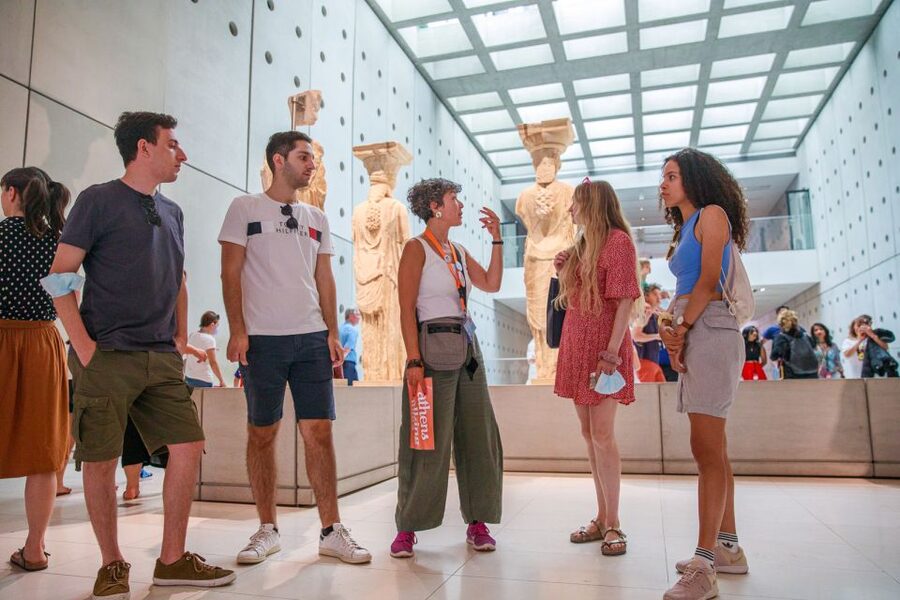
The first thing you notice is that this is not a traditional stone museum with dark rooms and endless labels. The Acropolis Museum has a bright, open feel, with strong sightlines and large areas of glass.
The design by Tschumi and Photiadis uses the building to keep the Acropolis present. You see the ancient hill outside, while excavations below the building show that the modern city sits above layers of earlier Athenian life.
A guide can help you read the architecture instead of rushing past it. The glass floors are especially useful because they reveal the remains of an ancient neighborhood beneath the museum. You are not simply looking at isolated statues. You are seeing a museum built over the physical remains of the city that supported the Acropolis.
The 3D displays add another helpful layer. They give you a sense of how Athens may have looked in earlier periods, when the buildings and sanctuaries were part of a working religious center rather than an archaeological site.
This is one of the tour’s most valuable features for first-time visitors. The museum can otherwise feel like a succession of beautiful objects. The guide ties the objects to place, period, and purpose.
The Archaic Gallery and its marble figures
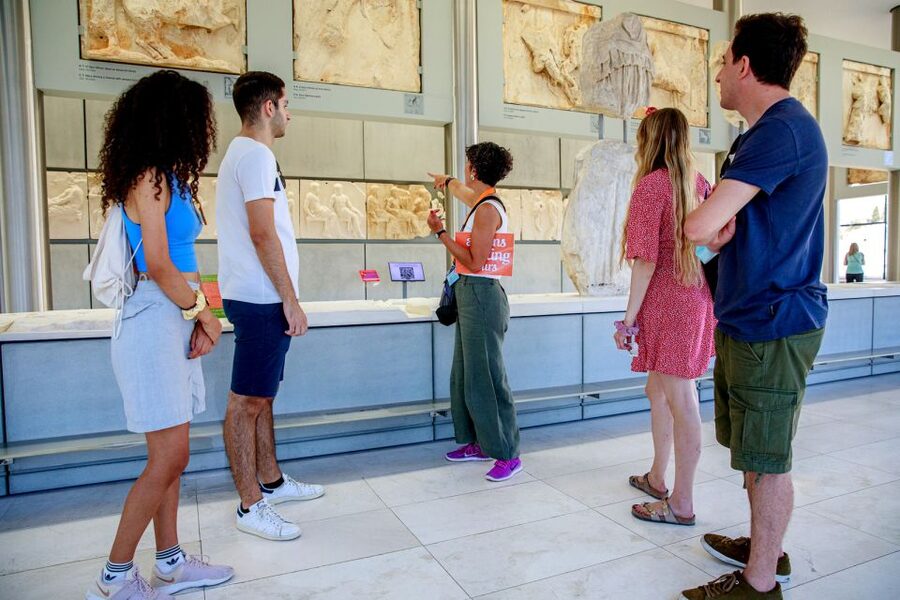
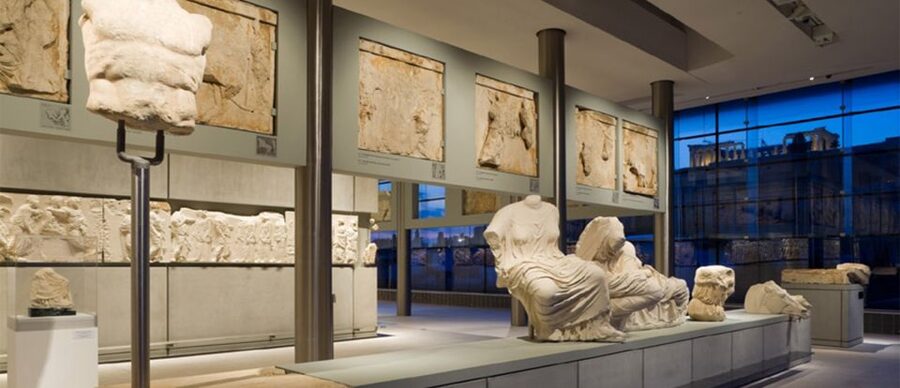
The Archaic Gallery on the first floor is one of the visual highlights. It is filled with natural light, which helps bring out the shape and surface of the statues.
The gallery covers the period before the artistic changes of the fifth century BC. The figures can look formal and still at first glance, but a guide points out the small changes in posture, expression, clothing, and carving that show Greek artists experimenting with the human form.
This is where a guided tour earns its fee. A quick walk alone might leave you thinking that several statues look similar. An informed explanation helps you notice the difference between a standard pose and a new artistic choice.
The guide also introduces votive offerings to Athena. These objects were given in honor of the goddess, and they show that the Acropolis was not simply a place for grand buildings. It was an active religious center where people brought gifts, asked for favor, expressed thanks, and marked important events.
I appreciate this human scale. Monumental temples can make ancient Athens feel distant. Small offerings help you picture individual people participating in religious life.
Guides have different ways of telling this story. Natasha has been praised for keeping the amount of information manageable, while Jordan was especially good at connecting religion, science, theatre, and art. That wider context helps you see Greek culture as a connected system rather than a list of famous names.
More ways to see the Acropolis:
- Athens: Acropolis & up to 5 Archaeological Sites Combo Pass
★ 4.4 · 12,619 reviews - Athens: Acropolis Ticket with Optional Audio or Live Guide
★ 4.2 · 11,055 reviews - Athens: Acropolis and Parthenon Guided Walking Tour
★ 4.6 · 5,882 reviews - Athens: Acropolis Ticket with Audio Guide
★ 4.0 · 3,575 reviews
The Caryatids and the people behind the stone
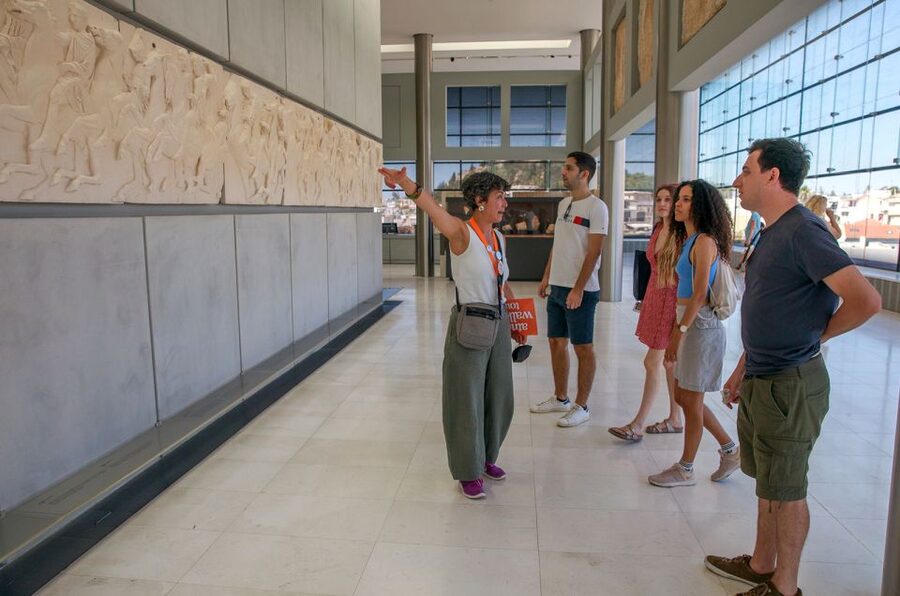
The Caryatids are among the museum’s most recognizable objects. These sculpted female figures once served as architectural supports connected with the Acropolis.
You can expect your guide to explain their role, their design, and the reason they are so important. The museum allows you to view the statues closely, which is quite different from seeing copies or distant figures on the Acropolis.
This stop also raises an important point about conservation. The museum protects the originals from weather and pollution while replicas help preserve the appearance of the monument outdoors. The indoor setting lets you study the carving, clothing, and posture without fighting glare, heat, or a crowd on the hill.
Do not expect the guide to spend equal time on every object. The usual aim is to explain the best-known pieces and use them to tell the larger story. One guide may focus more on individual figures, while another may give more attention to the Acropolis as a whole.
That variation can work in your favor if you enjoy storytelling, but it can frustrate you if you want a strict architectural overview. One person specifically preferred more general information about the Acropolis and less detail about individual people. If your interests are narrow, tell the guide early.
The Parthenon Gallery and views across Athens
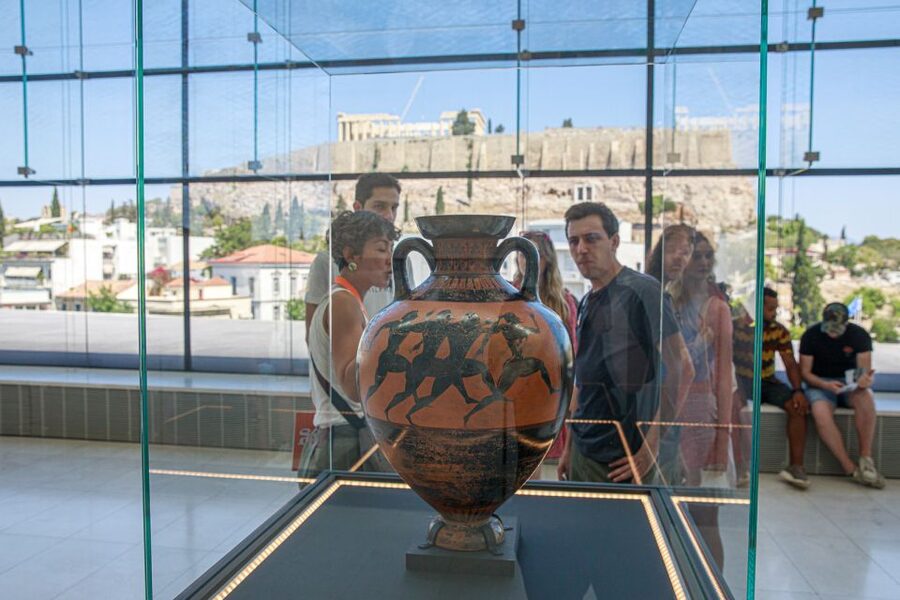
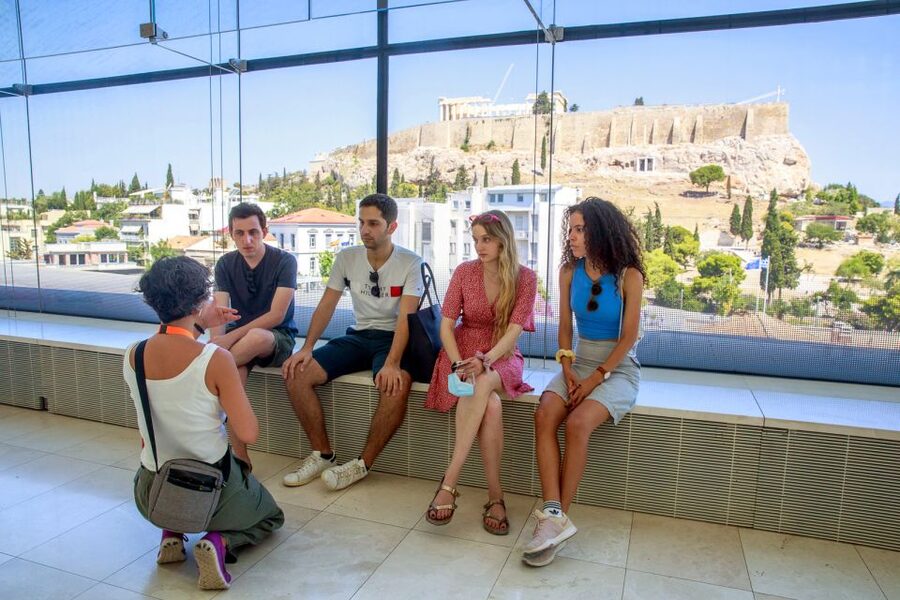
The upper level brings the museum and the Acropolis together. The glass atrium is aligned with the Parthenon, creating a strong visual relationship between the ancient temple and the objects displayed inside.
This is the museum’s central idea in physical form. You see the ruins outside, then turn toward the sculptural decoration associated with the monument. Even if you know little about Greek architecture, the alignment makes the connection easy to grasp.
The views are part of the experience, not a spare bonus. Looking through the glass toward the Acropolis helps you understand scale and placement. You can see why the hill dominated the city and why the buildings were meant to be viewed from many directions.
A guide’s explanation is particularly useful here because the sculpture is not always displayed in the same setting where it was first seen. Context matters. The guide can connect fragments, reliefs, and architectural pieces to the temple they once decorated.
The 75-minute schedule usually gives enough time for this broad overview. It does not leave much room for a slow, personal look at every display. If the Parthenon Gallery captures your attention, plan to remain after the guided portion if your ticket and schedule allow.
What the guide adds to the museum

The strongest feature of this activity is the human explanation. The museum contains excellent objects, but the labels cannot always provide the same sense of order and emphasis as a live guide.
Past guides have included Dimitris, Natasha, Niobe, Annie, Margherita, Kimon, Apollo, Chris, and Panagiota. Their styles vary, but the most praised qualities are clear English, humor, patience, and enthusiasm for archaeology.
Dimitris has been singled out for making the history easy to follow and relating ancient subjects to modern life. Annie kept a seven-year-old involved by bringing him into the conversation. Chris was praised for managing the group while remaining warm and amusing.
Those details matter if you are booking for a family or mixed-age group. A guide who checks that everyone can see the object and follows questions can make the visit far better than an otherwise accurate lecture.
The tour is conducted in English. Some guides give a brisk overview, while others spend longer on specific figures and stories. If you want a certain balance, say so politely. A good guide can often adjust the level of detail.
Group size may affect the experience. One person found the group quite large, although the guide kept it moving and made the most of the 75 minutes. In a large group, stay near the guide so you can hear and see the object being discussed.
Is $41 plus the entrance fee good value?
The tour costs $41 per person, with the museum entrance fee of approximately €20 per adult paid separately. That makes the total cost noticeably higher than simply entering on your own.
The value depends on how you use the museum. If you enjoy reading every label and already understand Greek art, independent entry may suit you better. You can move slowly, revisit favorite objects, and spend as long as you wish.
I think the guided option earns its extra cost for a first visit, especially if you are also seeing the Acropolis. The guide gives you a sensible route, points out the pieces most worth your attention, and explains why they matter. That saves mental effort in a large museum.
The skip-the-ticket line service is another practical benefit, but it does not mean the entrance fee disappears. You still need to pay for admission. The service may save time, though the total start can still be affected if your group is joining a longer tour.
Value also depends on your schedule. A 75-minute tour is efficient for a short stay in Athens, but it is not a full museum visit. Think of it as an expert introduction, not the final word on the collection.
How to fit it around the Acropolis
The best order is usually museum first, Acropolis second. The museum gives you the vocabulary and background to recognize what you see on the hill.
You will also benefit from seeing the Acropolis while its buildings are fresh in your mind. The relationship between the indoor displays, the Parthenon, the Caryatids, and the wider sanctuary becomes easier to follow.
Several people found the museum especially useful as preparation for the hilltop visit. One person who skipped the Acropolis because of the heat still found the museum worthwhile on its own. That is a good reminder that the museum is not merely a backup plan for bad weather.
If you are joining a combined Acropolis and museum program, check the order and timing before booking another activity. Delays in the first portion have pushed back the museum start. A separate afternoon tour or a planned lunch can become tight.
For a museum-only visit, the main timing issue is finding your group and confirming that it is not attached to an earlier Acropolis walk. Once the tour starts, the pace is generally steady and purposeful.
Who will enjoy this tour most?
I would choose this tour for:
- First-time visitors to Athens who want a clear introduction
- Families who benefit from stories and guided attention
- People who find museums difficult to navigate alone
- Anyone planning to visit the Acropolis afterward
- Visitors with limited time who want the main highlights
- People interested in architecture as well as sculpture
You may prefer independent entry if you want to spend several hours studying every object. The short format can also feel rushed if you want long pauses for photography or close examination.
The tour is wheelchair accessible, which makes the museum a practical choice for many visitors. Comfortable shoes still make sense because the meeting point and surrounding pedestrian area require walking.
Small practical tips for a better visit
Arrive early at the Dionysiou Areopagitou Street meeting point. Look for the orange Athens Walking Tours sign and do not assume the museum entrance is the meeting location.
Keep your bag small. Large bags and luggage are not allowed, and bringing less makes it easier to stay with the group.
Bring identification, even though you may not need to show it at every stage. The activity specifically advises carrying a passport or ID card.
Wear shoes you can walk in comfortably. You may spend only 75 minutes inside with the guide, but your Acropolis day will involve more walking.
If you have children, tell the guide their ages. Annie’s success in involving a seven-year-old shows how much better the experience can be when the guide knows who is in the group.
Finally, leave extra space in your day. The tour can be efficient, but combined programs have sometimes started late. Flexibility protects the rest of your Athens plans.
FAQ
How long is the Acropolis Museum guided tour?
The guided portion lasts 75 minutes. This is enough for the main highlights, but not for a slow visit to every gallery.
Is the museum entrance fee included?
No. The tour price is $41 per person, and the adult entrance fee is approximately €20.
Where is the meeting point?
Meet at 3 Dionysiou Areopagitou Street, near the Lukumades and Pilino stores. Staff will hold an orange Athens Walking Tours sign.
What language is the tour conducted in?
The live guided tour is conducted in English.
Is the tour wheelchair accessible?
Yes, the activity is listed as wheelchair accessible.
Can I bring luggage or a large bag?
No. Luggage and large bags are not allowed. Bring only what you need, along with comfortable shoes and a passport or ID card.
Should you book the Acropolis Museum tour?
Book it if you want the museum to tell a coherent story rather than simply display beautiful objects. The guides are the main reason to choose it, and the best ones, including Dimitris, Natasha, Niobe, Annie, and others, make the art easier to understand without turning the visit into a school lesson.
The museum’s natural light, ancient neighborhood below the floor, Caryatids, votive offerings, and Acropolis views would justify a visit on their own. The guided format adds useful order and saves you from guessing which pieces deserve your limited time.
Skip it if you strongly prefer to wander alone or want several hours with the collection. Also be cautious about tight schedules if you are joining a longer Acropolis program, since earlier delays can push the museum portion back.
For most first-time visitors, I would take the tour before visiting the Acropolis. Pay the separate entrance fee, allow room for a possible delay, and treat the 75 minutes as a focused introduction. You will leave with a better sense of what the hilltop ruins meant, and that makes the rest of ancient Athens easier to read.
Just added around Athens
- Athens Hotels to Athens Airport Private Departure Transfer★ 5.0 · 40 reviews
- Private One-way Transfer between Athens International Airport and Athens Hotels★ 4.5 · 40 reviews
- Athens: Acropolis Museum Ticket with Self-Guided Audio tour App★ 3.5 · 40 reviews
- From Athens: Meteora Train Trip with Overnight Stay★ 4.8 · 40 reviews
- Athens Photography Tour★ 5.0 · 40 reviews
- Athens: Acropolis Visit and City Night Tour★ 4.7 · 40 reviews
- Delphi Full Day Private Trip From Athens With Lunch Overlooking the Sea★ 5.0 · 40 reviews
- Acropolis & Plaka Neighbourhood Private Tour with Licensed Expert★ 5.0 · 40 reviews
Acropolis & Parthenon Tours, compared.
Acropolis & up to 5 Archaeological Sites Combo Pass
Read our review →

Acropolis, Parthenon & Acropolis Museum Guided Tour
Read our review →
Acropolis, Parthenon & Acropolis Museum Guided Tour
Read our review →

Acropolis: Acropolis and Parthenon Guided Walking Tour
Read our review →
Acropolis monuments & Parthenon Walking Tour with Optional Acropolis Museum
Read our review →Browse the lists this tour appears in