
Reviewed · ACROPOLIS & PARTHENON TOURS
Athens: The Acropolis Guided Walking Tour in German
The Acropolis still earns its fame. This 1.5-hour German-language tour takes you from the Theatre of Dionysus up to the Parthenon, with a licensed guide explaining the buildings, myths, and clever ancient design along the way. You finish on the hilltop with a 360-degree view across Athens.
I like the clear route through the southern side of the Acropolis and the fact that your entry ticket is arranged in advance. I also like the chance to hear the site explained in German, especially when a guide such as Jessica adds humor, pictures, and time for questions. The main drawback is the pace and terrain: you walk uphill over uneven, sometimes slippery ground, and there is no elevator.
In This Review
- Key points at a glance
- Why this German Acropolis tour works well
- Beginning below the Acropolis at the Theatre of Dionysus
- Walking past the Asklepieion and Odeon of Herodes Atticus
- Passing through the Propylaea
- Seeing the Temple of Athena Nike
- The Erechtheion and its unusual design
- The Parthenon: the main event
- The 360-degree view over Athens
- Guide quality and group size
- What to bring and what to leave behind
- Who should book this $95 experience?
- Is the German Acropolis tour worth booking?
- FAQ
- How long does the German Acropolis tour last?
- What language is the tour conducted in?
- Is Acropolis admission included?
- Can I stay at the Acropolis after the guided tour?
- Does the tour skip the ticket line?
- Where does the tour meet?
- What should I bring?
- Is the tour suitable for people with limited mobility?
Key points at a glance
- Starts at the Theatre of Dionysus: You begin near the birthplace of ancient Greek drama, not just at the main gate.
- Covers the major monuments: The route includes the Parthenon, Erechtheion, Propylaea, Temple of Athena Nike, and Odeon of Herodes Atticus.
- German-speaking licensed guide: The explanations are designed for German speakers, with guides praised for friendly, lively presentations.
- Ticket line avoided: Entry to the Acropolis is included, along with the administration fee for advance ticket booking.
- Free time after the tour: Your ticket remains valid for the day, so you can revisit favorite spots and take more photographs.
- Best for active walkers: Expect uphill walking, uneven surfaces, bright sun, and no access for people with limited mobility.
Why this German Acropolis tour works well
The Acropolis can feel confusing when you first arrive. Several monuments share the same hill, and the best view is not always the place where you happen to be standing. This tour gives you a logical route and puts the major buildings into a story you can follow.
The German language is the main reason to choose this particular experience. Ancient Greek names, architectural terms, and mythology can become a blur when you are trying to follow a guide in a second language. Here, you can listen in German and ask questions without translating in your head.
The tour also keeps its focus. In 90 minutes, you see the major landmarks without committing half a day to a larger historical program. That makes it useful for a short stay in Athens, or for a first visit before you return on your own.
The price is about $95 per person. That is not a budget walk, but it includes the Acropolis admission ticket, a licensed guide, ticket pre-booking, and a group visit that skips the ticket line. If you already planned to buy entry and wanted a guide, the difference can be reasonable. If you prefer to wander silently and read signs at your own speed, the cost will feel less attractive.
More Walking Tours in Athens
- Athens: Acropolis and Parthenon Guided Walking Tour
★ 4.6 · 5,882 reviews - Greek Food Walking Tour in Athens
★ 5.0 · 4,740 reviews - Acropolis: Acropolis and Parthenon Guided Walking Tour
★ 4.7 · 3,442 reviews
Beginning below the Acropolis at the Theatre of Dionysus
The route begins at a side entrance of the hill, with the exact meeting point depending on the option you book. From there, you walk for about two minutes before reaching the Acropolis area and the Theatre of Dionysus.
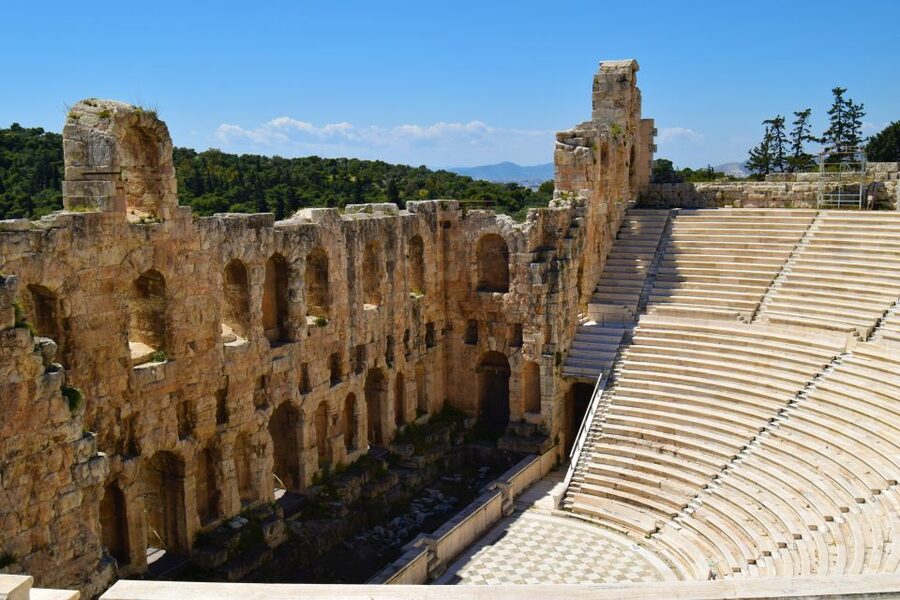
This is a smart opening stop. The theatre is closely tied to the birth of ancient Greek drama, and you can sit on or near the ancient stone seating while the guide explains how the space was used. Starting here gives you a sense of the Acropolis as a wider religious and cultural center, rather than treating the Parthenon as an isolated monument.
The theatre is also a useful warning about the ground ahead. Ancient stone surfaces are uneven, and the route becomes steeper as you climb. Wear shoes with a firm grip. Sandals without good support can make the walk less comfortable, particularly if the stone is slippery.
Walking past the Asklepieion and Odeon of Herodes Atticus
From the theatre, you continue along the southern and sunny side of the Acropolis hill. This part of the route includes the Asklepieion, described as one of the first hospitals in ancient Greece.
The stop adds welcome variety. You are not simply moving from one famous temple to another. The Asklepieion helps show how healing, religion, and daily life were connected in ancient Athens. Your guide can also help you understand what you are seeing in the remaining stones, since the site is less immediately recognizable than the Parthenon.
Next comes the Odeon of Herodes Atticus, a Roman-era performance space built on the southern slope. Its curved structure and steep seating make it easy to picture as a venue for music and drama. You will receive a guided explanation here, though this is not a performance visit.
The southern path can be sunny, so bring water, sunglasses, and a hat. In hot weather, this stretch may feel more demanding than the short distance suggests. The tour information specifically warns you to prepare for uphill walking and occasional slippery terrain.
Passing through the Propylaea
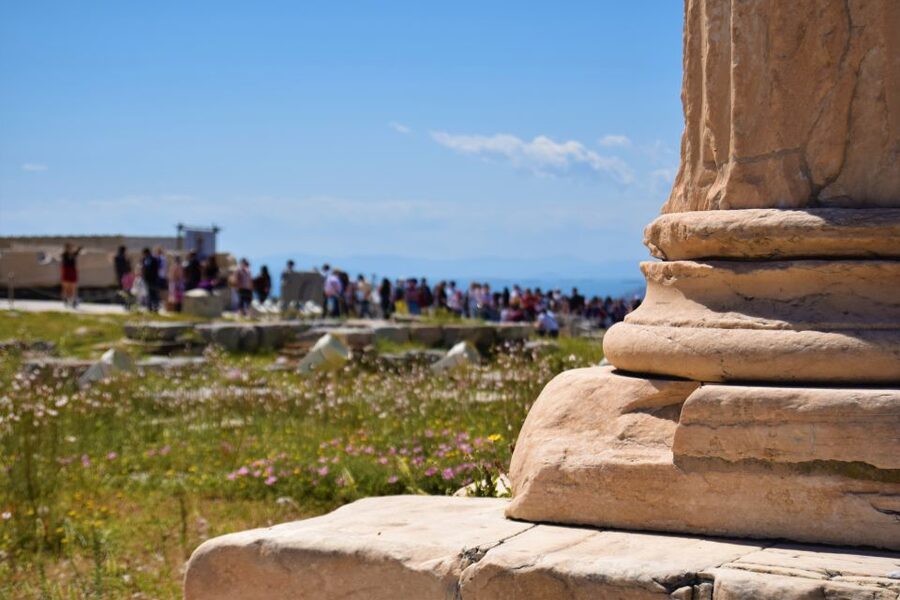
The Propylaea is the monumental entrance to the upper Acropolis. It is not merely a gateway in the modern sense. Its scale and formal design helped create a grand approach to the sacred buildings above.
As you pass through, the guide points out the architectural choices that made the Acropolis look balanced and imposing. This is one of the places where a live explanation earns its keep. From ground level, the structure can appear like a jumble of columns and blocks. A guide can direct your eye to the intended proportions and the way the entrance frames your arrival.
The passage also marks a clear change in the tour. Below, you have seen theatres, healing spaces, and the hillside setting. Above the Propylaea, the focus shifts to the temples that most people picture when they hear the word Acropolis.
The route is not suitable for people with mobility impairments. There is no elevator, and the combination of steps, slopes, and uneven stone requires steady footing.
More ways to see the Acropolis:
- Athens: Acropolis & up to 5 Archaeological Sites Combo Pass
★ 4.4 · 12,619 reviews - Athens: Acropolis Ticket with Optional Audio or Live Guide
★ 4.2 · 11,055 reviews - Athens: Acropolis, Parthenon & Acropolis Museum Guided Tour
★ 4.8 · 9,316 reviews - Athens: Acropolis, Parthenon & Acropolis Museum Guided Tour
★ 4.8 · 3,579 reviews
Seeing the Temple of Athena Nike
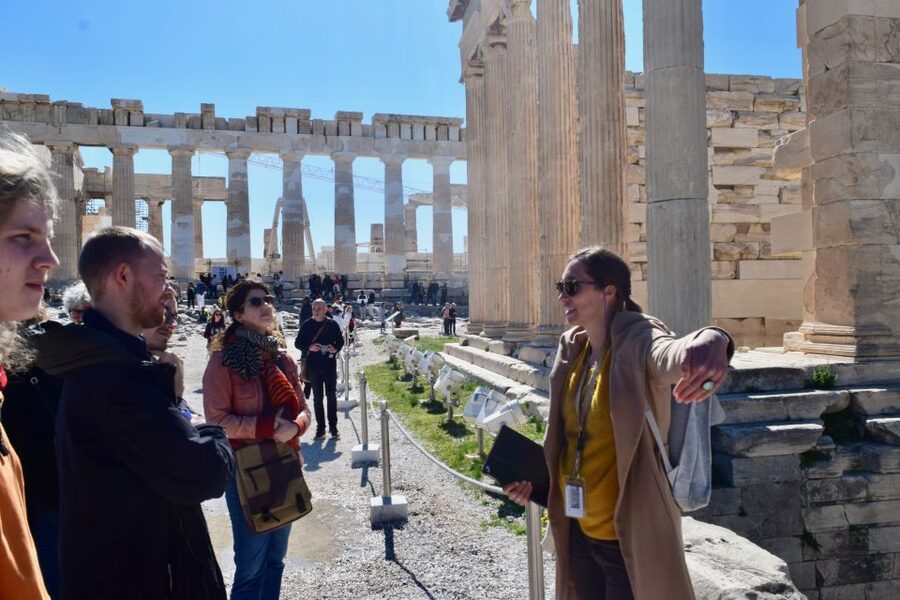
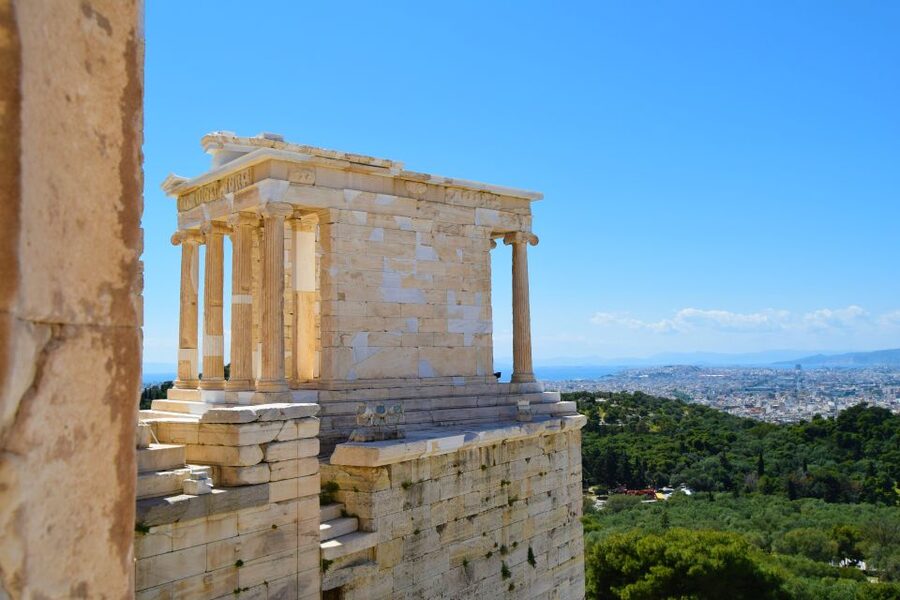
Near the entrance, you see the small Temple of Athena Nike. It is easy to overlook beside the larger monuments, but the guide gives it proper attention.
The temple is associated with Athena Nike, the goddess of victory. Its compact size makes a useful contrast with the Parthenon, and its position near the entrance gives it an important visual role. You can appreciate how the architects used a relatively small building to add detail to the approach.
This is also an example of why a short guided visit can be more rewarding than a quick photo stop. Without context, the Temple of Athena Nike can become one more classical ruin. With an explanation of its purpose and location, it becomes part of the plan of the whole hill.
The Erechtheion and its unusual design
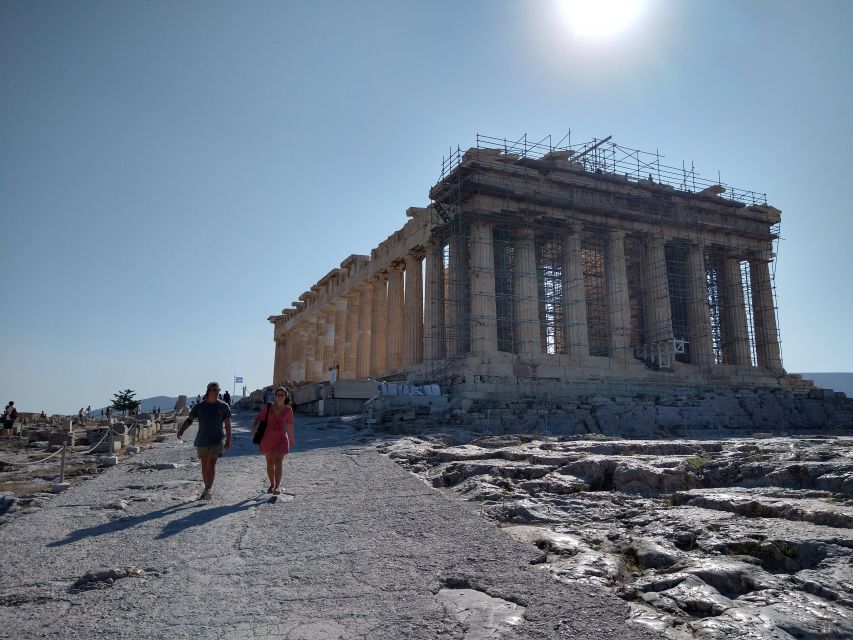
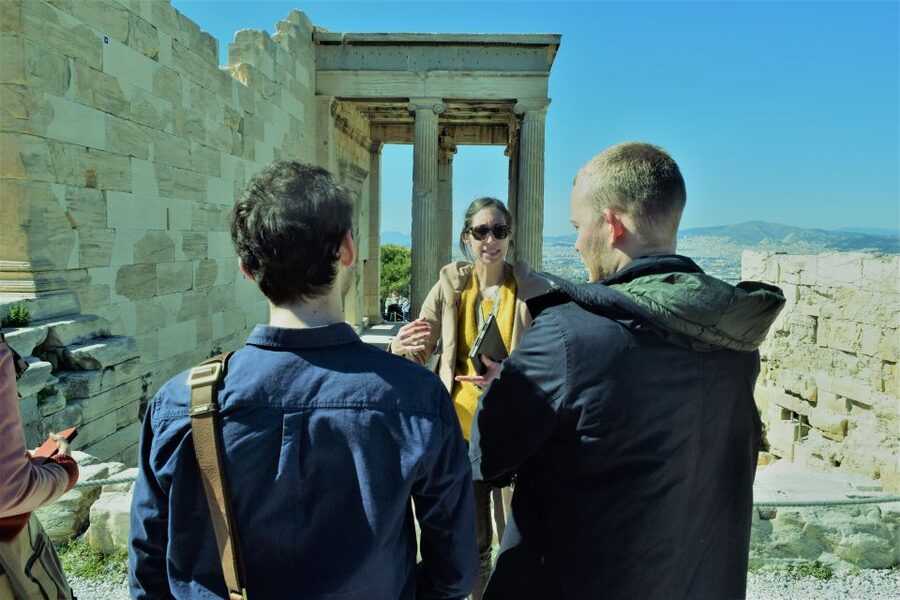
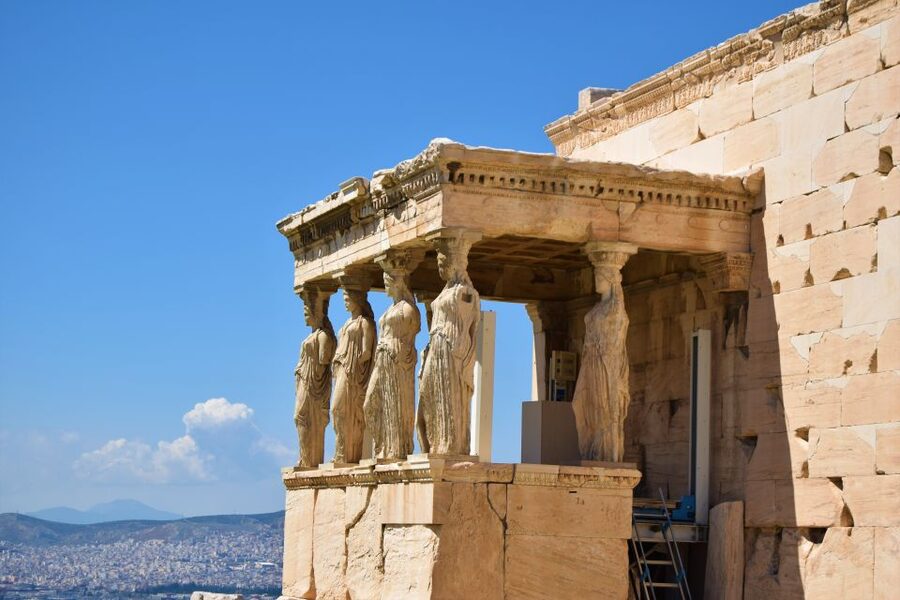
The Erechtheion, also spelled Erechteion in some tour materials, is one of the most intriguing buildings on the Acropolis. Its design is less symmetrical than the Parthenon, with different levels, porches, and sacred associations.
The guide explains the myths connected with the building and points out the architectural tricks used across the Acropolis. This is where the tour’s promise of more than basic sightseeing becomes important. You learn to look for solutions to difficult building problems, not just admire old columns.
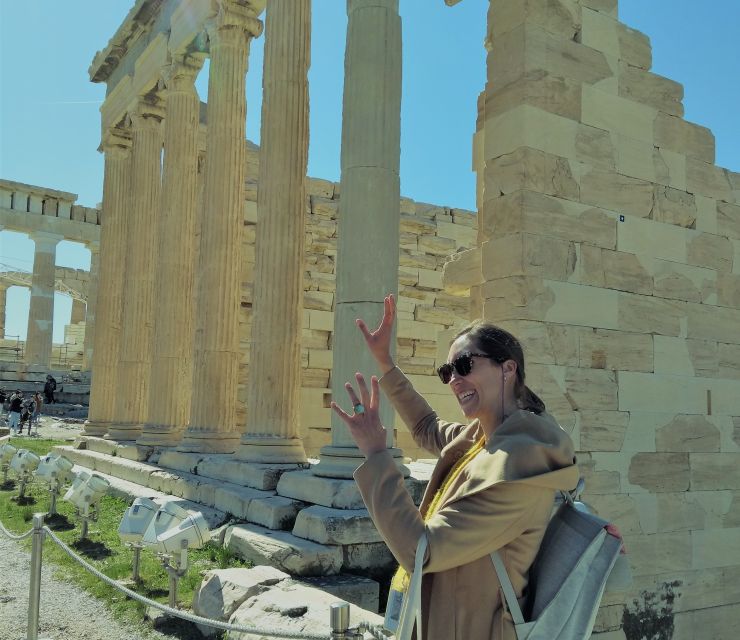
The famous Caryatid porch gives the Erechtheion much of its visual appeal. The building’s irregular plan can seem puzzling at first, but that irregularity reflects the need to accommodate different sacred areas and the uneven ground. A good explanation turns what might look like an unfinished structure into a building with a deliberate purpose.
The tour does not give you unlimited time at each monument. If the Erechtheion is your favorite, use the free time after the guided portion to look again and take photographs.
The Parthenon: the main event
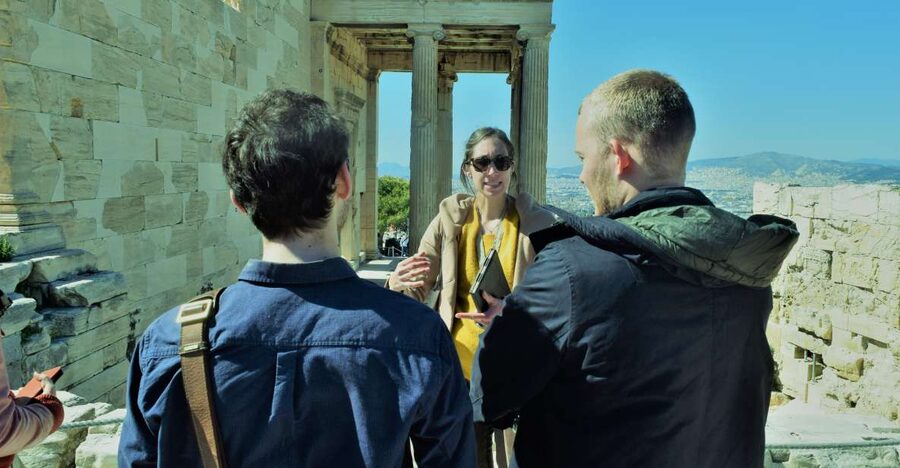
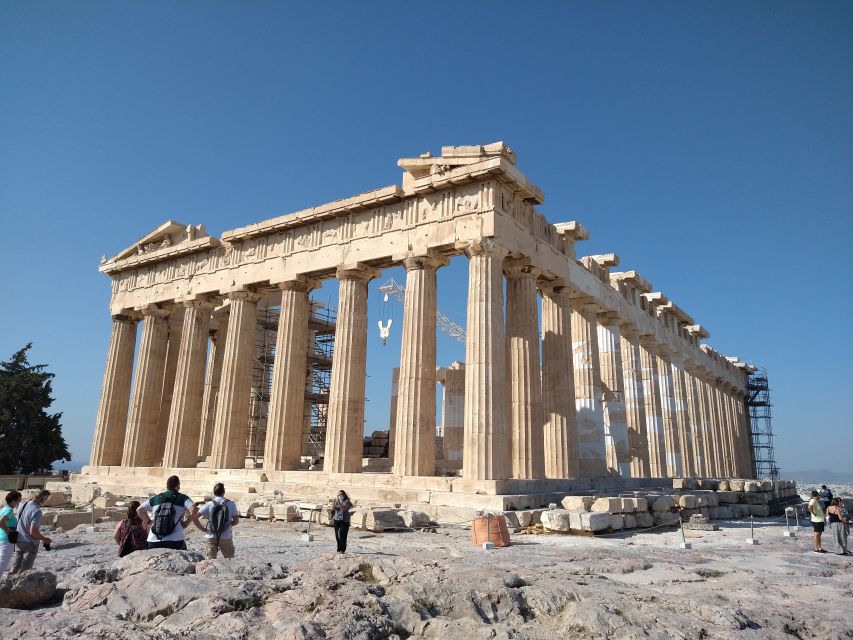
The Parthenon is the climax of the visit, and the guide discusses both its myths and its construction. You will hear about the visual methods ancient architects used to make the building appear straight and balanced.
That detail matters. The Parthenon is often described as a perfect temple, but its appearance depends on subtle adjustments. Slight curves and carefully placed columns helped avoid visual distortions from a distance. Once you know to look for these choices, the building becomes less like a postcard and more like a work of engineering.
The guide also explains the stories linked to the temple and the wider role of Athena. You should expect interpretation rather than a museum-style lecture. The tour is designed to keep moving, with time for questions and photographs along the way.
The guided visit ends on top of the Acropolis, before or near the Parthenon area depending on the group’s exact route. One useful feature is the free time afterward. The ticket is valid for the day, so you can stay at the archaeological site after the guide leaves and return to places that deserve a slower look.
The 360-degree view over Athens
The hilltop view is one of the simplest pleasures of the tour. From the Acropolis, you can look across Athens in every direction, with the city spreading below the ancient buildings.
This viewpoint helps you understand the Acropolis as a real place within a modern capital. The hill is not separated from Athens in a museum park. Streets, homes, and city districts extend around it, making the contrast between ancient stone and present-day life especially clear.
The view is also a practical way to get your bearings. After the tour, you may find it easier to understand where the surrounding parts of central Athens sit in relation to the Acropolis. Bring sunglasses because the hilltop can be bright, especially along the southern side.
Guide quality and group size
The strongest praise for this experience centers on the guides. Jessica receives particular credit for being friendly, engaged, humorous, and willing to make time for questions. Her approach is described as involving the group rather than simply delivering a speech.
Other comments point to explanations that are easy to understand, varied, and supported with pictures. That can be especially helpful at the Acropolis, where much of what you see survives only in fragments. A visual aid or a clear description can help you picture the original buildings.
One group reported having nine participants, which made it easy to stay together. Group size may vary, and you should not assume every departure will be that small. Still, the tour is clearly intended as a guided group walk rather than a private visit.
The best guides make a difference here because the Acropolis rewards careful looking. You want someone who can tell you where to focus, explain the myths without drowning you in names, and keep the walk moving. The available feedback points strongly in that direction.
What to bring and what to leave behind
Plan for an outdoor walk in full sun. Bring:
- Comfortable shoes with a reliable grip
- Water
- Sunglasses
- A sun hat
- Your passport or identity card, with a copy accepted
Large bags and luggage are not allowed, and neither are food and drinks inside the site. Baby strollers are also not permitted. Assistance dogs are allowed, but other pets are not.
You should also allow enough time to find the meeting point. The meeting location can change according to the booking option, so check your confirmation carefully rather than heading automatically to the first place listed in a guidebook.
The tour offers free cancellation up to 24 hours before the scheduled start, and you can reserve now and pay later. Those policies are useful if your Athens plans are still moving, but they do not change the physical demands of the walk.
Who should book this $95 experience?
I would recommend it to German-speaking visitors who want a focused introduction to the Acropolis without spending several hours on a broader Athens tour. It is particularly useful if you want the ticket handled in advance and prefer a guide to explain the architecture and myths in your first language.
It also suits people who like a clear structure. You visit the Theatre of Dionysus, Asklepieion, Odeon of Herodes Atticus, Propylaea, Temple of Athena Nike, Erechtheion, and Parthenon in one connected route. You then have time to continue on your own.
I would be more cautious if you want a slow photography session or long periods at each building. The tour lasts only 1.5 hours, so the pace must remain fairly purposeful. You can extend your visit afterward, but the guided portion itself is not designed for lingering at every monument.
It is not appropriate for anyone with limited mobility. The lack of an elevator, uphill route, uneven surfaces, and possible slipperiness are serious considerations, not minor footnotes.
Is the German Acropolis tour worth booking?
Book this tour if you value German explanations, advance ticket arrangements, and a lively guide-led route through the Acropolis. The $95 price is easiest to justify when you would otherwise pay for admission and want help making sense of the monuments.
The best practical choice is to wear sturdy shoes, carry water, arrive ready for sun, and keep your schedule flexible enough to use the ticket after the tour. If Jessica leads your visit, the warm and engaging style described in the feedback could make the ancient stones feel much more approachable.
Choose a different option if you need step-free access, dislike group tours, or want to explore at a very slow pace. For an active German-speaking visitor making a first Acropolis visit, this is a well-focused and highly praised introduction.
FAQ
How long does the German Acropolis tour last?
The guided walking tour lasts 1.5 hours.
What language is the tour conducted in?
The live tour guide speaks German.
Is Acropolis admission included?
Yes. The entry ticket to the Acropolis is included, along with the administration fee for ticket pre-booking.
Can I stay at the Acropolis after the guided tour?
Yes. Free time to explore the archaeological site after the tour is included, and the ticket is described as valid for the day.
Does the tour skip the ticket line?
Yes. The experience includes skip-the-ticket-line access through advance ticket arrangements.
Where does the tour meet?
There are two starting location options, and the exact meeting point may vary according to the option you book. Check the booking information carefully.
What should I bring?
Bring comfortable shoes, sunglasses, a sun hat, water, and a passport or identity card. A copy of the passport or identity card is accepted.
Is the tour suitable for people with limited mobility?
No. The tour is not recommended for people with mobility impairments because there is no elevator and the route includes uphill walking on uneven surfaces that may sometimes be slippery.
Just added around Athens
- Athens Hotels to Athens Airport Private Departure Transfer★ 5.0 · 40 reviews
- Private One-way Transfer between Athens International Airport and Athens Hotels★ 4.5 · 40 reviews
- Athens: Acropolis Museum Ticket with Self-Guided Audio tour App★ 3.5 · 40 reviews
- From Athens: Meteora Train Trip with Overnight Stay★ 4.8 · 40 reviews
- Athens Photography Tour★ 5.0 · 40 reviews
- Athens: Acropolis Visit and City Night Tour★ 4.7 · 40 reviews
- Delphi Full Day Private Trip From Athens With Lunch Overlooking the Sea★ 5.0 · 40 reviews
- Acropolis & Plaka Neighbourhood Private Tour with Licensed Expert★ 5.0 · 40 reviews
Acropolis & Parthenon Tours, compared.
Acropolis & up to 5 Archaeological Sites Combo Pass
Read our review →
Acropolis, Parthenon & Acropolis Museum Guided Tour
Read our review →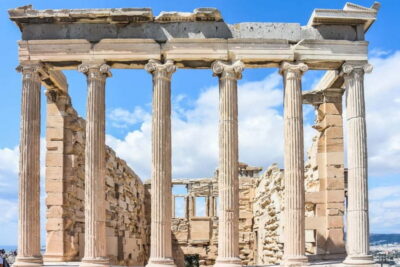
Acropolis, Parthenon & Acropolis Museum Guided Tour
Read our review →

Acropolis: Acropolis and Parthenon Guided Walking Tour
Read our review →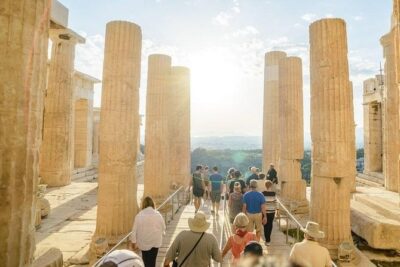
Acropolis monuments & Parthenon Walking Tour with Optional Acropolis Museum
Read our review →Browse the lists this tour appears in