
Reviewed · ACROPOLIS & PARTHENON TOURS
Athens Small Group Tour with Acropolis,Parthenon,Museum and Greek lunch
Ancient Athens comes with a side of souvlaki. This five-hour small-group outing links the Acropolis and Parthenon with the Acropolis Museum and a traditional Greek meal, giving you both the famous monuments and a taste of daily city life. I like the strong guiding, especially the clear storytelling from guides such as Natasha, Anna, Orestis, and Aphroditi. I also like that entrance fees and lunch are included, so you are not left sorting out major costs on the spot.
The main catch is physical: the Acropolis requires uphill walking over uneven stone, stairs, and exposed ground. Heat and crowds can make the climb harder, and the museum portion may feel short if you want time for every gallery. At $168.96 per person, this is not a budget walk, but the price can make sense if you want one organized morning or afternoon with tickets, guiding, and food handled together.
In This Review
- Key points at a glance
- Why this Athens tour works well
- Climbing the Acropolis in Athens
- The Parthenon and the meaning behind the columns
- Seeing the Acropolis Museum after the ruins
- A Greek lunch with local flavors
- The guides make the difference
- What the $168.96 price includes
- Timing, meeting point, and what to bring
- Who should book this experience?
- Should you book this Acropolis and lunch tour?
- FAQ
- How long does the Athens Acropolis tour last?
- Where does the tour begin and end?
- Is admission to the Acropolis included?
- Is admission to the Acropolis Museum included?
- Is lunch included?
- Are drinks included with lunch?
- What food may be served at lunch?
- Is the tour offered in English?
- How large is the group?
- What fitness level is needed?
- Can I cancel for a full refund?
Key points at a glance
- Two hours around the Acropolis: You get time for the citadel and Parthenon, with pauses during the climb.
- The museum completes the picture: Sculptures and artifacts help explain what you see on the hill.
- Lunch is part of the package: Expect Greek salad or another starter, souvlaki or moussaka, and dessert. Drinks cost extra.
- Guides earn the strongest praise: Natasha, Anna, Penelope, Katerina, Helen, Sophia, Orestis, and Aphroditi are singled out for warmth, humor, and clear explanations.
- Prepare for a real walk: Good shoes, water, a hat, and comfortable smart-casual clothing matter.
- Small group, but not tiny: The maximum is 20 people, and headsets may help keep everyone connected.
Why this Athens tour works well
Athens can be hard to organize on your own in the middle of a short visit. The Acropolis has timed entry arrangements, a steep approach, major crowds, and a huge amount of history packed into one rocky site. Add the museum and lunch, and a simple sightseeing plan can quickly turn into a day of ticket planning and restaurant guesswork.
This tour puts the main pieces together. You meet at Porinou 5, near the Acropolis, then spend about two hours exploring the ancient site before continuing to the museum. A Greek lunch follows, with the activity ending back at the meeting point.
I especially like the balance between formal sightseeing and ordinary city life. You are not only looking at columns and marble fragments. You also walk through Athens, hear about local customs and modern life, and sit down to a meal built around familiar Greek dishes.
The maximum group size is 20. That is still large enough to feel like a proper tour, but smaller than the long lines of people moving behind a flag in a major monument. The best guides also make a clear effort to keep the group together, pause for slower walkers, and find shade when the sun is fierce.
More Museums in Athens
- Athens: Acropolis, Parthenon & Acropolis Museum Guided Tour
★ 4.8 · 9,316 reviews - Athens: Mythology of Delphi, Museum and Arachova Guided Tour
★ 4.6 · 4,008 reviews - Athens: Acropolis, Parthenon & Acropolis Museum Guided Tour
★ 4.8 · 3,579 reviews
Climbing the Acropolis in Athens
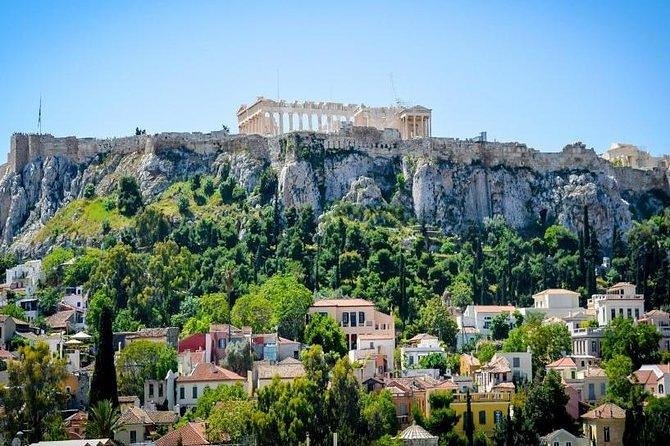
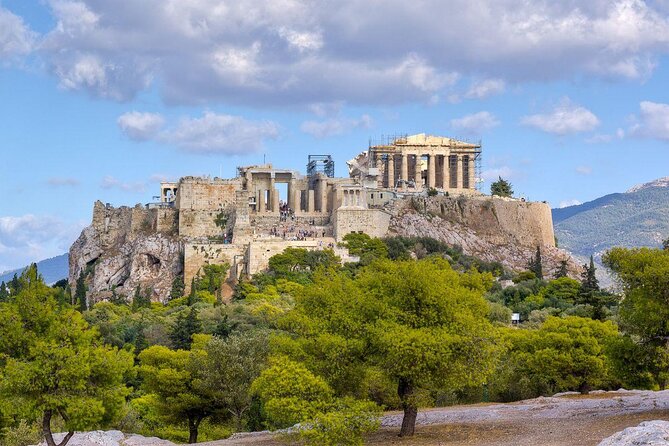
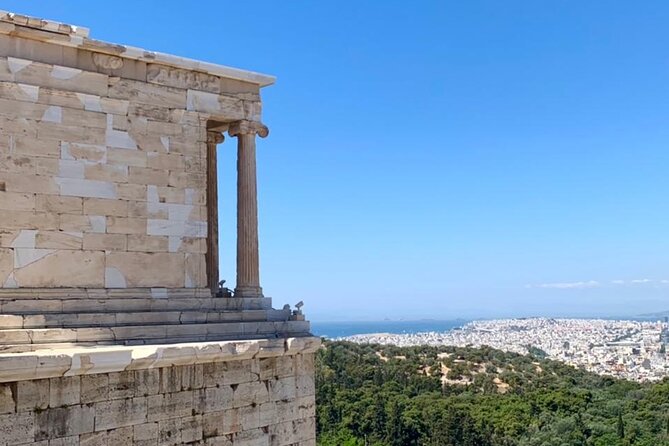
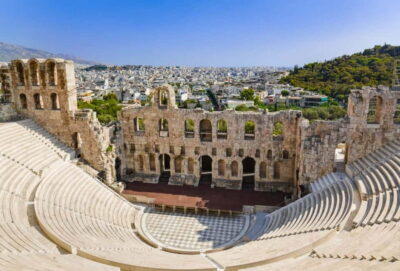
The Acropolis is the physical heart of the tour, and it deserves the largest share of your attention. You climb toward the rocky citadel above Athens, passing ancient remains and viewpoints that help you understand why this hill mattered so much to the city.
The walk is not a casual flat stroll. You will deal with uneven and rocky surfaces, stairs, and an uphill route. Several people found the climb tiring, especially in hot weather, but guides helped by stopping often and choosing shady places when possible.
I would wear proper walking or running shoes rather than smart shoes with thin soles. Bring water in a small backpack and wear a hat in summer. One useful detail is that water purchasing near the start may require coins, so it is wise not to arrive without a drink or small change.
The exposed setting creates another issue: the Acropolis can feel much hotter than a shaded street below. An early start is the better choice when available. One booking connected to a 9:00 a.m. departure required participants to arrive by 7:30 a.m., so check the final meeting instructions carefully rather than relying only on the advertised start time.
Your guide is not simply there to point at ruins. The better explanations connect architecture, religion, politics, and art. Guides use old images and reconstructions to help you picture how the monuments looked before centuries of damage altered the site.
The Parthenon and the meaning behind the columns
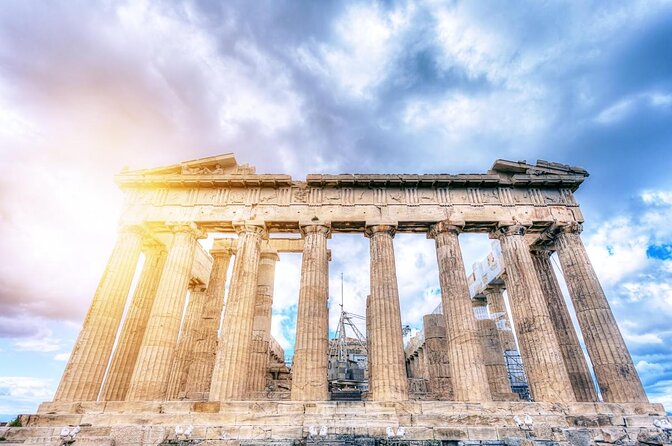
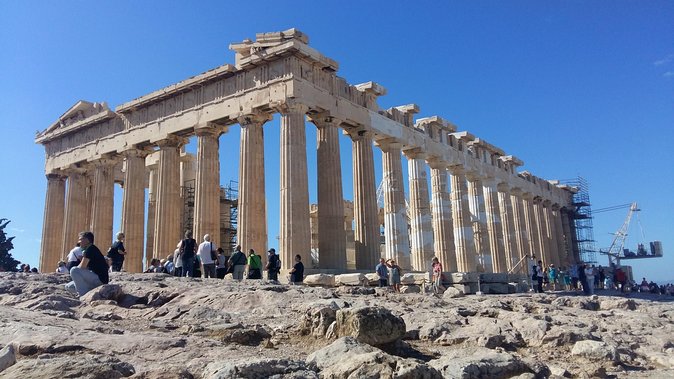
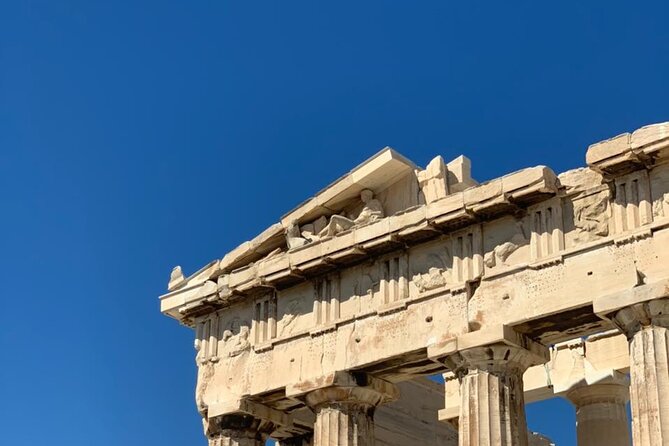
The Parthenon receives about 20 minutes as a named focus of the visit, though the wider Acropolis section lasts about two hours. Dedicated to Athena, the temple was built between 447 and 438 BCE during Athens’ Golden Age.
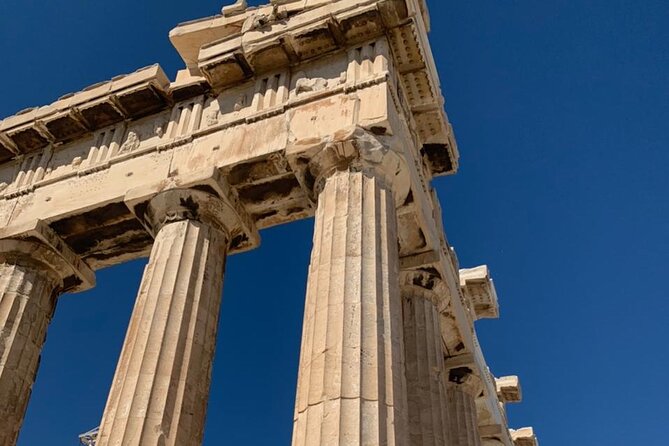
You will hear about its Doric design, balanced proportions, and original statue of Athena by Phidias. The point is not only that the Parthenon is old or famous. Its design shows how the Athenians joined religious belief, civic pride, art, and political power in one building.
The temple is partly damaged, and that is part of the experience. You are looking at a surviving structure shaped by war, weather, reuse, and time. A strong guide helps you read the missing pieces without pretending the building is untouched.
Crowds are the main frustration here. Several tour groups may gather at the same access points, and the first stage can feel disorganized while groups sort themselves out. Once your own guide has the group moving, the experience becomes easier, especially when headsets are used.
The guide quality matters greatly at this stop. Orestis was praised for animated explanations and humor despite extreme heat. Penelope was singled out for making frequent stops and finding shade. Artemis was appreciated for patience and care with every member of the group, while Stratus kept a slower group moving at a comfortable pace.
Seeing the Acropolis Museum after the ruins
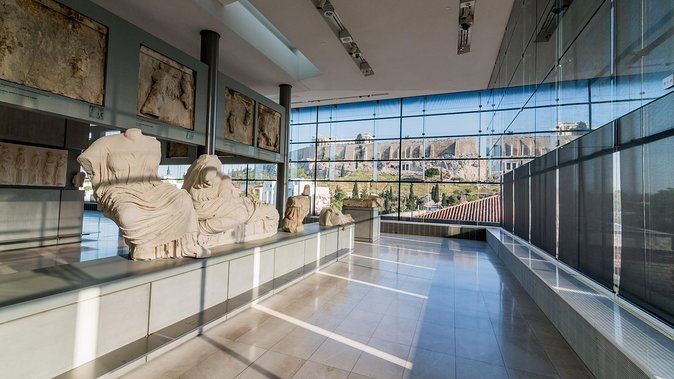
The Acropolis Museum is the tour’s second major anchor. It houses finds from the Acropolis and nearby slopes, covering material from the Greek Bronze Age through later Greek periods.
I like visiting the museum after the hill because the order makes sense. First, you see the temples in their actual setting. Then you examine sculpture, architectural fragments, and other objects in a controlled space where your guide can explain what you have just encountered.
The museum also gives your feet a break from the rough ground. Inside, you can focus on the details that are easy to miss outdoors: carved figures, decorative elements, traces of painted surfaces, and the way ancient artists handled the human form.
The planned museum visit lasts about two hours, although the guided explanation may cover the main displays in roughly an hour. This is enough for a strong introduction, but not enough for every room at a slow pace. If you are passionate about archaeology, you may want to return independently after the guided portion, as the ticket arrangement can allow you to continue viewing the museum.
Sophia was praised for giving enough information without overwhelming the group. Aphroditi was especially effective at pairing the physical remains with images of how the Acropolis may have looked in earlier periods. That approach is useful if you find bare ruins difficult to interpret.
The museum can also feel crowded, but it is generally an easier place to absorb information than the open hill. For me, this pairing is one of the tour’s best features. The Acropolis gives you scale and setting. The museum gives you detail and context.
More ways to see the Acropolis:
- Athens: Acropolis & up to 5 Archaeological Sites Combo Pass
★ 4.4 · 12,619 reviews - Athens: Acropolis Ticket with Optional Audio or Live Guide
★ 4.2 · 11,055 reviews - Athens: Acropolis and Parthenon Guided Walking Tour
★ 4.6 · 5,882 reviews - Athens: Acropolis Ticket with Audio Guide
★ 4.0 · 3,575 reviews
A Greek lunch with local flavors
The included lunch turns the tour from a monument visit into a fuller Athens outing. The sample meal begins with a salad, either a Greek salad or a superfood salad, plus another starter such as pan-fried mushrooms or eggplant rolls with Greek cheese.
For the main course, you may choose chicken or pork souvlaki with fresh fried potatoes and tzatziki, traditional moussaka, or a meat-free dish such as zucchini in egg-lemon sauce or gemista. Dessert is yogurt mousse with cracked biscuits and preserved spoon dessert.
Drinks are not included, and the minimum drinking age is 18. You should give dietary requirements when booking rather than waiting until you sit down.
The meal received plenty of praise, with several people calling it delicious, authentic, or worth the extra cost. One meal took place at Arcadia, a nearby local restaurant. Still, the food is not a guaranteed highlight for every person. One report found the lunch mediocre, and another found the service less welcoming when only a few people selected the meal option.
I would treat lunch as a useful convenience and a chance to try familiar Greek dishes, not as a carefully planned food tour. If you already have a favorite Athens restaurant or want to choose your own meal, the lunch portion may be less valuable to you. If you would rather sit down without researching where to eat near the museum, it earns its place in the package.
The guides make the difference
The strongest reason to book this experience is the guiding. The itinerary is built around places you can visit independently, but a good local guide changes what you notice and remember.
Natasha received exceptional praise for fluent English, warmth, humor, and command of the subject. Anna was appreciated for detailed explanations and genuine care during the climb. Katerina brought friendliness and fun to the walk, while Helen was helpful with a family group.
Other guides also made a strong impression. John, known as an architect, brought professional insight to the sites, museum, and lunch. Julia was described as friendly and well informed. Anna Maria was praised for making the tour feel personal, and Orestis combined historical detail with clever jokes.
The practical benefit is just as important as the storytelling. Guides pause for slower walkers, keep the group together, answer questions, and look for shade. Headsets can help when the group spreads out on busy paths.
Guide quality can never be guaranteed by name, of course. But the repeated pattern is clear: this company places real emphasis on live explanation rather than simply handing you an audio device and pointing toward the ruins.
What the $168.96 price includes
At $168.96 per person, this tour costs more than entering the Acropolis and museum by yourself. The value comes from combining several services: both entrance fees, a licensed professional guide, a Greek lunch, and a planned route that fits into about five hours.
I think the price is reasonable for a first visit if you want structure and interpretation. You avoid arranging separate tickets, choosing a lunch spot, and working out how to connect the Acropolis with the museum in a short window.
The value is weaker if you prefer slow museum visits, quiet photography, or complete control over meals. The museum time may feel limited, and lunch is optional in spirit for some people, even though this particular package includes it.
A small group also gives you more support than a self-guided visit. That matters on a steep site, especially if you are traveling with older family members or anyone who needs regular pauses. The tour is not effortless, but a careful guide can make the route manageable for someone with moderate fitness.
Timing, meeting point, and what to bring
The tour begins at Porinou 5 in Athens and ends at the same meeting point. The location is near public transportation, which makes it practical if you are staying elsewhere in the city.
Bring a mobile or printed voucher. Confirmation arrives when you book, and the activity operates in all weather, so check the forecast and dress accordingly.
Your basic packing list should include:
- Comfortable walking shoes with good grip
- Water in a small backpack
- A hat for summer
- Sunscreen and clothing suited to hot, exposed conditions
- Coins, in case you need to buy water near the approach
- Any dietary information required for lunch
Smart-casual clothing is requested, but comfort should win. The ancient stones do not care how polished your outfit looks, and your feet will have the final vote.
The tour is offered in English. It is suitable for people with moderate physical fitness, but it is not a good match for anyone expecting a level route or a short stroll between indoor attractions.
Who should book this experience?
I would recommend it most strongly to first-time visitors who want Athens’ headline ancient sites explained by a local professional. Families with older children and adults who prefer not to manage tickets and lunch separately should also find the structure helpful.
It suits you especially well if you want to understand the symbolism behind the architecture rather than collect quick photographs. The museum makes the experience more complete, and the meal gives you an easy taste of Greek food without adding another planning task.
You may want another option if you are an archaeology specialist, a slow museum reader, or a serious food traveler. You might prefer more museum time, a separate food walk, or a self-guided schedule that lets you stop whenever you choose.
The tour also demands honest preparation. Heat, steep walking, rocky ground, and crowds are not small details. If you arrive with water, good shoes, and a realistic view of the climb, the physical side is much easier to handle.
Should you book this Acropolis and lunch tour?
Book it if you want the major Athens sights, strong historical interpretation, and lunch tied together in one half-day plan. The guides are the real strength, and the Acropolis Museum adds the context that the hill alone cannot provide.
I would choose an early departure if possible, arrive well before the stated meeting time, and pack water before you leave. If lunch matters to you, include it and try the Greek specialties. If you already know Athens restaurants or want maximum flexibility, skip the meal option if your booking allows it.
At $168.96, this is a premium half-day tour, but the included entrances, licensed guide, small-group format, and meal make it a fair choice for a well-organized first look at Athens. Free cancellation is available up to 24 hours before the start time, which gives you some useful flexibility when building a larger Greece itinerary.
FAQ
How long does the Athens Acropolis tour last?
The experience lasts approximately five hours.
Where does the tour begin and end?
It starts at Porinou 5, Athina 117 42, Greece, and ends back at the meeting point.
Is admission to the Acropolis included?
Yes. The Acropolis entrance fee is included.
Is admission to the Acropolis Museum included?
Yes. The museum entrance fee is included.
Is lunch included?
Yes. Greek lunch is included in this experience.
Are drinks included with lunch?
No. Drinks are not included.
What food may be served at lunch?
The sample menu includes Greek or superfood salad, mushrooms or eggplant rolls, chicken or pork souvlaki, moussaka, vegan dishes, yogurt mousse, and preserved spoon dessert. Menu choices may vary.
Is the tour offered in English?
Yes. The experience is offered in English.
How large is the group?
The maximum group size is 20 people.
What fitness level is needed?
A moderate level of physical fitness is recommended. Expect uphill walking, stairs, uneven rocky ground, and considerable walking in exposed heat.
Can I cancel for a full refund?
Yes. You can cancel at least 24 hours before the experience start time for a full refund. Changes or cancellations made less than 24 hours before the start time are not accepted for a refund.
More Lunch Experiences in Athens
- All Day Cruise -3 Islands to Agistri,Moni, Aegina with lunch and drinks included
★ 5.0 · 4,958 reviews - From Athens: Hydra, Poros, and Aegina Day Cruise with Lunch
★ 4.1 · 4,305 reviews - Athens: Meteora Monasteries Day Trip with Caves and Lunch
★ 4.7 · 2,964 reviews - Athens: Meteora Monasteries Day Tour with Lunch
★ 4.8 · 2,196 reviews
Just added around Athens
- Athens Hotels to Athens Airport Private Departure Transfer★ 5.0 · 40 reviews
- Private One-way Transfer between Athens International Airport and Athens Hotels★ 4.5 · 40 reviews
- Athens: Acropolis Museum Ticket with Self-Guided Audio tour App★ 3.5 · 40 reviews
- From Athens: Meteora Train Trip with Overnight Stay★ 4.8 · 40 reviews
- Athens Photography Tour★ 5.0 · 40 reviews
- Athens: Acropolis Visit and City Night Tour★ 4.7 · 40 reviews
- Delphi Full Day Private Trip From Athens With Lunch Overlooking the Sea★ 5.0 · 40 reviews
- Acropolis & Plaka Neighbourhood Private Tour with Licensed Expert★ 5.0 · 40 reviews
Acropolis & Parthenon Tours, compared.
Acropolis & up to 5 Archaeological Sites Combo Pass
Read our review →

Acropolis, Parthenon & Acropolis Museum Guided Tour
Read our review →
Acropolis, Parthenon & Acropolis Museum Guided Tour
Read our review →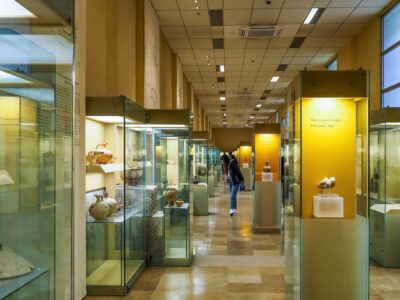

Acropolis: Acropolis and Parthenon Guided Walking Tour
Read our review →
Acropolis monuments & Parthenon Walking Tour with Optional Acropolis Museum
Read our review →Browse the lists this tour appears in