
Reviewed · WALKING TOURS
Athens: Philosophy and Democracy Walking Tour
Ancient Athens still asks hard questions. I love how this 3.5-hour walk links philosophy to real places, rather than treating Socrates and democracy as names in a textbook. I also like the small group size, capped at 15, which gives guide Panos room to explain ideas, answer questions, and keep the conversation lively.
The main drawback is that site admissions are not included, and the tour does not take you inside the Acropolis. You will see it from outside and visit several ancient areas along the way, so this works best as a thinking person’s city walk, not as a full archaeological ticket tour.
In This Review
- Key points before you book
- A walking tour with a clear point of view
- Meeting at the Statue of Theseus
- Kerameikos, where Athens meets its dead
- The Ancient Agora, the city’s public classroom
- Monastiraki and the city layered over antiquity
- Hadrian’s Library and the Roman Agora
- The Tower of the Winds and ancient weather watching
- Plaka, then the Pnyx and the birth of public debate
- Philopappos Hill and the best closing view
- The Acropolis from outside, not an Acropolis visit
- Panos makes the ideas accessible
- What $49 buys you
- Who should book this Athens walk?
- Should you book it?
- FAQ
- Where does the Athens Philosophy and Democracy Walking Tour meet?
- How long does the walking tour last?
- What language is the tour conducted in?
- How large is the group?
- Are admission tickets included?
- Does the tour enter the Acropolis?
- Are children allowed to join?
- What should I bring?
- Does the tour run in bad weather?
Key points before you book
- Panos is the central attraction: His storytelling connects ancient politics, science, philosophy, and daily life in clear, often funny terms.
- The route covers Athens beyond the Acropolis: You visit or pass the Ancient Agora, Roman Agora, Hadrian’s Library, Pnyx, Kerameikos, Plaka, and Philopappos Hill.
- Philosophy is part of the walk, not an afterthought: You discuss Socrates, Plato, Aristotle, rational thought, ethics, justice, and the way ancient ideas still affect modern life.
- The group is limited to 15 people: That is small enough for questions without the cost of a private tour.
- The final hill walk brings the best views: Philopappos Hill gives you a useful outlook over Athens and the Acropolis area.
- Bring good shoes and prepare for weather: The tour runs rain or shine, and heat can make the longer uphill section tiring.
A walking tour with a clear point of view
Many Athens tours give you a list of ruins and dates. This one follows a larger question: how did a city of competing citizens, merchants, soldiers, thinkers, and politicians develop ideas about public life?
That makes the route more than a parade of old stones. At the Ancient Agora, you consider the place where political, commercial, administrative, and social life met. At the Pnyx, the focus shifts to direct participation in government. On the hills above the city, the guide ties those places to philosophy and the habits of questioning, debate, evidence, and judgment.
Panos receives the strongest praise for making difficult subjects easy to follow. He brings up the development of philosophy as wisdom, common sense, and expertise, then connects it with science, mathematics, literature, law, and ethics. He also keeps the tone human. You are not expected to arrive with a degree in classical studies.
This is especially useful on your first day in Athens. You get the basic map of the ancient city and a framework for later visits. Afterward, the Acropolis, Agora, and museums have more meaning because you understand how the buildings fit into Athenian public life.
More Walking Tours in Athens
- Athens: Acropolis and Parthenon Guided Walking Tour
★ 4.6 · 5,882 reviews - Greek Food Walking Tour in Athens
★ 5.0 · 4,740 reviews - Acropolis: Acropolis and Parthenon Guided Walking Tour
★ 4.7 · 3,442 reviews
Meeting at the Statue of Theseus
The stated meeting point is in front of the statue of Theseus, opposite the train station and across the road. This is a practical central starting point, but give yourself time to identify the exact statue and crossing point before the scheduled start.
The route description also presents Kerameikos as the opening archaeological stop. Since the supplied route details place the statue meeting point and Kerameikos differently, confirm the day’s first stop with the guide when you arrive. That small check can prevent a rushed start.
The tour is conducted in English. A maximum of 15 people keeps it more personal than a large coach excursion, while still making the $49 price moderate for a half-day guided experience.
Kerameikos, where Athens meets its dead
Kerameikos is an important first lesson in how ancient Athens worked. It was a burial area where prominent Athenians were laid to rest for centuries, and it also helps you picture the edge of the ancient city.
Here the focus is not only on funerals. The place brings politics and memory into the story. Pericles, one of Athens’ most important leaders, delivered his famous speech in connection with the city’s fallen soldiers. That gives the site emotional weight and shows how public speeches, military sacrifice, and civic identity were connected.
You should expect interpretation rather than a long stop inside every visible ruin. The value is the setting and the explanation. Panos uses the location to show how Athenians thought about citizenship, honor, war, and the responsibilities of public life.
The Ancient Agora, the city’s public classroom
The Ancient Agora is the heart of the tour’s political story. It was the best-known example of an ancient Greek agora, a broad center for commerce, administration, social activity, and political business.
This is where Panos can make democracy feel less abstract. Ancient Athenian democracy was not a modern parliament with representatives handling everything from a distant capital. It involved citizens gathering, arguing, voting, and taking part in the affairs of the city.
The word citizen needs careful handling here. Ancient Athens excluded many people from political participation, including women, enslaved people, and others without the required status. A good explanation should celebrate the city’s political innovation without pretending it offered equal rights to everyone. The tour’s wider discussions of laws, society, and political regimes help you see both sides.
The area also supports the philosophical part of the walk. In a city where public argument mattered, skills such as persuasion, logic, and ethical judgment became practical tools. You begin to see why philosophy grew in the same setting as political debate.
Admissions to the Ancient Agora are not included in the $49 fee. The supplied details describe passing by and discussing the site, so confirm with Panos which areas the group enters and which are viewed from outside. If you plan a separate paid visit, this tour can serve as a useful introduction before you return with more time.
More things to do in Athens:
- Athens: Acropolis & up to 5 Archaeological Sites Combo Pass
★ 4.4 · 12,619 reviews - Athens: Acropolis Ticket with Optional Audio or Live Guide
★ 4.2 · 11,055 reviews - Athens: Acropolis, Parthenon & Acropolis Museum Guided Tour
★ 4.8 · 9,316 reviews - Athens: Cape Sounion & Poseidon Temple Sunset Half-Day Trip
★ 4.8 · 8,241 reviews
Monastiraki and the city layered over antiquity
The walk continues through Monastiraki, home to antique stores and the famous flea market. This is one of the route’s most useful changes of pace. You move from ancient civic spaces into a modern neighborhood where old objects, everyday commerce, and city life still overlap.
Do not expect the flea market to be a formal historical stop. Its role is to show that Athens has long been a place of exchange and movement. The old and new city sit close together here, and that contrast makes the ancient ruins feel less isolated.
Monastiraki can also be crowded and distracting. If you want to browse antique shops, save that for later. During the tour, keep your attention on the guide and watch your footing in narrow streets and busy areas.
Hadrian’s Library and the Roman Agora
Hadrian’s Library shows how Athens continued to matter under Roman rule. The complex was associated with books, learning, and intellectual life, making it a natural stop on a tour about education and ideas.
The key point is that ancient Athens did not end when the city’s classical political power faded. Later rulers reused, reshaped, and admired the city. Hadrian’s interest in Athens reflects the lasting force of Greek culture across the Roman world.
Nearby, the Roman Agora shifts the story toward Roman administration and urban order. The city’s public spaces changed as power changed hands. You can use this part of the walk to understand that Athens was not frozen in the age of Socrates. It kept adapting to new political systems and rulers.
Entry fees for Hadrian’s Library and the Roman Agora are separate. That matters when you compare the tour’s price with a full sightseeing package. At $49, you are paying mainly for the guide’s interpretation and the walking route, not for bundled admission tickets.
The Tower of the Winds and ancient weather watching
The Tower of the Winds is one of the more unusual stops. This octagonal marble tower stood in the Roman Agora and worked as a wind indicator and a clock.
Panos explains it as an early meteorological station, including how people used it to read conditions and forecast weather. That detail widens the tour beyond philosophy and politics. Ancient Greek achievement also included observation, measurement, engineering, and practical science.
This is a good example of why context matters. A weather tower is easy to glance at and forget. With an explanation of its purpose, you see it as evidence of a society trying to organize the natural world through careful observation rather than myth alone.
The Tower of the Winds is included among the sites with separate admission. The tour may discuss it from outside or include a paid entry depending on the operating plan, so ask before assuming your ticket is covered.
Plaka, then the Pnyx and the birth of public debate
The route passes through Plaka, a historic neighborhood of small scenic houses and narrow streets. Plaka is not the main intellectual stop, but it gives you a pleasant visual break between the ancient forums and the hills.
The Pnyx is more central to the democracy theme. This historic location is associated with public political meetings, making it one of the best places to discuss how citizens gathered to hear arguments and make decisions.
The setting helps explain the physical nature of ancient politics. Democracy was not just an idea written in a book. It required people to assemble, listen, speak, judge claims, and accept the result of a collective decision.
Expect the walk to become more demanding around the hill sections. The tour is described as easy, with a few steps at the end, but a summer review specifically notes that Athens heat can make the route strenuous for children and older people. The experience is officially not suitable for people over 70, and that warning is worth taking seriously if you have limited stamina.
Philopappos Hill and the best closing view
Philopappos Hill is where the tour gathers its different threads. The hill is associated with the Philopappos Monument, an ancient Greek mausoleum, and it provides views across Athens.
The final section can last around an hour, making it more than a quick photo stop. You have time to look back toward the Acropolis and connect the city’s physical layout with the places discussed earlier.
This is also where the philosophical conversation becomes more reflective. Panos has been praised for leaving people with questions rather than simply handing over a list of answers. That approach suits the subject. Ancient philosophy was built around questioning assumptions, examining how we live, and testing what we think we know.
The view is a strong reward, but the hill may be tiring after several hours on foot. Wear shoes with good grip, carry water, and avoid treating the tour as a gentle stroll through flat streets. A few steps are specifically noted near the end, and the full walk takes place outdoors.
The Acropolis from outside, not an Acropolis visit
The route passes by the Acropolis, the ancient citadel on its rocky outcrop above Athens. You should not book this experience expecting an Acropolis entry or a guided tour of the Parthenon.
That limitation is actually useful for planning. Book a separate Acropolis visit for the monuments themselves, then use this walk to understand the political and intellectual world around them. Several people who had already visited the Acropolis found this tour filled in the surrounding story and covered sights outside that major ticketed site.
The two experiences work well together. The Acropolis gives you monumental architecture and sacred history. This walk gives you the Agora, the Pnyx, Roman-era remains, burial grounds, city neighborhoods, and the ideas that shaped Athenian public life.
Panos makes the ideas accessible
The guide can make or break a subject-heavy walking tour. Here, Panos is repeatedly praised for storytelling, humor, warmth, and clear explanations.
He covers a lot: ancient Greek history, political systems, wars, philosophy, science, laws, society, and the relationship between rational thought and democracy. That is a large load for 3.5 hours, so you should expect a strong overview rather than a specialist seminar on one philosopher.
The best fit is someone who enjoys asking why, not only what. You may hear about Socrates, Plato, and Aristotle, then consider how their ideas relate to modern politics, ethics, education, and daily life. Panos also provides reading and media suggestions during the experience, which is useful if the walk sparks a new interest.
Families can join, and children up to age 14 are free. The content is not designed specifically for young children, though. A 10-year-old may find the philosophical sections long, while older children and teenagers who enjoy history or discussion are more likely to follow the full presentation.
What $49 buys you
At $49 per person, the tour offers fair value if you want an informed guide rather than simple transportation between sights. The fee covers a live English-language guide, a small group of up to 15, and 3.5 hours of explanation across central Athens.
It does not cover admission to the Ancient Agora, Hadrian’s Library, Roman Agora, or Tower of the Winds. You should add those costs if you plan to enter them, and you should also budget for separate Acropolis admission if that is on your Athens plan.
Children up to 14 join free, which improves the value for families. Free cancellation up to 24 hours before the start and the option to reserve now and pay later also make it easier to fit the walk into a changing Athens schedule.
The tour runs rain or shine. Bring comfortable shoes and clothing suited to the forecast. Rain did not stop Panos from delivering a strong experience for one group, but wet weather can still make stone surfaces and hill paths less pleasant.
Who should book this Athens walk?
I would choose this tour if you want a strong first look at Athens through ideas, not only monuments. It is especially good for adults, older children, teenagers, students, and curious first-time visitors who want the background before exploring the archaeological sites on their own.
You should also consider it if you have already seen the Acropolis. The walk covers much of what a standard Acropolis visit leaves out, including the Agora, Pnyx, Roman remains, Kerameikos, and Philopappos Hill.
I would hesitate if you dislike long explanations, prefer a short photo-focused tour, or have difficulty with several hours of walking and an uphill finish. The guide’s strength is the amount of thought and context he brings, so the experience rewards attention.
Should you book it?
Book it if the words democracy, Socrates, public debate, and ancient science sound more interesting to you than a quick checklist of ruins. Panos gives Athens a clear human story, and the small group size lets you follow the ideas without feeling lost in a crowd.
Skip it if you need every major site entered under one ticket or if you want a dedicated Acropolis tour. For most visitors, the best plan is to pair this walk with a separate Acropolis visit. At $49, it is a sensible way to give the rest of ancient Athens a voice.
FAQ
Where does the Athens Philosophy and Democracy Walking Tour meet?
The meeting point is in front of the statue of Theseus, opposite the train station and across the road.
How long does the walking tour last?
The tour lasts 3.5 hours.
What language is the tour conducted in?
The live guided tour is conducted in English.
How large is the group?
The group has a maximum of 15 people.
Are admission tickets included?
No. Admissions to Athens sites, Hadrian’s Library, the Roman Agora, the Tower of the Winds, and the Ancient Agora are not included.
Does the tour enter the Acropolis?
The tour passes by the Acropolis. Acropolis admission is not included.
Are children allowed to join?
Yes. Children up to 14 years old join for free.
What should I bring?
Bring comfortable shoes. The tour takes place outdoors and includes walking and a hill section.
Does the tour run in bad weather?
Yes. The tour takes place rain or shine.
Just added around Athens
- Athens Hotels to Athens Airport Private Departure Transfer★ 5.0 · 40 reviews
- Private One-way Transfer between Athens International Airport and Athens Hotels★ 4.5 · 40 reviews
- Athens: Acropolis Museum Ticket with Self-Guided Audio tour App★ 3.5 · 40 reviews
- From Athens: Meteora Train Trip with Overnight Stay★ 4.8 · 40 reviews
- Athens Photography Tour★ 5.0 · 40 reviews
- Athens: Acropolis Visit and City Night Tour★ 4.7 · 40 reviews
- Delphi Full Day Private Trip From Athens With Lunch Overlooking the Sea★ 5.0 · 40 reviews
- Acropolis & Plaka Neighbourhood Private Tour with Licensed Expert★ 5.0 · 40 reviews
Walking Tours, compared.



Acropolis: Acropolis and Parthenon Guided Walking Tour
Read our review →
Acropolis monuments & Parthenon Walking Tour with Optional Acropolis Museum
Read our review →
Knossos: Knossos Palace Skip-the-Line Guided Walking Tour
Read our review →

Athens Authentic Greek Food Walking Tour (Small Group)
Read our review →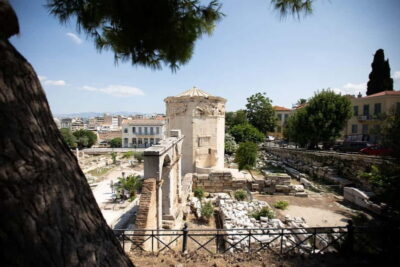
Early Morning Acropolis & Old Athens Guided Walking Tour
Read our review →Browse the lists this tour appears in