
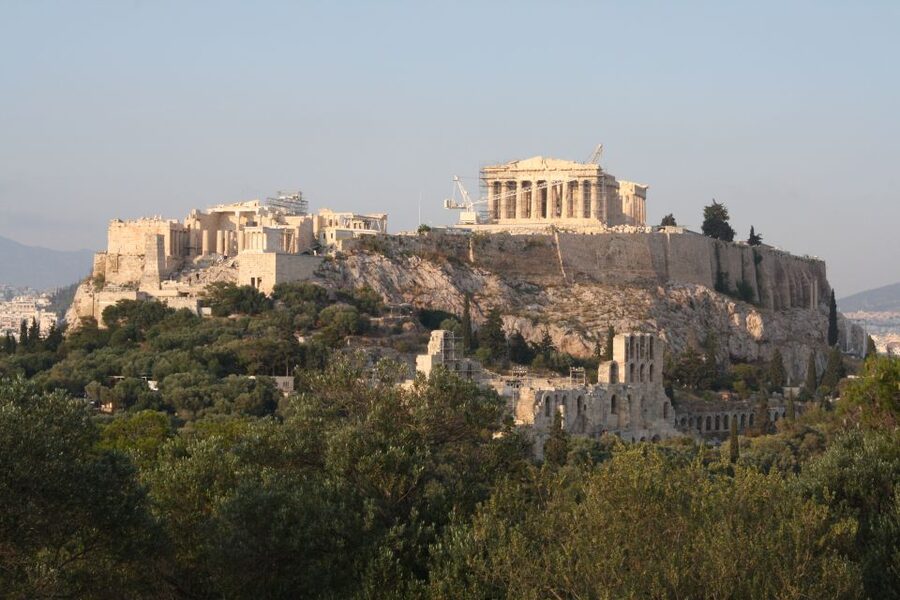
Reviewed · ACROPOLIS & PARTHENON TOURS
Athens: Guided Tour of Acropolis & Parthenon with Tickets
Ancient Athens rewards a little preparation. This two-hour walking tour gives you pre-reserved Acropolis entry and a licensed guide who explains the Parthenon, Erechtheion, Propylaea, and Temple of Athena Nike without wasting much of your day. At $35 per person, it is a sensible way to add context to a site that can otherwise feel like a grand pile of sunlit stones.
I especially like the small-group format and the headsets, which make it easier to hear even when other tour groups crowd the hill. Guides such as Lisa, Vicki, Eva, Maria, Elena, and Ria have earned repeated praise for clear storytelling, patience, photo advice, and careful pacing. The main catch is physical: the climb is steep in places, the stone can be slick, and there is no wheelchair, walker, or elevator access during the tour.
In This Review
- Key points to know before booking
- Meeting at Makrigianni 7
- The climb to the Acropolis
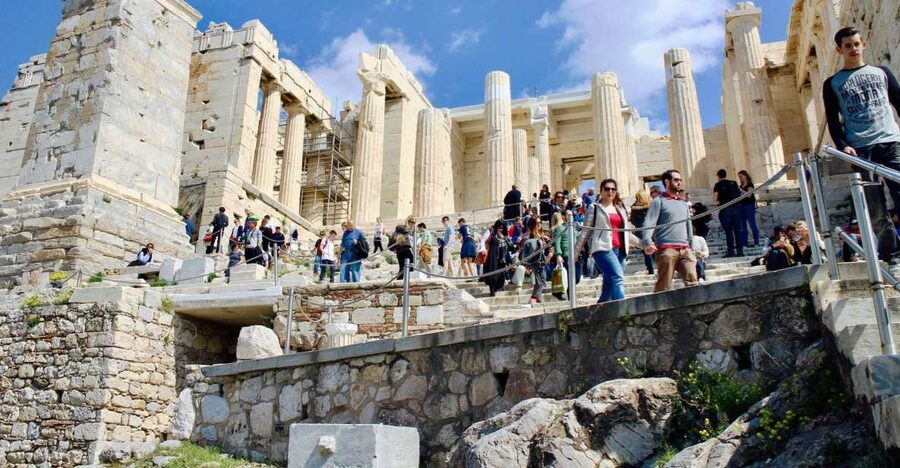
- The Propylaea: Athens makes an entrance
- The Parthenon and the power of scale
- The Erechtheion and its unusual stories
- The Temple of Athena Nike above Athens
- Myths, festivals, and the city below
- The Theater of Dionysus and the south slope
- Reserved tickets and the meaning of skip-the-line
- Timing, crowds, and summer heat
- Small group, headsets, and guide quality
- Is $35 good value?
- Who should book this Acropolis tour?
- Should you book it?
- FAQ
- Where does the tour meet?
- How long does the tour last?
- Does the price include Acropolis admission?
- What monuments are included?
- Are headsets provided?
- What languages are available?
- Is the tour suitable for wheelchair users?
- What should I bring?
Key points to know before booking
- Meet outside Acropolis Metro Station: Use the Makryianni and Dionysiou Areopagitou exit, then go to street level and look for the guide holding a sign with your names.
- The $35 price covers a useful service: You receive a two-hour guided walk, a licensed guide, headsets, and Acropolis entry if you select the ticket-included option.
- Early times are usually the smartest choice: The 8 a.m. start can be cooler and less crowded, a real advantage in Athens summer heat.
- The tour includes the Acropolis highlights: Expect the Parthenon, Propylaea, Erechtheion, Temple of Athena Nike, and views over Athens.
- You can stay after the guided portion: Once the walk ends, you may continue exploring the Acropolis on your own or follow the guide toward the south slope.
- Pack lightly and dress for the climb: Comfortable shoes, water, a hat, and sunscreen matter more here than clever sightseeing gear.
Meeting at Makrigianni 7
The starting point is outside the Acropolis Metro Station, one of the easiest places to reach in central Athens. If you arrive by metro, take the Makryianni and Dionysiou Areopagitou exit, go up to street level, and look for the sign marked Akropoli.
Your guide waits with a sign displaying your names. This is simple enough, but do not cut it close. Arrive five to ten minutes early because Acropolis entry is tied to a reserved time. Tickets can expire within five to ten minutes, and joining after the group has entered is not considered practical.
Transport to the meeting point is not included. The metro is the obvious choice if you are staying elsewhere in Athens, though the meeting area also sits within easy reach of the city center. Have your booking details ready and make sure you are standing at street level, not still inside the station.
More ways to see the Acropolis:
- Athens: Acropolis & up to 5 Archaeological Sites Combo Pass
★ 4.4 · 12,619 reviews - Athens: Acropolis Ticket with Optional Audio or Live Guide
★ 4.2 · 11,055 reviews - Athens: Acropolis, Parthenon & Acropolis Museum Guided Tour
★ 4.8 · 9,316 reviews
The climb to the Acropolis
The Acropolis is not a flat museum visit. You walk uphill on ancient ground, climb steps, and spend much of the time in direct sun. That physical effort is part of the experience, but it can be demanding for anyone who has trouble with hills, heat, or uneven surfaces.
The tour guides generally keep the group moving while allowing time for rest and questions. Ria, for example, has been praised for finding shady places during very hot conditions and keeping everyone together. Other guides, including Lisa and Vicki, have been noted for watching out for slower walkers rather than treating the group like a race.
You should still judge your own fitness honestly. Sandals and flip-flops are not allowed, and sensible walking shoes are essential. Bring water, a sun hat, and sunscreen. Baby strollers are also prohibited inside the site, so parents with young children should plan on using a baby pouch instead.
The tour is not suitable for children under six, pregnant women, people with heart problems, people with pre-existing medical conditions, wheelchair users, or those with mobility impairments. There is no elevator access during this walk.
The Propylaea: Athens makes an entrance
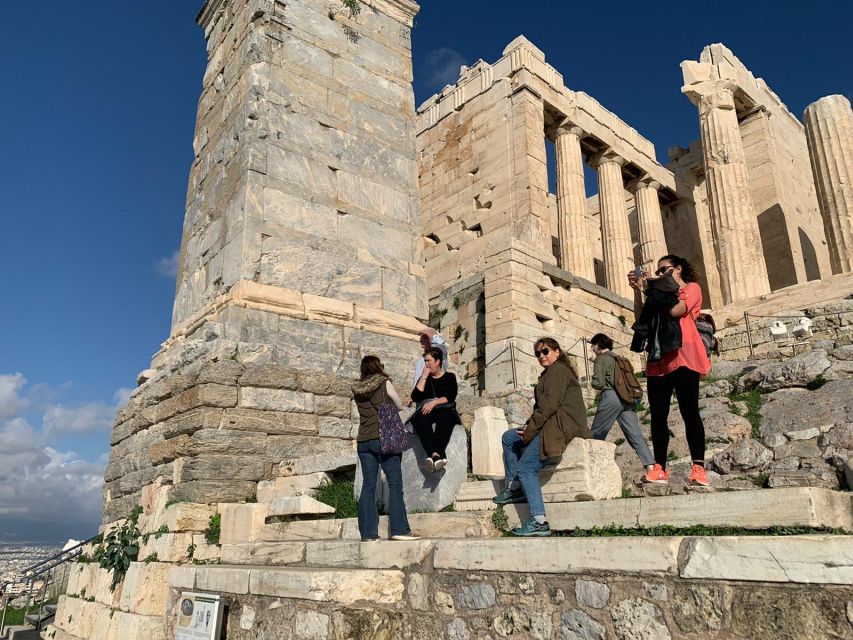
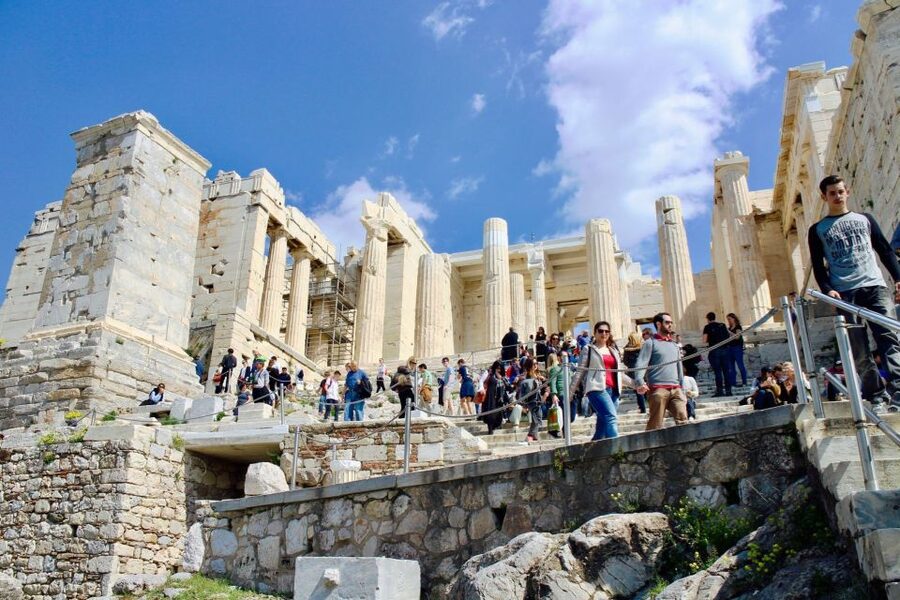
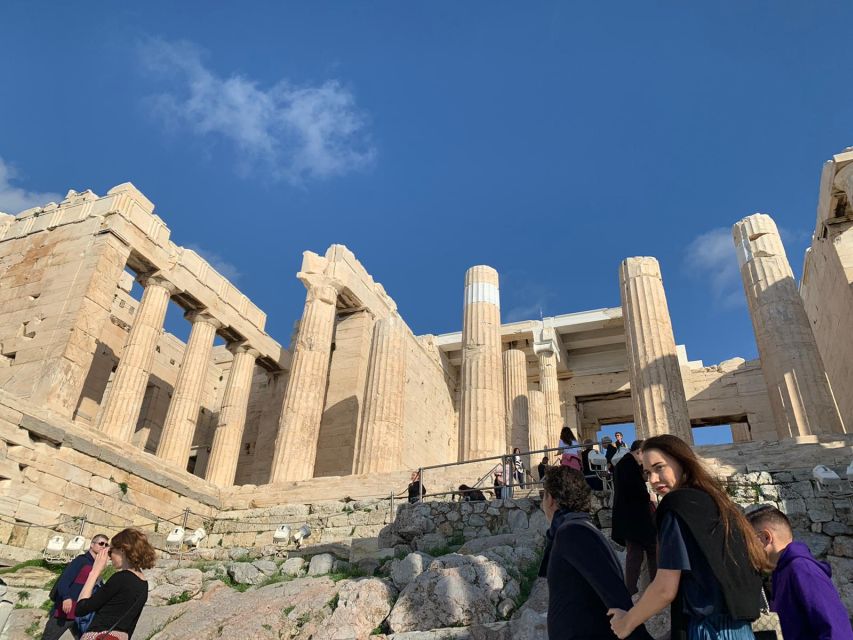
The Propylaea forms the monumental entrance to the Acropolis. Your guide uses this first major structure to explain how the hill functioned as a sacred precinct rather than simply a place to admire one famous temple.
This is a good point to have a guide. On your own, you might hurry through the gateway while focusing on the Parthenon above. With the headset, you can look around while still hearing the explanation, and the guide can connect the entrance to the larger plan of the hill.
The approach also gives you your first strong sense of the climb and the crowds. On busy days, people gather in narrow areas, so the group’s pace and organization matter. A guide who knows where to pause can help you avoid being trapped behind a larger tour group.
The Parthenon and the power of scale
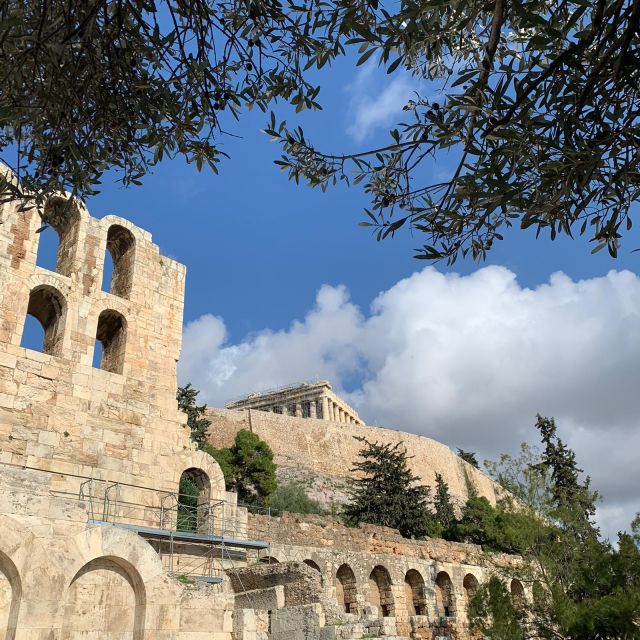
The Parthenon is the main event, but it is more rewarding when you know what you are looking at. The guide explains its architecture, religious purpose, and place in the story of classical Athens, while also helping you see details that are easy to miss from a distance.
The building is famous for its columns and proportions, yet the most useful part of the explanation is learning how the temple fit into the life of the city. The tour connects architecture with Greek mythology, worship, public festivals, and the political confidence of Athens.
You will not enter the Parthenon itself. The experience is an exterior visit around the monument, with time to listen, take photographs, and absorb the setting. Restoration work and crowds can affect the view, but the building remains powerful even when scaffolding or barriers appear in your pictures.
This is also where the guide’s personality can change the whole visit. Several guides have been praised for mixing facts with stories, humor, and mythology. That balance helps if you are not naturally drawn to ancient history. One especially useful feature is the chance to ask questions while standing in front of the monument, rather than trying to decode a sign later.
More things to do in Athens:
- Athens: Cape Sounion & Poseidon Temple Sunset Half-Day Trip
★ 4.8 · 8,241 reviews - Athens: Acropolis and Parthenon Guided Walking Tour
★ 4.6 · 5,882 reviews - All Day Cruise -3 Islands to Agistri,Moni, Aegina with lunch and drinks included
★ 5.0 · 4,958 reviews - Athens, Piraeus, and Coastline: Blue Hop-On Hop-Off Bus
★ 3.9 · 4,849 reviews
The Erechtheion and its unusual stories
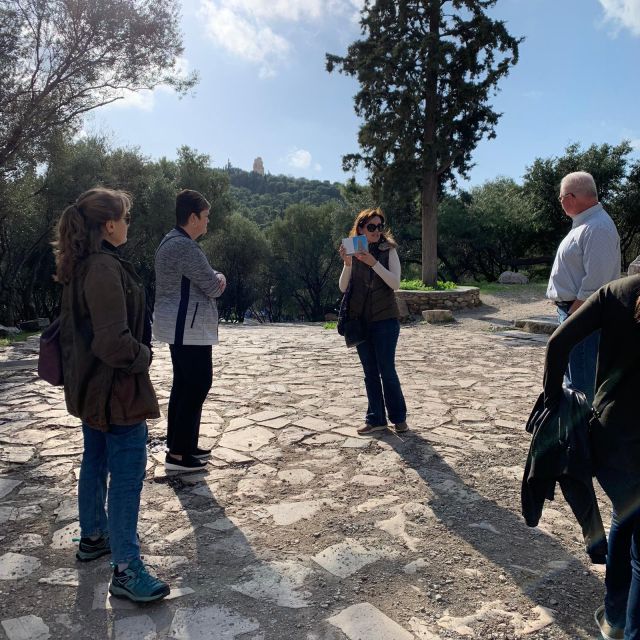
The Erechtheion has a different character from the Parthenon. It is more intricate and less immediately symmetrical, with a design tied to several sacred traditions. The guide explains the myths and cults connected with the site, including the competing claims of Athens’ patron gods.
The building is best known for its Caryatid porch, where sculpted female figures appear to support the roof. You will see the famous porch from outside, though access and viewing angles can vary with preservation rules and crowd control.
This stop rewards patience. It is easy to spend all your attention on the Parthenon and treat the Erechtheion as a secondary monument. I like that the tour gives it proper attention, since its irregular form and religious associations reveal a more complicated side of the Acropolis.
The headset is particularly useful here. The group may spread out to see the structure from different angles, but you can still follow the guide without standing shoulder to shoulder.
The Temple of Athena Nike above Athens
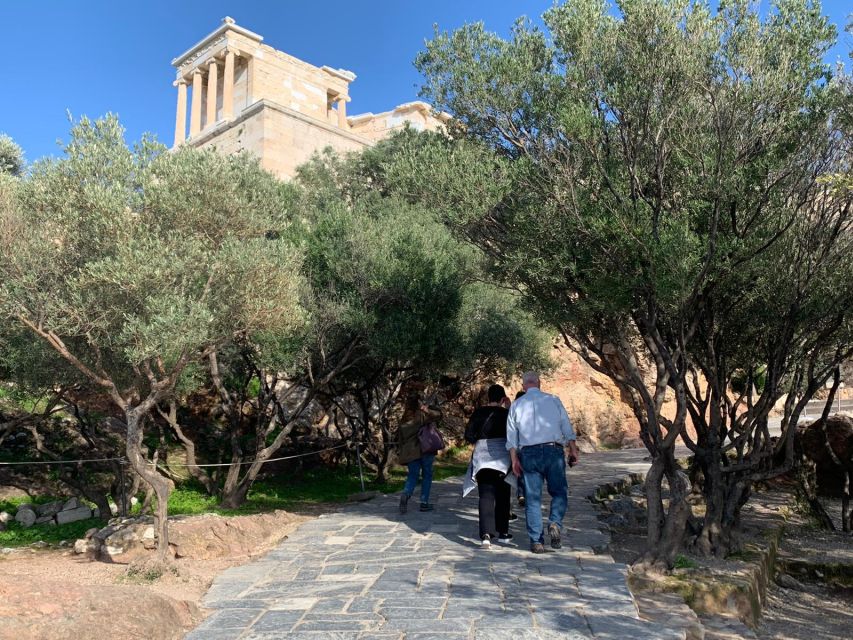
The Temple of Athena Nike is smaller than the Parthenon but occupies a dramatic position near the entrance. Its placement gives it a ceremonial quality, and your guide explains its connection with Athena in her role as a bringer of victory.
This is a compact stop, but it helps you understand that the Acropolis was not built around one monument alone. Several buildings, shrines, gateways, and ritual spaces worked together to create a sacred approach.
The temple also offers another chance for photographs, though the best angles depend on where the group can safely stand. Guides such as Vicki and Elena have received praise for pointing out good photo positions without losing control of the group.
Myths, festivals, and the city below
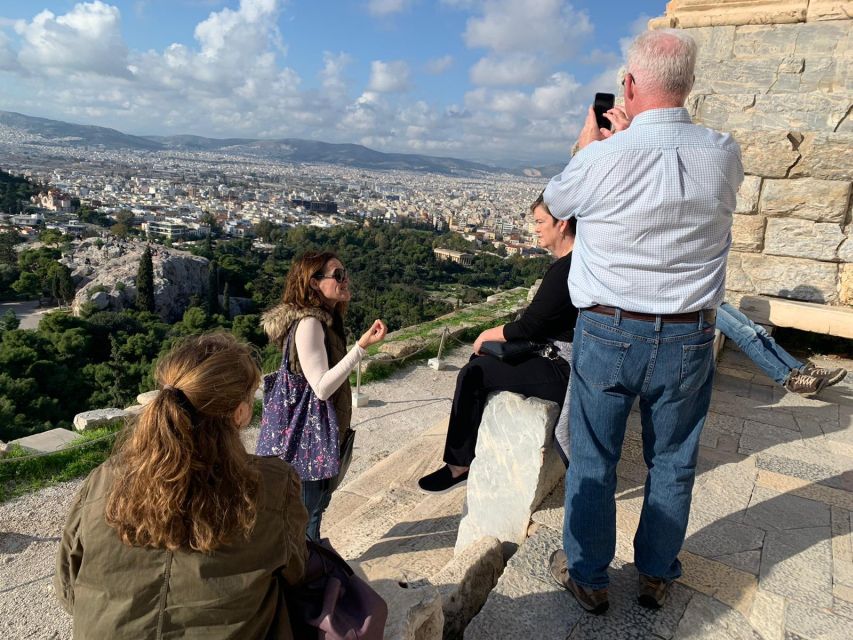
One of the tour’s strongest features is the way it links physical remains to the lives of ancient Athenians. You hear about the gods of Athens, early religious practices, major festivals, and the ceremonies that once filled these routes with movement and sound.
That approach is more helpful than a list of dates. A column becomes easier to understand when you know why people came to the hill, what they carried, and which rituals gave the buildings meaning.
The guide also places the Acropolis in its later chapters. The hill experienced Roman, Byzantine, and Ottoman periods before becoming part of modern Athens. This wider timeline keeps the visit from turning ancient Greece into a frozen postcard. The site has been reused, altered, damaged, and reinterpreted across centuries.
At $35, this storytelling is the main value of the tour. You are not paying only for a walk to famous monuments. You are paying for someone to organize the site, explain its purpose, answer questions, and help you notice relationships between buildings.
The Theater of Dionysus and the south slope
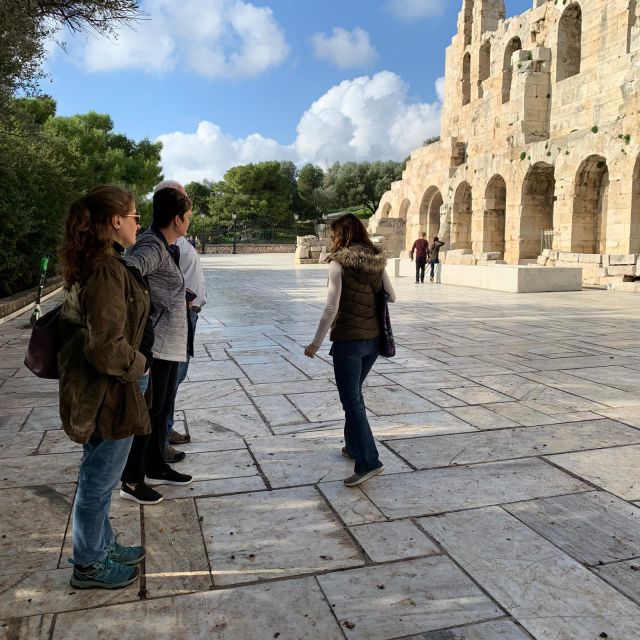
After the main guided walk, you may stay on the Acropolis at your own pace. Alternatively, you can follow the guide toward the south slope, where the route passes the Sanctuary of Asclepius and the Theater of Dionysus.
The Theater of Dionysus is one of the most meaningful stops on the extended route. It is closely tied to the birth of drama, so the guide can connect the stones beneath you with the plays, festivals, and public performances that shaped Greek culture.
The south slope adds variety after the high monuments. You trade the open summit views for a closer look at the lower parts of the sacred complex. This extra portion is not described as a separate long visit, so if you want a slow, detailed examination of every area, you may need more time on your own.
The good news is that the tour does not force you to leave when the two-hour guided portion ends. You can linger, take more photographs, or make your way to another nearby sight.
Reserved tickets and the meaning of skip-the-line
The ticket arrangement saves time, but it does not promise an empty entrance. With pre-reserved tickets, you bypass the ordinary ticket-buying line and join the queue for reserved ticket holders. During the high season, that queue can still be long at popular time slots.
That is an important distinction. This tour reduces one source of delay, but the Acropolis remains one of Athens’ busiest sights. You should not expect to walk straight through every crowd.
If you choose the option without tickets, you must bring the exact cash amount for the Acropolis entry fee and pay at the meeting point. Other tickets or passes are not accepted for that arrangement. For simplicity, I would choose the ticket-included option unless you have a specific reason not to.
The reserved entry is most valuable when your Athens schedule is tight. Two hours is short enough to fit into a morning or afternoon, and the fixed entrance time gives your day structure. It also means you must arrive punctually.
Timing, crowds, and summer heat
Early morning is the safest recommendation. The 8 a.m. tour has been praised for cooler temperatures and lighter crowds, while several people found that the site became much more crowded by the time they descended.
A 10 a.m. start can also work, and some people found it quieter than the earliest slot. Still, Athens heat builds quickly. An 11 a.m. tour may be uncomfortable in summer, even if the guide provides shade breaks.
Guides have been praised for stopping in shaded areas, keeping the pace sensible, and making sure the group stays together during hot weather. That helps, but no guide can remove the sun from an exposed hill. If you are visiting in July or August, choose the earliest time that fits your schedule.
Allow extra energy for the walk after the tour. You may want to continue at the Acropolis, visit the Acropolis Museum, or walk down toward the Theater of Dionysus. Do not plan a demanding activity immediately afterward if you know heat and hills wear you out.
Small group, headsets, and guide quality
The experience is advertised as a small-group tour, with a private group option available. Group size can affect how personal the visit feels, so it is wise to keep expectations realistic. One booking described a group of about 20 people, but the headsets made it easy to hear and follow the guide even when people stood a little apart.
The audio equipment is one of the practical strengths. You do not need to crowd around the guide or strain to catch every sentence. Anna also appreciated that the headsets were comfortable, though a printed map would have helped her remember the route afterward.
Guide quality is central here, and the feedback is unusually consistent. Lisa is praised for patience and safety, Vicki for organization and clear explanations, Eva for personality and historical detail, and Maria for bringing mythology to life. Elena, Ria, Frosso, and Andi have also been singled out for warmth, humor, and care with the group.
That does not mean every guide will use the same style. Some will focus more on architecture, others on mythology or wider Greek history. The common benefit is having a licensed professional interpret a complicated site while you walk.
Is $35 good value?
At $35 per person, this is not the cheapest way to enter the Acropolis. You can visit independently if you prefer to read in advance and set your own pace. The two-hour limit also makes the price feel high if you measure value only by time.
I think the cost is fair for three reasons. First, reserved entry simplifies one of the most important parts of the visit. Second, the guide gives structure to a site with many monuments and layers. Third, the headsets let you hear the explanation without stopping every few steps.
The tour becomes especially good value if you have only one day in Athens, do not want to prepare a detailed self-guided visit, or enjoy mythology and architecture more when someone tells the story in place. If you are already an ancient Greek history expert and dislike fixed pacing, independent entry may suit you better.
Tips are appreciated, though not required. If your guide keeps the group safe, answers questions well, and makes the monuments easier to understand, a gratuity is a considerate gesture.
Who should book this Acropolis tour?
I would choose this tour if you want the essential Acropolis sights in a focused two-hour visit. It suits first-time visitors, families with older children, couples on a tight schedule, and anyone who wants the Parthenon explained rather than simply photographed.
It is also a good fit for people who normally avoid group tours. The pace is organized, but there is room for questions, photographs, and some time afterward on your own. The relaxed style praised in several bookings suggests that the experience need not feel like being herded through a checklist.
I would think twice if you have trouble climbing hills, cannot manage uneven ground, or need a wheelchair, walker, stroller, or elevator. You should also avoid the hottest part of the day if heat affects you.
Should you book it?
Book this tour if you want a well-organized introduction to the Acropolis, especially with the ticket-included option and an early start. The strongest reasons are the clear guides, useful headsets, practical pacing, and the way mythology, architecture, and later history are tied to what you can see.
Skip it if you prefer complete independence, need a long unhurried visit, or are not comfortable with the climb. For most first visits to Athens, though, $35 buys more than admission. It gives you a knowledgeable voice at the exact moment the Parthenon, Erechtheion, and ancient theater are in front of you.
FAQ
Where does the tour meet?
The meeting point is outside the Acropolis Metro Station at Makrigianni 7. If arriving by metro, use the Makryianni and Dionysiou Areopagitou exit, go to street level, and look for the guide holding a sign with your names.
How long does the tour last?
The guided walking tour lasts two hours. Afterward, you may remain on the Acropolis at your own pace or follow the guide toward the south slope.
Does the price include Acropolis admission?
Acropolis admission is included if you select the option with pre-reserved tickets. If you choose the option without tickets, you must bring the exact entry fee in cash to the meeting point.
What monuments are included?
The route includes the Acropolis, Parthenon, Propylaea, Erechtheion, Temple of Athena Nike, and Theater of Dionysus. The south slope route also passes the Sanctuary of Asclepius.
Are headsets provided?
Yes. Headsets are included so you can hear the guide more clearly, including when the group spreads out or the site is crowded.
What languages are available?
The tour is available in English and German. A private group option is also available.
Is the tour suitable for wheelchair users?
No. The tour has no wheelchair, walker, or elevator access. It is also not suitable for people with mobility impairments or serious pre-existing medical conditions.
What should I bring?
Bring comfortable shoes, water, sunscreen, and a sun hat. Sandals, flip-flops, baby strollers, luggage, and large bags are not allowed.
Just added around Athens
- Athens Hotels to Athens Airport Private Departure Transfer★ 5.0 · 40 reviews
- Private One-way Transfer between Athens International Airport and Athens Hotels★ 4.5 · 40 reviews
- Athens: Acropolis Museum Ticket with Self-Guided Audio tour App★ 3.5 · 40 reviews
- From Athens: Meteora Train Trip with Overnight Stay★ 4.8 · 40 reviews
- Athens Photography Tour★ 5.0 · 40 reviews
- Athens: Acropolis Visit and City Night Tour★ 4.7 · 40 reviews
- Delphi Full Day Private Trip From Athens With Lunch Overlooking the Sea★ 5.0 · 40 reviews
- Acropolis & Plaka Neighbourhood Private Tour with Licensed Expert★ 5.0 · 40 reviews
Acropolis & Parthenon Tours, compared.
Acropolis & up to 5 Archaeological Sites Combo Pass
Read our review →
Acropolis, Parthenon & Acropolis Museum Guided Tour
Read our review →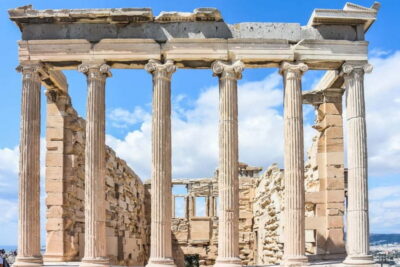
Acropolis, Parthenon & Acropolis Museum Guided Tour
Read our review →

Acropolis: Acropolis and Parthenon Guided Walking Tour
Read our review →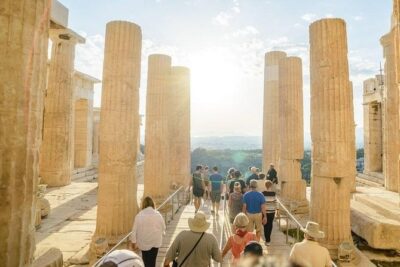
Acropolis monuments & Parthenon Walking Tour with Optional Acropolis Museum
Read our review →Browse the lists this tour appears in