
Reviewed · WALKING TOURS
Athens: Guided Street Art Walking Tour
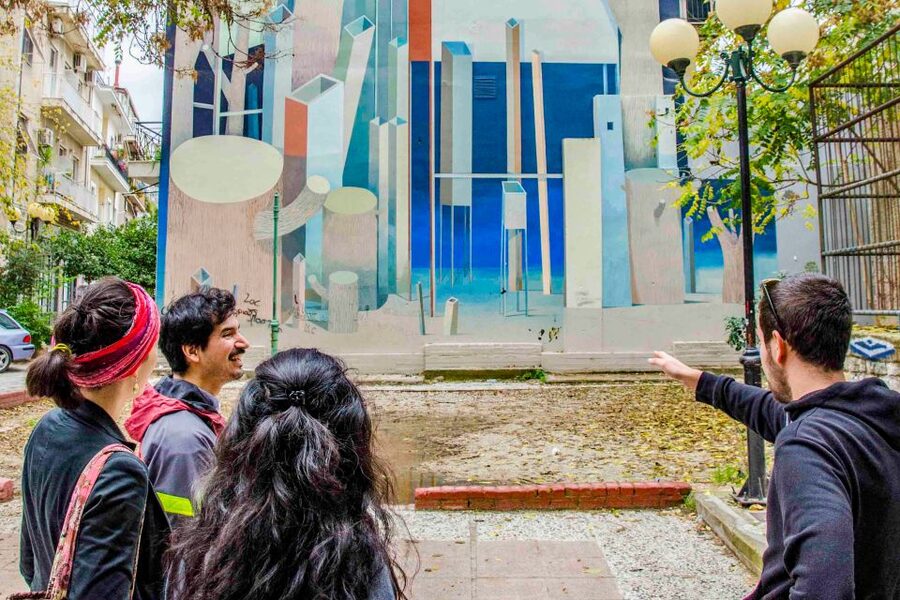
Athens speaks through its walls. This three-hour walk takes you beyond the Acropolis and into the city’s street art scene, where murals, tags, and political images reveal modern Greek life. I especially like the artist-led commentary and the chance to see Psyri, Gazi, and Monastiraki from a less polished angle. The main drawback is that the route involves steady walking on city streets and is not suitable for wheelchair users or people with mobility impairments.
You get more than a photo walk here. Guides such as Nikos, also known as Rude, have worked in the local art scene and can explain artists including WD, iNO, and Moralez. I also like the tour’s connection to Greece’s economic and social crisis, though anyone seeking only ancient monuments may find the political discussion less appealing.
In This Review
- Key points to know before booking
- Why Athens is best read one wall at a time
- Starting near Thissio and finding the meeting point
- Psyri: old streets with a modern voice
- Gazi: industrial character and large-scale work
- Monastiraki: the familiar center seen differently
- The economic crisis through paint and paste
- What makes an artist guide different
- Three hours, $57, and what you receive
- Who will enjoy this walk most
- Practical advice for a better morning or afternoon
- Should you book the Athens street art tour?
- FAQ
- Where does the Athens street art tour start?
- How long does the walking tour last?
- Which neighborhoods does the tour visit?
- What languages are available?
- Is transportation included?
- Is the tour suitable for wheelchair users?
Key points to know before booking
- A working street artist leads the walk: Guides such as Nikos bring first-hand experience of graffiti and urban art, not just a list of artist names.
- Three central neighborhoods provide the setting: The route explores Psyri, Gazi, and Monastiraki, areas where old buildings and new creative work meet.
- The art carries social and political messages: You learn how artists have responded to economic hardship, public frustration, revolution, and daily life in Greece.
- It is a useful contrast to Athens’s ancient sights: The tour shows the contemporary city and takes you into streets many first-time visitors might otherwise miss.
- The pace suits conversation: Past groups have included adults, art students, and children as young as 12, with guides encouraging questions and discussion.
- The practical deal is clear: The tour costs $57 per person, lasts three hours, and includes the guide and walking tour, but not transportation.
Why Athens is best read one wall at a time

Athens has no shortage of classical monuments. You can spend days looking at marble temples, Roman ruins, and Byzantine churches. But the city’s present-day concerns are often easier to see on a painted wall than inside a museum.
This tour treats graffiti and street art as part of the city’s public conversation. A face, slogan, stencil, or enormous painted figure may refer to politics, poverty, migration, rebellion, identity, or simply the artist’s visual style. Your guide helps you look closely rather than rushing past the work as background decoration.
That is the real value here. You are not merely shown attractive murals. You are given some basic tools for reading them: how styles differ, how artists use scale and placement, and how a piece can change meaning depending on the building or street around it.
The tour’s rating of 4.9 from 182 reviews reflects unusually consistent praise, especially for the guides’ warmth, clear explanations, and ability to connect art with Greek society. That does not mean every piece will appeal to you. Street art can be rough, confrontational, or deliberately obscure. The reward is learning why it is there and deciding for yourself what it means.
More Walking Tours in Athens
- Athens: Acropolis and Parthenon Guided Walking Tour
★ 4.6 · 5,882 reviews - Greek Food Walking Tour in Athens
★ 5.0 · 4,740 reviews - Acropolis: Acropolis and Parthenon Guided Walking Tour
★ 4.7 · 3,442 reviews
Starting near Thissio and finding the meeting point

The meeting point is in front of the Association of Greek Archaeologists in Thissio. This is a practical starting area because you can reach it by taking the green train line to Thissio. You can also use the blue line to Monastiraki and walk along Adrianou Street.
Check your exact starting instructions before setting out. The supplied details list Thiseio, also written as Thēseio, as the starting area, while the route later includes Psyri, Gazi, and Monastiraki. Since Athens has several similarly spelled neighborhood and station names, arriving a little early gives you time to confirm the precise meeting spot.
The first few minutes are useful for getting oriented. Your guide may explain what separates street art from graffiti, commissioned murals from unsanctioned work, or decorative painting from political expression. One past guide began with a definition of street art that helped the group understand what to look for during the rest of the walk.
Wear comfortable shoes. You will spend three hours on foot, and the streets of central Athens can include uneven paving, steps, and crowded pedestrian areas. Transportation is not included, but the meeting point is reachable by metro.
Psyri: old streets with a modern voice
Psyri is one of the tour’s main areas and a good place to see how Athens combines older urban fabric with contemporary art. The neighborhood is close to Monastiraki, yet its smaller streets can feel quite different from the main archaeological routes.
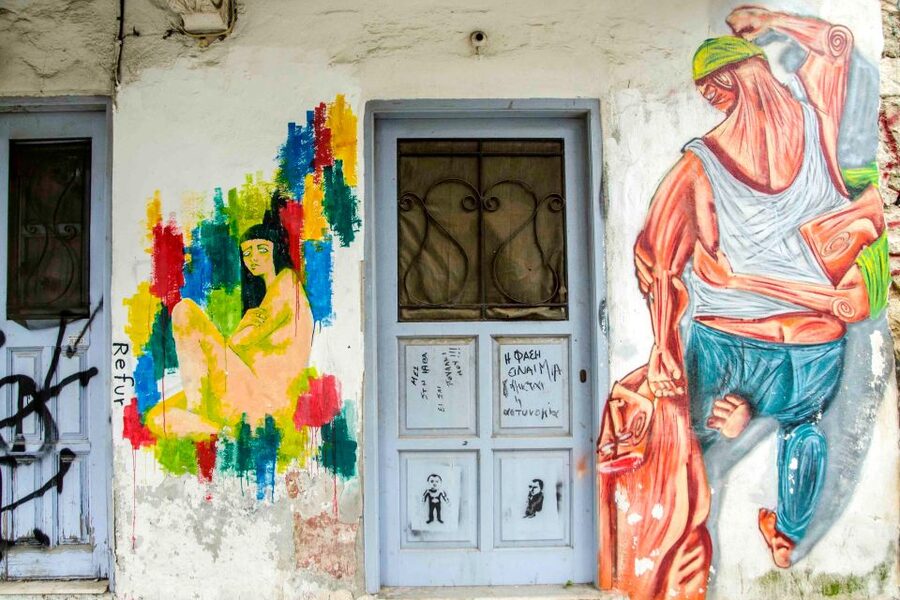
Here, you might find work painted across shutters, side walls, abandoned facades, and the edges of older buildings. Some pieces are large and carefully planned. Others are quick marks layered over older paint. The changing surface is part of the story: street art is temporary, and no wall stays exactly the same for long.
Your guide’s role matters most in places like this. Without context, you may see only a striking image. With an artist beside you, you can learn about the person who made it, the symbols used, and the reason the work may have appeared in that setting.
Psyri also helps you understand how art can coexist with everyday city life. You may pass cafes, restaurants, small businesses, and local streets while discussing political or social ideas painted directly onto the walls. That mix makes the experience feel less like a gallery visit and more like a walk through Athens’s current affairs.
A small caution: the atmosphere can change from one block to the next, and some streets are more urban and worn than the polished areas around the Acropolis. That is not a flaw for most people booking this experience. It is exactly the point. Still, you should be comfortable exploring ordinary city streets rather than expecting a neat row of monumental murals.
Gazi: industrial character and large-scale work

The route also reaches Gazi, an area associated with former industrial buildings and a strong contemporary identity. The neighborhood gives the art a different backdrop from Psyri’s older lanes.
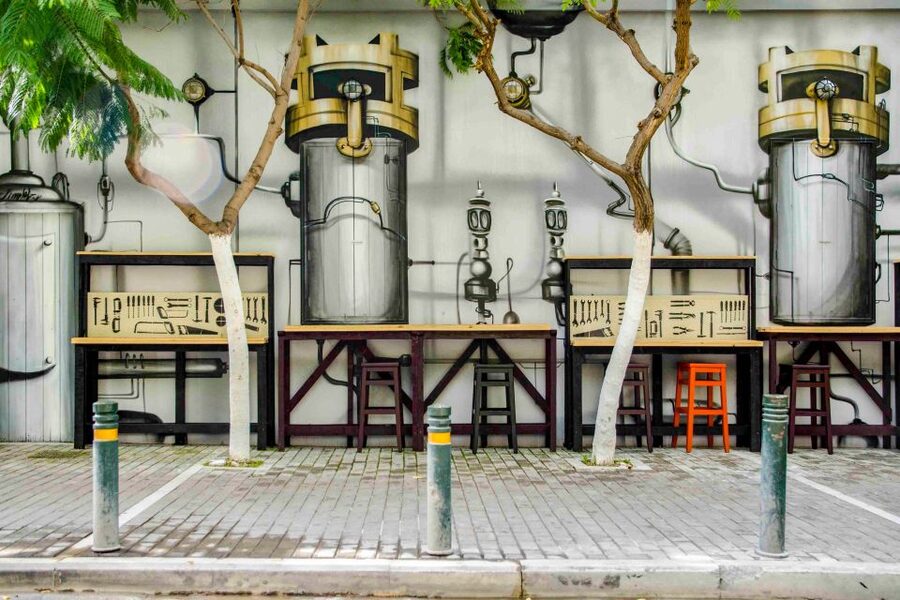
Large walls can make it easier to appreciate the technical side of urban painting. Your guide may point out lettering, portrait work, stencils, color choices, and the way artists adapt a design to a wall’s size and shape. You can also learn how one artist’s approach differs from another’s, which is particularly helpful if you are new to street art.
Artists such as WD, iNO, and Moralez are among the names discussed. The guide does not simply identify a signature. You learn to notice recurring styles and the ideas behind individual pieces. iNO received especially strong attention from one group, which described his work as a highlight of the walk.
Gazi is also a useful place to consider the city’s changing identity. Industrial surroundings, nightlife, creative activity, and economic pressure can all exist in the same district. Street art often records those tensions faster than official signs or city brochures do.
Do not expect every artwork to be in perfect condition. Paint fades, walls are covered, buildings are renovated, and new work may appear after the tour route has been planned. The guide’s value is partly in explaining the scene as something alive and changeable, not as a permanent collection.
More things to do in Athens:
- Athens: Acropolis & up to 5 Archaeological Sites Combo Pass
★ 4.4 · 12,619 reviews - Athens: Acropolis Ticket with Optional Audio or Live Guide
★ 4.2 · 11,055 reviews - Athens: Acropolis, Parthenon & Acropolis Museum Guided Tour
★ 4.8 · 9,316 reviews - Athens: Cape Sounion & Poseidon Temple Sunset Half-Day Trip
★ 4.8 · 8,241 reviews
Monastiraki: the familiar center seen differently

Monastiraki is one of Athens’s best-known central areas, with a metro station, market streets, restaurants, and easy access to major sights. You may already pass through it during your trip, but a street art walk encourages you to look beyond the obvious route.
The neighborhood works as a bridge between Athens’s famous historical center and its contemporary street culture. Instead of focusing only on the ancient remains nearby, you consider how modern artists use public space to comment on the city.
This part of the route can be busier than the quieter side streets. That is worth knowing if you prefer calm walks or need extra room for mobility. It can also make the art feel more connected to public life. A message on a wall is not hidden away from the people it addresses. It is placed where commuters, shopkeepers, students, residents, and visitors will see it.
The tour finishes in Psyri. That makes the end convenient if you want to continue with a meal or a drink in the neighborhood. Several guides have offered useful local suggestions at the end of the walk, including cafes, bars, and restaurants. These recommendations are not part of the formal inclusions, but they can help you turn the final stop into a practical next step.
The economic crisis through paint and paste

The most substantial part of the tour is its social context. Athens’s street art cannot be separated from Greece’s economic crisis and the strain that followed. Walls became places for anger, humor, protest, mourning, and resistance.
You may see imagery that refers directly to political frustration, unemployment, inequality, or public distrust. Other work may be less literal, using a distorted face, a broken figure, or an unsettling symbol to express a mood. Your guide helps connect these images to recent Greek life without reducing every piece to a single political slogan.
That context gives the walk more weight than a standard art sightseeing tour. You learn that a mural can be beautiful and critical at the same time. You also see how artists respond to events in different ways, from direct statements to work that leaves room for personal interpretation.
The discussion is not only about crisis. Guides also explain the development of graffiti and street art in Athens, the city’s neighborhoods, the buildings you pass, and aspects of ordinary life. Several people particularly valued learning about Greek culture, politics, architecture, and local history alongside the artwork.
I would not book this tour if you want to avoid modern political subjects. The conversation is a central part of the experience. If you are curious about how a city expresses frustration and hope in public, it may become one of the most memorable three hours of your Athens visit.
What makes an artist guide different
The guide is the heart of this experience. Nikos, often identified as Nicos or Rude, is the name most often associated with the walk, though other guides including Pavlina, Elisabeth, and Achilles have also led tours.
Nikos is described as relaxed, friendly, funny, and deeply familiar with the local scene. His background as a street artist allows him to explain technique and intention in a way that a general city guide might not. A guide who has made art can discuss the practical choices behind a piece, not just its subject.
The tone is conversational rather than formal. Groups are encouraged to ask questions, share opinions, and talk through what they see. That makes the experience work for people who know little about art as well as those with a serious interest in it.
Families have found the format especially successful. Teenagers and children aged 12, 15, and 18 have enjoyed the tour, and one art-school graduate appreciated speaking with someone connected to Greece’s wider art scene. The walk is not aimed only at specialists.
Guide quality can vary slightly because different artists may lead the tour. Still, the repeated praise for clear explanations, patience, humor, and local insight suggests that the guide is a strong reason to book. If you have a preferred language, check availability for English or French when choosing a time.
Three hours, $57, and what you receive
At $57 per person, this is not the cheapest way to spend three hours in Athens. You can see some street art on your own for free. The question is what you would miss without interpretation.
I think the price is reasonable if you care about understanding the work rather than simply photographing it. The fee includes a street artist guide and the walking tour, and the route covers three neighborhoods. You are paying for access to local knowledge, background on artists, and a structured way to find work that may be difficult to locate independently.
The value is stronger for a first visit or a short stay. If you have only two days in Athens, the tour gives you a clear view of the city beyond the ancient center while also helping you understand the layout of several central neighborhoods.
The value is weaker if you already know Athens’s street art scene well, or if you dislike walking for three hours. This is not a hop-on, hop-off experience, and there is no included vehicle or transfer between areas.
Private groups are available. That option may suit a family or a group of friends who want more control over the pace and discussion, though the supplied information does not state the additional cost or exact private-group arrangements.
You can cancel up to 24 hours before the start for a full refund, and the reserve-now, pay-later option helps if your plans are still shifting. Those policies do not change the nature of the tour, but they make it easier to fit into an Athens schedule.
Who will enjoy this walk most

I would recommend it first to people who want a modern counterpoint to Athens’s ancient sights. Art lovers will find plenty to discuss, but you do not need an art background. The guides explain the basics and invite your own reaction.
It is also a strong choice for families with older children and teenagers. Young people who find a traditional history tour slow may respond to the scale, color, politics, and directness of street art. The walk can give them a more personal way to think about the city.
This tour suits you if you enjoy:
- Contemporary art and graffiti
- Local politics and social history
- Exploring neighborhoods beyond the major sights
- Small-group conversation
- Recommendations for food and drinks after a walk
I would be more cautious if you have limited mobility. The experience is specifically listed as unsuitable for wheelchair users and people with mobility impairments. Comfortable footwear is essential, and the three-hour duration leaves little room for avoiding difficult surfaces.
You should also remember that street art is temporary. A piece may be painted over, damaged, or harder to see than expected. The experience is about learning how Athens uses public walls, not checking off a fixed museum collection.
Practical advice for a better morning or afternoon

Start with water and comfortable shoes. Athens can be hot, and the route takes place outdoors for three hours. The supplied information does not promise a cafe stop, but one guide has taken a group to a good cafe for coffee, so you may get a break depending on the route and guide.
Bring a phone or camera if you want photographs, but listen before shooting. The explanation of a piece may be more valuable than the image itself, especially when the art is partly hidden by parked cars, shadows, or nearby construction.
Allow time after the tour in Psyri. The finish there makes it easy to follow a guide’s suggestions for lunch, coffee, a bar, or a restaurant. Do not schedule a major timed attraction immediately afterward unless you have a generous buffer, since city walking routes can vary.
Finally, ask questions. The tour is at its best when you discuss what a piece might mean, why an artist chose a particular wall, or how a neighborhood affects the reading of the work. You are not expected to identify styles or artists in advance.
Should you book the Athens street art tour?
Book it if you want Athens to be more than temples and marble. For $57, you receive three hours of guided walking, access to three central neighborhoods, and an artist’s explanation of work you might otherwise pass without understanding.
The strongest reasons to go are the guides, the political and social context, and the chance to see Psyri, Gazi, and Monastiraki through contemporary culture. Nikos and the other artists who lead the walk appear to make the experience warm and personal rather than academic.
Skip it if you need a fully accessible route, dislike long walks, or want a tour devoted only to classical Athens. For everyone else, especially families with teens, art lovers, and curious first-time visitors, this is a smart way to spend part of an Athens day.
FAQ
Where does the Athens street art tour start?
The meeting point is in front of the Association of Greek Archaeologists in Thissio. You can reach the area by taking the green train line to Thissio, or the blue line to Monastiraki and walking along Adrianou Street.
How long does the walking tour last?
The tour lasts three hours. Starting times vary, so you should check availability for the date you want.
Which neighborhoods does the tour visit?
The route includes Psyri, Gazi, and Monastiraki, with the tour finishing in Psyri.
What languages are available?
The tour is available in English and French.
Is transportation included?
No. Transportation is not included. The experience is a walking tour, although the meeting point is accessible by metro.
Is the tour suitable for wheelchair users?
No. The tour is not suitable for wheelchair users or people with mobility impairments. You should also bring comfortable shoes for the three-hour walk.
More Street Art in Athens
- Athens Street Art Walk
★ 5.0 · 309 reviews - Awesome Street Art Tour in Athens with a Local Expert Small-Group
★ 5.0 · 150 reviews - Athens Urban Street Art Tour
★ 5.0 · 98 reviews
Just added around Athens
- Athens Hotels to Athens Airport Private Departure Transfer★ 5.0 · 40 reviews
- Private One-way Transfer between Athens International Airport and Athens Hotels★ 4.5 · 40 reviews
- Athens: Acropolis Museum Ticket with Self-Guided Audio tour App★ 3.5 · 40 reviews
- From Athens: Meteora Train Trip with Overnight Stay★ 4.8 · 40 reviews
- Athens Photography Tour★ 5.0 · 40 reviews
- Athens: Acropolis Visit and City Night Tour★ 4.7 · 40 reviews
- Delphi Full Day Private Trip From Athens With Lunch Overlooking the Sea★ 5.0 · 40 reviews
- Acropolis & Plaka Neighbourhood Private Tour with Licensed Expert★ 5.0 · 40 reviews
Walking Tours, compared.



Acropolis: Acropolis and Parthenon Guided Walking Tour
Read our review →
Acropolis monuments & Parthenon Walking Tour with Optional Acropolis Museum
Read our review →
Knossos: Knossos Palace Skip-the-Line Guided Walking Tour
Read our review →

Athens Authentic Greek Food Walking Tour (Small Group)
Read our review →
Early Morning Acropolis & Old Athens Guided Walking Tour
Read our review →Browse the lists this tour appears in