
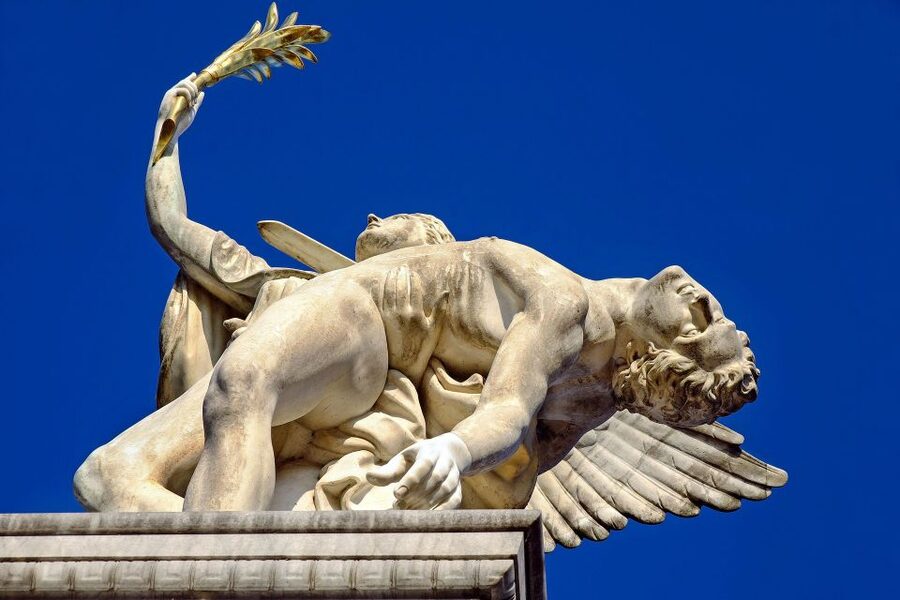
Reviewed · WALKING TOURS
Athens: Guided Mythological Walking Tour
Myths make Athens easier to read. This two-hour walk turns statues, monuments, streets, and ancient stories into one connected tour, moving from Korai 4 through Syntagma Square and Plaka to Monastiraki. I especially like the way it links Greek gods and heroes to the city around you, and I like that it reveals smaller details you could easily pass without noticing.
The guide is the heart of the experience. Penelope receives the strongest praise for her storytelling, humor, patience, and command of mythology, while Christina and Cristina have also led memorable versions of the tour. The main consideration is the amount of information: this is not just a light stroll with a few familiar tales. Expect a serious lesson, especially if your guide connects mythology with philosophy, literature, history, and social customs.
In This Review
- Key points at a glance
- Why mythology changes the way you see Athens
- Starting at Korai 4 and the Academy of Athens
- The Numismatic Museum and the clues on city buildings
- Akadimias and the city between the landmarks
- Syntagma Square and the human side of the gods
- Mitropoleos and a change of city mood
- Plaka, where the stories feel closest to the street
- What the guide adds to the experience
- Is $47 a fair price for two hours?
- Who will enjoy this Athens mythology walk?
- Practical tips for getting the most from the walk
- FAQ
- Where does the Athens Mythological Walking Tour start?
- Where does the tour finish?
- How long is the walking tour?
- What language is the tour offered in?
- What is included in the price?
- Are archaeological site entrance fees included?
- Are meals included?
- Is hotel pickup and drop-off provided?
- What should I wear?
- Can I cancel for a full refund?
- Should you book this Athens mythology tour?
Key points at a glance

- A mythology-led route through central Athens: Walk from Korai 4 to Monastiraki through the Academy of Athens, Syntagma, Mitropoleos, and Plaka.
- Storytelling is the main attraction: Gods, satyrs, nymphs, lovers, betrayals, and punishments bring the city’s monuments into focus.
- Penelope earns repeated praise: Her engaging style works well for adults, older children, and families with teenagers.
- You see details beyond the headline sights: Statues, architecture, lesser-known corners, and monuments gain a mythological connection.
- Two hours, but not a shallow tour: The pace includes frequent walking and a substantial amount of explanation.
- Best value for curious visitors: At $47 per person, it is most worthwhile if you want context, questions answered, and a new way to understand Athens.
Why mythology changes the way you see Athens
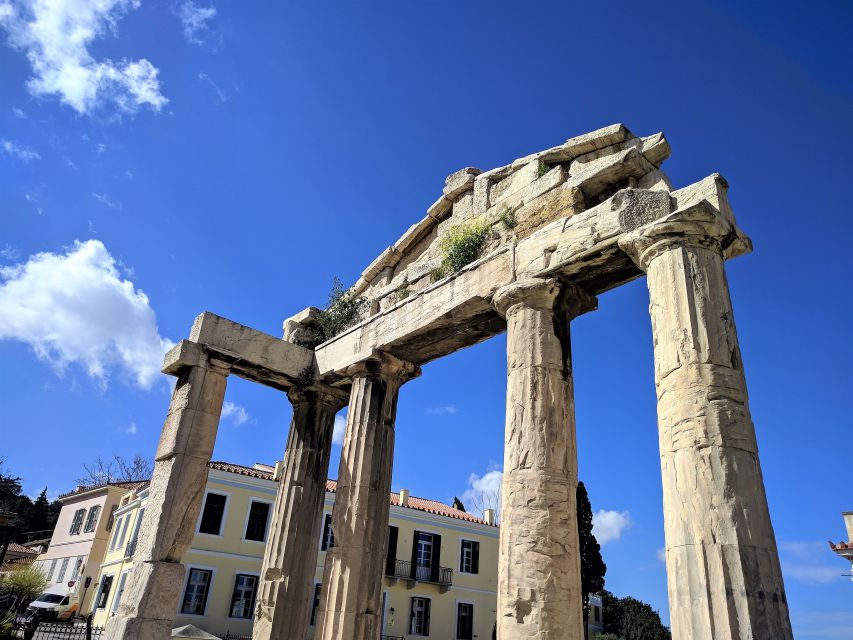
Athens can feel like two cities at once. One is the busy modern capital, full of cafés, traffic, offices, and broad city streets. The other is the Athens of Zeus, Athena, satyrs, nymphs, heroes, and divine grudges.
This tour concentrates on the second city, but it does not treat mythology as a collection of children’s stories. The tales include seduction, jealousy, deception, family conflict, transformation, and punishment. That human side makes the gods easier to understand. They may possess divine powers, but they behave with very recognizable weaknesses.
I like this approach because it gives you a reason to look up. A statue is no longer just a statue. A building may carry an architectural reference to a god. A monument may recall an old story. A street or district may connect with the wider story of Athens and its people.
The tour also adds daily life to the myths. You learn about social customs and how Athenians understood the relationship between humans and the gods. That makes the experience more useful than a simple retelling of Zeus’s affairs or the adventures of mythical beasts.
More Walking Tours in Athens
- Athens: Acropolis and Parthenon Guided Walking Tour
★ 4.6 · 5,882 reviews - Greek Food Walking Tour in Athens
★ 5.0 · 4,740 reviews - Acropolis: Acropolis and Parthenon Guided Walking Tour
★ 4.7 · 3,442 reviews
Starting at Korai 4 and the Academy of Athens
The meeting point is in front of the Starbucks café at Korai 4. This is a practical starting location in central Athens, but give yourself enough time to find the exact café and gather before the walk begins.
From there, the route takes about 20 minutes on foot to the Academy of Athens. That first stretch begins the shift from modern city life to the world of classical ideas. The Academy building is an important stop because its decoration and architecture provide a natural setting for discussion of gods, wisdom, learning, and the way later Athens presented its ancient identity.
You should not think of this as an entrance visit to the Academy. The tour is outdoors, and admission to archaeological sites is not included. The value here comes from the guide’s explanation and from seeing how mythological themes can appear in public buildings and monuments.
The Academy is also a good early stop for setting up the cast of Greek mythology. If the names of gods and heroes blur together, ask questions early. Guides such as Penelope are praised for answering questions clearly and for making complicated family connections easier to follow.
The Numismatic Museum and the clues on city buildings
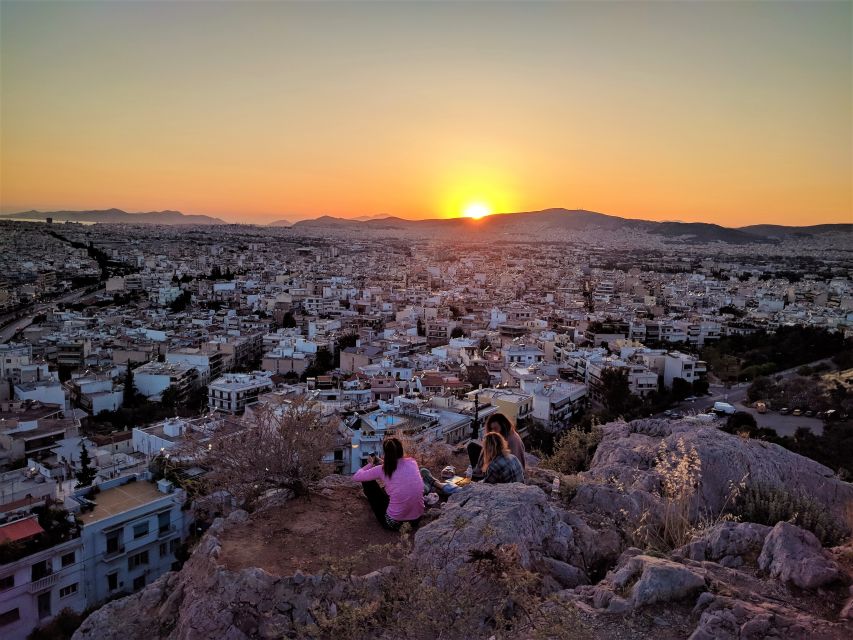
The next walk takes roughly 15 minutes to the Numismatic Museum. The itinerary does not include museum admission, so treat this as an exterior or nearby city stop rather than a museum tour.
Its presence fits the wider theme of the walk. Coins, public symbols, rulers, gods, and civic identity are closely tied to the way ancient societies presented themselves. The guide uses the city around you to explain those links, rather than keeping mythology locked inside a textbook.
This part of the route may appeal most to you if you enjoy the small evidence of the past. Several people have praised the guides for pointing out buildings, statues, and details they had walked past before. That is one of the tour’s better features. You are not only hearing a familiar story about Athena or Zeus. You are learning where to look for the story’s echoes.
The stop also helps show that mythology was not separate from ordinary Greek life. It shaped public imagery, ideas about power, and the way people understood their city. You might leave this section paying closer attention to symbols on buildings throughout Athens.
Akadimias and the city between the landmarks
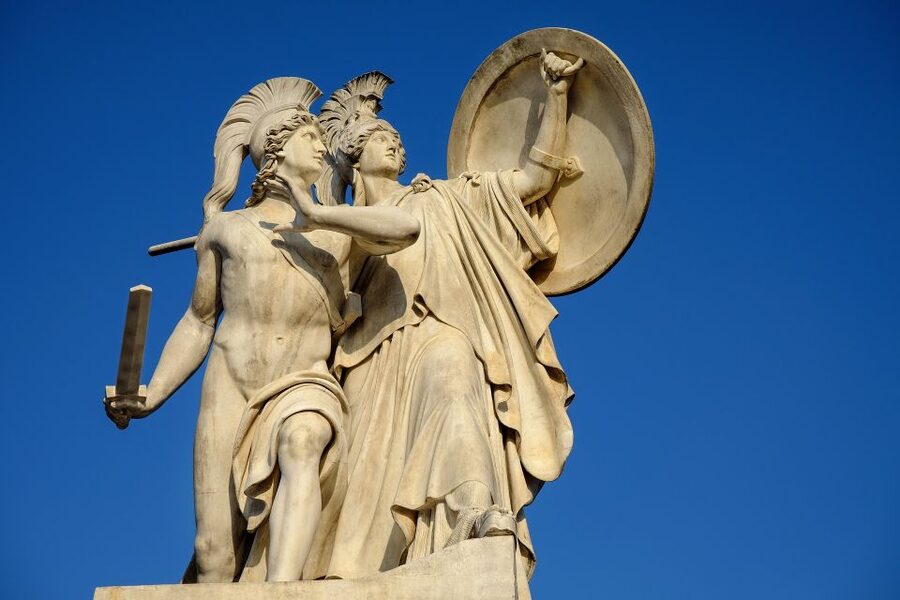
The walk to Akadimias takes about 20 minutes. This is one of the longer stretches, and it matters because the tour is not a series of stationary talks. You are walking through central Athens while the guide continues the story.
That movement gives the experience a useful rhythm. You hear a myth, then see a building or statue that gives the tale a physical setting. You walk again, notice another part of the city, and receive another piece of context. The result is less like a lecture in one square and more like a moving conversation.
Still, you should wear comfortable shoes. The total route includes several walking segments, with the longest listed stretch taking 30 minutes later in Plaka. Comfortable clothing is also advised. In summer, bring water and a hat. Penelope has been praised for seeking shade, taking breaks, and adjusting the pace during hot weather, but Athens can still be demanding under strong sun.
This section can also be a useful orientation to central Athens. The tour does not promise entry into every monument, and it is not a substitute for visiting the Acropolis or major archaeological sites. Instead, it helps you understand how different parts of the city connect.
More things to do in Athens:
- Athens: Acropolis & up to 5 Archaeological Sites Combo Pass
★ 4.4 · 12,619 reviews - Athens: Acropolis Ticket with Optional Audio or Live Guide
★ 4.2 · 11,055 reviews - Athens: Acropolis, Parthenon & Acropolis Museum Guided Tour
★ 4.8 · 9,316 reviews - Athens: Cape Sounion & Poseidon Temple Sunset Half-Day Trip
★ 4.8 · 8,241 reviews
Syntagma Square and the human side of the gods
After another walk of about 20 minutes, you reach Syntagma Square. This is one of Athens’s most recognizable public spaces, and it gives the tour a clear contrast between ancient ideas and modern civic life.
Here, the guide can place mythology beside the city’s present-day identity. The focus remains on stories, monuments, and the interaction between gods and humans in ancient Greece. But the setting reminds you that Athens is not an archaeological park. It is a living capital built around layers of memory.
I find this especially helpful for first-time visitors. You get a sense of the city’s central layout while learning how ancient stories continued to shape names, images, and public symbols. The walk does not claim that every modern street preserves an untouched ancient scene. Its strength is showing how Athens remembers and reuses its past.
If you want a gentle introduction to Greek mythology, this may be the point where the amount of material becomes noticeable. Guides often connect one myth to another, and the cast can grow quickly. The stories involve gods, heroes, humans, satyrs, and nymphs, each with their own relationships and rivalries.
Mitropoleos and a change of city mood
The route continues for about 15 minutes to Mitropoleos. This stretch brings you closer to the central neighborhoods where old religious and civic landmarks sit beside restaurants, shops, and everyday Athens.
The exact detail discussed here depends on the guide and the group’s questions. What you can expect is another opportunity to connect a visible place with the beliefs and stories that shaped ancient Greek culture. Architecture and monuments are not just backdrops. They become prompts for asking how Athenians imagined divine power, human behavior, fate, and punishment.
This is also where the tour’s balance of history and myth becomes clear. Some people arrive expecting only dramatic stories about the gods. Instead, the guide may explain customs, cultural change, and the development of ideas over time. That makes the walk suitable for anyone interested in history, literature, anthropology, or philosophy, not only mythology fans.
Families can benefit from the interactive style. Children and teenagers have been kept involved through questions, humor, and stories with strong characters. Still, younger children may need help following the many names and connections, especially if they have little background in Greek mythology.
Plaka, where the stories feel closest to the street
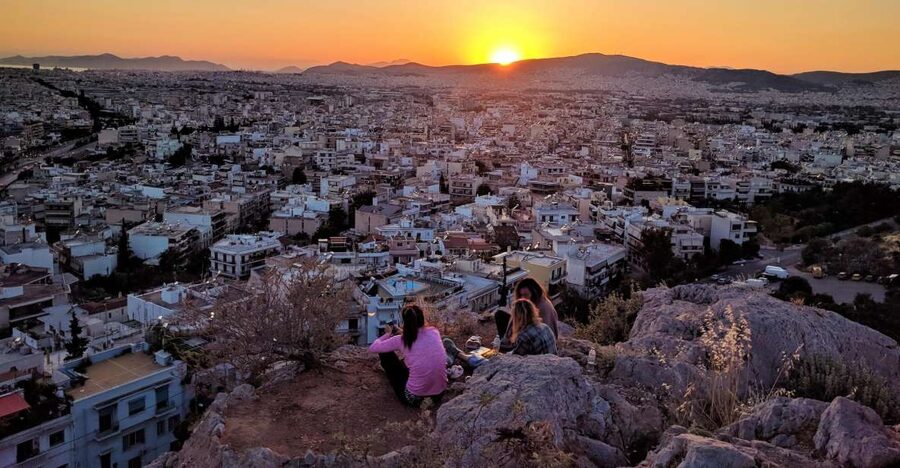
The final major walking section leads into Plaka and takes about 30 minutes. This is the longest listed part of the route, so it is the stretch where good shoes, water, and sensible clothing matter most.
Plaka is one of Athens’s most picturesque areas, with narrow streets, old buildings, small shops, cafés, and views toward the city’s ancient core. It provides an enjoyable setting for mythological storytelling because you are walking through a neighborhood rather than simply stopping at a formal monument.
The guide brings together the main themes here: the legends of Athens, the relationship between humans and gods, and the way myths influenced the city’s identity. You may hear about divine romance, rivalry, punishment, and transformation while passing places that seem ordinary at first glance.
That contrast is part of the fun. You are not only looking at famous ruins. You are learning to notice the mythological layer in streets and public art. A guide with strong presentation skills can make this feel lively rather than academic. Penelope has been particularly praised for holding children’s attention while still giving adults enough detail to stay interested.
The route finishes at Monastiraki. This is convenient if you want to continue exploring central Athens afterward, though hotel pickup and drop-off are not included. The ending also places you near one of the city’s most useful areas for continuing your day on foot.
What the guide adds to the experience
The quality of this tour depends heavily on the person leading it. The repeated praise for Penelope focuses on three things: her command of the subject, her ability to tell a story, and her warm way of dealing with questions.
Those qualities matter because Greek mythology can become confusing fast. Zeus has a large family, the gods often change form, and the same story may involve several names unfamiliar to English speakers. A guide who can explain connections without losing the thread makes the experience much more enjoyable.
Penelope’s style also seems to suit mixed groups. Families with children aged 10, 11, 13, and younger have found the tour engaging, while adults with a strong interest in mythology have still learned new details. She has also been praised for using shade and breaks sensibly in hot weather.
Earlier versions of the walk have been led by Christina or Cristina. The strong comments about these guides emphasize the same general strengths: clear storytelling, local suggestions, friendly conversation, and the ability to connect mythology with Athens itself. Since guide assignments can change, check the current booking details if a particular guide matters to you.
Is $47 a fair price for two hours?
At $47 per person, this is not the cheapest way to walk around Athens. You are paying for a live English-speaking guide, not for entry to a monument, a meal, transportation, or a private transfer.
The value depends on what you want. If you simply need directions between Syntagma, Plaka, and Monastiraki, you can walk the route yourself. If you want a guide to explain the stories, answer questions, point out details, and connect architecture with ancient beliefs, the price is easier to justify.
The tour is especially good value early in an Athens visit. It gives you an overview of central areas and may help you notice details during later independent sightseeing. One earlier participant described it as a useful city introduction, with recommendations for restaurants, cafés, and bars after the walk.
The group size can affect the experience. Some departures have been very small, even only two people, creating an almost private conversation. The supplied details do not promise a fixed group size, so you should not book expecting a private tour. But if your departure is small, you may have more time for questions and a more personal exchange.
Flexible booking adds practical value. You can cancel up to 24 hours before the activity for a full refund, and the reserve-now, pay-later option lets you hold a place without paying immediately. Check the available start times because the exact schedule is not fixed in the information provided.
Who will enjoy this Athens mythology walk?
I would choose this tour if you enjoy stories with complicated characters and moral problems. The Greek gods are not presented as tidy role models. They are jealous, proud, romantic, cruel, clever, and often deeply unfair.
It also suits you if you have already seen Athens’s major sights but want a different way to understand them. Several people who had spent multiple days in the city still found new corners and new details.
Families are a good match, especially with children old enough to follow a long story. The guides have successfully held the attention of children and teenagers, but the material is more detailed than a short entertainment show.
You may want something else if you prefer a quick, visual tour with little talking. Two hours includes a lot of explanation, and the route is built around storytelling rather than entrance visits. You should also consider the heat, the walking distance, and the fact that meals, site tickets, and hotel transfers are not included.
Practical tips for getting the most from the walk
- Wear comfortable walking shoes and light, practical clothing.
- Bring water and a hat, especially from late spring through summer.
- Arrive at the Starbucks café at Korai 4 with enough time to identify the meeting point.
- Ask questions as you go. The guides are praised for making the walk conversational.
- If the mythology names become tangled, focus on the story’s main conflict first. The details will make more sense afterward.
- Consider taking the tour near the beginning of your Athens stay, when the city’s streets and monuments are still unfamiliar.
- Do not count on entering archaeological sites. Entrance fees are not included.
- Plan your next activity near Monastiraki, where the walk ends.
FAQ
Where does the Athens Mythological Walking Tour start?
It starts at Korai 4, in front of the Starbucks café.
Where does the tour finish?
The tour finishes at Monastiraki.
How long is the walking tour?
The stated duration is two hours.
What language is the tour offered in?
The live guided tour is offered in English.
What is included in the price?
Mythological storytelling from an expert guide is included.
Are archaeological site entrance fees included?
No. Entrance to archaeological sites is not included.
Are meals included?
No. Meals are not included.
Is hotel pickup and drop-off provided?
No. Hotel pickup and drop-off are not included.
What should I wear?
You should wear comfortable clothes and comfortable shoes.
Can I cancel for a full refund?
Yes. You can cancel up to 24 hours in advance for a full refund.
Should you book this Athens mythology tour?
Book it if you want Athens explained through stories rather than simply photographed. The strongest reason to go is the guide’s ability to connect gods, lovers, statues, architecture, customs, and city streets into one readable experience.
I would particularly recommend it to families, mythology fans, and first-time visitors who want an orientation before exploring on their own. Penelope appears to be an excellent match for this format, especially if you appreciate humor, detailed explanations, and plenty of questions.
Skip it if you want a short, low-information stroll or a tour that includes archaeological-site entry. At $47, the value comes from the live storytelling and the fresh way of seeing central Athens. For the right audience, that is a fair exchange, and Monastiraki is a handy place to continue your day.
Just added around Athens
- Athens Hotels to Athens Airport Private Departure Transfer★ 5.0 · 40 reviews
- Private One-way Transfer between Athens International Airport and Athens Hotels★ 4.5 · 40 reviews
- Athens: Acropolis Museum Ticket with Self-Guided Audio tour App★ 3.5 · 40 reviews
- From Athens: Meteora Train Trip with Overnight Stay★ 4.8 · 40 reviews
- Athens Photography Tour★ 5.0 · 40 reviews
- Athens: Acropolis Visit and City Night Tour★ 4.7 · 40 reviews
- Delphi Full Day Private Trip From Athens With Lunch Overlooking the Sea★ 5.0 · 40 reviews
- Acropolis & Plaka Neighbourhood Private Tour with Licensed Expert★ 5.0 · 40 reviews
Walking Tours, compared.

Acropolis: Acropolis and Parthenon Guided Walking Tour
Read our review →
Acropolis monuments & Parthenon Walking Tour with Optional Acropolis Museum
Read our review →
Knossos: Knossos Palace Skip-the-Line Guided Walking Tour
Read our review →

Athens Authentic Greek Food Walking Tour (Small Group)
Read our review →
Early Morning Acropolis & Old Athens Guided Walking Tour
Read our review →Browse the lists this tour appears in