
Reviewed · WALKING TOURS
Athens: Guided Mythological Walking Tour & Creation Stories
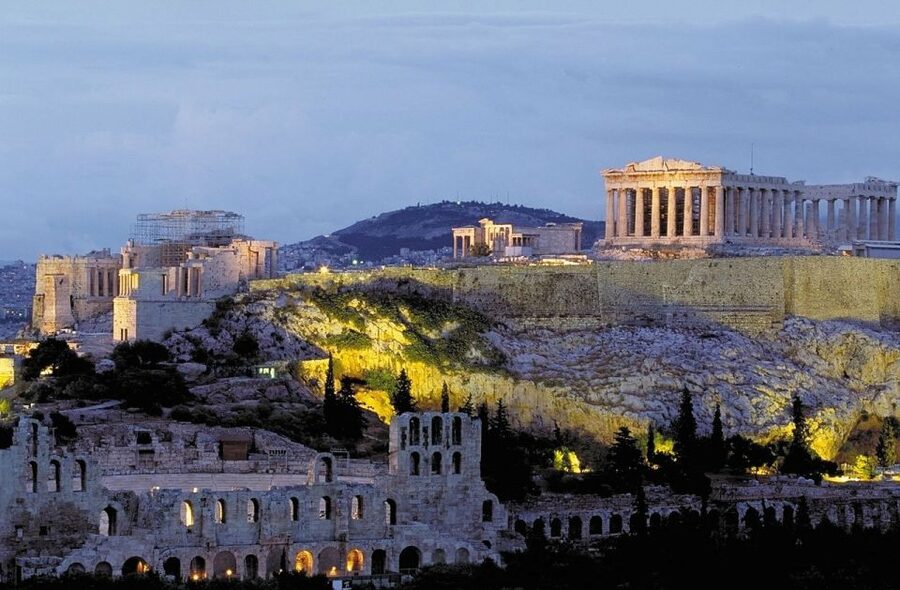
Mythology gives Athens a second map. This two-hour walk uses the stories of Athena, Poseidon, and Theseus to explain the city’s ancient culture, public spaces, names, and symbols. I like the small-group format and the way the tour connects familiar gods with real places in central Athens. I also like that a heritage interpreter leads the walk rather than offering a simple list of facts.
The main consideration is language: the tour is conducted only in Spanish. That makes it a strong choice for Spanish speakers, but a poor fit if you need English commentary. At $28 per person, it offers good value for anyone who wants context before visiting Athens’s major ancient sights, though it is more about stories and interpretation than entering a long list of monuments.
In This Review
- Key points about this Athens mythology walk
- Starting at the Academy in central Athens
- Athena, Poseidon, and the contest for Athens
- Following Theseus through the city
- Seeing Greek mythology in modern Athens
- A guide-led experience with a personal touch
- Why the two-hour length works
- Is $28 a fair price?
- Who should book this experience?
- Booking details worth knowing
- My verdict: book it for the stories, not a monument checklist
- FAQ
- Where does the Athens mythology tour meet?
- How long does the walking tour last?
- How much does the tour cost?
- What language is the tour conducted in?
- Is there a live guide?
- Which mythological figures are covered?
- Does the tour explain ancient Greek culture?
- Does the tour look at modern Athens as well as the ancient world?
- Can I reserve now and pay later?
- What is the cancellation policy?
Key points about this Athens mythology walk
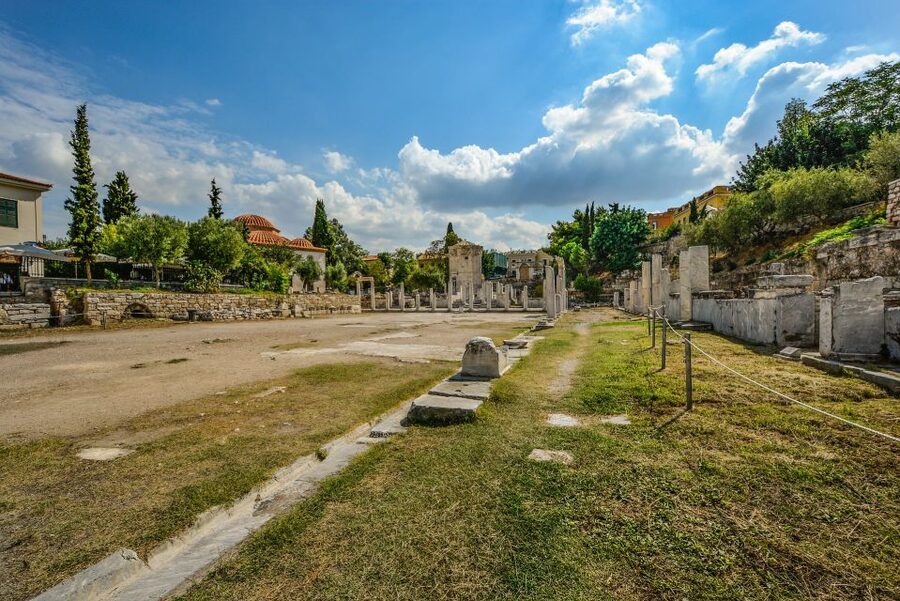
- Athena and Poseidon take center stage: Learn why their contest became central to the identity of Athens.
- Theseus connects legend and city history: The hero’s story helps explain Athens’s place in Greek mythology.
- The Academy is the meeting point: Find the group on the stairs in front of the Academy in central Athens.
- Spanish is the tour language: The live guide and heritage interpretation are provided in Spanish.
- Two hours keeps the walk focused: You get a clear introduction without giving up most of your day.
- Juan Pablo has earned warm praise: His friendly, well-prepared style and enthusiasm for mythology made a strong impression.
Starting at the Academy in central Athens
The walk begins on the stairs in front of the Academy. This is a fitting place to start. The Academy is one of Athens’s most recognizable neoclassical buildings, and its decoration gives you an early taste of how ancient Greek ideas still appear in the modern city.
You should arrive with enough time to identify the meeting point. The stated location is specific, but the area can still feel busy if you are looking for a guide among other groups. The stairs in front of the Academy are your landmark.
From here, the tour presents Athens as more than a collection of ruins. You begin looking for the old gods in city names, building decoration, public art, and familiar expressions. That approach matters because mythology in Greece was not a separate subject reserved for poets. It shaped ideas about trade, love, power, family, war, and the natural world.
I like this opening because it gives the city a clear theme. Instead of asking you to memorize dates, the guide helps you notice how mythology continues to appear in everyday Athens.
More Walking Tours in Athens
- Athens: Acropolis and Parthenon Guided Walking Tour
★ 4.6 · 5,882 reviews - Greek Food Walking Tour in Athens
★ 5.0 · 4,740 reviews - Acropolis: Acropolis and Parthenon Guided Walking Tour
★ 4.7 · 3,442 reviews
Athena, Poseidon, and the contest for Athens
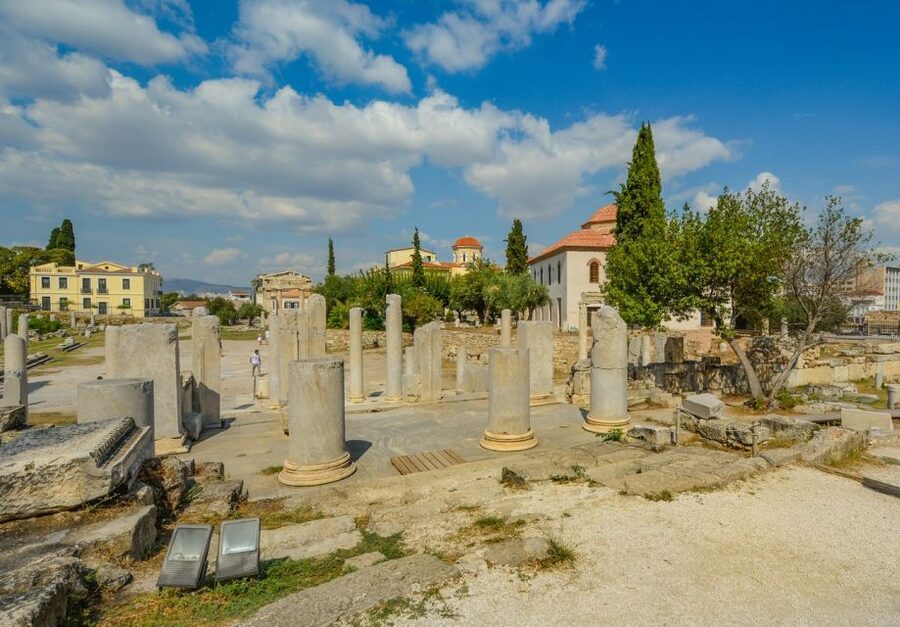
The central story is the famous connection between Athena and Poseidon. Both gods wanted the city, and their contest became part of Athens’s identity.
The story works especially well on a walking tour because it explains why Athena is so closely tied to the city. You are not just hearing about a remote deity from a textbook. You are walking through the city named for her and learning how her legend helped shape Athens’s public image.
Poseidon adds a useful counterpoint. He represents power, the sea, and a different kind of divine force. Setting him beside Athena gives the story tension and makes the city’s patronage feel like a choice rather than a given fact.
A good guide can also show how these myths reflect ancient values. Athena’s association with wisdom and civic order offered one model of power. Poseidon’s force and unpredictability offered another. The story is entertaining, but it also tells you how ancient Athenians wanted to see themselves.
This is one of the tour’s best features. You get the memorable plot first, then a little cultural meaning behind it. That makes it easier to remember than a long explanation of religious practice without a story to hold it together.
Following Theseus through the city
Theseus is another major figure in the walk. He is a hero permanently linked to Athens, and his story gives the guide a way to explain how mythology and civic identity worked together.
Ancient cities used heroes to tell stories about their origins, ambitions, and values. Theseus was not simply a character in an adventure. His connection to Athens helped make the city part of a larger heroic world.
You can expect the guide to use Theseus’s story as a bridge between legend and the city itself. The exact emphasis may depend on the guide and the group, but the purpose is clear: mythology helps explain why certain figures remained important long after the stories were first told.
I find this particularly useful if you already know a few Greek myths but have never considered how they functioned in public life. The tour does not treat Theseus as an isolated hero. It places him within Athens’s story.
The subject also keeps the walk lively. Athena and Poseidon provide divine rivalry. Theseus supplies the human hero. Together, they give the tour a good balance of gods, mortals, conflict, and civic pride.
Seeing Greek mythology in modern Athens
One of the more unusual parts of the experience is the search for mythology outside the main archaeological sites. The tour points to the mark left by the gods on buildings, streets, decoration, names, and expressions that remain familiar today.
That means you should not expect every stop to be a major monument. Some of the value comes from learning how to read details you might otherwise pass without notice. A name on a street or an image on a building can take on a new meaning once you know the myth behind it.
This approach suits Athens well. The city combines daily life with visible reminders of antiquity. You might be walking past a modern building one minute and discussing a god, hero, or ancient belief the next. The contrast is part of the experience.
The tour also explains that religion touched ordinary life in ancient Greece. Commerce and love affairs, among other parts of life, were linked to religious ideas. That wider view is important. Greek mythology was not just a collection of dramatic tales about Olympus. It gave people a way to understand social behavior and the world around them.
I appreciate tours that make ancient culture practical. If you finish this walk noticing a mythological reference on a building or recognizing the origin of an expression, the experience has done its job.
More things to do in Athens:
- Athens: Acropolis & up to 5 Archaeological Sites Combo Pass
★ 4.4 · 12,619 reviews - Athens: Acropolis Ticket with Optional Audio or Live Guide
★ 4.2 · 11,055 reviews - Athens: Acropolis, Parthenon & Acropolis Museum Guided Tour
★ 4.8 · 9,316 reviews - Athens: Cape Sounion & Poseidon Temple Sunset Half-Day Trip
★ 4.8 · 8,241 reviews
A guide-led experience with a personal touch
The activity includes an accompanying heritage interpreter and a live guide in Spanish. The strongest praise has centered on the guides’ preparation, friendliness, and ability to keep the walk interactive.
Juan Pablo received especially warm approval for being well prepared, funny, and genuinely enthusiastic about mythology and Athens. That enthusiasm matters here. A mythology tour can become a dry recital of names, but a guide who enjoys the subject can make the stories feel like conversation rather than a lecture.
One recent experience was described as a mix of history, culture, and mythology, with Juan Pablo creating the feeling of chatting with people who share a real interest in the subject. That is exactly the mood you should hope for from a small-group walk.
Another guide was praised for making the tour interactive and informative. Since the guide can shape the pace and tone, the exact experience may vary. Still, the consistently positive response to the guiding style is a good sign.
The Spanish-only format is worth taking seriously. If you understand Spanish comfortably, you can expect a more natural and engaging experience. If you only understand a little, the stories may be difficult to follow, especially when several gods and heroes appear in quick succession.
Why the two-hour length works
Two hours is a sensible length for this subject. Greek mythology can sprawl across generations, rivalries, marriages, monsters, and divine disputes. A longer tour could become tiring or lose its main thread.
This walk appears designed as an introduction. You get the key stories connected to Athens, an explanation of their cultural importance, and a look at how those ideas remain visible in the city. You do not need to give up an entire morning or afternoon.
I would place it early in an Athens visit if mythology is new to you. The stories can give later sightseeing more meaning, especially when you visit ancient sites or notice references to Athena, Poseidon, and other Olympian figures.
You can also take it after a first look at Athens. In that case, the guide may help organize details you have already seen. The tour does not replace a full archaeological visit, but it can act as a useful cultural frame around one.
Starting times vary, so check availability when you book. The walk is outdoors and involves moving through central Athens, so comfortable shoes and water are sensible choices, even though those items are not listed as included.
Is $28 a fair price?
At $28 per person, the price is reasonable for a two-hour guided experience with a heritage interpreter, especially in a small group. You are paying for explanation and connection, not just for someone to lead you from one point to another.
The value is strongest if you enjoy mythology, want cultural context, or prefer a human guide to reading background information alone. A guide can connect several stories and show how they relate to the city in a way that is hard to recreate from a short guidebook paragraph.
The value is weaker if you want extensive time inside archaeological monuments or a full general sightseeing tour. The description focuses on stories, ancient culture, city details, and beautiful old places. It does not promise entrance to a major museum or monument, nor does it present itself as a complete overview of Athens.
For a first visit, I would think of this as a focused cultural walk. It fills a different role from an Acropolis visit. One gives you a major ancient site. This one gives you a mythological lens for the city around it.
Who should book this experience?
I would recommend it most strongly to Spanish-speaking visitors with an interest in Greek mythology. It should also suit families with older children who already know some stories about the gods, though the available information does not specify a minimum age.
It is a good match for anyone who likes to understand why a city looks and feels the way it does. The walk links religion with commerce, love, public identity, architecture, street names, and language. That range gives you more than a chain of entertaining myths.
It may not suit you if you want a fast-paced checklist of famous landmarks, a museum visit, or commentary in English. You should also avoid booking it on the assumption that it includes transport or admission to attractions. Those inclusions are not stated.
The small-group setting is another reason to choose it. A smaller group generally makes it easier to hear the guide and ask questions, though the exact group size is not provided. The strong comments about interaction suggest that the format supports conversation rather than a one-way speech.
Booking details worth knowing
The tour costs $28 per person and lasts two hours. It is offered in Spanish with a live guide, and the meeting point is the stairs in front of the Academy in central Athens.
The booking terms are flexible. You can reserve now and pay later, which is useful if your schedule is still taking shape. You can also cancel up to 24 hours before the activity for a full refund.
Only the accompanying heritage interpreter is listed as included. Since transport, food, drinks, and admissions are not listed, you should not assume they form part of the price.
The overall rating is 4.8 from 46 reviews, and the most praised features are the guides’ enthusiasm, preparation, friendliness, and ability to make the tour interactive. I would give those points more weight than the number alone, because guide quality is especially important on a story-based walk.
My verdict: book it for the stories, not a monument checklist
I would book this tour if you speak Spanish and want Athens explained through its myths. The Athena and Poseidon story, the link to Theseus, and the look at mythology in buildings and street names give the city a memorable thread.
At $28, it is a fair buy for a focused two-hour introduction. Choose it early if you want a useful frame for the rest of your sightseeing, or choose it later if you want to make sense of details you have already seen.
Skip it if you need English commentary or expect major archaeological entries. But for a small-group walk led by an enthusiastic guide such as Juan Pablo, this is a thoughtful way to meet the gods of Olympus in the city that made Athena famous.
FAQ
Where does the Athens mythology tour meet?
The meeting point is on the stairs in front of the Academy in central Athens.
How long does the walking tour last?
The tour lasts two hours.
How much does the tour cost?
The listed price is $28 per person.
What language is the tour conducted in?
The tour is conducted in Spanish.
Is there a live guide?
Yes. The experience includes a live Spanish-speaking guide and an accompanying heritage interpreter.
Which mythological figures are covered?
The tour focuses on Athena, Poseidon, and the hero Theseus, along with other stories from Greek mythology.
Does the tour explain ancient Greek culture?
Yes. It connects mythology with ancient Greek culture and explains how religion related to areas such as commerce and love affairs.
Does the tour look at modern Athens as well as the ancient world?
Yes. The walk examines how Greek gods appear in building decoration, street names, and concepts or expressions that continue into the present.
Can I reserve now and pay later?
Yes. The booking option allows you to reserve your place and pay later.
What is the cancellation policy?
You can cancel up to 24 hours in advance for a full refund.
Just added around Athens
- Athens Hotels to Athens Airport Private Departure Transfer★ 5.0 · 40 reviews
- Private One-way Transfer between Athens International Airport and Athens Hotels★ 4.5 · 40 reviews
- Athens: Acropolis Museum Ticket with Self-Guided Audio tour App★ 3.5 · 40 reviews
- From Athens: Meteora Train Trip with Overnight Stay★ 4.8 · 40 reviews
- Athens Photography Tour★ 5.0 · 40 reviews
- Athens: Acropolis Visit and City Night Tour★ 4.7 · 40 reviews
- Delphi Full Day Private Trip From Athens With Lunch Overlooking the Sea★ 5.0 · 40 reviews
- Acropolis & Plaka Neighbourhood Private Tour with Licensed Expert★ 5.0 · 40 reviews
Walking Tours, compared.



Acropolis: Acropolis and Parthenon Guided Walking Tour
Read our review →
Acropolis monuments & Parthenon Walking Tour with Optional Acropolis Museum
Read our review →
Knossos: Knossos Palace Skip-the-Line Guided Walking Tour
Read our review →

Athens Authentic Greek Food Walking Tour (Small Group)
Read our review →
Early Morning Acropolis & Old Athens Guided Walking Tour
Read our review →Browse the lists this tour appears in