Reviewed · TICKETS
Athens: Agora and Hephaistos Temple Entrance Ticket
Ancient Athens feels surprisingly close here. This ticket gives you access to the Ancient Agora, the old city center where commerce, politics, and daily life met, plus the remarkably preserved Temple of Hephaistos. I especially like the chance to walk through a large open archaeological site at your own pace, and the excellent view into Athens’ past offered by the Temple of Hephaistos and the Stoa. The main drawback is practical: the entrance information has caused confusion, so you need to follow the current access instructions carefully.
I also like that you can add a self-guided audio tour in English, German, Spanish, Italian, or French. It adds useful stories without tying you to a group schedule. Still, the audio route may begin from an old entrance, and some people find the site signs easier to follow. With a fixed time slot, no refunds, and little shade, this ticket rewards careful planning.
In This Review
- Key points to know before you go
- Why the Ancient Agora belongs beside the Acropolis
- Finding the entrance at Thissio Square
- The Temple of Hephaistos is the clearest reward
- The Church of the Holy Apostles adds another layer
- The Stoa and museum help make sense of the ruins
- How the audio guide works in real use
- Planning the timing and pace
- Is the $30 price good value?
- Who will enjoy this Agora visit most?
- Should you book the Agora and Hephaistos Temple ticket?
- FAQ
- Where is the current entrance to the Ancient Agora?
- Can I enter at any time during the day?
- Is the audio guide included with every ticket?
- Is there a live guide?
- What does the ticket include?
- Can I change my date or time slot after booking?
Key points to know before you go
- The Temple of Hephaistos is the star attraction: It is described as the best-preserved ancient Greek Doric temple in the world.
- The Ancient Agora shows everyday Athens: You see foundations, ruins, political spaces, market areas, and the restored Stoa.
- The current entrance is at Thissio Square: Use the entrance on Apostolou Pavlou pedestrian street, not an older map pin or closed gate.
- Your entry time matters: Admission is allowed only during your chosen slot, or up to 15 minutes before or after.
- The audio guide is optional: It offers original stories and commentary, but its starting point may not match the present entrance.
- Allow more than a quick glance: One visitor spent four hours seeing the full area, though your visit can be shorter.
Why the Ancient Agora belongs beside the Acropolis
The Acropolis gives you Athens at its grandest. The Agora gives you Athens at street level.
This was the city’s marketplace and civic center, a place for buying goods, meeting friends, discussing politics, and handling public business. You do not simply look at one famous monument here. You walk through the setting where ancient Athenians carried out ordinary activities and major decisions.
That difference makes the site a strong follow-up to the Acropolis. The Acropolis can feel like a grand stage of temples and monuments. The Agora helps explain how the city worked below that hill. You see the foundations of buildings that once shaped public life, along with open ground, paths, and surviving structures that make the layout easier to picture.
Much of the Agora consists of ruins and building foundations. That means you need to use your imagination, especially in areas where only low stone walls remain. The audio guide can help connect those fragments to their original purpose, while the signs offer a more direct way to orient yourself.
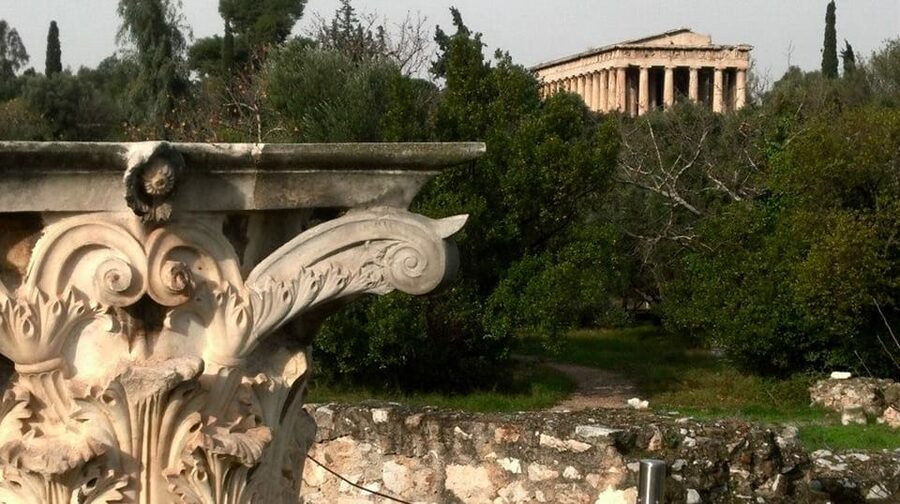
The site also gives you a different view toward the Acropolis. The ancient monuments are not isolated from the modern city. As you walk, you can look back toward the rocky hill and understand how closely the Agora and Acropolis were linked.
More things to do in Athens:
- Athens: Acropolis & up to 5 Archaeological Sites Combo Pass
★ 4.4 · 12,619 reviews - Athens: Acropolis Ticket with Optional Audio or Live Guide
★ 4.2 · 11,055 reviews - Athens: Acropolis, Parthenon & Acropolis Museum Guided Tour
★ 4.8 · 9,316 reviews
Finding the entrance at Thissio Square
This is the most important practical detail.
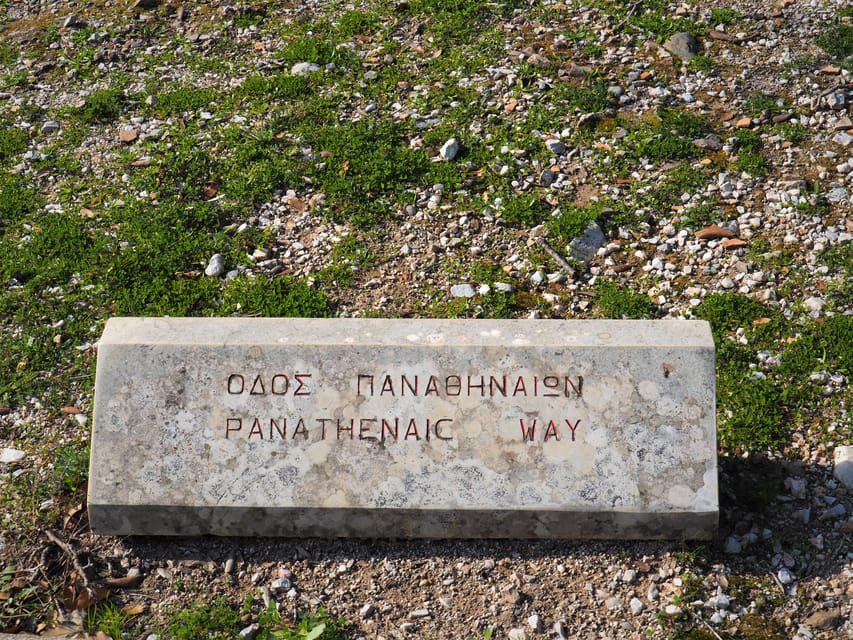
The current entrance and exit are at Thissio Square, also called Jacqueline de Romilly Square, on the pedestrian street of Apostolou Pavlou. This arrangement is scheduled to remain in place until the end of 2025 according to the supplied information, so check the latest instructions if your visit is later.
Older map information has caused real frustration. Some directions point toward a former entrance, a locked gate, or a location inside the archaeological area rather than the ticket entrance. You may find yourself walking uphill, reaching the wrong side of the site, and then walking back again. That extra effort is especially unwelcome if your time slot is close.
I suggest checking the entrance location before you leave your hotel and again while you are near Apostolou Pavlou. Do not assume that the meeting point shown in an app is still correct. If the first gate you reach has no ticket machine or staff member, stop and recheck the route rather than pressing farther into the site.
The good news is that entry itself is simple once you reach the correct gate. You scan your ticket at the validating machines and enter without needing to join a live tour.
The Temple of Hephaistos is the clearest reward
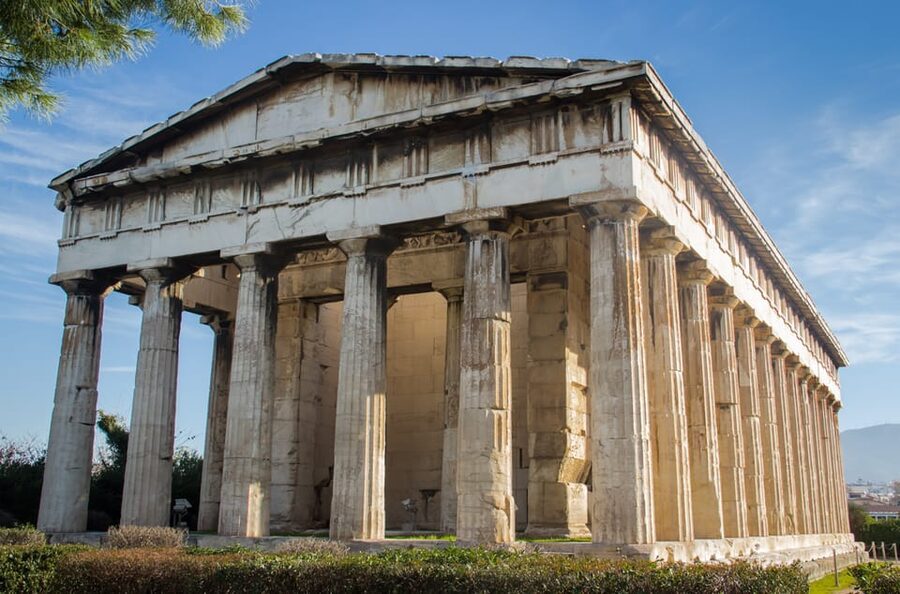
The Temple of Hephaistos is the reason many people remember this visit.
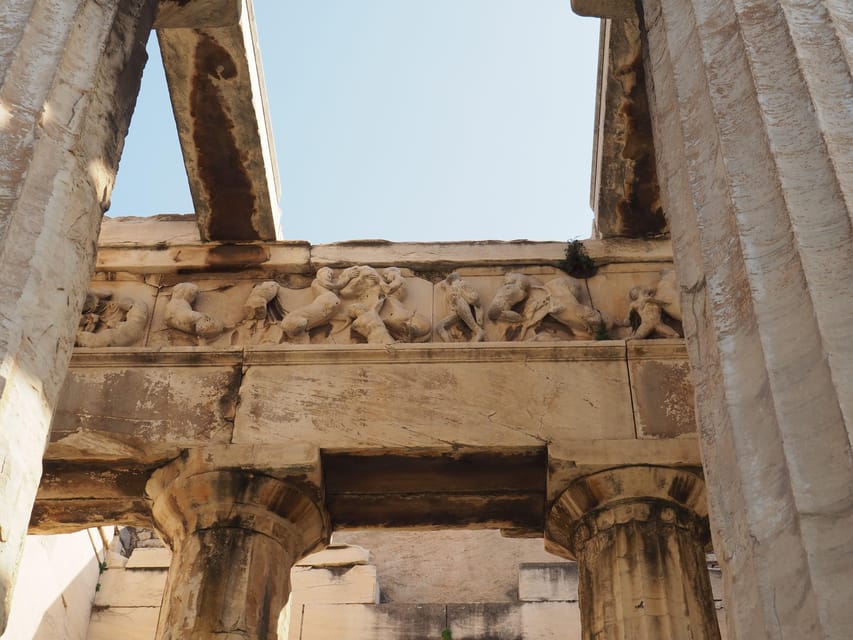
It is a Doric temple with an unusually complete appearance. Compared with many Greek temples, where only columns or partial walls survive, this building lets you understand the shape and scale of an ancient temple much more easily. Its preservation makes it one of the most valuable stops in the Agora.
You cannot treat it as a quick photo stop. Walk around it and look at how the columns, roofline, and enclosed temple space relate to one another. The building feels more understandable when you see it from different angles rather than viewing it only from the main path.
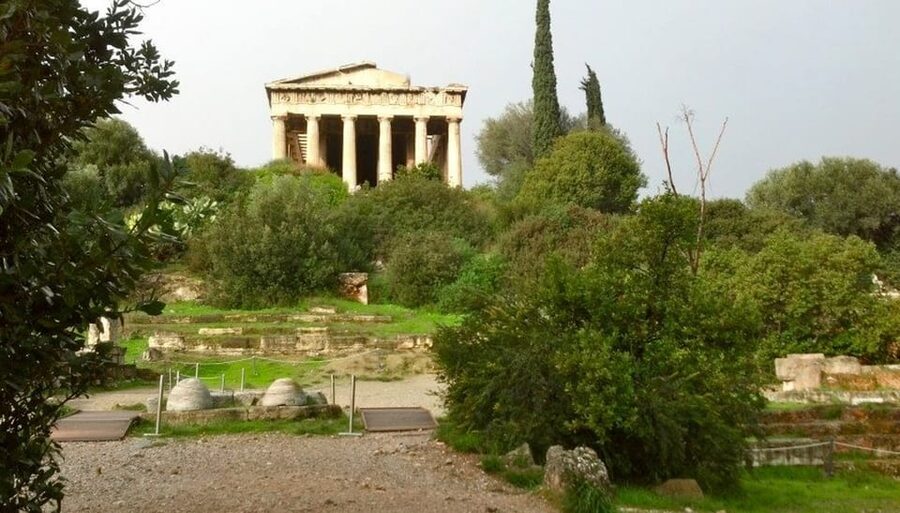
The temple also gives the Agora a strong visual center. The rest of the site spreads around it in foundations and broken structures, while Hephaistos offers a nearly complete architectural form. This contrast helps you read the ruins.
The setting is open, and there may be limited shade while you walk. In hot weather, bring water, sunscreen, a hat, and comfortable shoes. One visitor cut the visit short after overheating, despite finding the site worthwhile. That is a useful warning: the ancient stones do not provide much relief from the Greek sun.
The Church of the Holy Apostles adds another layer
The Church of the Holy Apostles is a very different stop from the temple.
Instead of ancient pagan architecture, you see a Christian church set within the Agora. Its connection with St. Paul, who is said to have preached there, adds an important link between Athens’ classical past and its later religious history.
The church helps prevent the site from becoming a simple tour of Greek columns. The Agora continued to have meaning long after the classical city changed. Its presence shows how the area developed across different periods.
The ticket includes entrance to the church, so make time for it instead of walking directly to the temple and leaving. The audio guide may help explain why this building matters and how it fits into the wider site.
A few more Athens trips worth weighing up
- Athens: Acropolis Ticket with Audio Guide
★ 4.0 · 3,575 reviews - Athens All Included: Acropolis and Museum Guided Tour with Ticket
★ 4.5 · 2,673 reviews - Athens: Acropolis Museum Ticket with optional Audio Guide
★ 4.4 · 2,652 reviews - Athens: Acropolis Ticket & Optional Self-Guided Audio Tours
★ 4.1 · 2,542 reviews
The Stoa and museum help make sense of the ruins
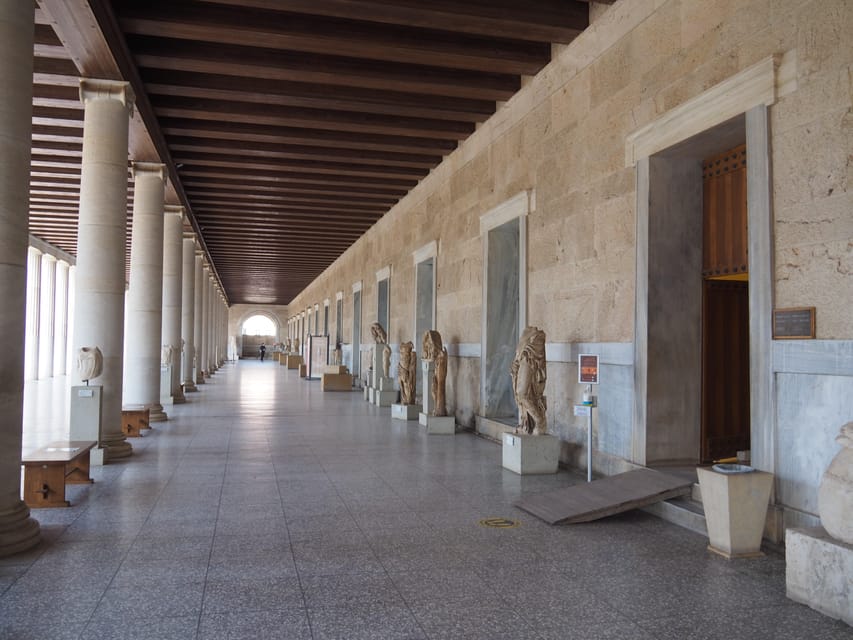
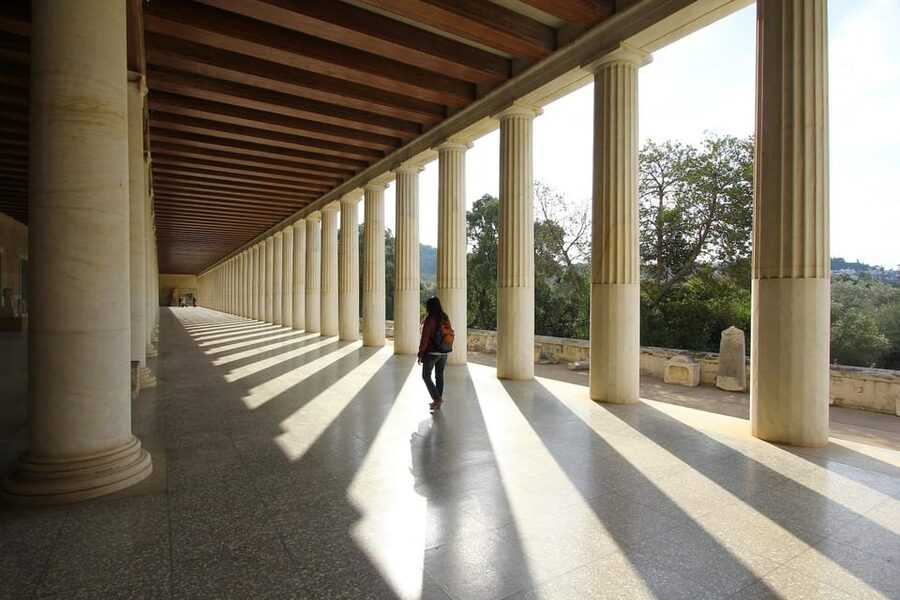
The Stoa is another major point of interest. It provides a clearer sense of the practical and civic buildings that once surrounded the Agora. If the foundations elsewhere feel hard to read, the Stoa helps you picture a functioning public area rather than an empty field of stones.
The museum is also worth adding to your route. A visit to the open-air ruins gives you scale and setting, but museum displays can provide smaller objects and details that are easy to miss outside. One visitor specifically found the museum worth seeing, and I agree with that approach as a matter of planning: the ruins show where things happened, while the museum can help explain what people used and valued.
The supplied information highlights an original Spartan bronze shield as a particularly notable object. Look for it if it is on display during your visit. A specific artifact like this can make the broader political and military story feel less abstract.
How the audio guide works in real use

The audio guide is a self-guided option, not a live tour. You receive the ticket for your selected time slot and, if you choose that package, access to commentary from professional guides and storytelling specialists. You then walk through the site while listening through your headphones.
This format suits you if you like to pause, take photographs, or move at your own speed. You do not have to keep up with a group, and you can spend longer at the Temple of Hephaistos or the museum if those parts interest you most.
The commentary includes historical information, along with selected stories and smaller details. A few people found those side comments especially enjoyable because they gave the walk more character than a list of dates and names.
There is one important weakness. The audio route was created around an earlier entrance, so its opening instructions may not match the entrance currently in use. You might begin listening in the wrong place or follow a map that sends you toward a closed gate. I would treat the audio as background guidance rather than a substitute for checking the current site layout.
Some people also prefer the written signs. If you learn better by reading, the signs may feel more direct and easier to follow. The best choice depends on your style:
- Choose the audio guide if you want stories, spoken explanations, and freedom from a fixed group.
- Skip it if you prefer visible signs, your own reading pace, or a shorter visit.
- If you select it, download or open it before walking far from the entrance and keep the current site access in mind.
Planning the timing and pace
The ticket is valid for one day, but admission itself is tied to a selected time slot. You can enter only at that time or within 15 minutes before or after. This is not a flexible walk-in ticket, so build in time for finding Thissio Square.
The site can take far longer than the ticket duration might suggest. A quick route could focus on the Temple of Hephaistos, the Church of the Holy Apostles, the Stoa, and the museum. If you want to inspect the ruins, listen to the audio, and stop for views, allow several hours.
One person spent four hours walking through the area. That does not mean you must reserve half a day, but it shows how much space there is to cover. The Agora is larger than a single-monument visit, and the paths include uphill walking.
Go early or choose a cooler part of the day if you are visiting in warm weather. Bring water and wear shoes with good support. A hat and sunscreen are not optional extras here, especially because shade is limited.
The ticket is wheelchair accessible, which makes it a useful option for people who need accessible entry. Conditions across an archaeological site can still vary, so anyone with specific mobility needs should confirm the current route and access arrangements before arrival.
Is the $30 price good value?
The listed price is $30 for a group of up to one, which appears to mean a regular adult-price ticket for one person. Check the exact booking screen before paying, especially if you are comparing the ticket-only and audio-guide options.
The price can save time when a long ticket line is expected. Several people found that prebooking let them move to the scanning point quickly. That convenience has value, particularly if you have an Acropolis visit, museum plans, or another timed activity on the same day.
But this is not always the cheapest choice. The Agora was not very crowded for some visits, and one person felt that buying in advance cost more than necessary. Since the ticket is non-refundable and the entry time cannot be changed for any reason, a casual schedule may favor buying directly if tickets are available.
There is another wrinkle: the regular adult ticket applies to people of all ages under this offer, so children may not receive a reduced rate through this product. From April 1, 2025, EU citizens under 25 and non-EU citizens under 18 can receive free admission by showing identification at the ticket booth. People with disabilities can also receive free admission with a Disability Certificate.
That means you should compare this prepaid ticket with the official ticket office if anyone in your party might qualify for free entry. The booking convenience is useful, but it is not automatically the best value for every age group.
Who will enjoy this Agora visit most?
I would recommend it to you if you have already seen, or plan to see, the Acropolis and want a fuller picture of Athens. It is also a good choice if you enjoy archaeology, ancient politics, architecture, or walking through open-air sites without a live guide.
Families can use the flexible pace to keep the visit short or stop often. History-minded visitors may want several hours for the ruins, temple, church, museum, and audio commentary.
You may want to skip the audio if you prefer reading signs or if the extra cost matters. You may also want to avoid a timed purchase if your schedule is uncertain. The ticket works best when you know exactly when you can arrive and have confirmed the entrance at Thissio Square.
Should you book the Agora and Hephaistos Temple ticket?
Book it if you want a simple entry scan, a self-guided audio option, and a set plan for exploring one of Athens’ most important ancient public spaces. The Temple of Hephaistos is exceptional, the Agora adds context that the Acropolis cannot provide, and the church and museum give the visit more range.
I would not book it blindly. Confirm the current entrance, arrive within the 15-minute time window, and compare the $30 adult price with any free-admission rules that apply to your party. If you can handle the heat, allow at least two hours, and consider longer if you want the museum and audio route.
For a first visit to Athens, this is not a replacement for the Acropolis. It is the place to go next, when you want to understand how the city worked beyond its famous hilltop temples.
FAQ
Where is the current entrance to the Ancient Agora?
The current entrance and exit are at Thissio Square, also called Jacqueline de Romilly Square, on the pedestrian street of Apostolou Pavlou.
Can I enter at any time during the day?
No. You can enter only during the selected time slot, or up to 15 minutes before or after it.
Is the audio guide included with every ticket?
The self-guided audio tour is included only if you select the audio-guide option. Available languages are English, German, Spanish, Italian, and French.
Is there a live guide?
No. This is a self-guided experience. A live guided tour is not included.
What does the ticket include?
It includes entrance to the Temple of Hephaistos and the Church of the Holy Apostles. The audio tour is included only with the relevant ticket option.
Can I change my date or time slot after booking?
No. The travel date and entry time cannot be amended, and the activity is non-refundable.
Just added around Athens
- Athens Hotels to Athens Airport Private Departure Transfer★ 5.0 · 40 reviews
- Private One-way Transfer between Athens International Airport and Athens Hotels★ 4.5 · 40 reviews
- Athens: Acropolis Museum Ticket with Self-Guided Audio tour App★ 3.5 · 40 reviews
- From Athens: Meteora Train Trip with Overnight Stay★ 4.8 · 40 reviews
- Athens Photography Tour★ 5.0 · 40 reviews
- Athens: Acropolis Visit and City Night Tour★ 4.7 · 40 reviews
- Delphi Full Day Private Trip From Athens With Lunch Overlooking the Sea★ 5.0 · 40 reviews
- Acropolis & Plaka Neighbourhood Private Tour with Licensed Expert★ 5.0 · 40 reviews
Tickets, compared.


Athens All Included: Acropolis and Museum Guided Tour with Ticket
Read our review →
Acropolis Museum Ticket with optional Audio Guide
Read our review →
Acropolis Ticket & Optional Self-Guided Audio Tours
Read our review →
Knossos Palace Entry Ticket with Optional Audio Guide
Read our review →