
Reviewed · ACROPOLIS & PARTHENON TOURS
Athens: Acropolis Guided Walking Tour without Entry Ticket
Ancient Athens rewards a guide. I like the small-group format and the way the tour links temples, theaters, gods, and old stories instead of treating the Acropolis as a pile of stones. I also like the chance to stay inside afterward and explore at your own pace.
The main catch is simple: your Acropolis entry ticket is not included. You must arrange it separately and match it carefully to the tour time. The guide speaks Spanish, and past praise has focused on detailed explanations, including from a guide named Juan.
In This Review
- Key points to know before booking
- Why a guided Acropolis visit helps
- Meeting at Acropolis Metro station
- Buying the Acropolis ticket separately
- Theater of Dionysus: where performance began
- The Odeon of Herodes Atticus
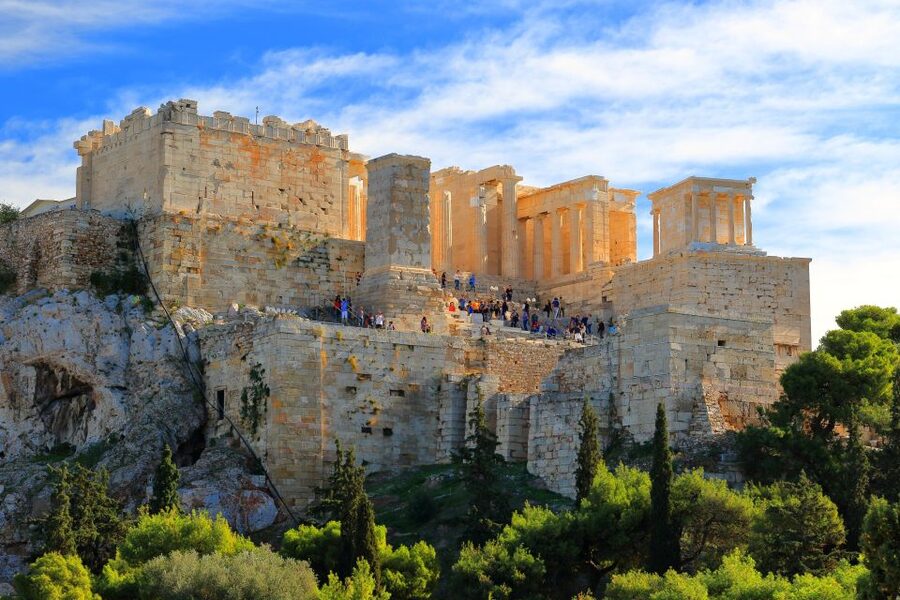
- Propylaea, the grand entrance to the Acropolis
- The Parthenon and the story of Athena
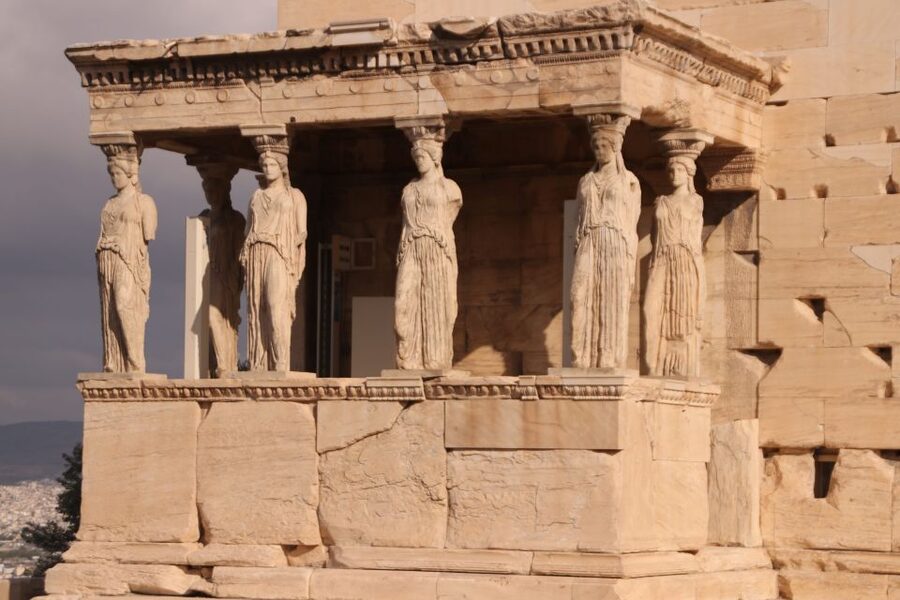
- Erechtheion and the Caryatides
- Athena Nike, the smaller temple with a clear purpose
- What the guide adds to the mythology
- Is $32.75 good value?
- Heat, crowds, and the best type of visitor
- Should you book this Acropolis tour?
- FAQ
- How long does the Acropolis guided tour last?
- Is the Acropolis entry ticket included?
- Where does the tour meet?
- How early should I arrive?
- What language is the tour in?
- Can I stay at the Acropolis after the guided tour?
- Are strollers and wheelchairs allowed?
Key points to know before booking
- Spanish-language guidance: The tour is led in Spanish, with time to ask questions in the small group.
- Ticket not included: You must buy your Acropolis ticket separately before meeting the guide.
- Two hours on the hill: The route covers the Parthenon, Propylaea, Erechtheion, theaters, and temples.
- Meet at Acropolis Metro station: The guide meets you at street level outside the station entrance.
- Ancient theaters are part of the route: You see the Theater of Dionysus and the Odeon of Herodes Atticus.
- Free time follows the guided walk: After the tour ends, you may remain and continue looking around on your own.
Why a guided Acropolis visit helps
The Acropolis is easy to recognize but not always easy to understand. You can look at the Parthenon and know that it matters, yet miss why Athena was central to Athens, how religious festivals shaped city life, or why the nearby theater matters just as much as the famous temple.
This two-hour walk gives you a framework. The guide connects the ruins to Greek gods, myths, religious ceremonies, political life, and the long story of Athens. That makes the site easier to read as you move from one monument to the next.
I especially like the balance between famous sights and less famous details. The Parthenon gets its due, but the route also includes the Theater of Dionysus, the Erechtheion, the Caryatides, the Temple of Athena Nike, and the Odeon of Herodes Atticus. You get more than a quick photo stop at the best-known building.
The small-group setup matters here. The Acropolis can feel crowded, and a guide speaking to a large mass of people is hard to follow. A smaller group gives you a better chance to hear the explanation and ask about a myth, carving, or building detail while you are standing beside it.
More Walking Tours in Athens
- Athens: Acropolis and Parthenon Guided Walking Tour
★ 4.6 · 5,882 reviews - Greek Food Walking Tour in Athens
★ 5.0 · 4,740 reviews - Acropolis: Acropolis and Parthenon Guided Walking Tour
★ 4.7 · 3,442 reviews
Meeting at Acropolis Metro station
The starting point is practical. You meet your guide at street level at the entrance to Acropolis Metro station, not inside a hotel or at a hard-to-find side street. Plan to arrive between 10 and 5 minutes before the scheduled start.
The meeting point is close to the Acropolis entrance, but your ticket arrangements require care. If you already bought your ticket online, check the entry time before you set out for the meeting point. The tour and ticket need to line up.
The activity ends back at the meeting point. That gives the tour a clear beginning and end, though you should understand the wording: the guided activity returns to the meeting area, while the information also allows free time to stay longer at the site. Confirm the exact exit and remaining access with your guide on the day.
Buying the Acropolis ticket separately
This is the most important practical issue. The $32.75 price covers the guided tour and licensed guide, but not admission to the Acropolis. You need to buy your own entry ticket online in advance when possible.
The required time slot changes with the season:
- From November 1 through March 31, the 9:15 tour requires a ticket for the 9:00 to 10:00 slot.
- In the same low season, the 2:30 p.m. tour requires a ticket for the 2:00 to 3:00 slot.
- From April 1 through October 31, the 8:15 tour requires a ticket for the 8:00 to 9:00 slot.
- During the same high-season period, the 5:00 p.m. tour requires a ticket for the 5:00 to 6:00 slot.
These details are not minor. A ticket for the wrong window could create stress at the entrance, so check the season and tour time before paying for admission.
If online tickets are unavailable, the operator says it will help. If you buy at the ticket office, go to the South Entrance ticket office about 30 minutes before the tour. After getting the ticket, walk to the meeting point, which is less than two minutes away.
I would not leave this until the last minute. The ticket office can involve a wait, and the tour begins at a set time. The cleanest plan is to secure the correct ticket in advance, save it where you can access it quickly, and arrive early enough to find the metro meeting point without rushing.
Theater of Dionysus: where performance began
The Theater of Dionysus is one of the most useful first stops because it changes how you think about ancient Athens. The theater could hold about 17,000 spectators and hosted festivals honoring Dionysus.
Your guide explains the connection between religion and performance. In ancient Athens, drama was not simply an evening show. It was tied to festivals, public life, and worship. Standing near the theater gives the mythology a physical setting.
This is also a good place to ask questions. The site contains several layers of history, and a guide can help separate what you are seeing from the larger story of Greek theater and religious celebration.
The drawback is that the area may not feel quiet or solitary. The Acropolis is a major attraction, and the tour description itself warns that crowds and heat can affect the experience. The guide’s commentary helps, but you should still expect an active archaeological site rather than a peaceful private walk.
More ways to see the Acropolis:
- Athens: Acropolis & up to 5 Archaeological Sites Combo Pass
★ 4.4 · 12,619 reviews - Athens: Acropolis Ticket with Optional Audio or Live Guide
★ 4.2 · 11,055 reviews - Athens: Acropolis, Parthenon & Acropolis Museum Guided Tour
★ 4.8 · 9,316 reviews - Athens: Acropolis, Parthenon & Acropolis Museum Guided Tour
★ 4.8 · 3,579 reviews
The Odeon of Herodes Atticus
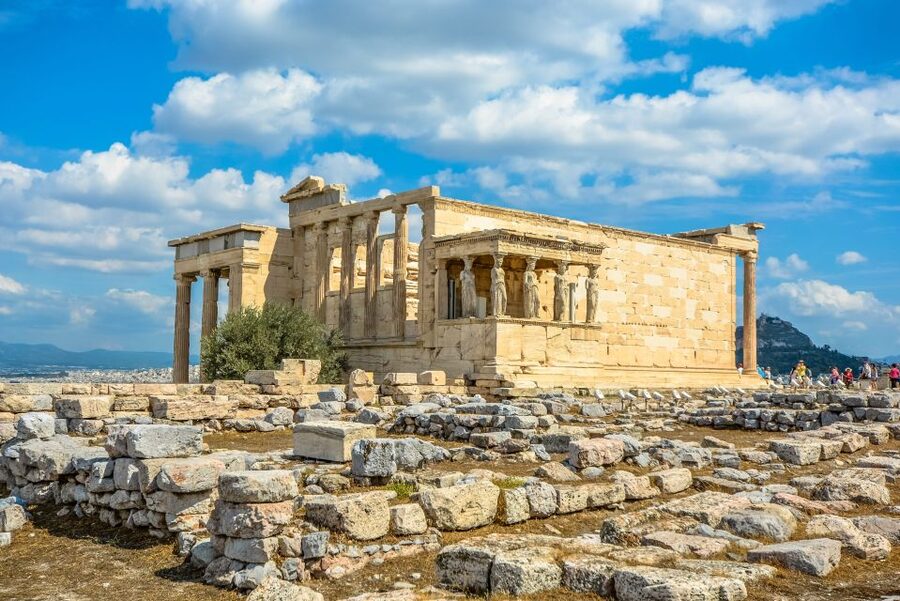
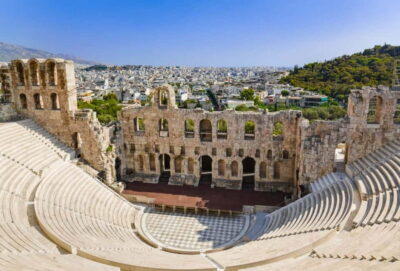
The Odeon of Herodes Atticus is a large stone theater and one of the route’s most impressive structures. Unlike the open-air Theater of Dionysus, this building gives you a strong sense of scale and craftsmanship even from outside.
It is a useful stop because it shows that the Acropolis was not only about temples. Theater, ceremony, religion, and public gatherings all belonged to the same cultural world. The guide’s explanation helps place the building within the wider life of ancient Athens.
I like this part of the route for visual reasons. Large stone seating and walls are easier to picture than a foundation line, and the theater gives you a clear reminder that performance was a major part of Greek culture.
The tour does not promise a performance or special access inside the theater. You are there to see the structure and hear its story, so set your expectations accordingly.
Propylaea, the grand entrance to the Acropolis
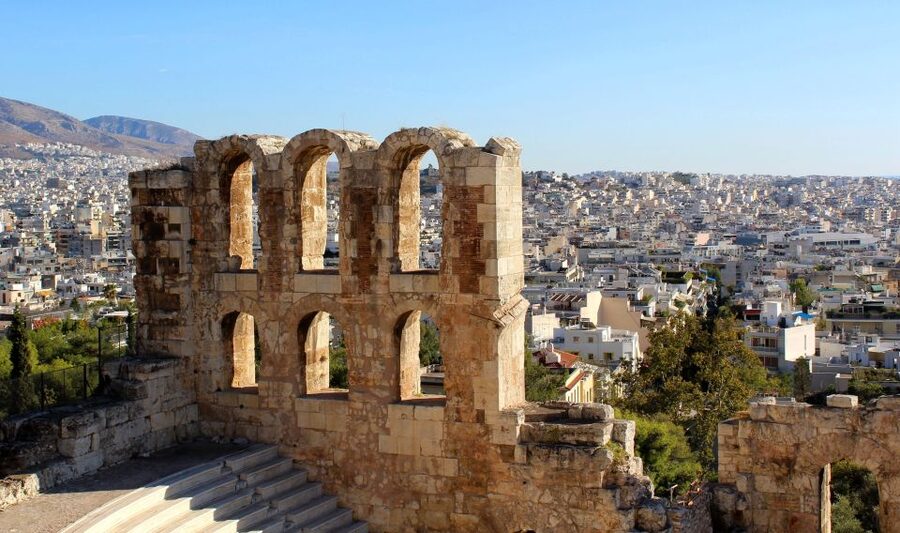
The Propylaea serves as the monumental gateway into the rocky citadel. Passing through it gives the visit a natural sense of progression. You are not simply arriving at a single temple. You are entering a sacred area dedicated to Athena, the goddess protector of Athens.
This is one of the places where a guide adds real value. Architectural remains can look confusing when seen without context. The guide points out how the gateway shaped the approach and why entering the Acropolis was a meaningful act in ancient times.
The rocky ground and restrictions on mobility are worth noting. Baby strollers, non-folding wheelchairs, and electric wheelchairs are not allowed on this activity. If anyone in your group has mobility concerns, check suitability before booking.
Wear practical shoes and expect walking over an uneven archaeological site. The tour lasts two hours, so even a visitor who normally avoids long walks should think about the heat, stairs, and exposed setting.
The Parthenon and the story of Athena
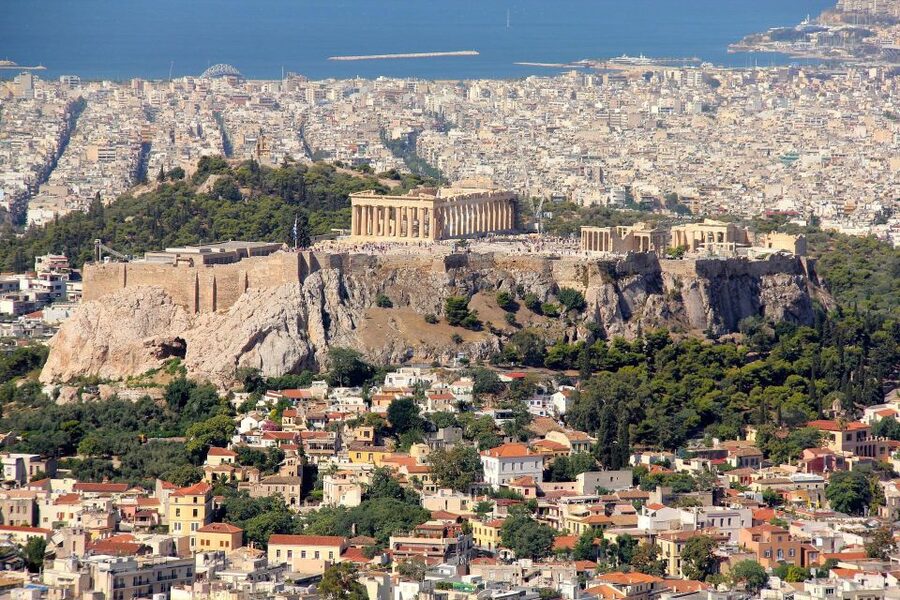
The Parthenon is the central sight, and no guided Acropolis walk can avoid it. The temple was dedicated to Athena, the city’s protector, and it remains the building most closely tied to the image of Athens.
A good guide does more than name the columns. The focus here is on the role of Athena, the religious meaning of the site, and the myths connected to the ancient city. You get a clearer sense of why this hill mattered to the people who built and used it.
The Parthenon is also the point where expectations need a little adjustment. You will see an archaeological monument under preservation, not a perfectly intact temple furnished as it once was. Restoration work and missing elements are part of the modern experience.
That does not make the visit less worthwhile. It means the guide’s explanation matters. With context, damaged stone and partial structures become clues rather than disappointments.
Erechtheion and the Caryatides
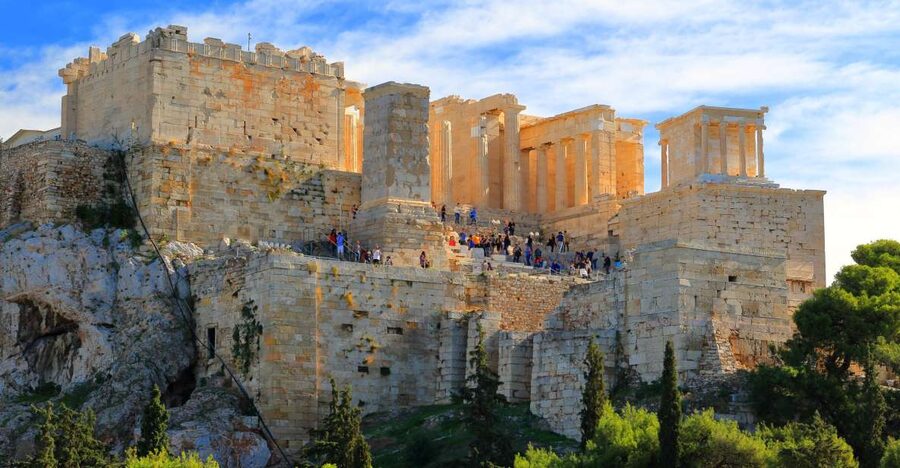
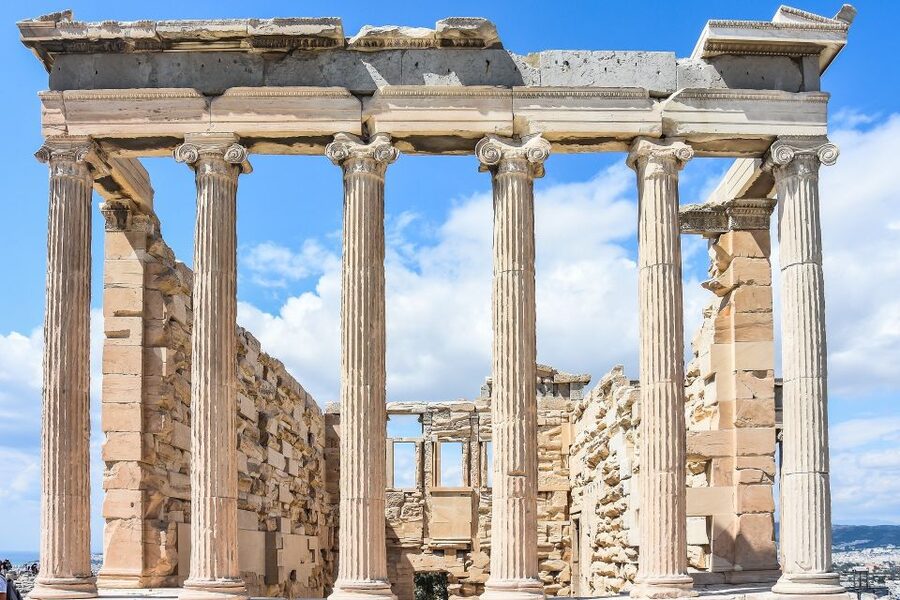
The Erechtheion is named after the demi-god Erechtheus and is one of the most distinctive buildings on the Acropolis. Its unusual design and connection to myth give the tour a change of pace after the grand scale of the Parthenon.
The Caryatides are the memorable feature here. These carved female figures take the place of columns, creating one of the Acropolis’s most recognizable views. Your guide explains what you are looking at and connects the carvings to the stories surrounding the site.
I would give this stop your full attention. It can be tempting to hurry from the Parthenon to the next viewpoint, but the Erechtheion rewards a slower look. The carvings are a reminder that ancient architecture could be both structural and symbolic.
The tour describes the Caryatides as stone carvings at the site. Do not assume that every original element is still in place or that you can approach and touch the monument. Like the rest of the Acropolis, this is a protected archaeological area.
Athena Nike, the smaller temple with a clear purpose
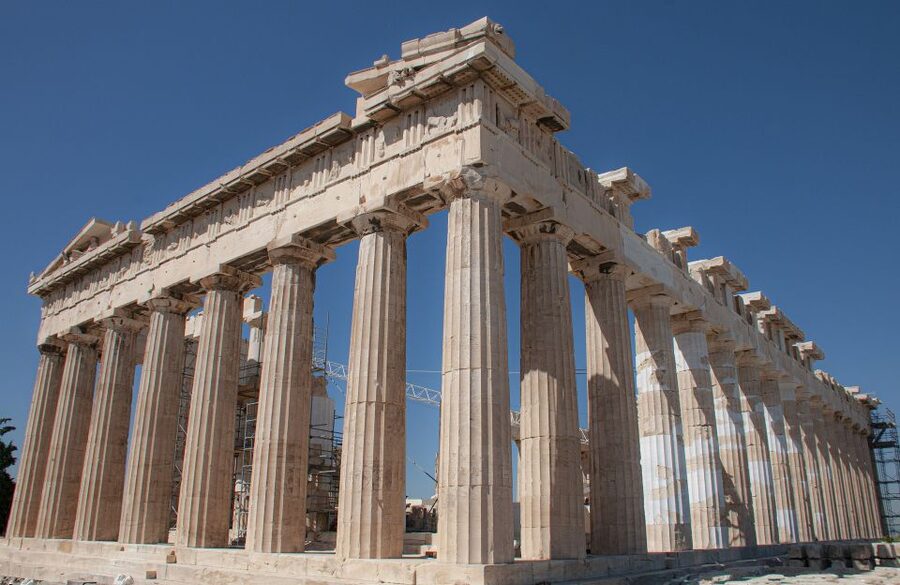
The Temple of Athena Nike is described as the smallest temple on the route. Its compact size makes it an interesting contrast with the Parthenon and Propylaea.
This stop helps you see that the Acropolis was not built around one single monument. Different buildings served different religious purposes, and each had a place in the sacred complex. The guide’s mythology and historical commentary gives the temple a role within that larger setting.
Small does not mean unimportant. In fact, the compact temple is a useful reminder that ancient builders used the hill for a group of sacred structures, not one isolated showpiece.
What the guide adds to the mythology
The mythology is a major part of this experience. You hear stories connected to Athena, Dionysus, Erechtheus, and the religious life of ancient Athens.
I like tours that use myths as a key to the site rather than as a string of random legends. Here, the stories are tied to specific temples, theaters, and ceremonies. That makes the information easier to remember once you leave the hill.
The strongest praise for the guiding has centered on detailed explanations and a lively presentation, even in heat and heavy crowds. Juan is specifically praised for mixing historical information with anecdotes, which is the sort of approach that can keep a two-hour walk from feeling like a lecture.
The listed guide language is Spanish. If you want a Spanish-speaking guide, this is a clear fit. If you need another language, confirm before booking because Spanish is the language provided for this activity.
Is $32.75 good value?
At $32.75 per person, the tour is reasonably priced for two hours with a licensed guide, especially if you want historical and mythological context rather than a self-guided look around.
The value depends on how you approach the Acropolis. If you already know the monuments well and prefer reading signs at your own pace, the added cost may feel unnecessary. You still have to purchase the entry ticket, and that extra expense should be included in your total budget.
For many people, though, the guide is the part worth paying for. The Parthenon is famous enough to recognize, but the Theater of Dionysus, Odeon, Propylaea, Erechtheion, Caryatides, and Temple of Athena Nike are easier to appreciate when someone explains their purpose.
The two-hour length also keeps the commitment manageable. You get a focused introduction without signing up for a full-day program. Afterward, you can continue exploring independently, which gives you both structure and freedom.
Heat, crowds, and the best type of visitor
The experience is best for you if you want a clear introduction to the Acropolis and enjoy asking questions along the way. It suits first-time visitors, history fans, mythology enthusiasts, and anyone who wants help making sense of several monuments in one visit.
It is also a good choice if you prefer a small group to a large organized crowd. The guide can keep the commentary focused, and the format makes it easier to follow the story from the Theater of Dionysus to the temples above.
You should think twice if you dislike scheduled entry times or do not want to arrange admission yourself. The separate-ticket system adds a task, and the wrong ticket window can create a problem.
Heat and crowds are other real considerations. One past account specifically notes that the guide kept the visit engaging despite both. That is encouraging, but no guide can remove the sun, stone, or people from the Acropolis. Choose a start time carefully and arrive prepared for an exposed walk.
Free cancellation up to 24 hours before the start gives you some flexibility, and the reserve-now, pay-later option can help if your plans are still moving. Those policies are useful, but they do not replace the need to secure the correct admission ticket.
Should you book this Acropolis tour?
I would book it if you want the Acropolis explained in Spanish, prefer a small group, and are willing to handle the entry ticket yourself. The strongest reason to choose it is the focused mix of major monuments, ancient theaters, and mythology within two hours.
I would skip it if you want a ticket-inclusive package or a completely open-ended visit. In that case, the separate ticket and fixed meeting time may outweigh the benefit of the guide.
For the best experience, buy the right Acropolis ticket before the tour, arrive at the Acropolis Metro meeting point 10 to 15 minutes early, and allow extra time if you must use the South Entrance ticket office. If the logistics suit you, this is a practical way to turn a famous monument into a story you can actually follow.
FAQ
How long does the Acropolis guided tour last?
The tour lasts two hours. Starting times vary, so check availability when booking.
Is the Acropolis entry ticket included?
No. You must buy the Acropolis entry ticket separately.
Where does the tour meet?
Meet the guide at street level at the entrance of Acropolis Metro station.
How early should I arrive?
You should arrive between 10 and 5 minutes before the scheduled start time.
What language is the tour in?
The live guide provides the tour in Spanish.
Can I stay at the Acropolis after the guided tour?
The activity includes free time to stay longer and explore the site at your own pace.
Are strollers and wheelchairs allowed?
Baby strollers, non-folding wheelchairs, and electric wheelchairs are not allowed on this activity.
Just added around Athens
- Athens Hotels to Athens Airport Private Departure Transfer★ 5.0 · 40 reviews
- Private One-way Transfer between Athens International Airport and Athens Hotels★ 4.5 · 40 reviews
- Athens: Acropolis Museum Ticket with Self-Guided Audio tour App★ 3.5 · 40 reviews
- From Athens: Meteora Train Trip with Overnight Stay★ 4.8 · 40 reviews
- Athens Photography Tour★ 5.0 · 40 reviews
- Athens: Acropolis Visit and City Night Tour★ 4.7 · 40 reviews
- Delphi Full Day Private Trip From Athens With Lunch Overlooking the Sea★ 5.0 · 40 reviews
- Acropolis & Plaka Neighbourhood Private Tour with Licensed Expert★ 5.0 · 40 reviews
Acropolis & Parthenon Tours, compared.
Acropolis & up to 5 Archaeological Sites Combo Pass
Read our review →

Acropolis, Parthenon & Acropolis Museum Guided Tour
Read our review →
Acropolis, Parthenon & Acropolis Museum Guided Tour
Read our review →

Acropolis: Acropolis and Parthenon Guided Walking Tour
Read our review →
Acropolis monuments & Parthenon Walking Tour with Optional Acropolis Museum
Read our review →Browse the lists this tour appears in