
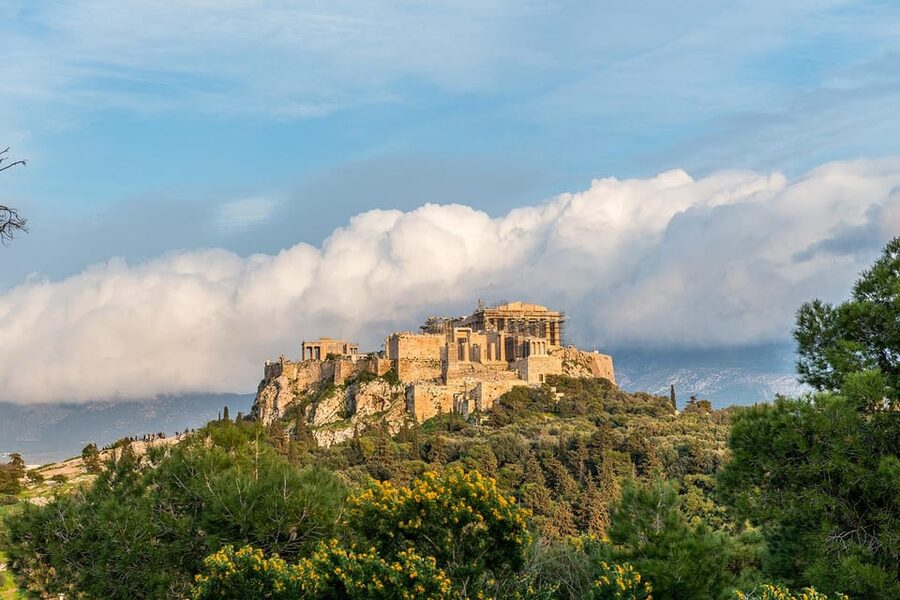
Reviewed · ACROPOLIS & PARTHENON TOURS
Athens: Acropolis and Mythology Highlights Small Group Tour
Greek myths make old stones speak. This walking tour links the Acropolis, Ancient Agora, Temple of Olympian Zeus, and other major sites with the gods, heroes, politics, and daily life behind them. I especially like the way guides such as Antonia, Alex, Danae, and Stellios connect mythology to real Athenian society, and I like the small groups, which make questions and photo stops much easier.
The main caution is the pace and the uneven ground. You will walk uphill on stone surfaces, stand in the open sun, and cover a lot in two to four hours. Also, check your booking carefully because entry tickets may be included only with selected options, even though the guide can arrange them in advance.
In This Review
- Key points to know before booking
- Starting under Hadrian’s Arch
- The Temple of Olympian Zeus from the outside
- Climbing into the Acropolis
- Temple of Athena Nike and the Acropolis entrance
- The Erechtheion and its layered stories
- The Parthenon, Athens’ great symbol
- The Theatre of Dionysus and the Sanctuary of Asclepius
- Walking down toward the Ancient Agora
- The Temple of Hephaestus and the working city
- Guides who turn information into a story
- Price, timing, and practical value
- Who should book this Athens tour?
- FAQ
- Where does the tour meet?
- How long does the tour last?
- Are Acropolis tickets included?
- Does the tour visit the Ancient Agora?
- What languages are available?
- What should I bring?
- Can I bring a backpack or stroller?
Key points to know before booking
- The tour begins beneath Hadrian’s Arch: This is an easy meeting point near the Acropolis metro station, with the guide holding an Alternative Athens sign.
- Mythology is the main thread: You learn not only who the gods were, but how myths reflected politics, human behavior, religion, and everyday life.
- The Acropolis receives the most time: Expect about 90 minutes inside the hilltop complex, including the Parthenon, Erechtheion, Temple of Athena Nike, and nearby sanctuaries.
- The Ancient Agora adds the human side of Athens: The Temple of Hephaestus and the old civic center show where public life happened beyond the temples.
- Small groups are a real advantage: Groups can be as small as two people, and several guides use visual aids or audio devices to make explanations easier to follow.
- Summer demands preparation: Comfortable shoes, water, light clothing, and an early start matter, especially in the heat and crowds.
Starting under Hadrian’s Arch
The meeting point is beneath the Arch of Hadrian on Leoforos Vasilisis Amalias 50, beside the Acropolis. The nearest metro stop is Acropolis, followed by about a five-minute walk to the arch. Look for a guide holding an Alternative Athens sign.
This is a useful place to begin. Hadrian’s Arch marks the edge between ancient Athens and the Roman-era expansion associated with Emperor Hadrian. Before you even enter an archaeological site, you begin thinking about how Athens changed over many centuries rather than existing as one frozen classical moment.
Your guide sets up the central idea of the tour here: Athens is both a real city and a mythical one. The stories of Athena, Zeus, Poseidon, Apollo, and the other gods are not treated as random fairy tales. They are used to explain the values, fears, rivalries, and ambitions of the people who built these monuments.
The guides receive especially strong praise for their presentation. Alex is described as charismatic and attentive, while Danae used drawings of former building designs and family links among the gods. Maria and Chrysa brought archaeological training to their explanations. That mix matters because the Acropolis is easier to understand when storytelling is tied to visible evidence.
More ways to see the Acropolis:
- Athens: Acropolis & up to 5 Archaeological Sites Combo Pass
★ 4.4 · 12,619 reviews - Athens: Acropolis Ticket with Optional Audio or Live Guide
★ 4.2 · 11,055 reviews - Athens: Acropolis, Parthenon & Acropolis Museum Guided Tour
★ 4.8 · 9,316 reviews
The Temple of Olympian Zeus from the outside
The first formal stop is the Temple of Olympian Zeus, seen from outside, with about 15 minutes of guided explanation. This enormous temple once honored Zeus and took centuries to complete. Even from the perimeter, its surviving columns give you a clear sense of scale.
The stop helps explain Athens’ relationship with power. The temple was begun in earlier periods and completed under Roman rule, showing that Athens’ grand projects did not belong to one short golden age. It also gives your guide a chance to explain Zeus as a central figure in Greek religion, while keeping the discussion tied to the city’s political ambitions.
Do not expect a full interior visit here. The value is the introduction, the view of the columns, and the connection between divine authority and human rulers. If you want to study the temple at length, you will need separate time outside this tour.
Climbing into the Acropolis
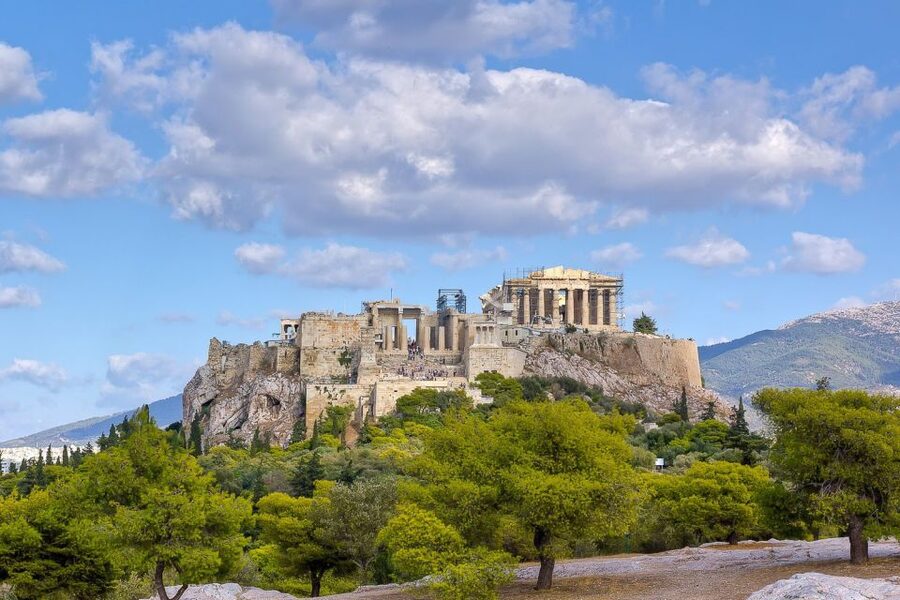
From the Zeus area, the group walks toward the Acropolis. The approach takes about 15 minutes, and the ground becomes more demanding as you rise. Wear shoes with a firm grip. Sandals that slide on smooth stone will make the visit less pleasant.
The guide keeps the group moving while allowing time for photos and short pauses. Several experiences have included shade and water breaks in hot weather, and one guide adjusted the pace for older members of the group. That is worth noting because a summer Acropolis visit can be physically tiring even before the commentary begins.
The Acropolis is not a quiet museum. Groups gather around the same viewpoints, and it can be hard to hear a guide when the site is crowded. Some tours provide headsets, while other sessions have had no hearing devices. If clear audio is important to you, ask about this before booking or stay close to the guide.
Temple of Athena Nike and the Acropolis entrance
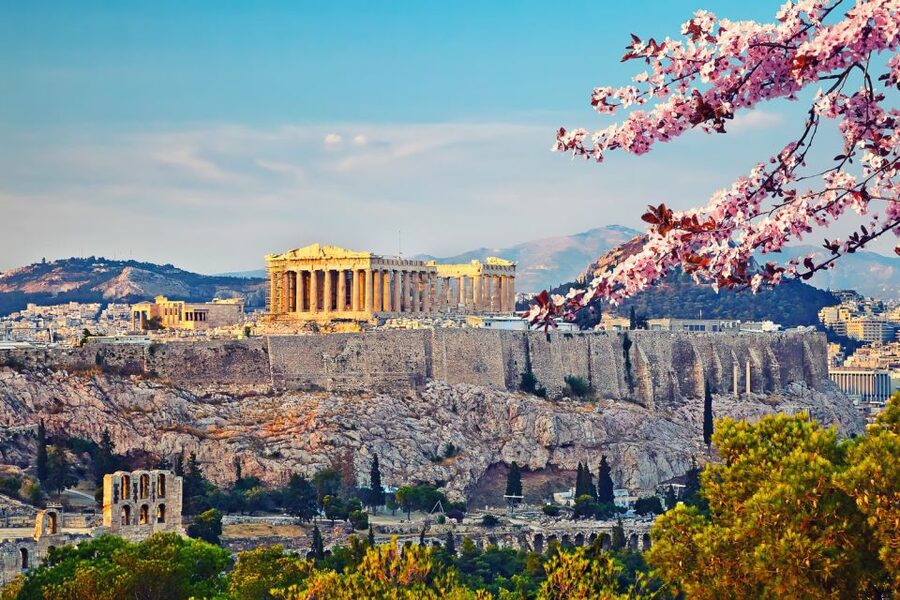
The Temple of Athena Nike is a small but elegant monument near the entrance area. The guide spends about 15 minutes here, explaining Athena in her role as a protector and bringer of victory.
This is one of the places where the mythology theme works well. Athena is not presented only as a character in a famous story. Her image reflects what Athens valued: strategic intelligence, civic protection, craft, and military success. The small temple also gives you a chance to notice details that are easy to miss when everyone is focused on the Parthenon.
The Acropolis entrance can feel busy, especially during the warmer months. The tour may use pre-purchased tickets, helping you avoid the ticket line, but admission depends on the option you select. Confirm exactly what your price includes before you pay, particularly if you want both the Acropolis and Ancient Agora.
More things to do in Athens:
- Athens: Cape Sounion & Poseidon Temple Sunset Half-Day Trip
★ 4.8 · 8,241 reviews - Athens: Acropolis and Parthenon Guided Walking Tour
★ 4.6 · 5,882 reviews - All Day Cruise -3 Islands to Agistri,Moni, Aegina with lunch and drinks included
★ 5.0 · 4,958 reviews - Athens, Piraeus, and Coastline: Blue Hop-On Hop-Off Bus
★ 3.9 · 4,849 reviews
The Erechtheion and its layered stories

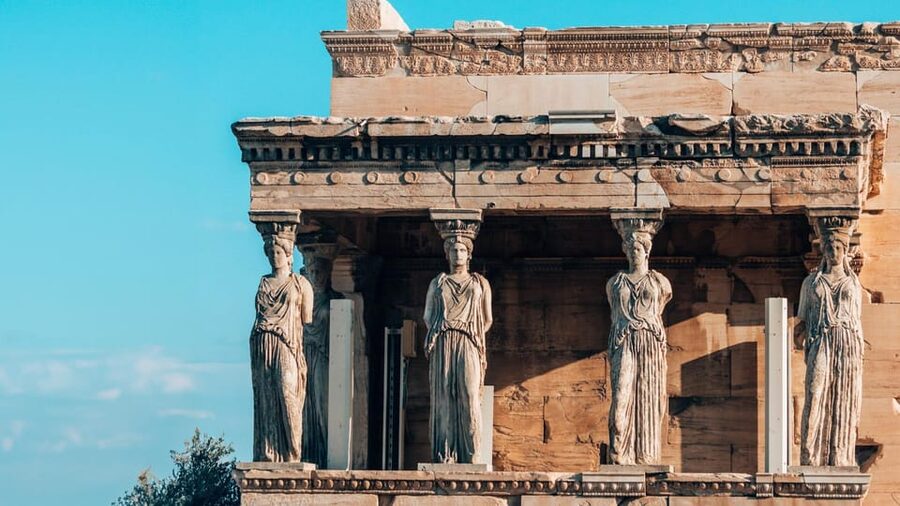
The Erechtheion receives another 15 minutes of attention. Its unusual design and famous Caryatid figures make it one of the most memorable buildings on the Acropolis, but its story is also more complicated than a quick photo stop suggests.
This is where the rivalry between Athena and Poseidon becomes especially useful. The myth tells of a contest for control of Athens, with Athena offering the olive tree and Poseidon striking the ground with his trident. Your guide links that story to the city’s identity and to the importance of olive cultivation.
The building itself served several sacred purposes, and its different sections reflect the layered traditions of the hill. A good guide helps you see that the Acropolis was not just one temple complex built all at once. It was a holy center shaped by older beliefs, political change, rebuilding, and later damage.
Danae’s use of visual material is particularly helpful here. Seeing how the structures may have looked with their original finishes makes the pale ruins easier to read. You should still expect reconstruction work, restricted areas, and crowds around the most photographed views.
The Parthenon, Athens’ great symbol
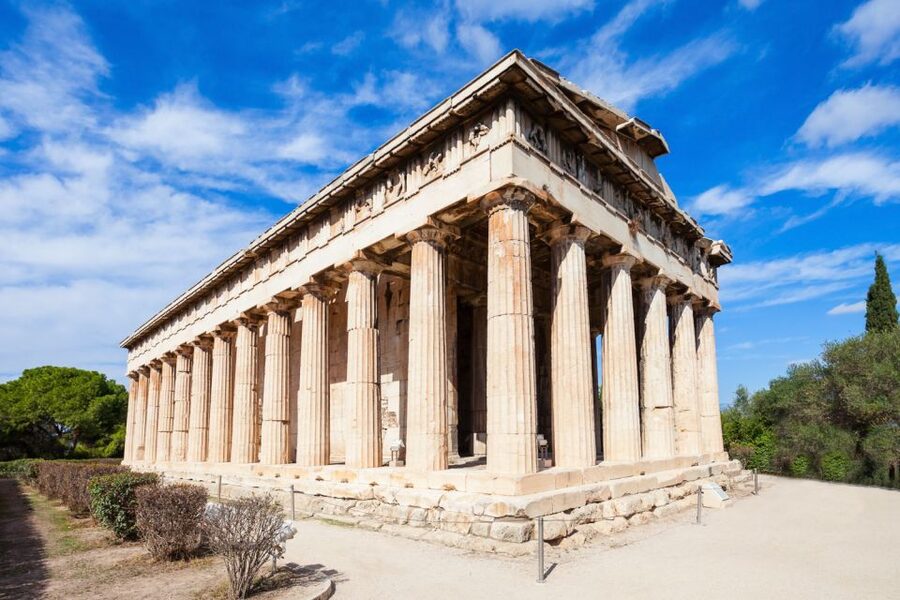
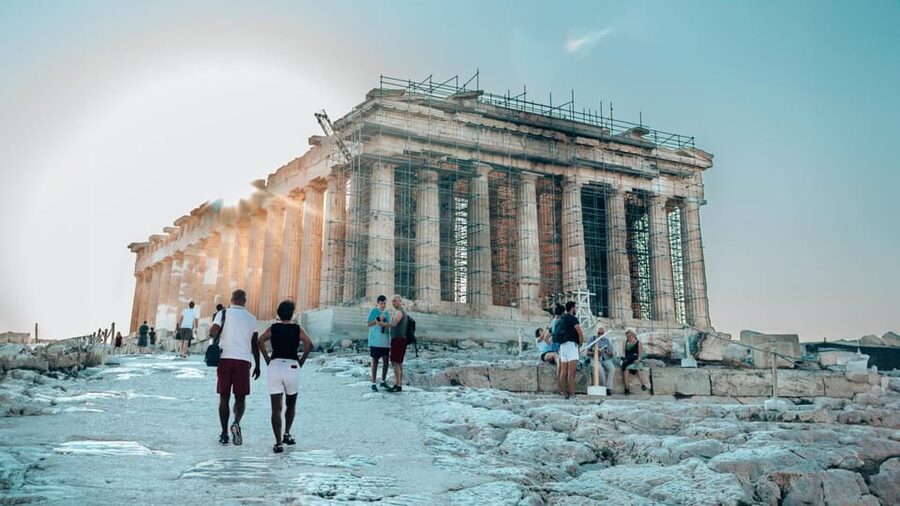
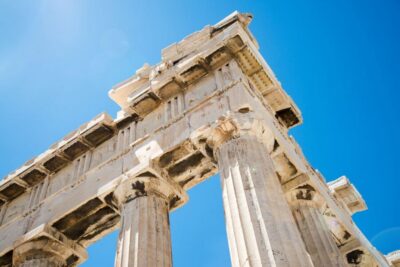
The Parthenon receives about 30 minutes, although the full Acropolis visit lasts roughly 90 minutes. This is the point most people anticipate, but the best part is not simply standing in front of a famous building. It is learning what the building meant to the Athenians who paid for it and placed it above the city.
The temple honored Athena and expressed the power of Athens during its fifth-century BC peak. Your guide explains the architecture, the myths associated with Athena, and the way the monument reflected civic pride. Several guides are praised for showing how Greek myths connected to ordinary human concerns rather than presenting a list of gods to memorize.
Look closely at the structure instead of rushing straight to the perfect photo. Columns, sculptural decoration, and the high position all helped communicate order and authority. From the hill, you also gain a strong view over modern Athens, which makes the city’s long continuity easier to grasp.
This is one of the tour’s most valuable features: interpretation. Without it, you can admire marble, columns, and open space. With a skilled guide, you begin to understand why these particular buildings were placed here and why the Acropolis became such a lasting symbol.
The Theatre of Dionysus and the Sanctuary of Asclepius

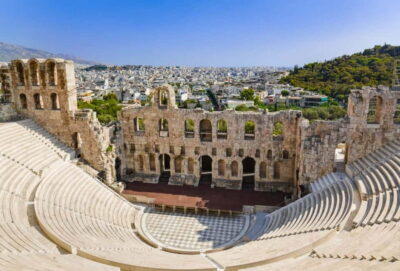
The route also includes the Theatre of Dionysus Eleuthereus and the Sanctuary of Asclepius, along with other less familiar parts of the Acropolis complex. These stops broaden the visit beyond the Parthenon.
The Theatre of Dionysus reminds you that ancient Athens was a place of performance as well as worship and politics. Drama was tied to religious festivals, civic life, and public debate. Standing in the theatre helps put Greek tragedy and comedy into their original setting rather than treating them as modern classroom subjects.
The Sanctuary of Asclepius adds another side of ancient life: healing. Asclepius was associated with medicine, and the sanctuary shows how religious practice and hopes for physical recovery were closely connected.
These quieter sites can be easy to overlook if you visit without a guide. They also require some imagination because the remains are less immediately recognizable than the Parthenon. The guide’s storytelling is doing real work here, helping you picture how the hill functioned as a religious center.
Walking down toward the Ancient Agora
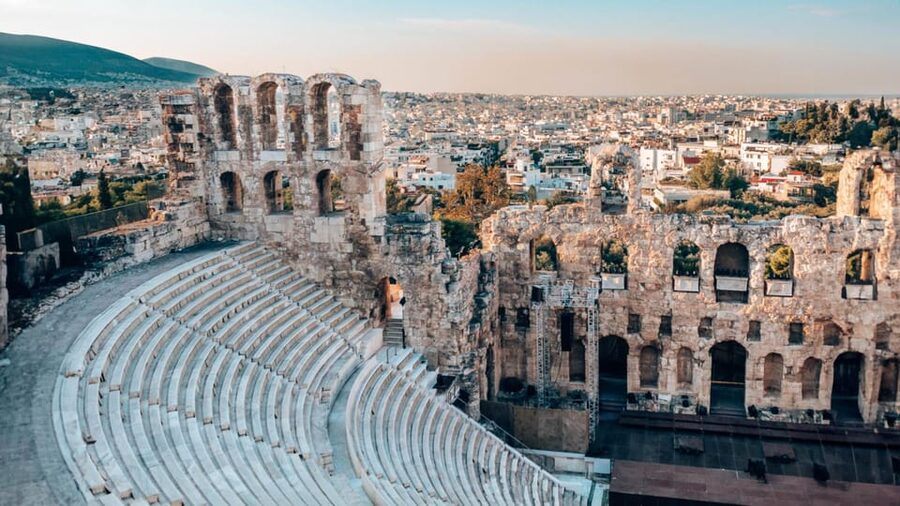
The walk to the Ancient Agora takes about 30 minutes. This section changes the mood of the tour. The Acropolis is the grand religious and political symbol above the city, while the Agora brings you closer to ordinary public life.
You will see where Athenians gathered, debated, traded, worshipped, and handled civic business. The guide explains how Athens developed into a major center and how its political system depended on public participation, even though that participation excluded large parts of the population.
The Agora is generally a calmer place to explore than the Acropolis. The route still involves walking, and the total experience can feel full after the hilltop visit. Families with children may appreciate the change of scenery, while anyone seeking a slower archaeological visit should consider choosing the longer option if available.
Ticket arrangements are important here. Some versions include entry to both the Acropolis and Ancient Agora, while other arrangements cover the Acropolis only. Entry fees are non-refundable and non-exchangeable, so check the exact choice before booking.
The Temple of Hephaestus and the working city
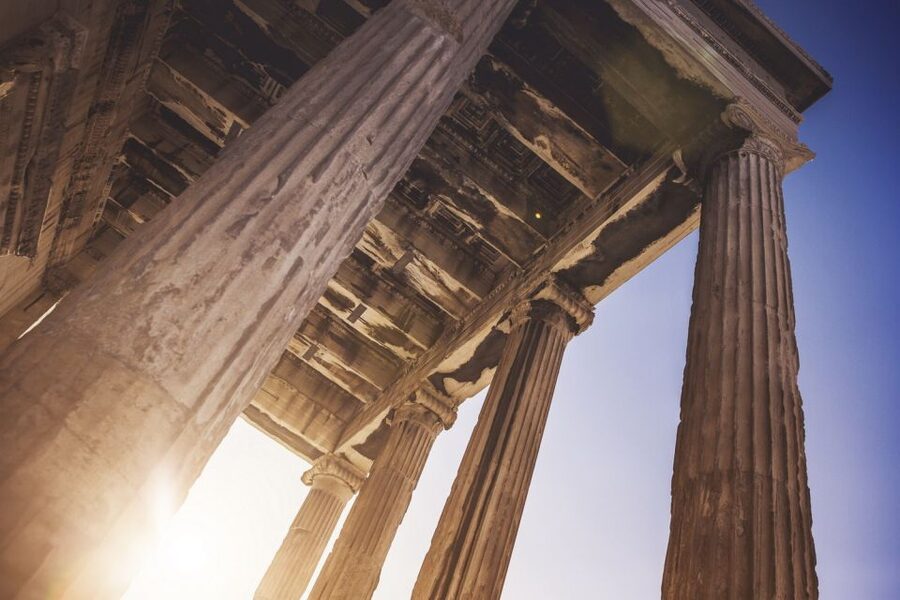
The Temple of Hephaestus receives about 30 minutes of guided attention. It is one of the most complete surviving ancient Greek temples, and its connection to Hephaestus adds a practical contrast to the lofty image of the Acropolis.
Hephaestus was associated with fire, metalwork, and craftsmanship. That makes this temple a fitting stop in the Agora, where public life depended on skilled workers, merchants, officials, and citizens. The tour’s mythology theme feels grounded here because the gods are connected to real trades and social roles.
This final stop also gives the tour a satisfying shape. You begin with Zeus and royal-scale ambition, rise to Athena’s sacred hill, then descend into the civic center and finish with the god of the forge. You see not only monuments, but a picture of how religion touched different parts of Athenian life.
Guides who turn information into a story
The strongest feature of this experience is the guide. The high rating is supported by repeated praise for clear explanations, humor, warmth, and strong storytelling. Antonia is praised for making both myths and historical periods easy to follow, while Vicky is noted for creating a vivid picture of how the sites received their names.
The best guides adjust their style to the group. Danae engaged both parents and children, including tweens who already knew Greek myths. Alex kept children interested while also giving adults serious historical context. Chrysa and Maria brought archaeological training, while other guides made the experience friendly and relaxed.
That variety means your exact experience depends partly on who leads your group. Still, the common strength is the way the guides connect stories to physical remains. You are not simply told that Athena defeated Poseidon. You are shown how that story helped express the identity of Athens.
Small groups make a noticeable difference. A group of seven can stop without blocking a major path, and a group of two may receive something close to a private experience. You can ask questions without waiting for a large crowd to settle, though the tour remains a walking route rather than a private custom itinerary.
Price, timing, and practical value
At $53 per person, this tour is a fair buy if your priority is understanding the Acropolis rather than just entering it. The price is strongest when admission tickets are included, the group is genuinely small, and your guide gives the site the kind of context you would otherwise need to research yourself.
Check the ticket option closely. The basic price may not include all archaeological entry fees, and the provider can pre-purchase tickets if you request that arrangement. That convenience can save time, but admission costs remain non-refundable once purchased.
The stated duration is two to four hours. A shorter version can work well if you mainly want the Acropolis and its central monuments. The longer route, including the Ancient Agora and Temple of Hephaestus, gives you a better picture of Athens as a functioning city.
The best time of day is early, especially in summer. A January morning can bring clear weather and lighter crowds, while August may mean intense heat and more people on the hill. Bring water, wear comfortable clothes, and carry as little as possible.
Backpacks, large bags, baby strollers, and pets are not allowed at the Acropolis, though assistance dogs are permitted. A passport or ID card may be needed for age-based admission benefits. European Union citizens under 25 and non-EU citizens under 18 can enter the Acropolis and Ancient Agora free with valid identification.
The tour is offered in English and French. If hearing the guide clearly matters to you, ask whether headsets are provided on your departure. Some groups have used them successfully, while others found it difficult to hear in crowded areas.
Who should book this Athens tour?
I would choose this tour for a first visit to Athens, especially if Greek mythology interests you or if you want more than a list of dates and building names. It also suits families because the stories give children a way into the ruins, and the small groups allow guides to adjust explanations and rest stops.
It is a good fit for people who want the Acropolis and Ancient Agora in one outing. You cover a lot, so it is less suitable if you prefer to linger quietly at one monument or take dozens of uninterrupted photographs.
Book it if you value a strong guide, clear connections between myth and history, and help making sense of archaeological remains. Skip it if you already have specialist knowledge and would rather explore alone at your own speed. For most first-time visitors, the interpretation is worth the $53, provided you select the ticket option that matches your plans.
FAQ
Where does the tour meet?
The meeting point is beneath Hadrian’s Arch at Leoforos Vasilisis Amalias 50. The closest metro station is Acropolis, about a five-minute walk away. Your guide will hold an Alternative Athens sign.
How long does the tour last?
The tour duration is listed as two to four hours, depending on the option and route selected. The Acropolis guided portion is about 1.5 hours, with additional walking and time at the Ancient Agora on longer versions.
Are Acropolis tickets included?
Acropolis tickets, or combined Acropolis and Ancient Agora tickets, are included only if you select the relevant option. The provider can pre-purchase entry tickets for you, so confirm the choice when booking.
Does the tour visit the Ancient Agora?
Yes, the route includes a walk through the Ancient Agora and a guided visit to the Temple of Hephaestus. The Ancient Agora portion takes about 30 minutes.
What languages are available?
The tour is offered in English and French.
What should I bring?
Bring a passport or ID card, comfortable shoes, and comfortable clothing. Water is also a sensible choice, particularly in warm weather.
Can I bring a backpack or stroller?
Backpacks, large bags, and baby strollers are not allowed at the Acropolis and should not be brought on the tour. Pets are not allowed, but assistance dogs are permitted.
Just added around Athens
- Athens Hotels to Athens Airport Private Departure Transfer★ 5.0 · 40 reviews
- Private One-way Transfer between Athens International Airport and Athens Hotels★ 4.5 · 40 reviews
- Athens: Acropolis Museum Ticket with Self-Guided Audio tour App★ 3.5 · 40 reviews
- From Athens: Meteora Train Trip with Overnight Stay★ 4.8 · 40 reviews
- Athens Photography Tour★ 5.0 · 40 reviews
- Athens: Acropolis Visit and City Night Tour★ 4.7 · 40 reviews
- Delphi Full Day Private Trip From Athens With Lunch Overlooking the Sea★ 5.0 · 40 reviews
- Acropolis & Plaka Neighbourhood Private Tour with Licensed Expert★ 5.0 · 40 reviews
Acropolis & Parthenon Tours, compared.
Acropolis & up to 5 Archaeological Sites Combo Pass
Read our review →
Acropolis, Parthenon & Acropolis Museum Guided Tour
Read our review →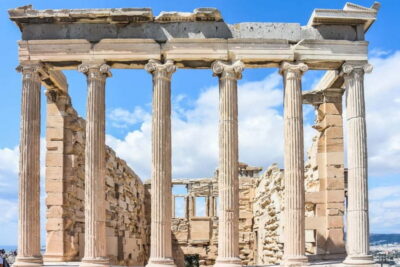
Acropolis, Parthenon & Acropolis Museum Guided Tour
Read our review →

Acropolis: Acropolis and Parthenon Guided Walking Tour
Read our review →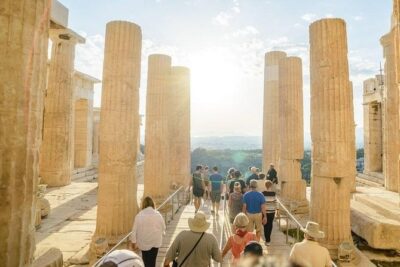
Acropolis monuments & Parthenon Walking Tour with Optional Acropolis Museum
Read our review →Browse the lists this tour appears in