
Reviewed · ACROPOLIS & PARTHENON TOURS
Acropolis: Private Guided Tour
The Acropolis deserves more than a quick glance. This two-hour private tour gives you an archaeologist guide, a small group of up to five people, and time to ask questions as you move among Athens’ great monuments. I especially like the late-afternoon timing, which can mean cooler temperatures, softer light, and fewer people than during the morning rush. I also like the private format, since your guide can slow down for family members, focus on your interests, and help you leave through a faster route when possible.
There is one important catch: the $176 per-person price does not include Acropolis admission. You must pay the entrance fee separately on site, and you should be ready to pay in cash. The late start is also seasonal. During the winter closing period, tours cannot begin later than 10:00.
In This Review
- Key points to know before booking
- Why a private Acropolis tour can be worth it
- Meeting your guide and getting started
- Walking up to the Acropolis
- The Theater of Dionysus comes first
- The Parthenon remains the main event
- The Erechtheum and its unusual design
- The Temple of Athena Nike and the wider view
- What the archaeologist guide adds
- Late afternoon versus morning
- The extra ticket cost and overall value
- Who should book this two-hour visit?
- Should you book the Acropolis Private Guided Tour?
- FAQ
- How long does the Acropolis private tour last?
- How many people can join the private tour?
- Which Acropolis monuments are included?
- Is the Acropolis entrance fee included?
- What languages are available?
- What should I bring?
Key points to know before booking
- Private group of up to five: You get a personal guide rather than a large group lecture, with room for questions and a pace that suits your party.
- Late-day Acropolis visit: The tour aims for cooler conditions and lighter crowds, though the exact start time depends on availability and season.
- Archaeologist-led interpretation: Guides such as Kimissa, Sophia, Rigoula, Dimitra, and Katerina have been praised for clear explanations, storytelling, and patience.
- Major monuments in two hours: The route includes the Parthenon, Erechtheum, Temple of Athena Nike, and Theater of Dionysus.
- Admission costs extra: Bring cash for the Acropolis ticket, plus a passport if you may qualify for a reduced price.
- Wear serious walking shoes: The approach, stairs, and uneven ground can be tiring, especially for anyone with knee, back, or climbing concerns.
Why a private Acropolis tour can be worth it
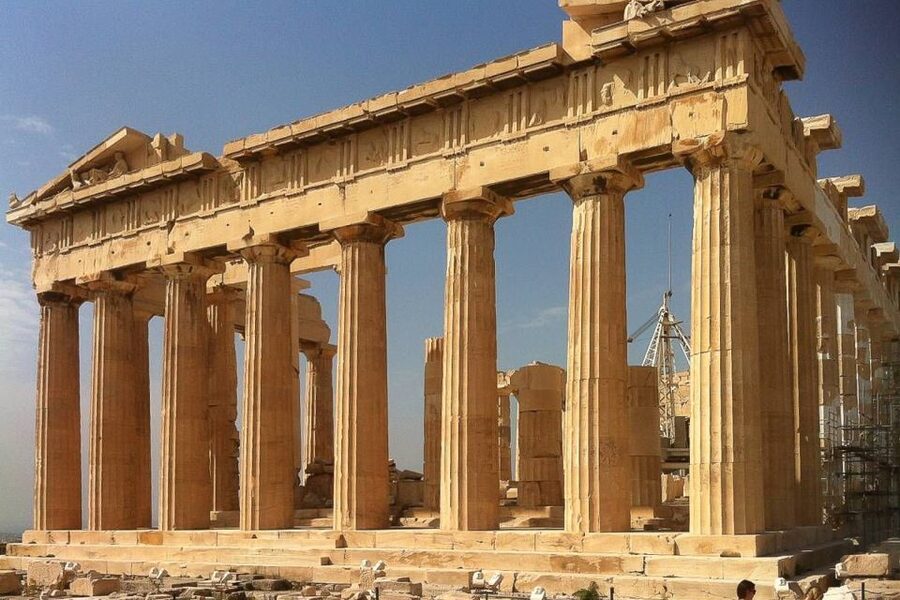
The Acropolis is not a place you simply stroll into and understand at once. It is a hilltop site filled with famous buildings, broken stones, old religious customs, and layers of Athenian history. Without context, the Parthenon can become a grand photo stop. With a good guide, the columns, sculpture, and surrounding sanctuaries begin to make sense.
This experience is designed for a maximum of five people. That small size matters. You can ask why the buildings were placed where they are, pause for a better view, or request more stories about Greek gods and ancient Athens. A large group often means standing at the edge of a crowd while trying to hear. Here, your guide can speak directly to you.
The private format is also useful for families. Katerina kept children interested during a two-hour visit by using questions and a simple children-versus-parents game. Another guide, Kimissa, adjusted the pace for a person who had trouble keeping up. Those details tell you what the format can offer: not a guaranteed custom itinerary, but a much better chance of receiving personal attention.
The tradeoff is price. At $176 per person, this is not the bargain choice, especially because admission is extra. For five people, though, the cost buys a private guide for the whole group rather than five seats in a standard group tour. I would consider it strongest value for families, couples who care about history, or friends who want to share one guide and ask plenty of questions.
More ways to see the Acropolis:
- Athens: Acropolis & up to 5 Archaeological Sites Combo Pass
★ 4.4 · 12,619 reviews - Athens: Acropolis Ticket with Optional Audio or Live Guide
★ 4.2 · 11,055 reviews - Athens: Acropolis, Parthenon & Acropolis Museum Guided Tour
★ 4.8 · 9,316 reviews
Meeting your guide and getting started
You meet at the local partner’s shop. The tour then heads into the Acropolis area with a licensed archaeologist guide. The supplied details do not give a precise shop address, so check the confirmed meeting instructions carefully before setting out.
Your guide should provide an introduction before the main monuments. One visitor specifically found the opening overview helpful for understanding the rest of the visit. That is good tour practice at the Acropolis, where a little orientation saves you from seeing a collection of ruins without a clear plan.
The tour lasts two hours. That is enough time to see the main highlights with explanation, but it is not enough for every corner of the hilltop or a long stop at the Acropolis Museum. Rigoula, one of the praised guides, went beyond the immediate site by offering extra information about the museum. Still, treat that as a helpful bonus, not a museum tour included in the booking.
The available guide languages are English, French, and German. Several guides have been praised for fluent, easy-to-follow English, including Dimitra and another guide who was especially clear for Australian visitors.
Walking up to the Acropolis
The Acropolis is a hilltop archaeological site, and the physical effort begins before you reach the famous temples. You will walk uphill, use stairs, and cross uneven ancient surfaces. Comfortable shoes are not a polite suggestion here. They are the sensible choice.
A sunhat is also recommended. Even a late visit can feel exposed, particularly in summer. The shift away from the hottest part of the day helps, but it does not turn the Acropolis into a shady park.
If someone in your party has back or knee problems, or finds climbing stairs difficult, tell the guide early. The tour cannot remove the hill, but the private setup allows the route and pace to be handled with more care. Kimissa was praised for accommodating a slower participant, while Sophia planned the visit in a way that made it easier for a party member with physical limitations.
Do not confuse private guiding with step-free access. The information provided does not promise an accessible route or special transport. If mobility is a serious concern, ask the local partner what route is possible before booking.
The Theater of Dionysus comes first
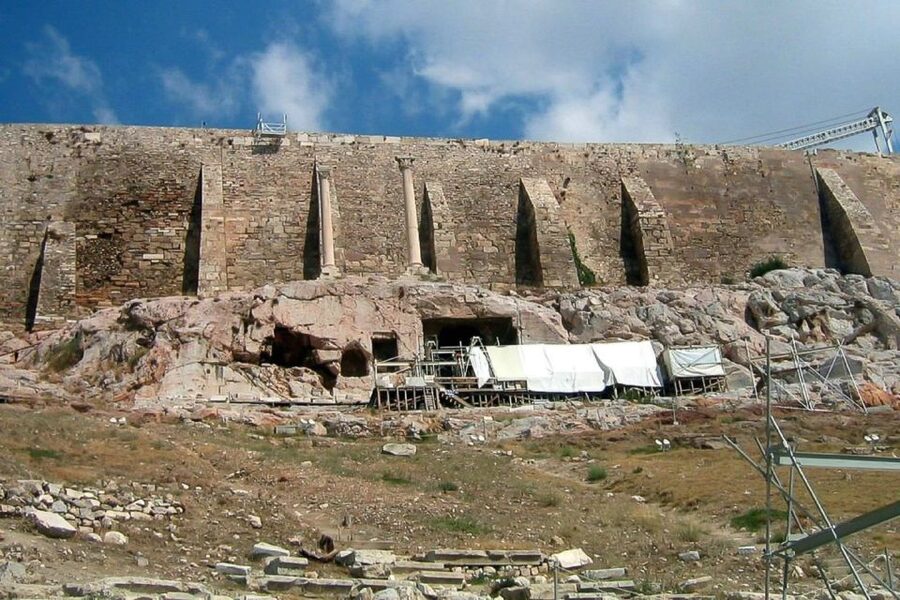
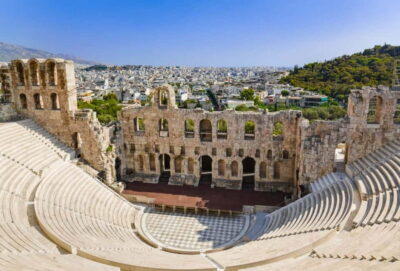
The ancient Theater of Dionysus is one of the key stops. It sits on the southern slope of the Acropolis and helps explain the city’s connection with drama, performance, and public gatherings.
This is a valuable early stop because it gives you a different view of the hill. The Parthenon gets all the postcards, but the theater helps you picture the Acropolis as part of a wider civic and religious center. Your guide can place the upper temples in context before you climb farther.
The theater is also a reminder that Athens was not only about temples. Public life included performance, debate, ceremony, and shared cultural events. A good guide can turn the stone seating and open stage into a picture of how ancient Athenians used the space.
The visit is still brief. With only two hours, you should expect an explanation and a look around rather than a long architectural study of every section.
More things to do in Athens:
- Athens: Cape Sounion & Poseidon Temple Sunset Half-Day Trip
★ 4.8 · 8,241 reviews - Athens: Acropolis and Parthenon Guided Walking Tour
★ 4.6 · 5,882 reviews - All Day Cruise -3 Islands to Agistri,Moni, Aegina with lunch and drinks included
★ 5.0 · 4,958 reviews - Athens, Piraeus, and Coastline: Blue Hop-On Hop-Off Bus
★ 3.9 · 4,849 reviews
The Parthenon remains the main event
At the top, the Parthenon is the stop most people have been waiting for. It was dedicated to Athena, the city’s patron goddess, and its scale and position still dominate the Acropolis.
Your guide can help you see more than the familiar facade. Look at the surviving columns, the ongoing restoration work, the sculptural decoration, and the way the temple frames views over Athens. The building is famous partly because of its appearance, but also because it represents the ambition of classical Athens.
You should expect crowds even during a quieter time. The late afternoon can reduce the pressure, but it cannot guarantee an empty monument. One private guide, Sophia, was praised for making a crowded Acropolis feel surprisingly calm and for helping her group exit quickly. That sort of crowd management is one of the better reasons to choose a private tour.
The Parthenon is also a place where your questions can shape the visit. You might want more on mythology, architecture, restoration, or the city below. The private format gives you room to follow those interests instead of waiting for a guide to finish a fixed speech.
The Erechtheum and its unusual design
The Erechtheum offers a contrast to the Parthenon. Its design is more irregular, and its famous porch with female figures gives the building an instantly recognizable profile.
Your guide will explain its religious importance and the stories connected with the Acropolis. This is where storytelling can make a real difference. Rigoula was praised for explaining historical and cultural subjects through engaging stories, while other guides used myths and questions to keep the visit lively.
The Erechtheum can also be a good place to slow down for photographs. The setting, columns, and nearby views give you more visual variety than another straight-on look at the Parthenon. Your guide can help you understand why the buildings do not all follow the same shape or serve the same purpose.
As with the rest of the hill, keep your footing in mind. Ancient paving and busy paths can make it hard to stop wherever you want. A private guide can suggest sensible places to pause without blocking the route.
The Temple of Athena Nike and the wider view
The Temple of Athena Nike is a smaller monument, but do not skip it mentally just because it lacks the Parthenon’s size. Its position near the entrance made it an important part of the approach to the sacred hill.
The temple is associated with Athena in her role as a bringer of victory. That detail gives the entrance a political and religious message. You were not simply walking into a collection of old buildings. You were entering a place tied to the identity and fortunes of Athens.
The late-day schedule has another advantage here: the views across the city can look particularly appealing as the light softens. The exact sunset experience depends on the season and starting time, so do not book this expecting a guaranteed sunset. Still, a late afternoon visit offers a better chance of seeing Athens in gentler light than a hot midday climb.
What the archaeologist guide adds
The guide is the central reason to book this experience instead of buying a ticket and walking up alone. The best moments are likely to come through explanation: a myth linked to a monument, a detail in the architecture, or a reason one temple sits where it does.
The strongest guide feedback centers on three traits:
- Clear historical and cultural explanation, especially from Rigoula and Sophia.
- Warm, personal communication, with guides described as friendly, personable, and engaging.
- Flexible pacing, including extra time for questions, children, photographs, or a slower participant.
Dimitra was praised for making good use of a short stay in Athens. That is important if you have only a day or two in the city. A focused two-hour tour can give you a solid foundation before you visit other ancient sites or the Acropolis Museum on your own.
Do keep expectations reasonable. Your guide is an archaeologist and interpreter, not a magic crowd remover. The site can still be busy, and the tour cannot change the weather, stairs, or admission rules. What you gain is better use of your time and a person who can help you make sense of what you are seeing.
Late afternoon versus morning
The late start is the clearest practical advantage. Summer heat can make the uphill approach harder, and the Acropolis has little shade. A later visit should be more comfortable than the hottest part of the day, with a better chance of softer light over Athens.
The timing is not fixed in the details provided. You need to check available start times when booking. Also note the winter restriction: from November 1 through May 1, the Acropolis closes at 14:00, so a tour cannot begin later than 10:00 during that period.
That means the tour’s main selling point changes by season. In summer, late afternoon may give you cooler conditions and sunset views. In winter, you should expect a morning visit instead. One family had a successful 8:30 to 10:30 private tour in November, with very light crowds and plenty of time to take photographs.
The November experience is a useful reminder that quiet conditions are not limited to summer evenings. If your schedule allows, a winter morning can be a very good option. Just bring layers suited to the day, since the provided information only specifically recommends comfortable shoes and a sunhat.
The extra ticket cost and overall value
The tour costs $176 per person, with admission to the Acropolis paid separately. That makes the headline price less than the final cost, so budget accordingly.
You may qualify for a reduced admission price. EU citizens under 25 enter free, while non-EU citizens under 25 receive a 50 percent discount. Bring your passport to prove eligibility, and be prepared to pay cash for the entrance ticket on the tour day.
The booking includes the private tour, archaeologist guide, and a bottle of water. It does not include the Acropolis entrance fee. It also does not describe hotel pickup, transportation, meals, or a museum ticket, so plan those separately.
I see the value most clearly when the group is full, up to five people. A family can divide the private guide cost across the group and keep children engaged. A couple pays more per person, but may value the ability to ask detailed questions and set a relaxed pace. Solo visitors should compare the price with a standard group tour before deciding.
The free cancellation period, up to 24 hours before the tour for a full refund, gives you some protection if your Athens plans change. You can also reserve now and pay later, which helps when you are arranging several parts of a Greece itinerary.
Who should book this two-hour visit?
I would recommend it most strongly to:
- Families who want a guide able to keep children involved.
- Small groups of friends who prefer private conversation.
- First-time Acropolis visitors who want the monuments explained clearly.
- People with limited time in Athens who need a focused introduction.
- Anyone who cares about myths, architecture, history, and cultural context.
- Visitors who prefer a calmer late-day schedule in summer.
I would think twice if you mainly want independent wandering, dislike fixed meeting arrangements, or are trying to keep admission and sightseeing costs as low as possible. Two hours also goes quickly. If you want a long archaeological study, a museum visit, and extensive photography, you will need more time beyond this tour.
Should you book the Acropolis Private Guided Tour?
Book it if you want the Acropolis to make sense, not simply appear in your camera roll. The private format, archaeologist guide, flexible pace, and chance to avoid the worst heat give this tour real advantages.
Before paying, confirm the available starting time, meeting point, language, and total cost including admission. Bring cash, a passport if you may qualify for a discount, water if you want more than the included bottle, a sunhat, and shoes built for uphill walking.
For families and groups of up to five, I think the price can be justified. For budget-minded solo visitors, compare alternatives. Either way, a good guide can transform two hours on the Acropolis from a monument checklist into a clear, memorable introduction to Athens.
FAQ
How long does the Acropolis private tour last?
The tour lasts two hours.
How many people can join the private tour?
The private group can include up to five people.
Which Acropolis monuments are included?
The tour includes the Parthenon, Erechtheum, Temple of Athena Nike, and ancient Theater of Dionysus, along with other important areas of the Acropolis.
Is the Acropolis entrance fee included?
No. You must pay the entrance fee separately on site and should be prepared to pay in cash.
What languages are available?
Live guiding is available in English, French, and German.
What should I bring?
Wear comfortable shoes and consider bringing a sunhat. If you may qualify for reduced admission, bring your passport.
Just added around Athens
- Athens Hotels to Athens Airport Private Departure Transfer★ 5.0 · 40 reviews
- Private One-way Transfer between Athens International Airport and Athens Hotels★ 4.5 · 40 reviews
- Athens: Acropolis Museum Ticket with Self-Guided Audio tour App★ 3.5 · 40 reviews
- From Athens: Meteora Train Trip with Overnight Stay★ 4.8 · 40 reviews
- Athens Photography Tour★ 5.0 · 40 reviews
- Athens: Acropolis Visit and City Night Tour★ 4.7 · 40 reviews
- Delphi Full Day Private Trip From Athens With Lunch Overlooking the Sea★ 5.0 · 40 reviews
- Acropolis & Plaka Neighbourhood Private Tour with Licensed Expert★ 5.0 · 40 reviews
Acropolis & Parthenon Tours, compared.
Acropolis & up to 5 Archaeological Sites Combo Pass
Read our review →

Acropolis, Parthenon & Acropolis Museum Guided Tour
Read our review →
Acropolis, Parthenon & Acropolis Museum Guided Tour
Read our review →

Acropolis: Acropolis and Parthenon Guided Walking Tour
Read our review →
Acropolis monuments & Parthenon Walking Tour with Optional Acropolis Museum
Read our review →Browse the lists this tour appears in