
Reviewed · ACROPOLIS & PARTHENON TOURS
Acropolis of Athens and Acropolis Museum Tour
The ancient city rises above Athens. This 3.5-hour walking tour pairs the Acropolis archaeological site with the Acropolis Museum, giving you both the ruins and the original objects that once decorated them. I like the way the guides connect mythology to the stones, and I like the included headsets, which make it easier to follow commentary in a group. The main drawback is that the €56.84 starting price does not include admission unless you choose the ticket upgrade.
An early start can make this outing much more pleasant. The hill has little shade, the marble can be slippery, and the route requires steady walking and stairs. You also need to arrive on time, since strict entry slots mean the group cannot wait for late arrivals.
In This Review
- Key details before you book
- Why pairing the Acropolis with its museum works
- Starting near Dionysiou Areopagitou Street
- Climbing through the ancient entrance
- Theater of Dionysus and the birth of drama
- The Odeon of Herodes Atticus
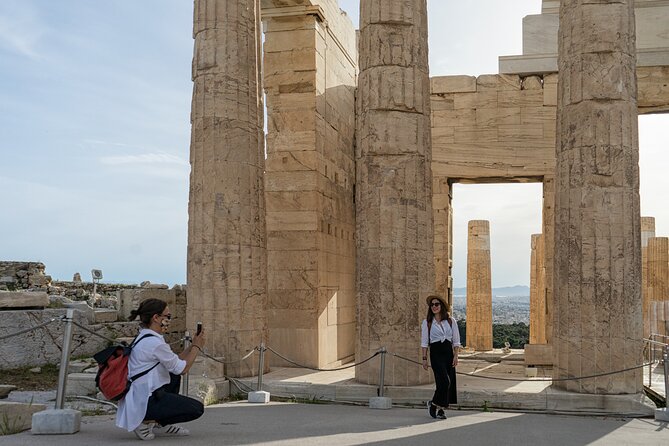
- Temple of Athena Nike and the Propylaea
- Erechtheion and its famous Caryatids
- The Parthenon and the best Athens views
- The Acropolis Museum in about 90 minutes
- Guides, headsets, and group size
- Is the ticket upgrade worth the extra cost?
- Who should book this Acropolis tour?
- Should you book it?
- FAQ
- Does the tour include Acropolis admission?
- Does the tour include Acropolis Museum admission?
- How long does the experience last?
- What language is the tour offered in?
- Where does the tour begin?
- Where does the tour end?
- Can I bring a stroller?
- What should I wear and bring?
Key details before you book
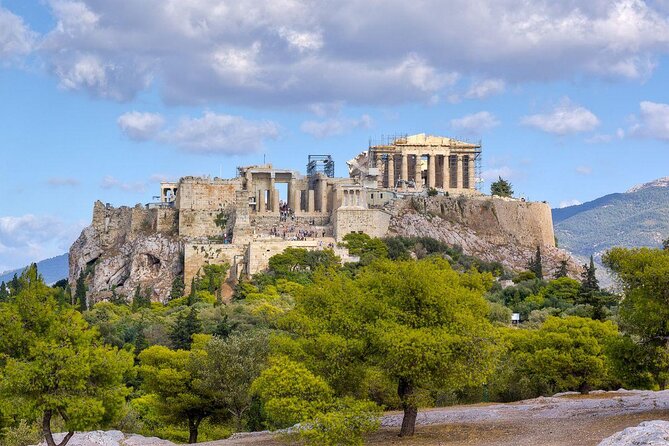
- Two major Athens sights in one outing: You visit the Acropolis first, then spend about 90 minutes with the highlights of the Acropolis Museum.
- The ticket choice matters: The base price excludes the €30 Acropolis ticket and €20 museum ticket. Select the option with admission if you want the operator to arrange entry and provide skip-the-ticket-line service.
- Early morning is the smart choice: An 8:00 or similar early departure can help you avoid the worst heat and some of the crowds.
- The walking is real: Expect uneven marble, uphill sections, stairs, and limited shade. Good shoes, water, a hat, and sunscreen are essential.
- Guides make the difference: Dimitris, Rina, Yolanda, Maria, Margarita, Nicoletta, Niobe, Aigli, Vassiliki, Philippia, and Panyioti have all been praised for clear explanations, patience, and strong storytelling.
- The group can reach 24 people: Headsets help, but this is still a shared tour rather than a private visit.
Why pairing the Acropolis with its museum works
The Acropolis can look like a grand pile of columns if you walk through it without context. The museum helps fill in the blanks. It houses sculptures, architectural pieces, and other objects found on and around the hill, including original elements whose places at the site are now occupied by replicas.
That connection is the heart of this experience. On the hill, you see the buildings in their setting, with Athens spread below. In the museum, you see the surviving details close up, protected from weather and damage. A guide can point out how a sculpture or frieze relates to the temple you have just seen.
The museum portion lasts about 90 minutes, but it is a highlights visit, not a full tour of every gallery. That is a sensible choice for a half-day outing. You get the main story without trying to absorb an entire museum in one sitting, and you can remain inside afterward if you want more time.
I especially like this pairing for a first visit to Athens. The Acropolis gives you the drama, while the museum supplies the fine detail. Alone, each sight is excellent. Together, they make far more sense.
More Museums in Athens
- Athens: Acropolis, Parthenon & Acropolis Museum Guided Tour
★ 4.8 · 9,316 reviews - Athens: Mythology of Delphi, Museum and Arachova Guided Tour
★ 4.6 · 4,008 reviews - Athens: Acropolis, Parthenon & Acropolis Museum Guided Tour
★ 4.8 · 3,579 reviews
Starting near Dionysiou Areopagitou Street
The meeting point is at Dionysiou Areopagitou 3, a short walk from the Acropolis. This location is near public transportation and close to the Acropolis Museum, but allow extra time to find the exact gathering spot.
The meeting area can be easy to miss. The tour staff use a small sign near a coffee shop patio, so do not assume the meeting point will be marked with a large street display. Check your voucher carefully and arrive early.
The tour cannot wait for late arrivals because Acropolis entry times are tightly controlled. This is not the place to cut things close after breakfast or a taxi ride. Plan to be there before the stated meeting time, especially if you are coming from Piraeus or another part of Athens.
If you arrive by cruise ship, the X80 bus runs between Piraeus and central Athens. The bus stop for the Acropolis is across from the meeting area, and the return stop is on the opposite side of the road. The stated fare in the supplied information is €4.10 for a return ticket, with service running about every 40 minutes.
Climbing through the ancient entrance
After meeting your guide, you go through security and enter the archaeological site. All visitors pass airport-style security, and in the busiest season the wait can reach 30 minutes or more. The ticket upgrade can reduce time spent in the ticket queue, but it does not always remove the security wait or crowding inside the site.
The group uses a side entrance, which can make the route more direct. If you book without tickets, follow the voucher instructions carefully. You may need to arrange the admission times yourself, and the tour provider cannot simply admit you without a valid ticket.
The approach is uphill and uneven. I would not describe it as extreme for a person in fair shape, but you need to watch your footing rather than stare only at the ruins. The marble is polished in places, and rain makes it more slippery. A grippy pair of walking shoes is much better than smooth-soled sandals.
The route includes breaks, and guides such as Niobe have been praised for splitting the climb into manageable sections. That can help older visitors and anyone who worries about the ascent. Still, this tour is not suitable for someone who needs a wheelchair, and it is not a good match for serious mobility limitations.
Theater of Dionysus and the birth of drama
The first major stop is the Theater of Dionysus, with about 15 minutes set aside for explanation. Its stone seating is cut into the lower slope of the Acropolis, giving you a clear sense of how ancient audiences watched performances below.
This is a valuable early stop because it shows that the Acropolis was not just a collection of temples. Religion, civic life, theater, politics, and public gatherings all met on this hill. A good guide can explain how Greek drama developed here and why the setting mattered.
You will not spend a long time seated in the theater, and the tour is not designed for a slow, silent examination of every row. The value comes from the setting and the story, not from extensive free time.
More ways to see the Acropolis:
- Athens: Acropolis & up to 5 Archaeological Sites Combo Pass
★ 4.4 · 12,619 reviews - Athens: Acropolis Ticket with Optional Audio or Live Guide
★ 4.2 · 11,055 reviews - Athens: Acropolis and Parthenon Guided Walking Tour
★ 4.6 · 5,882 reviews - Athens: Acropolis Ticket with Audio Guide
★ 4.0 · 3,575 reviews
The Odeon of Herodes Atticus
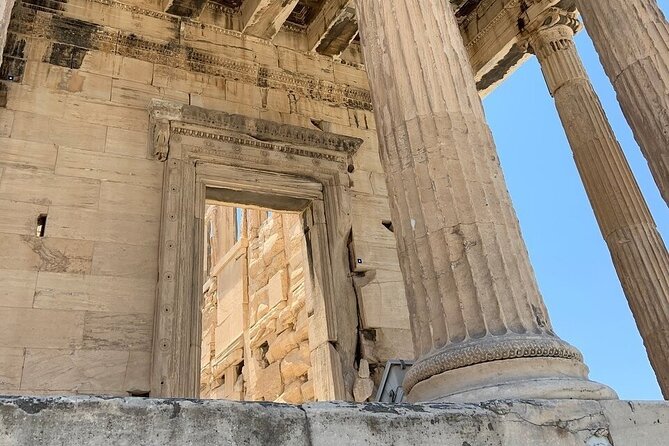
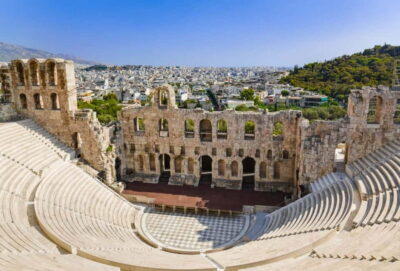
The route continues toward the Odeon of Herodes Atticus, a Roman-era performance space that remains in use for concerts and performances. The planned stop is about 10 minutes.
The theater is often viewed from above or from an angle, so do not expect to wander freely through every part of it during this visit. Even so, it is a striking reminder that the Acropolis area continued to serve public life long after the classical period.
This is also one of the places where a guide can save you from rushing past a major feature. In a busy setting, it is easy to see the theater, take a quick photograph, and move on without understanding what makes it different from the Theater of Dionysus.
Temple of Athena Nike and the Propylaea
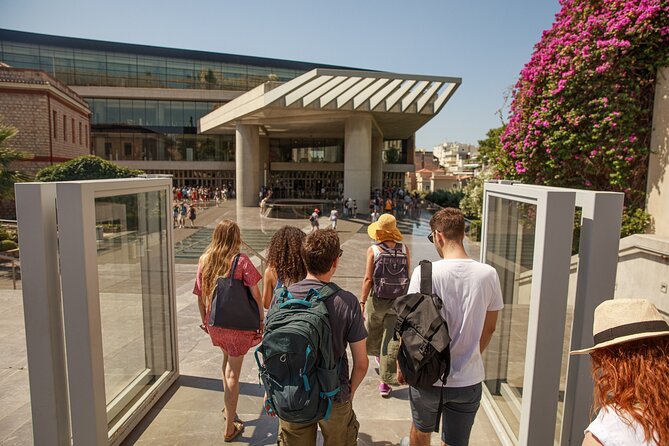
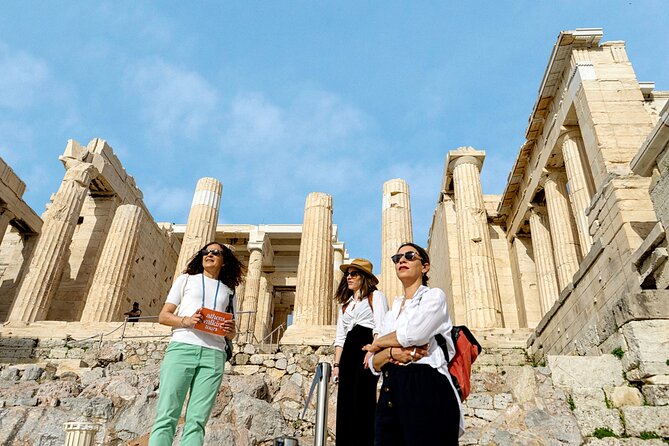
Near the entrance stands the Propylaea, the monumental gateway to the summit. It was designed to make arrival feel important, and the scale still works. The route also includes the Temple of Athena Nike, a small Ionic temple dedicated to Athena as the goddess of victory.
The temple is known for its fine friezes and high position above Athens. The setting gives you strong views, but there can be heavy foot traffic around the approach. Your guide will likely stop at a practical viewing point, explain the temple, and keep the group moving with the entry schedule in mind.
These stops are brief, usually around 10 minutes for the Temple of Athena Nike. That is enough for an explanation and photographs, but not enough for extended independent study. If you enjoy architectural details, take mental notes and return later if your admission allows it.
Erechtheion and its famous Caryatids
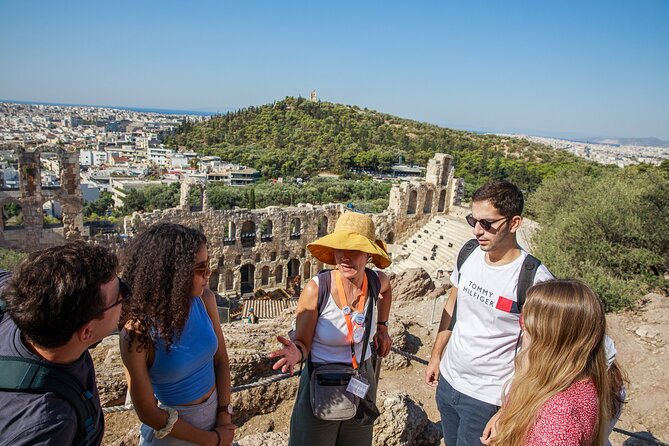
The Erechtheion receives about 15 minutes, and it is one of the most memorable buildings on the hill. Its unusual design reflects the different sacred traditions connected with the site, including myths tied to Athena and the early kings of Athens.
The Caryatids, the sculpted maidens used as architectural supports, are the obvious visual stars. You can see their arrangement at the temple, then view related originals and museum material later. The guide’s explanation helps you understand why the building looks less orderly than the Parthenon. It was not meant to be a simple rectangular temple with one clean visual idea.
Crowding can make this stop frustrating. People pause for photographs near the same narrow areas, and the stones underfoot are uneven. Listen through the headset, stay aware of the people ahead of you, and do not stop in the middle of a stairway.
The Parthenon and the best Athens views
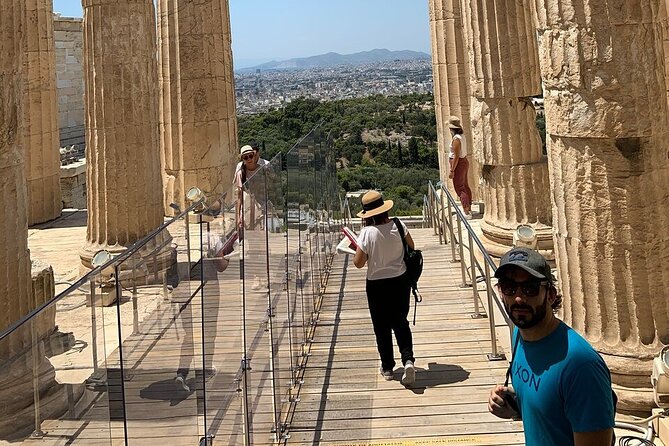
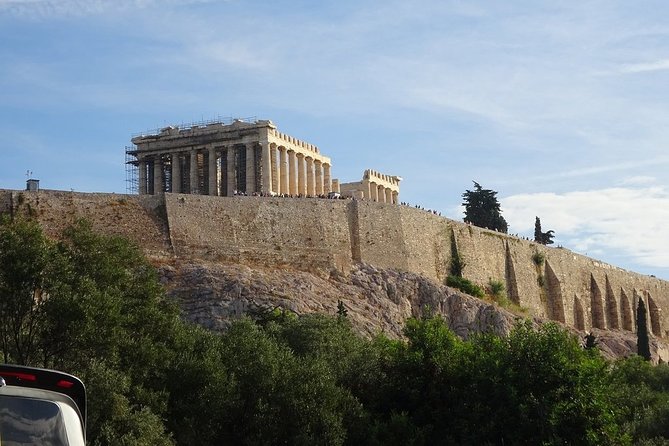
The Parthenon is the tour’s main event. About 20 minutes are reserved for focused discussion, along with time to admire the views across Athens.
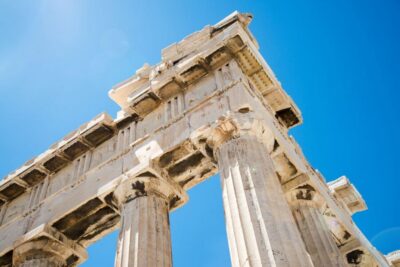
The temple is more powerful when you know what you are seeing. Your guide can explain the Doric columns, the sculptural program, the building’s role in ancient Athens, and the changes it suffered over time. The structure you see today is incomplete, weathered, and under ongoing preservation work, but it still has extraordinary presence.
Expect a crowd around the best viewpoints. The route does provide time for photographs, but do not count on a long quiet pause beside the temple. One useful feature of the headsets is that you can move a little away from the guide to take pictures and still hear the explanation.
The summit is exposed. In summer, temperatures can reach the high 90s or even 100s Fahrenheit, and the stone reflects the heat. Carry water before entering, since there is no convenient refreshment stop during the main walk through the site. A hat, sunscreen, and a refillable or insulated bottle can make a big difference.
The Acropolis Museum in about 90 minutes
After descending from the hill, the group goes to the Acropolis Museum at Dionysiou Areopagitou 15. This part of the tour is not an afterthought. It gives you a chance to see the artistic details that are hard to appreciate from below or that cannot remain outdoors.
The guide focuses on key objects and explains how they relate to the buildings you have just visited. You may see sculpture, architectural fragments, and sections of the Parthenon frieze in a way that makes their original purpose clearer.
The museum is large enough to occupy much of a day, so a guided highlights route is useful if your time in Athens is limited. You will not cover everything, but you should leave with a better grasp of how the Acropolis developed across different periods.
Some guides make the museum especially memorable. Margarita has been praised for bringing the frieze to life, while Maria, Nicoletta, and Vassiliki have received strong marks for clear explanations and sensible pacing. Panyioti has been described as attentive to individual needs, including helping with a museum bag issue.
At the end, you can leave with the guide or stay inside and continue alone. That flexibility is important. The guided portion gives you a framework, then you can spend extra time with the objects that catch your eye.
Guides, headsets, and group size
The guide is the most important variable on this tour. The strongest guides use mythology, local stories, and clear historical explanation without burying you in dates. Dimitris has been praised for engaging mythological stories, Rina for patience with an older visitor recovering from knee replacement, and Aigli for handling heat and crowds with calm skill.
There is one fair caution: guiding styles differ. Some guides may spend more time on anecdotes than you prefer, while others may provide dense detail on a fixed schedule. If you want lots of free time for photographs, tell your guide early and use the headset to move slightly ahead or behind without losing the commentary.
The group can include up to 24 people. That is not a small private walk, but the audio equipment helps. The supplied system uses an earpiece, and you may be able to use your own headphones if they have the old-style plug.
Is the ticket upgrade worth the extra cost?
The listed starting rate is $56.84 per person, but admission is separate unless you choose the ticket option. The stated prices are €30 for the Acropolis and €20 for the museum, for €50 total. Once those fees are added, the ticket-included version can look much more expensive than the headline price.
I still think the upgrade is worth serious consideration. It saves you the task of arranging timed admission, gives you the skip-the-ticket-line service, and can be especially useful during a hot morning or busy high season. It does not guarantee an empty entrance, since security checks and site capacity still affect your wait.
The value depends on what you want. If you are comfortable arranging tickets yourself and prefer maximum independence, the lower-priced option may work. If you want one coordinated visit with a guide and fewer ticket-line worries, paying for admission in advance is the simpler choice.
Who should book this Acropolis tour?
I would choose this tour for a first visit, a short stay in Athens, or anyone who wants the major facts explained rather than reading signs on the run. It also suits families with older children who can manage a steep, exposed walk and people who value a good guide more than a completely flexible schedule.
An early departure is best for summer. It can be cooler, and it may help you avoid some of the heaviest crowds. The site still may feel packed, but starting at 8:00 or a similar time is much better than tackling the hill in the hottest part of the day.
I would think twice if you dislike group pacing, want long stretches of quiet exploration, or have serious mobility limits. Strollers are not allowed on the Acropolis, and there is no cloakroom at the side entrance, so a baby carrier is the practical choice for small children. Backpacks are also not allowed, so pack lightly and check current instructions before arriving.
Cancellation is free up to 24 hours before the start time. Changes made inside that window are not accepted, and poor weather or failure to meet the minimum group size can lead to a new date or a full refund.
Should you book it?
Book it if you want context, structure, and the museum in one morning. The strongest reasons are the excellent guide feedback, the useful headsets, the link between the ruins and the museum objects, and the option to prepay admission.
Choose the ticket-included early option if you are visiting in summer, arriving from a cruise ship, or simply do not want to manage timed tickets. Wear shoes with grip, bring water and sun protection, and arrive early enough to find the meeting point without stress.
This is not the cheapest way to see the Acropolis, and it is not a leisurely private visit. But for most first-time visitors, the guide’s stories and explanations add enough value to justify the cost, especially when the tour turns a famous monument into a place you can actually understand.
FAQ
Does the tour include Acropolis admission?
Only if you select the option with tickets. The standard option excludes the €30 Acropolis entry fee.
Does the tour include Acropolis Museum admission?
Only the ticket-included option covers the museum. The stated museum admission is €20 per person.
How long does the experience last?
The stated duration is about 3 hours and 30 minutes, though some sessions may take closer to four hours or slightly longer.
What language is the tour offered in?
The tour is offered in English.
Where does the tour begin?
It begins at Dionysiou Areopagitou 3 in Athens, a short walk from the Acropolis.
Where does the tour end?
It ends at the Acropolis Museum at Dionysiou Areopagitou 15. You may also remain inside the museum after the guided portion.
Can I bring a stroller?
Baby strollers are not allowed on the Acropolis or archaeological site. A baby pouch is recommended, and there is no cloakroom at the side entrance.
What should I wear and bring?
Wear comfortable shoes with good grip and bring a hat, sunscreen, and water. Backpacks are not allowed, and the site can be hot, exposed, uneven, and slippery.
Just added around Athens
- Athens Hotels to Athens Airport Private Departure Transfer★ 5.0 · 40 reviews
- Private One-way Transfer between Athens International Airport and Athens Hotels★ 4.5 · 40 reviews
- Athens: Acropolis Museum Ticket with Self-Guided Audio tour App★ 3.5 · 40 reviews
- From Athens: Meteora Train Trip with Overnight Stay★ 4.8 · 40 reviews
- Athens Photography Tour★ 5.0 · 40 reviews
- Athens: Acropolis Visit and City Night Tour★ 4.7 · 40 reviews
- Delphi Full Day Private Trip From Athens With Lunch Overlooking the Sea★ 5.0 · 40 reviews
- Acropolis & Plaka Neighbourhood Private Tour with Licensed Expert★ 5.0 · 40 reviews
Acropolis & Parthenon Tours, compared.
Acropolis & up to 5 Archaeological Sites Combo Pass
Read our review →
Acropolis, Parthenon & Acropolis Museum Guided Tour
Read our review →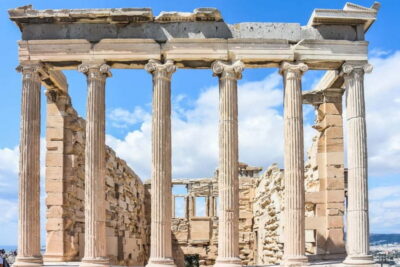
Acropolis, Parthenon & Acropolis Museum Guided Tour
Read our review →

Acropolis: Acropolis and Parthenon Guided Walking Tour
Read our review →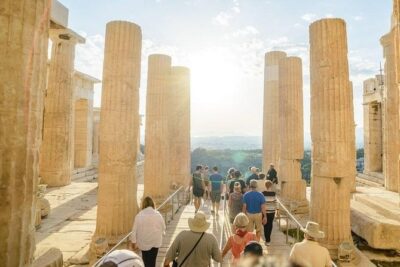
Acropolis monuments & Parthenon Walking Tour with Optional Acropolis Museum
Read our review →Browse the lists this tour appears in