
Reviewed · ACROPOLIS & PARTHENON TOURS
Acropolis Of Athens & Acropolis Museum Skip The Line Private Guided Tour
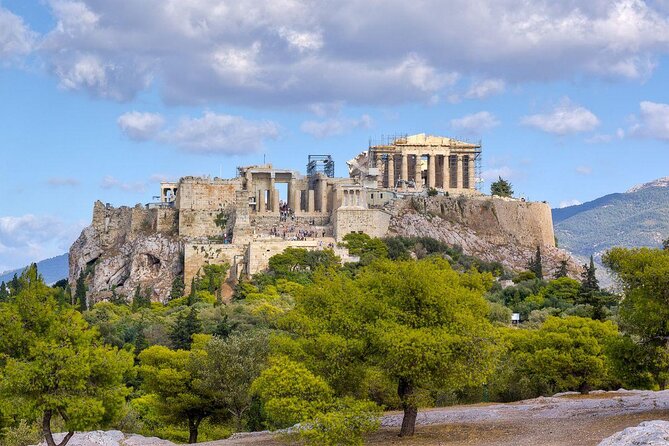
The Acropolis rewards a good guide. This four-hour private tour pairs skip-the-line entry with a licensed local guide who explains the monuments through history, mythology, and stories rather than leaving you to decode a pile of marble. I especially like the private format, which lets the guide adjust the pace for children, teenagers, or older adults, and the smart pairing of the hilltop ruins with the Acropolis Museum. The main drawback is physical: the Acropolis means uphill walking, uneven surfaces, heat, and plenty of standing.
The tour begins at 9:00 am near Dionysos Zonar’s at Rovertou Galli 43 and returns to the same meeting point. At $366.44 per person, it is a serious splurge, especially for a small group, but the price buys personal attention, admission tickets, line-saving access, and nearly four hours with a guide. Guides praised by name include Anda, Eva, Efi, Effie, Nicoletta, Irena, Theodora, and Maria, though a particular guide cannot be guaranteed.
In This Review
- Key points to know before booking
- Why the private format works at the Acropolis
- Starting at the Acropolis, not the museum
- The Parthenon and the main monuments
- What the walking is really like
- Why the Acropolis Museum belongs on the same tour
- Guides who shape the experience
- Is $366.44 per person good value?
- Best timing, group types, and practical advice
- Should you book this Acropolis tour?
- FAQ
- How long does the tour last?
- What time does the tour start?
- Where does the tour meet?
- Where does the tour end?
- Is admission included?
- Is this a private tour?
- Is the tour offered in English?
- How physically demanding is the experience?
- What happens if bad weather cancels the tour?
Key points to know before booking
- Two major sights in one morning: You visit the Acropolis for about two hours, then spend about two hours at the Acropolis Museum.
- Private attention changes the experience: Your guide can answer questions, slow down for children, stop for photographs, and shape explanations around your interests.
- Skip-the-line access matters most at peak times: The Acropolis can become crowded and uncomfortable, so avoiding a long wait can protect valuable sightseeing time.
- The museum completes the hilltop visit: Original surviving sculptures and architectural pieces make more sense after you have seen the buildings they came from.
- Plan for a physical morning: Expect a climb, uneven ground, hot sun, and a lot of walking. Bring water and wear sensible shoes.
- The guides earn the strongest praise: Anda is repeatedly singled out for her passion, patience, family skills, and detailed explanations, while Eva, Efi, Effie, Irena, Theodora, Nicoletta, and Maria also receive warm praise.
Why the private format works at the Acropolis
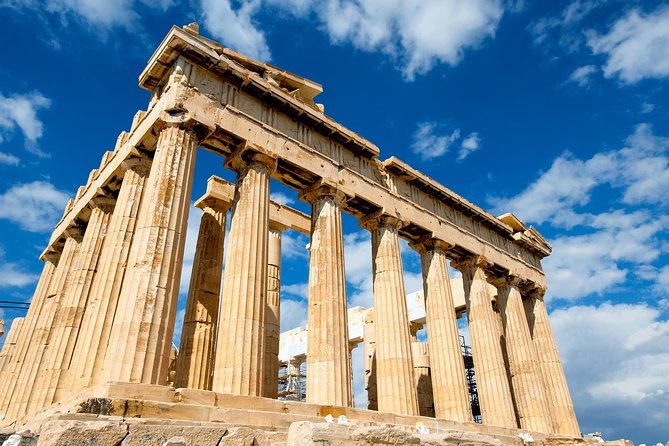
The Acropolis is famous enough that you can recognize the Parthenon in a photograph, yet the site can feel confusing once you arrive. You see columns, broken walls, foundations, and several monuments sharing the same rocky plateau. Without context, it is easy to admire the view and miss what each building meant.
A private guide gives the site a clear order. You can ask why the Parthenon was built, how Athena shaped the identity of Athens, and which pieces are original. Several guides use pictures to show how the Acropolis changed over time, which helps you picture a monument that now survives mostly as fragments.
The private setup also helps with family groups. Anda is repeatedly praised for keeping children, teenagers, and college-age visitors engaged without flooding them with facts. She apparently used questions, adjusted the pace, and gave groups room to look around. That balance matters here. A two-hour explanation can become tiring if every stone receives a lecture.
You also avoid the awkwardness of a large group. Your guide can pause for photos, explain a point again, or spend a little longer at the monument that interests you most. That personal rhythm is a large part of the value.
More Museums in Athens
- Athens: Acropolis, Parthenon & Acropolis Museum Guided Tour
★ 4.8 · 9,316 reviews - Athens: Mythology of Delphi, Museum and Arachova Guided Tour
★ 4.6 · 4,008 reviews - Athens: Acropolis, Parthenon & Acropolis Museum Guided Tour
★ 4.8 · 3,579 reviews
Starting at the Acropolis, not the museum
The 9:00 am start is one of this tour’s practical strengths. Athens can be hot, and the Acropolis offers little shade. Beginning in the morning gives you a better chance of walking the hill before the day becomes more punishing.
Meet at Dionysos Zonar’s, Rovertou Galli 43. The location is near public transportation, but you should still allow time to find it. The meeting point is not described as hotel pickup, and the experience ends back there, so plan your route to and from the area.
Your Acropolis visit lasts about two hours. That sounds generous, but the site covers enough ground to keep the pace moving. You will walk uphill and across ancient surfaces, with pauses for the main monuments and views over Athens.
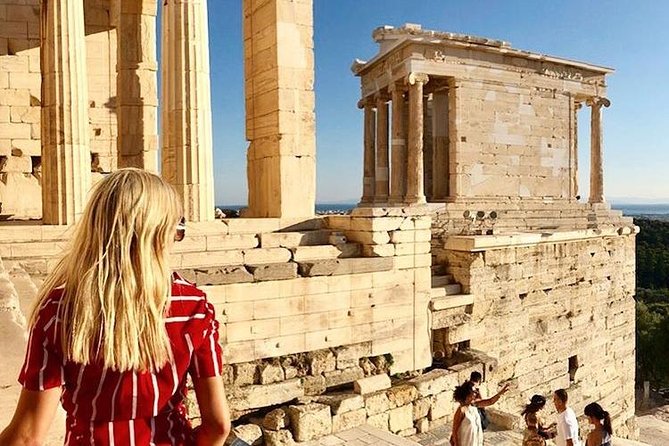
The guide’s role is especially useful at the entrance and on the approach. The Propylaea, the monumental gateway to the Acropolis, is not just a grand entrance. It sets up the scale and purpose of the sanctuary, and a guide can help you understand how visitors in antiquity would have approached the sacred hill.
Skip-the-line access is not magic protection from crowds inside the site. It does not make the Acropolis empty. It does, however, reduce time spent waiting outside and may help your group enter with more energy for the monuments themselves.
The Parthenon and the main monuments

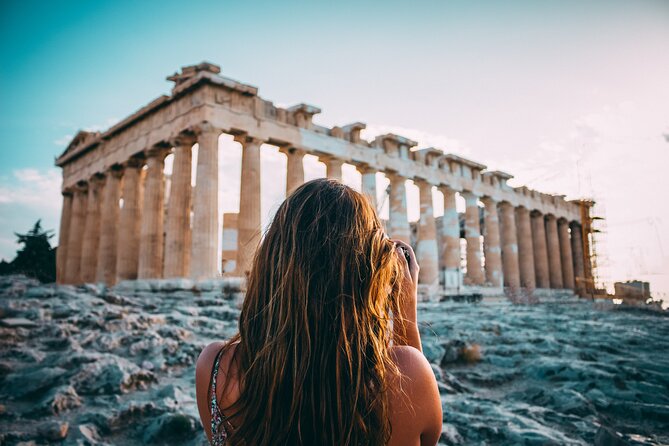
The Parthenon is the emotional center of the visit. Even in its damaged state, its proportions and setting are astonishing. Your guide can explain its connection to Athena and point out the difference between seeing a famous symbol and understanding the building as part of a working religious complex.
One useful detail from the guided experience is the attention to original material. At the Acropolis and later in the museum, guides such as Anda have explained which pieces remain in Athens and which Parthenon sculptures are held in Britain. That distinction gives the visit a modern dimension without taking attention away from the ancient work.
The Erechtheion offers a different mood. Its unusual design and sacred associations make it less straightforward than the Parthenon. A guide can sort out the competing myths and explain why this building did not follow the same simple plan.
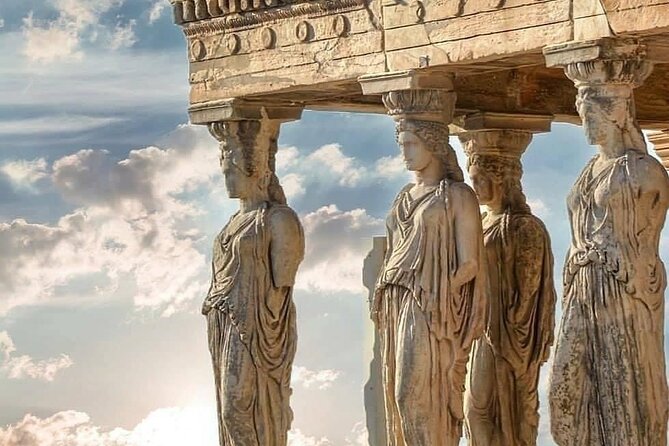
The Porch of the Caryatids is one of the Acropolis’ most memorable sights. A guide helps you understand that the figures you see are connected to a larger story of preservation and replacement, rather than treating them as decorative statues with no background.
The Temple of Athena Nike is smaller, but its position near the entrance makes it an important part of the approach. Your guide can connect the monument to Athena’s role as a protector and bring the smaller temple into the larger story of the hill.
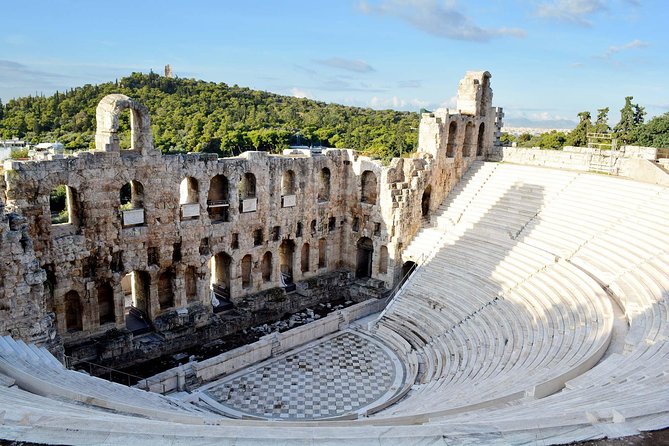
Below the main plateau, the Theater of Dionysus introduces another side of ancient Athens. This is where the city’s theatrical tradition takes physical form. It helps widen your idea of the Acropolis beyond temples and marble. The sanctuary was tied to festivals, drama, civic life, and public identity.
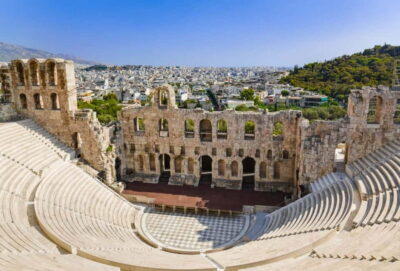
The Odeon of Herodes Atticus adds another layer. Its setting below the Acropolis and its connection with performance show how the slopes were used as well as the summit. The guide can help you understand why the surrounding spaces matter, even when the Parthenon gets most of the attention.
What the walking is really like
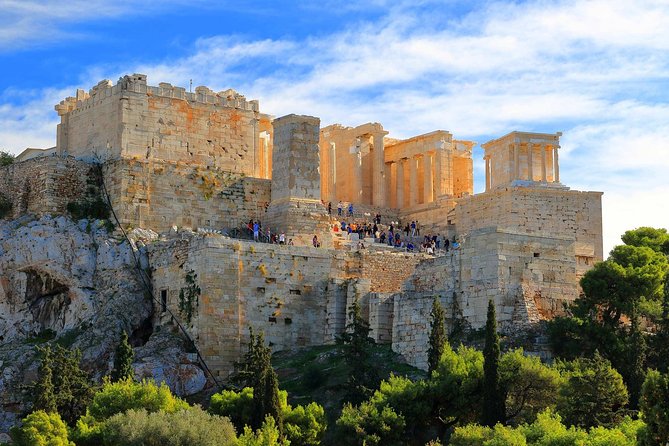
You should have a moderate level of physical fitness for this outing. The tour includes a climb to the Acropolis, extended walking, uneven ground, and time on your feet at both the archaeological site and museum.
The guides appear to handle different paces well. Anda is praised for walking at a group’s speed, stopping often, and explaining things along the way. That is reassuring for families and mixed-age groups, but a private tour cannot remove the physical demands of the hill.
Bring plenty of water. One account specifically warns that there is a lot of walking and recommends carrying extra water. Morning helps with heat, but it does not make the site cool. Comfortable shoes are a sensible choice, and you should expect limited shade.
Photography is another quiet advantage of a private guide. Several guides offer to take pictures and know useful viewpoints. That can save you from relying on hurried selfies, though the main reason to book remains the explanation and personal attention.
More ways to see the Acropolis:
- Athens: Acropolis & up to 5 Archaeological Sites Combo Pass
★ 4.4 · 12,619 reviews - Athens: Acropolis Ticket with Optional Audio or Live Guide
★ 4.2 · 11,055 reviews - Athens: Acropolis and Parthenon Guided Walking Tour
★ 4.6 · 5,882 reviews - Athens: Acropolis Ticket with Audio Guide
★ 4.0 · 3,575 reviews
Why the Acropolis Museum belongs on the same tour
The Acropolis Museum is not a spare add-on after the real attraction. It gives you the close-up details that the hilltop cannot provide.
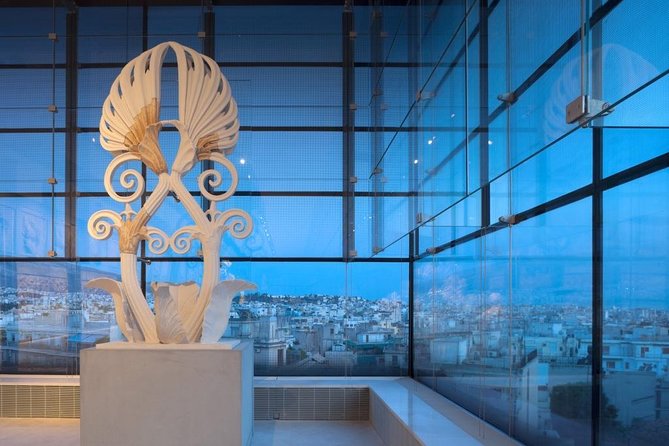
The museum displays surviving masterpieces from the Acropolis temples in a building designed by Bernard Tschumi with Greek architect Michalis Photiadis. Natural light helps you see the sculpture and architectural fragments clearly, while glass floors and walkways reveal excavations beneath the building.
That design creates a helpful contrast. On the Acropolis, you experience scale, setting, sky, and distance. In the museum, you can examine carved details at close range and consider how the original buildings were decorated. The two stops work best in that order: first see the monuments in place, then study the surviving pieces indoors.
The museum also gives you an air-conditioned break after the exposed hilltop, a point one guide specifically recommends. The café and nearby facilities can make the second half of the morning more comfortable, though the tour still requires attention and walking.
A private guide can prevent the museum from becoming a parade of display cases. Efi is praised for getting a group through without waiting and for giving the right amount of information. Anda is praised for identifying original pieces and explaining the Parthenon sculptures in the museum. That kind of orientation is useful because the collection can otherwise feel large and visually dense.
The museum visit lasts about two hours. For some people, that will feel just right. For others, especially younger children, four hours of concentrated ancient history may be a lot. The private format helps, since you can ask questions and keep the visit connected to what you saw outside.
Guides who shape the experience
The strongest praise is directed at the guides, not simply at the monuments. Anda receives the most repeated approval. She is described as passionate, articulate in English, patient, good with children and older teenagers, helpful with photographs, and generous with local suggestions for food and nearby sights.
Eva is also praised for making the Acropolis manageable in heavy crowds and for explaining the site’s extensive history. Efi and Effie receive approval for clear English, patience, warmth, and a good balance between information and free time.
Irena is described as highly credentialed and especially skilled at bringing the subject to life. Theodora is praised for her care, clear speaking, and visible pride in Greek culture. Nicoletta is singled out for her work with children, while Maria is noted for careful navigation and a well-planned route.
These details suggest a consistent strength in the company’s guide team. Still, you should not book on the assumption that you will automatically receive a particular person. You can make a request, but the supplied details do not promise a specific guide.
The guides also seem willing to help beyond formal commentary. One guide walked a short distance outside the site to help a group find a reputable ride back to its hotel. That is a small act, but it shows the practical care that private guiding can provide.
Is $366.44 per person good value?
At $366.44 per person, this is not a budget Acropolis visit. You are paying a premium for a private experience, included admission, line-saving access, and a dedicated licensed guide for approximately four hours.
The value improves when you divide the cost among a larger private group, since the guide’s attention benefits everyone. It also improves if you have only one morning in Athens, are visiting during a crowded period, or want a strong historical framework instead of reading signs on your own.
The price is harder to justify for a solo visitor or for someone who prefers wandering independently. You can see the monuments without a private guide, and the museum can be visited on its own. The question is not simply how much the ticket costs. It is how much you value time, clarity, flexibility, and personal questions.
For families, the case is stronger. Keeping children engaged at the Acropolis is not easy, and the guides have a good record with young visitors. For older adults, a private pace may also be worth paying for, although the physical requirements remain.
The tour is recommended by 96 percent of customers and has a 4.8 rating from 102 reviews. Those figures point to a dependable experience, but they do not erase the price or the effort involved.
Best timing, group types, and practical advice
I would choose this tour for a first visit to Athens, especially if the Acropolis is a priority and you want to understand what you are seeing. It suits families, multigenerational groups, history fans, and anyone who prefers questions and conversation over a recorded guide.
The 9:00 am start is useful for heat and crowds. Wear shoes with a secure grip, carry water, and avoid scheduling another demanding activity immediately afterward. The tour normally lasts about four hours, but the walking can leave you ready for lunch and a slower afternoon.
English is the offered language. The guide team receives high praise for clear communication, but if every member of your group has special language needs, confirm that before booking.
The activity requires good weather. If poor weather forces cancellation, you are offered another date or a full refund. Standard cancellation is free up to 24 hours before the start time. Cancellations or changes made less than 24 hours before the start are not refunded or accepted.
Should you book this Acropolis tour?
Book it if you want the Acropolis and museum to feel connected, not like two unrelated stops. The private guide, morning schedule, and line-saving access are especially useful for families and first-time visitors who want the stories, myths, architecture, and modern preservation issues explained in plain language.
Skip it if you are watching every euro, dislike guided sightseeing, or cannot manage a steep and lengthy walk. At this price, the tour needs to be more than a fast escort through famous ruins. Based on the repeated praise for Anda, Eva, Efi, Effie, Irena, Theodora, Nicoletta, and Maria, the guide quality is the main reason it earns consideration.
For many visitors, the Acropolis is a once-in-a-lifetime stop. A private guide will not make the ancient stones less crowded or the hill less steep, but it can turn a beautiful view into a meaningful visit.
FAQ
How long does the tour last?
The experience lasts approximately four hours, with about two hours at the Acropolis and about two hours at the Acropolis Museum.
What time does the tour start?
The scheduled start time is 9:00 am.
Where does the tour meet?
The meeting point is Dionysos Zonar’s, Rovertou Galli 43, Athina 117 42, Greece.
Where does the tour end?
The activity ends back at the meeting point.
Is admission included?
Yes. Admission tickets for both the Acropolis and the Acropolis Museum are included.
Is this a private tour?
Yes. Only your group participates in the activity.
Is the tour offered in English?
Yes. English is the listed tour language.
How physically demanding is the experience?
A moderate level of physical fitness is recommended. The tour includes substantial walking at the Acropolis, including uphill sections and uneven surfaces.
What happens if bad weather cancels the tour?
If the experience is canceled because of poor weather, you will be offered a different date or a full refund.
More Skip the Line in Athens
- Essential Athens Highlights Plus Cape Sounion Skip-The-Line Tour
★ 5.0 · 705 reviews - Athens Skip the Line: Open Air Ancient Greek Theatre Performance
★ 4.5 · 520 reviews - Half Day Athens Private Tailor-Made City Tour (Skip the line of Acropolis)
★ 4.5 · 198 reviews - Acropolis Skip The Line Private Tour with Licensed Expert Guide
★ 5.0 · 88 reviews
Just added around Athens
- Athens Hotels to Athens Airport Private Departure Transfer★ 5.0 · 40 reviews
- Private One-way Transfer between Athens International Airport and Athens Hotels★ 4.5 · 40 reviews
- Athens: Acropolis Museum Ticket with Self-Guided Audio tour App★ 3.5 · 40 reviews
- From Athens: Meteora Train Trip with Overnight Stay★ 4.8 · 40 reviews
- Athens Photography Tour★ 5.0 · 40 reviews
- Athens: Acropolis Visit and City Night Tour★ 4.7 · 40 reviews
- Delphi Full Day Private Trip From Athens With Lunch Overlooking the Sea★ 5.0 · 40 reviews
- Acropolis & Plaka Neighbourhood Private Tour with Licensed Expert★ 5.0 · 40 reviews
Acropolis & Parthenon Tours, compared.
Acropolis & up to 5 Archaeological Sites Combo Pass
Read our review →

Acropolis, Parthenon & Acropolis Museum Guided Tour
Read our review →
Acropolis, Parthenon & Acropolis Museum Guided Tour
Read our review →

Acropolis: Acropolis and Parthenon Guided Walking Tour
Read our review →
Acropolis monuments & Parthenon Walking Tour with Optional Acropolis Museum
Read our review →Browse the lists this tour appears in