
Reviewed · ACROPOLIS & PARTHENON TOURS
Acropolis monuments, Parthenon and Plaka, Monastiraki walking tour
Athens reveals itself one layer at a time. This 3.5-hour walk links the Acropolis and Parthenon with the Roman Agora, Plaka, and Monastiraki, so you get both major monuments and the city streets around them. I like the skip-the-line Acropolis admission, which matters in Athens, and I like the stop for semolina custard pastry and spanakopita. The main caution is physical: the Acropolis includes uphill walking, uneven ground, and potentially slippery sections.
The tour costs $105.26 per person and runs in English with a maximum of 20 people. That is a fair price if you want a guide to explain the ancient sites and help you find your way through central Athens, but less appealing if you prefer to explore at your own pace or plan to visit the Acropolis independently. Guides such as Demos, Anna, Artemis, Sofia, Eleni, and Sapfo have been praised for clear explanations, humor, good pacing, and practical local suggestions.
In This Review
- Key points at a glance
- Why this Athens walking tour works
- Reaching the Parthenon before the crowds
- The Parthenon and the smaller Temple of Athena Nike
- The Roman Agora and the Tower of the Winds
- Plaka, where Athens feels like a neighborhood
- Monastiraki and the pastry stop
- What the $105.26 price really buys
- Who should book it, and who should skip it
- Should you book the Acropolis and Plaka walk?
- FAQ
- How long is the Acropolis, Plaka, and Monastiraki tour?
- What time does the tour start?
- Where does the tour begin?
- Where does the tour end?
- Is Acropolis admission included?
- Is the Tower of the Winds admission included?
- What food is included?
Key points at a glance
- Skip-the-line Acropolis entry: Save valuable morning time at Athens’ most crowded ancient site.
- Parthenon and Temple of Athena Nike: See the headline monument, then pause for a closer look at a smaller but important temple.
- Tower of the Winds: Spot one of the ancient world’s most unusual timekeeping and weather instruments.
- Plaka and Anafiotika streets: Trade the formal ruins for cobbled lanes, old churches, tavernas, and small shops.
- Greek pastry stop: Try semolina custard cream and spanakopita during the walk.
- One-way city route: Begin near the Acropolis and finish in Monastiraki, a useful location for lunch or further sightseeing.
Why this Athens walking tour works
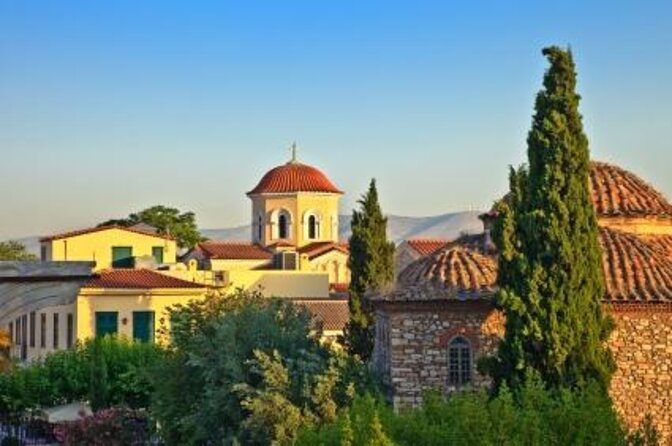
Athens is easy to underestimate. The Parthenon gets all the attention, but the experience of the city comes from seeing how ancient ruins, Ottoman-era traces, neoclassical buildings, churches, shops, and cafés sit beside one another. This tour gives you that connection in a single morning.
You meet at Porinou 5 in central Athens at 9:00 a.m. From there, the route climbs toward the Acropolis before descending through the old neighborhoods. The order is sensible. You tackle the biggest sight while the day is still relatively young, then spend the rest of the tour walking at a gentler pace through Plaka and Monastiraki.
The licensed guide is the heart of the experience. A good guide turns broken columns into a story rather than a pile of stones. Demos was praised for linking ancient facts to modern life and using humor without making the tour feel like a lecture. Anna Kotorou was singled out for her upbeat manner, patience, and careful explanations. Guides named Eleni, Artemis, Sofia, Lisa, Annie, and Sapfo also received strong praise for their clarity and friendly style.
A headset system may be used, which is useful in a group of up to 20 people. You can look around, take photographs, and still hear the guide instead of crowding close around one person. That small detail makes a real difference at the Acropolis.
More Walking Tours in Athens
- Athens: Acropolis and Parthenon Guided Walking Tour
★ 4.6 · 5,882 reviews - Greek Food Walking Tour in Athens
★ 5.0 · 4,740 reviews - Acropolis: Acropolis and Parthenon Guided Walking Tour
★ 4.7 · 3,442 reviews
Reaching the Parthenon before the crowds
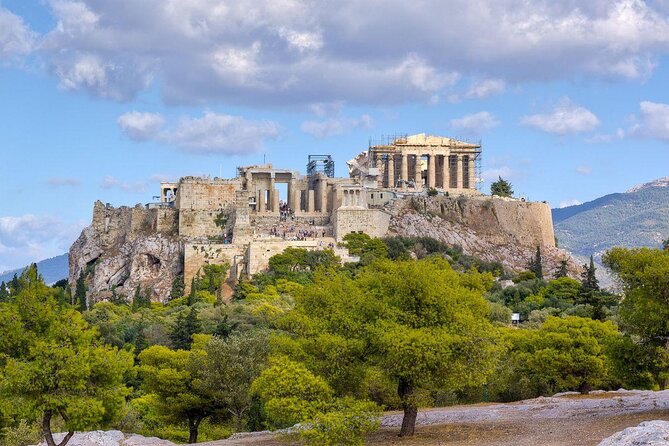
The Acropolis is the tour’s main event. This rocky citadel rises above Athens and contains several ancient structures, with the Parthenon as its famous centerpiece. Skip-the-line admission is included, helping you avoid spending part of the morning in an entrance queue.
Do not read skip-the-line as private access or an empty monument. The Acropolis is one of Europe’s busiest historic sites, and you should still expect other groups and plenty of people taking photographs. The benefit is simpler: less waiting and more time inside.
The climb requires moderate fitness. You will walk uphill and across ancient stone surfaces, so comfortable shoes are not a minor suggestion. Bring water, especially in warm weather, and be ready for limited shade. One useful point from the tour experience is that an elevator may be available for people with mobility issues, but permission must be arranged when booking. Last-minute access is not guaranteed.
At the top, the guide helps you understand the Acropolis as more than a single temple. You will see how the buildings were arranged and why the site mattered to ancient Athens. The views over the modern city also help you grasp the scale of Athens, with the ancient citadel still dominating the center.
The Parthenon and the smaller Temple of Athena Nike
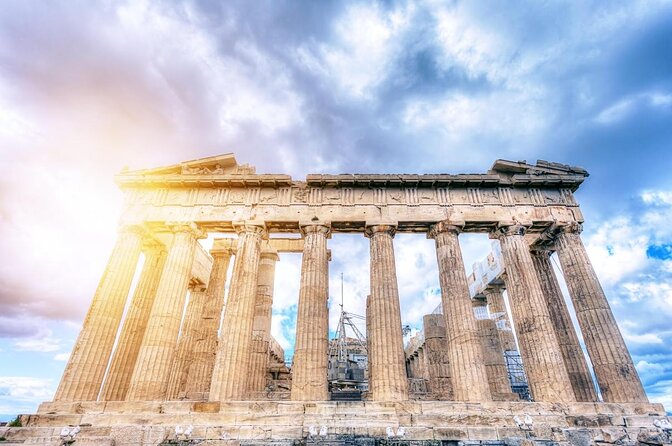
You get about 30 minutes focused on the Parthenon. Construction began in 447 BC, when Athens was at the height of its power through the Delian League. The temple was dedicated to Athena, the city’s patron goddess, and its design became one of the most influential models in Western architecture.
A guide adds value here because the Parthenon is not self-explanatory. You are looking at a building shaped by religion, politics, wealth, and civic pride. The surviving structure is also undergoing conservation, so some parts may look more complete than others. A clear explanation helps you separate the original ancient work from modern preservation.
The Temple of Athena Nike receives a shorter stop of about five minutes. It is easy to miss beside the Parthenon, but it deserves attention. Built around 420 BC, it is the earliest fully Ionic temple on the Acropolis and was dedicated to Athena Nike, the goddess associated with victory.
This is a good example of the tour’s advantage over simply walking around with a guidebook. You are prompted to notice the smaller monument instead of rushing straight to the Parthenon. Five minutes is not a long time, but it is enough for an introduction and a few photographs.
The Roman Agora and the Tower of the Winds
After the Acropolis, the tour moves into central Athens and toward the Roman Agora. The change of mood is welcome. You leave the broad, monumental setting of the hill and enter streets where ancient remains appear between modern shops and cafés.
The Roman Agora was built roughly 100 meters east of the original Agora between 27 BC and 17 BC, using money associated with Augustus and a promise connected to Julius Caesar. It was an open commercial and civic space surrounded by a colonnade, with shops, entrances, a fountain, and public toilets.
You do not need to memorize every date to enjoy the stop. The useful point is that Athens continued to grow and change long after the classical age. Roman Athens was not simply a faded version of Periclean Athens. It had its own public spaces, officials, markets, and building projects.
The Tower of the Winds is the most distinctive sight here. This octagonal marble structure functioned as a timepiece and combined sundials, a water clock, and a wind vane. It is often described as the world’s first meteorological station.
The tour allows around 10 minutes for the tower, but admission is not included. You see it as part of the walk rather than entering with a paid ticket. That is worth knowing if you want a detailed interior visit. The monument was cleaned and conserved between 2014 and 2016, and its compact shape makes it an excellent photographic stop.
More ways to see the Acropolis:
- Athens: Acropolis & up to 5 Archaeological Sites Combo Pass
★ 4.4 · 12,619 reviews - Athens: Acropolis Ticket with Optional Audio or Live Guide
★ 4.2 · 11,055 reviews - Athens: Acropolis, Parthenon & Acropolis Museum Guided Tour
★ 4.8 · 9,316 reviews - Athens: Acropolis, Parthenon & Acropolis Museum Guided Tour
★ 4.8 · 3,579 reviews
Plaka, where Athens feels like a neighborhood
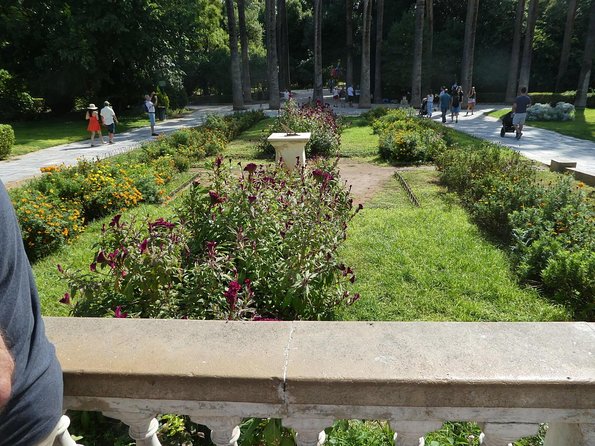
Plaka spreads across the lower slopes of the Acropolis. Its narrow cobbled streets, neoclassical townhouses, Byzantine churches, independent shops, tavernas, and sidewalk cafés give the area a village feel within the capital.
The walk through Plaka lasts about 30 minutes. It is not a formal monument visit. Instead, you get a sense of how Athens works at street level. You may pass jewelry shops, local ceramics, clothing stores, and restaurants aimed partly at visitors. Some lanes feel atmospheric, while others can be more commercial.
That mix is part of the point. Plaka is not an untouched old quarter. It is a living district shaped by tourism, dining, shopping, and residents. A good guide makes the area more useful by pointing out places to return to later. Anna was praised for offering suggestions for shops and restaurants, while other guides helped explain how the neighborhoods around the Acropolis developed.
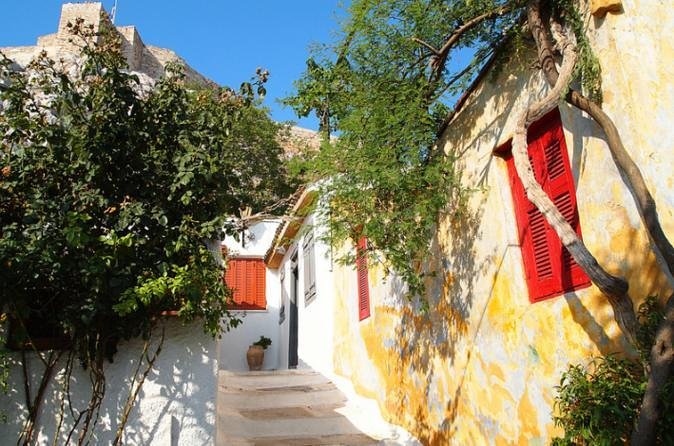
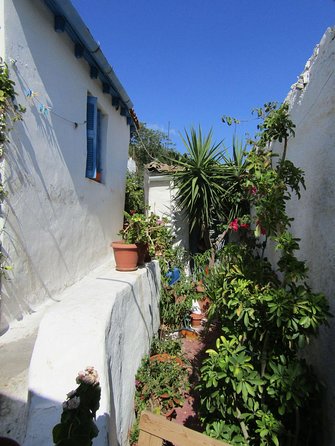
Anafiotika, a small area within Plaka, adds a different note. Its whitewashed homes give it a Greek-island appearance, despite being in the center of Athens. The tour summary does not promise a long stop there, so consider it an atmospheric detail rather than a separate attraction with guaranteed exploration.
The Plaka section is also where pacing matters. After the Acropolis, your legs may appreciate the slower walk and frequent pauses. One guide was praised for stopping at points of interest and offering rest breaks. That is especially helpful in warm weather.
Monastiraki and the pastry stop
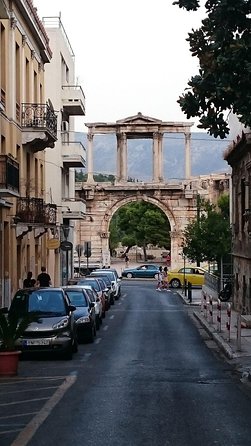
The tour ends in Monastiraki, one of central Athens’ best bases for continuing on foot. You finish near the square after passing through Plaka and the Roman Agora, so you can easily continue with lunch, shopping, or more sightseeing.
Monastiraki has a strong street-level energy, with food, small shops, historic buildings, and easy access to other central areas. The stop itself is listed as about 10 minutes, but the practical value is that you finish in a part of Athens where you can keep exploring without returning to the starting point.
Along the way, the tour includes Greek pastry snacks. The two named tastings are sweet semolina custard cream and traditional spanakopita. The food is not intended as a full meal, but it adds a welcome local touch and gives the walk a pause beyond monuments and dates.
If you are hungry, plan lunch afterward. The pastry stop is a sample, not a replacement for breakfast or lunch. The finish in Monastiraki makes that easy, since you are already in a central area with many places to eat.
What the $105.26 price really buys
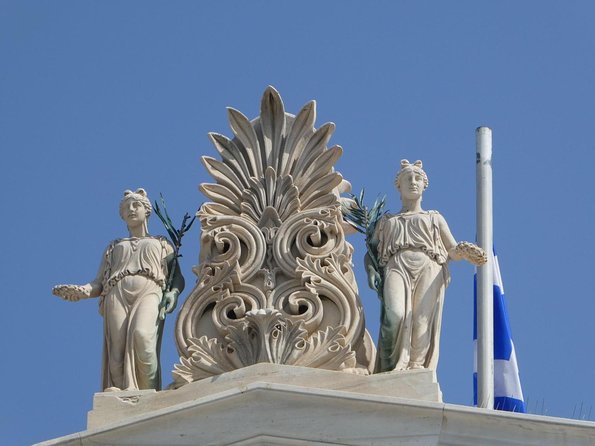
At $105.26 per person, this is not a budget walk. The value comes from the combination of the Acropolis ticket, a licensed English-speaking guide, the headset system, and the route through several major areas.
The Acropolis admission is the most important part of the price. Buying a ticket separately and exploring without a guide may cost less, depending on your plans, but you would need to manage the entrance, route, historical context, and neighborhood orientation yourself. The tour saves time and reduces that planning burden.
The walk also avoids the trap of treating Athens as only an ancient site. You get the Parthenon, Temple of Athena Nike, Roman Agora, Tower of the Winds, Plaka, and Monastiraki in one continuous route. For a first morning in Athens, that is a useful introduction.
The value drops if you already know the city, dislike group tours, or want long periods at each monument. The maximum group size is 20, and even with headphones, a group walk cannot match the freedom of a private visit. The schedule is designed to give you a broad picture, not an exhaustive study of each ruin.
The strong rating of 4.9 from 182 reviews and the 98 percent recommendation figure support the idea that the guiding is the product’s strongest feature. Names change by departure, so you cannot select Demos, Anna, Artemis, or another praised guide from the information provided. Still, the repeated praise for humor, patience, pacing, and clear explanations is encouraging.
Who should book it, and who should skip it
I would choose this tour early in an Athens stay. It gives you a map of the city center and helps you decide where to return. You also get practical advice about restaurants and shopping while the locations are still fresh in your mind.
It suits first-time visitors, couples, families with children aged 10 or older, and anyone who wants ancient history explained in plain English. The minimum age is 10, and the tour requires a moderate level of fitness.
It is less suitable for anyone with serious mobility limitations unless elevator access is arranged in advance. The Acropolis climb and uneven surfaces are the key concerns. It is also a poor match if you need a fully accessible route confirmed at the last minute.
Bring comfortable walking shoes, water, sun protection, and a phone or camera. You may present either a paper or electronic voucher, and the experience is offered in English. Hotel pickup and drop-off are not included, so you need to reach the central meeting point yourself.
The tour requires good weather. If poor weather cancels it, you are offered another date or a full refund. Free cancellation is available up to 24 hours before the 9:00 a.m. start, but changes or cancellations inside that window are not accepted.
Should you book the Acropolis and Plaka walk?
Book it if you want the Acropolis explained well, want to avoid the main ticket line, and like the idea of finishing among Athens’ old streets rather than at the same place you began. The blend of major ruins, the Tower of the Winds, Plaka, Monastiraki, and Greek pastries gives you more than a single-site visit.
I would be especially happy with this choice for a first full day in Athens. Just remember that the price pays for structure and interpretation, not solitude. If you bring good shoes, water, and realistic expectations about group size, this is a strong way to connect the ancient Acropolis with the living city below it.
FAQ
How long is the Acropolis, Plaka, and Monastiraki tour?
The tour lasts approximately 3 hours and 30 minutes.
What time does the tour start?
The tour starts at 9:00 a.m.
Where does the tour begin?
The meeting point is Porinou 5, Athens 117 42, Greece.
Where does the tour end?
The tour ends in Monastiraki, Athens.
Is Acropolis admission included?
Yes. Skip-the-line Acropolis entrance tickets are included, including access for the Parthenon and Temple of Athena Nike.
Is the Tower of the Winds admission included?
No. The tour visits the Tower of the Winds, but admission to that site is not included.
What food is included?
The tour includes Greek pastry snacks, including sweet semolina custard cream and traditional spanakopita.
Just added around Athens
- Athens Hotels to Athens Airport Private Departure Transfer★ 5.0 · 40 reviews
- Private One-way Transfer between Athens International Airport and Athens Hotels★ 4.5 · 40 reviews
- Athens: Acropolis Museum Ticket with Self-Guided Audio tour App★ 3.5 · 40 reviews
- From Athens: Meteora Train Trip with Overnight Stay★ 4.8 · 40 reviews
- Athens Photography Tour★ 5.0 · 40 reviews
- Athens: Acropolis Visit and City Night Tour★ 4.7 · 40 reviews
- Delphi Full Day Private Trip From Athens With Lunch Overlooking the Sea★ 5.0 · 40 reviews
- Acropolis & Plaka Neighbourhood Private Tour with Licensed Expert★ 5.0 · 40 reviews
Acropolis & Parthenon Tours, compared.
Acropolis & up to 5 Archaeological Sites Combo Pass
Read our review →

Acropolis, Parthenon & Acropolis Museum Guided Tour
Read our review →
Acropolis, Parthenon & Acropolis Museum Guided Tour
Read our review →

Acropolis: Acropolis and Parthenon Guided Walking Tour
Read our review →
Acropolis monuments & Parthenon Walking Tour with Optional Acropolis Museum
Read our review →Browse the lists this tour appears in