
Reviewed · OLIVE OIL TASTINGS
Traditional Olive Grove and Dragon Fruit Farm Tour
Small farms can teach big lessons. This 90-minute Crete farm tour brings you among olive trees, explains how the island’s famous oil is made, and introduces dragon fruit, a newer crop for Greece. I like the personal family-farm setting, and I like that the visit includes an olive oil tasting, local bread, and a choice of coffee or dragon fruit tea. The main point to consider is that the farm portion may take closer to one hour, so this suits you best if you want a relaxed local stop rather than a full-day agricultural outing.
Alex Alexakis leads the visit in English or Greek, and his warm, humorous approach helps keep the information easy to follow. You can handle some of the traditional tools, ask questions about cultivation and harvesting, and taste products at the end. The $9 price is excellent value, though purchases of olive oil, olives, tea, or fruit cost extra.
In This Review
- Key points to know before you go
- FAQ
- Where is the Traditional Olive Grove and Dragon Fruit Farm Tour?
- Is parking available?
- How long does the tour last?
- What languages does the guide speak?
- Is the tour private?
- What will I learn about?
- Is olive oil tasting included?
- Are coffee and tea included?
- Can I pick dragon fruit?
- Can I buy products at the farm?
- Can I cancel my booking?
Key points to know before you go
- A five-generation working farm: Olive cultivation here has continued for more than five decades, with about 2,500 olive trees on the property.
- Two crops in one visit: You learn about the long-established olive groves and the newer dragon fruit cultivation developing in Crete.
- A generous tasting: Local bread, olive oil, olives, and farm products may be served with yogurt, tomatoes, honey, marmalade, or dragon fruit.
- Alex is the main guide: He speaks English and Greek, explains the work clearly, and welcomes questions about the farm and its products.
- Simple, flexible timing: The guided portion is about one hour, followed by roughly 30 minutes for coffee, tea, tasting, and shopping.
The meeting point is marked by the farm’s sign on the right side of the road as you drive uphill. Parking is free and next to the sign, which makes arrival simple if you are coming by car. The farm does not present itself as a polished theme park. That is part of its appeal. You are arriving at a working family business where olive trees and fruit crops are the main attraction.
A shaded waiting area gives you somewhere to pause before the tour begins. Alex has been praised for greeting visitors on time and offering a friendly welcome, often beginning with dragon fruit tea or coffee. That first drink sets the tone: this is an informal visit built around conversation, food, and farm life.
The experience is offered as a private group, so your visit may feel more personal than a large coach excursion. Exact group sizes are not provided, but the format allows you to ask questions and take your time around the trees. If you are traveling with children or older family members, the relaxed structure is useful. The activity is not suitable for babies under one year or people over 95 years, according to the stated conditions.
The first part focuses on the olive grove and the work behind Cretan olive oil. You walk among the trees while Alex explains cultivation, seasonal care, harvesting, and extraction. The value here is not just seeing an olive tree. It is understanding the long chain of work between planting a tree and pouring oil onto your plate.
The farm has cultivated olives for more than 50 years and has been in the family for five generations. That gives the discussion a personal angle. You are not hearing only a general description of Mediterranean farming. You are hearing how one family has maintained its land and made olive production part of daily life.
You can see and touch the tools used on the farm. Depending on timing and availability, you may also try some of the work yourself. The chance to handle the equipment gives the tour a practical edge, especially for children and anyone who prefers doing something to simply listening.
Harvesting is part of the subject, but you should not expect a full olive-picking session every day of the year. The farm’s main promise is instruction, with hands-on elements when appropriate. The tour can therefore be worthwhile outside harvest season, though the trees and tools will provide more of the action than the actual picking.
A useful detail is the scale. The property has about 2,500 olive trees, so this is more than a small garden with a few decorative plants. You get a real sense of olive farming as ongoing work. At the same time, the walking route is short enough to fit comfortably into a 90-minute visit.
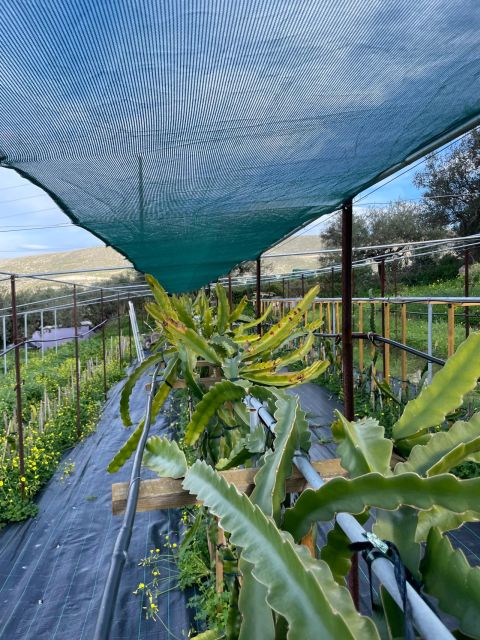
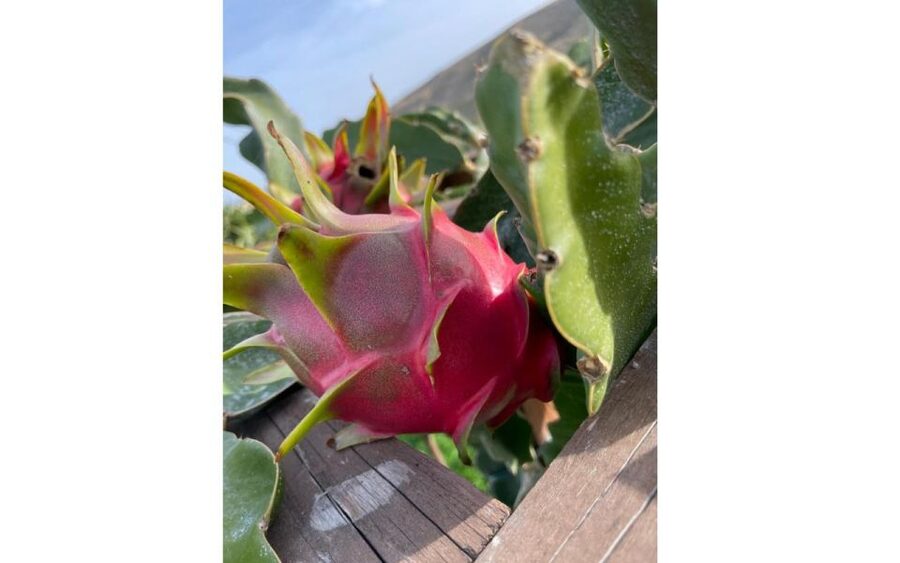
The second agricultural story is dragon fruit, an unusual addition to a traditional Cretan farm. Alex explains how this oriental fruit has found suitable conditions on the island and why it is becoming a more important crop there.
This part gives the tour a nice contrast. Olive trees represent an old and deeply established part of Crete’s food culture. Dragon fruit represents experimentation and change. You see how a farm can protect its traditions while trying a crop that would have seemed foreign to many local growers not long ago.
You can walk among the dragon fruit plantings, learn how the crop is grown, and harvest your own fruit if it is available. That last point matters. Picking is dependent on the season and supply, so you should treat it as a possible extra rather than a guarantee.
The tasting makes the dragon fruit section more useful. Instead of seeing an unfamiliar plant and moving on, you have a chance to sample the fruit and try dragon fruit tea. The tea may be served with local Cretan herbs, and the exact drink can depend on your preference.
If you know little about dragon fruit, this is probably the most distinctive part of the visit. Olive oil tours are common in Crete, but the combination of an old olive grove and an emerging fruit crop gives this farm a broader story.
After the walk, you sit for a tasting on the patio. The basic inclusion is simple and very Cretan: local bread dipped into the farm’s olive oil. This is the moment when the earlier explanation becomes practical. You can taste the oil directly instead of burying it under a complicated dish.
The food spread can be generous. It may include olives, bread, honey, marmalade, tomatoes, yogurt, and dragon fruit, along with the oil. The exact selection is not fixed in the information provided, but several visitors describe a substantial collection of homemade and farm products rather than a token spoonful.
You can choose an espresso, Greek coffee, or dragon fruit and local herb tea. The drink is included in the admission price. The shaded patio and views over the orchard make the break feel unhurried, even though the total visit is fairly short.
I like this part because it encourages you to taste in the local way. Olive oil is not presented as a souvenir bottle with a label and a sales pitch. You try it with bread, compare the flavor with the other foods, and decide for yourself if you want to buy some.
Purchases are optional and not included. Products may include olive oil, specially packed olives, dragon fruit, dragon fruit tea, and fruit you harvest when available. You should not feel obliged to buy anything, but the tasting gives you a better basis for choosing if you want to take a food souvenir home.
The advertised duration is 90 minutes. The planned structure is about one hour of guided touring followed by 30 minutes of break time. In practice, some visits may finish closer to one hour if the group has seen the main plantings and completed the tasting.
That shorter timing is not automatically a problem. For a farm visit, one hour can be just right, particularly in hot weather or when you are fitting this stop between other Cretan sights. You get the main explanations, a walk through both crops, and food without giving up half a day.
If you want more time for photographs, questions, or shopping, tell Alex at the start. The experience is a private group, and the stated farm visit can run from approximately one to two hours, depending on the arrangement. Still, do not book it expecting a long agricultural workshop with extensive harvesting.
The walk is outdoors, so practical clothing helps. Wear shoes rather than going barefoot, which is specifically not allowed. The rules also prohibit alcohol, drugs, littering, and explosive substances. These are basic farm-safety expectations, but it is useful to know them before arrival.
At $9 per person, the tour is one of the easier additions to a Crete itinerary. The admission covers the farm tour, the olive oil tasting with local bread, and one coffee or tea. The food offered during the patio break can make the value even better, especially if you receive a broad tasting of olives, spreads, yogurt, tomatoes, honey, and dragon fruit.
The price works best when you think of this as both a short cultural activity and a snack stop. You are paying for access to a family farm, a guided explanation, and a tasting. You are not paying for transport, a full meal, or a large museum-style attraction.
The only caution is that the final bill can rise if you buy products. That is entirely optional, but olive oil and packed olives are tempting souvenirs, and dragon fruit tea is less common than the usual Cretan food gifts.
Several people have described the experience as strong value for money, and I agree based on what is included. The combination of a personal guide, farm access, two crops, and a generous tasting is hard to fault at this price.
I would recommend this tour to anyone curious about where food comes from. It is especially good for families, since children can see the trees, handle tools, learn about an unfamiliar fruit, and taste several products in one place.
It also suits adults who want a quieter alternative to crowded archaeological sites or busy food attractions. You get local culture without a formal lecture or a large group atmosphere. Alex’s English is described as clear, and his friendly style makes it easy to ask questions.
Food lovers will appreciate the olive oil tasting, while gardeners and small-scale growers may be most interested in cultivation and harvesting. The dragon fruit section adds something for people who have already visited an olive mill or tasted Cretan oil elsewhere.
This is less suitable if you want a dramatic sightseeing stop, extensive ruins, or a serious cooking class. The attraction is the farm itself, the conversation, and the tasting. Its pleasures are modest but genuine.
Try to arrive at the roadside sign rather than driving past in search of a more obvious entrance. Free parking is next to the sign, and additional directions may be provided after booking.
Bring questions. You can ask about olive tree cultivation, harvesting, extraction, the family farm, or dragon fruit in Greece. The visit is strongest when it becomes a conversation rather than a one-way talk.
If dragon fruit picking matters to you, ask about availability before you arrive. Fruit harvesting is offered only when the crop allows it. The same applies to the exact tasting selection.
Plan around the heat if possible. Much of the tour takes place outdoors among the trees, although there is a shaded waiting area and a patio for the refreshment break. Comfortable shoes are essential, and bare feet are not permitted.
The tour has free cancellation up to 24 hours before the start, and you can reserve while paying later. Starting times depend on availability, so check the schedule when choosing your date.
Book this farm tour if you want a short, friendly introduction to Cretan olive oil with an unexpected dragon fruit twist. The five-generation family setting, Alex’s clear explanations, the hands-on tools, and the generous tasting give the visit more substance than its low price suggests.
Skip it if you are looking for a long harvest experience or a full meal. For most people, though, the balance is excellent: about 90 minutes, free parking, a private group format, coffee or tea, bread and olive oil, and a chance to buy local products only if you want them.
At $9, this is an easy recommendation for families, food lovers, and anyone who wants to see a working side of Crete beyond the usual sightseeing route.
FAQ
More Olive Oil Tastings in Crete
- Knossos-Zeus Cave -Old Traditional Villages-Olive Oil Factory
★ 5.0 · 694 reviews - Knossos & Lasithi Plateau: Zeus Cave,Villages, Olive Oil Tour
★ 5.0 · 328 reviews - Heraklion: Knossos, Zeus, Villages & Olive Oil Factory Tour
★ 5.0 · 88 reviews
Where is the Traditional Olive Grove and Dragon Fruit Farm Tour?
The tour takes place at the Traditional Olive Grove and Dragon Fruit Farm in Crete, Greece. The meeting point is marked by the farm sign on the right side of the road as you drive uphill.
Is parking available?
Yes. Free parking is available next to the farm sign.
How long does the tour last?
The stated duration is 90 minutes. The guided walk takes about one hour, followed by roughly 30 minutes for refreshments and tasting. The farm visit may last approximately one to two hours depending on the arrangement.
More Olive Oil Tastings in Heraklion:
- The Governor’s Olive Mill Tour with Olive Oil Tasting
★ 5.0 · 502 reviews - From Chania: Olive Oil, Wine, Cheese & Honey Tasting Tour
★ 4.6 · 490 reviews - Zeus Cave, Lassithi Plateau, Olive Oil Factory, Kritza, Pottery
★ 5.0 · 362 reviews - From Chania: Wine and Olive Oil Tasting Tour with Snacks
★ 4.8 · 354 reviews
What languages does the guide speak?
The live guide speaks English and Greek.
Is the tour private?
Yes. The activity is offered for a private group.
What will I learn about?
You will learn about olive tree cultivation, harvesting, olive oil extraction, and the tools used on the farm. You will also learn about dragon fruit cultivation in Crete.
Is olive oil tasting included?
Yes. Olive oil tasting with local bread is included in the admission price.
Are coffee and tea included?
Yes. You can choose an espresso, Greek coffee, or dragon fruit and local Cretan herb-infused tea, depending on your preference.
Can I pick dragon fruit?
You may harvest your own dragon fruit if fruit is available. Picking is not guaranteed.
Can I buy products at the farm?
Yes. Optional purchases may include olive oil, specially packed olives, harvested dragon fruit, and dragon fruit tea. Products are not included in the admission price.
Can I cancel my booking?
You can cancel up to 24 hours in advance for a full refund. A reserve-now-and-pay-later option is also available.
More Farm Visits around Heraklion
- Crete: Knossos, Lasithi, Lasinthos and Olive Farm Combo Tour
★ 4.5 · 351 reviews - Mykonos: Farm, Ano Mera Village, and Beaches Guided Tour
★ 4.4 · 1,283 reviews - Crete: Road-trip to Lasithi Plateau & Olive Mill Farm
★ 4.4 · 420 reviews - Heraklion: Olive Farm Tour with Tasting of Local Delicacies
★ 4.9 · 411 reviews
Just added around Heraklion
- Hersonissos: Alar Spectacular Dinner Show★ 4.7 · 45 reviews
- Heraklion: Sunrise Balloon Flight & Sunset Catamaran Cruise★ 5.0 · 45 reviews
- Crete: Knossos E-Ticket with Audio Guide & Optional Museum★ 3.8 · 48 reviews
- Knossos Palace guided tour – Heraklion City tour + market★ 3.6 · 51 reviews
- From Heraklion: Elounda, Kolokitha, and Spinalonga Boat Trip★ 3.7 · 56 reviews
- Crete: Olive, Wine, & Raki on a Flavorful Culinary Journey★ 4.7 · 56 reviews
- Crete: Hot-Air Balloon Flight with Breakfast and Wine★ 4.9 · 60 reviews
- Crete: Heraklion Center, Local Market and Creta Aquarium★ 3.9 · 61 reviews
Olive Oil Tastings, compared.
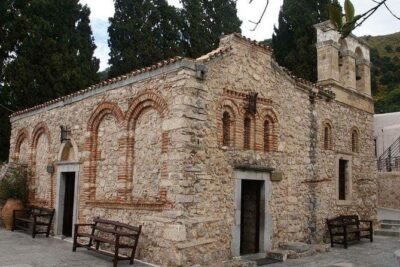
Knossos-Zeus Cave -Old Traditional Villages-Olive Oil Factory
Read our review →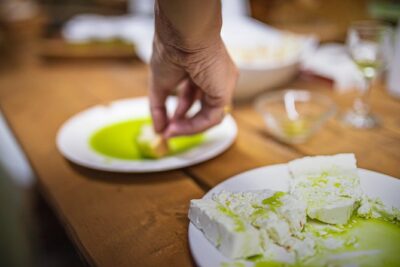
The Governor’s Olive Mill Tour with Olive Oil Tasting
Read our review →

Zeus Cave, Lassithi Plateau, Olive Oil Factory, Kritza, Pottery
Read our review →

Knossos & Lasithi Plateau: Zeus Cave,Villages, Olive Oil Tour
Read our review →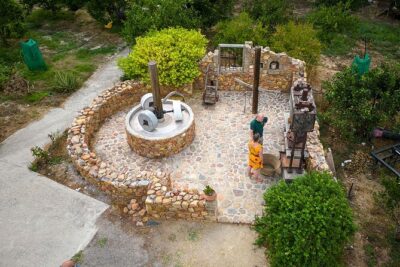
Browse the lists this tour appears in