
Reviewed · HISTORICAL TOURS
Small-group Corfu Town Historical Walking Tour
Corfu’s story is written in stone. This three-hour walk links the Old Fortress, Venetian streets, British landmarks, and St. Spyridon Church with a local guide who can explain not only what you are seeing, but how Corfu still lives with its past. I especially like the small-group format and the chance to hear about modern island life alongside military, religious, and political history. The main drawback is simple: this is a walking tour, so you will be on your feet for most of three hours, often on old town streets.
The price is $95.86 per person, which is not bargain-level for a town walk. Still, admission to the Old Fortress is included, and the strongest guide reports describe an experience that feels closer to a private introduction than a standard group outing. Check the meeting instructions carefully, since the details identify the start near Agoniston Politechniou and also say the guide meets you in front of the Old Fortress at the statue of Schulemburg.
In This Review
- Key points at a glance
- Why three hours works well in Corfu Town
- Starting at the Old Fortress and Schulemburg statue
- Spianada Square and the Liston’s changing role
- The Palace of Saint Michael and Saint George
- St. Spyridon Church and the heart of local faith
- Town Hall Square and the old San Giacomo Theatre
- The Jewish quarter and wartime scars
- The guides are the main reason to book
- Group size, timing, and physical demands
- Is $95.86 good value?
- Who will enjoy this Corfu walking tour?
- Should you book it?
- FAQ
- How long is the Corfu Town historical walking tour?
- What time does the tour start?
- Where does the tour meet?
- Where does the tour finish?
- Is admission to the Old Fortress included?
- How large is the group?
- Can I cancel for a full refund?
Key points at a glance
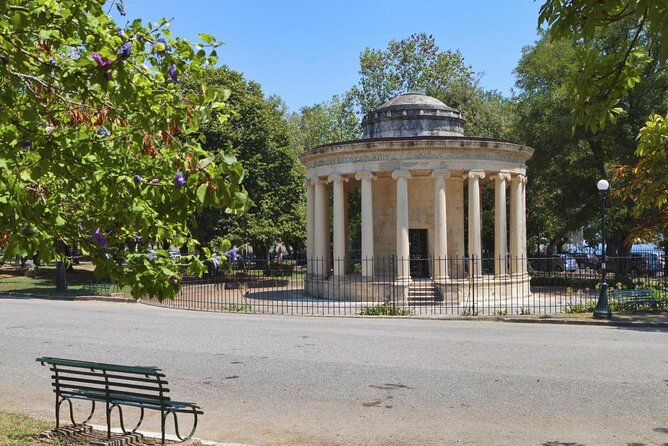
- The Old Fortress provides the tour’s big opening view, with an hour devoted to Corfu’s Venetian defensive stronghold.
- St. Spyridon Church adds a personal local dimension, including the saint’s relics and Corfu’s enduring devotion to its patron.
- Group sizes are kept small, with the tour described as limited to eight, while the practical maximum is listed as 10.
- Guides receive the highest praise, including Ariti, Electra, Alice, Debbie, Nausica, and other local professionals.
- The route covers several ruling periods, from Venetian defenses to French planning and British administration.
- Morning and evening options may suit different schedules, although the supplied booking details list a 10:00 am start.
Why three hours works well in Corfu Town
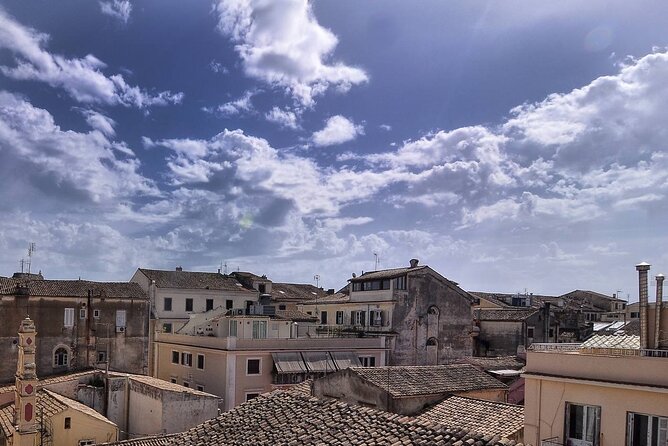
Corfu Town can look easy to cover. The old center is compact, and you can stroll through its lanes without a guide. But the town’s story is layered. Venetian fortifications, French urban planning, British buildings, Greek Orthodox devotion, and the former Jewish quarter all occupy a relatively small area.
That is where a guided walk earns its keep. You get a sequence rather than a collection of pretty corners. The fortress explains why the town was built where it was. Spianada shows how defensive space became a public square. The Palace of Saint Michael and Saint George points to British rule. St. Spyridon brings the focus back to local faith and daily life.
I like that the experience is not limited to monuments. Guides such as Electra and Debbie are praised for explaining present-day Corfu as well as earlier centuries. Nausica is also singled out for local food advice, while Alice has taken visitors to a favorite place for Greek coffee. Those touches matter because they help the walk feel like an introduction to a living town, not a history lecture delivered outdoors.
A three-hour schedule gives enough time to ask questions without turning the outing into an all-day commitment. It also works well near the start of a stay. One particularly useful suggestion from the experience is to take the walk on your first evening or first full morning, then use what you learn to shape the rest of your time in Corfu.
More Walking Tours in Corfu
- Corfu Town: Guided Walking Tour and Local Food Tastings
★ 4.9 · 313 reviews - Taste Corfu: Private Corfu Food Walking Tour
★ 5.0 · 82 reviews - Corfu: Gastronomy Walking Tour
★ 4.9 · 78 reviews
Starting at the Old Fortress and Schulemburg statue
The tour opens at the Old Fortress, where the accredited guide meets the group near the statue of Schulemburg. After an introduction, you enter the fortress together. Admission is included, so you do not need to arrange a separate ticket for this portion.
Allow about an hour here. That is enough time to get more than a quick photo, though it is not an exhaustive archaeological visit. The Old Fortress is the right place to begin because it gives physical weight to Corfu’s military past. The Venetian-era stronghold helped protect the town and shaped its development.
You should expect the guide to provide context before and during the visit rather than simply lead you through gates and viewpoints. The fortress is much easier to understand when you know how defensive needs influenced the town’s position and open spaces.
The practical issue is heat. July can be very hot, and several guide reports emphasize efforts to keep the group in shade when possible. That is reassuring, but shade cannot be guaranteed on an exposed fortress site. Bring water, wear a hat, and choose light clothing in summer. Comfortable shoes are more important than stylish ones.
The first stop also sets the pace for the rest of the tour. If you prefer a slow, unhurried walk, tell your guide early. The guides are repeatedly praised for adjusting pace and checking what the group wants to learn.
Spianada Square and the Liston’s changing role
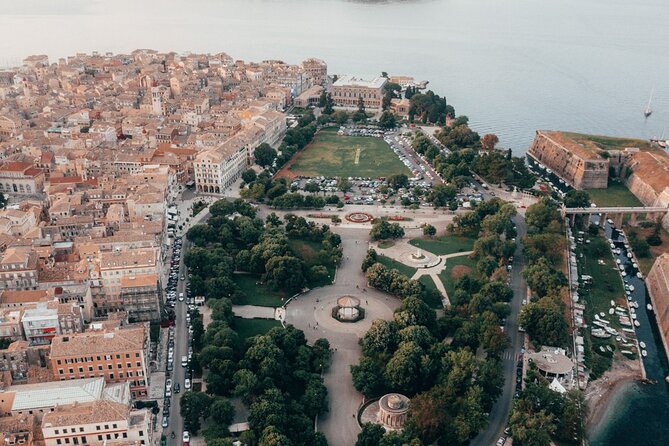
After the fortress, the route moves to Spianada Square for about 20 minutes. This is the central open space of Corfu Town and one of the places where the town’s past is easiest to read.
The name comes from a Venetian word meaning an open flat area. Before the 19th century, this was a large empty zone used for defense. Later, the French turned it into a public square. That change says a lot about Corfu: a space created for military protection became a place for social life, strolling, cafés, and sport.
The Liston lines part of the square and houses cafés and restaurants. It is a good spot to notice how formal European influences shaped the center. Corfu’s connection to France is not just a line in a textbook. It appears in the arrangement and use of this public space.
You may also hear about cricket, which is played on the Esplanade. Corfu is the only place in Greece where the sport is played, a quirky reminder of the British period and one of those details that helps the town stick in your memory.
This stop is outdoors and relatively easy, but it can be busy and sunny. Your guide’s explanation is the main reason to linger. Without context, Spianada may look like a pleasant square. With context, it becomes a record of changing rulers and changing civic life.
The Palace of Saint Michael and Saint George
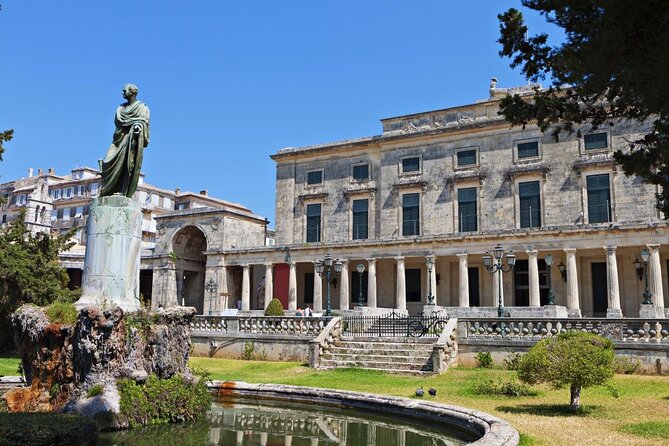
The route continues toward the Palace of Saint Michael and Saint George on the northern side of the historic center. The building was created during British rule, which lasted from 1814 until 1864, when the Ionian Islands joined the rest of Greece.
The palace was built at the request of Sir Thomas Maitland, the British Lord High Commissioner. It served as his residence and housed the administration of the British government. The scale and position of the building reflect the importance of Corfu under British control.
Today, it houses the Corfu Museum of Asian Arts. The collection was founded in 1928 and contains about 15,000 works from the Far East and India. It is described as the only museum of its kind in Greece.
The walking tour includes the palace as part of the town route, but the supplied details do not say that museum admission is included or that you enter the museum. Treat this as an exterior and historical stop unless your guide tells you otherwise. If Asian art interests you, ask about visiting the museum separately.
This is also a good example of why a guide helps. Corfu Town can seem mainly Venetian at first glance, but the palace shows the later British chapter clearly. The tour keeps those periods connected instead of presenting the old town as a single-style attraction.
More things to do in Corfu:
- From Corfu Island: Antipaxos & Paxos Blue Caves Boat Cruise
★ 4.6 · 2,963 reviews - From Corfu: Day Cruise to Paxos, Antipaxos, and Blue Caves
★ 4.6 · 2,851 reviews - Full-Day Boat Tour of Paxos Antipaxos Blue Caves from Corfu
★ 4.5 · 1,567 reviews - Corfu: City Sightseeing Hop-On Hop-Off Bus Tour
★ 4.1 · 937 reviews
St. Spyridon Church and the heart of local faith
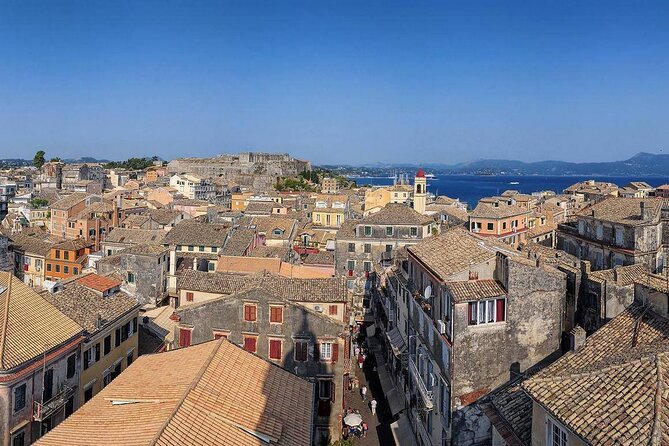
The visit to St. Spyridon Church lasts about 20 minutes. The church is dedicated to Corfu’s patron saint, who is regarded locally as a miracle worker and protector of the island.
The building dates to the 16th century and has a Venetian architectural style. Its bell tower is the highest point in Corfu Town and can be seen from across the old center. That makes it a useful visual marker as you walk, even before you enter.
Inside, a crypt holds the relics of St. Spyridon in a double sarcophagus. This is not simply another historic church stop. The saint remains central to Corfiot religious life, and the guide can explain why local devotion is so strong.
Visitors should remember that this is an active place of worship. Dress and behave respectfully, and expect the visit to depend on church activity at the time. The supplied information does not promise a particular ceremony or length of interior access beyond the planned stop.
I consider this one of the most valuable parts of the walk because it connects architecture with belief. The fortress tells you how Corfu defended itself. St. Spyridon helps explain how people in Corfu understand protection in a more personal and spiritual sense.
Town Hall Square and the old San Giacomo Theatre
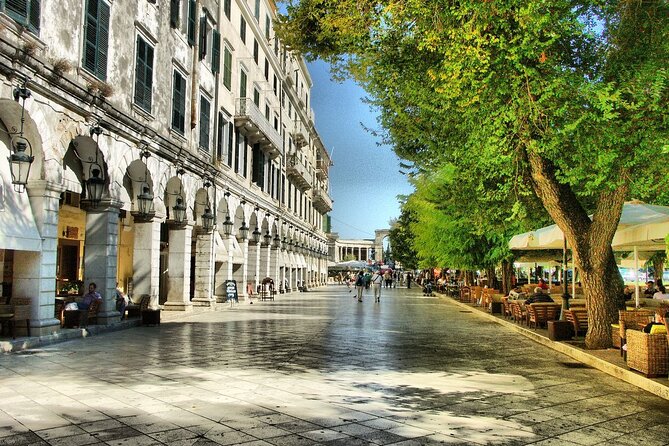
The walk then threads through narrow streets to Town Hall Square. This area was once an exclusive Venetian neighborhood, with an opera house and villas for the upper ranks of society.
The Town Hall building began as a club for noblemen. In 1720, it became the Noble Theatre of Saint Giacomo of Corfu. In 1903, it was converted into the Town Hall.
That sequence is a tidy lesson in how public buildings change with a city. A private social club became a theater, then a civic office. You are not just looking at an attractive façade. You are seeing several versions of Corfu’s urban life in one building.
The stop lasts about 15 minutes, so expect an explanation and exterior viewing rather than a long interior visit. The narrow streets around the square are part of the appeal, but they also mean you should stay close to the guide. It is easy to pause for a photograph and lose sight of the group.
The Jewish quarter and wartime scars
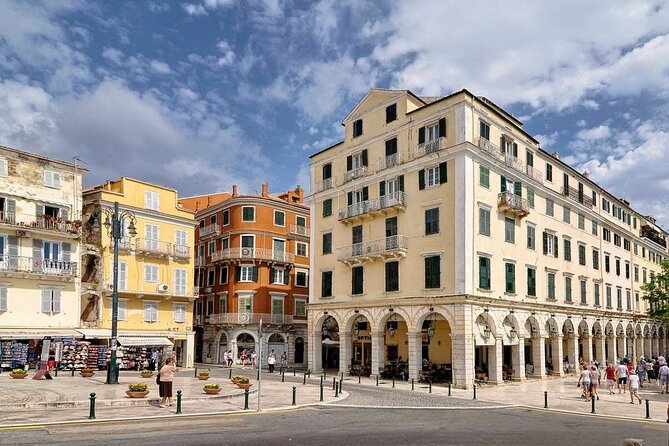
The final part of the route brings you through the Jewish quarter, known in Greek as Evraiki. The old Venetian ghetto occupied the southeast part of the city near the fortifications.
The area once had a close network of narrow lanes and tall, weathered houses. Its resemblance to Venice was part of its character. Bombing during the Second World War damaged the neighborhood and broke up much of its former unity.
This section gives the walk a more serious tone. Corfu Town is not only a place of Venetian arches, cafés, and colorful streets. It also carries the marks of war, displacement, and a Jewish community whose historic quarter changed drastically.
The supplied itinerary does not give a precise duration for this stop, but it is included in the broader three-hour walk. Listen closely here. The streets may appear ordinary, yet the guide’s account provides the context that makes them meaningful.
The guides are the main reason to book
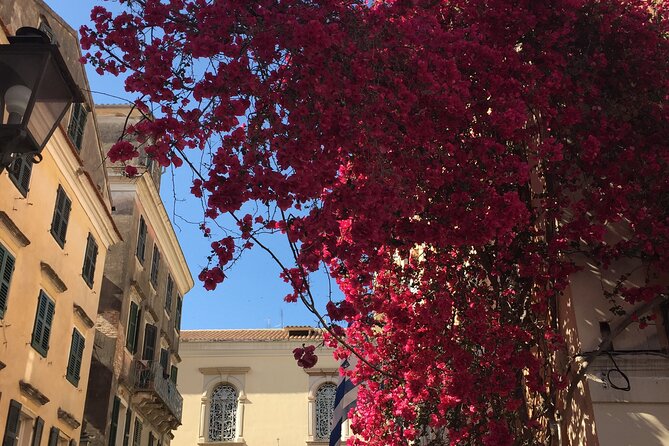
The guide quality is the strongest part of this experience. The tour has received a 4.9 rating from 39 reviews, with 97 percent of customers recommending it, and the praise is unusually consistent.
Ariti is described as warm, informative, and eager to answer questions. Electra receives praise for her personality, local knowledge, and care in hot weather. One evening walk with Electra was especially valued for its relaxed pace and the greetings she received from people around town, which gave the outing a genuine local feel.
Alice, also called Alkistis, is praised for being friendly, lively, and well informed. Debbie is described as someone born in Corfu Town with deep family roots there. Nausica receives strong marks for her humor, language ability, historical detail, and food recommendations.
You should not assume you will receive a particular guide, but these names show the range of personalities working with the company. The shared strengths are clear: strong English, warmth, historical skill, and a willingness to discuss modern Corfu.
The best experience will come if you ask questions. If you want food suggestions, local customs, wartime history, religious traditions, or practical advice for the rest of your stay, say so. Small groups make that exchange easier.
Group size, timing, and physical demands
The experience is promoted as a small-group tour, with the main description limiting the group to eight. The additional details list a maximum of 10. In practice, the cited outings included groups of three, four, and six, and one April departure had only the guide and one family.
That smaller setting is important. You are less likely to be lost at the back of a crowd, and the guide can respond to individual interests. At times, the tour may function almost like a private walk, especially outside the busiest season. Do not book on the assumption that it will always be private, though.
The stated duration is about three hours. The supplied booking information lists a 10:00 am start, while the description also offers morning or evening departure choices. Confirm the exact time when booking, particularly if you are visiting by cruise ship or have a fixed schedule.
The route is manageable for most people who can walk for three hours, but you will be standing and moving throughout. Old town streets and fortress surfaces are not the place for flimsy footwear. One direct warning is worth taking seriously: some teenagers may find a history-focused walk slow and lose interest. Older children and adults who enjoy stories, buildings, and questions will get more from it.
The tour starts and ends at the meeting point. It is near public transportation, and service animals are allowed. Confirmation is provided when you book.
Is $95.86 good value?
At $95.86 per person, this is a premium walking tour. If you only want to wander Corfu Town and take photographs, you can spend less by exploring on your own.
The value improves if you want three things: entry to the Old Fortress, a clear explanation of the town’s different ruling periods, and direct access to a local guide. The tour covers the main historic center without asking you to organize several separate visits. It also gives you a framework for returning to places later, such as the Liston, the Palace of Saint Michael and Saint George, or the Jewish quarter.
The price feels easier to justify in a tiny group. A three-hour private tour would normally cost more, while a large group would offer less personal attention. The April example, with a guide devoted to one family, shows the possible upside, but it should be treated as a seasonal bonus rather than a promise.
If you are on a tight budget, book only if guided history is a priority. If you have limited time in Corfu or want a solid first orientation, the cost is more reasonable. One useful plan is to follow the walk with a visit to Kanoni, a suggestion that turns the tour into the first half of a fuller Corfu day.
Who will enjoy this Corfu walking tour?
I would recommend it most strongly to:
- First-time visitors who want the old town to make sense quickly
- Couples and families who prefer a personal guide to a large group
- History fans interested in Venetian, French, British, Greek, and wartime influences
- Repeat visitors who want local detail beyond the standard sights
- Cruise passengers or short-stay visitors with only a few hours
- People who enjoy asking questions and walking at a moderate pace
I would be more cautious if you dislike long periods on your feet, want a food tour rather than a historical walk, or are traveling with teenagers who have little interest in architecture and history.
Free cancellation is available up to 24 hours before the start time for a full refund. Changes or cancellations inside that window are not accepted for a refund, and the cut-off follows local time.
Should you book it?
Book this tour if you want Corfu Town explained by a local person rather than simply photographed. The route is well chosen, the guide reports are exceptionally strong, and the small group makes it easier to ask questions about both the past and present.
Skip it if you are happy exploring alone, already know the town well, or want a very light stroll with little historical discussion. For most first-time visitors, especially those with just one day in Corfu, the three hours and included fortress admission make this a useful, well-rounded introduction. Confirm the start time and meeting point, bring good shoes, and aim for the cooler morning or evening option when available.
FAQ
How long is the Corfu Town historical walking tour?
The tour lasts approximately three hours.
What time does the tour start?
The supplied details list a 10:00 am start. The experience also describes morning and evening departure choices, so confirm the exact option available when booking.
Where does the tour meet?
The meeting information gives Agoniston Politechniou, Kerkira 491 00, Greece, and the itinerary says the guide meets you in front of the Old Fortress at the statue of Schulemburg. Check your booking confirmation for the precise instructions.
Where does the tour finish?
The activity ends back at the meeting point.
Is admission to the Old Fortress included?
Yes. The Old Fortress visit lasts about one hour, and admission is included.
How large is the group?
The tour is presented as a small-group experience limited to eight people, while the additional information gives a maximum of 10 travelers. Actual groups can be smaller, with examples of three, four, and six people.
Can I cancel for a full refund?
Yes. You can cancel at least 24 hours before the experience starts for a full refund. Cancellations or changes made less than 24 hours before the start time are not accepted for a refund.
More Historical Tours in Corfu
- Small-Group Food and Cultural Tour in Corfu
★ 5.0 · 299 reviews - Corfu: History and Culture Walking Tour
★ 4.9 · 55 reviews - Historical Delphi One Day Tour with Arachova Stop & Expert Guide
★ 4.5 · 1,247 reviews - Historic Athens: Small Group Electric Bike Tour
★ 4.9 · 740 reviews
Just added around Corfu
- Corfu: Ghost Stories and Legends Tour★ 4.8 · 40 reviews
- Corfu: Aqualand Water Park Entry Ticket & Optional Transfer★ 4.7 · 41 reviews
- Corfu Parasailing – Fly High in the Sky★ 5.0 · 43 reviews
- The Amazing Glyfada Beach★ 4.0 · 43 reviews
- Corfu: Northwest Coast and Village Charms 4×4 Tour★ 4.7 · 44 reviews
- Corfu: Shore & Shared Tour – Achilleion, Mon Repos, Old Town★ 5.0 · 45 reviews
- Corfu: Customized Private Tour★ 4.5 · 47 reviews
- Rock Climbing Experience in Corfu for Beginners★ 5.0 · 47 reviews
Historical Tours, compared.
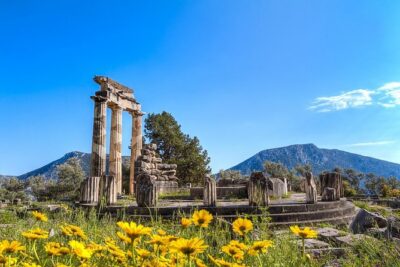
Historical Delphi One Day Tour with Arachova Stop & Expert Guide
Read our review →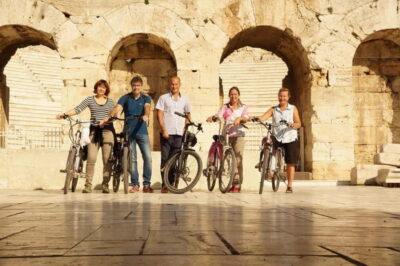
Historic Athens: Small Group Electric Bike Tour
Read our review →
Half-Day Guided History and Culture Sightseeing Tour
Read our review →


Throne of Helios: The History of Rhodes in 9D Experience
Read our review →
The History of Athens: Greek Mythology Private Tour
Read our review →Browse the lists this tour appears in