
Reviewed · HISTORICAL TOURS
Corfu: History and Culture Walking Tour
Corfu tells its story in stone. This three-hour walk through Corfu Town links the Venetian Old Fortress with French and British influences, Orthodox tradition, quiet lanes, grand squares, and the people who shaped the island. I like the way the tour puts Corfu’s mixed identity at the center, rather than treating the town as a string of pretty photo stops. I also like the small group of up to eight, which gives you a better chance to ask questions and keep a comfortable pace.
The main drawback is the walking itself. The tour is not suitable for people with mobility impairments, and the Old Fortress and historic center include uneven surfaces and walking between stops. At $93 per person, it is not a budget stroll, but the fortress admission and a licensed English-speaking guide are included. Guides such as Alice, Nausica, Valia, Arita, and Ariti have been praised for making the past clear, lively, and connected to daily life.
In This Review
- Key points to know before you book
- Starting by the Schulenburg statue
- Inside the Venetian Old Fortress
- Corfu Town through lanes, fountains, and squares
- St. Spyridon Church and Corfu’s Orthodox heart
- Town Hall Square and Corfu’s former elite
- What the guide adds to the $93 price
- How long the walk feels
- What the praise tells you about the experience
- Who should book this Corfu walk?
- Should you book the Corfu History and Culture Walking Tour?
- FAQ
- How long is the Corfu History and Culture Walking Tour?
- Where does the tour start?
- What sites are included?
- Is the Old Fortress entrance fee included?
- Is hotel pickup provided?
- Is food included?
- What language is the tour conducted in?
- Is the tour suitable for people with mobility impairments?
Key points to know before you book
- The Old Fortress is the tour’s essential first stop: You receive a guided visit and the entrance fee is included.
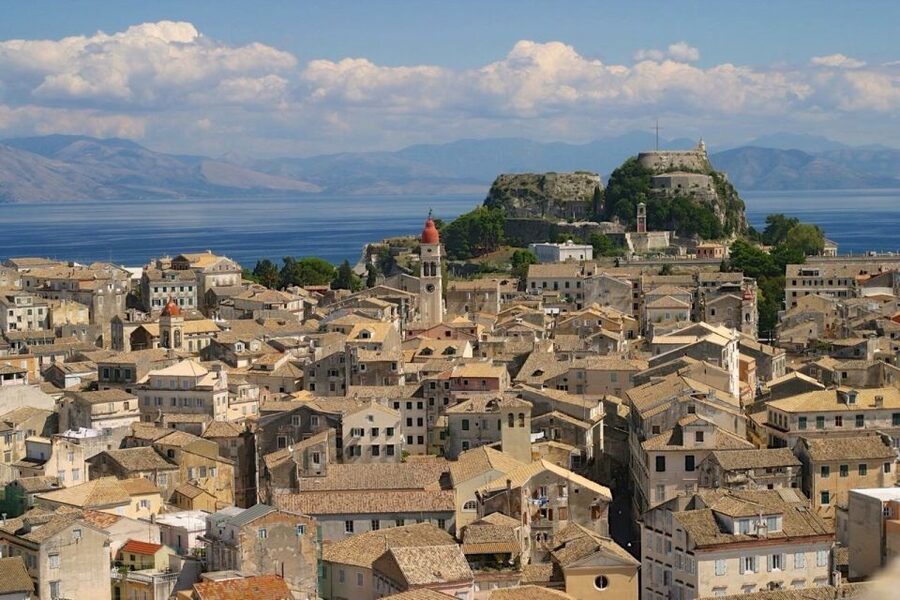
- Corfu’s culture comes from several ruling powers: Venetian, French, and British traces appear alongside Greek Orthodox traditions.
- St. Spyridon Church adds a strong local focus: Its 16th-century architecture and tall bell tower show Corfu’s religious importance.
- The walk ends at Town Hall Square: This former elite quarter gives the tour a useful look at social life, not just military history.
- The group is limited to eight people: That suits anyone who wants to ask questions or request more time at a particular stop.
- Wear proper walking shoes: Comfortable footwear matters on a three-hour route through a historic center and fortress.
Starting by the Schulenburg statue
Your meeting point is the statue of Schulenburg in front of the Old Fortress, at Agoniston Politechniou. This is a practical start because the fortress is the first major stop, so you do not spend the opening part of the tour simply walking toward the subject.
Look for your English-speaking guide by the statue. The group size is limited to eight, a real advantage in a historic setting where narrow lanes and crowded points can make a large group awkward. A smaller party also makes the tour feel more like a conversation. You can ask why a building looks Venetian, how the island’s traditions developed, or what to see after the official route ends.
The experience lasts three hours and returns to the same general meeting area. There is no hotel pickup or drop-off, so you need to reach the fortress on your own. Food is not included, though individual guides have sometimes added small local tastings or coffee stops as unexpected extras. Treat those as pleasant surprises, not part of the promised program.
More Walking Tours in Corfu
- Corfu Town: Guided Walking Tour and Local Food Tastings
★ 4.9 · 313 reviews - Taste Corfu: Private Corfu Food Walking Tour
★ 5.0 · 82 reviews - Corfu: Gastronomy Walking Tour
★ 4.9 · 78 reviews
Inside the Venetian Old Fortress
The Old Fortress gives the tour its strongest physical setting. This Venetian-era stronghold sits in the historic center and provides both a guided visit and scenic views along the way. You are not just hearing that Venice once controlled Corfu. You are looking at the defensive structure that helped protect the island and shaped the city around it.
A guide can give the fortress a human scale. Walls and military buildings can blur together when you explore alone, especially if you do not know which details matter. Here, the focus is on the Venetian imprint and how outside powers affected local customs and identity.
The fortress is also a good early stop because it sets up the rest of the walk. After seeing a major symbol of Venetian rule, you can notice smaller traces in Corfu Town with more context. The tour is at its best when it connects a grand structure to the everyday streets that follow.
Allow for walking rather than a quick photo stop. The official information specifically advises comfortable shoes, and the experience is not suited to people with mobility impairments. If you have trouble with uneven ground, slopes, or extended walking, this is an important reason to choose another way to see the town.
Corfu Town through lanes, fountains, and squares
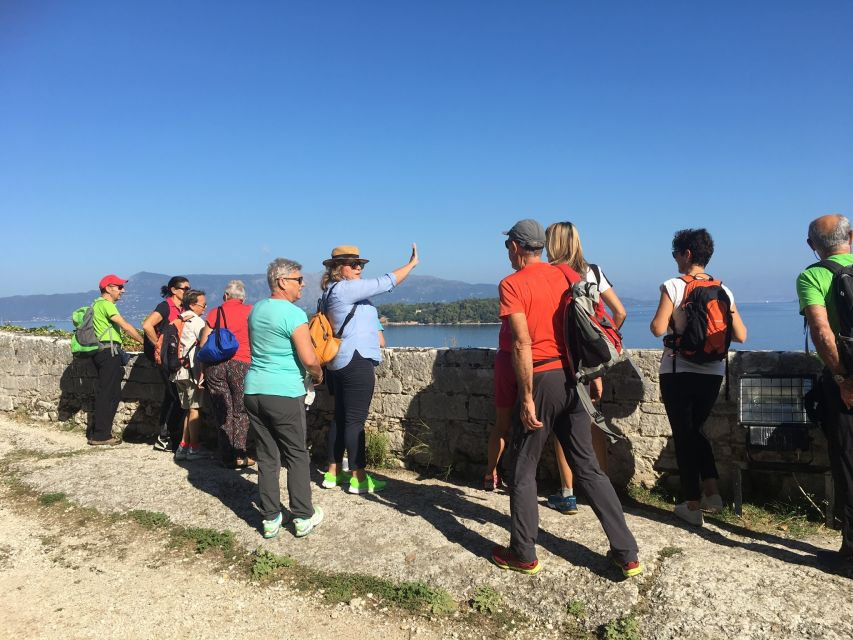
After the fortress, the route moves into Corfu Town’s historic center. This is where the tour shifts from military power to daily life. You pass through alleys, squares, and fountains, with the guide explaining how different rulers left marks on architecture, customs, and the character of the island.
I like this part because it keeps the tour from becoming a lecture about dates. Corfu’s story is easier to understand when you move through the places where people lived, traded, worshipped, and met. Quiet lanes can reveal one side of the city, while open squares show how public life worked.
The French and British periods are part of the wider story, along with the Venetian era. You are shown Corfu as a meeting point of cultures rather than a place shaped by one power alone. That helps explain why the island feels distinct within Greece. The guide’s job is not merely to name an architectural style, but to explain what those outside influences meant for Corfiot traditions and local identity.
This is also the part where your guide’s personality matters most. Alice was praised for making culture and history easy to follow. Nausica and Nausicaa were described as lively, warm, and deeply attached to their city. Valia was noted for explaining the island’s traditions and its many identities, while Arita and Ariti were praised for strong local knowledge and enthusiasm.
Those comments point to the tour’s greatest strength: the quality of the person leading it. The core route is worthwhile, but a guide who welcomes questions can turn familiar streets into a much better experience. Dean also appreciated flexibility about how much time was given to different areas, which is useful if your group becomes especially interested in one site.
St. Spyridon Church and Corfu’s Orthodox heart
The walk continues to St. Spyridon Church, a 16th-century Greek Orthodox church dedicated to Corfu’s patron saint. Its architecture offers a clear change from the Venetian fortress and the broader European influences found around town.
The bell tower is a major visual point. It is described as the highest in the Ionian Islands, so it is easy to spot and helps define the old city skyline. Inside and outside, the church gives the tour a chance to focus on religious tradition, not only political control.
This stop is especially valuable if you want to understand how Corfu’s identity is both Greek and shaped by centuries of contact with foreign powers. The church provides a local anchor. It shows that outside influence did not erase the island’s own traditions.
A guide may also connect the church and surrounding area with notable people and events. One participant appreciated learning about the church where Prince Philip was christened. That detail may be part of the explanation on your particular departure, but the key benefit is broader: your guide can link major names and events to actual places instead of leaving them as disconnected facts.
Because this is an active religious site, follow your guide’s advice about respectful behavior. The tour description identifies the church as a sightseeing stop, but it does not promise a private visit or a particular interior ceremony. Conditions can vary.
More things to do in Corfu:
- From Corfu Island: Antipaxos & Paxos Blue Caves Boat Cruise
★ 4.6 · 2,963 reviews - From Corfu: Day Cruise to Paxos, Antipaxos, and Blue Caves
★ 4.6 · 2,851 reviews - Full-Day Boat Tour of Paxos Antipaxos Blue Caves from Corfu
★ 4.5 · 1,567 reviews - Corfu: City Sightseeing Hop-On Hop-Off Bus Tour
★ 4.1 · 937 reviews
Town Hall Square and Corfu’s former elite
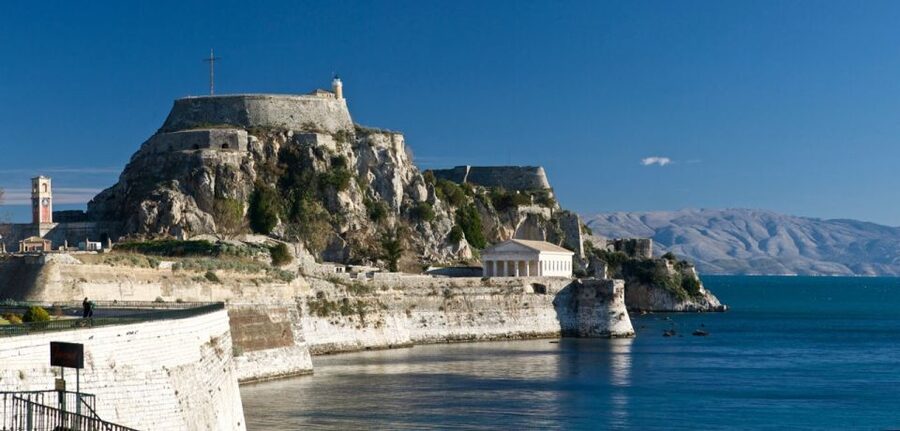
The final main stop is Town Hall Square, once regarded as Corfu’s most exclusive neighborhood. This gives the tour a different angle on the city. The fortress explains defense, the old center reveals daily movement, and the square shows where Corfu’s elite met and displayed their status.
The monuments around the square provide a visual setting for stories about class, power, and public life. I appreciate that the tour ends here rather than finishing at a random street corner. You leave with a sense of how Corfu was organized socially, not only how it was ruled politically.
This stop may appeal most to people who enjoy architecture with a social explanation attached. A beautiful square can be easy to admire and just as easy to misunderstand. The guide helps you see why it mattered and who had access to its circles of influence.
The route then returns to Agoniston Politechniou. Since there is no included transport, you should plan your next move from there. The guide may offer useful ideas for food or other sights. One guide suggested a good lunch venue, and another recommended visiting the Asian museum after the walk. Those suggestions can be valuable, but they are personal guidance rather than included parts of the tour.
What the guide adds to the $93 price
At $93 per person, this is a premium walking tour. You are paying more than you would for a self-guided wander, but the comparison is not simply entrance fee versus no entrance fee. The price includes entry to the Old Fortress and a licensed English-speaking guide for three hours.
The small group improves the value. With no more than eight people, you are less likely to lose the guide in a lane or wait while a large party gathers. You can also ask about details that interest you, such as Corfu’s traditions, foreign influences, religious life, or social history.
The guide’s local perspective is the strongest reason to consider the cost. Several guides were praised for clear explanations, humor, warmth, and flexibility. Martin especially valued the balance between enough detail and answers to follow-up questions. Manya appreciated that Arita combined facts about the fortress and town with suggestions for coffee and restaurants.
The tour also received praise for adapting to poor weather. That does not mean the route becomes weatherproof, but it suggests that the guide can make sensible adjustments when conditions are unpleasant. You should still dress for the day and wear shoes that can handle three hours of walking.
The value is weaker if you already have a strong grasp of Corfu’s past and prefer exploring without a set route. It is also less suitable if you cannot comfortably walk through a historic center or manage the fortress terrain. For first-time visitors, cruise passengers with a free morning or afternoon, and anyone who wants context before exploring alone, the price is easier to justify.
How long the walk feels
Three hours is a sensible length for this subject. It gives you enough time for the Old Fortress, the historic center, St. Spyridon Church, and Town Hall Square without turning the day into an all-day history course. One participant called the duration perfect, while another described the route as informative and thorough.
The pace can vary depending on questions and the interests of your group. If you enjoy stopping for explanations, the time should feel well used. If you prefer fast sightseeing and lots of independent time, the guided format may feel slower.
There is no meal included. Some past departures included local dairy sampling, liquor tasting, or a Greek coffee, but those extras are not guaranteed. You should not arrive expecting lunch or a formal food tour. Eat beforehand if you need a full meal, and regard any tasting as a bonus.
The tour is conducted in English. That makes it a straightforward choice for English-speaking visitors, but there are no other languages listed. Free cancellation is available up to 24 hours before the start, and you can reserve now and pay later, which helps if your Corfu plans are still shifting.
What the praise tells you about the experience
The strongest pattern is the guide quality. The high rating of 4.9 from 55 reviews is supported by repeated praise for enthusiasm, local insight, pleasant manner, and the ability to answer extra questions.
That matters because the route itself is concentrated. In three hours, you will see several important places, but you will not receive an exhaustive study of every street or building. The guide makes the difference between a basic orientation walk and a useful introduction to Corfu’s past and present.
The feedback also points to a good balance of information and enjoyment. Ariti was praised for answering questions openly and bringing a strong local foundation to the tour. Alice helped make culture and history memorable. Nausica’s personal connection to Corfu made the town feel more engaging to one group, while Valia helped explain the island’s traditions and changing identities.
You should still keep expectations reasonable. Guide assignments can change, and no specific guide is guaranteed. The repeated praise suggests a strong standard, but your own experience will depend on the person leading your group, the weather, and how much time your party spends asking questions.
Who should book this Corfu walk?
I would choose this tour if you want a clear first look at Corfu Town and prefer learning the meaning behind what you see. It suits couples, families with older children, solo visitors, and small groups who enjoy asking questions.
It is particularly useful for anyone interested in architecture, military sites, religious tradition, or the way Venetian, French, and British influence shaped a Greek island. It also works well early in a stay, since the guide can help you identify places to revisit, eat, or explore afterward.
You may want to skip it if your main goal is shopping, a long meal, or unstructured wandering. You should also think carefully about the walking requirement if you have limited mobility. The tour does not include food or transport, and the $93 price requires you to value expert guidance rather than simply count the number of sights.
Should you book the Corfu History and Culture Walking Tour?
Book it if you want Corfu Town explained by a local guide rather than viewed only through photographs. The Old Fortress, St. Spyridon Church, and Town Hall Square create a strong route, and the small group keeps the experience personal.
I would be most likely to book when visiting Corfu for the first time, especially if I had three hours and wanted a useful foundation for the rest of my stay. The price is fair for the fortress entry, licensed guide, and limited group, though it is not the right choice for a tight budget or anyone who needs an easy, flat route.
Meet at the Schulenburg statue, wear comfortable shoes, and leave room for questions. That is where this experience earns its keep.
FAQ
How long is the Corfu History and Culture Walking Tour?
The tour lasts three hours.
Where does the tour start?
Your guide waits by the statue of Schulenburg in front of the Old Fortress, at Agoniston Politechniou.
What sites are included?
The route includes the Old Venetian Fortress, Corfu Town’s historic center, St. Spyridon Church, and Town Hall Square.
Is the Old Fortress entrance fee included?
Yes. The Old Fortress entrance fee is included in the price.
Is hotel pickup provided?
No. Hotel pickup and drop-off are not included.
Is food included?
No. Food is not included. Some past tours included occasional tastings or coffee, but these are not listed as guaranteed inclusions.
What language is the tour conducted in?
The tour is conducted in English with a live English-speaking guide.
Is the tour suitable for people with mobility impairments?
No. The activity is not suitable for people with mobility impairments. Comfortable shoes are recommended for everyone taking part.
More Historical Tours in Corfu
- Small-Group Food and Cultural Tour in Corfu
★ 5.0 · 299 reviews - Historical Delphi One Day Tour with Arachova Stop & Expert Guide
★ 4.5 · 1,247 reviews - Historic Athens: Small Group Electric Bike Tour
★ 4.9 · 740 reviews - Naxos Half Day History and Culture Guided Tour
★ 5.0 · 491 reviews
Just added around Corfu
- Corfu: Ghost Stories and Legends Tour★ 4.8 · 40 reviews
- Corfu: Aqualand Water Park Entry Ticket & Optional Transfer★ 4.7 · 41 reviews
- Corfu Parasailing – Fly High in the Sky★ 5.0 · 43 reviews
- The Amazing Glyfada Beach★ 4.0 · 43 reviews
- Corfu: Northwest Coast and Village Charms 4×4 Tour★ 4.7 · 44 reviews
- Corfu: Shore & Shared Tour – Achilleion, Mon Repos, Old Town★ 5.0 · 45 reviews
- Corfu: Customized Private Tour★ 4.5 · 47 reviews
- Rock Climbing Experience in Corfu for Beginners★ 5.0 · 47 reviews
Historical Tours, compared.
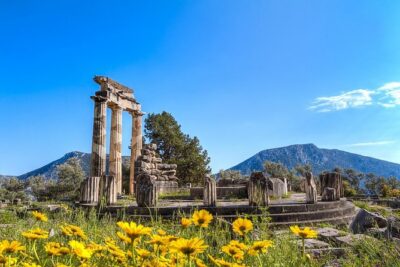
Historical Delphi One Day Tour with Arachova Stop & Expert Guide
Read our review →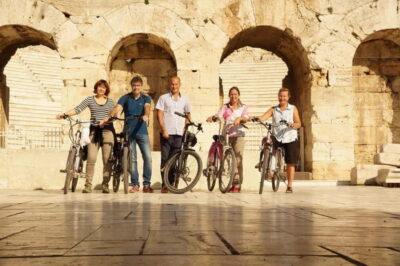
Historic Athens: Small Group Electric Bike Tour
Read our review →
Half-Day Guided History and Culture Sightseeing Tour
Read our review →


Throne of Helios: The History of Rhodes in 9D Experience
Read our review →
The History of Athens: Greek Mythology Private Tour
Read our review →Browse the lists this tour appears in