Reviewed · VIP
Private Luxury Tour: Unveiling the Sacred Mysteries of Eleusis
The road to Eleusis is the real attraction. This private half-day trip follows the ancient Sacred Way from Athens toward the sanctuary where Demeter and Persephone were worshipped, with useful stops at Roman bridges, Daphni Monastery, and the ruins of Eleusis. I especially like the private door-to-door transport and the way the route gives the Eleusinian Mysteries a physical setting, rather than treating them as a collection of old myths.
I also like the small-group comfort: one to four people ride in a luxury sedan, while groups of five to seven use a minivan, with air-conditioning, bottled water, and Wi-Fi included. The main drawback is that the driver-guide is not a licensed guide inside the archaeological sites, and the entrance fee is extra. Your time at Eleusis may therefore feel more like a guided introduction followed by independent looking around.
In This Review
- The essential facts at a glance
- Why Eleusis deserves more than a quick photo stop
- From Athens to the Sacred Way
- Daphni Monastery, where two sacred traditions meet
- The Sanctuary of Aphrodite at Skaramagkas
- Roman bridges near Eleusis
- Entering the Archaeological Site of Eleusis
- The Telesterion and the center of the Mysteries
- The Great Propylaea and the sacred threshold
- The Kallichoron Well and the Ploutonion
- The Archaeological Museum of Eleusis
- What the private vehicle adds
- Is $192.23 per person good value?
- Who should book this Eleusis tour?
- Should you book it?
- FAQ
- How long does the private Eleusis tour last?
- Is hotel pickup included?
- Can I be picked up at a cruise port?
- Is airport pickup included?
- What type of vehicle is used?
- Is the entrance fee included?
- Is a licensed guide included inside the archaeological sites?
- What should I bring?
- Is the tour available in languages besides English?
- Can I cancel for a full refund?
The essential facts at a glance
- The Sacred Way comes first: You follow fragments of the ancient route used by pilgrims traveling from Athens to Eleusis.
- Roman engineering gets its due: The tour includes two ancient bridge sites, including a 50-meter bridge from the reign of Emperor Hadrian.
- Daphni Monastery adds a Byzantine layer: Its 11th-century mosaics provide a sharp change from Greek and Roman ruins.
- Eleusis is the main event: The Telesterion, Great Propylaea, Kallichoron Well, Ploutonion, and museum bring the central story into focus.
- Comfort is built in: Pickup, private transport, air-conditioning, Wi-Fi, and bottled water are included.
- Budget for admission: The archaeological sites and museums are not included, with an entrance charge listed at €10 per person.
Why Eleusis deserves more than a quick photo stop
Eleusis is not simply another ancient ruin outside Athens. It was the center of the Eleusinian Mysteries, a religious tradition linked to Demeter, goddess of agriculture, and Persephone, whose return from the underworld represented renewal and the cycle of life.
The rituals themselves were secret. That mystery is part of the appeal, but it also shapes what you should expect. You will not receive a complete explanation of what initiates saw or heard inside the Telesterion because the ancient participants guarded those secrets. Instead, the tour helps you understand the setting, route, buildings, and myths that made Eleusis important.
I like this approach. You are not just dropped at a temple and handed a date. You travel along the route that thousands of pilgrims once used, stopping at places connected with crossings, processions, worship, and burial beliefs. The road gives the story a human scale.
The four to five hour duration includes travel between the locations, so this is not four to five hours of walking among ruins. That makes it manageable from Athens, but you should keep your expectations realistic. Several stops are short, around 10 minutes, while the central archaeological site and museum receive about 30 minutes each.
More things to do in Athens:
- Athens: Acropolis & up to 5 Archaeological Sites Combo Pass
★ 4.4 · 12,619 reviews - Athens: Acropolis Ticket with Optional Audio or Live Guide
★ 4.2 · 11,055 reviews - Athens: Acropolis, Parthenon & Acropolis Museum Guided Tour
★ 4.8 · 9,316 reviews
From Athens to the Sacred Way
The first two stops focus on Iera Odos, or the Sacred Way. The road once connected Athens with Eleusis and carried pilgrims toward the sanctuary during the great religious festival.
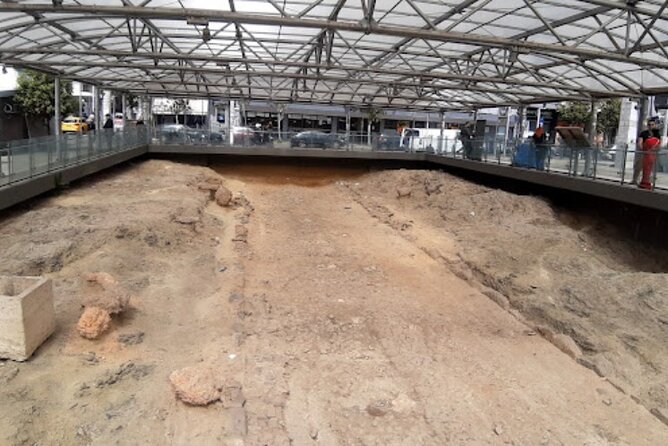
The first site is near the modern Eleonas Metro Station, where construction exposed remains of a bridge over the Kifisos River. Three surviving piers suggest a bridge with at least five arches. It is a modest archaeological stop, but the location helps you picture an important crossing just beyond Athens’ ancient walls.
I appreciate stops like this because they explain how a sacred journey worked in practical terms. Pilgrims needed roads, bridges, and safe crossings. The Eleusinian procession was not an abstract religious idea. It was a long trip made by people moving together toward a very real destination.
You spend about 10 minutes here, and admission is free. Do not expect a large monument or a long visit. Its value lies in the explanation and in seeing one fragment of the route before the modern city swallows it up.
The second Iera Odos stop is in Aigaleo, where you can walk along further remains of the ancient road. This is where the tour’s central idea becomes clearer. Ancient Athenians carried sacred objects, sang hymns, and made their way toward the sanctuary of Demeter and Persephone.
The route is especially useful for anyone interested in the religious side of ancient Greece. You are following the same general path used by initiates, rather than racing straight to Eleusis on a modern road. Again, the stop lasts about 10 minutes and has no admission charge.
Daphni Monastery, where two sacred traditions meet
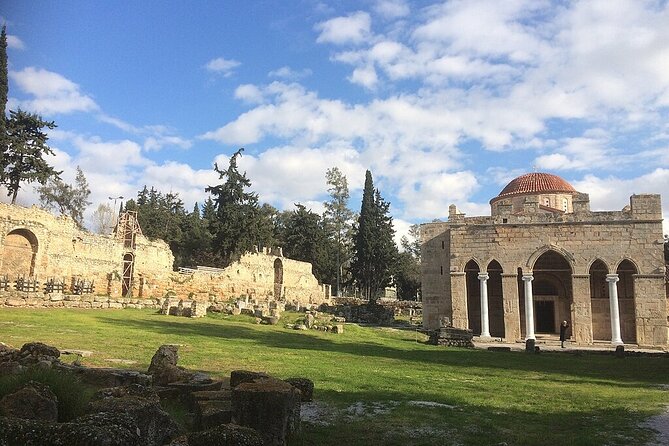
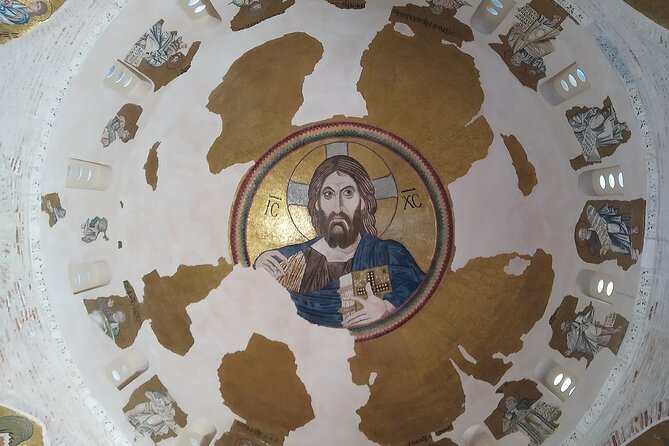
Daphni Monastery is one of the most rewarding changes of pace on the tour. Built in the 11th century, this UNESCO World Heritage Site sits along the same historic route to Eleusis, but it belongs to the Byzantine Christian world rather than the pagan cult of Demeter.
The monastery is known for its mosaics, especially the image of Christ Pantocrator in the dome. Ancient cypress trees and the quiet setting add to the sense of a place used for worship across many centuries.
I like the stop because it prevents the tour from becoming a single-note study of classical ruins. You see how the Sacred Way remained important after the Eleusinian Mysteries faded. Greek religious history did not end with the Roman period, and Daphni helps connect antiquity with the Byzantine era.
The planned visit is about 30 minutes. The tour information lists admission as free, but opening arrangements can affect what you see inside. Your driver-guide can explain the stop as part of the route, while the details of the mosaics are best appreciated at your own pace.
The Sanctuary of Aphrodite at Skaramagkas
The Sanctuary of Aphrodite at Skaramagkas offers another brief look at ancient religious practice. It was dedicated to Aphrodite, goddess of love and beauty, and sat near the Sacred Way used by pilgrims heading to Eleusis.
Only remnants remain, so this is not a major standalone archaeological visit. The surrounding setting and the connection to the old route are the main reasons to stop. You get a sense that the journey to Eleusis passed through a wider religious world, with different gods and sacred places along the way.
Access matters here. The sanctuary is open to the public on weekends. On weekdays, you cannot enter the interior, but the tour makes a short outside stop for photographs and a look at the site.
That schedule is worth checking before you book if entering the sanctuary is important to you. On a weekday, treat it as a roadside historical pause, not a full site visit.
A few more Athens trips worth weighing up
- Best of Athens Half Day Private Tour
★ 5.0 · 3,714 reviews - Athens Full Day Private Tour
★ 5.0 · 2,903 reviews - Athens Airport Private Arrival Transfer with Meet & Greet
★ 4.5 · 1,495 reviews - Athens Airport to Athens Hotels Private Arrival Transfer
★ 5.0 · 947 reviews
Roman bridges near Eleusis
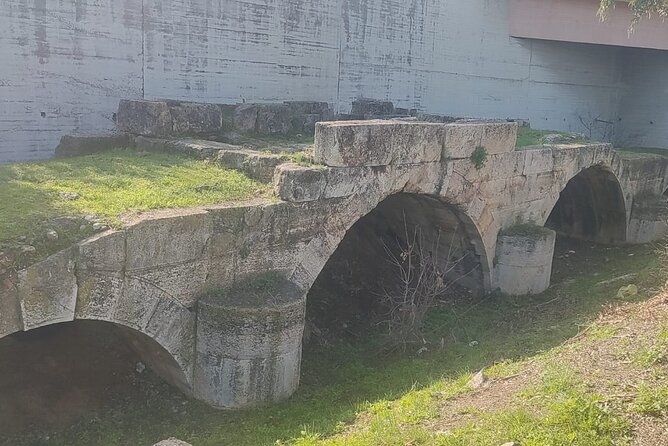
Just east of the Sanctuary of Demeter is a well-preserved Roman bridge associated with the Sacred Way and the Eleusinian Kephisos River. Built from Piraeus limestone, it is about 50 meters long and 5.30 meters wide.
The central section has four arches, with two wider arches in the middle and narrower ones at the ends. Inclined approaches complete the structure. It was built around 125 AD during the reign of Emperor Hadrian.
This is one of the tour’s best technical details. The bridge shows how Roman infrastructure supported older Greek religious routes. Pilgrims needed to cross the river, and the bridge made that movement possible. A visit here gives you more than another view of broken columns. You see the practical work that kept the Sacred Way functioning.
The stop lasts about 10 minutes and admission is free. It is short, but the bridge is visually clear enough to reward a quick visit.
Entering the Archaeological Site of Eleusis
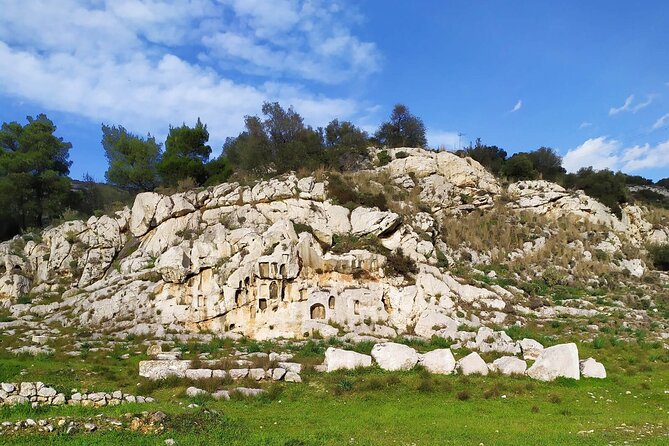
The archaeological site is the heart of the outing. Here, you begin to see the sanctuary as a working religious complex rather than a scattering of ruins.
The site is connected with Demeter and Persephone and includes gateways, sacred areas, walls, wells, caves, and the remains of the structures used during the Mysteries. Views toward the Saronic Gulf and the surrounding hills add to the setting, though the focus remains firmly on the ruins.
You have about 30 minutes scheduled for the main site and museum section, followed by several short visits to individual features. That is enough for a strong first look, especially if the driver-guide has prepared you during the journey. It is not enough for a slow, detailed archaeological study.
The entrance fee is not included. The supplied information lists the archaeological sites and museums at €10 per person. Since the driver is not a licensed guide accompanying you inside, consider bringing an audio guide, site notes, or a little background reading if you want detailed explanations at each ruin.
The Telesterion and the center of the Mysteries
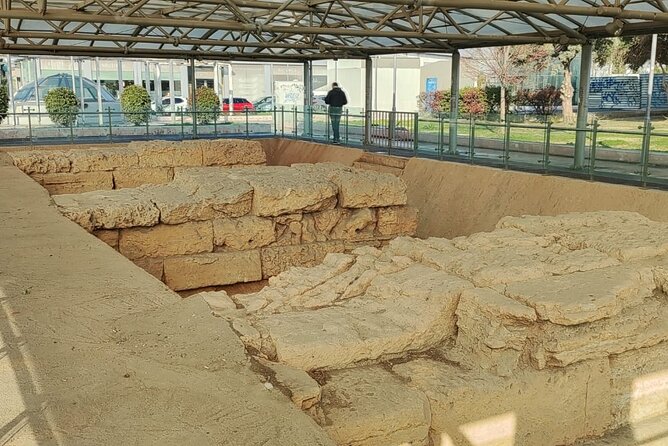
The Telesterion was the large hall where initiation ceremonies took place. It was the central building of the Eleusinian Mysteries, surrounded by imposing walls and sacred precincts.
Today, you see foundations and remains rather than an intact hall. Even so, this is the place where the tour’s mythology and archaeology meet most directly. The route from Athens, the procession, the sacred objects, and the private rituals all led toward this building.
You receive about 10 minutes at the Telesterion. That is brief, so listen carefully as your guide explains the site before arrival. One of the strongest points of the experience is that the driver-guide can give you the story during the ride, allowing your time at the ruins to be used for orientation and photographs.
A previous guest specifically praised Demetrios for making several stops along the way and preparing the group for the Telesterion and Temple of Demeter. That is exactly the right method for Eleusis. The site makes more sense when you arrive with the journey already in your head.
The Great Propylaea and the sacred threshold
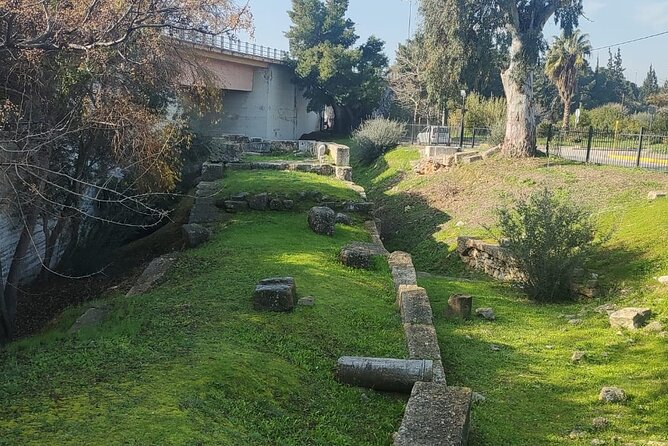
The Great Propylaea was the monumental entrance to the Sanctuary of Demeter and Persephone. Built in the 2nd century CE under Emperor Marcus Aurelius, it echoed the Propylaea of the Acropolis.
Its role was symbolic as well as practical. Passing through a grand gateway marked a change from ordinary life into sacred space. Initiates came here seeking a closer relationship with the divine and a better understanding of death and the afterlife.
The surviving Doric columns and large stone blocks help you read that entrance even in ruined form. You get about 10 minutes here, and the site is included within the paid archaeological area.
This is another place where a short explanation matters. Without context, the Propylaea can look like a smaller cousin of Athens’ Acropolis entrance. With context, it becomes part of the psychological journey into the sanctuary.
The Kallichoron Well and the Ploutonion
The Kallichoron Well is tied to the story of Demeter’s search for Persephone. According to ancient tradition, Demeter rested here, while the name Kallichoron means well of the beautiful dances. Local women were said to have danced at the well to comfort the grieving goddess.
The well is not a grand monument, but it carries a strong link to the myth at the center of Eleusis. You spend around 10 minutes here. It is a good place to pause and consider how water, mourning, dance, and seasonal renewal shaped the religious story.
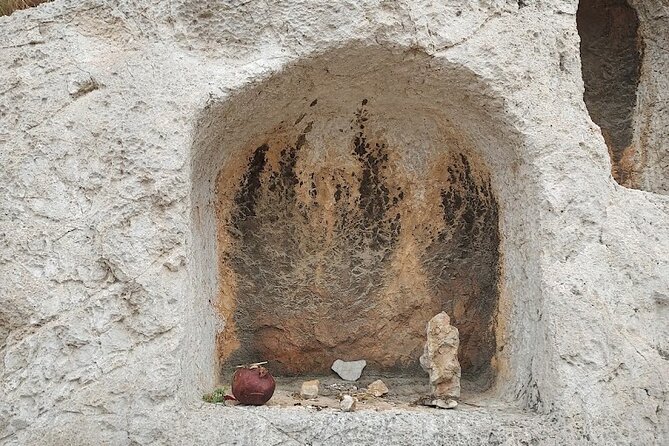
The Ploutonion is a cave associated with Hades, also called Plouton. Ancient belief treated it as a possible entrance to the underworld, connecting it with Persephone’s descent and return.
You will not be entering a dramatic underworld cavern as if this were a theme-park attraction. The site is a rocky sacred feature within the ruins. Its importance comes from the way ancient people connected a physical opening in the earth with stories about death, return, and rebirth.
Both stops are included in the archaeological admission fee and receive about 10 minutes each. Comfortable shoes will help, since the site involves walking across uneven ancient remains.
The Archaeological Museum of Eleusis
The museum brings smaller objects and human details to the story. Its collection includes statues of Demeter and Persephone, offerings, and reliefs connected with the Eleusinian Mysteries.
I find museums especially helpful after seeing a sanctuary. Ruins show scale and location, while sculptures and reliefs show how people represented their gods and rituals. The museum can help you connect the large Telesterion with the people who worshipped there.
The planned museum visit is 30 minutes. Admission is not included, and the museum is located within the archaeological complex. If your interest is mainly mythology, focus on the Demeter and Persephone material. If you enjoy ancient art, allow yourself time to study the reliefs and offerings.
The full route gives you a useful progression: road, bridges, religious sites, sanctuary entrance, ritual buildings, mythic landmarks, and museum objects. That sequence is what makes this more satisfying than a simple transfer from Athens to Eleusis.
What the private vehicle adds
Pickup and drop-off are provided at your hotel, apartment, or selected port locations. For port pickup, the driver greets you in the arrival area with a sign showing your name. Airport pickup is available for an added charge.
Groups of one to four use a luxury sedan. Groups of five to seven use a comfortable minivan. In both cases, the vehicle is air-conditioned, and bottled water and Wi-Fi are included.
I see real value here, especially during warm weather. You can move between scattered sites without arranging taxis or figuring out public transport connections. The Wi-Fi is a useful extra for checking maps or messages, though the tour’s real benefit is having the route handled for you.
The English-speaking driver-guide is also central to the experience. The strongest praise has gone to Demetrios and Pericles, both described as kind and well prepared, with Pericles receiving particular praise for his explanations of Demeter and the Sacred Way.
Remember the distinction between a driver-guide and a licensed site guide. The driver can explain the route and history during the drive, but is not licensed to accompany you inside the archaeological sites. If you want a formal, room-by-room explanation, this may not be the right format.
Is $192.23 per person good value?
At $192.23 per person, this is not a cheap way to reach Eleusis. The price makes more sense for a small private group that values comfort, a personal pickup, and a focused route rather than the lowest possible fare.
You also need to add the listed €10 per person entrance charge for the archaeological sites and museums. Tips are not included and remain your choice. Airport pickup costs extra as well.
For one person, the price may feel high. For a group sharing a private sedan or minivan, the value improves because you are paying for private transport and a full route of stops, not just a ride to the main ruins.
I would choose this tour if you care about the Sacred Way and want the sites connected into one story. If you only want to see the main sanctuary, a simpler visit may cost less and give you more time inside Eleusis. The private format is most useful when you want flexibility, comfort, and historical context between stops.
Who should book this Eleusis tour?
I would recommend it to you if you:
- Have already seen Athens’ major ancient monuments and want a quieter, more specialized outing.
- Enjoy Greek mythology, especially the stories of Demeter, Persephone, and Hades.
- Prefer a private vehicle to public transport and multiple taxi connections.
- Want to follow the Sacred Way instead of visiting Eleusis as an isolated ruin.
- Are traveling with family or friends and can share the private vehicle cost.
- Appreciate a knowledgeable driver-guide but do not require a licensed guide inside every site.
It is less suitable if you want a long, slow archaeological visit. The itinerary covers many points, but several are 10-minute stops, and the four to five hours include driving time.
Wear comfortable shoes and bring a hat and sunscreen. Greece can be hot and bright, and the ancient site includes outdoor walking. Good weather is required, so a poor-weather cancellation may result in a different date or a full refund.
Should you book it?
Book this private Eleusis tour if you want the journey to matter as much as the destination. Its best feature is the chain of connections: Athens, the Sacred Way, river crossings, Daphni, Aphrodite’s sanctuary, Roman engineering, and the sanctuary where the Eleusinian Mysteries took place.
I would especially choose it with a small group and a driver such as Demetrios or Pericles, whose warm manner and clear historical explanations have been singled out. The tour costs more than a basic outing and does not include site admission or a licensed guide, but it offers a comfortable and thoughtful way to reach one of Greece’s most important religious sites.
If you want a quick, self-guided look at Eleusis, save your money. If you want to understand why people made the trip in the first place, this route earns its price.
FAQ
How long does the private Eleusis tour last?
The tour lasts approximately four to five hours, including the driving time between locations.
Is hotel pickup included?
Yes. Pickup and drop-off are available at designated hotel and apartment locations. The driver waits outside the accommodation.
Can I be picked up at a cruise port?
Yes. Selected port pickup options are available during checkout, and the driver greets you in the arrival area with a sign showing your name.
Is airport pickup included?
Airport pickup is available at an additional cost. It is not included in the standard tour price.
What type of vehicle is used?
Groups of one to four people use a luxury sedan. Groups of five to seven people use a comfortable minivan.
Is the entrance fee included?
No. Entrance fees for the archaeological sites and museums are extra. The listed charge is €10 per person.
Is a licensed guide included inside the archaeological sites?
No. The experience includes an English-speaking expert driver-guide, but a licensed guide to accompany you inside the archaeological sites is not included.
What should I bring?
Wear comfortable footwear and bring a hat and sunscreen. The tour includes outdoor walking at several ancient sites.
Is the tour available in languages besides English?
The tour is offered in English.
Can I cancel for a full refund?
Yes, if you cancel at least 24 hours before the start time. Cancellations made less than 24 hours in advance are not refunded, and poor weather may lead to a different date or a full refund.
Just added around Athens
- Athens Hotels to Athens Airport Private Departure Transfer★ 5.0 · 40 reviews
- Private One-way Transfer between Athens International Airport and Athens Hotels★ 4.5 · 40 reviews
- Athens: Acropolis Museum Ticket with Self-Guided Audio tour App★ 3.5 · 40 reviews
- From Athens: Meteora Train Trip with Overnight Stay★ 4.8 · 40 reviews
- Athens Photography Tour★ 5.0 · 40 reviews
- Athens: Acropolis Visit and City Night Tour★ 4.7 · 40 reviews
- Delphi Full Day Private Trip From Athens With Lunch Overlooking the Sea★ 5.0 · 40 reviews
- Acropolis & Plaka Neighbourhood Private Tour with Licensed Expert★ 5.0 · 40 reviews
VIP, compared.

Luxury Catamaran Cruise from Athens with Traditional Greek Meal and BBQ
Read our review →
Hydra, Poros and Egina Day Cruise from Athens with Optional VIP Upgrade
Read our review →
Santorini Sunset Luxury Sailing Catamaran Cruise with BBQ, drinks, transfer
Read our review →
Luxury Small-Group Catamaran Cruise with BBQ, Open bar & Transfer
Read our review →3 Island Luxury Cruise with 4 Swimming Stops with Captain Morgan
Read our review →

Balos & Gramvousa Luxury Catamaran Sailing Cruise
Read our review →