Reviewed · ATHENS TOURS
Mythology, Philosophy and Democracy Tour
Ideas changed Athens forever. This three-hour walking tour links Greek mythology, early science, philosophy, politics, and democracy across the ancient city. I like its clear theme and its choice of places that many first-time visitors skip, especially Kerameikos and Pnyx Hill. I also like the small group size, capped at 12 people, which gives the guide room to adjust the conversation.
The main drawback is the walking and the heat. You finish on Philopappos Hill after about three hours, and one guest found the summer heat difficult even with water and ice cream stops. This is not a quick monuments tour. You need comfortable shoes, sun protection, and enough interest in ideas to enjoy several long explanations.
In This Review
- Five things to know before you book
- Why this Athens tour has a clear purpose
- Kerameikos: pottery workshops and Athens’ cemetery
- The Ancient Agora and the habit of public debate
- Monastiraki, the Roman Agora, and the Tower of the Winds
- Hadrian’s Library and Plaka
- Pnyx Hill, the world’s early parliament
- Philopappos Hill and the final Acropolis view
- Panos’ guiding style and group size
- Is the $50.69 price good value?
- Practical advice for a better walk
- Who should book this Athens walking tour?
- Should you book it?
- FAQ
- How long does the Mythology, Philosophy and Democracy Tour last?
- How much does the tour cost?
- Where does the tour begin?
- Where does the tour end?
- Is the tour offered in English?
- How large is the group?
- Can I cancel for a full refund?
Five things to know before you book
- The tour connects several big ideas: You move from mythology and ancient religious belief toward philosophy, mathematics, science, civic debate, and democracy.
- Kerameikos is an unusual first stop: This former cemetery and pottery district gives you an early look at everyday Athens and the people who shaped it.
- Pnyx Hill is the political heart of the route: This is where citizens gathered for public debate, and where Pericles delivered his famous funeral speech.
- Panos is the key part of the experience: His style combines history, humor, questions, and modern comparisons rather than simply listing dates and names.
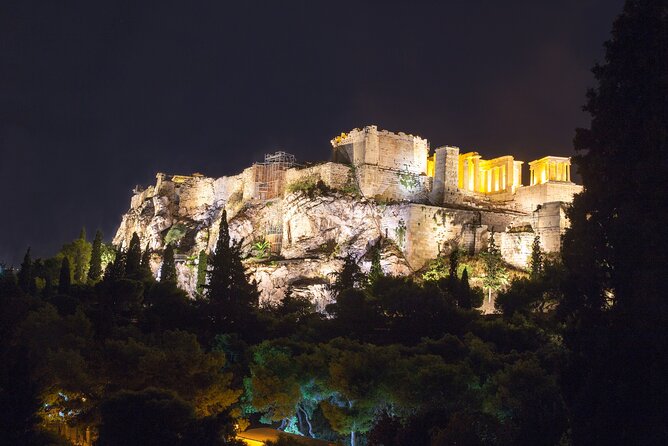
- The finish brings the views: Philopappos Hill gives you memorable sights toward the Acropolis and Athens, especially around sunset or after dark.
Why this Athens tour has a clear purpose
Many Athens walking tours move from monument to monument. This one takes a different route. Its subject is not only what happened in Athens, but how Athenian ways of thinking developed.
You hear about the shift from blind faith toward questions, observation, argument, and the early search for scientific explanations. The tour then links those changes to philosophy and civic life. That makes the route useful if you want more than a collection of ancient stones.
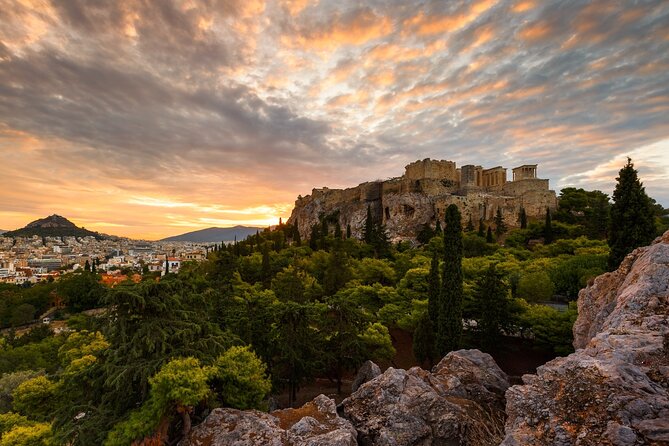
I especially like the way the tour can give the Acropolis a wider setting. You do not spend the whole time staring up at the Parthenon. Instead, you see the places where people lived, argued, governed, worshipped, traded, and buried their dead. The Acropolis becomes part of a larger city story.
Guide Panos receives the strongest praise for his delivery. His approach is witty, thoughtful, and highly informed, with a knack for connecting ancient problems to modern ones. Several people describe leaving with a better sense of how ancient Greek thought influenced politics, mathematics, religion, and Western civilization.
That said, this is not the right choice if you want a quiet stroll with only brief commentary. Panos can spend time on concepts and historical links, so the pace may feel slow to someone focused mainly on photography.
More things to do in Athens:
- Athens: Acropolis & up to 5 Archaeological Sites Combo Pass
★ 4.4 · 12,619 reviews - Athens: Acropolis Ticket with Optional Audio or Live Guide
★ 4.2 · 11,055 reviews - Athens: Acropolis, Parthenon & Acropolis Museum Guided Tour
★ 4.8 · 9,316 reviews
Kerameikos: pottery workshops and Athens’ cemetery
The walk begins at the Statue of Theseus, then heads toward Kerameikos. The name comes from keramos, meaning ceramic, because pottery workshops once occupied this part of the city.
Kerameikos later served as Athens’ cemetery for many centuries. That gives the stop a useful balance. You are not looking only at grand public buildings. You are also considering how Athenians marked death, status, memory, and family life.
The site is connected with prominent Athenians, and it also links directly to the political theme of the tour. Pericles delivered his famous Epitaphios, or funeral speech, here for the first Athenian casualties of the Peloponnesian War. The speech praised the virtues of democracy and the Athenian way of life.
You spend about 25 minutes here. That is enough time for Panos to set up the main themes without turning the stop into a full archaeological visit. Admission is listed as free for the tour, but you should not confuse that with a full ticketed museum visit or an extended independent exploration.
Kerameikos is a strong opening because it feels less obvious than the Acropolis. You begin with the city’s workshops, graves, and public memory, then move into the places where citizens debated how Athens should work.
The Ancient Agora and the habit of public debate
The Ancient Agora was the center of Athenian public life. Philosophers, politicians, writers, merchants, and ordinary citizens walked through this area and discussed matters that affected the city.
The names associated with Athens’ Golden Age are substantial: Socrates, Plato, Solon, Themistocles, Pericles, Thucydides, Sophocles, and Aristophanes. The tour uses this setting to explain how philosophy and politics overlapped. Ideas were not locked away in classrooms. They were part of public life.
You only spend about 10 minutes at the Agora, so think of this as a focused orientation rather than a complete visit. If you want to examine the ruins and museum at length, set aside separate time. The value here is the explanation of what the Agora meant and how it functioned.
I like this stop because it helps you picture democracy as a lived practice. It was not only a modern word on a textbook page. It involved citizens meeting, speaking, listening, arguing, and making decisions.
The ancient system was also limited and unequal by modern standards. The tour’s reflective style makes room for those comparisons. You can appreciate Athens’ contribution without pretending that its democracy included everyone.
Monastiraki, the Roman Agora, and the Tower of the Winds
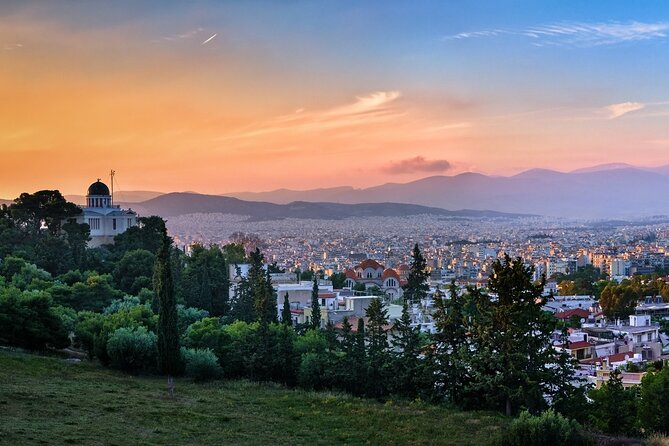
The route then shifts from ancient civic life to modern Athens. In Monastiraki Square, you walk at an easy pace through the flea market area, with antique shops and tourist stores along the way.
This is a short 10-minute stop, so it functions as a transition rather than a shopping session. You get a sense of how old and new Athens sit together. If you are hoping to browse properly, return later with more time and less pressure to keep moving.
The Roman Agora lies north of the Acropolis and east of the Ancient Agora. It reflects Athens under Roman rule, when the city remained important but operated within a different political world.
Nearby, the Tower of the Winds adds one of the tour’s most engaging science stories. The octagonal building was made by Andronicus of Kyrristos in the first century BC. It worked as a wind indicator, a solar clock, and a water-powered timekeeper for cloudy days.
The hydraulic mechanism reportedly produced a sound every hour. That made the tower both a clock and a weather station, often described as the first meteorological station. I find this detail especially useful because it breaks the habit of treating ancient Greece as only temples and myths. Ancient Athenians also watched the sky, measured time, and built practical technology.
You spend about 10 minutes at the Roman Agora and another 10 minutes at the Tower of the Winds. The short timing keeps the tour moving, but it also means you will want to return if architecture or ancient engineering interests you.
A completely different sort of day out in Athens:
- Athens: Cape Sounion & Poseidon Temple Sunset Half-Day Trip
★ 4.8 · 8,241 reviews - Athens: Acropolis and Parthenon Guided Walking Tour
★ 4.6 · 5,882 reviews - All Day Cruise -3 Islands to Agistri,Moni, Aegina with lunch and drinks included
★ 5.0 · 4,958 reviews - Athens, Piraeus, and Coastline: Blue Hop-On Hop-Off Bus
★ 3.9 · 4,849 reviews
Hadrian’s Library and Plaka
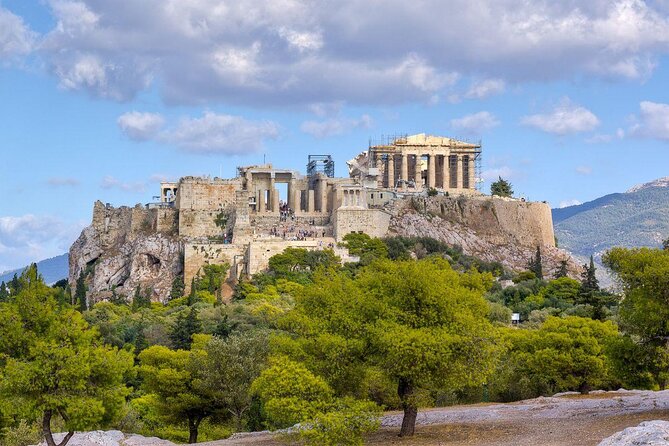
Hadrian’s Library was built by Roman Emperor Hadrian in AD 132 on the north side of the Acropolis. It was once the second-largest library in the world.
The stop gives Panos another chance to explain how Athens changed under Roman rule. The city’s intellectual reputation remained powerful, even as political control shifted. A library in this location also reminds you that books, learning, and public culture were central to Athens’ identity.
The visit lasts around 10 minutes. Again, the emphasis is on context and connections rather than a long architectural inspection.
From there, the walk reaches Plaka, one of Athens’ most scenic neighborhoods. Small houses and narrow streets create a sharp contrast with the open spaces of the Agora and the formal ruins nearby.
Plaka is a pleasant part of the route, but it is not presented as a major lecture stop. I see it as breathing space between the ancient sites and the hills ahead. You can enjoy the streets while still hearing how modern Athens grew around its older layers.
Pnyx Hill, the world’s early parliament

Pnyx Hill is the intellectual and political high point of the tour. It is described as the first parliament in the world, the place where Athenian citizens gathered to debate public matters.
This is where the democracy theme becomes physical. You are not merely hearing about speeches and voting. You are standing on a hill associated with direct civic participation, with views across the area and toward the Acropolis.
The stop lasts about 25 minutes. Panos uses it to explain how public speaking, persuasion, law, and citizenship worked together. This is also a place where the tour’s modern comparisons can become especially interesting. Ancient political problems often sound familiar: who gets a voice, how should leaders be judged, and how does a society handle disagreement?
Pnyx is free and open, like the other listed stops. Its lack of a grand entrance or elaborate museum display is part of the appeal. You get a simple hillside setting with enormous historical weight.
The best timing is late afternoon or near sunset, if your departure fits the schedule. The heat is easier to manage than in the middle of the day, and the light improves the view. Still, weather matters. The tour requires good conditions and may be rescheduled or refunded if poor weather forces cancellation.
Philopappos Hill and the final Acropolis view

The final stop is Philopappos Hill, also called the Hill of the Muses. You spend about 45 minutes here, making it the longest stop on the route.
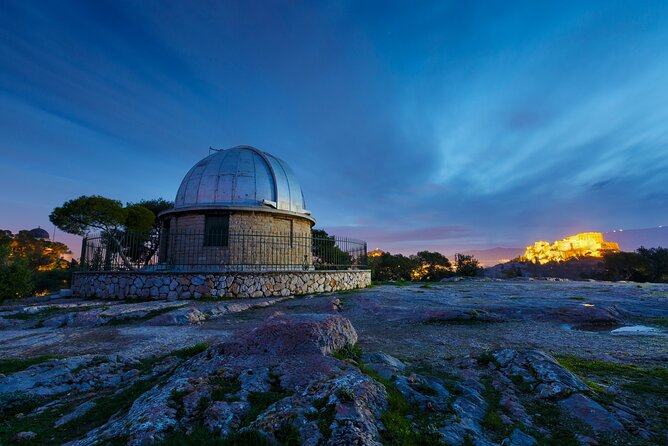
The hill is known for views toward the Acropolis and Athens by night. It gives the tour a calm ending after the denser discussion of philosophy and democracy. The setting also suits the tour’s final reflective mood. You have moved through cemeteries, civic spaces, markets, Roman remains, libraries, and neighborhoods, then finish by looking across the city.
The route ends on the hill rather than returning to the starting point. That matters when planning your evening. You should be comfortable finding your next destination from Philopappos Hill, or arrange your plans with the finish in mind.
The final discussion may feel like a small symposium, with ancient Greek philosophy used as a starting point for wider questions. The tone is conversational rather than purely academic, but the subject matter can be substantial.
Panos’ guiding style and group size
Panos is the main reason this experience works for people who want ideas, not just sightseeing. He is described as warm, humorous, enthusiastic, and able to tell stories in a way that brings the ancient city back to life.
His strongest skill is making connections. Mythology leads toward philosophy. Philosophy affects how people think about knowledge and mathematics. Those ideas shape public debate and political systems. The result is a tour with a storyline rather than nine unrelated stops.
The maximum group size is 12. That is small enough to keep the guide nearby and make conversation possible. It also supports the tour’s thoughtful style, since Panos can respond to questions and adjust the discussion to the group.
The tour is offered in English. Most people can participate, and service animals are allowed. It is near public transportation, but the route includes walking and hills, so good shoes remain important.
Is the $50.69 price good value?
At $50.69 per person, this tour costs more than a basic free walking tour, but the comparison is not quite fair. You are paying for a planned three-hour route, a small group, a specialist theme, and a guide whose interpretation is the main product.
The listed stops do not require an admission fee as part of the experience. That helps the price, since you are not paying for a bundle of expensive attraction tickets. The value comes from the explanations, the route, and the chance to reach viewpoints and historical places you might miss on your own.
I would consider it good value if you enjoy history, philosophy, political thought, or guided discussion. It is also a strong choice for families with older children and teenagers. One family found the material educational for kids, while another described the tour as suitable for high-school age and up.
You might find it less useful if your main goal is to enter major archaeological sites and spend long periods examining artifacts. In that case, book your Acropolis and Agora visits separately and use this tour for the larger story.
Practical advice for a better walk
Book early if your schedule is fixed. The experience is often reserved about 37 days ahead, which suggests that popular dates can fill well before arrival.
Try to take this tour early in your Athens stay. It can give you a framework for the Acropolis, Agora, Roman ruins, and surrounding neighborhoods. Once you understand how the city developed, later visits may make more sense.
Plan for sun and heat. The route is outdoors, and one particularly hot outing became harder for the group despite generous stops for water and ice cream. A hat, sunscreen, water, and light clothing are sensible. An evening departure in June was described as cooler and more comfortable than daytime.
Wear shoes suited to uneven streets and hills. The final climb to Philopappos Hill is part of the experience, but it is still a climb.
Free cancellation is available if you cancel at least 24 hours before the start time. Changes or cancellations inside that window are not refunded. If bad weather or an insufficient number of bookings cancels the tour, you are offered another date or a full refund.
Who should book this Athens walking tour?
Book it if you want to understand how Athens moved from myth and tradition toward reasoned inquiry, public debate, and democratic government. Book it if you like a guide who asks you to think, not simply memorize.
It is particularly well suited to couples, families with older children, students, history fans, and anyone planning to visit the Acropolis afterward. The small group and English-language format make the experience personal without turning it into a private tour.
Skip it if you dislike long explanations, hills, outdoor walking, or philosophical discussion. You will see many places briefly, so it is not a replacement for detailed archaeological visits.
Should you book it?
I would book this tour for the story it tells. Kerameikos, Pnyx Hill, the Tower of the Winds, and Philopappos Hill give you more than the usual Athens checklist, while Panos supplies the links between them.
The best reason to go is simple: you leave with a clearer sense of why Athens still matters. The main caution is equally clear: bring water, expect serious walking, and allow your mind to work as hard as your feet.
FAQ
How long does the Mythology, Philosophy and Democracy Tour last?
The tour lasts approximately three hours.
How much does the tour cost?
The listed price is $50.69 per person.
Where does the tour begin?
The meeting point is the Statue of Theseus in Athens, Greece.
Where does the tour end?
The tour ends at Philopappos Hill.
Is the tour offered in English?
Yes. The tour is offered in English.
How large is the group?
The experience has a maximum of 12 travelers.
Can I cancel for a full refund?
Yes, if you cancel at least 24 hours before the scheduled start time. Cancellations made less than 24 hours in advance are not refunded. Weather or minimum-group cancellations may result in another date or a full refund.
Just added around Athens
- Athens Hotels to Athens Airport Private Departure Transfer★ 5.0 · 40 reviews
- Private One-way Transfer between Athens International Airport and Athens Hotels★ 4.5 · 40 reviews
- Athens: Acropolis Museum Ticket with Self-Guided Audio tour App★ 3.5 · 40 reviews
- From Athens: Meteora Train Trip with Overnight Stay★ 4.8 · 40 reviews
- Athens Photography Tour★ 5.0 · 40 reviews
- Athens: Acropolis Visit and City Night Tour★ 4.7 · 40 reviews
- Delphi Full Day Private Trip From Athens With Lunch Overlooking the Sea★ 5.0 · 40 reviews
- Acropolis & Plaka Neighbourhood Private Tour with Licensed Expert★ 5.0 · 40 reviews
Athens Tours, compared.
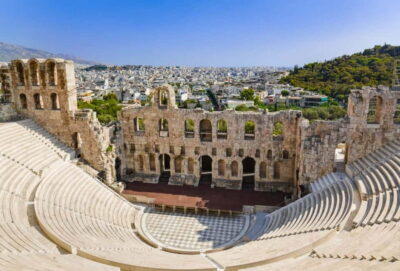
Acropolis & up to 5 Archaeological Sites Combo Pass
Read our review →

Acropolis, Parthenon & Acropolis Museum Guided Tour
Read our review →
Cape Sounion & Poseidon Temple Sunset Half-Day Trip
Read our review →

All Day Cruise -3 Islands to Agistri,Moni, Aegina with lunch and drinks included
Read our review →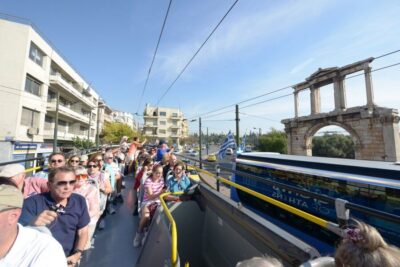
Athens, Piraeus, and Coastline: Blue Hop-On Hop-Off Bus
Read our review →