
Reviewed · MYCENAE & NAFPLIO TOURS
From Athens: Mycenae, Epidaurus & Nafplio Full Day Trip
Ancient kings, seaside streets, and one perfect theater. This 10-hour outing packs three very different Peloponnese stops into one long but well-organized day. You visit the Bronze Age citadel of Mycenae, pause at the Corinth Canal, eat and wander in Nafplio, then finish at the ancient theater of Epidaurus with an archaeologist trip attendant putting the ruins into context.
I especially like the early arrival at Mycenae, which can help you see the Lion Gate and museum before larger groups arrive. I also like the mix of places: Mycenae gives you epic archaeology, Nafplio offers a proper town break, and Epidaurus provides one unforgettable architectural moment. The main drawback is simple: the day covers a lot of ground, and the advertised price does not include €40 in site entrance fees or lunch.
The tour leaves from outside Halandri Metro Station on Athens’ Blue Line, about 20 minutes from Syntagma by metro. That suburban departure takes a little extra planning, but it can get the bus out of central Athens faster, which matters on a full-day trip.
In This Review
- Five things to know before you go
- Leaving Athens from Halandri Metro Station
- The Corinth Canal gives the day a quick start
- Mycenae puts Homeric Greece under your feet
- Nafplio supplies the day’s human scale
- Epidaurus finishes with Greece’s great ancient theater
- The archaeologist guide can shape the whole day
- What the $33.31 price really covers
- Who should book this Peloponnese day trip?
- Should you book it?
- FAQ
- Where does the tour start?
- How long does the day trip last?
- Is transportation included?
- Are Mycenae and Epidaurus entrance fees included?
- Is lunch included?
- Is the tour guided inside the archaeological sites?
- Is cancellation available?
Five things to know before you go
- The Corinth Canal is a quick but worthwhile photo stop: You get about 15 minutes for photos, coffee, and a look at the narrow waterway.
- Mycenae is the archaeological centerpiece: Allow 105 minutes to pass through the Lion Gate, see the palace area, visit the museum, and walk to the tombs.
- Nafplio is more than a lunch stop: You have about two hours total for food, the harbor, squares, and old-town streets.
- Epidaurus ends the day on a high note: The theater’s design and acoustics make it one of Greece’s most memorable ancient sites.
- The trip is led by an archaeologist: Guides such as Vivian, Voula, Stavroula, Dimi, George, and Julia have been praised for clear explanations, warmth, and care.
- Budget for extras: Mycenae costs €20, Ancient Epidaurus costs €20, and lunch is paid separately.
Leaving Athens from Halandri Metro Station
The meeting point is outside Halandri Metro Station, at the exit marked To Vrilissia. From Syntagma, the Blue Line ride takes roughly 20 minutes, so you should allow enough time to reach the station and find the correct exit.
This is not a hotel pickup in the center of Athens. That may feel less convenient if you are staying near the Acropolis, but it has a practical advantage. The bus avoids some of the central-city traffic before heading west toward the Peloponnese. One of the strongest practical points from this outing is the smooth start and punctual running of the day.
Transportation is by a modern, air-conditioned coach, with free Wi-Fi listed as part of the service. Several people praised the clean, spacious bus and careful driving, particularly a driver named Loukas. One important caution: Wi-Fi was not available on every departure, and one person reported that the bus speaker was difficult to hear. Treat the onboard commentary as useful when it works, but do not depend on it for every word.
The guide travels with the group and provides information before and after the site visits. Inside Mycenae and Epidaurus, the visits are essentially self-guided rather than full guided walks through every monument. That format gives you freedom to take photographs and explore at your own pace, but you should listen carefully to the introduction because it supplies much of the historical framework.
More Mycenae and Nafplio days:
- From Athens: Mycenae, Epidaurus & Nafplio Full-Day Tour
★ 4.5 · 1,580 reviews - 4-Day Classical Greece Tour: Epidaurus, Mycenae, Olympia, Delphi, Meteora
★ 4.5 · 732 reviews - Athens: Ancient Corinth & Nafplio Full Day Trip with Swim
★ 4.8 · 523 reviews
The Corinth Canal gives the day a quick start
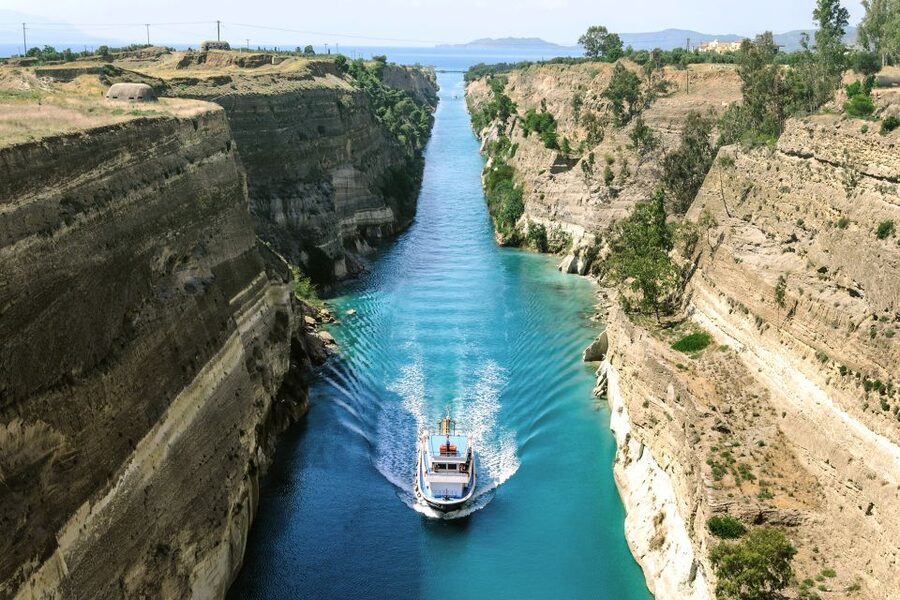
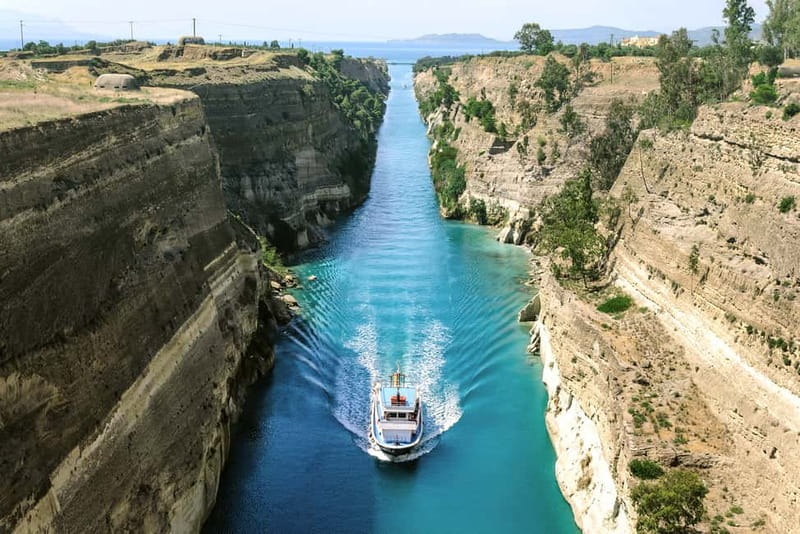
After about an hour on the road, the first stop is the Isthmus of Corinth. You get approximately 15 minutes for a photo break, coffee, and a look at the canal.
The canal cuts through the narrow Corinthian isthmus and creates a sharp visual contrast: steep sides, a slender strip of water, and bridges carrying the road above it. If a vessel happens to pass during your stop, the view becomes much more memorable. You may also be able to walk onto the bridge for a better angle, depending on the exact stopping point and group instructions.
Do not expect a full visit to Corinth or its ancient ruins. This is a short orientation stop, not a major attraction in its own right. Still, it breaks up the drive and gives you a first look at the route into the Peloponnese.
Mycenae puts Homeric Greece under your feet
Mycenae is the most important archaeological stop of the day. The site was the center of a powerful kingdom during the later Bronze Age, around 1350 BC, and its massive stone walls still create a strong first impression.
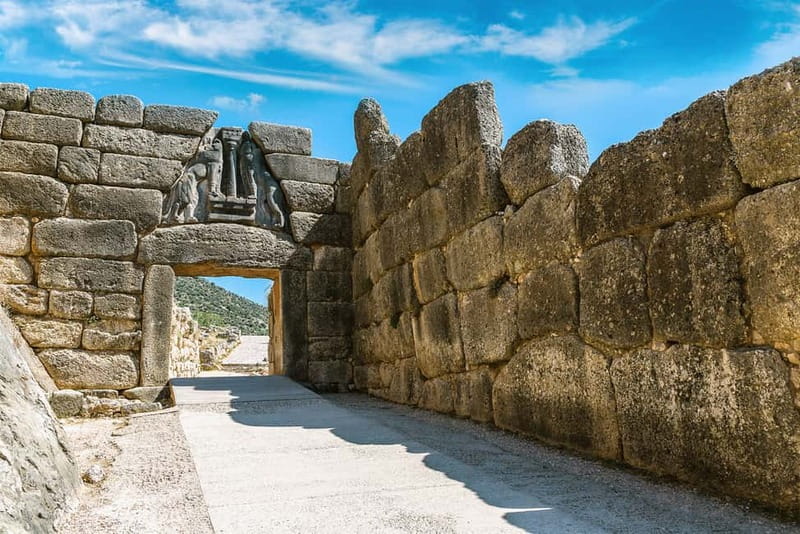
Your visit lasts about 105 minutes. You enter through the famous Lion Gate, although the surviving sculptures are often described as lionesses because of the missing heads and the form of the bodies. The gate is not merely a photo backdrop. It marks the entrance to a fortified citadel built with enormous blocks of stone, the kind of construction later Greeks attributed to the Cyclopes.
The guide’s introduction is especially useful here. Mycenae can look like a collection of stones if you arrive without context. With the story of the palace, royal burials, defensive walls, and Bronze Age power struggles in mind, the site becomes easier to read.
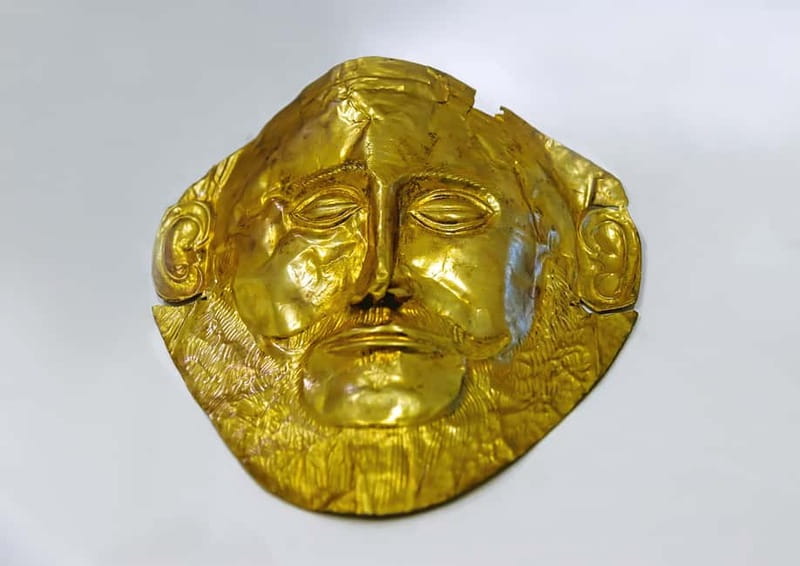
Inside the archaeological park, you can explore the palace area, the royal burial features, and the surrounding ruins. The so-called Mask of Agamemnon is displayed in the museum, although the identification with Agamemnon belongs to the famous tradition rather than firm proof. That distinction is part of what makes Mycenae so interesting: archaeology, myth, and later storytelling are constantly crossing paths.
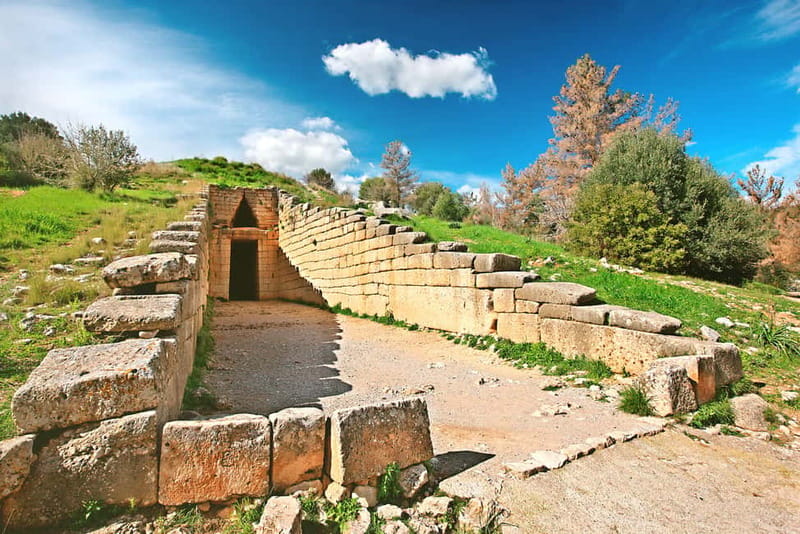
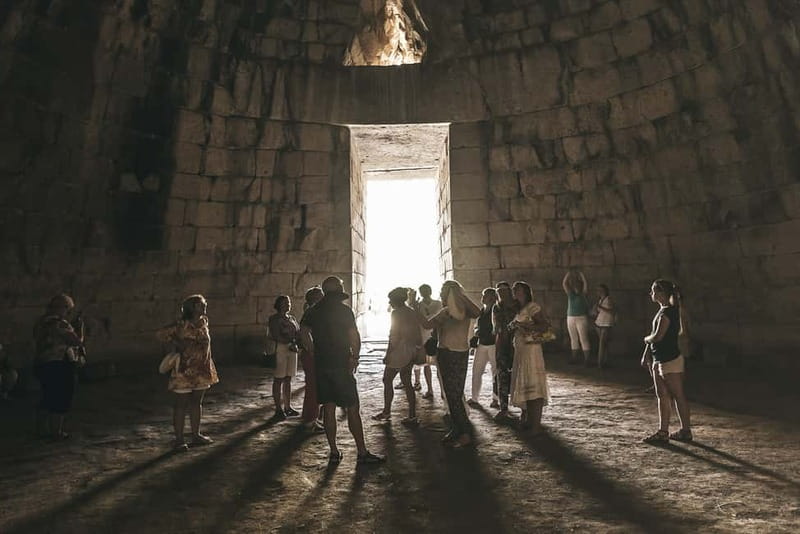
You also visit the Treasury of Atreus, often called the Tomb of Agamemnon. This beehive-shaped tholos tomb has a tall stone entrance and a broad circular chamber. The scale is impressive, especially when you remember that the builders created the structure without modern machinery.
The Tomb of Clytemnestra is another important stop. Together, these burial monuments help you understand the power of the Mycenaean ruling class better than a quick look at the palace stones alone.
The site requires walking over uneven ground, so comfortable shoes are not optional advice. The route also includes some uphill sections. If you want to visit every corner, including the museum and the underground cistern, keep an eye on the clock. One person enjoyed arriving early enough to see the site before a large school group, while another missed the secret cistern. The timing is good, but it is not generous enough for a slow, detailed archaeological study.
Mycenae entrance costs €20 and is not included. That fee is significant compared with the advertised tour price, but the visit is the main reason to choose this particular excursion.
Nafplio supplies the day’s human scale
After Mycenae, the bus takes about 25 minutes to Nafplio. This is where the day shifts from ancient ruins to a living Greek town.
Nafplio served as Greece’s capital before Athens, and its buildings show Venetian, Byzantine, Ottoman, and modern Greek influences. You have about one hour for lunch, followed by another hour for free time and sightseeing. That gives you enough time to eat and get a pleasant taste of the town, though not enough to explore every major monument.
The waterfront is the natural place to begin. You can look across the harbor toward Bourtzi, the small fortress on an islet, and up toward Acronauplia and Palamidi. The old center has picturesque squares and streets with a different feel from Athens. Nafplio works well as a midpoint because you can sit down, eat a proper meal, and stretch your legs before returning to archaeological sites.
Lunch is not included, which is a plus if you dislike fixed menus. You can choose your own meal in town, though the freedom comes with a time limit. The food choice is one area where expectations should stay realistic. A roadside or group-oriented meal would be less appealing than finding your own table in Nafplio, so use the free hour wisely.
The biggest limitation here is that you only get a taste of the town. You do not have time to climb Palamidi, tour Bourtzi, and explore the old center at a relaxed pace. Entry to Palamidi, Bourtzi, and Acronauplia is also not included.
For a simple two-hour plan, I would walk the waterfront first, continue into the central squares, then choose lunch close to the meeting point. If you want to reach Palamidi, ask the guide whether a taxi would fit the schedule. Do not attempt the climb unless you are certain you can return on time.
More things to do in Athens:
- Athens: Acropolis & up to 5 Archaeological Sites Combo Pass
★ 4.4 · 12,619 reviews - Athens: Acropolis Ticket with Optional Audio or Live Guide
★ 4.2 · 11,055 reviews - Athens: Acropolis, Parthenon & Acropolis Museum Guided Tour
★ 4.8 · 9,316 reviews - Athens: Cape Sounion & Poseidon Temple Sunset Half-Day Trip
★ 4.8 · 8,241 reviews
Epidaurus finishes with Greece’s great ancient theater
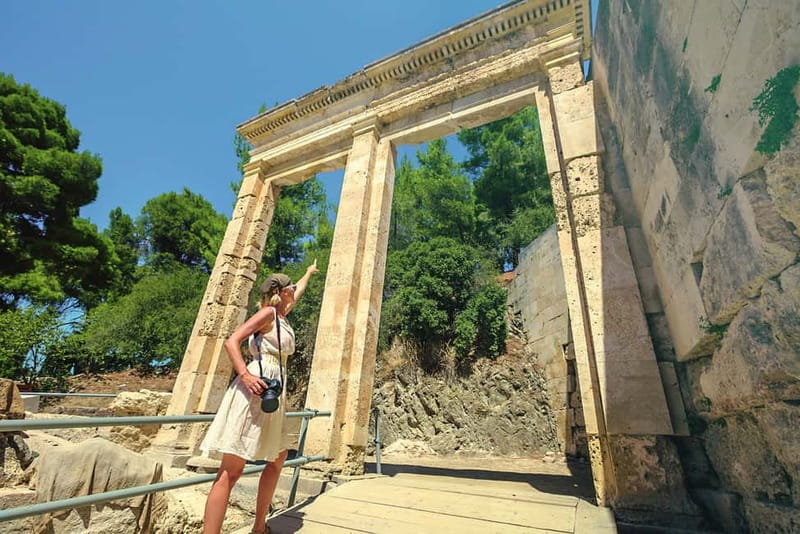
The final major stop is Ancient Epidaurus, reached after about 25 minutes from Nafplio. You have roughly 75 minutes at the site, which is a sensible amount of time for the theater and its main surroundings.
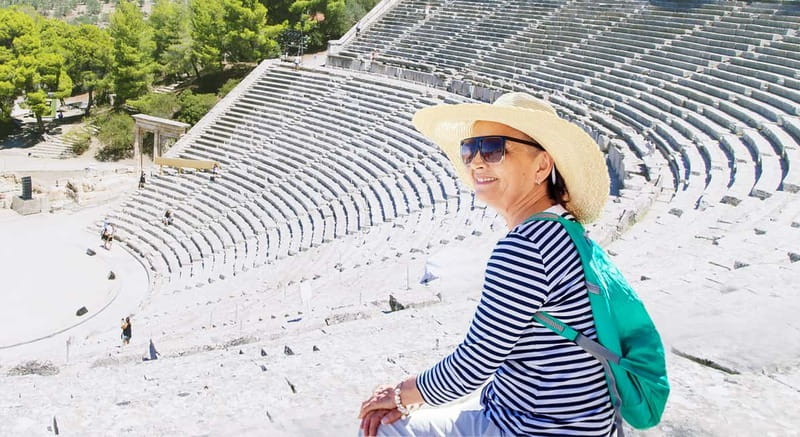
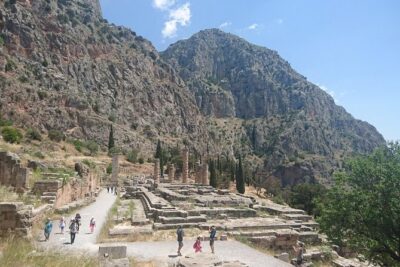
The theater is the star. Its semicircular rows sit in a natural setting, and the proportions are remarkably clear. Stand near the center of the orchestra and speak toward the upper seats. Even if the exact effect depends on noise, wind, and where other groups are standing, the theater’s acoustic design is easy to appreciate.
This is not a modern performance venue pretending to be ancient. The theater still hosts the Festival of Epidaurus each summer, giving the site a direct connection with Greek performance today. That link adds meaning to the visit: you are not only looking at a ruin, but at a building that still serves its original artistic purpose.
The sanctuary was linked to healing, though the theater usually captures most of the attention. Seventy-five minutes lets you focus on the main attraction without feeling rushed through the entire site. If you want a detailed examination of every remaining structure, you may wish for more time.
Ancient Epidaurus also costs €20, separate from the tour price. This is the second major added cost, so include both entrance fees when comparing the excursion with other day trips.
The ride back to Halandri takes about two hours. The return journey is long, especially after a full day of walking. The route can offer fine countryside views, but there are no scheduled scenic photo stops on the way back. If you hope to stop at viewpoints, ask about that before departure rather than assuming it is part of the plan.
The archaeologist guide can shape the whole day
The most praised part of this experience is the guide service. An archaeologist trip attendant travels with the group, and the strongest guides do more than recite dates. They explain the myths, point out details in the stonework, connect the sites to one another, and keep the long bus rides lively.
Vivian received repeated praise for combining archaeology, mythology, art, and practical advice. Voula and Stavroula were also singled out for entertaining explanations and imaginative mythological stories. Dimi was described as warm and attentive, while George was appreciated for explaining each stop and then giving people room to explore independently.
That last point matters. Some people want a lecture beside every column. Others prefer a clear briefing, followed by freedom to wander. This trip leans toward the second model. You get expert preparation, then self-guided time inside the archaeological parks.
Care also seems to be part of the service. One guide named Julia helped a participant who injured an ankle and made sure that person stayed comfortable. That does not replace proper planning for uneven ground, but it suggests that the staff pay attention to practical needs.
There are limits. A faulty speaker made it hard for one group to hear the guide, and the bus bathroom was advertised but not usable on at least one departure. The safest approach is to use facilities during scheduled stops and tell the guide quickly if you cannot hear.
What the $33.31 price really covers
At $33.31 per person, the basic price is unusually low for a 10-hour excursion covering this much distance. It includes round-trip bus transportation, the archaeologist attendant, basic travel insurance, and listed Wi-Fi access.
But the real cost is higher. Add €20 for Mycenae, €20 for Epidaurus, and the price of lunch. The castles in Nafplio require separate payment if you choose to enter them. You should compare the full day’s cost, not just the headline figure.
Even with those additions, the value is good if you want to see all three destinations without renting a car or working out several regional bus connections. The coach saves you from driving unfamiliar roads, and the guide gives you a useful framework at sites where signs alone would not be enough.
A private option is available as well as a shared guided experience. The shared trip is likely the better value for most people. A private departure may make more sense if you want a more flexible pace, have special interests in archaeology, or prefer not to follow a larger group.
Who should book this Peloponnese day trip?

I would choose this excursion if you have one open day in Athens and want a broad introduction to the northeastern Peloponnese. It suits first-time visitors, Greek history fans, families with older children, and anyone who wants transportation and site planning handled in one package.
It is especially good if Mycenae is high on your list but you also want to see Nafplio and Epidaurus. The schedule is well paced, according to the day’s timing: each stop feels substantial, but the tour keeps moving before the long return drive becomes even longer.
I would hesitate if you dislike early starts, long bus rides, uneven paths, or fixed departure times. Nafplio also deserves more than two hours, and serious photographers or archaeology specialists may want separate full-day visits.
Book with comfortable shoes, water, sun protection, and a plan for lunch. Check the exact departure time, meet outside the correct Halandri exit, and bring enough money for €40 in entrance fees plus food.
Should you book it?
Yes, if you want strong sightseeing value in a single day and accept the long return to Athens. Mycenae provides the drama, Nafplio gives you a welcome town break, and Epidaurus supplies the memorable finale.
The best reason to book is the combination of sites with an archaeologist guide. The main reason to skip it is not poor organization, but limited time. You will see three major places, not master them. For a first look at the Peloponnese from Athens, that is a fair trade.
FAQ
Where does the tour start?
It starts outside Halandri Metro Station on Athens’ Blue Line. Use the exit marked To Vrilissia and meet the trip attendant outside the station.
How long does the day trip last?
The full experience lasts about 10 hours and returns to the same Halandri Metro Station meeting point.
Is transportation included?
Yes. Round-trip transportation is provided in a modern, air-conditioned bus. Free Wi-Fi is listed as included, although availability may vary by departure.
Are Mycenae and Epidaurus entrance fees included?
No. Mycenae costs €20 and Ancient Epidaurus costs €20. These fees are paid separately.
Is lunch included?
No. Lunch is not included, and you choose and pay for your own meal in Nafplio.
Is the tour guided inside the archaeological sites?
The trip attendant provides explanations and historical context, but the visits inside Mycenae and Epidaurus are self-guided rather than full guided tours.
Is cancellation available?
You can cancel up to 24 hours before the activity for a full refund. A reserve-now, pay-later option is also available.
More 1-Day Tours in Athens
- Athens: Meteora Monasteries Day Trip with Caves and Lunch
★ 4.7 · 2,964 reviews - From Athens: Small-Group Delphi, Museum & Arachova Day Trip
★ 4.8 · 2,476 reviews - Delphi English Day Trip from Athens with Official Guide
★ 4.5 · 2,199 reviews - Athens: Peloponnese Highlights Day Trip and V.R. Audio Guide
★ 4.5 · 1,425 reviews
More Full-Day in Athens
- All Day Cruise -3 Islands to Agistri,Moni, Aegina with lunch and drinks included
★ 5.0 · 4,958 reviews - From Athens: Delphi Full Day V.R. Audio Guided Tour
★ 4.6 · 3,028 reviews - Athens Full Day Private Tour
★ 5.0 · 2,903 reviews - Athens Greece Full Day private tour
★ 5.0 · 785 reviews
Just added around Athens
- Athens Hotels to Athens Airport Private Departure Transfer★ 5.0 · 40 reviews
- Private One-way Transfer between Athens International Airport and Athens Hotels★ 4.5 · 40 reviews
- Athens: Acropolis Museum Ticket with Self-Guided Audio tour App★ 3.5 · 40 reviews
- From Athens: Meteora Train Trip with Overnight Stay★ 4.8 · 40 reviews
- Athens Photography Tour★ 5.0 · 40 reviews
- Athens: Acropolis Visit and City Night Tour★ 4.7 · 40 reviews
- Delphi Full Day Private Trip From Athens With Lunch Overlooking the Sea★ 5.0 · 40 reviews
- Acropolis & Plaka Neighbourhood Private Tour with Licensed Expert★ 5.0 · 40 reviews
Mycenae & Nafplio Tours, compared.

4-Day Classical Greece Tour: Epidaurus, Mycenae, Olympia, Delphi, Meteora
Read our review →
Ancient Corinth & Nafplio Full Day Trip with Swim
Read our review →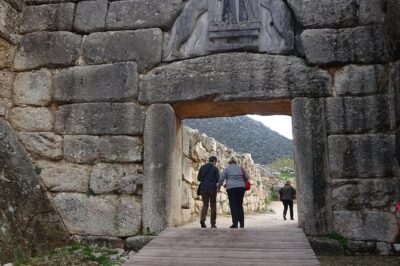
Mycenae and Nafplion Day Trip from Athens with Official guide
Read our review →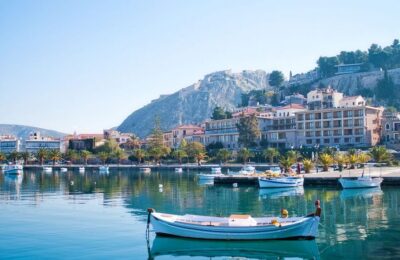
3-Day Classical Greece Tour: Epidaurus, Mycenae, Nafplion, Olympia, Delphi
Read our review →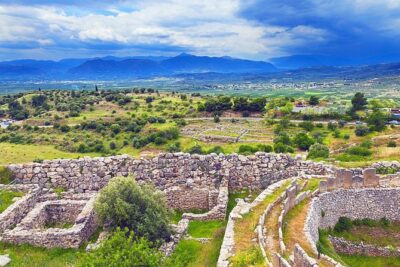
Mycenae, Epidaurus, Nafplio Full Day Private Tour from Athens
Read our review →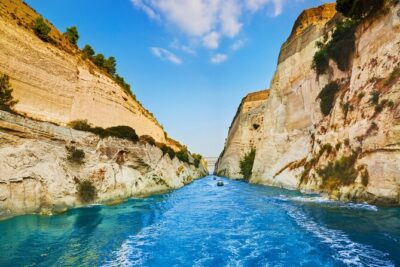
Mycenae, Epidaurus & Nafplio Full-Day V.R audio guided Tour
Read our review →Browse the lists this tour appears in