
Reviewed · WORKSHOPS
Ceramic and Pottery Creative Workshop with Two Local Artists
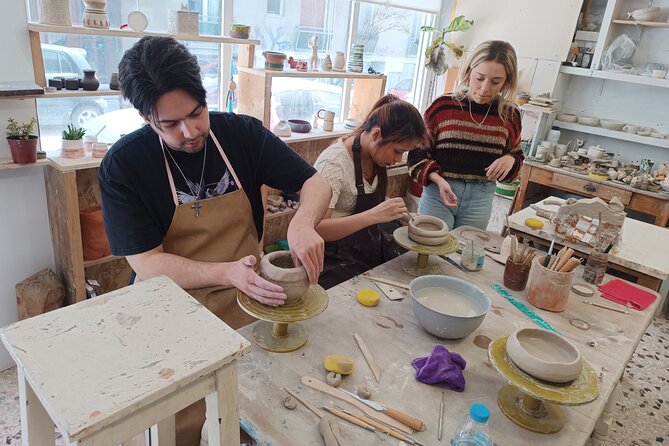
Clay makes a fine Athens break. This two-hour pottery workshop gives you time away from ruins and busy streets, with hands-on instruction from local artists and all materials included. I like the small maximum of six people, and I like that complete beginners can make something from scratch without needing artistic experience. The main catch is important: firing, glazing, collection, and shipping your piece are not included in the $36.04 price.
The workshop takes place at Genneou Kolokotroni 8, near public transportation. I especially like the relaxed pace praised by many participants, along with the patient, friendly teaching associated with Pavlos and Rossina. Still, you should ask clear questions about the finished piece before you begin, since drying, kiln work, glazing, and delivery can add both cost and waiting time.
In This Review
- Key points to know before shaping your clay
- A calm creative stop in central Athens
- The first step: wedging and learning the tools
- Pinching, shaping, and building your own piece
- Adding a personal touch to the clay
- What the $36.04 price really covers
- The biggest concern: getting the pottery afterward
- Why the teachers receive such strong praise
- Who will enjoy this Athens pottery class?
- Timing, transport, and practical planning
- How to make the most of your two hours
- Should you book this Athens pottery workshop?
- FAQ
- How long does the pottery workshop last?
- Where does the workshop start and finish?
- Is the workshop suitable for beginners?
- Is a pottery wheel included?
- What does the price include?
- Are firing, glazing, and shipping included?
- Can I cancel for a full refund?
Key points to know before shaping your clay
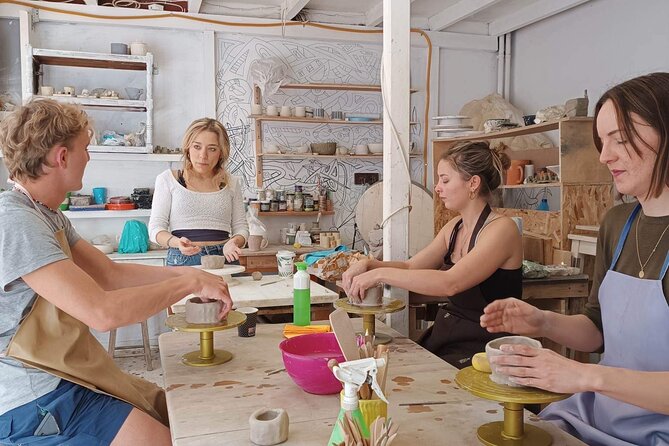
- Small groups of up to six: You get more help than in a crowded craft class, and the session can feel personal even when other people attend.
- Handbuilding, not a guaranteed pottery wheel session: The stated activity centers on wedging, pinching, shaping, and decorating by hand.
- A usable piece starts with construction: You make the object yourself, but it must still dry, be fired, and usually be glazed before normal use.
- Local artists lead the work: Pavlos and Rossina are named instructors, with other feedback also mentioning George and an assistant.
- The finished piece may cost extra to receive: Firing, transparent glazing, and shipping are available on request, but shipping is not included and reports of long delays make this worth confirming in advance.
- Best value at $36.04: The price is fair for two hours of instruction, clay, tools, and a creative activity, but less attractive if taking home the finished pottery is essential.
A calm creative stop in central Athens
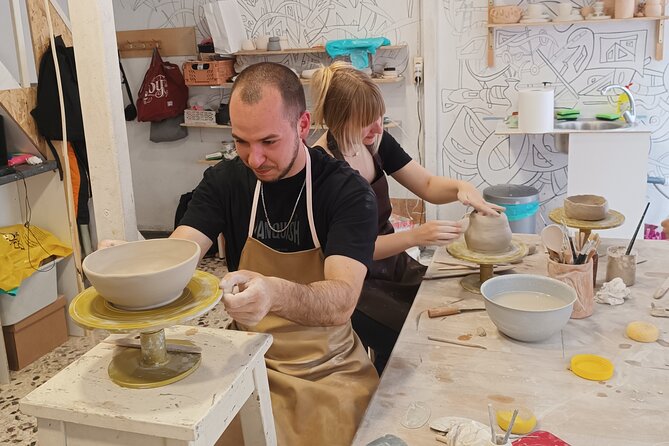
Athens is full of big sights, hot stone, crowded viewpoints, and long museum visits. This class gives you a quieter two hours in which the main task is simply to work with your hands.
The workshop is based in central Athens at Genneou Kolokotroni 8, Athina 117 41. The address is near public transportation, so you can fit it into a day of sightseeing without making a major journey across the city.
The setting matters because pottery asks you to slow down. You are not racing from one display to the next. You are handling clay, listening to instructions, and making small decisions about shape and decoration. Several people describe the session as relaxing, peaceful, and therapeutic, which makes it a sensible choice after a morning at the Acropolis or a packed museum schedule.
The experience is offered in English. It is open to beginners and people with previous pottery experience, so you do not need to arrive knowing how to center clay or use professional equipment.
More Workshops in Athens
- Athens: Classic Cooking Class with Market Visit and Wine
★ 5.0 · 1,101 reviews - Athens: Food Market Visit and Cooking Class with Wine
★ 4.9 · 1,087 reviews - Greek Cooking Class in Athens Including Rooftop Dinner with Acropolis View
★ 5.0 · 826 reviews
The first step: wedging and learning the tools
Your session begins by getting familiar with the clay, tools, and basic process. Wedging prepares the clay for use, while also giving you a first feel for its texture and resistance.
This is not just a formal demonstration. The point is to help you understand how the material behaves before you try to build an object. Clay looks soft and simple, but it can be surprisingly stubborn. One first-time participant described the material as harder than expected, while still finding the activity enjoyable.
That is useful to know. You are not buying a quick souvenir-making machine. You are learning a craft in a short introduction. The instructor’s role is to keep the process manageable, explain the theory, and help you avoid common mistakes.
Teaching quality appears to be one of the strongest parts of the experience. Pavlos is described as personable, encouraging, and good at explaining techniques in simple terms. Rossina is praised for giving practical tips and listening to the creative ideas of the people in her class. George is also described as a supportive guide who demonstrates the process and offers feedback.
The exact instructor may be Pavlos or Rossina, as the experience is presented with two local artists. The supplied feedback also names George and an assistant, so the teaching arrangement may vary. That is not necessarily a problem, but you should not assume a particular person will lead your session unless you confirm it.
Pinching, shaping, and building your own piece
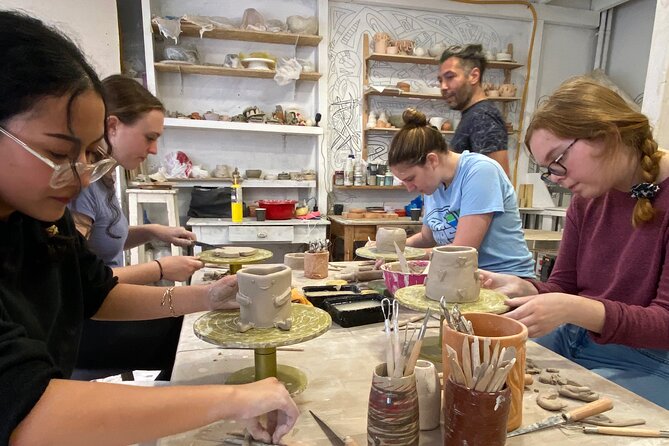
The main activity is handbuilding pottery. You work from a lump of clay and use techniques such as pinching and shaping to create an object.
Handbuilding is different from throwing clay on a wheel. Your fingers do more of the work, and the final form can feel more personal because you are building it gradually. You might make a small vessel or another usable form, depending on the instruction and your own idea.
One practical point deserves special attention: the official activity is a handbuilding class. At least one person arrived expecting to use an electric pottery wheel and was disappointed when the project involved only handbuilding. If the wheel is the reason you are interested, ask before booking. Do not treat a pottery class in Athens as an automatic wheel-throwing lesson.
The class works well for families because the instructor can adjust the pace and level of help. A family with children aged 10, 8, and 3 found that each child could take part according to interest and ability. A five-year-old also enjoyed the experience with a parent.
Very young children may need close adult help, especially when handling tools and trying to keep the clay shape stable. The activity is listed as suitable for most people, and service animals are allowed, but the information does not provide detailed guidance about child seating, studio layout, or specific accessibility equipment. If those details matter to you, ask ahead.
Adding a personal touch to the clay
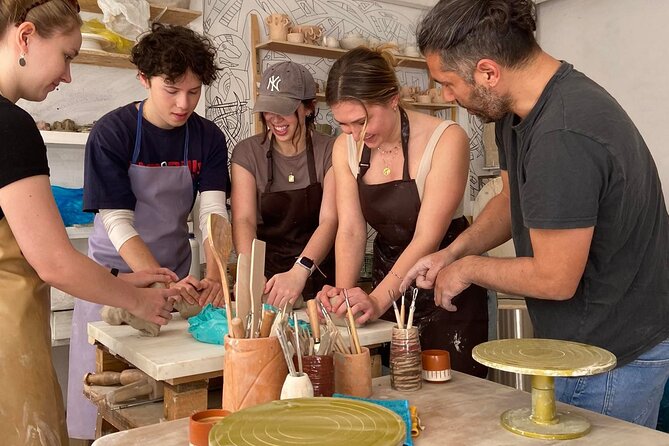
Once the basic form is built, you add your own design choices. This is where the class shifts from technique to expression.
You might keep the surface simple, add texture, or shape the object around an idea from your trip. The teachers encourage creativity rather than forcing everyone to copy one model. That freedom is especially useful if you are attending with friends, siblings, or teenagers and want each person to make something different.
The small group limit helps here. With no more than six people, the instructor has a better chance to check your walls, edges, and joins before a small problem becomes a collapse. Several sessions had only three people, creating a particularly personal feel.
At the same time, you should keep your expectations realistic. Two hours is enough for a satisfying introduction and the construction of one piece. It is not enough to become skilled at pottery or produce a gallery-quality object every time.
The most valuable souvenir may be the process, not the finished item. You will understand why clay needs careful handling, why a shape can crack, and why a handmade object has small irregularities. That makes the class more meaningful than simply buying a ceramic bowl from a shop.
More things to do in Athens:
- Athens: Acropolis & up to 5 Archaeological Sites Combo Pass
★ 4.4 · 12,619 reviews - Athens: Acropolis Ticket with Optional Audio or Live Guide
★ 4.2 · 11,055 reviews - Athens: Acropolis, Parthenon & Acropolis Museum Guided Tour
★ 4.8 · 9,316 reviews - Athens: Cape Sounion & Poseidon Temple Sunset Half-Day Trip
★ 4.8 · 8,241 reviews
What the $36.04 price really covers
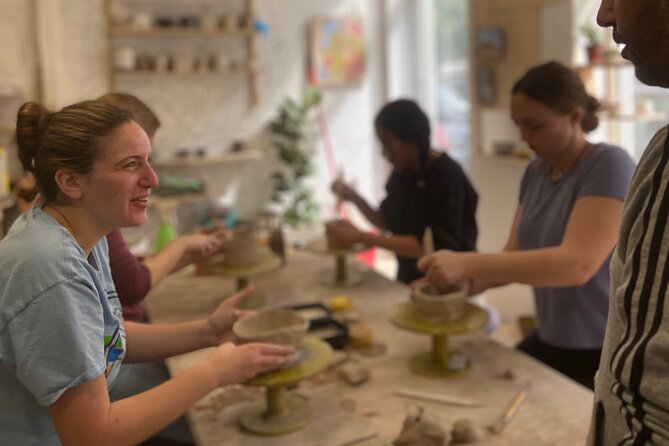
At $36.04 per person, the cost is reasonable for a two-hour guided activity in central Athens. You receive instruction, clay, the needed tools, and the construction of one usable piece.
The word usable needs a little explanation. The class includes the construction of the piece, but the object is not ready for ordinary use immediately after you finish it. It needs time to dry, then kiln firing, and possibly transparent glazing.
The extra finishing work is not included in the listed price. Firing and glazing are optional services, and shipping is also extra. This is the point most likely to affect your budget and expectations.
A clay object can take around five to six days to dry before kiln work begins. Additional firing and glazing steps take more time, and the finished piece may not be ready for collection for roughly two or three weeks, depending on the arrangement and workload.
If you live nearby or remain in Athens long enough, collection may be possible. If you are flying home soon, ask about the complete process before choosing a large or heavy object. Shipping has been quoted at about €35 per piece in one account, but the exact amount can depend on weight and destination.
That cost may be fair for carefully packed international delivery, but it can exceed the class price. Decide at the start how much you are willing to spend on receiving the pottery. A small piece may be a better choice than a heavy vessel if shipping is important to you.
The biggest concern: getting the pottery afterward
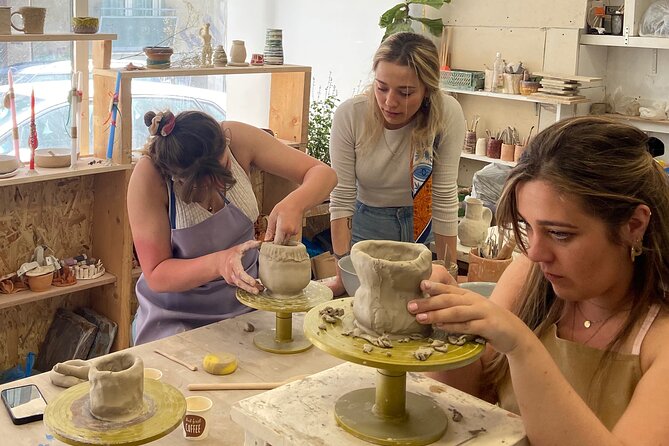
The artistic session receives far more praise than the post-class delivery arrangements. The class itself is often described as fun, warm, encouraging, and well taught. The serious complaints concern finished pottery, communication, and unclear extra charges.
Some people waited months for pieces to be shipped and had trouble getting updates. Others reported unanswered messages or difficulty arranging collection. One person had not received pottery four months after paying for shipping, while another waited around two months before trying to get a response.
These reports do not mean your piece will necessarily be lost or delayed. They do mean you should treat shipping as a risk that requires clarification, not as an automatic part of the experience.
Before you start, ask these direct questions:
- Is firing included in the price of my booking?
- What is the current cost of glazing?
- How long will the piece take before collection?
- Can I collect it in person, and during what hours?
- What is the estimated shipping fee to my country?
- Who should I contact for an update after the class?
If taking home a physical souvenir is essential, get the answers in writing if possible. You may also decide to enjoy the making process without paying for delivery. That is the safest choice if your Athens visit is short or your departure date is close.
Why the teachers receive such strong praise
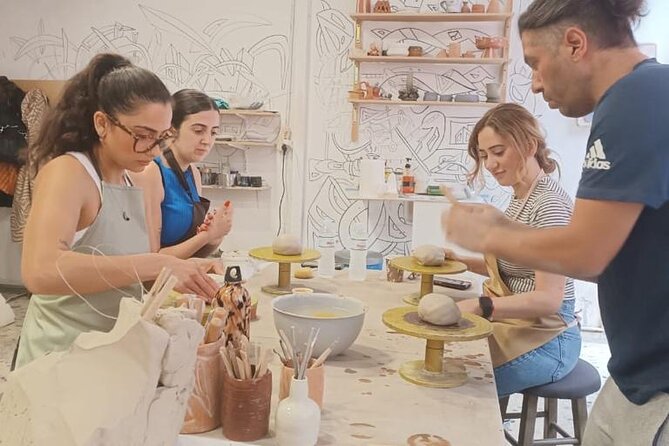
The instructors are repeatedly praised for patience, humor, clear explanations, and a friendly manner. That combination matters because clay can make beginners feel awkward within minutes.
A good teacher shows enough technique to get you moving, then lets you make choices. Pavlos is described as attentive and personable, and one group appreciated that the session did not feel rushed. Rossina is praised for helping participants turn their own ideas into a finished form.
The warm details also matter. One teacher arranged coffee for a group, adding a simple touch that made the studio feel welcoming. Other comments describe an easygoing atmosphere where people laughed, shared ideas, and worked alongside one another.
The experience is not presented as a formal art-school course. It is friendlier and less demanding. You receive enough guidance to create something, but the point is enjoyment and experimentation.
Who will enjoy this Athens pottery class?
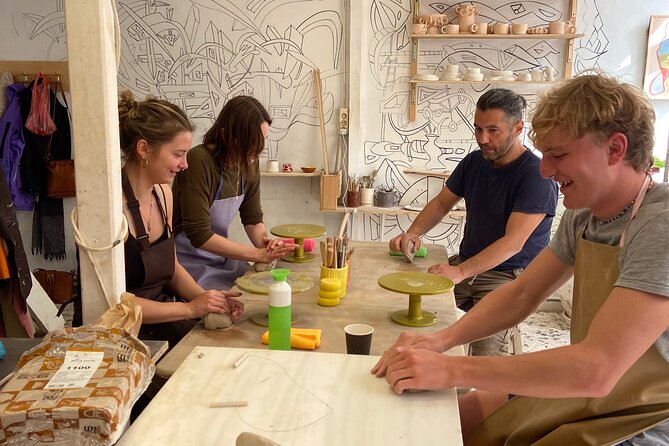
I would recommend it most strongly to:
- Couples or friends who want a hands-on activity rather than another monument
- Families with children who can manage a two-hour creative session
- Teenagers who enjoy making things and want a break from standard sightseeing
- First-time pottery makers who want patient help
- Anyone seeking a calm indoor activity in central Athens
- People who enjoy souvenirs with a personal story
It is also a good fit for a small group of siblings or friends. The shared table atmosphere gives you something to talk about, while each person still makes an individual object.
I would be more cautious if you want a pottery-wheel lesson, need a guaranteed finished souvenir before flying home, or dislike extra charges that are not clear at the start. Serious pottery students may also find the two-hour format too basic.
Timing, transport, and practical planning
The activity lasts about two hours and begins and ends at Genneou Kolokotroni 8. Because the maximum group size is six, the session may feel more like a private lesson than a large tour.
The meeting point is near public transportation, which makes it relatively easy to add to an Athens itinerary. Still, allow enough time to reach the address without arriving breathless. The class depends on a fixed start time, and changes made less than 24 hours before the start are not accepted.
You can cancel for a full refund up to 24 hours before the experience begins. The activity may also be canceled if the minimum number of participants is not met or if poor weather affects operation. In either case, you are offered another date or a full refund.
A mobile ticket is provided, and the class is offered in English. Confirmation is received at booking, which is useful when you are arranging several Athens activities close together.
Wear something you can work comfortably in. The supplied details do not specify an apron or clothing policy, so avoid bringing an outfit that you would be upset to mark with clay. The most important item to bring is not special equipment, but patience.
How to make the most of your two hours
Arrive with a loose idea rather than a rigid plan. Clay changes as you work, and a simple object is often more successful than an ambitious one.
Listen closely during wedging and construction. Small details such as wall thickness, joins, and the way you smooth an edge can affect whether the piece dries well.
Do not choose a large piece simply because it looks impressive at the start. If you might pay for shipping, weight can make a major difference, and large forms may also take more care to dry.
Take a photo of your creation before leaving. It gives you a record while the piece is drying and provides a useful reference if you later need to identify it during collection or shipping.
Most of all, allow yourself to make something imperfect. Handmade pottery has fingerprints, uneven curves, and small surprises. That is the point. A perfectly identical object could have come from a shop.
Should you book this Athens pottery workshop?
Yes, if you want a friendly, small-group creative activity and you are happy to view the class as the main souvenir. At $36.04, two hours of instruction, materials, tools, and a handmade project offer good value, particularly for families, couples, and first-time pottery makers.
Book with caution if you must receive the finished piece after your visit. Firing and glazing cost extra, shipping is not included, and the reported delays in communication are serious enough to warrant clear questions before you pay for delivery.
My practical choice would be to book the workshop for the making experience, keep the piece modest in size, and confirm every finishing and collection detail before shaping the clay. If the teacher is Pavlos or Rossina and the group stays small, you can expect a relaxed, personal introduction to pottery in the heart of Athens.
FAQ
How long does the pottery workshop last?
The handbuilding experience lasts approximately two hours.
Where does the workshop start and finish?
It starts at Genneou Kolokotroni 8, Athina 117 41, Greece, and ends back at the same meeting point.
Is the workshop suitable for beginners?
Yes. Beginners and people with previous pottery experience can participate, and the instructor guides you through the process.
Is a pottery wheel included?
The stated activity focuses on handbuilding techniques such as wedging and pinching. A pottery wheel is not guaranteed.
What does the price include?
The price includes the two-hour handbuilding experience, the materials and tools needed, and construction of one usable piece.
Are firing, glazing, and shipping included?
No. Firing and transparent glazing are available on request but are not included in the price. Shipping also costs extra.
Can I cancel for a full refund?
Yes. You can cancel at least 24 hours before the local start time for a full refund. Changes or cancellations made less than 24 hours before the start are not accepted.
Just added around Athens
- Athens Hotels to Athens Airport Private Departure Transfer★ 5.0 · 40 reviews
- Private One-way Transfer between Athens International Airport and Athens Hotels★ 4.5 · 40 reviews
- Athens: Acropolis Museum Ticket with Self-Guided Audio tour App★ 3.5 · 40 reviews
- From Athens: Meteora Train Trip with Overnight Stay★ 4.8 · 40 reviews
- Athens Photography Tour★ 5.0 · 40 reviews
- Athens: Acropolis Visit and City Night Tour★ 4.7 · 40 reviews
- Delphi Full Day Private Trip From Athens With Lunch Overlooking the Sea★ 5.0 · 40 reviews
- Acropolis & Plaka Neighbourhood Private Tour with Licensed Expert★ 5.0 · 40 reviews
Workshops, compared.

Classic Cooking Class with Market Visit and Wine
Read our review →
Food Market Visit and Cooking Class with Wine
Read our review →
Greek Cuisine Cooking Class in Santorini with Recipes and Wine
Read our review →
Half-Day Cooking Class at Basiliko Family Tavern
Read our review →
Greek Cooking Class in Athens Including Rooftop Dinner with Acropolis View
Read our review →
Greek Small-Group Athens Cooking Class & Dinner
Read our review →
Authentic Cooking Class in the White Mountains
Read our review →
Browse the lists this tour appears in