Reviewed · ATHENS TOURS
Big Bus Athens Hop-On Hop-Off with optional Piraeus & Riviera
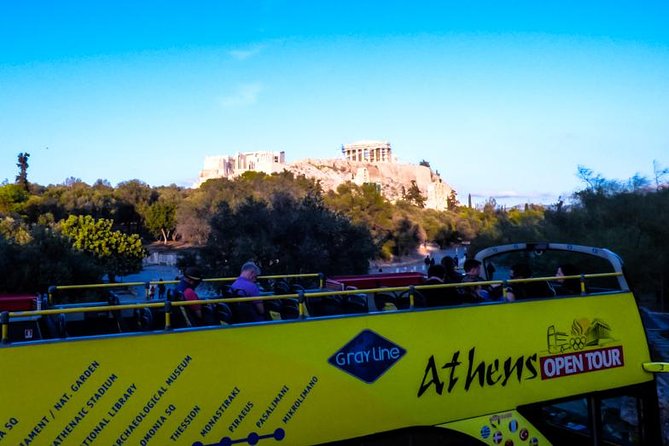
Athens looks better from the top deck. I like the three-route network, which links the historic center with Piraeus and the coastal Riviera, and I like the freedom to hop off near major sights such as the Acropolis, Temple of Zeus, and Panathenaic Stadium. The main catch is traffic: delays, crowded buses, and confusing route changes can eat into your sightseeing time.
The pass is sold for 48 or 72 hours, with audio commentary, headphones, and onboard Wi-Fi. I would use the Athens route to get oriented, then choose either Piraeus or the Riviera for a longer ride. The city center is walkable, so this bus works best as a sightseeing tool and a backup when the heat, distance, or tired feet begin to win.
In This Review
- Key points to know before you board
- What the Big Bus Athens pass actually gives you
- Start with the Athens route around the ancient center
- Acropolis and Parthenon
- Temple of Olympian Zeus
- Hellenic Parliament and Syntagma Square
- Benaki Museum and Panathenaic Stadium
- Vallianeio Megaron and the National Library
- National Archaeological Museum
- Omonia, Karaiskaki, and Kotzia Squares
- Old Parliament and Monastiraki Square
- Piraeus adds port views and a different side of Athens
- The Riviera route is the longest and most scenic outing
- Audio commentary is useful, but bring realistic expectations
- Delays and crowded buses can change your day
- How to get the best value from 48 or 72 hours
- Who should book this Athens bus tour?
- Should you book the Big Bus Athens experience?
- FAQ
- How long is the Big Bus Athens tour?
- How many routes are included?
- Is audio commentary available?
- Is Wi-Fi available on the bus?
- Does the bus stop at the Acropolis?
- How often do the buses run?
- What is the cancellation policy?
Key points to know before you board
- Three routes cover very different Athenian experiences: ancient Athens, the port city of Piraeus, and the beaches and marinas of the southern coast.
- The Athens route is the most practical: buses are generally scheduled about every 20 minutes, while the Piraeus and Riviera routes run less often.
- The Acropolis stop is useful but not at the monument entrance: the bus stops near Dionysos Restaurant and the south entrance area, so you still walk to the archaeological site.
- A two-day pass gives the best value: it leaves time for a city circuit plus one coastal or port outing without forcing every stop into a single day.
- Audio quality is not perfectly consistent: some buses have weak headphone connections or faulty speakers, so bring patience and ask staff for help.
- Check the route before boarding: not every bus serves every stop, and some ticket versions may not include all three routes.
What the Big Bus Athens pass actually gives you
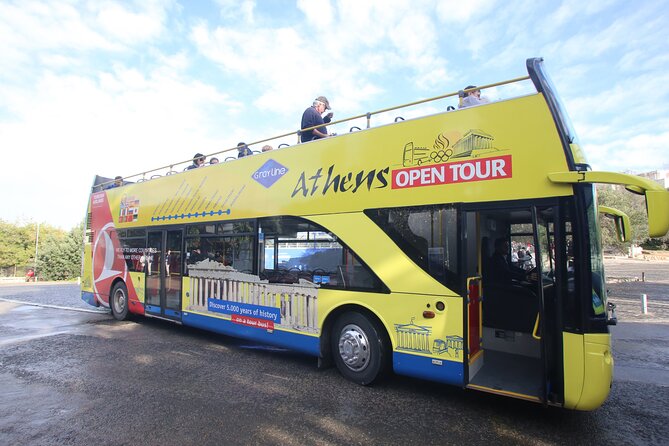
The advertised price is about $27.56 per person, though the amount can change with booking conditions and ticket selection. In exchange, you receive unlimited hop-on, hop-off access for either 48 or 72 hours, a useful span of time in a city where traffic can turn a short ride into a long one.
The pass includes the Athens route, plus access to the Piraeus and Riviera routes when you select the all-route option. This detail matters. Some buyers have encountered an extra charge to use every route, so check the exact ticket description before paying. You do not want to discover at the port that your city ticket does not cover the coast.
You get a mobile ticket, headphones, and free Wi-Fi onboard. The commentary is available in 14 languages, although language availability and audio equipment can vary by bus. Children must travel with an adult, and service animals are allowed.
A full non-stop circuit takes about two hours, according to the listed tour duration. That is enough for a first look, but not enough for a proper visit to the Acropolis, museum, or archaeological sites. Think of the bus as moving transportation with a narrated overview, not as a replacement for walking through Athens.
More things to do in Athens:
- Athens: Acropolis & up to 5 Archaeological Sites Combo Pass
★ 4.4 · 12,619 reviews - Athens: Acropolis Ticket with Optional Audio or Live Guide
★ 4.2 · 11,055 reviews - Athens: Acropolis, Parthenon & Acropolis Museum Guided Tour
★ 4.8 · 9,316 reviews
Start with the Athens route around the ancient center
The central Athens route is the one I would take first. It passes the city’s major monuments, central squares, museums, and older neighborhoods, giving you a useful mental map before you begin exploring on foot.
The route includes roughly 15 central stops, with Syntagma Square serving as a key point. Since Athens is relatively walkable in the central area, you may not need the bus for every short journey. Its value is greatest when you want a broad overview, a break from the heat, or a quick ride between sights that are not quite next door.
The main stops are as follows.
Acropolis and Parthenon
The Acropolis stop is listed near 69 Rovertou Galli Street, next to Dionysos Restaurant, with another stop for Plaka and the south entrance area near Melina’s statue. This is the practical stop for the Acropolis, though the bus does not carry you directly into the archaeological site.
You will need to walk from the bus stop to the entrance and allow time for admission and security. The stop also puts you near Plaka, the old neighborhood below the Acropolis, making it easy to combine ancient sights with a meal or a stroll through narrow streets.
Do not confuse the bus stop with the Acropolis Museum stop. The museum is separate and deserves its own visit.
Temple of Olympian Zeus
The Temple of Zeus stop sits next to the temple entrance. It is one of the easiest stops for a quick look at the enormous Corinthian columns, which give you a sense of the scale of Roman-era Athens.
This is a good place to hop off if you want to connect the Acropolis area with Syntagma Square. You can also use it as a short stop between longer rides. The attraction itself is not an all-day visit, so the bus works well here.
A completely different sort of day out in Athens:
- Athens: Cape Sounion & Poseidon Temple Sunset Half-Day Trip
★ 4.8 · 8,241 reviews - Athens: Acropolis and Parthenon Guided Walking Tour
★ 4.6 · 5,882 reviews - All Day Cruise -3 Islands to Agistri,Moni, Aegina with lunch and drinks included
★ 5.0 · 4,958 reviews - Athens, Piraeus, and Coastline: Blue Hop-On Hop-Off Bus
★ 3.9 · 4,849 reviews
Hellenic Parliament and Syntagma Square
The Parliament stop is next to the Hellenic Parliament on Vasilisis Amalias Avenue. Syntagma Square is another central stop, listed at 1 Ermou Street and also near the main shopping area.
This is a useful place to begin or end your bus day. It is central, easy to recognize, and close to major streets. The bus provides an overview, but you will get more from the area by walking around the square and nearby streets after hopping off.
Benaki Museum and Panathenaic Stadium
The Benaki Museum stop is opposite the museum, while the Panathenaic Stadium stop is opposite the stadium. These are two different kinds of sightseeing.
The Benaki Museum offers a museum-based look at Greek art and culture, while the marble Panathenaic Stadium is an instantly recognizable landmark with a strong connection to the modern Olympic movement. The bus makes it easy to choose one or both without arranging separate transportation.
Vallianeio Megaron and the National Library
The stop called Vallianeio Megaron is in front of the National Library. It places you near a grand group of civic and cultural buildings in central Athens.
I would treat this as part of a walking section rather than a quick hop-off photo stop. The bus gives you the location, but the surrounding area makes more sense when you slow down and walk.
National Archaeological Museum
The National Archaeological Museum stop is in front of the museum. This is one of the most important stops for anyone who wants more than an outdoor look at Athens.
Plan this stop carefully. A museum visit can easily take several hours, so do not hop off here late in the day and expect to fit the rest of the route afterward. The bus is convenient for reaching the museum, but the schedule still controls your return.
Omonia, Karaiskaki, and Kotzia Squares
The central route also reaches Omonia Square, Karaiskaki Square, and Kotzia Square. These stops are useful for seeing parts of Athens beyond the postcard monuments.
Omonia is listed near the Hondos Center store. Karaiskaki Square is near Wyndham Athens Residence, and Kotzia Square is opposite City Hall. These locations can help you orient yourself around central Athens, but they are not as immediately useful for a first visit as the Acropolis, Syntagma, or Temple of Zeus stops.
Old Parliament and Monastiraki Square
The National Historical Museum, in the Old Parliament House, has its own stop. Monastiraki Square is another important stop, located in front of the Nike store.
Monastiraki is especially handy for combining the bus with a walking route through central Athens. The Old Parliament stop adds a museum and historic setting, while Monastiraki connects you with one of the city’s best-known public squares.
Piraeus adds port views and a different side of Athens
The Piraeus route begins around the Acropolis and Plaka area, then runs toward Pantios, Stavros Niarchos Park, the port, and the waterfront.
Piraeus is not simply a cruise terminal. It is a working port city with its own waterfront districts and marinas. The route includes stops at Municipal Theatre, Cruise Terminal A at Miaoulis, Cruise Terminal B, Pasalimani, and Mikrolimano.
The cruise terminal stops are listed outside Gates 11 and 12. This can be useful if you are arriving by ship, but allow extra time. Port traffic, ship schedules, and bus frequency can affect the ride, and missing a bus at the end of a cruise day is a serious problem.
The Piraeus route also reaches:
- Municipal Theatre: next to the theatre on Korai Square
- Pasalimani: opposite the statue of the Clock
- Mikrolimano: opposite The Alex Hotel
- Stavros Niarchos Park: near Onassio Hospital
- Athens Marriott and Planetarium: in front of the Marriott
- InterContinental Athenaeum Athens: on the route back toward the Acropolis
The Piraeus service is much less frequent than the Athens circuit, with about four departures per day at roughly 80-minute intervals. That means hopping off requires planning. You may wait a long time for the next bus, so check the timetable before leaving the vehicle.
Stavros Niarchos Park gives you a modern cultural stop, while Pasalimani and Mikrolimano offer waterfront scenery. If you have a 48 or 72-hour pass, the route is worth considering. If you only have a short window before a cruise departure, stay cautious.
The Riviera route is the longest and most scenic outing
The Riviera route is the most ambitious part of the pass. It follows the southern coast through marinas, beaches, hotel districts, and seaside suburbs before returning through Athens.
Stops include Flisvos Marina, Alimos Marina, Agios Kosmas Marina, Glyfada, Kavouri Beach, Astir Beach, Lake Vouliagmeni, Voula Park, and Edem. The route also includes the Athens Marriott, InterContinental, Temple of Zeus, Parliament, and Syntagma Square.
This is not a quick loop. Service is listed at about three departures per day, roughly every two hours. If you get off at a beach or lake, you may have a long wait before the next bus. Bring water, check the return schedule, and do not treat the route like the frequent Athens circuit.
The stops have different appeal:
- Flisvos Marina and Alimos Marina: good choices for a waterfront break and a change from the ancient center.
- Agios Kosmas Marina and Glyfada: useful for seeing the southern coastal districts.
- Kavouri Beach and Astir Beach: the most obvious choices if you want a seaside stop.
- Lake Vouliagmeni: a distinctive natural attraction on the route, though admission costs extra.
- Voula Park, Glyfada Center, and Glyfada Beach: practical stops for combining the coast with shops, restaurants, and beach areas.
- Phaleron War Cemetery and Edem: quieter alternatives on the return side of the route.
The full ride to the coast takes about an hour, so plan it as a half-day outing rather than an add-on between two museum visits. A bathing suit may be useful, but only if your schedule allows enough time to get off and enjoy the coast.
Audio commentary is useful, but bring realistic expectations
The recorded commentary provides short facts and stories about the sights. I like this format for your first circuit because it gives you context without tying you to a guide’s pace.
The audio is offered in 14 languages, and headphones are provided. On a good bus, the narration adds helpful background as you pass monuments and neighborhoods. Some passengers also liked the use of both male and female voices, which makes the recording easier to follow.
The weak point is equipment and timing. Headphone connections have been unreliable on some buses, and a few riders have found that the narration does not line up perfectly with the sight outside the window. Some descriptions also skip ruins or points that are visible from the road.
Test your headphones soon after boarding. If the sound is weak, ask a staff member or driver for another set instead of waiting until the bus is halfway around the route. The commentary should be treated as an introduction, not a full history lesson.
Delays and crowded buses can change your day
Athens traffic is the biggest practical risk. The bus can be comfortable and punctual, but traffic jams may create long waits at stops. Arrival estimates are not guarantees, and staff may give short estimates that stretch longer in real conditions.
Buses can also fill during busy periods. A full bus may mean waiting for the next one, and switching between routes can be confusing. In some cases, a bus may be reassigned, requiring you to get off and wait for another vehicle.
I would avoid building a tight schedule around the bus. Do not use it for a must-not-miss airport connection, a timed museum entry, or a cruise departure unless you have a generous buffer. The central route is the safest place to use it because buses run more often and many destinations are still reachable on foot.
The open upper deck offers the best views, but Athens sun can be intense. Covered buses are more comfortable in heat or rain, and some buses provide shade while others do not. Choose your seat with the weather in mind.
How to get the best value from 48 or 72 hours
The 48-hour ticket is the practical choice for most people. Use the first day for one complete Athens circuit, then hop off at the Acropolis, Temple of Zeus, Parliament, or Monastiraki. On the second day, choose either Piraeus or the Riviera.
The 72-hour pass makes sense if you want a slower pace, plan several museum stops, or want to try both coastal routes. It also gives you more protection against traffic delays and missed connections.
At $27.56, the pass can be good value if you use it for transportation as well as sightseeing. The value drops if you stay only on the bus, use just one or two stops, or walk the entire central area. Athens has many compact sights, so a visitor staying near Syntagma, Plaka, or Monastiraki may find walking faster for short journeys.
I would use the pass strategically:
- Take one complete central loop to get oriented.
- Hop off at two or three major sights, not every stop.
- Save Piraeus or the Riviera for a day with no fixed appointment.
- Check the route and departure time before leaving a bus.
- Confirm that your ticket covers all three routes.
- Use the app or online bus-stop finder if you are unsure where to wait.
Free Wi-Fi is a nice extra for checking maps, schedules, and messages. It should not be the only way you navigate, but it can help when you are trying to find a stop in an unfamiliar part of Athens.
Who should book this Athens bus tour?
I would recommend it to first-time visitors who want a broad look at Athens, families who need a break from walking, and anyone staying outside the central sightseeing zone. It is also useful for visitors who want to see Piraeus or the Riviera without arranging separate transport.
It is less suitable if you have only a few hours, dislike waiting, or want detailed guided visits inside monuments. The bus gets you near the Acropolis, museums, beaches, and port, but you still need to organize your own entries and walking time.
The strongest part is the flexibility. The biggest weakness is that the flexibility depends on buses arriving when expected. Use the central route freely, but plan the less frequent Piraeus and Riviera routes with care.
Should you book the Big Bus Athens experience?
Book it if you want a simple overview of Athens and have at least two days. The Athens route plus one coastal route offers the clearest value, especially if heat, hills, or long distances make walking tiring.
Choose the 72-hour option if you want both Piraeus and the Riviera, and confirm that all three routes are included before purchase. If you have a tight cruise schedule or only one afternoon, rely on walking and public transportation instead of making the bus your only plan.
This is a useful sightseeing framework, not a perfect timetable. With realistic expectations, a flexible schedule, and a quick check of each route before boarding, it can help you see far more of Athens than your feet might manage.
FAQ
How long is the Big Bus Athens tour?
A full circuit takes approximately two hours, but the 48-hour and 72-hour tickets allow you to hop off and explore during the validity period.
How many routes are included?
The experience offers three routes: Athens, Piraeus, and the Riviera. Check your selected ticket carefully, since some ticket versions may require an additional charge for access to all three.
Is audio commentary available?
Yes. Audio commentary is offered in 14 languages, and headphones are included.
Is Wi-Fi available on the bus?
Yes. Free Wi-Fi is available onboard.
Does the bus stop at the Acropolis?
Yes. The Acropolis stops are near Dionysos Restaurant on Rovertou Galli Street and near the Plaka and south entrance area. You must walk from the stop to the archaeological site.
How often do the buses run?
The Athens route is listed at about every 20 minutes. The Piraeus route runs about four times per day at roughly 80-minute intervals, while the Riviera route runs about three times per day at roughly two-hour intervals.
What is the cancellation policy?
You can receive a full refund if you cancel at least 24 hours before the experience start time. Cancellations or changes made within 24 hours are not refunded or accepted.
Just added around Athens
- Athens Hotels to Athens Airport Private Departure Transfer★ 5.0 · 40 reviews
- Private One-way Transfer between Athens International Airport and Athens Hotels★ 4.5 · 40 reviews
- Athens: Acropolis Museum Ticket with Self-Guided Audio tour App★ 3.5 · 40 reviews
- From Athens: Meteora Train Trip with Overnight Stay★ 4.8 · 40 reviews
- Athens Photography Tour★ 5.0 · 40 reviews
- Athens: Acropolis Visit and City Night Tour★ 4.7 · 40 reviews
- Delphi Full Day Private Trip From Athens With Lunch Overlooking the Sea★ 5.0 · 40 reviews
- Acropolis & Plaka Neighbourhood Private Tour with Licensed Expert★ 5.0 · 40 reviews
Athens Tours, compared.
Acropolis & up to 5 Archaeological Sites Combo Pass
Read our review →
Acropolis, Parthenon & Acropolis Museum Guided Tour
Read our review →
Cape Sounion & Poseidon Temple Sunset Half-Day Trip
Read our review →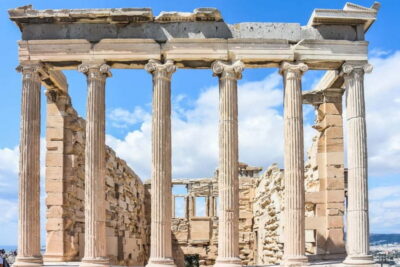

All Day Cruise -3 Islands to Agistri,Moni, Aegina with lunch and drinks included
Read our review →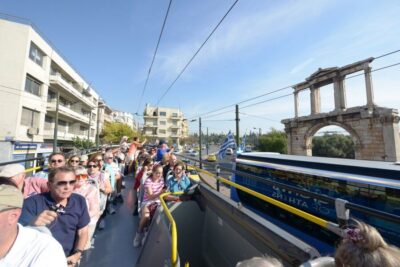
Athens, Piraeus, and Coastline: Blue Hop-On Hop-Off Bus
Read our review →