
Reviewed · AUDIO TOURS
Athens: Temple of Olympian Zeus Ticket and Audio Tour
Ancient Athens gets very big here. The Temple of Olympian Zeus offers a close look at one of the city’s grandest ruins, with a self-guided audio tour that explains the myths, politics, storms, and centuries of change behind the remaining columns. I like the freedom to walk at my own pace and the way the audio adds meaning to a site that can otherwise feel like a quick stop for photographs. I also like that the route ends at an ancient public bathhouse, a small but human detail beside the huge temple. The main drawback is simple: much of the temple is gone, and you can see several columns from outside the archaeological site.
For $30 per person, this is best viewed as a convenient history lesson rather than a full guided tour. You get the entry ticket, the digital audio program, and offline map content, but you must bring your own phone and headphones. The experience takes about one to two hours, depending on how often you pause.
In This Review
- Key Things to Know Before You Go
- Why the Olympieion Matters in Athens
- Entering Through the Great Propylon
- The 700-Year Construction Story
- What You Actually See Among the Ruins
- Storm Damage and Nineteenth-Century Warnings
- Ending at the Ancient Balaneion
- How the Phone Audio Tour Works
- Time, Comfort, and Site Conditions
- Is $30 a Fair Price?
- Who Will Enjoy This Visit Most?
- Should You Book the Temple of Olympian Zeus Audio Tour?
- FAQ
- How long does the Temple of Olympian Zeus audio tour take?
- Is a live guide included?
- What languages are available?
- Do I need my own phone and headphones?
- Does the audio tour work offline?
- Are EU citizens under 25 eligible for free admission?
- Is the site suitable for wheelchair users?
Key Things to Know Before You Go
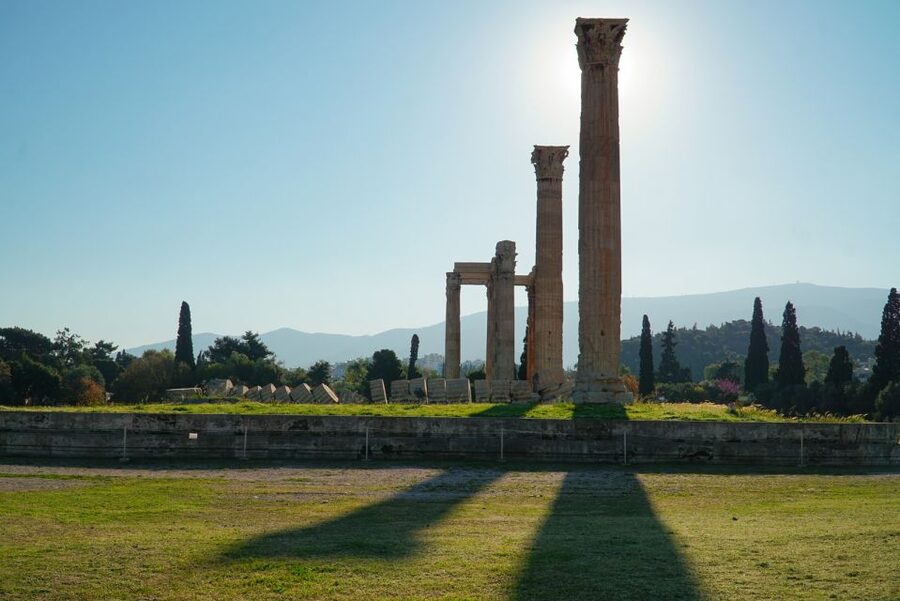
- The 17-meter columns are the main event: Their size gives you a clear sense of how extravagant the finished temple must have been.
- The audio tour follows a story, not just a list of dates: It links Zeus, Theseus, Athenian rulers, Roman power, storms, and local fears into the site’s long story.
- The Balaneion adds an everyday human touch: The ancient bathhouse helps you picture ordinary public life beside a monument built for divine power.
- You can listen at your own pace: The audio can be replayed, which is useful if you want to pause in the shade or revisit a section.
- The app works offline: Downloading the tour and map before arrival helps you avoid roaming charges and weak connections.
- Check age and access rules carefully: EU citizens aged 0 to 25 enter free with identification, while the site is not suitable for wheelchair users.
Why the Olympieion Matters in Athens
The Temple of Olympian Zeus, also called the Olympieion, occupies a central spot in Athens. It is close to other major sights, so it fits neatly into a day of exploring the historic center. Yet the mood here differs from the Acropolis. The Acropolis presents a hilltop complex with several famous monuments. The Olympieion gives you open space, huge fallen drums, and a group of surviving columns that make scale the star.
The temple was dedicated to Zeus, the chief god of ancient Greek religion. The audio tour uses that connection to begin with the myth of the Great Deluge, a story of divine anger and punishment. It is a theatrical opening for a place built to honor the god of thunder and storms.
The site also tells the story of Athens itself. Construction stretched across roughly 700 years, with different rulers attempting to claim the temple and its divine association for their own political purposes. That long delay is important. You are not looking at a monument produced in one neat burst of ancient planning. You are seeing the result of changing ambitions, interrupted work, Roman intervention, natural damage, and later loss.
More self guided tours in Greece:
- Athens: Acropolis Ticket with Optional Audio or Live Guide
★ 4.2 · 11,055 reviews - Athens: Cape Sounio & Poseidon Temple Trip with Audio Guide
★ 4.4 · 4,521 reviews - Athens: Acropolis Ticket with Audio Guide
★ 4.0 · 3,575 reviews
Entering Through the Great Propylon
The visit begins near the Great Propylon, the monumental gateway. This is where the audio program starts shaping the experience. Instead of walking directly toward the columns with no context, you hear about the Great Deluge and the religious world surrounding Zeus.
The gateway also helps you understand the scale of the original complex. A grand entrance was not a minor accessory. It announced that this was a major sacred precinct, built to impress before you even reached the temple itself.
As you move through the site, look closely at the surviving architectural pieces. The 17-meter columns are not delicate ornaments. They are massive vertical statements, and their height is easier to appreciate when you stand near their bases and look upward. The open setting lets you see the columns against the sky, which makes the missing roof and walls part of the story.
This is a place where the audio matters. Without it, you may walk around, take in the columns, and leave after twenty minutes. With the narration, each section becomes part of a longer account of ambition and decline.
The 700-Year Construction Story
The most useful part of the audio tour is its explanation of the temple’s unusually long construction history. Work began in the ancient Greek period, but the building was not completed quickly. Political changes and shifting power affected the project, leaving it unfinished for generations.
The story later brings in an Athenian tyrant who wanted to connect his rule with the authority of Zeus. Much later, a Roman emperor also used the temple to display power. The message was plain: if a ruler could complete or control a sanctuary dedicated to the greatest Greek god, he could present himself as a figure of almost heavenly importance.
That political angle gives the ruins more bite. You are not only looking at old stone. You are looking at a public statement, repeatedly taken over by leaders who wanted Athens to remember their names.
The audio also connects the temple’s story with the legendary foundation of Athens. The tale of Theseus includes a bloody act tied to the city’s origins. It is not a gentle founding myth, and that contrast is useful. Ancient Athens was shaped by stories of violence, divine judgment, heroic deeds, and political competition, not by a single tidy legend.
What You Actually See Among the Ruins
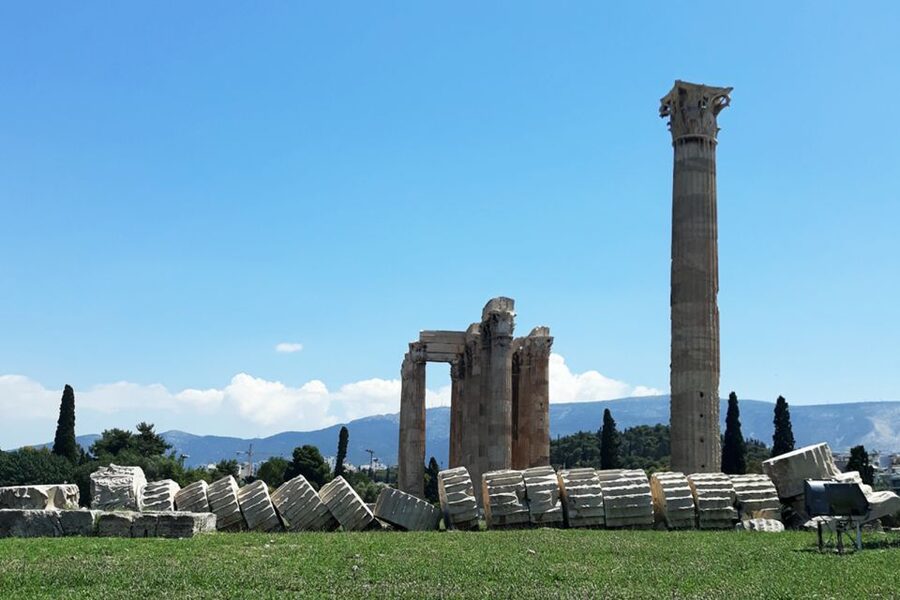
You should set your expectations before paying the entrance fee. There is not a complete temple here, and the remains can feel sparse when compared with the Acropolis. One visitor found that much of the site could be seen from outside, which is a fair criticism.
Still, the surviving columns are powerful. Their height and spacing show the ambition of the original design. A few upright columns can sometimes communicate scale better than a restored building because you must use your imagination to fill in the missing pieces.
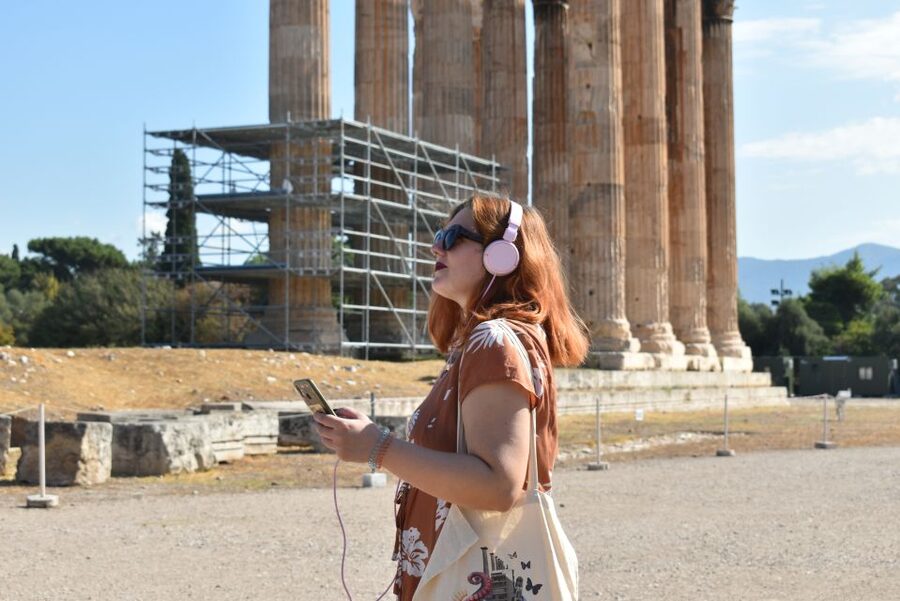
Benches in shaded areas make it possible to sit and look for a while. That matters in Athens, especially on a hot day. You can listen to the audio again, study the columns, and picture the temple when it was complete instead of rushing through for a single photograph.
You may also spot a tortoise on the grounds. It is a small, unexpected detail, but it adds life to a site otherwise dominated by stone. Do not visit expecting a long list of preserved rooms or elaborate interiors. Visit for the scale, the setting, and the story of what happened to the building.
More audio tours in Greece:
- From Athens: Delphi Full Day V.R. Audio Guided Tour
★ 4.6 · 3,028 reviews - Athens: Acropolis Museum Ticket with optional Audio Guide
★ 4.4 · 2,652 reviews - Athens: Acropolis Ticket & Optional Self-Guided Audio Tours
★ 4.1 · 2,542 reviews - Parthenon & Acropolis Museum with Audio or Live Tour Option
★ 4.1 · 2,446 reviews
Storm Damage and Nineteenth-Century Warnings
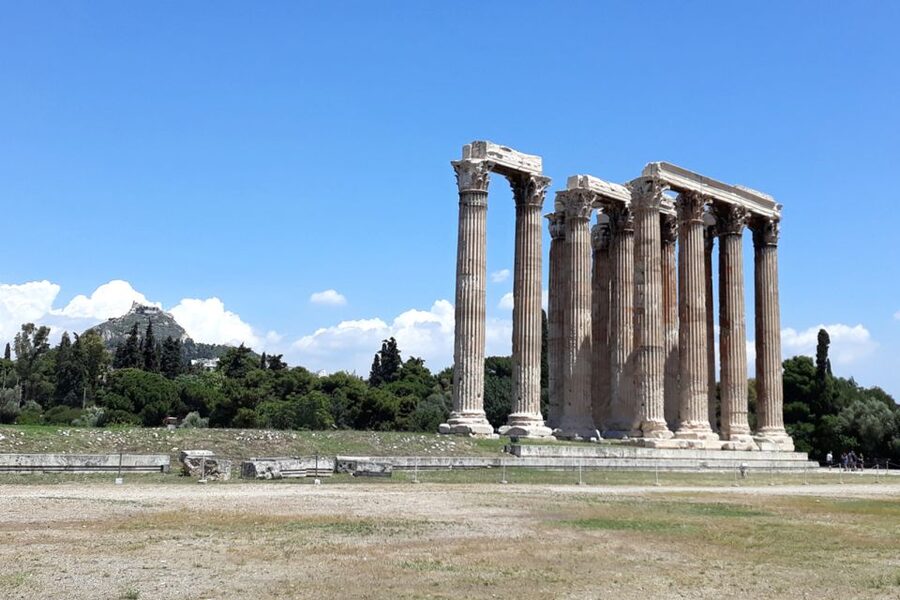
The audio tour does not stop with ancient rulers. It also tells of a violent thunderstorm that caused serious damage to the temple. That detail fits the site’s identity in a striking way. A monument built for Zeus, god of thunder, was later harmed by the very force associated with him.
The story then moves into nineteenth-century Athens, when local people sensed that disaster might be approaching. These later fears add another layer to the site. The Olympieion was not frozen in a single ancient moment. People continued to live around it, interpret it, worry about it, and watch its condition change.
This is one of the better reasons to choose the audio tour instead of relying on a quick walk around the grounds. The ruins cannot explain their own later history. The narration gives you a timeline that reaches beyond the original builders and into modern Athens.
The tone is informative and engaging, though not especially dramatic. One listener enjoyed the sense of being brought into the past but wished for a more theatrical version with sound effects. If you prefer a calm, factual presentation, that should suit you. If you want a cinematic performance, the audio may feel restrained.
Ending at the Ancient Balaneion
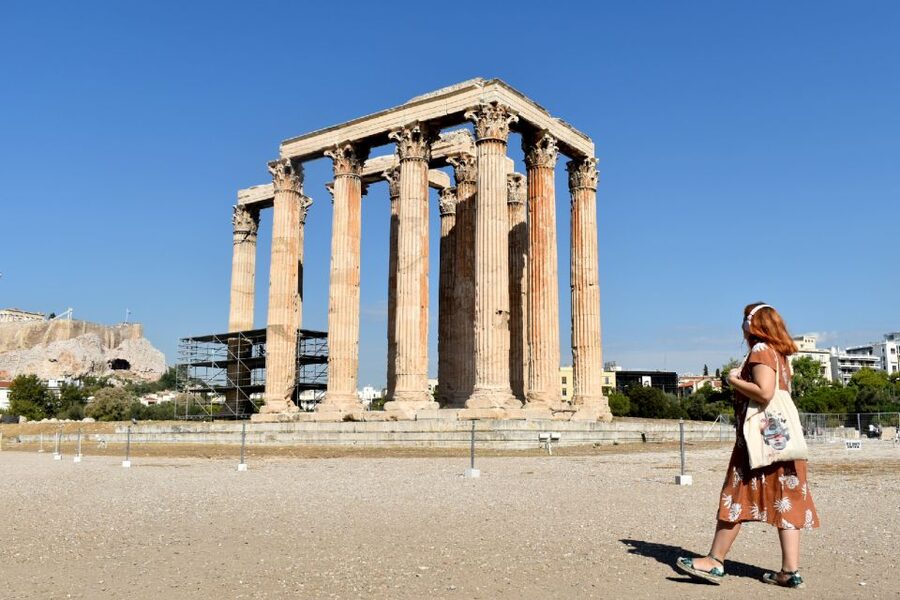
The route ends near the Balaneion, an ancient Greek public bathhouse. It is a welcome change of scale. After hearing about emperors, tyrants, Zeus, and giant architecture, you finish with a place connected to daily routines and physical comfort.
The bathhouse helps you imagine how public spaces served ordinary needs in the ancient world. People did not live only among temples and political monuments. They also gathered, washed, rested, and cared for their bodies.
Do not expect a fully intact bath complex. The attraction here is the remains and the explanation. The audio describes the refreshing benefits of public baths and gives you a chance to picture everyday life thousands of years ago.
This final stop also gives the walk a satisfying shape. You begin with myth and divine punishment, move through centuries of ambitious construction and political display, and finish with a practical building used by people. The contrast makes the site feel less like a field of columns and more like one part of a working city.
How the Phone Audio Tour Works
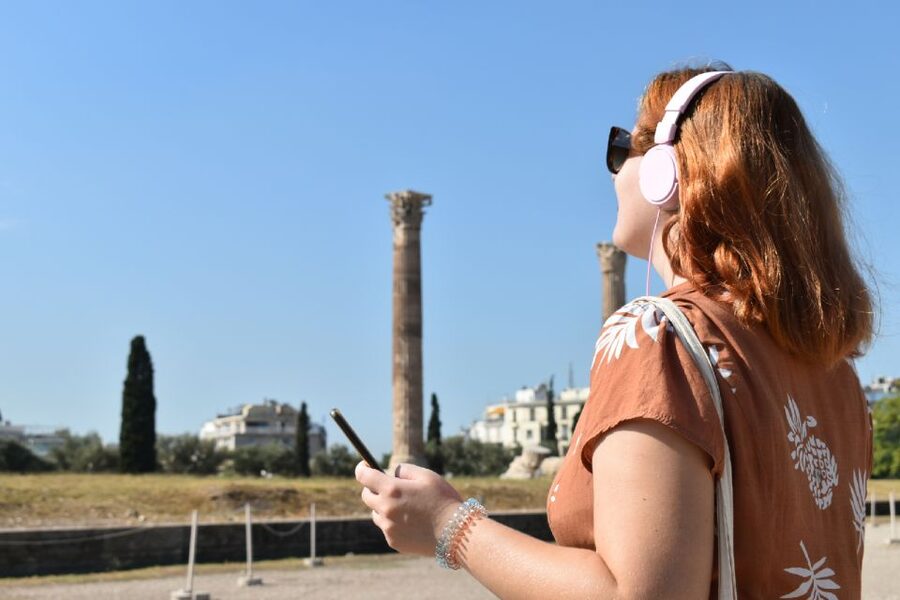
This is a self-guided experience, not a live tour. After downloading the app, you use a secure promotional code to access the audio content. The program is available in English, French, German, Italian, Spanish, and Greek.
The offline map and offline audio are useful features. Download everything before entering so you do not depend on a mobile signal or pay roaming charges. You can then move around without watching your data use.
Bring a fully charged Android or iOS phone and your own headphones. Neither a smartphone nor headphones is provided. The program is not compatible with Windows phones, iPhone 5 or 5C, older Apple devices listed in the conditions, or earlier iPod Touch and iPad models.
The ability to replay the audio is one of the strongest practical points. You can stop under a shady bench, return to a section you missed, or listen again before leaving. That freedom is especially helpful if you are visiting with someone who reads signs slowly or wants to take photographs.
The app is user-friendly according to the experience of Eunice from the United States, while Sahar from the United Kingdom stressed the importance of actually having the audio ready to listen to. That sounds obvious, but it is easy to enter an archaeological site, start taking pictures, and forget the feature you paid for.
Time, Comfort, and Site Conditions
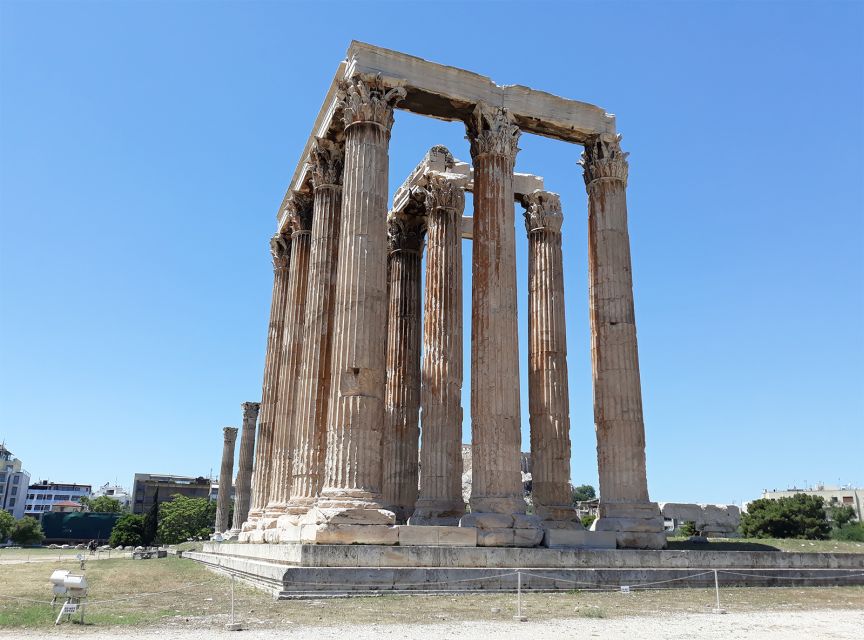
Plan on one to two hours. A quick visit can be shorter, but the longer estimate allows time to listen, stop in the shade, and examine the remains without hurrying.
Wear comfortable shoes. The site is an archaeological area, and you will get more from it if you are willing to walk and pause rather than treat it as a roadside photograph. Sunglasses and a sun hat are sensible in strong weather, and headphones help you hear the narration clearly.
Construction conditions can affect your exit. From October 7, 2025, work is scheduled in front of the Olympieion archaeological site exit. The normal exit will be closed, and the accessible entrance will temporarily serve as both entrance and exit.
The site is not suitable for wheelchair users, and baby strollers and pets are not allowed. These points may decide the visit for you, so check them before booking rather than discovering the restrictions at the gate.
The meeting point can vary by the option selected. Check your confirmation carefully, especially if your day includes several central Athens sights.
Is $30 a Fair Price?
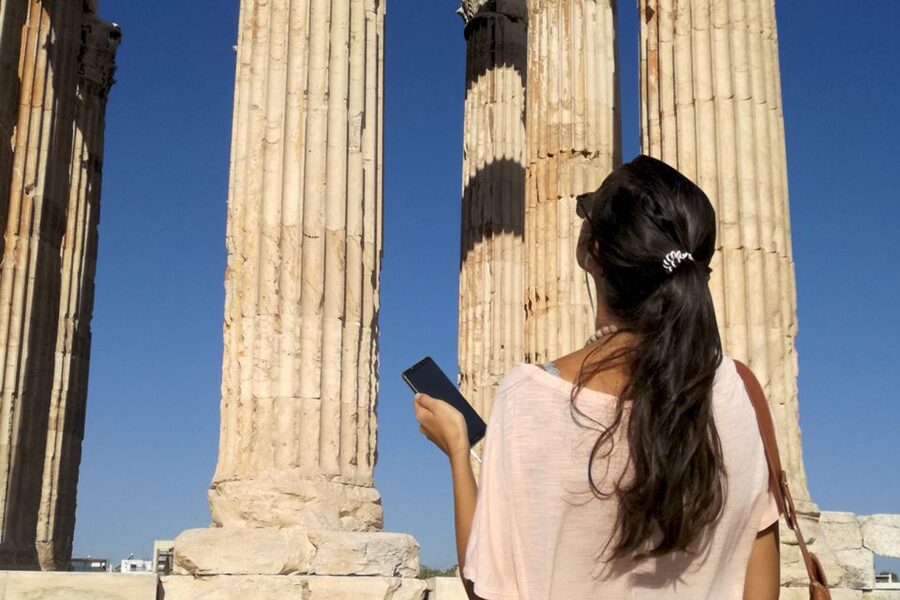
At $30, the value depends on what you want from the visit. The ticket alone may feel expensive if you plan to spend only fifteen minutes looking at columns that are partly visible from outside. That concern is reasonable, and one visitor felt the site was not worth adding after seeing the Acropolis.
The price makes more sense if you want structured interpretation without joining a fixed group. You receive admission, the audio program, several languages, and offline map content. A live guide does not accompany you, so you are paying for convenience and narration rather than personal questions or spontaneous discussion.
The Olympieion also works well for visitors who like to set their own rhythm. You can move quickly, linger in the shade, or replay the content. A live guide would offer more interaction, but this format gives you privacy and flexibility.
EU citizens aged 0 to 25 qualify for free admission, but they must wait in line and show an identity card or passport. Children from non-EU countries up to age five can receive free admission with a passport proving age and country of origin. If you qualify, confirm the rule before buying the adult ticket. Bruno from Germany specifically wished this had been made clearer.
Who Will Enjoy This Visit Most?
I would recommend it most to:
- First-time Athens visitors who want context for a major ruin
- Independent visitors who dislike fixed schedules
- Mythology fans interested in Zeus, Theseus, and the Great Deluge
- People who enjoy ancient architecture but do not need a complete monument
- Visitors who want a quieter stop with benches and room to pause
- Anyone planning to combine the Olympieion with nearby central Athens sights
I would hesitate if you have only a short time in Athens and have already seen the Acropolis. The Olympieion is important, but it may not outrank Athens’ headline attractions for a first visit.
It may also disappoint children or adults who need a lot of visible structure. The site has impressive remains, but the temple is not reconstructed. The audio must do some of the work.
Should You Book the Temple of Olympian Zeus Audio Tour?
Book it if you want a flexible, self-guided visit and you enjoy understanding what ruins once meant. The audio gives the columns a story about myth, political power, weather, and daily life. The Balaneion is a particularly nice finish because it brings the experience down from the realm of emperors and gods to the routines of ordinary people.
Skip it if you are satisfied with an exterior view, have already seen the Acropolis and need to cut your sightseeing list, or want a live expert who can answer questions. At $30, the experience earns its price through the audio and the freedom to explore, not through the number of structures still standing.
Bring a charged phone, headphones, comfortable shoes, and identification if you qualify for free admission. Most important, give yourself enough time to listen. The columns are impressive on their own, but the story is what makes the visit worth considering.
FAQ
How long does the Temple of Olympian Zeus audio tour take?
The stated duration is one to two hours. Your timing will depend on how long you spend listening, walking, sitting, and examining the ruins.
Is a live guide included?
No. This is an e-ticket with a self-guided audio tour on your smartphone. No live guide accompanies you.
What languages are available?
The audio guide is available in English, French, German, Italian, Spanish, and Greek.
Do I need my own phone and headphones?
Yes. You need a charged Android or iOS smartphone and your own headphones. Neither is included.
Does the audio tour work offline?
Yes. The included content and interactive map can be used offline after downloading, which helps you avoid roaming charges.
Are EU citizens under 25 eligible for free admission?
EU citizens aged 0 to 25 are entitled to free admission, but they must wait in line and show an identity card or passport.
Is the site suitable for wheelchair users?
No. The experience is not suitable for wheelchair users. Baby strollers and pets are also not allowed.
Just added around Greece
- Lasithi –Plateau Traditional Vilages★ 5.0 · 40 reviews
- Athens Hotels to Athens Airport Private Departure Transfer★ 5.0 · 40 reviews
- The Palace of Knossos with Skip-the-Line Ticket★ 5.0 · 40 reviews
- Santorini 5 Hour Private Oia Tour & Lunch/Dinner at a Local Farm★ 5.0 · 40 reviews
- From Chania: Preveli Palm Beach Day Tour★ 4.3 · 40 reviews
- Private One-way Transfer between Athens International Airport and Athens Hotels★ 4.5 · 40 reviews
- Chania Morning Catamaran Cruise with Premium Lunch & Drinks★ 5.0 · 40 reviews
- From Thessaloniki: Meteora Small Group Day Trip★ 5.0 · 40 reviews
Audio Tours, compared.


Cape Sounio & Poseidon Temple Trip with Audio Guide
Read our review →
Acropolis Museum Ticket with optional Audio Guide
Read our review →
Acropolis Ticket & Optional Self-Guided Audio Tours
Read our review →
Parthenon & Acropolis Museum with Audio or Live Tour Option
Read our review →
Knossos Palace Entry Ticket with Optional Audio Guide
Read our review →Browse the lists this tour appears in