Reviewed · ATHENS TOURS
Athens: Mythology Tour for Families
Myth makes marble memorable. This three-hour Acropolis walk turns the Parthenon, Theater of Dionysus, and Pnyx into a connected world of gods, heroes, jealousy, war, theater, and democracy. I like the kid-friendly storytelling, which gives younger children a reason to look closely at old stones, and I like the small group size, capped at 15 people. The main drawback is the length: three hours in the Athens heat can test even cheerful children, so bring water and plan a slower afternoon afterward.
The tour costs $79 per person, with Acropolis entry included only if you select that option. I also like that the guide-led visit does not stop at the Acropolis entrance. You continue to ancient Pnyx, where children take part in a mythology-based activity. Meeting-point directions have caused confusion for some families, so check the exact instructions carefully before setting out.
In This Review
- Key points to know before booking
- Why mythology works so well on the Acropolis
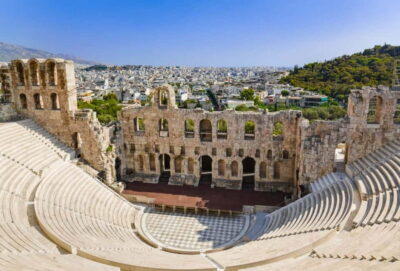
- Starting at the Theater of Dionysus
- Climbing through the Propylaea
- The Temple of Athena Nike and the Erechtheion
- Spending 70 minutes at the Parthenon
- Walking to ancient Pnyx
- The Pnyx activity brings the myths to life
- The guides make or break the experience
- Is $79 per person a fair price?
- Practical advice for a smoother morning
- Who should book this Acropolis family tour?
- FAQ
- How long does the Athens Mythology Tour for Families last?
- What age group is this tour best for?
- Is Acropolis admission included?
- What languages are available?
- How large is the standard tour group?
- Where does the tour start and finish?
- Can I bring a stroller or backpack?
- Is the tour suitable for wheelchair users?
- What should I bring?
Key points to know before booking
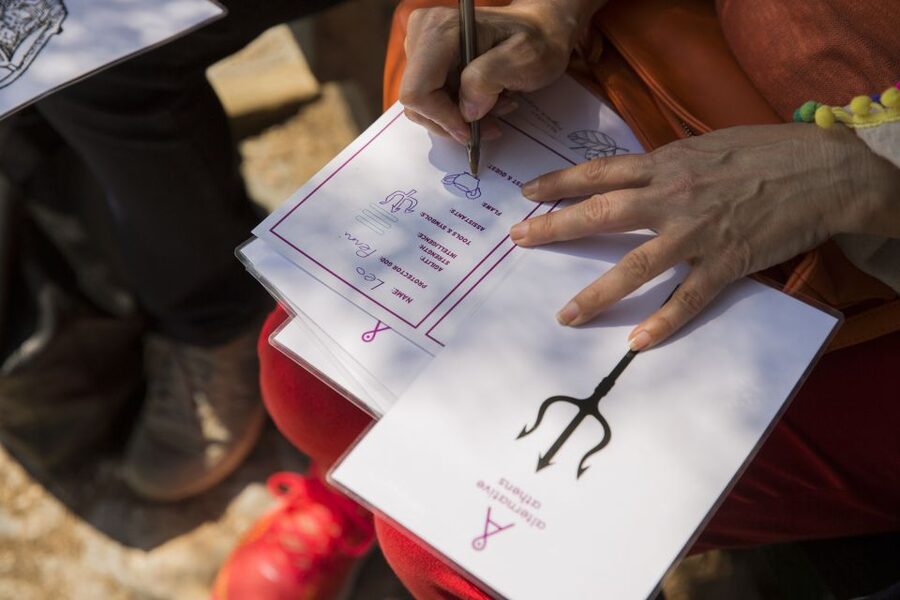
- Best for children ages 5 to 11: The stories, questions, and group activity are shaped mainly for this age range, though older children and adults can enjoy the tour too.
- The Parthenon gets the most time: Expect about 70 minutes there, with shorter stops at the Theater of Dionysus, Propylaea, Temple of Athena Nike, and Erechtheion.
- Pnyx adds a hands-on finish: You walk about 15 minutes from the Acropolis to the ancient meeting place, then spend roughly 45 minutes on stories and an activity.
- Small groups help: The standard group has no more than 15 people, and a private option is available for families who want their own pace.
- Guides are the star: Families praised guides including Christina, Kelli, Chrysa, Maria, Demi, Sophia, Marika, and Amarylis for patience, humor, and strong storytelling.
- Pack light and dress for stone paths: Strollers, backpacks, and large bags are not allowed at the Acropolis. Comfortable shoes, sunglasses, a hat, and water matter.
Why mythology works so well on the Acropolis
A conventional Acropolis tour can become a procession of names: Parthenon, Erechtheion, Propylaea, Temple of Athena Nike. That can be a lot for a child. This experience gives each building a story and each story a character.
Your guide introduces major figures such as Zeus, Athena, Poseidon, Dionysus, Hera, Aphrodite, and Theseus. The myths are not just entertainment. They help explain why Athena mattered to Athens, why the city honored certain gods, and how ancient people used stories to make sense of power, nature, family, love, and conflict.
I especially like the way the tour links mythology to what you are looking at. Instead of hearing about Athena in a classroom and then seeing an unrelated temple, your family can connect the goddess of wisdom with the city that took her name. Poseidon brings the sea into the story. Dionysus connects directly to theater. These links give children something to remember after the tour ends.
The guide also has to balance fact and legend. The best moments come when the stories are lively but the buildings remain central. Families praised guides for doing exactly that, explaining the myths while also discussing Greek culture, philosophy, art, and the purpose of each site.
More things to do in Athens:
- Athens: Acropolis & up to 5 Archaeological Sites Combo Pass
★ 4.4 · 12,619 reviews - Athens: Acropolis Ticket with Optional Audio or Live Guide
★ 4.2 · 11,055 reviews - Athens: Acropolis, Parthenon & Acropolis Museum Guided Tour
★ 4.8 · 9,316 reviews
Starting at the Theater of Dionysus
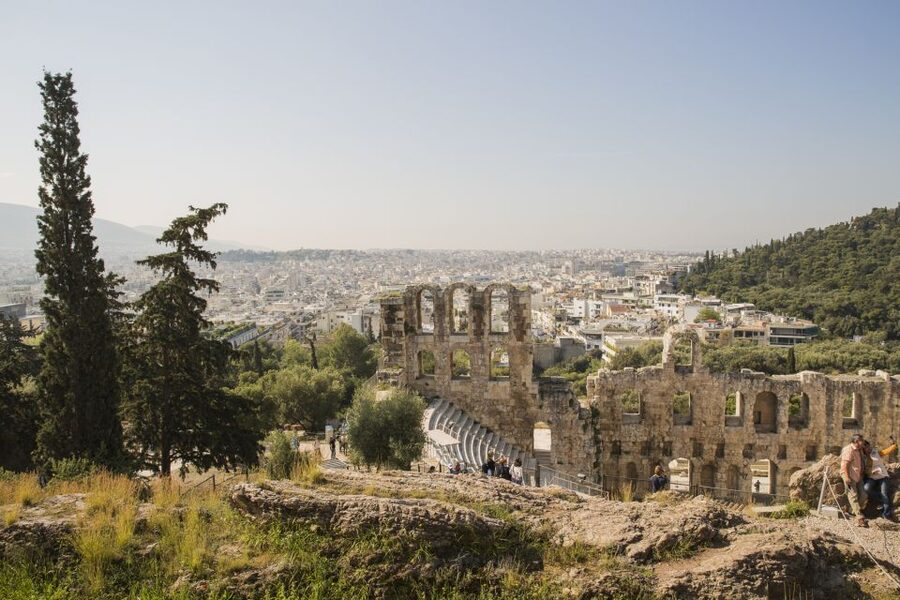
The first major stop is the Theater of Dionysus, with about 15 minutes of guided explanation. This is a smart opening because it gives children an immediate sense of place. Ancient Athens did not treat theater as a small side activity. Drama was tied to public life and worship of Dionysus, the god associated with wine and theater.
You can expect the guide to use the theater as a doorway into Greek stories and performance. Children who enjoy acting, heroes, or dramatic tales may respond quickly here. Adults get useful context about how theater began in the ancient world.
The short visit is helpful. You get the point without asking children to sit through a long lecture at the start. From here, the tour climbs toward the Acropolis, so this is also where you should settle into comfortable footwear and make sure everyone has water.
Climbing through the Propylaea

The Propylaea is the grand entrance to the Acropolis. The guided portion lasts about 10 minutes, but its role is larger than the clock suggests. You are passing through the formal gateway to the hill, moving from the modern city into the sacred center of ancient Athens.
For children, the guide can turn that transition into part of the story. The Propylaea is not as instantly famous as the Parthenon, so a family-focused explanation helps you notice its scale and purpose rather than walking through without a thought.
This section also brings the practical side of the visit into focus. The Acropolis has uneven stone surfaces and exposed areas. A stroller is not permitted, and wheelchairs are not suitable for this activity. Keep bags small, wear shoes with a secure grip, and expect the uphill route to feel demanding in hot weather.
The Temple of Athena Nike and the Erechtheion
The Temple of Athena Nike receives about 15 minutes. Its connection to Athena gives your guide another chance to explain the city’s devotion to its patron goddess. The temple is much smaller than the Parthenon, but that can work in your favor. Children often absorb the meaning of a compact monument more easily than a giant building with many competing details.
The Erechtheion follows, with about 10 minutes of guided time. This is one of the most distinctive parts of the Acropolis, especially because of its famous Caryatids, the sculpted female figures used as architectural supports. The stop also brings in the rivalry between Athena and Poseidon, a useful myth for explaining the city’s identity and its relationship with the sea.
Ten minutes is enough for a focused explanation, not a full art lesson. If your children are curious, ask questions while you are there. Guides such as Chrysa, Maria, and Sophia were praised for taking time with children’s questions, even when the questions moved beyond the planned script.
A completely different sort of day out in Athens:
- Athens: Cape Sounion & Poseidon Temple Sunset Half-Day Trip
★ 4.8 · 8,241 reviews - Athens: Acropolis and Parthenon Guided Walking Tour
★ 4.6 · 5,882 reviews - All Day Cruise -3 Islands to Agistri,Moni, Aegina with lunch and drinks included
★ 5.0 · 4,958 reviews - Athens, Piraeus, and Coastline: Blue Hop-On Hop-Off Bus
★ 3.9 · 4,849 reviews
Spending 70 minutes at the Parthenon

The Parthenon is the centerpiece, and the tour allows about 70 minutes here. That is a generous share of the three-hour visit. You have time to hear the mythology, look at the architecture, discuss the building’s role, and pause for views across Athens.
The guide presents the Parthenon as more than an iconic photograph. Its presence connects to Athena, the city’s power, and the larger religious world of ancient Athens. You should expect the explanation to combine stories of gods and heroes with the human work behind the monument.
This is also where the tour’s family focus matters most. Children may not care about every architectural term, but they can follow questions about rival gods, heroic choices, and why one city would devote such an enormous building to a goddess. A guide who knows when to switch from facts to story can keep the group moving mentally as well as physically.
I would not expect total quiet or a scholarly lecture. This is an active family tour, not a specialist architecture seminar. Adults who want detailed discussion of every sculptural fragment may prefer a more academic visit. Families who want their children to remember the Acropolis are likely to get more from this format.
Take advantage of any pause to drink water. One family found the full three hours too long in summer, and there are not many water stops on the route. Morning timing is worth considering if you have a choice.
Walking to ancient Pnyx
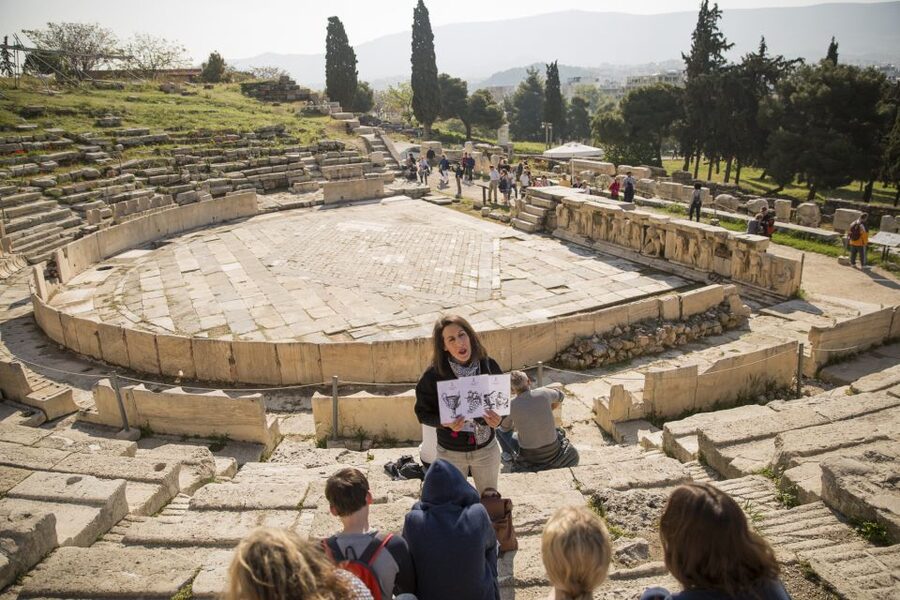
After the Acropolis, you walk about 15 minutes to ancient Pnyx. This short transfer changes the mood. You leave the most famous monument behind and reach a place tied to public discussion and the birth of democracy.
Pnyx was where Athenians gathered to debate political matters. That makes it a valuable counterpoint to the Acropolis. The hill was not only a place of temples and sacred stories. It was also connected to citizens speaking, arguing, and making decisions.
The walk itself may be welcome after the concentrated Acropolis visit, though tired children may need encouragement. Since the tour ends at Pnyx Hill, you should think about what comes next before booking. The experience does not return you to the original meeting point.
The Pnyx activity brings the myths to life
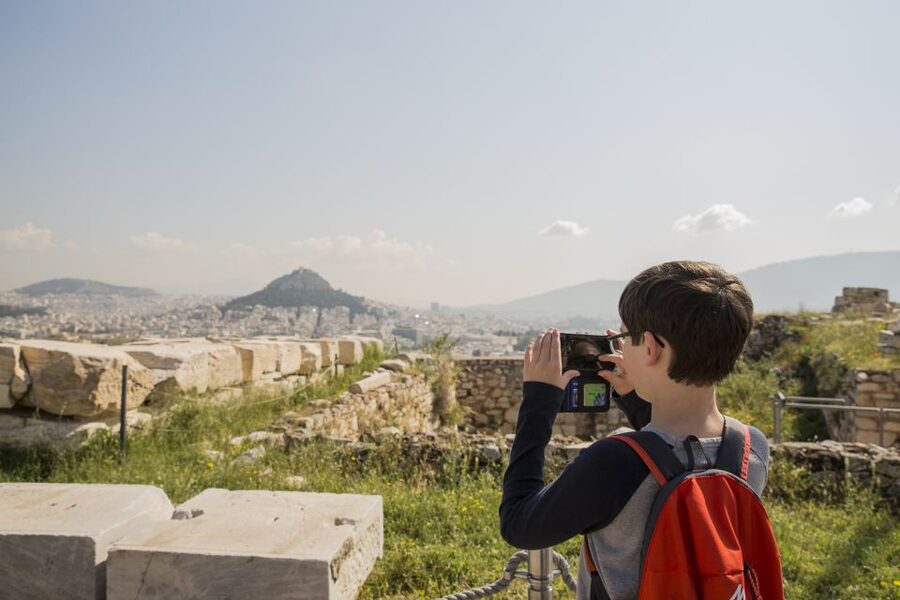
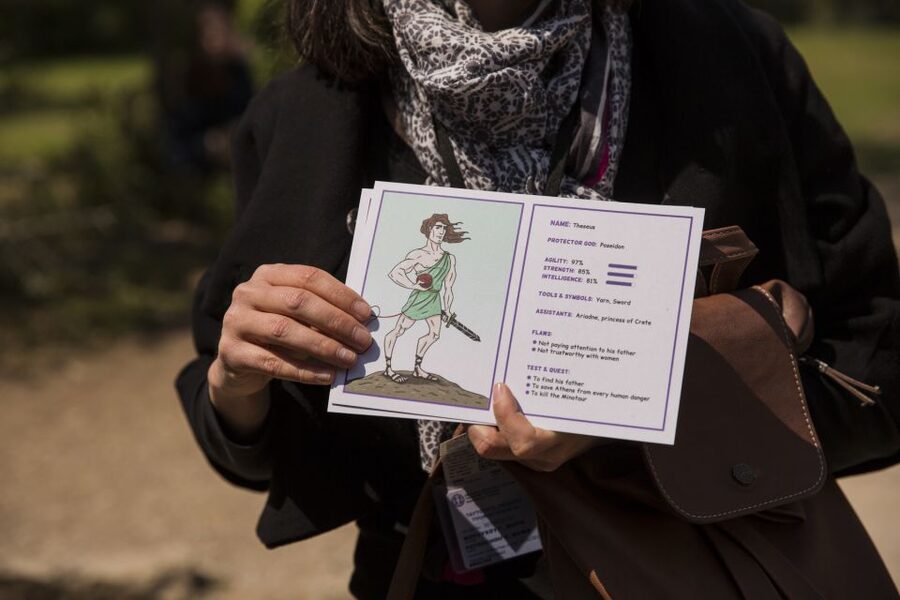
The final 45 minutes at Pnyx are designed around a group family activity. The material draws on the gods and heroes introduced earlier, including Theseus and the Minotaur, Hera, and Aphrodite.
This is the part that makes the experience more than a guided walk. Children get a chance to respond imaginatively to the setting and create something together with their family. The supplied activity materials are educational and playful, but the exact format can depend on the guide and group.
Families with children who lose interest during long explanations may find this section especially useful. Several guides kept tired or distracted children involved with games, questions, and humor. Sophia was praised for engaging a group that included young children and grandparents, while Demi was singled out for keeping children involved even when they were tired.
Pnyx also gives the tour a satisfying theme. You begin with gods and heroes, then finish at a place where people gathered to shape the life of their city. Your family leaves with both mythical stories and a sense of how public life worked in ancient Athens.
The guides make or break the experience
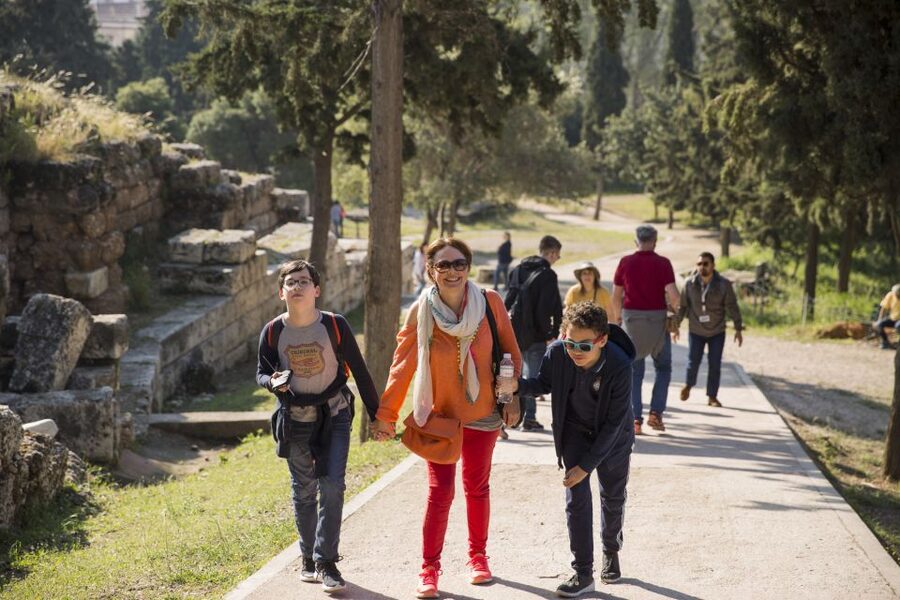
The content is strong, but the guide’s personality determines how well it works. Children do not need a performance every second, yet they do need clear explanations, patience, and a guide who welcomes interruptions.
The most praised guides were warm with children and able to speak to adults without leaving them behind. Christina was praised for giving a private family the right pace and answering questions from children aged 10 and 12. Kelli, Chrysa, Maria, Marika, Amarylis, and Heleni also received strong praise for their patience, humor, and storytelling.
Demi was described as especially good at explaining mythology and history together. Dani handled a difficult visit during a guide strike and still kept the experience moving. These examples suggest a team that understands the needs of family groups, though you cannot assume a specific guide will lead your tour.
English and French are available. A private group option can be useful if your children need frequent breaks, your family has a wide age range, or you want the guide to adjust the pace closely.
Is $79 per person a fair price?
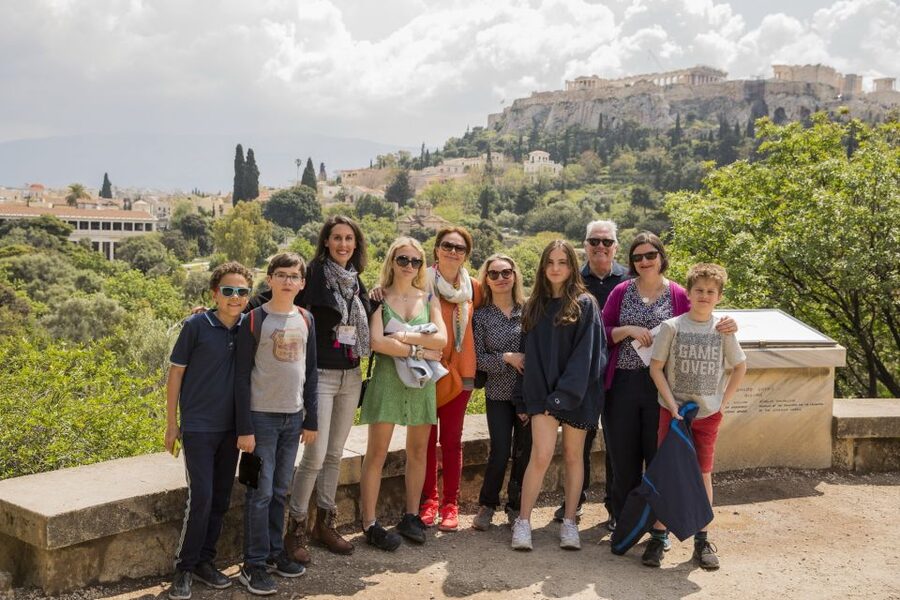
At $79 per person, the value depends on how much help your family needs. You are paying for three hours with a family-focused guide, a structured route, storytelling at the key Acropolis monuments, and a Pnyx activity. Acropolis entry is included only with the appropriate booking option, so compare the total cost rather than assuming the ticket is always covered.
I think the price makes sense for families who might otherwise wander through the Acropolis without knowing how to connect the sites. It can also save you the work of finding suitable explanations for different ages. One family booked late and appreciated that the provider arranged early entry tickets they might not have secured alone.
The price is less attractive if your children are older and already want a detailed study of architecture, or if your family prefers to explore independently. The mythology angle is the main product here. Choose it because you want stories, questions, and participation, not simply because you want the fastest route around the monuments.
Entry fees are non-refundable and cannot be exchanged. Children may qualify for free Acropolis admission under the stated age and nationality rules, but you must bring valid identification. Check the current conditions carefully before selecting tickets.
Practical advice for a smoother morning
Confirm the meeting point for your exact option. The starting location may be listed around Acropoli or the Acropolis area, and incorrect address information has caused families to walk to the wrong place and backtrack.
Arrive with identification, comfortable shoes, sunglasses, a sun hat, and water. Do not bring a stroller, backpack, or large bag into the Acropolis. The tour is not suitable for wheelchair users.
The experience is most suitable for children aged 5 to 11. A three-year-old has enjoyed it with the right guide, and older children aged 10 to 12 have also responded well, but the strongest fit is a child who likes stories and can manage a three-hour outing.
Plan your day around the heat. In summer, the exposed hill can make the final part feel long. An early start, plenty of water, and a quiet plan afterward will help. Free cancellation is available up to 24 hours before the activity, and reserve-now, pay-later booking can help if your schedule is still changing.
Who should book this Acropolis family tour?
I would choose this tour for a family visiting Athens for the first time, especially with children who enjoy Greek gods, monsters, heroes, or acting. It is also a good choice if you want the Acropolis to feel like a story rather than a list of monuments.
I would think twice if anyone in your group has limited mobility, dislikes walking in heat, or needs a stroller or large bag. I would also skip it if your main interest is advanced architectural detail.
For most families with children in the target age range, the combination of famous monuments, myth-based explanations, and a creative Pnyx activity gives the $79 price a reasonable return. Book the ticket-inclusive option if you want the provider to handle admission, verify the meeting point, and schedule the tour when temperatures are easier. The guide’s ability to involve children is the strongest reason to go.
FAQ
How long does the Athens Mythology Tour for Families last?
The tour lasts three hours. It includes the Acropolis sites, a 15-minute walk to ancient Pnyx, and about 45 minutes at Pnyx.
What age group is this tour best for?
The tour is most suitable for children ages 5 to 11. Older children and adults can also enjoy the mythology and historical explanations.
Is Acropolis admission included?
Acropolis entry tickets are included only if you select the ticket-inclusive option. Entry fees can also be pre-purchased through the provider.
What languages are available?
The live tour is available in English and French.
How large is the standard tour group?
The small group has a maximum of 15 people. A private group option is also available.
Where does the tour start and finish?
The meeting point varies according to the option booked. The tour finishes at Pnyx Hill, so it does not end at the original starting point.
Can I bring a stroller or backpack?
No. Strollers, backpacks, and large bags are not allowed at the Acropolis and should not be brought on the tour.
Is the tour suitable for wheelchair users?
No. The activity is not suitable for wheelchair users.
What should I bring?
Bring a passport or ID card, comfortable shoes, sunglasses, a sun hat, and water. Identification may also be needed for age-based admission rules.
Just added around Athens
- Athens Hotels to Athens Airport Private Departure Transfer★ 5.0 · 40 reviews
- Private One-way Transfer between Athens International Airport and Athens Hotels★ 4.5 · 40 reviews
- Athens: Acropolis Museum Ticket with Self-Guided Audio tour App★ 3.5 · 40 reviews
- From Athens: Meteora Train Trip with Overnight Stay★ 4.8 · 40 reviews
- Athens Photography Tour★ 5.0 · 40 reviews
- Athens: Acropolis Visit and City Night Tour★ 4.7 · 40 reviews
- Delphi Full Day Private Trip From Athens With Lunch Overlooking the Sea★ 5.0 · 40 reviews
- Acropolis & Plaka Neighbourhood Private Tour with Licensed Expert★ 5.0 · 40 reviews
Athens Tours, compared.
Acropolis & up to 5 Archaeological Sites Combo Pass
Read our review →

Acropolis, Parthenon & Acropolis Museum Guided Tour
Read our review →
Cape Sounion & Poseidon Temple Sunset Half-Day Trip
Read our review →

All Day Cruise -3 Islands to Agistri,Moni, Aegina with lunch and drinks included
Read our review →
Athens, Piraeus, and Coastline: Blue Hop-On Hop-Off Bus
Read our review →