

Reviewed · AUDIO TOURS
Athens: Ancient Agora E-Ticket and Audio Tour
Democracy began with a walk. This Athens Ancient Agora ticket pairs quick site access with a phone-based audio tour about the people and arguments that shaped early Athenian democracy. I like the freedom to pause for photos, skip ahead, or linger at the Temple of Hephaestus. I also like that the downloadable map and audio work offline.
The main drawback is navigation. A few walking directions can be vague, and the route reaches nearby sites beyond the main Agora grounds. At $30 per person, this is good value if you want context, but less so if you only need admission and already carry a guidebook.
In This Review
- Key points to know before you go
- Why the Ancient Agora deserves a place in your Athens plan
- Entering through the Ancient Agora gate
- The Temple of Hephaestus and the opening story
- The Tholos and Bouleuterion: how the city did its work
- The Museum of the Ancient Agora
- Mars Hill, the Pnyx, and the best views
- The Prison of Socrates and the final walk to Dionysus
- How the audio app performs in practice
- Price, timing, and who gets good value
- Should you book the Ancient Agora audio tour?
- FAQ
- What does the Ancient Agora ticket include?
- Is there a live guide?
- How long does the visit take?
- Which languages are available?
- Do I need internet access inside the site?
- Is the GetYourGuide voucher accepted at the entrance?
- Can I use my own smartphone and headphones?
- Is the experience wheelchair accessible?
- Can EU students and minors enter for free?
Key points to know before you go
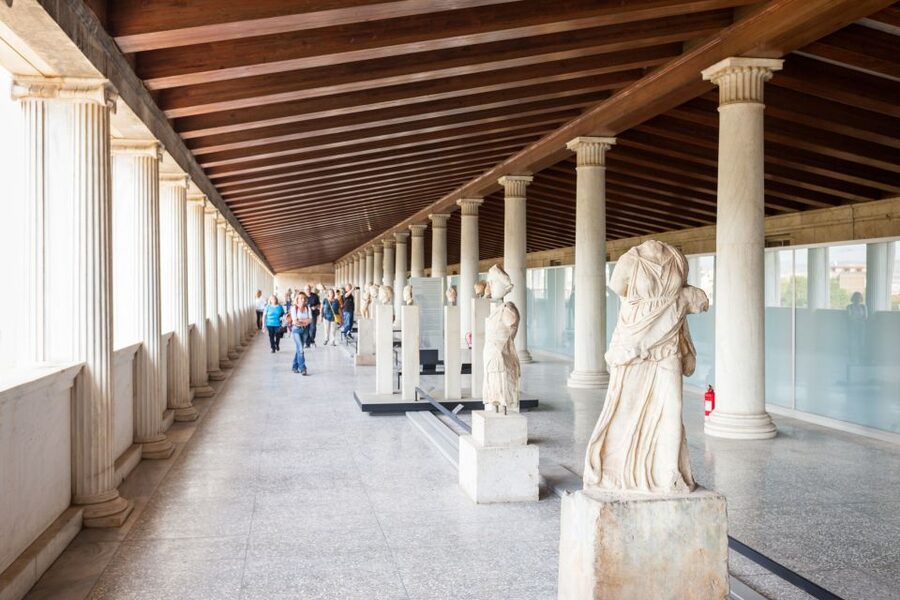
- The Temple of Hephaestus anchors the visit: This well-preserved temple gives the Ancient Agora an immediate visual focus.
- The audio explains democracy through real people: Solon, Aristides the Just, Pericles, and Socrates all help turn ruins into a human story.
- The route includes more than the Agora: You hear about Mars Hill, the Pnyx, the Rock of Ares, the Prison of Socrates, and the Theatre of Dionysus.
- The Museum of the Agora deserves time: Its displays explain Athenian government, voting, and the harsh tools used to protect democracy.
- Download everything before arrival: There is no internet access inside the archaeological site, and the GetYourGuide voucher alone is not accepted at the gate.
- The second floor is worth the stairs: It offers a useful view toward the Panathenaic Way, a detail easy to miss.
Why the Ancient Agora deserves a place in your Athens plan
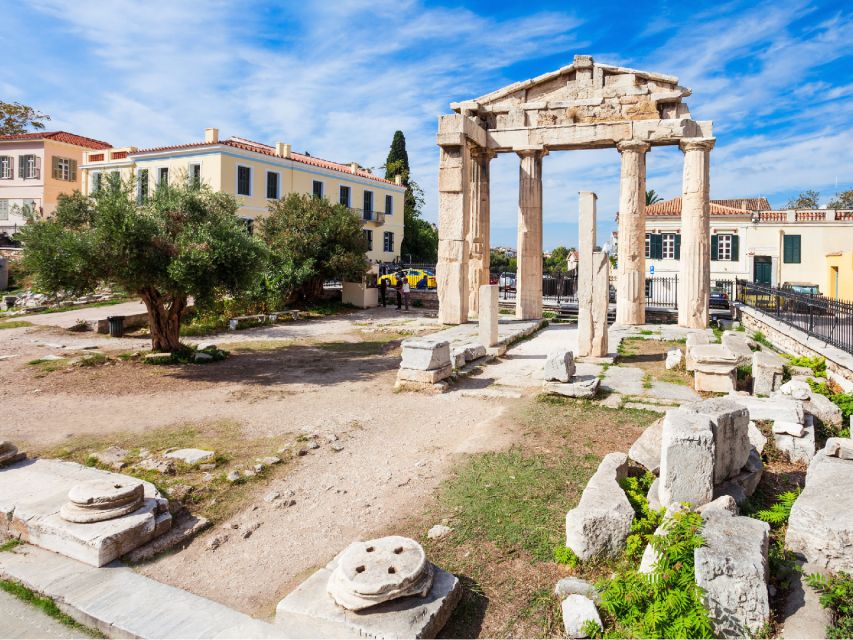
The Acropolis gets the postcard, but the Ancient Agora gives you the city’s daily life. This was the civic center where Athenians met, traded, argued, worshipped, and handled the practical business of running a city.
That makes the site especially useful if you want to understand what democracy meant on the ground. The audio does not simply point at broken stones. It links the ruins to laws, public debate, political danger, and the personalities who shaped Athens.
You should allow 90 minutes to two hours. I would not rush it. The open archaeological grounds, museum, hillside viewpoints, and nearby stops work best when you give yourself time to listen, look around, and match the story to the remains.
The ticket is for the Ancient Agora. It does not automatically provide entry to the Acropolis or every other archaeological site mentioned along the audio route. If you plan to visit several major sites, compare this price with an available combination ticket before booking.
More things to do in Athens:
- Athens: Acropolis & up to 5 Archaeological Sites Combo Pass
★ 4.4 · 12,619 reviews - Athens: Acropolis Ticket with Optional Audio or Live Guide
★ 4.2 · 11,055 reviews - Athens: Acropolis, Parthenon & Acropolis Museum Guided Tour
★ 4.8 · 9,316 reviews
Entering through the Ancient Agora gate
After booking, you receive the actual e-ticket and audio instructions in a separate email from the local partner. Check your spam folder. This matters because the GetYourGuide voucher is not accepted at the entrance by itself.
Download the ticket to your phone before you arrive, or print it. At the site, use the validating machines. Having the correct ticket ready will save you from searching through email at the gate, especially when the entrance area is busy.
The word fast-track can sound more dramatic than the process really is. You have a pre-booked ticket, but you still need to present the proper e-ticket and follow the entrance procedure. EU students and minors can enter free with an identity card or passport, but they must queue for a zero-value pass. Non-EU students and people over 65 can receive reduced admission, though they need to visit the ticket office.
The meeting point can change with the option you book. Read the instructions carefully rather than assuming you should meet a guide somewhere in central Athens. There is no live guide with this product.
The Temple of Hephaestus and the opening story
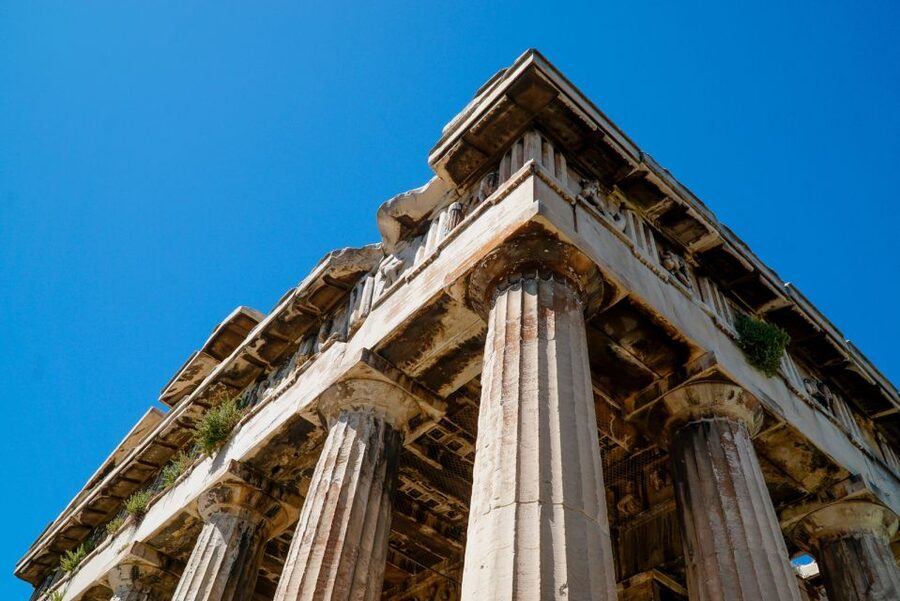
The route begins near the Temple of Hephaestus, the most complete ancient temple in the Agora area. Even before the audio gets into political theory, this is an excellent place to get your bearings.
The commentary introduces Solon and the legal reforms that helped move Athens toward a more organized civic system. You hear how democracy did not appear in one grand moment. It developed through changes in law, citizenship, public participation, and political struggle.
That framing is one of the audio tour’s best features. If you only walk through the Agora with a map, you may see columns, foundations, and stones without understanding what happened there. The narration gives each area a role in the city’s political machine.
The Temple of Hephaestus also provides an easy visual reference as you begin. You can pause the narration, take photographs, and return to the same track without being tied to a group’s pace.
The Tholos and Bouleuterion: how the city did its work
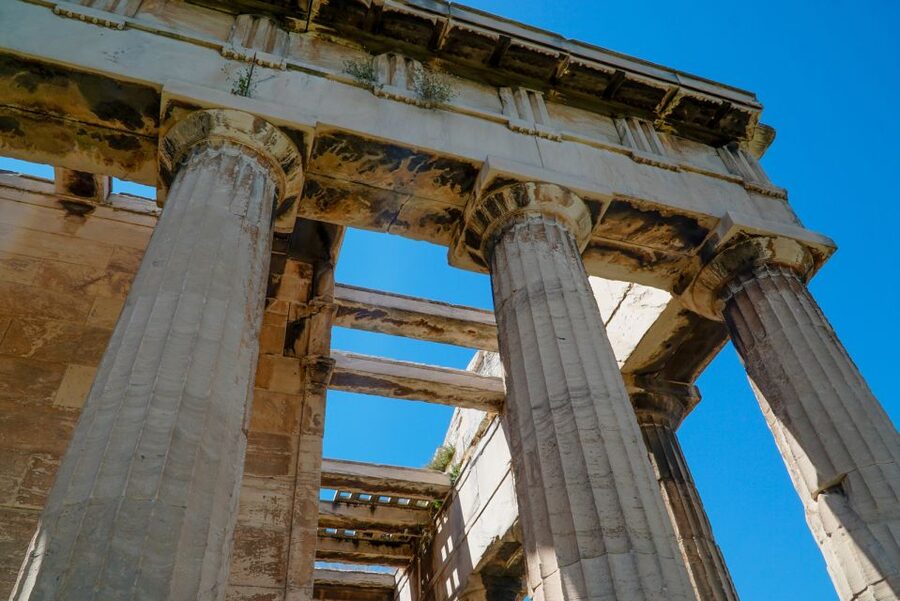
Near the Tholos, the route explains the Boule, the council of 500 Athenians who prepared laws and proposals for the popular assembly. The Bouleuterion is now ruined, but its purpose helps you picture the less glamorous side of democracy: organizing agendas, discussing proposals, and preparing decisions.
This is where the audio adds value beyond a standard admission ticket. It explains that democracy was not only speeches on a hill. It also required committees, procedures, public offices, and citizens willing to spend time on civic business.
The narration brings in figures such as Aristides the Just and Pericles. Their stories give the tour a personal edge, with anecdotes that keep the political material from becoming a list of dates.
Still, pay attention to the map. Some paths run parallel, and not every route marker is obvious. The audio directions have been helpful for many parts of the visit, but they can be imprecise in places. I suggest pausing at each stop, checking your position on the offline map, and not walking on while staring at your phone.
More self guided tours in Athens:
- Athens: Cape Sounio & Poseidon Temple Trip with Audio Guide
★ 4.4 · 4,521 reviews - Athens: Acropolis Ticket with Audio Guide
★ 4.0 · 3,575 reviews - From Athens: Delphi Full Day V.R. Audio Guided Tour
★ 4.6 · 3,028 reviews - Athens: Acropolis Museum Ticket with optional Audio Guide
★ 4.4 · 2,652 reviews
The Museum of the Ancient Agora
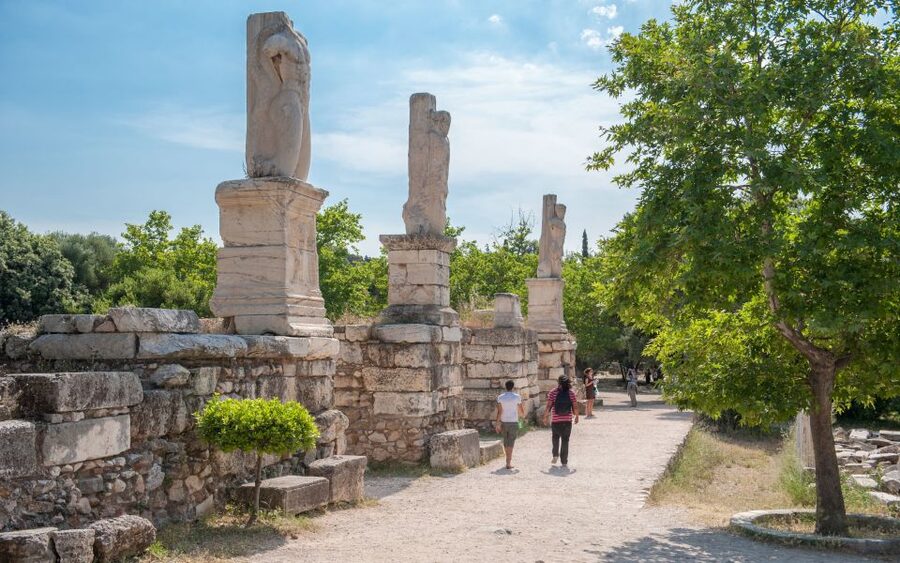
The small museum is one of the most useful parts of the experience. It places objects and civic practices beside the remains you have just seen outdoors.
You learn about the ways Athenians defended their political system, including methods that could be surprisingly severe. The exhibits show that democracy in classical Athens was not gentle or open to everyone. Its protections could involve exclusion, punishment, and political control.
That tension is valuable. The audio presents Athenian democracy as an achievement, but not as a perfect model. You get a clearer sense of who had political rights and how the city tried to protect itself from figures it considered dangerous.
Give the museum more time than a quick pass. The second floor is especially easy to overlook, yet it offers a distinct view of the Panathenaic Way from above. One practical tip is to visit the upper level before leaving the museum, even if you think you have finished with the displays.
The museum is also a useful break from the sun. One visitor specifically appreciated its air conditioning, which can make a real difference on a hot afternoon. For that reason, I would plan your visit for early morning or late afternoon, then use the museum as a cooler stop during the archaeological walk.
Mars Hill, the Pnyx, and the best views
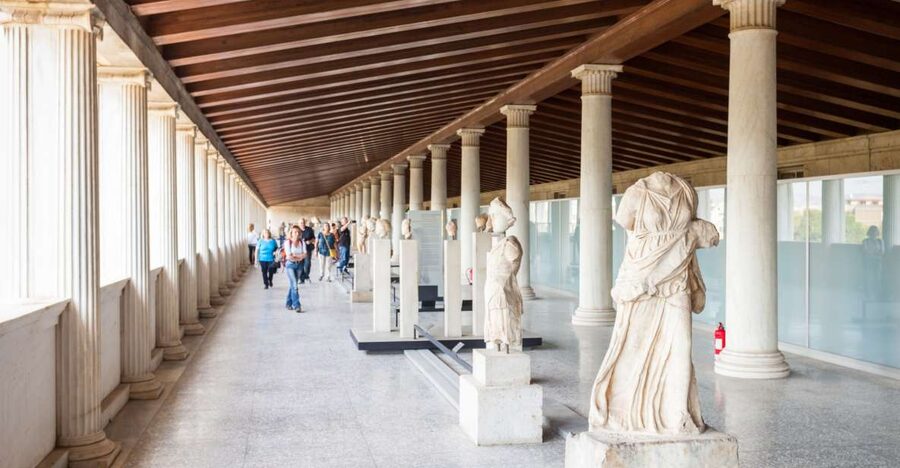
The audio route widens its focus beyond the Agora to nearby hills and civic landmarks. At the Pnyx, you get an important connection to public speaking and popular participation. This is the place to think about democracy as a physical act: citizens gathering, listening, and deciding.
The Pnyx and the Rock of Ares also provide fine views toward the Acropolis. Bring your camera, but do not let the photo stop replace the story. The audio is at its best here because the view and the political setting work together.
The walking directions can be less clear in this section. Paths and hills do not always announce themselves with large, obvious signs, and some points may be easy to pass. Use the interactive offline map and listen for descriptions of the next location before moving on.
These nearby sections also affect the meaning of the price. You are not paying only for a short loop around the Temple of Hephaestus. You are getting a longer historical route that connects the Agora with the places where Athenian public life unfolded.
The Prison of Socrates and the final walk to Dionysus
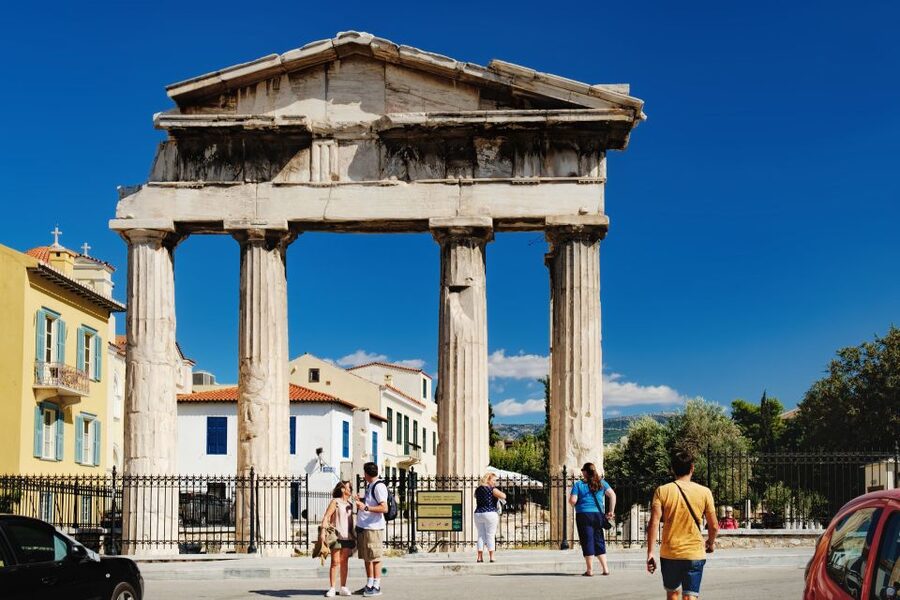
The route continues toward the Prison of Socrates on Philopappos Hill. The site and its story offer a change of mood from civic institutions to the fate of one of Athens’ best-known thinkers.
The audio uses Socrates to explore his life, trial, and death. It also includes the story of Samuel the Cobbler and his connection to Socrates, one of the more memorable personal details in the tour. These smaller stories help keep the experience human rather than purely architectural.
You should treat the prison stop as a historical point of interest, not expect a fully preserved prison building. The surrounding walk and the interpretation do much of the work.
The route finishes near the Acropolis archaeological area, in front of the Theatre of Dionysus. This is a strong ending. The theatre is linked with Aeschylus, Sophocles, and Euripides, and the audio places you at the location where their tragedies were performed.
Keep in mind that ending near the Theatre of Dionysus does not mean this ticket gives you entry to the Acropolis site. Check your ticket details before assuming you can continue through another entrance.
How the audio app performs in practice

The audio tour is available in English, Italian, Greek, German, Spanish, and French. You use your own Android or iOS smartphone and headphones.
Download both the ticket and tour before visiting. The archaeological site has no internet access, so streaming or last-minute downloading is not a safe plan. Charge your phone fully, and consider carrying a small power bank if you expect to take many photographs.
The app’s content is clear and informative, with a relaxed pace that suits a self-guided visit. You can stop when you want, which is a major advantage over a fixed group tour.
Navigation is the weaker point. The map is useful, but some directions could be clearer, and certain paths are difficult to distinguish. The audio may also stop if you zoom in to take a photograph, so pause deliberately rather than trying to operate the map and recording at the same time.
The app does not work with Windows phones, iPhone 5 or 5C and older models, several older iPads, older iPod Touch models, or the first-generation iPad Mini. You must supply your own phone and headphones.
Price, timing, and who gets good value

At $30 per person, the experience sits above a simple admission ticket because it includes the audio tour and offline map. I consider it worthwhile if you enjoy historical explanation but do not want to hire a private guide.
It is less attractive for three types of visitors. First, if you already have a strong guidebook and prefer to explore without recorded commentary, the extra cost may not help. Second, if you are eligible for free or reduced admission, check the rules before purchasing an adult ticket. Third, if you dislike using a phone while sightseeing, a live guide may suit you better.
The 90-minute to two-hour estimate is realistic for a focused visit, but the hills and museum can make the outing feel longer. Wear comfortable shoes. Large bags and luggage are not allowed, and some points are not wheelchair accessible. The experience is not suitable for wheelchair users.
The best time is early morning or late afternoon, especially in hot weather. The open grounds offer little relief, while the museum gives you a cooler pause. The non-refundable policy also means you should confirm your date, phone compatibility, and schedule before booking.
Should you book the Ancient Agora audio tour?
Book it if you want the Agora to make sense, not just look attractive. The strongest parts are the clear account of how Athenian democracy developed, the stories about Solon, Pericles, Aristides, and Socrates, and the connection between the Agora, Pnyx, Mars Hill, and Theatre of Dionysus.
I would choose it for independent visitors who want structure without a live group. Download the files in advance, use headphones, allow two hours, and give the museum’s second floor a proper look.
Skip it if you only want fast entry, need step-free access, or prefer to follow a printed guide at your own pace. For everyone else, $30 is a fair price for a thoughtful introduction to the civic heart of classical Athens, provided you are prepared for a few imperfect directions and the need to manage your own technology.
FAQ
What does the Ancient Agora ticket include?
It includes an adult e-ticket for the Ancient Agora and a self-guided audio tour for an Android or iOS smartphone. Offline content and an interactive map are also included.
Is there a live guide?
No. This is a self-guided audio tour, and no live guide is included.
How long does the visit take?
The stated duration is 90 minutes to two hours.
Which languages are available?
The audio guide is available in English, Italian, Greek, German, Spanish, and French.
Do I need internet access inside the site?
No internet access is available in the archaeological site. Download the e-ticket, audio tour, and offline map before arriving.
Is the GetYourGuide voucher accepted at the entrance?
No. You need the separate e-ticket sent by the local partner. Print it or download it to your phone, then use it at the validating machines.
Can I use my own smartphone and headphones?
Yes. You must provide your own charged smartphone and headphones.
Is the experience wheelchair accessible?
No. It is not suitable for wheelchair users, and some points of interest are not wheelchair accessible.
Can EU students and minors enter for free?
Yes, EU students and minors can enter free with an identity card or passport. They must still queue to receive a zero-value pass. Non-EU students and people over 65 can receive reduced tickets at the ticket office.
More Audio Tours in Athens
- Athens: Acropolis Ticket & Optional Self-Guided Audio Tours
★ 4.1 · 2,542 reviews - Parthenon & Acropolis Museum with Audio or Live Tour Option
★ 4.1 · 2,446 reviews - Athens: Peloponnese Highlights Day Trip and V.R. Audio Guide
★ 4.5 · 1,425 reviews - Athens: Acropolis Ticket with Multilingual Audio Guide
★ 3.9 · 926 reviews
Just added around Athens
- Athens Hotels to Athens Airport Private Departure Transfer★ 5.0 · 40 reviews
- Private One-way Transfer between Athens International Airport and Athens Hotels★ 4.5 · 40 reviews
- Athens: Acropolis Museum Ticket with Self-Guided Audio tour App★ 3.5 · 40 reviews
- From Athens: Meteora Train Trip with Overnight Stay★ 4.8 · 40 reviews
- Athens Photography Tour★ 5.0 · 40 reviews
- Athens: Acropolis Visit and City Night Tour★ 4.7 · 40 reviews
- Delphi Full Day Private Trip From Athens With Lunch Overlooking the Sea★ 5.0 · 40 reviews
- Acropolis & Plaka Neighbourhood Private Tour with Licensed Expert★ 5.0 · 40 reviews
Audio Tours, compared.


Cape Sounio & Poseidon Temple Trip with Audio Guide
Read our review →
Acropolis Museum Ticket with optional Audio Guide
Read our review →
Acropolis Ticket & Optional Self-Guided Audio Tours
Read our review →
Parthenon & Acropolis Museum with Audio or Live Tour Option
Read our review →
Knossos Palace Entry Ticket with Optional Audio Guide
Read our review →Browse the lists this tour appears in