
Reviewed · RHODES TOURS
Rhodes Town: Pomegranate Pottery Masterclass
Slow down and make something by hand. This two-hour pottery workshop in Rhodes Town offers a welcome break from beach time, with simple handbuilding, Greek cultural stories, and a friendly instructor named Theo. I especially like the global exchange of handmade pomegranates, and the calm, personal teaching style that helps complete beginners feel at ease. The main drawback is that you do not take home the pomegranate you make that day.
I also like the good value at $47 per person, since your fee covers instruction, clay, tools, paints, refreshments, and a finished ceramic piece. The workshop is limited to 10 people, though a quiet time slot may leave you with a much smaller class. The studio is in a 120-square-meter basement with red windows, so anyone using stairs or a mobility aid should take that setting into account before booking.
In This Review
- Key details at a glance
- Entering the basement studio in Rhodes Town
- Why the pomegranate matters in Greek culture
- Shaping your first pomegranate from clay
- The unusual three-pomegranate exchange
- Painting, glazing, and choosing your keepsake
- A calm activity away from the beach
- Is it suitable for children?
- What makes Theo’s teaching effective
- Is $47 good value?
- Who should book this pottery class?
- Practical details for planning your visit
- Should you book the Rhodes Pomegranate Pottery Masterclass?
- FAQ
- How long does the Rhodes Pomegranate Pottery Masterclass last?
- How much does the pottery class cost?
- What do I make during the workshop?
- Do I take home the pomegranate I make?
- What does the pomegranate symbolize?
- Is the activity suitable for children?
- What is included in the price?
Key details at a glance
- Make, paint, and exchange: You shape one pomegranate, paint another made earlier, then choose a finished piece to take home.
- Theo leads the class: His patient, warm teaching style suits first-time potters, families, solo visitors, and anyone who prefers relaxed instruction.
- Greek meaning comes first: You learn why the pomegranate represents abundance, fertility, good fortune, and wealth in Greek culture and beyond.
- A peaceful two hours: Clay work gives you a quiet, hands-on break from Rhodes beaches, sightseeing, and busy streets.
- Small groups help: With no more than 10 people, you get room to ask questions and work at a comfortable pace.
- Plan for the firing time: Your own clay pomegranate is painted and fired later, a process taking about two weeks.
Entering the basement studio in Rhodes Town
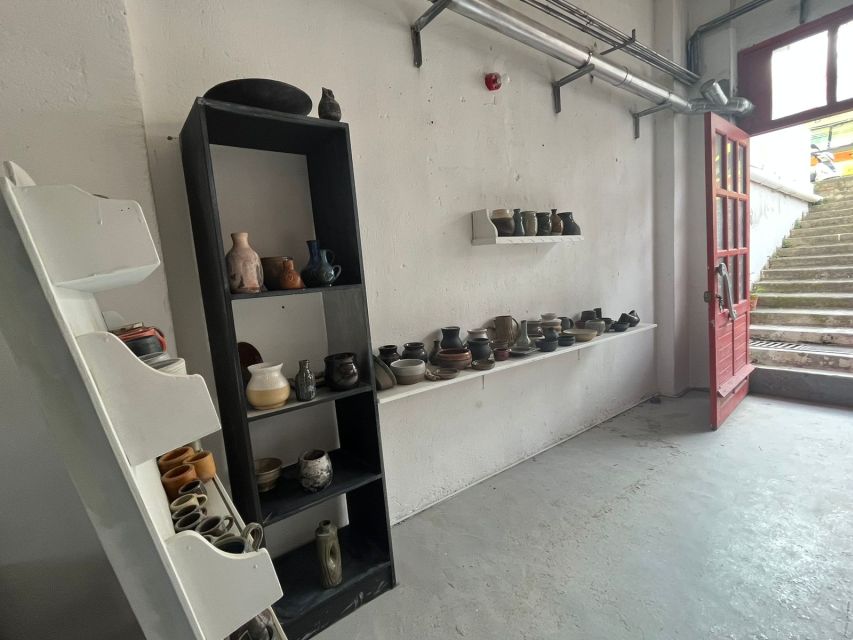
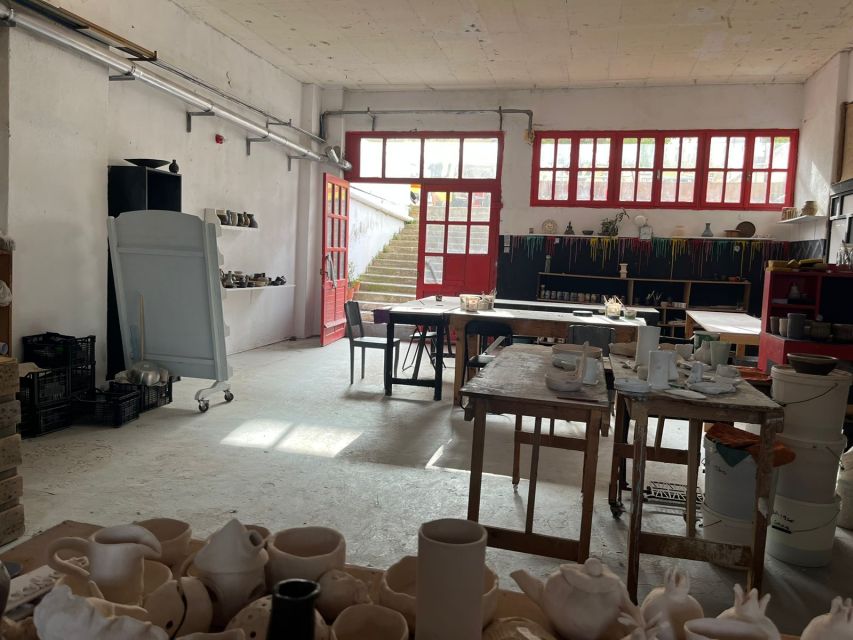
The meeting point is easy to identify by its red windows. You are looking for a 120-square-meter pottery workshop below street level, not a large tourist attraction or a formal art school. That modest setting is part of the appeal. You come to work with clay, not pose for a quick photo and move on.
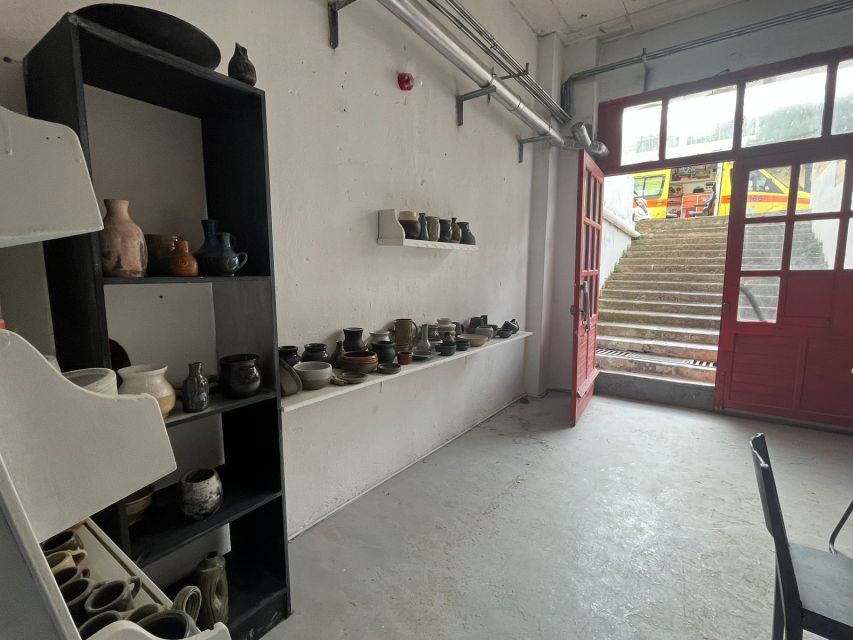
The basement location also brings one practical concern. You need to go downstairs, and one person specifically noted that Theo helped carry a mobility scooter down and back up the steps. That shows a generous attitude, but it does not remove the need to consider your own mobility. If stairs are difficult for you, contact the provider before reserving so you know exactly what to expect.
The class is taught in English and Greek. That makes it accessible to most international visitors, and the relaxed format leaves space for conversation. Theo often adds stories about Greece, pottery, local places, and the meaning of the pomegranate. I would treat the session as both a craft lesson and an informal cultural meeting.
More things to do in Rhodes:
- Rhodes: Speedboat Trip to Symi with Free Time to Explore
★ 4.5 · 4,265 reviews - Rhodes: High-Speed Boat to Symi Island and St George’s Bay
★ 4.8 · 2,333 reviews - Rhodes: All Inclusive Day Cruise with BBQ & Unlimited Drinks
★ 4.8 · 2,331 reviews
Why the pomegranate matters in Greek culture
At first, you might wonder why the class focuses on one fruit. The answer gives the activity its purpose. The pomegranate has long been linked with abundance, fertility, wealth, good luck, and positive intentions in Greek culture. It is also meaningful in several other cultures, which helps explain the workshop’s international exchange.
You are encouraged to give your clay piece a personal meaning. You might shape it around hopes for good fortune, family, health, or a fresh start. That small idea changes the task from simply copying a model into making a symbolic object with your own intentions.
Theo explains the cultural background while showing the pottery methods. This works well because the information is tied to what your hands are doing. You are not sitting through a long lecture about symbolism. You learn a little, shape a little, and see how an everyday object can carry a message.
Shaping your first pomegranate from clay
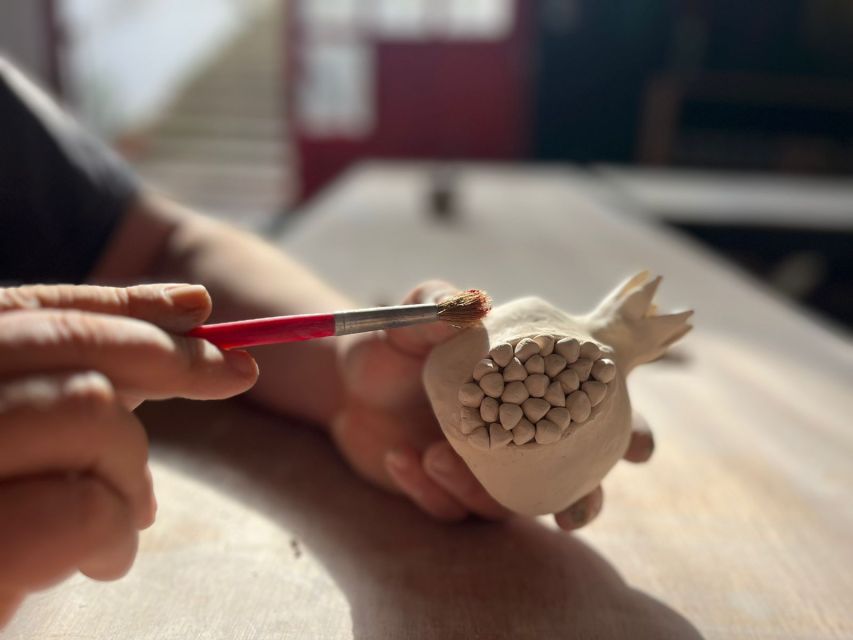
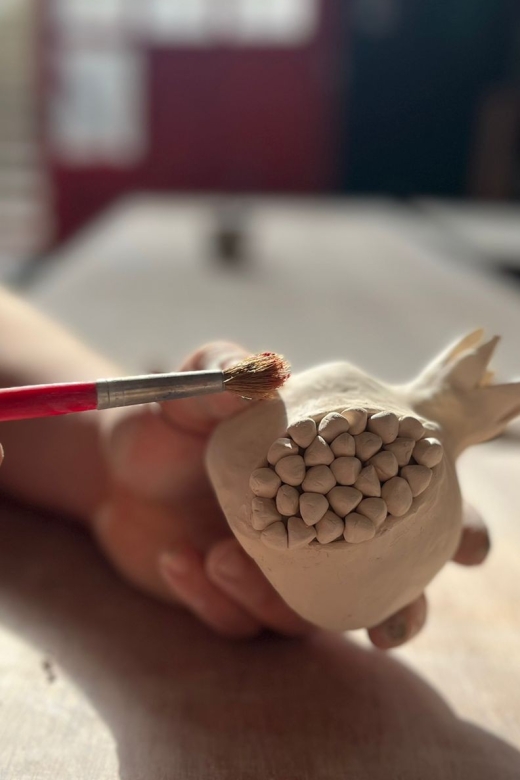
The main practical lesson is handbuilding. You work with real clay and learn basic techniques for forming a rounded pomegranate shape. The process is designed for beginners, so you do not need previous pottery experience or special artistic skill.
Theo demonstrates each step and gives useful corrections as you work. The instruction is clear and encouraging rather than strict. Several people with no experience at all felt pleased with what they produced, which tells you something important: the finished result is achievable even if you are not naturally crafty.
The clay work is the heart of the session. You press, shape, smooth, and add detail by hand. The pace is relaxed, with enough time to ask questions and try again. One visitor who already enjoyed working with clay wished the two hours had lasted longer, but for most beginners the time should feel focused rather than rushed.
This is not wheel throwing. You are not learning to make cups on a spinning wheel. Instead, you are learning a manageable handbuilding project with a clear shape and cultural purpose. That makes it a good choice if you want an introduction to pottery without committing to a technical, demanding class.
You should expect clay on your hands and perhaps a few uneven edges. That is part of the charm. The goal is not factory-perfect symmetry. Each pomegranate carries the marks of the person who shaped it.
The unusual three-pomegranate exchange
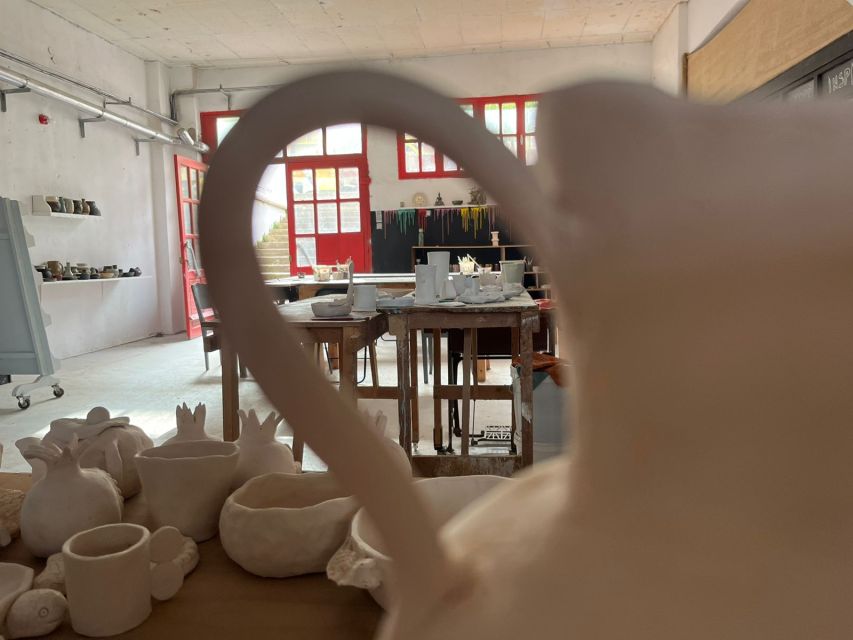
The most distinctive part of the experience is the way the finished object moves from person to person. Your newly shaped pomegranate is set aside to dry. It then goes through painting and firing, a process that takes about two weeks.
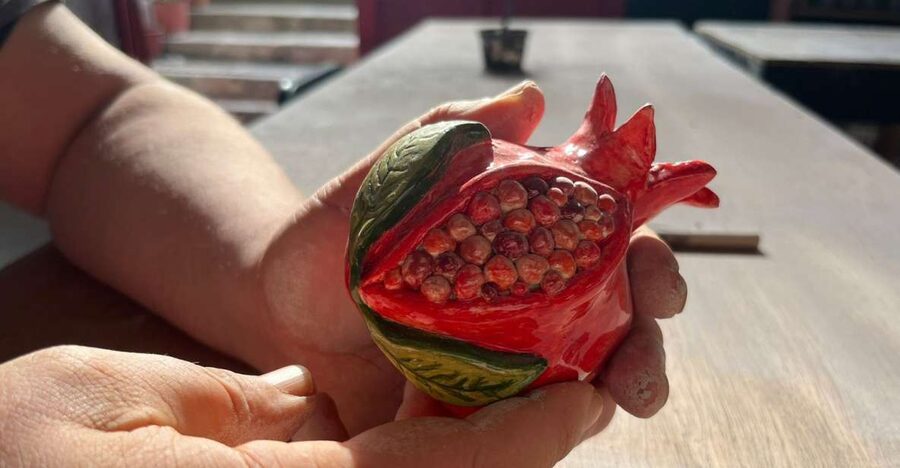
You do not wait around for your own piece to be completed. Instead, you paint a dried pomegranate made by someone from an earlier session. After that, you choose a finished pomegranate made by a previous participant to take home.
At first, this may seem like a compromise. If you want to leave with the exact item you made, this arrangement could disappoint you. Your own piece will not be ready during your visit, and it may eventually go to someone else.
I think the exchange gives the workshop its strongest idea. The piece you take home carries another person’s work, while the one you make will continue through the same cycle. One set of hands shapes it, another adds color, and a third person brings it home. The result is a small chain connecting people who may never meet.
It also takes pressure off your first attempt. You can experiment with your own clay pomegranate without worrying that it must become a perfect souvenir. Then you can choose a finished piece that already has the polished look of a fired ceramic object.
A completely different sort of day out in Rhodes:
- From Rhodes: Cruise to Symi Island and Saint George’s Bay
★ 4.0 · 2,137 reviews - Rhodes: All-Inclusive Catamaran Cruise with Lunch and Drinks
★ 4.8 · 2,002 reviews - From Rhodes: Bus Tour to Lindos and the Seven Springs
★ 4.2 · 1,854 reviews - Rhodes: Symi Island & Panormitis Monastery Day Trip by Boat
★ 4.5 · 1,784 reviews
Painting, glazing, and choosing your keepsake
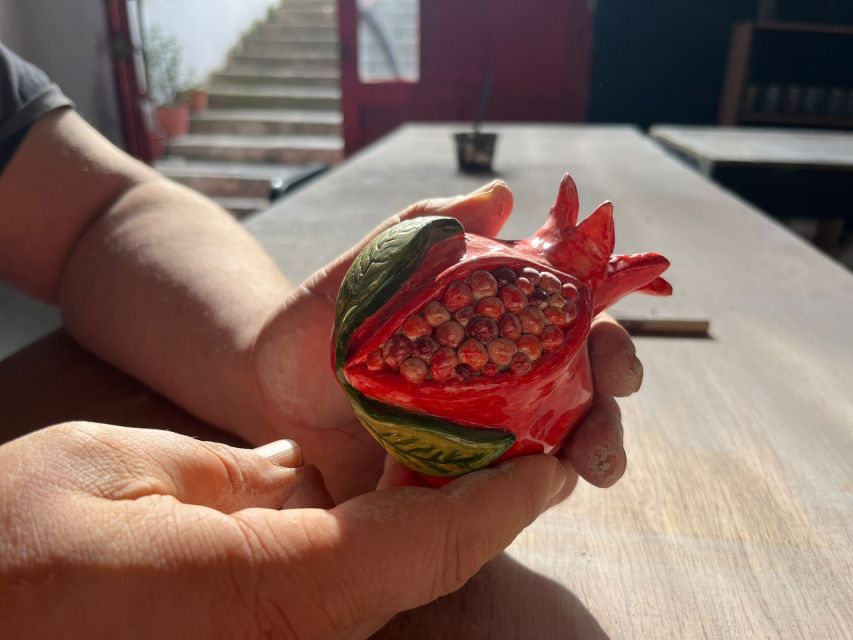
After the handbuilding stage, you select a dried pomegranate to decorate. Tools and paints are included, so you can focus on color and personal style rather than bringing supplies.
This part gives you a second kind of creative decision. The first pomegranate tests your ability to shape clay. The second lets you think about surface, color, and decoration. Theo guides you through the process and handles the next stage, including dipping the painted piece before firing.
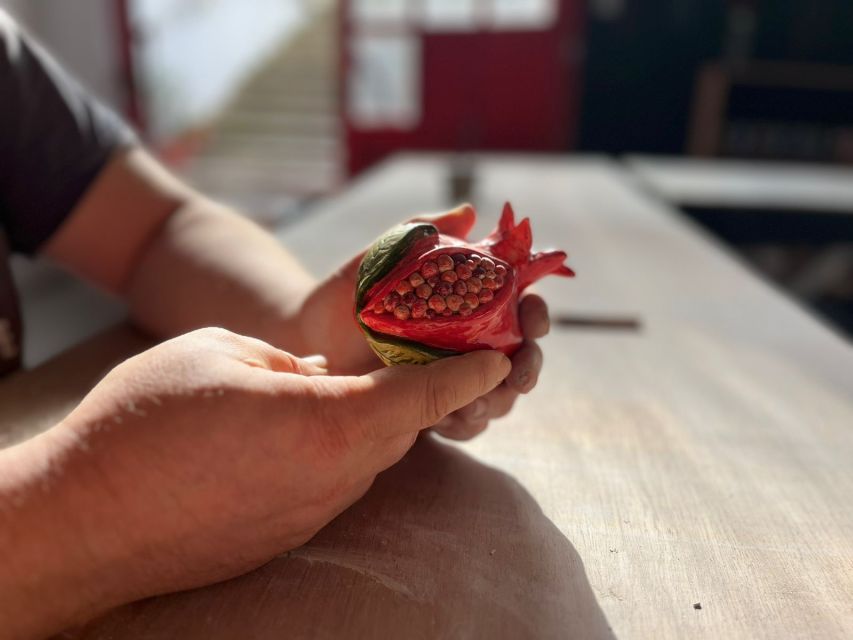
Finally, you choose a completed pomegranate to take home. The finished items are made by earlier participants, so each one has its own look. You may find a piece with a simple finish, bold decoration, or small irregularities that show it was made by hand.
The keepsake is compact enough to fit naturally into a holiday memory, though the supplied details do not specify packaging or luggage protection. If you are flying home, ask how the finished item will be wrapped before you leave. Handmade ceramic can be a wonderful souvenir, but it deserves a little care in your suitcase.
Some people also choose to buy additional handmade pottery from Theo. That is optional and separate from the workshop price. If you see a piece you like, you can ask about available work and pricing at the studio.
A calm activity away from the beach
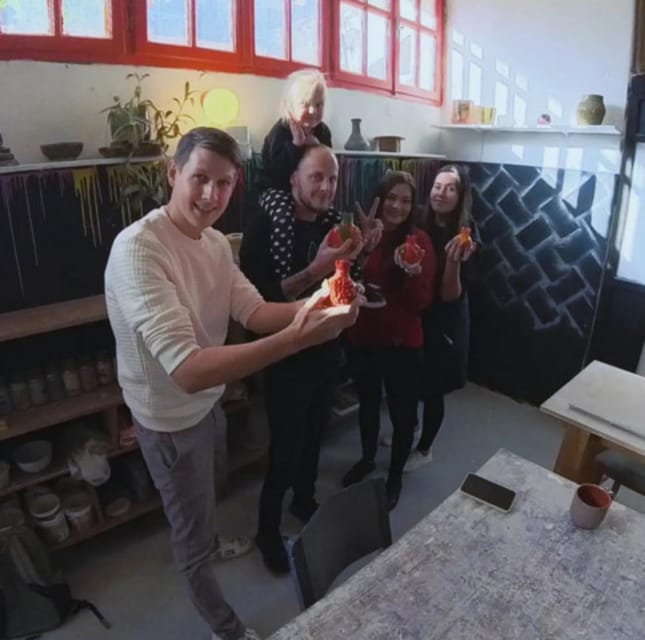
Rhodes is famous for sun, sea, and old stone streets, but two hours of quiet clay work can reset your day. I like this activity for the way it changes your pace. You are not trying to see five sights before lunch. You are sitting down, concentrating on one small object, and talking with the people around you.
The atmosphere is helped by the refreshments. Freshly made filtered coffee, cold bottled water, and other refreshments are included. Coffee is a small detail, but it adds to the feeling of being welcomed into a working studio rather than processed through a standard attraction.
The class can also suit an evening schedule. One couple booked a later time and ended up with what felt like a private lesson because they were the only participants. Group size can vary, but the official limit is 10 people. A smaller session may offer more individual attention, while a full group could bring more shared energy and different creative ideas.
You can book alone without feeling out of place. One solo participant felt welcomed and informed, and the teaching style is built around helping people relax. Couples, friends, parent and child pairs, and small families all fit naturally into the format.
Is it suitable for children?
Children under 7 are not permitted. The experience can work well for older children who can follow instructions and stay engaged with a hands-on task.
A 7-year-old enjoyed the class with a parent, and another family found it especially good for a 12-year-old. A 13-year-old also enjoyed the creative format. Those examples suggest that the activity can be a good family choice, but younger children may need close help with shaping and painting.
For a child, the workshop offers more than a souvenir. It gives them a chance to make something slowly, listen to an instructor, and understand that an object can carry cultural meaning. The exchange system may also spark a useful conversation about sharing creative work with people around the world.
What makes Theo’s teaching effective
Theo is the main reason this experience feels personal. His style is described as friendly, patient, humorous, and reassuring. He demonstrates the techniques, explains the pomegranate’s meaning, and gives advice without taking over your project.
That balance matters. A pottery teacher can either give too little help or fuss over every detail. Here, the aim is to let you try things yourself while offering a steady hand when needed. A child can work independently, and a first-time adult can ask basic questions without embarrassment.
Theo also adds plenty of conversation. He has spoken about Greek culture and suggested places to visit or avoid on Rhodes. Those tips are not the formal point of the workshop, and they will vary by conversation, but they can make the session feel more like meeting a local craftsperson than attending a fixed demonstration.
The personal attention may be strongest in a small group. Since the limit is 10, I would reserve ahead during busy periods if you want a particular time. Some available sessions may be nearly private, but you should not assume that will happen.
Is $47 good value?
At $47 per person, this is not the cheapest way to spend two hours in Rhodes. It is, however, a fair price for a small-group creative class that includes materials, tools, instruction, paints, coffee, water, refreshments, and a finished ceramic pomegranate.
The value comes from the full process, not just the object in your hand. You learn basic handbuilding, create a personal piece, paint another, hear about Greek symbolism, and receive a keepsake made by someone else. If you measure value only by taking home your own work, the price may seem less attractive.
If you enjoy making things, the experience offers more than a souvenir shop purchase. You spend time learning a skill and leave with an object that represents a shared process. If you are mainly looking for a polished, traditional Greek ceramic made by a professional, buying a finished piece may suit you better.
The included refreshments and small group help justify the cost, especially compared with a generic craft activity. The session also provides a useful indoor option if you want relief from heat or need a quieter break in your sightseeing day.
Who should book this pottery class?
I would recommend it to:
- First-time potters who want clear guidance
- Couples looking for a meaningful holiday activity
- Families with children aged 7 and older
- Solo visitors who enjoy meeting people through a shared task
- Honeymooners seeking a handmade keepsake
- Anyone who wants a calm alternative to a beach afternoon
- People interested in Greek customs and symbolic objects
I would hesitate if you need to take home the exact item you made. I would also think twice if stairs are a serious problem or if you want a fast, highly polished demonstration with little participation.
The workshop is less about producing a perfect pomegranate and more about joining a creative chain. That distinction is worth understanding before you book.
Practical details for planning your visit
The workshop lasts two hours, and starting times vary, so check the available schedule before choosing a slot. The language options are English and Greek, and the group limit is 10 participants.
The meeting point is the basement pottery workshop with red windows. Allow a little time to locate the entrance, especially if you are arriving for a scheduled session.
Children under 7 cannot join. The activity is family-friendly for older children, but young participants should be prepared to work carefully with clay and follow the instructor.
The clay pomegranate you make will need drying, painting, and firing. The full process takes about two weeks, so you should not expect to collect that particular piece before leaving Rhodes. You will instead select a completed pomegranate made during an earlier class.
Free cancellation is available up to 24 hours before the activity for a full refund. You can also reserve now and pay later, which is useful if your island plans are still changing.
Should you book the Rhodes Pomegranate Pottery Masterclass?
Yes, if you want an authentic, hands-on activity with a strong human touch. Theo’s patient instruction, the Greek symbolism, and the unusual exchange of pottery make this more memorable than a standard souvenir stop.
Book it if you enjoy creative work, even if you think you are not artistic. The class is built for beginners, and the finished piece you take home means you can enjoy the result without worrying about whether your own first attempt came out perfectly.
Skip it if you insist on taking home your exact creation, dislike working with clay, or cannot manage the basement steps. For everyone else, $47 buys a peaceful two hours, a cultural story, a chance to make something with your hands, and a keepsake connected to people who shaped it before you.
FAQ
How long does the Rhodes Pomegranate Pottery Masterclass last?
The workshop lasts two hours.
How much does the pottery class cost?
The price is $47 per person.
What do I make during the workshop?
You make a ceramic pomegranate from real clay using basic handbuilding techniques.
Do I take home the pomegranate I make?
No. Your pomegranate is set aside for painting and firing, which takes about two weeks. You choose a finished pomegranate made by a previous participant to take home.
What does the pomegranate symbolize?
The pomegranate symbolizes abundance, fertility, good fortune, and wealth in Greek culture and in other cultures.
Is the activity suitable for children?
Children under 7 are not permitted. Older children can join, and the class has been enjoyed by children aged 7, 12, and 13.
What is included in the price?
The price includes the pottery workshop, instructor, tools, paints, freshly made filtered coffee, cold bottled water, and refreshments.
Just added around Rhodes
- The Best of Rhodes & Lindos: Full Island Tour (Small Group)★ 4.5 · 40 reviews
- Faliraki : Transfer & Cruise to Lindos with 3 Swimming Stops★ 4.4 · 40 reviews
- BEST OF LINDOS & RHODES – PRIVATE TOUR – SHORE EXCURSION – HALF DAY – 4 People★ 5.0 · 41 reviews
- Sunset Cruise in Rhodes with unlimited drinks & snacks★ 5.0 · 43 reviews
- Faliraki: Evening RIB Cruise with Champagne and Sunset Views★ 4.9 · 43 reviews
- Rhodes Sunset Cruise – Swim and Dine w/ Live Music & Sunset!★ 5.0 · 44 reviews
- Small Group Hiking on Mount Akramitis in Rhodes★ 5.0 · 45 reviews
- Kiotari, Lardos, Pefkos, & Lindos: Speedboat to Symi Island★ 4.7 · 46 reviews
Rhodes Tours, compared.

Speedboat Trip to Symi with Free Time to Explore
Read our review →
High-Speed Boat to Symi Island and St George’s Bay
Read our review →
All Inclusive Day Cruise with BBQ & Unlimited Drinks
Read our review →

All-Inclusive Catamaran Cruise with Lunch and Drinks
Read our review →

Symi Island & Panormitis Monastery Day Trip by Boat
Read our review →
Boat Trip to Symi Island with swimming stop at St George Bay
Read our review →Browse the lists this tour appears in