
Reviewed · FOOD & DRINK
Naxos Villages Food Tour
Small villages, big flavors. This five-hour Naxos food tour leaves Chora behind for mountain roads, family food traditions, and three places you might not reach easily without a car. I love the visit to a working olive grove in Kourounochori, and I like how the tour links food with village life rather than treating lunch as the whole event. The small group, capped at 12 people, also gives the guide room to answer questions and adjust the pace.
The main caution is value. At $235.33 per person, this is a pricey half-day outing, and the food may feel modest if you expect a long succession of tastings. Some of the stops are sit-down meals rather than quick samples, and the final distillery visit is less useful for anyone who does not drink alcohol. Still, the tour earns its strong reputation through its guides, scenery, and access to rural Naxos.
In This Review
- Key Points Before You Book
- Why This Tour Gets You Beyond Chora
- Kourounochori: Olive Trees and a Quiet Start
- Apeiranthos: Marble Streets and the Main Meal
- Chalki: Kitron, Distilling, and Dessert
- What You Actually Eat and Drink
- The Guides Are a Major Part of the Experience
- Is $235.33 a Fair Price?
- Timing, Walking, and Practical Planning
- Who Should Book This Naxos Food Tour?
- Should You Book the Naxos Villages Food Tour?
- FAQ
- Where does the Naxos Villages Food Tour start?
- What time does the tour begin?
- How long does the tour last?
- Which villages does the tour visit?
- Is food included?
- Are drinks included?
- How many people can join the tour?
- Can I cancel for a full refund?
Key Points Before You Book
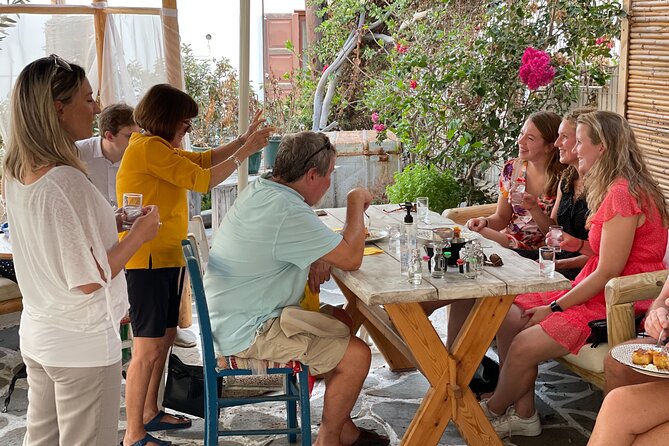
- Kourounochori offers the most unusual stop: Meet a young farmer, visit his olive grove, and learn how olives are harvested.
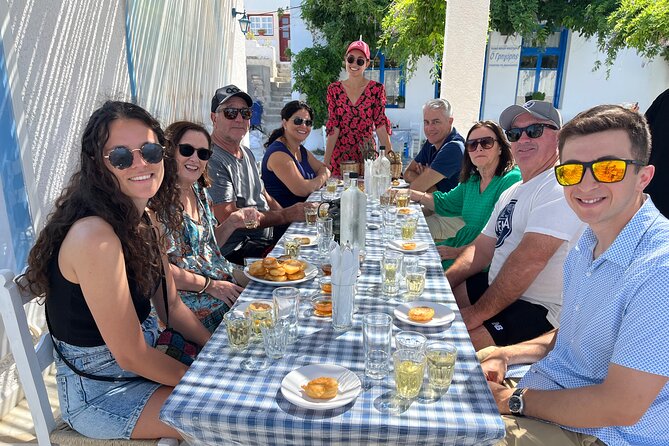
- Apeiranthos combines village architecture with food: Marble streets, medieval buildings, cheese, wine, potatoes, meat, and other Naxian dishes form the main meal.
- Chalki brings the island’s citron tradition to life: Taste Kitron at an old distillery, then try a local custard pie or orange pie.
- The tour is as much cultural as culinary: Guides explain customs, farming, village life, island history, and local food traditions.
- Small groups make a real difference: Groups can be as small as three people and never exceed 12.
- Plan for a drive-heavy half-day: You see several parts of the interior, but the experience is not a nonstop food crawl.
Why This Tour Gets You Beyond Chora
Naxos is easy to enjoy from its beaches, waterfront restaurants, and main town. Yet the island’s food identity comes from inland villages, family farms, mountain roads, old stone buildings, olive trees, local cheese, and dishes built around potatoes and meat. This tour is designed to show you that side of the island in one morning and early afternoon.
You meet at the Naxos Bus Transfer point in Chora at 10:00 am. From there, the tour moves into the island interior by vehicle. That transportation matters. You do not need to rent a car, navigate narrow village roads, or work out how to combine three villages in a single outing.
The pace is fairly full but not frantic. The planned village visits take about three and a half hours in total, with the rest of the five-hour schedule used for driving, tasting, and transitions. The drives are part of the experience, giving you views of the interior and a sense of how different inland Naxos feels from the coast.
The strongest reason to book is the guide. Elizabeth receives repeated praise for her warmth, clear explanations, and love of Naxos. Maria is also praised for her long experience in tourism and her easy connection with local people. Depending on the departure, you may be accompanied by Elizabeth, Maria, or another guide from the same team.
The best guides here do more than point out buildings. They explain why certain foods matter, how olive oil fits into local life, and what makes one village different from the next. One particularly memorable detail from the experience is the presence of Elizabeth, a Naxos local who has shared stories about growing up on the island and village family life.
More Food Tours in Naxos
- Naxos/ Paros: Sailing Cruise with Food and Drinks
★ 4.8 · 269 reviews - Naxos: Naxos Town Food Tour with Tastings and Wine
★ 4.9 · 266 reviews - Naxos: Catamaran Cruise with Swim Stops, Food, and Drinks
★ 4.8 · 180 reviews
Kourounochori: Olive Trees and a Quiet Start
The first stop is Kourounochori, an off-the-beaten-path village with cobblestone lanes, natural waterfalls, and plenty of greenery. It is a smart opening because you begin with a place that many independent visitors could easily miss.
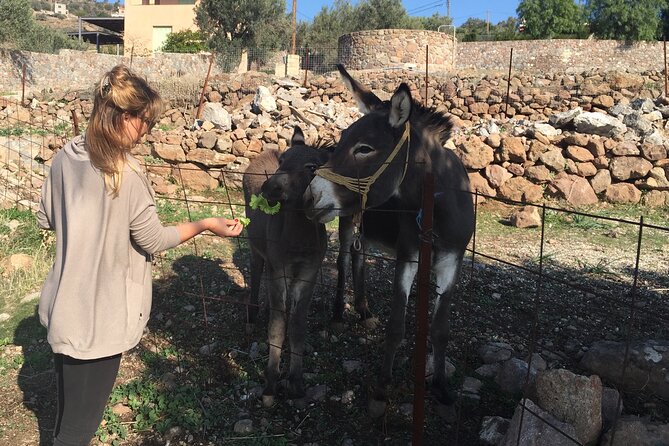
The village visit includes time at a local olive grove, where you meet a young farmer and taste his products. You also learn about the old methods of harvesting olives in Greece. This is one of the tour’s most distinctive experiences because it connects the food on your plate to the work behind it.
Olive cultivation is not presented as a polished museum display. Instead, the focus is on a local producer and the traditional process. You get a clearer idea of why olive oil is central to Greek cooking and how older olive trees can remain productive for many years. The guide also explains how olive oil is linked with long-standing local habits and daily life.
The tasting here is described as a breakfast or a light opening meal. It can include local products, tea, and small bites. I would not treat this as a full breakfast replacement if you wake up hungry, but it sets the tone well. You are not simply sampling olive oil from a bottle. You are hearing about farming, meeting someone connected to the land, and tasting products in the setting that produced them.
Kourounochori also requires some walking through old lanes. The reviews describe uneven paths, steps, and climbs in the villages visited. Most people can take part, but you should be comfortable walking on cobblestones and managing stairs. The tour is not presented as an accessible, step-free route.
Apeiranthos: Marble Streets and the Main Meal
Apeiranthos is the centerpiece of the tour. This mountain village is known for its marble streets and medieval architecture, and the walking portion gives you time to notice details that would be easy to miss from a car window.
The marble underfoot gives Apeiranthos a different feel from Kourounochori. Its lanes, old buildings, and mountain setting create a strong sense of place. The village is one of Naxos’ best-known inland stops, but the tour adds context by pairing the walk with local food and an explanation of village customs.
The meal here is the most substantial food stop. Included dishes can feature Naxian cheeses, local specialties, the island’s famous potatoes, local meat, and house wine. The exact combination may vary, but the point is to sample the food Naxos is especially proud of rather than chase a long list of tiny bites.
This is where opinions about value may differ. Some people find the portions generous and leave satisfied. Others expect a food tour to include more frequent stops and a broader range of samples. The meal is closer to a traditional sit-down spread than to a market crawl with one bite at every corner.
I like that arrangement if you want to understand how Naxians eat. Potatoes, cheese, meat, wine, and homemade dishes tell you more about the island’s food culture than a string of fashionable tasting plates. If your goal is to sample as many products as possible, though, you may find the format less exciting.
The guide’s role is especially important here. Elizabeth is praised for explaining the food clearly and placing each dish in its cultural setting. You learn not only what you are eating, but also why particular ingredients and cooking habits matter on Naxos.
Chalki: Kitron, Distilling, and Dessert
The last village is Chalki, the former capital of Naxos. Its role in the tour is built around two local specialties: Kitron, the island’s citron liqueur, and a traditional sweet.
At the old distillery, you taste Kitron and learn about the local liquor tradition. Kitron is one of the products most closely associated with Naxos, so this is a useful stop even if you are not a serious spirits enthusiast. The tasting gives you a direct connection to a product that is specific to the island rather than simply another glass of Greek wine.
The dessert is meant to follow the distillery visit. The tour information identifies a locally prepared custard pie, while the included food description also mentions portokalopita, a Greek orange pie. You may therefore encounter a traditional homemade sweet connected with the local menu rather than a standardized restaurant dessert.
This final stop is also the tour’s least consistent point. Some descriptions make the dessert sound like a special treat, while one account reports that it was not served. Another criticism is that the stop offers less food variety than expected for the price. If you are booking mainly for eating, keep that in mind.
For anyone under legal drinking age, the distillery portion has limited value. The tour includes a local liquor tasting, and the stop is not designed around a nonalcoholic alternative. You can still appreciate Chalki and its history, but this part will not carry the same weight.
More things to do in Naxos:
- Naxos Highlights Bus Tour with Free Time for Lunch at Apeiranthos
★ 5.0 · 1,215 reviews - Naxos: Half-Day Cooking Class at Basiliko Family Tavern
★ 5.0 · 887 reviews - Semi-private Antiparos & Caves Blue Lagoon OR Rina Cave & Small Cyclades
★ 4.5 · 500 reviews - Naxos Half Day History and Culture Guided Tour
★ 5.0 · 491 reviews
What You Actually Eat and Drink
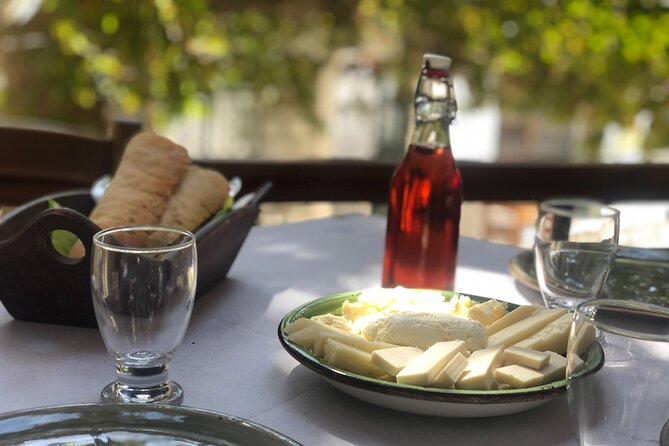
The menu is broad enough to give you a picture of Naxian cooking, though the quantity and variety may not match every person’s idea of a food tour. Included items can include:
- Naxian cheeses
- Local specialties
- The island’s famous potatoes
- Local meat
- House wine
- Kitron tasting
- Orange pie, or portokalopita
- A traditional custard pie
- Tea and light bites at the first stop
The strongest food experiences are the ones tied to a place. Olive products at an olive grove feel more meaningful than the same tasting in a shop. Cheese and wine in Apeiranthos make sense after a village walk. Kitron at an old distillery gives the final stop a clear local identity.
Vegetarians can be accommodated, but you should report food allergies or dietary needs ahead of time. The available information specifically asks you to notify the operator about allergies. It does not promise a particular vegan or gluten-free menu, so ask before booking if your diet is strict.
One useful expectation check: this is not necessarily a tour where you stop at six shops for a single bite each. Two of the main stops involve seated food, and that means less movement from one tasting counter to another. I see this as a strength if you want time to talk and eat properly, but a weakness if you prefer constant variety.
The Guides Are a Major Part of the Experience
The clearest thread running through the feedback is the quality of the guides. Elizabeth is frequently singled out for her kindness, patience, enthusiasm, and connection to Naxos. She explains food traditions in a way that makes the tastings more interesting, and she is comfortable answering questions during the drives and walks.
Maria is praised for creating a private-feeling experience and for knowing the villages and local contacts well. One memorable account describes her as an experienced guide with more than 40 years in tourism. Elizabeth, who has local roots and was described as a guide in training on one departure, added a personal view of island life.
Guide assignments can change, so you should not book on the assumption that one specific person is guaranteed. Still, the repeated praise for the guiding team suggests that the human side of the tour is a real asset.
The maximum group size is 12, but the group may be much smaller. A group of three creates a very different mood from a full minibus. Small numbers allow more questions, easier conversation with the guide, and less waiting during tastings.
Is $235.33 a Fair Price?
The price is $235.33 per person, which puts this well above a basic lunch outing. Included in that figure are transportation during the experience, three village visits, food, house wine, and Kitron tasting. Gratuities for the guide and driver are not included.
I would judge the price in two ways. As a food crawl, it may feel expensive. You do not get a long series of quick shop visits, and some people may want more food for the money. If you compare it with lower-priced food tours around the world, the portion-to-price ratio may disappoint.
As a guided inland Naxos experience, the calculation looks better. You reach Kourounochori, Apeiranthos, and Chalki in one organized trip. You also get local explanations, an olive grove visit, a village walk, a traditional distillery, and meals that would be harder to arrange independently without a car and local contacts.
I would book it for the access and context, not simply because lunch is included. If you already have a rental car and enjoy researching village tavernas on your own, the price may be harder to justify. If you want someone else to handle the roads and introduce you to local people, the cost becomes easier to defend.
Timing, Walking, and Practical Planning
The tour starts at 10:00 am at Naxos Bus Transfer in Chora and ends back at the same meeting point. The full experience lasts about five hours, so you still have much of the afternoon available.
Wear shoes suited to cobblestones and village steps. The route includes walking through old mountain settlements, and the paths are not described as flat or smooth. The village setting is part of the charm, but it also means you should not expect a polished, step-free sightseeing route.
The activity is near public transportation, though the tour itself provides the organized movement between villages. Most people can participate, but anyone concerned about stairs, uneven ground, or long periods of sitting in a vehicle should ask the operator for current details before booking.
Confirmation is sent within 48 hours, subject to availability. Free cancellation is available up to 24 hours before the start time for a full refund. Changes or cancellations inside that 24-hour window are not accepted for a refund.
The tour is offered in English and uses a mobile ticket. It is typically booked well ahead, with an average booking lead time of 73 days. That does not mean you must reserve exactly that early, but it is a useful warning for summer trips and dates when you have little flexibility.
Who Should Book This Naxos Food Tour?
I would recommend it most strongly to you if you want to see inland Naxos without renting a car. It is also a good fit if you enjoy learning how food connects to farming, family life, local customs, and village identity.
The tour suits people who prefer a small group, a relaxed meal, and a guide-led introduction to places they might otherwise pass by. It is particularly useful early in a Naxos stay, since it gives you a wider sense of the island beyond Chora and the coast.
You may want to skip it if you want a nonstop tasting route, a large number of restaurant stops, or exceptional value based only on food volume. It is also less suitable if you do not drink and have little interest in a liqueur distillery.
Should You Book the Naxos Villages Food Tour?
Yes, if your priority is authentic inland Naxos with food attached. The olive grove, marble lanes of Apeiranthos, local dishes, and Kitron tasting create a well-rounded look at island life. The guides, especially Elizabeth and Maria, add warmth and useful local knowledge that you would not get from simply driving through the villages.
I would book this tour when you want access, context, and easy transportation in one package. I would not book it expecting the cheapest or most food-packed tour on the island. Check your appetite, dietary needs, walking comfort, and interest in alcohol first. If those line up, the experience offers a memorable way to see the Naxos that sits beyond the beach and waterfront.
FAQ
Where does the Naxos Villages Food Tour start?
The tour starts at Naxos Bus Transfer in Chora Naxos, Naxos 843 00, Greece.
What time does the tour begin?
The scheduled start time is 10:00 am.
How long does the tour last?
The experience lasts approximately five hours.
Which villages does the tour visit?
The tour visits Kourounochori, Apeiranthos, and Chalki.
Is food included?
Yes. Included food can feature Naxian cheeses, local specialties, potatoes, local meat, and a traditional sweet such as orange pie or custard pie.
Are drinks included?
Yes. House wine and a Kitron tasting are included. Tea and other drinks may also be served during the food stops.
How many people can join the tour?
The maximum group size is 12 people.
Can I cancel for a full refund?
Yes. You can cancel at least 24 hours before the experience starts for a full refund. Cancellations or changes made less than 24 hours before the start time are not accepted for a refund.
Just added around Naxos
- Naxos: Private E-Bike Tour with Farm Lunch★ 5.0 · 40 reviews
- Naxos Sunset City Walk★ 4.5 · 41 reviews
- Unforgettable Naxos in 6 Hours: Villages, Tastings & Lunch★ 5.0 · 42 reviews
- Naxos Old Town Private Food Tour with Dinner and Pickup★ 5.0 · 42 reviews
- Private Catamaran All-Inclusive Cruise in Naxos★ 5.0 · 44 reviews
- Rent an Aurelia e-assist bike and explore Naxos!★ 5.0 · 45 reviews
- From Naxos: Cruise to Iraklia and Ano Koufonisi Island★ 4.4 · 53 reviews
- Naxos: Hike to the Top of Mount Zas with a Guide★ 5.0 · 56 reviews
Food & Drink, compared.

Small Group Greek Traditional Food Tour in Athens 20+ Tastings
Read our review →
Santorini Wine Stories: Sunset Tour with Tasting & Dinner
Read our review →
Food Market Visit and Cooking Class with Wine
Read our review →
Browse the lists this tour appears in