
Reviewed · HISTORICAL TOURS
From Chania: Crete World War II History Tour
Crete remembers every landing. This six-hour small-group tour gives you a clear, thoughtful look at the Battle of Crete, from the first German parachute landings at Maleme to the resistance that followed. I especially like the use of old maps and photographs, and I like that the route includes both major battle sites and personal remnants preserved by local collectors. The main drawback is practical: there is usually only one scheduled comfort stop, and the snack is not a substitute for a proper lunch.
You travel in an air-conditioned minivan from the Chania region, with an English-speaking driver-guide and a local guide. Yannis, Yanis, Gyannis, and Babis are praised for bringing the subject to life, explaining troop movements clearly, and adding insight into everyday Cretan life. If you have family connections to the Allied forces, the cemeteries can be especially moving, but this is also a strong choice if you simply want to understand what happened on the island.
In This Review
- Key Points Before You Book
- Why the Battle of Crete Matters
- Maleme and the First German Landings
- Tavronitis Bridge and the Battle’s Physical Evidence
- Galatas and the Local Resistance
- Secret Shelters and Wartime Remnants
- German and Allied Cemeteries
- A Six-Hour Day in a Comfortable Minivan
- Food, Breaks, and Small Practical Limits
- Is $111 a Fair Price?
- Who Will Enjoy This Tour Most?
- Should You Book It?
- FAQ
- Where does the tour depart from?
- How long does the tour last?
- Which languages are available?
- Are the war cemetery visits included?
- Is food included?
- What should I bring?
Key Points Before You Book
- Maleme gives the battle a physical starting point: You see the airfield area from above and visit the nearby Tavronitis Bridge, two places closely tied to the German invasion.
- Maps and photographs make troop movements clear: The guide uses visual material to explain the battle in a way that is easier to follow than a string of dates.
- Galatas adds the human scale: The village and its battle sites show how local communities became part of a wider military struggle.
- The private collection is a memorable stop: A local collector presents wartime objects found around Crete, often explaining the story behind each item.
- Both sides of the dead are remembered: The German cemetery and Allied war cemetery offer very different settings, but each receives respectful attention.
- Plan for limited breaks: Bring comfortable shoes, use the restroom before departure, and do not assume a full restaurant lunch is included.
Why the Battle of Crete Matters
The story begins before the German invasion. Your guide explains the Greek-Italian War of 1940 and the wider military situation that led Hitler to launch Operation Mercury, the airborne assault on Crete in May 1941.
That background matters because the Battle of Crete was not an isolated island skirmish. It connected Greece to the larger war in southeastern Europe, and the fighting involved German forces, Greek defenders, British troops, Australians, New Zealanders, and local partisans.
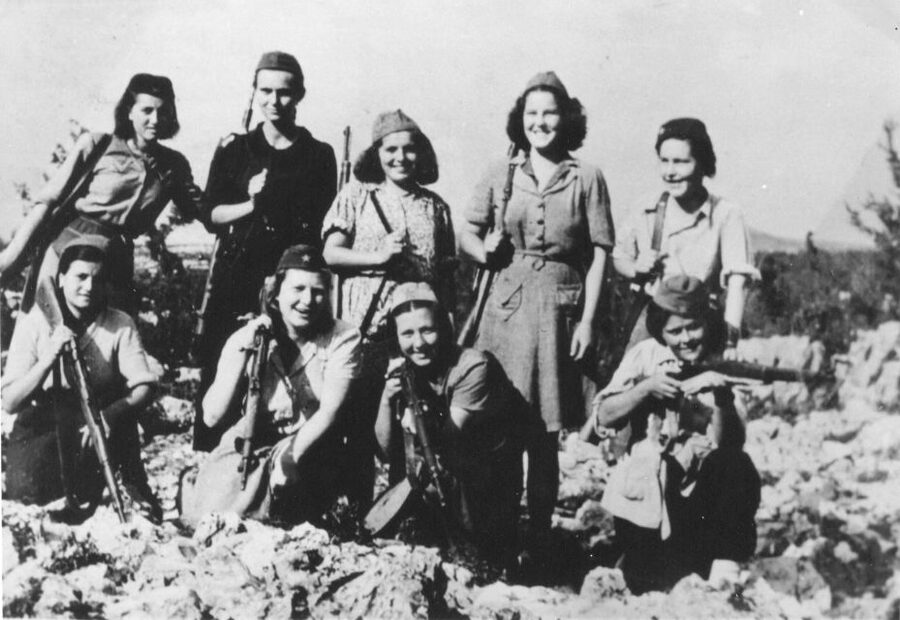
The Allied defeat came quickly in military terms, but the resistance that followed had an effect far beyond the island. The struggle helped restore Allied morale at a difficult stage of the war. Your guide also explains how Cretan civilians and partisans helped Allied soldiers, often at great personal risk.
I find this wider framing more useful than a tour that only points out bunkers and graves. You learn not just where fighting occurred, but why Crete mattered and how local resistance altered the story after the invasion.
More things to do in Crete:
- From Kissamos Port: Boat Cruise to Balos Lagoon & Gramvousa
★ 4.2 · 6,755 reviews - From Chania: Full-Day Samaria Gorge Trek Excursion & Guide
★ 4.6 · 3,191 reviews - Cretan Safari – 4×4 Adventure to Preveli Beach with Lunch
★ 5.0 · 780 reviews
Maleme and the First German Landings
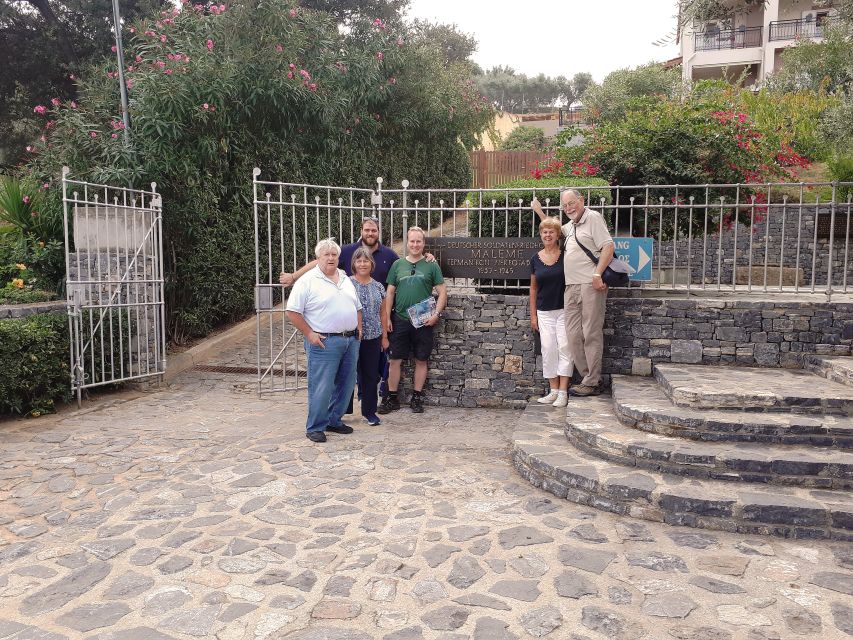
Maleme is the key opening stop. This pretty village and its surrounding area were central to the German airborne assault, since paratroopers landed near the airfield during the first phase of Operation Mercury.
Seeing the airfield from above helps you grasp the geography. From a map or book, the battle can seem like a collection of names. On site, the relationship between the airfield, the surrounding high ground, roads, and villages becomes easier to understand.
The guide explains how the German forces tried to seize the airfield and why control of it was so important. Once the Germans could bring in reinforcements, the Allied position became far more difficult to hold.
This is one of the tour’s strongest features: you are not left alone with a monument and a date. Yannis or Babis may use maps, old photographs, and direct explanation to show how troop movement unfolded. Their military background, mentioned by several participants, adds practical insight into why certain positions mattered.
Do not expect a large museum complex at every stop. Much of the value comes from looking at ordinary terrain with someone who can explain its wartime role. You should wear shoes that handle uneven ground and short walks comfortably.
Tavronitis Bridge and the Battle’s Physical Evidence
The visit to Tavronitis Bridge brings you closer to the first moments of the invasion. The bridge and surrounding area preserve remnants linked to the fighting, giving you a more direct connection to the events than a standard town sightseeing stop.
The guide uses the site to explain how German forces moved through the area and how the Allied defenders responded. This is also where the tour begins to show the difference between military plans and what actually happened on the ground.
The remains can be modest. You will not find a polished attraction with a long line of displays. That is part of the appeal, but it also means you need to listen carefully. Without the guide’s explanation, some of the wartime details could be easy to miss.
I like this kind of stop because it keeps the story rooted in real places. You can look at the bridge, roads, and nearby ground while the guide describes the pressure on both sides. The tour asks you to imagine the battle without turning the site into a theme park.
Galatas and the Local Resistance
Galatas adds another important chapter. The battle here shows how the invasion spread into villages and how Greek civilians became tied to the conflict.
Your guide explains the Battle of Galatas and the role of local resistance groups. The emphasis is not only on regular armies. British, Australian, and New Zealand troops depended on local help, and Cretan partisans supported escape routes and resistance efforts during the occupation.
This is where the tour moves beyond a simple Allied-versus-German account. You hear about the risks taken by people who were defending their own homes, hiding soldiers, passing information, or helping troops reach safety.
Several guides have been praised for explaining the battle in chronological order. That is useful at Galatas because the events can otherwise become confusing. You are likely to hear about different units, withdrawals, local actions, and changing positions over a short period. The best explanations connect those pieces instead of burying you in military names.
The village setting also gives the day some variety. You are not spending six hours inside one museum or walking through a single cemetery. The route shifts between villages, battle positions, memorials, and collections, keeping the subject focused without making the day feel like a lecture in a van.
More Historical Tours in Chania:
- Historical Delphi One Day Tour with Arachova Stop & Expert Guide
★ 4.5 · 1,247 reviews - Historic Athens: Small Group Electric Bike Tour
★ 4.9 · 740 reviews - Naxos Half Day History and Culture Guided Tour
★ 5.0 · 491 reviews - Naxos: Half-Day Guided History and Culture Sightseeing Tour
★ 4.7 · 435 reviews
Secret Shelters and Wartime Remnants
The tour also seeks out smaller traces of the war, including shelters and lesser-known monuments. The exact sites can vary with the day’s route, but the point is to show how wartime history survives in ordinary corners of Crete.
A shelter may not look impressive at first glance. Its importance comes from the story attached to it: who used it, how it was hidden, and what happened in the surrounding area. Your local guide helps connect these quiet places with the broader occupation and resistance.
This part suits you if you enjoy history at a human scale. You are not simply checking off famous landmarks. You are looking at the physical remains of a conflict that affected farms, villages, families, and roads.
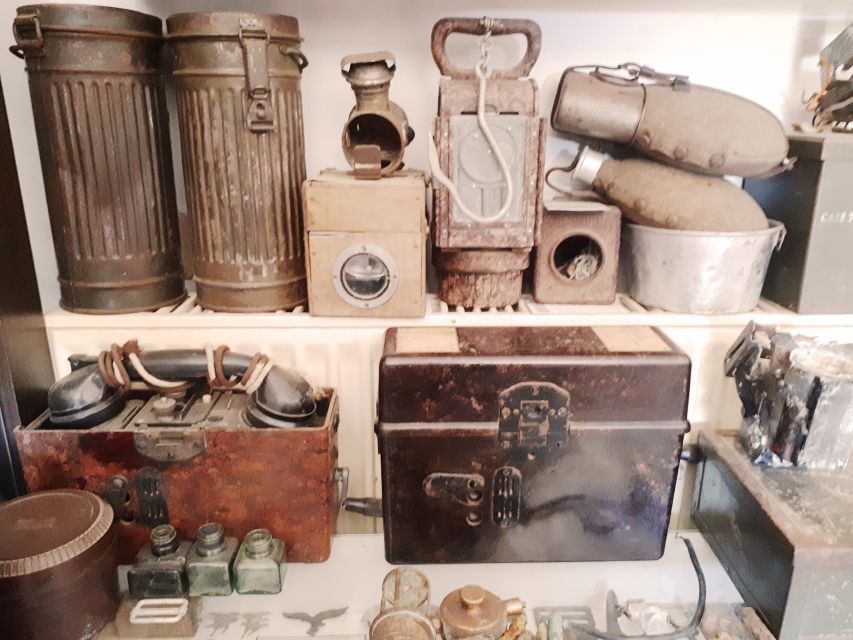
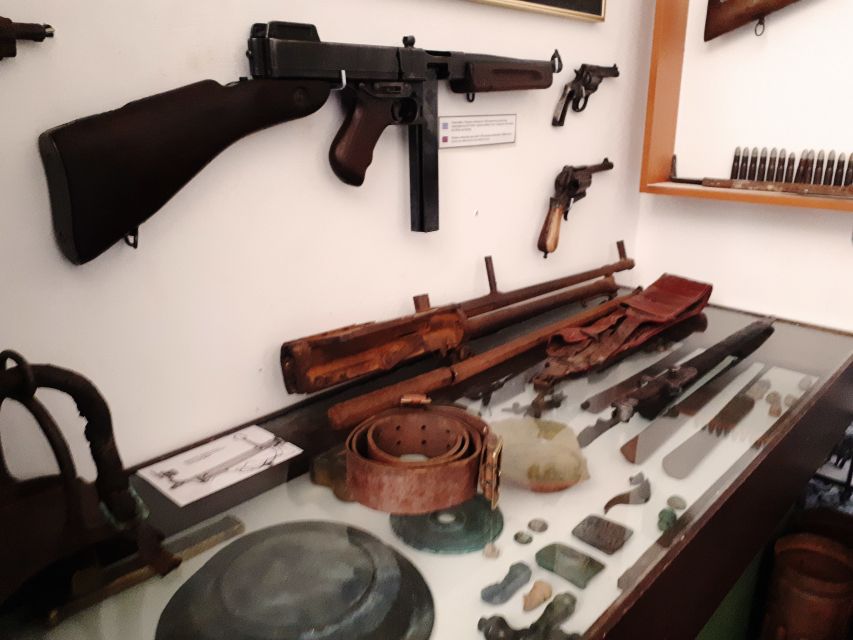
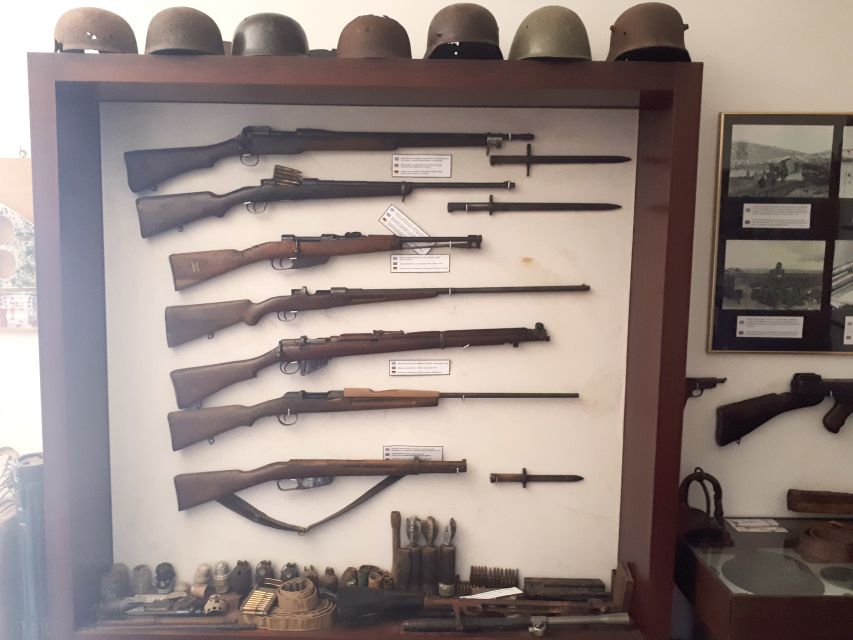
The tour can also include a visit to a private collection of World War II objects gathered from the local area. The collector, identified in feedback as Stelios, is described as deeply familiar with each piece and able to explain where items were found.
This collection seems to be one of the day’s most personal stops. You may see relics up close rather than behind glass, and the objects can make the campaign feel immediate. At the same time, the presentation may take a while because the collector has a story for nearly every item. If you prefer a brisk museum visit, this can feel lengthy. If you enjoy objects with a local backstory, it may be the highlight.
German and Allied Cemeteries
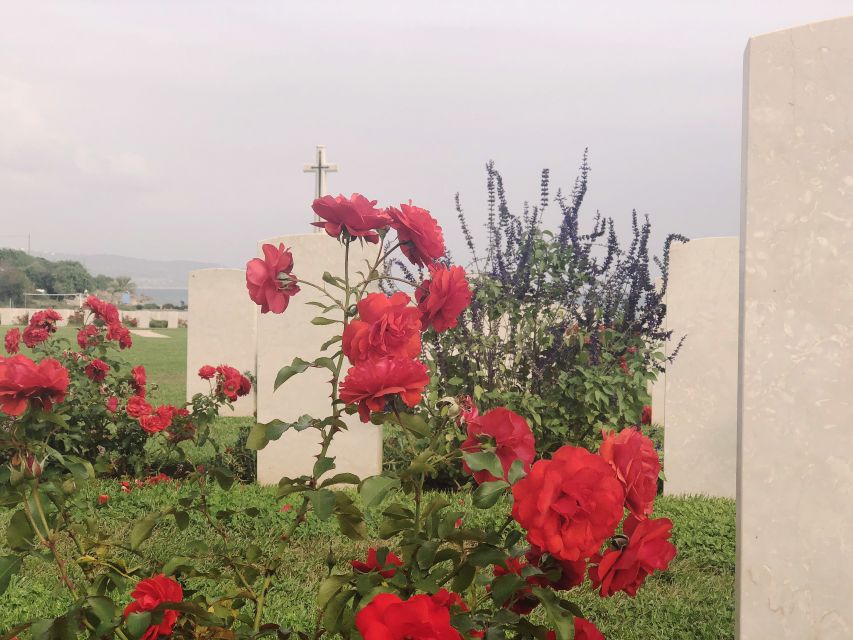
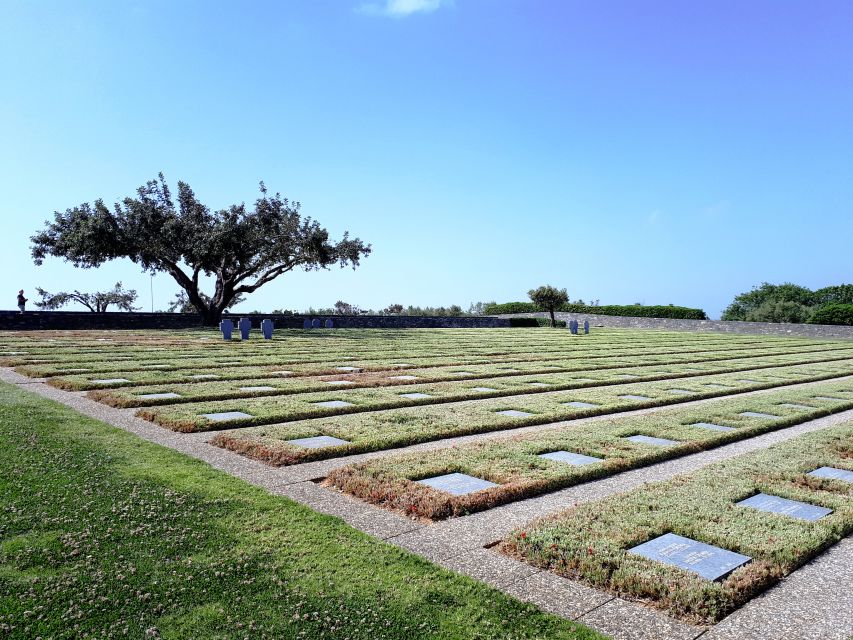
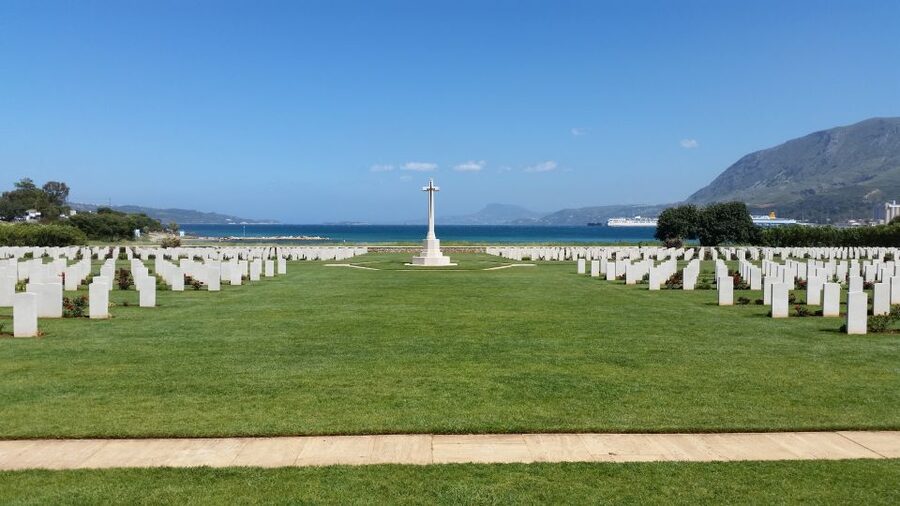
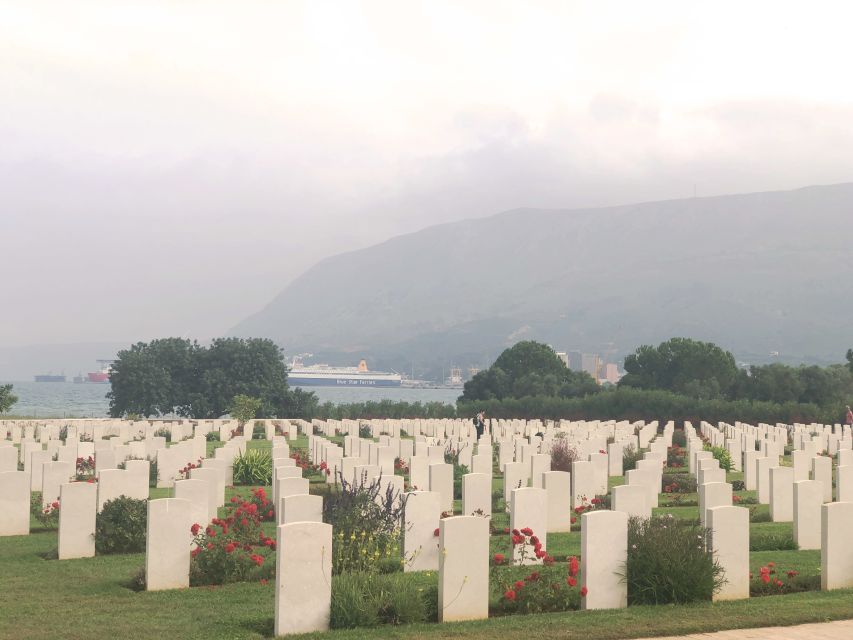
The war cemeteries provide the quietest part of the day. The German cemetery and the Commonwealth cemetery offer different visual and historical perspectives, but both are treated with care.
The Allied cemetery is especially important for visitors with family links to British, Australian, or New Zealand forces. One participant came to Crete mainly to honor relatives who fought in the battle. For people with that connection, time at the graves is not just another sightseeing stop.
The Commonwealth cemetery is described as exceptionally well kept. Rows of graves, careful grounds, and the distance from the soldiers’ home countries create a solemn setting. You should allow yourself a little quiet time here rather than treating it as a quick photo stop.
The German graves receive similarly respectful treatment. The wording and presentation are handled with sensitivity to the destruction caused by the invasion and occupation. The tour does not ask you to ignore responsibility, but it does recognize the human cost on both sides.
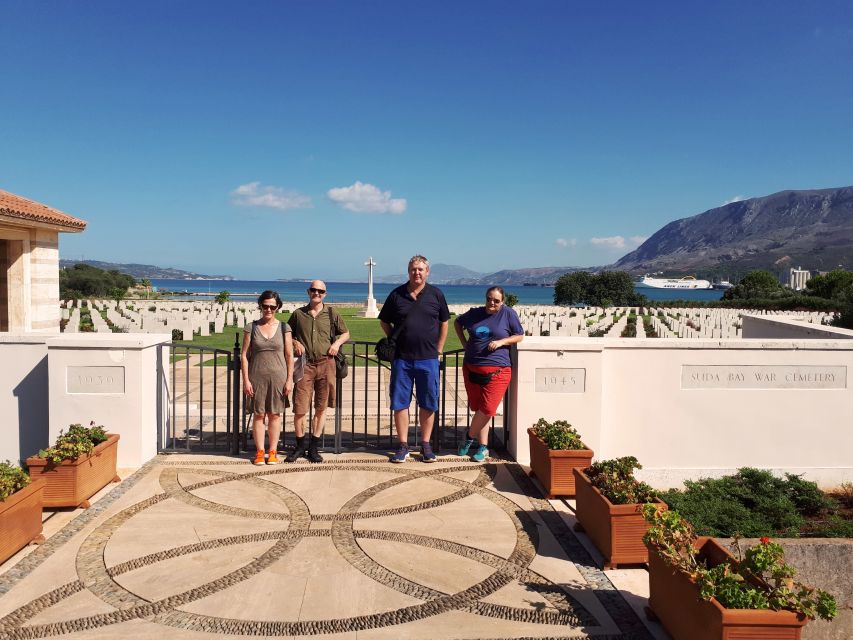
Time management can matter here. At least one participant felt there was not enough time at Souda Bay cemetery, especially because that stop was the most important part of the day for them. If honoring a particular soldier is your main purpose, tell the guide early. The route includes many sites, and the exact time at each one can depend on the group and the day.
A Six-Hour Day in a Comfortable Minivan
The tour lasts about six hours and includes pickup and drop-off from specific locations in the Chania region. It does not depart from every part of Crete, so check that your accommodation is within the pickup area before booking.
Transportation is by air-conditioned minivan. That matters in Crete, particularly during the hotter months. One participant described traveling in 34-degree heat and appreciated the driver’s effort to keep the vehicle cool. The small group format also makes it easier to hear the guide and ask questions.
The driver may also be your guide. That arrangement keeps the day efficient, though it means the guide must balance driving with commentary. Local and English-speaking guides are included, and the tour is offered in English and Greek.
The itinerary covers a lot of ground. The official duration is six hours, but you should allow roughly six to six and a half hours depending on pickup timing and the pace of the group. A previous description referred to a longer day, so it is sensible to avoid scheduling a tight connection afterward.
Bring water, even though a bottle is provided for each person. Comfortable shoes are important because the day includes battlefield locations, monuments, cemeteries, and shelters rather than only paved indoor spaces.
Food, Breaks, and Small Practical Limits
A snack is included, along with a bottle of water. Some groups have received a lunch snack from a local bakery, and dietary needs have been handled well in at least one case. Still, I would not book this expecting a seated lunch at a taverna.
The more consistent concern is restroom access. Several people wanted at least one additional comfort stop, while the guide made an extra supermarket stop when asked. That is a useful clue for planning: use facilities before pickup, carry a little water, and speak up if you need a break.
The tour does not allow pets. Pickup is limited to the Chania region, and the activity offers free cancellation up to 24 hours before departure. You can also reserve now and pay later, which helps if your Crete plans are still shifting.
Is $111 a Fair Price?
At $111 per person, this is not the cheapest way to see western Crete. You are paying for a small-group vehicle, an English-speaking driver-guide, a local guide, entrance fees, pickup and drop-off in the Chania region, taxes, water, and a snack.
The value comes from the interpretation. Maleme, Tavronitis, Galatas, the cemeteries, and wartime remnants are spread across the region. Seeing them independently would require a car, careful research, and a strong grasp of the geography. You would also miss much of the meaning behind smaller remains and private artifacts.
The price makes the most sense if you care about World War II, military history, family connections, or local resistance. It is less suitable if you only want a general sightseeing day in western Crete. The subject is serious, and much of the day involves listening, reflecting, and moving between sites.
The near-perfect rating reflects the tour’s strongest qualities: clear explanations, warm guides, good transport, and a route that shows more than one side of the conflict. The small limitations are real but manageable, especially the sparse comfort stops and uncertain lunch arrangement.
Who Will Enjoy This Tour Most?
You should consider booking this tour if you want a structured introduction to the Battle of Crete and do not want to build your own route.
It is particularly good for:
- People with British, Australian, New Zealand, Greek, or German family connections
- Visitors who want the Cretan point of view, not only a military account
- First-time students of the Battle of Crete
- History fans who enjoy maps, photographs, relics, and battlefield geography
- Visitors without a rental car who want to reach Maleme, Galatas, Tavronitis, and the cemeteries
You may want a different outing if you need frequent breaks, want a full lunch, or prefer a relaxed day with little narration. The pace is considered manageable, but the amount of material is substantial.
Should You Book It?
I would book this tour if the Battle of Crete is one of your main interests in Crete. The combination of Maleme, Tavronitis, Galatas, private artifacts, shelters, and both cemeteries gives you a much fuller picture than a single museum visit.
Ask for a guide such as Yannis or Babis if possible, though guide assignments cannot always be guaranteed. Tell the guide if you have a family member buried at Souda Bay or another cemetery, and ask about an extra restroom stop at the start.
For $111, you receive transportation, access, and several hours of clear local explanation. Bring comfortable shoes, do not count on a full lunch, and leave room in your schedule after the tour. If you want to understand how Crete’s villages, soldiers, and partisans were caught up in World War II, this is a serious and worthwhile day.
FAQ
Where does the tour depart from?
The tour departs only from the Chania region. Pickup and drop-off are included from specific locations within that region.
How long does the tour last?
The stated duration is six hours. Depending on pickup timing and the pace of the group, you should allow roughly six to six and a half hours.
Which languages are available?
The live tour guide service is available in English and Greek.
Are the war cemetery visits included?
Yes. The route includes the German war cemetery and the cemetery for Allied and Commonwealth forces.
Is food included?
A snack and one bottle of water per person are included. Do not assume that a full restaurant lunch is part of the tour, though a local bakery snack may be provided.
What should I bring?
Bring comfortable shoes for battlefield sites, monuments, cemeteries, and shelters. Pets are not allowed.
Just added around Chania
- From Chania: Day Trip to Preveli Beach & Damnoni Beach★ 4.1 · 44 reviews
- Chania: Elafonisi & Falasarna Private Tour w/olive oil tasting★ 5.0 · 46 reviews
- Samaria Gorge Trek: Full-Day Excursion from Rethymno with Guide★ 4.5 · 46 reviews
- Chania Alternative Sunset Bike Tour★ 4.9 · 48 reviews
- Crete White Mountains Safari Including Lunch★ 4.5 · 48 reviews
- Polaris Buggy 4-Hour Safari from Rethymno Town★ 4.5 · 48 reviews
- From Chania Private half day Winery-Olive factory-Kournas lake★ 5.0 · 50 reviews
- Samaria Gorge Trek: Full-Day Excursion from Chania with Guide★ 4.5 · 51 reviews
Historical Tours, compared.
Historical Delphi One Day Tour with Arachova Stop & Expert Guide
Read our review →
Historic Athens: Small Group Electric Bike Tour
Read our review →
Half-Day Guided History and Culture Sightseeing Tour
Read our review →

Throne of Helios: The History of Rhodes in 9D Experience
Read our review →
The History of Athens: Greek Mythology Private Tour
Read our review →Browse the lists this tour appears in