
Reviewed · HISTORICAL TOURS
Athens: History of Rebellion Walking Tour
Athens tells its loudest stories in the streets. This 2.5-hour walk links Ottoman rule, the Greek Revolution, fascism, protest, and modern social justice, giving you a side of Athens that ancient monuments rarely explain. I like the focus on modern Greek history and the time spent in Exarchia, a neighborhood central to the city’s political and artistic life. The main drawback is that this is a serious walking tour, with two to three hours of standing and moving through city streets, so it is not suitable for people with mobility impairments.
I also like the small-group feel and the guide’s open, conversational style. Maelle receives especially strong praise for explaining difficult subjects with warmth, humor, and clarity, while also offering practical tips for restaurants, shopping, sights, and Greek islands. If you want only cheerful sightseeing and ancient ruins, this may feel too political. If you want to understand how Athens became the city you see today, it is a valuable choice.
In This Review
- Key points at a glance
- Why this Athens tour feels different
- Starting in Monastiraki: Ottoman Athens and the Greek Revolution
- Syntagma Square and the public life of modern Greece
- Kolonaki and the Academy of Athens
- Entering Exarchia, Athens’ center of dissent
- What the guide adds
- Price, time, and physical demands
- Who should book this walk
- FAQ
- How long is the Athens History of Rebellion Walking Tour?
- Where does the tour begin?
- How will I recognize the guide?
- Where does the tour finish?
- Which languages are available?
- Is this a private tour?
- What is included in the price?
- How much does the tour cost?
- What should I bring?
- Is the tour suitable for people with mobility impairments?
- Can I cancel the booking?
- Should you book it?
Key points at a glance

- Ottoman rule to modern protest: The walk connects the Greek Revolution with later struggles against fascism, police violence, and political oppression.
- Exarchia is the main event: You explore a neighborhood associated with anarchists, refugees, LGBT+ communities, artists, and grassroots activism.
- Maelle brings the subject to life: Her approach combines history, politics, culture, humor, and personal recommendations.
- A useful first-day tour: The walk can help you make sense of Athens before you visit more ancient sites and museums.
- Small groups make discussion possible: Private and small-group options allow time for questions and more personal conversation.
- Bring practical walking gear: Comfortable shoes, water, sunscreen, and a sun hat are sensible choices.
Why this Athens tour feels different
Most first visits to Athens revolve around antiquity. The Acropolis, the Agora, and the National Archaeological Museum deserve their place, but they do not fully explain the city’s modern character. This tour shifts the focus to the last 200 years and asks a more pointed question: how have Athenians responded when power, poverty, foreign rule, or state violence pressed hard?
You are not simply led from one monument to another. The guide uses squares, churches, government buildings, public art, and ordinary streets to explain how resistance shaped Athens. That makes the experience useful for anyone who wants context rather than a parade of dates.
The walk also treats history as something still under discussion. The subjects include social justice, police repression, fascism, migration, gentrification, anarchism, and community life. You will not get a neutral list of facts with all the edges sanded off. The tour has a clear interest in people and movements that are often left out of standard sightseeing.
That viewpoint will suit you best if you are interested in politics, social movements, human rights, or recent European history. It may be less comfortable if you prefer a strictly traditional account of Greece.
More Historical Tours in Athens
- Historical Delphi One Day Tour with Arachova Stop & Expert Guide
★ 4.5 · 1,247 reviews - Historic Athens: Small Group Electric Bike Tour
★ 4.9 · 740 reviews - The History of Athens: Greek Mythology Private Tour
★ 5.0 · 138 reviews
Starting in Monastiraki: Ottoman Athens and the Greek Revolution
The meeting point is Monastiraki Square, in front of Pantanassa Church. Look for a guide holding a sign that says Athens City of Rebellion. This is a practical place to begin because Monastiraki is easy to reach and already gives you a layered view of Athens, with religious buildings, commercial streets, archaeological remains, and constant city movement close together.
The opening section takes you back to the period when Athens was under Ottoman rule. Rather than treating independence as a simple heroic tale, the guide explains the resistance that helped ignite the Greek Revolution around 200 years ago. You can expect stories about individuals who became symbols, along with discussion of the wider forces that made rebellion possible.
The stop at Monastiraki itself is brief, around five minutes, but it sets the tone. This is not a tour that treats the city as a collection of pretty backdrops. The places around you become evidence of changing power and contested identity.
You then pass the Metropolitan Church of Athens. The stop is short, but its position along the route helps connect religious institutions, national identity, and public life. The tour also includes a less obvious site nearby, where the guide pauses to share a story that many standard city walks skip.
Because the tour takes place outdoors, the quality of the experience depends partly on your ability to listen amid city noise and foot traffic. A smaller group helps, especially when the guide stops on a busy street rather than in a quiet museum room.
Syntagma Square and the public life of modern Greece

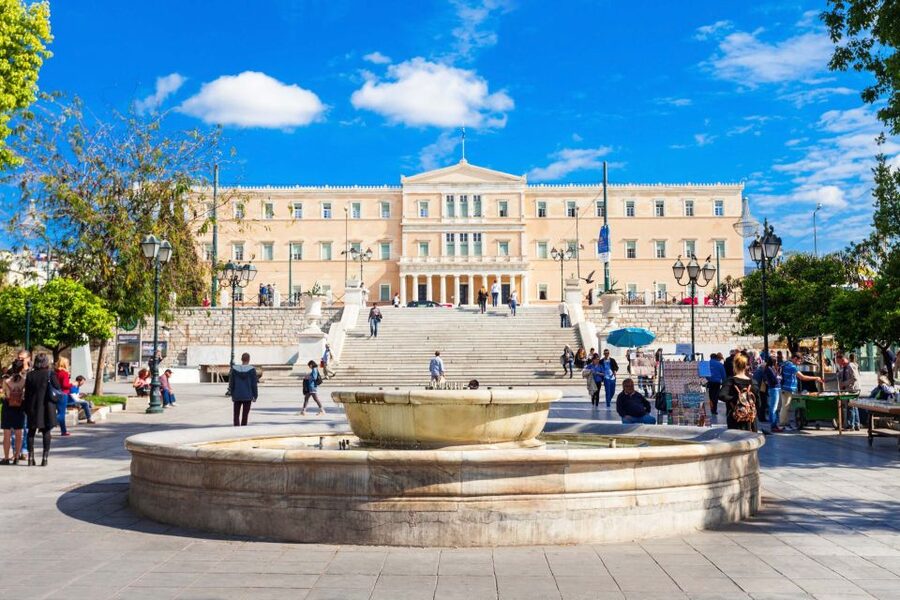
The walk continues toward Syntagma Square, the center of modern Athens and a natural setting for stories of protest. Here, the guide explores the popular movements that have shaped the city, including struggles for freedom in the face of fascism, violence, and oppression.
Syntagma is not presented merely as the place where visitors watch the guards. It becomes a stage for public action, where ordinary people gather, demonstrate, mourn, demand change, and challenge those in power. That shift in focus is one of the tour’s strongest features.
At the Hellenic Parliament, the guide adds political context. You learn about heroic acts and collective movements, not just official institutions. This helps explain why the square remains such an important part of Athens life.
The Tomb of the Unknown Soldier receives another short stop. Its symbolism is familiar, but the tour uses it to ask who gets remembered, how national stories are built, and what happens when official memory leaves out difficult experiences. You should expect interpretation rather than a long architectural explanation.
This portion may be especially helpful early in your visit. Several people who took the walk on their first day found that it gave shape to facts and impressions they encountered elsewhere in Greece. I would schedule it near the beginning if modern history matters to you, since it may change how you read the city afterward.
Kolonaki and the Academy of Athens
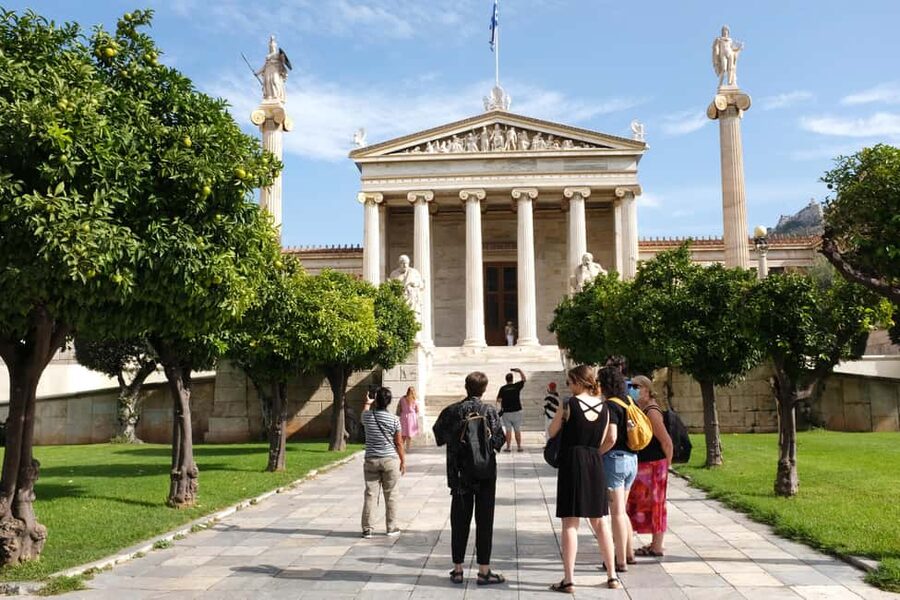
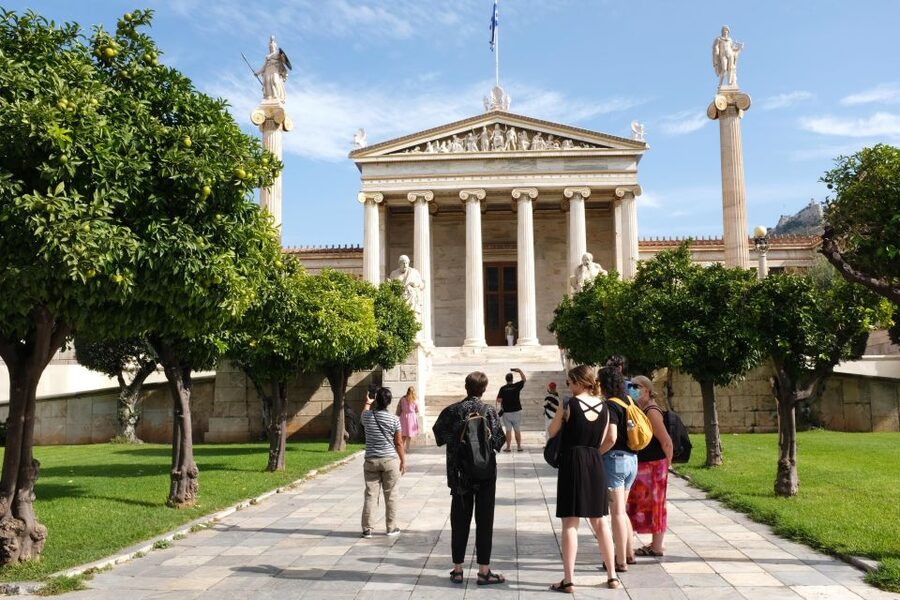
The route passes through Kolonaki before reaching the Academy of Athens. The contrast between neighborhoods matters. Athens is not politically or socially uniform, and the changing streets help frame the differences between polished central districts and areas with stronger traditions of protest and grassroots organizing.
At the Academy, the guide continues the story of the modern Greek state and its institutions. The stop is not a full architectural tour, so do not book this experience expecting detailed coverage of classical design or academic buildings. Instead, the Academy is one more place where the guide connects public ideals with the complicated reality of Greek society.
The walking pattern is well judged for a 2.5-hour experience. Short stops keep the group moving, while longer pauses at Syntagma, the Academy, and Exarchia allow room for questions. Still, the schedule is active. You will spend much of the time walking or standing, and there is no promise of a long café break.
More Walking Tours in Athens
- Athens: Acropolis and Parthenon Guided Walking Tour
★ 4.6 · 5,882 reviews - Greek Food Walking Tour in Athens
★ 5.0 · 4,740 reviews - Acropolis: Acropolis and Parthenon Guided Walking Tour
★ 4.7 · 3,442 reviews - Acropolis monuments & Parthenon Walking Tour with Optional Acropolis Museum
★ 5.0 · 2,678 reviews
Entering Exarchia, Athens’ center of dissent
The final section takes you into Exarchia, the part of the tour that receives the most attention. The neighborhood is associated with anarchists, refugees, LGBT+ communities, artists, and people working through local forms of mutual support and activism.
Exarchia is not treated as a theatrical attraction. The guide explains its role in resistance and social justice while taking care not to turn residents’ lives into a display for visitors. That approach matters. You are being asked to look closely, but also to respect that this is a lived-in neighborhood rather than an open-air museum.
Several stops in Exarchia allow the guide to discuss police repression, gentrification, collective life, and the effort to protect the area’s identity. Street art also becomes part of the discussion. A piece by the artist WD, for example, is used to encourage critical thinking about public art and political messages.
This is where Maelle’s style seems particularly effective. She is praised for combining serious material with humor, empathy, and questions that invite conversation. You are not expected to memorize a timeline. Instead, you are encouraged to consider how different groups understand the same street, event, or symbol.
The tour includes Exarchia Square, where the walk finishes according to the route. The meeting-point information also says the activity ends back at the meeting point, so confirm the exact finishing arrangement when you book. Either way, the practical endpoint is in central Athens and should be easy to place on your map.
What the guide adds
A strong guide is essential for this subject. Without one, the route could feel like a series of politically charged locations without enough explanation. Maelle is repeatedly praised for making modern Greek history clear, putting events in order, and answering questions about daily life, politics, culture, and street art.
Her greatest strength appears to be connection. She explains how large events affected people and neighborhoods, then links those stories to issues still visible in Athens. You get more than a lecture, but the tour is not merely casual conversation either.
The group format also matters. Private and small-group options leave more room for questions and discussion. One benefit of booking this type of walk is the chance to ask about subjects you notice during your stay, from restaurants and shopping to other parts of Greece.
Maelle also provides suggestions for places to eat, sights to visit, and activities in Athens and on the islands. These recommendations are an extra benefit, particularly if you take the tour near the start of your trip. They can help you spend the rest of your time with a clearer sense of what interests you.
Price, time, and physical demands

The listed price is $44.04 per person. For a 2.5-hour guided walk, that is a fair price if you value interpretation and conversation rather than simple transportation between famous sights. You are paying for a focused subject, a local perspective, and the chance to ask questions in a small group.
The value is strongest for visitors who would otherwise struggle to understand modern Athens. A general orientation walk might show you more famous landmarks, but this experience explains why certain squares, neighborhoods, and public spaces matter.
The price is less compelling if your main goal is ancient history. This walk only passes some major sites and does not replace an Acropolis visit, an archaeological tour, or a museum guide.
Plan for warm-weather conditions. The organizers advise comfortable shoes, water, sunscreen, and a sun hat. There are several short stops, but you should still expect prolonged walking and standing. The tour is specifically not suitable for people with mobility impairments.
English and French tours are available. You can cancel up to 24 hours before the activity for a full refund, and the reserve-now, pay-later option gives you some flexibility when arranging a busy Athens schedule.
Who should book this walk

I would recommend it to you if you want to:
- Understand Greece beyond ancient ruins and mythology
- Learn how modern Greek politics and social movements developed
- Visit Exarchia with more context and respect
- Discuss social justice, migration, protest, or community organizing
- Take a thoughtful first-day orientation to Athens
- Join a private or small group where questions are welcome
I would hesitate to recommend it if you want a light sightseeing stroll, a focus on classical monuments, or a route designed around sitting and resting. The material can be serious, and the guide presents a clear sympathy for resistance movements past and present.
That viewpoint is not hidden, and that is useful to know before you book. You can still ask questions and form your own conclusions, but the tour is designed to take overlooked histories seriously.
FAQ

How long is the Athens History of Rebellion Walking Tour?
The tour lasts 2.5 hours. Starting times vary, so you need to check availability for the date you want.
Where does the tour begin?
It begins in Monastiraki Square, at Pl. Monastirakiou 2, in front of Pantanassa Church.
How will I recognize the guide?
The guide will hold a sign saying Athens City of Rebellion.
Where does the tour finish?
The route lists Exarchion Square as the finishing point. The meeting-point details also say the activity ends back at the meeting point, so confirm the exact ending location when booking.
Which languages are available?
The tour is offered in English and French.
Is this a private tour?
Private and small-group options are available.
What is included in the price?
The price includes the walking tour and a guide.
How much does the tour cost?
The listed price is $44.04 per person.
What should I bring?
Bring comfortable shoes, water, sunscreen, and a sun hat.
Is the tour suitable for people with mobility impairments?
No. The activity is not suitable for people with mobility impairments and includes substantial walking and standing.
Can I cancel the booking?
Yes. You can cancel up to 24 hours in advance for a full refund.
Should you book it?
Book this tour if you want Athens to make more sense as a living city, not just an ancient one. The route from Monastiraki to Syntagma and Exarchia connects national history with present-day struggles, and Maelle’s warm, thoughtful delivery gives the subject a human scale.
I would place it near the start of your Athens stay. You will leave with more questions, which is a good sign, and you may see the city’s squares, graffiti, institutions, and neighborhoods differently afterward. Skip it only if political history is not your interest or if a long walking route would be difficult.
Just added around Athens
- Athens Hotels to Athens Airport Private Departure Transfer★ 5.0 · 40 reviews
- Private One-way Transfer between Athens International Airport and Athens Hotels★ 4.5 · 40 reviews
- Athens: Acropolis Museum Ticket with Self-Guided Audio tour App★ 3.5 · 40 reviews
- From Athens: Meteora Train Trip with Overnight Stay★ 4.8 · 40 reviews
- Athens Photography Tour★ 5.0 · 40 reviews
- Athens: Acropolis Visit and City Night Tour★ 4.7 · 40 reviews
- Delphi Full Day Private Trip From Athens With Lunch Overlooking the Sea★ 5.0 · 40 reviews
- Acropolis & Plaka Neighbourhood Private Tour with Licensed Expert★ 5.0 · 40 reviews
Historical Tours, compared.
Historical Delphi One Day Tour with Arachova Stop & Expert Guide
Read our review →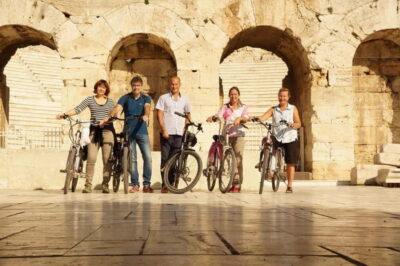
Historic Athens: Small Group Electric Bike Tour
Read our review →

Half-Day Guided History and Culture Sightseeing Tour
Read our review →


Throne of Helios: The History of Rhodes in 9D Experience
Read our review →
The History of Athens: Greek Mythology Private Tour
Read our review →Browse the lists this tour appears in