

Reviewed · CYCLING TOURS
Ancient Athens E-Bike Tour
Athens comes alive on three wheels. This two-hour tour uses a standing, motorized Trikke to connect the Acropolis, Pnyx, Ancient Agora, Kerameikos, Plaka, and other central sights without asking you to march up every hill. I especially like the compact route and the way the small group format keeps the outing personal. The bikes also make sense in Athens heat, since you do not pedal between stops.
The main drawback is that this is a sightseeing ride, not a full archaeological visit. You will see the Acropolis and several ancient sites from close viewpoints, but the listed archaeological entrance fees are generally extra. At $72.09 per person, the price is fair if you want orientation, local explanation, and easy transport between sights, but less attractive if you plan to spend the whole day inside museums and ruins.
In This Review
- Key points before you book
- Why a Trikke makes sense in Athens
- Starting near the Acropolis
- Theatre of Dionysus and the Odeon of Herodes Atticus
- Seeing the Acropolis without the full climb
- The Pnyx and the story of democracy
- Nymphs Hill and the National Observatory
- The Ancient Agora, Athens’s civic center
- Kerameikos and the quieter edge of the old city
- Monastiraki and the modern pulse of Athens
- Roman Agora and the Tower of the Winds
- Plaka, the final neighborhood stroll
- What the $72.09 price really buys
- Who will enjoy this most
- Practical advice for a smoother ride
- Should you book the Ancient Athens E-Bike Tour?
- FAQ
- How long does the Ancient Athens E-Bike Tour last?
- What vehicle is used on the tour?
- What sights are included in the route?
- Are archaeological entrance tickets included?
- How many people can join the tour?
- What happens if bad weather cancels the tour?
Key points before you book
- A motorized Trikke replaces hard walking: You stand on a three-wheeled electric vehicle, with no pedaling required.
- The route covers Athens highlights quickly: The Acropolis, Pnyx, Ancient Agora, Kerameikos, Roman Agora, Monastiraki, and Plaka all fit into about two hours.
- The Pnyx adds real historical weight: This is the hill linked with the beginnings of democracy, not just another Acropolis photo stop.
- Small groups keep the ride manageable: The maximum group size is 12 people.
- Guide quality matters here: Dimitris is repeatedly praised for his clear explanations, friendly manner, and willingness to adjust the route around sights you have already seen.
- Bring extra money for entry fees: Acropolis and related admission costs are not included, while some other stops are free or viewed from outside.
Why a Trikke makes sense in Athens
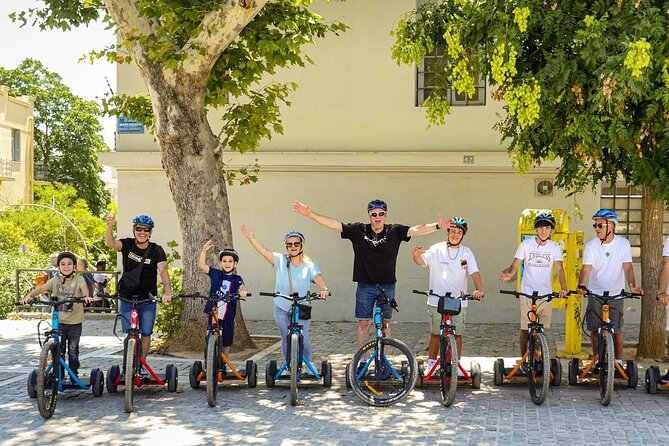
Athens is compact on a map but tiring on foot. The major ancient sights sit around hills, stone paths, busy streets, and sun-exposed open ground. A normal bicycle would still require effort, and a walking tour can leave you hot before you reach the best viewpoints.
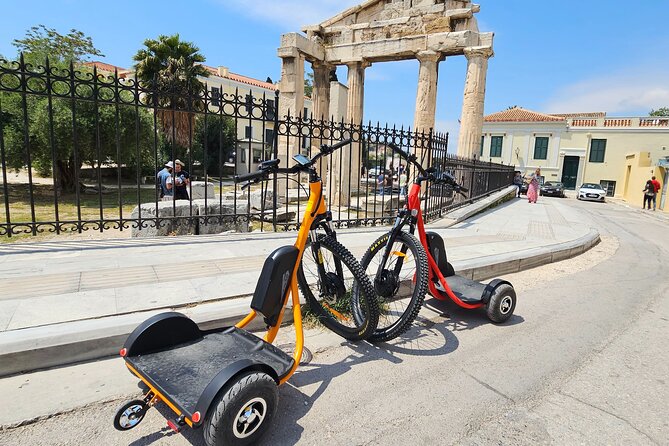
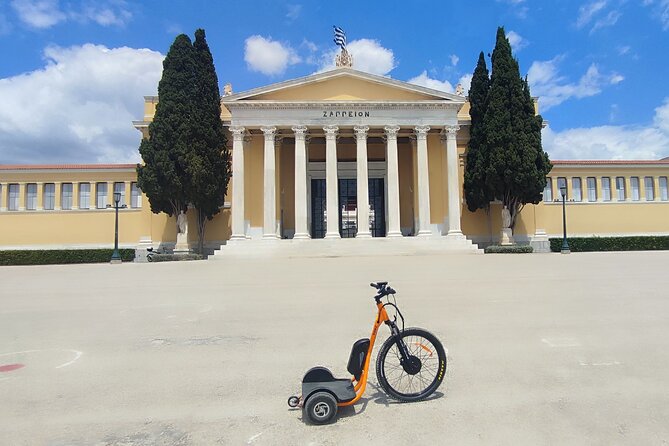
The Trikke changes the rhythm. You stand upright on a motorized tricycle and do not pedal. That makes it a useful middle ground between walking and riding in a car. You still move through the city at street level, but you can cover more ground and reach viewpoints that might feel like a chore after several hours on foot.
You should still expect to learn how the vehicle works before setting off. The experience is described as easy to use, and families with children aged 9, 12, 13, and 15 enjoyed the bikes. A helmet and customer insurance are included. The tour has a maximum of 12 people, which is small enough to avoid the feel of a large convoy, though the exact group size on your date can vary.
The Trikke is also part of the fun. It is not a standard bicycle and not a silent sightseeing bus. You get a playful way to move around the historic center, with the added benefit of avoiding a great deal of uphill walking.
More Bike Tours in Athens
- Athens Scenic Bike Tour with an Electric or a Regular Bike
★ 5.0 · 2,702 reviews - Athens Electric Bike Tour
★ 5.0 · 836 reviews - Athens: Old Town Highlights Guided E-Bike Tour
★ 4.9 · 834 reviews
Starting near the Acropolis
The meeting point is at Leoforos Andrea Siggrou 22, close to central Athens and public transportation. The route begins in the area around the Acropolis, where the city’s ancient core quickly becomes visible.
Your guide may ask what you have already seen and adjust the order or emphasis. That detail is useful. If you have already spent the morning at the Parthenon, the guide can give more attention to the Pnyx, Ancient Agora, or neighborhoods you have not yet explored. Dimitris receives particular praise for this flexible approach, as well as for making people feel comfortable on the Trikke.
The schedule is listed for Monday through Saturday, from 10:00 a.m. to 4:00 p.m. The tour returns to the starting point, so you do not need to arrange a separate ride back across town.
Theatre of Dionysus and the Odeon of Herodes Atticus
The route includes views and explanations connected with the Theatre of Dionysus, often described as the birthplace of theatre. This is where ancient Greek drama took shape, making it far more than a pile of old stones beside the Acropolis.
The Odeon of Herodes Atticus gives you a different angle on the ancient world. Built in the second century A.D. as a memorial for Herodes Atticus’s wife, the Roman theatre is still used for performances. Its semicircular seating and dramatic setting beneath the Acropolis make it one of the most memorable sights in this part of Athens.
The important practical point is admission. The supplied information lists a €20 ticket for the Acropolis area, including both the Theatre of Dionysus and the Odeon of Herodes Atticus. The tour itself does not include archaeological entrance tickets, so you should confirm current prices before budgeting. The ride lets you see the sites and understand their place in the city, but you may need a separate visit if you want to enter and explore at length.
Seeing the Acropolis without the full climb
The tour brings you close to the Acropolis Hill, with the Parthenon visible above the city. That is useful if you want a strong first look before committing several hours to the full archaeological site.
You should be clear about what this stop offers. The itinerary describes watching the hill from a close side, not an escorted visit inside the Acropolis. You will get orientation, a guide’s explanation, and a chance to take in the rock and its temples. You will not get the same experience as walking through the Propylaia, examining the Parthenon columns at close range, or spending time at the Erechtheion.
I like this approach for a first afternoon in Athens. It helps you understand how the Acropolis relates to the surrounding neighborhoods before you return on your own. If the Parthenon is your main reason for coming to Athens, treat this tour as a companion outing rather than a substitute for an Acropolis ticket.
More E-Bike Tours in Athens
- Athens Small Group Electric Bike Tour
★ 5.0 · 803 reviews - Historic Athens: Small Group Electric Bike Tour
★ 4.9 · 740 reviews - Athens Acropolis Official E-Scooter Guided Tour Fat E-Bike
★ 5.0 · 504 reviews - Athens: Discover the City Electric Bike Tour
★ 4.9 · 414 reviews
The Pnyx and the story of democracy

The Pnyx is one of the strongest stops on the route. This hill is connected with the early development of democracy, and the open setting helps you picture public meetings taking place above the ancient city.
The value here is not simply the view. The Pnyx gives political meaning to the stones around you. Ancient Athens was not only about temples and sculpture. It was also about citizens gathering, arguing, and taking part in public decisions. One guide, Dimitris, is praised for explaining the significance of the meeting place and the democratic character of the city.
The Pnyx sits within an archaeological area that also functions as a park. It is a good pause from the denser streets and a chance to see Athens from a quieter hilltop position. Admission is listed as free.
Nymphs Hill and the National Observatory
The National Observatory of Athens occupies the Hill of the Nymphs and adds a later scientific chapter to the ancient city. It was the first observatory in Athens, and the hill is part of the same broad archaeological zone around the Pnyx.
This stop helps break up the usual Acropolis-only story. You move from drama and democracy to astronomy, while still staying among the historic hills west of the Acropolis. The listed stop lasts about 15 minutes, and admission is included.
Do not expect a long observatory visit during a two-hour city ride. The value is the setting and the connection between Athens’s ancient civic life and its later scientific ambitions. You are getting a quick introduction, not a specialist astronomy tour.
The Ancient Agora, Athens’s civic center
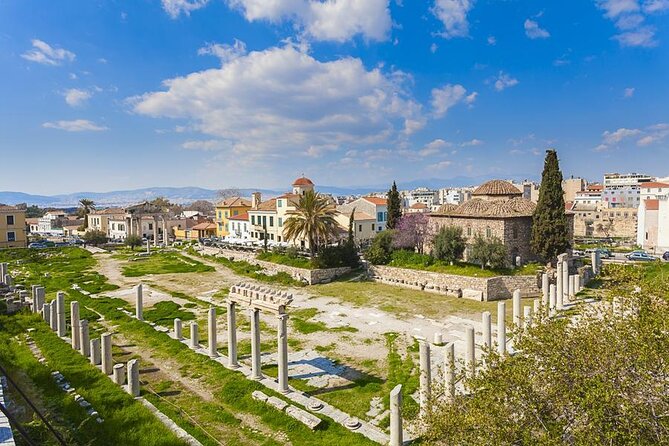
The Ancient Agora is the most substantial archaeological stop on the route, with about 20 minutes assigned to it. In ancient Athens, this was the main market and a central place for public life. It is where commerce, politics, legal matters, and everyday encounters came together.
I would pay close attention here. The Acropolis is the famous symbol, but the Agora often makes ancient Athens easier to understand. The temples show what people worshipped. The Agora shows where people worked, argued, bought goods, met friends, and took part in civic life.
The listed entry price is €4, though prices can change. The information also marks this stop as included in the tour, which appears to refer to access or the planned visit, while the general conditions state that archaeological tickets are not included. Because those details conflict, you should confirm whether the €4 admission is covered when you book. Either way, allow extra money if you want to enter.
Twenty minutes is enough for an introduction and a few key views, but not enough for a slow archaeological study. If you want to explore the Agora museum and every path, return later with more time.
Kerameikos and the quieter edge of the old city
Kerameikos is a useful contrast to the better-known monuments. The name comes from the ceramic production associated with the area, and the archaeological site lies close to the Ancient Agora.
The stop lasts about 10 minutes and is listed as free. That short visit should give you a sense of the district’s role in ancient Athens, but it will not replace a dedicated visit to the site. I see this as one of the tour’s orientation stops: your guide places it on the map, explains why it matters, and gives you a reason to return if the subject interests you.
Because the route moves through several locations, these brief pauses are part of the bargain. You trade depth for range.
Monastiraki and the modern pulse of Athens
Monastiraki is described as the city’s second most crowded square and one of the main hearts of Athens. Bars, restaurants, and many other choices surround it, so the square gives you a clear change of mood after the ancient sites.
The tour allows about 10 minutes here. That is enough to identify the area and get a feel for its central role, but not enough for a meal, shopping session, or long wander through the surrounding streets. I like seeing Monastiraki within the same route as the Agora and Roman Agora. You can connect the ancient civic center with the modern meeting place that occupies the same central part of town.
This is also a practical point for later planning. If you want dinner, drinks, or more time in the central market area, you can return after the tour ends.
Roman Agora and the Tower of the Winds
The Roman Agora was built in the second century A.D. as a later counterpart to the Greek Agora. Its most famous feature is the Tower of the Winds, an ancient timekeeping and weather station with a distinctive octagonal form.
The stop is listed at about 10 minutes. The supplied details give a €4 ticket price but also label admission as free, another reason to check the current entry arrangement before you arrive. The guide can explain how the Roman version differed from the earlier Greek Agora, helping you see that Athens kept changing long after its classical peak.
You will probably view this as a quick historical stop rather than a full site visit. That is fine on a route designed to show you many parts of Athens in one ride.
Plaka, the final neighborhood stroll
Plaka is the traditional neighborhood below the Acropolis, known for its picturesque streets and an atmosphere often compared with a Greek island. The tour allows about 10 minutes here, enough to introduce the district and point out places worth revisiting on foot.
Plaka is best enjoyed slowly, so do not judge it by the brief stop alone. Its value on this tour is practical: you learn where it is, how it connects with the monuments, and why it deserves a separate wander. After the ride, you can return without the pressure of finding it for the first time.
The tour ends back at the starting point rather than in Plaka. That makes the finish predictable, but it also means you may need to retrace your steps if you want to continue exploring the neighborhood immediately.
What the $72.09 price really buys
At $72.09 per person, this is not the cheapest way to see Athens. You are paying for the Trikke, helmet, insurance, guide service, and the ability to cover a wide area in about two hours. The price makes more sense if your time is short, the heat is intense, or hills and long walks are not appealing.
It is less compelling for someone who enjoys spending a full morning at one archaeological site. The Acropolis, Ancient Agora, and Roman Agora all reward slow visits, and entry fees are generally separate. You should add those costs before deciding how much value you are getting.
The tour also gives you a useful first-day map of Athens. You can see the main historic zones, note restaurants and squares for later, and decide where to return with more time. That orientation has real value, especially on a short stay.
Who will enjoy this most
I would recommend this experience for:
- First-time visitors who want to understand how Athens fits together
- Families seeking an active outing without constant walking
- People visiting during hot weather
- Anyone with only a few hours for ancient Athens
- Visitors who enjoy local stories and a guide-led introduction
- Anyone who wants to reach hilltop viewpoints more easily
Children aged 9, 12, 13, and 15 enjoyed the Trikkes, so the experience can work well for families. The maximum group size of 12 also helps keep the ride from becoming unwieldy.
I would be more cautious if you dislike unusual vehicles, need a long time at each ruin, or mainly want an indoor museum experience. The tour is built around movement and overview, not exhaustive site visits.
Practical advice for a smoother ride
Wear secure shoes and bring water, especially during the warmer part of the day. You are not pedaling, but you are still outdoors around exposed archaeological areas and hills.
Arrive ready to listen to the safety instructions and practice with the Trikke before leaving. The equipment is described as easy to use, and the positive experiences with families suggest a gentle learning curve, but comfort on a motorized three-wheeler still varies from person to person.
Ask about the archaeological ticket details before the tour starts. The Acropolis area is listed at €20, the Agora at €4, and the Roman Agora at €4, but the information gives mixed signals about which smaller admissions are included. A quick confirmation prevents surprises.
The tour operates Monday through Saturday, with listed hours from 10:00 a.m. to 4:00 p.m. It requires good weather. If poor weather forces cancellation, you can choose a different date or receive a full refund. You can also cancel for a full refund up to 24 hours before the start time.
Should you book the Ancient Athens E-Bike Tour?
Book it if you want a fast, friendly introduction to Athens and would rather glide between the sights than walk every hill. The route is unusually broad for two hours, and stops such as the Pnyx, Kerameikos, and National Observatory add more substance than a simple Acropolis photo ride.
I would especially consider it early in your stay. Use the tour to get your bearings, hear Dimitris or another guide explain the city’s ancient and modern sides, then return to the Acropolis, Agora, Plaka, or Monastiraki for deeper visits.
Skip it if you already know central Athens well or want long, detailed time inside the archaeological areas. For everyone else, the Trikke is a practical and entertaining way to cover ground, save your legs, and see how the pieces of ancient Athens connect.
FAQ
How long does the Ancient Athens E-Bike Tour last?
The tour lasts approximately two hours.
What vehicle is used on the tour?
You use a standing, motorized Trikke, described as a three-wheeled vehicle. No pedaling is required.
What sights are included in the route?
The route includes the Theatre of Dionysus, Odeon of Herodes Atticus, Acropolis viewpoints, Pnyx, National Observatory of Athens, Ancient Agora, Kerameikos, Monastiraki, Roman Agora, and Plaka.
Are archaeological entrance tickets included?
The tour information states that archaeological tickets are not included. It lists €20 for the Acropolis area and €4 for the Ancient Agora and Roman Agora, but some individual stop details give conflicting admission information. Confirm the current ticket arrangement before booking.
How many people can join the tour?
The maximum group size is 12 people.
What happens if bad weather cancels the tour?
If poor weather causes cancellation, you will be offered another date or a full refund. You can also cancel up to 24 hours before the start time for a full refund.
Just added around Athens
- Athens Hotels to Athens Airport Private Departure Transfer★ 5.0 · 40 reviews
- Private One-way Transfer between Athens International Airport and Athens Hotels★ 4.5 · 40 reviews
- Athens: Acropolis Museum Ticket with Self-Guided Audio tour App★ 3.5 · 40 reviews
- From Athens: Meteora Train Trip with Overnight Stay★ 4.8 · 40 reviews
- Athens Photography Tour★ 5.0 · 40 reviews
- Athens: Acropolis Visit and City Night Tour★ 4.7 · 40 reviews
- Delphi Full Day Private Trip From Athens With Lunch Overlooking the Sea★ 5.0 · 40 reviews
- Acropolis & Plaka Neighbourhood Private Tour with Licensed Expert★ 5.0 · 40 reviews
Cycling Tours, compared.
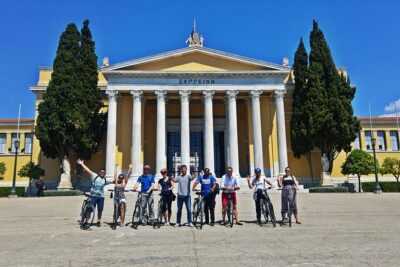
Athens Scenic Bike Tour with an Electric or a Regular Bike
Read our review →

Agia Pelagia Crete Quad Bike authentic backland Tour
Read our review →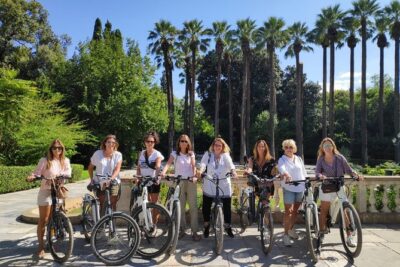
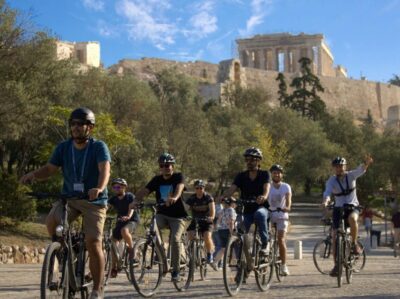
Historic Athens: Small Group Electric Bike Tour
Read our review →
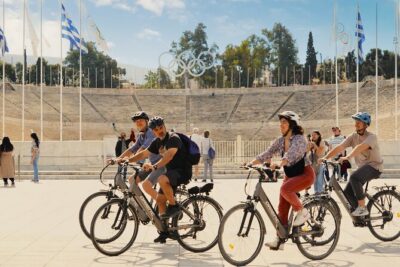
Acropolis & Parthenon Tour and Athens Highlights Bike tour
Read our review →Browse the lists this tour appears in