
Reviewed · FOOD & DRINK
Thessaloniki: Walking Open Market Food Tour and Tasting
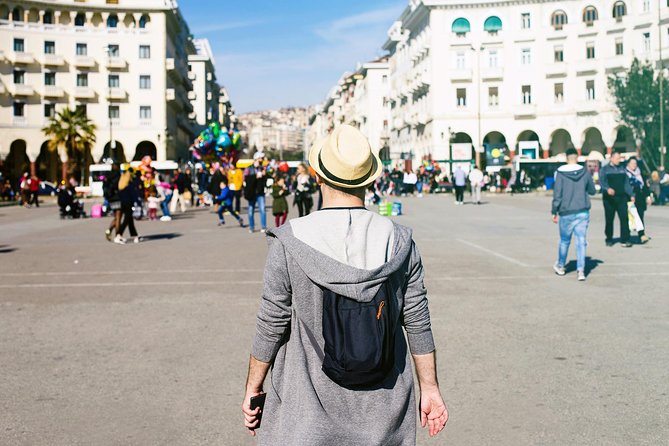
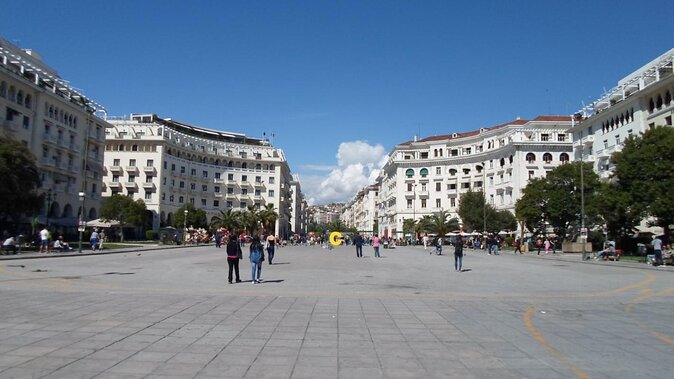
Come hungry, Thessaloniki serves breakfast twice. This three-hour walk combines Kapani Market, Ladadika, and Aristotelous Square with Greek coffee, bougatsa, pies, olives, sweets, and other local tastes. I like the way food comes with useful city history, and I like the practical tavern recommendations you can use for dinner later.
The English-speaking guides, including Eleni, Helen, Konstantina, Dina, Adria, and Margarita, receive especially warm praise for being friendly and attentive. The main caution is simple: the 10:30 a.m. start may feel early, and you should skip breakfast if you want to enjoy the full spread.
In This Review
- Quick takeaways
- Why this food walk works well in Thessaloniki
- From Ladadika to the first bougatsa
- Kapani Market: the heart of the morning
- Food variety: generous portions, but not a fixed menu
- Aristotelous Square and the city beyond the market
- The guides make the difference
- How much value do you get for $54.31?
- Who should book this tour?
- Practical advice before you go
- FAQ
- How long does the Thessaloniki food tour last?
- What time does the tour start?
- Where does the tour begin?
- Where does the tour finish?
- What is included in the price?
- Is lunch included?
- How large is the group?
- Can I cancel for a full refund?
- Should you book it?
Quick takeaways
- Bougatsa from a historic workshop: Start with Thessaloniki’s famous custard or savory pastry at a long-running local bakery.
- Kapani Market at its best: See where people shop for vegetables, cheese, coffee, olives, spreads, and other everyday foods.
- A real coffee break: Sit down with traditional Greek coffee instead of rushing through a takeaway cup.
- Food plus city stories: The walk links market stalls and tastings with Thessaloniki’s past and food traditions.
- Useful dinner advice: Your guide shares suggestions for tavernas, family meals, drinks, and local places to try afterward.
- A small-group format: The maximum group size is 15, which helps you hear the guide in crowded market lanes.
Why this food walk works well in Thessaloniki
Thessaloniki is an easy city to explore on foot, but its food culture can be harder to read at first. A market stall may sell ingredients you do not recognize, while a pastry shop may offer several versions of the same dish. This tour gives you a friendly introduction before you start ordering on your own.
The route begins at Le Palace Hotel on Tsimiski Street at 10:30 a.m. From there, you walk toward the Ladadika district and the central markets. The meeting point is close to public transportation, and the tour finishes back at the same location.
I particularly like the timing for a first morning in the city. You get your bearings, learn the names of foods, and collect restaurant suggestions before lunch. The drawback is that the tour itself effectively becomes lunch for many people, so scheduling another large meal immediately afterward may be optimistic.
The experience is offered in English and includes an English-speaking host, traditional Greek coffee, and food tastings. The maximum group size is 15. That is small enough for questions and conversation, though the market can still feel tight when several people gather around a stall.
More Food Tours in Thessaloniki
- Thessaloniki: Open Market Food Tour with Tasting
★ 4.8 · 186 reviews - Thessaloniki: Food Tastings and Drinks tour with a Chef
★ 5.0 · 181 reviews - Thessaloniki Food Tour with a Local Chef
★ 5.0 · 111 reviews
From Ladadika to the first bougatsa
The opening walk passes through Ladadika, an old commercial quarter now known for restaurants and evening activity. Here, the guide begins connecting Thessaloniki’s modern food scene with its older trading traditions.
The first major taste is bougatsa from a historic local workshop. This pastry is one of Thessaloniki’s signature foods. It may be filled with sweet custard and dusted with sugar and cinnamon, or prepared in a savory style with cheese or meat. The tour information specifically highlights bougatsa, while the tastings described by participants also include savory meat and cheese pies.
This is a smart first stop because bougatsa gives you an immediate sense of the city. It is familiar enough to enjoy at once, but distinctive enough to remember. One practical tip: do not arrive after a full Greek breakfast. Several people found the food plentiful, and one described the bougatsa as a favorite.
There is also a traditional crafts shop selling Greek folk art. This adds a shopping element without turning the walk into a souvenir hunt. You might find something more personal here than the usual mass-produced trinket, but the food remains the main purpose of the outing.
Kapani Market: the heart of the morning
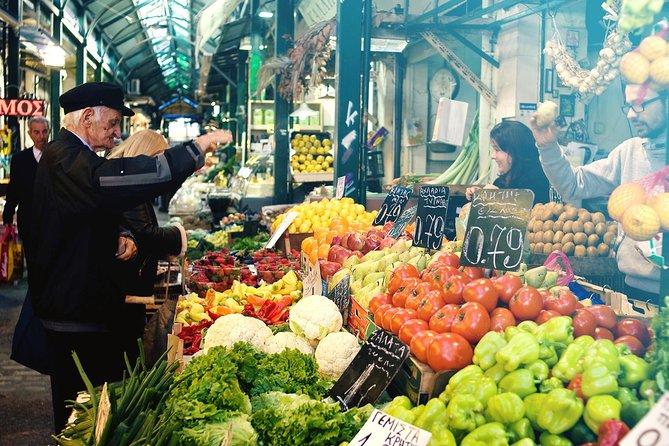
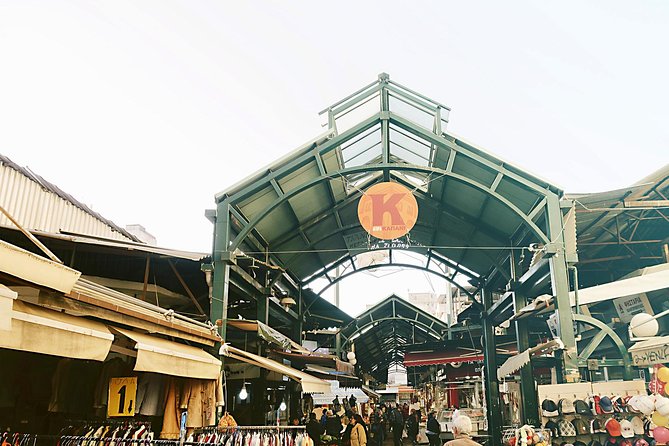
Kapani Market, also called Vlali Market, is the tour’s main food stop. It is a working market rather than a polished food hall, so the experience is tied to ordinary shopping and local trade.
The guide points out places selling fresh vegetables, artisanal cheeses, aromatic coffee, olives, dolmadakia, tsipouro, and traditional spreads. Some of these foods may be sampled, while others are explained as ingredients or shopping finds. That distinction matters. You are not simply moving from restaurant to restaurant. You are learning how the market fits into daily life.
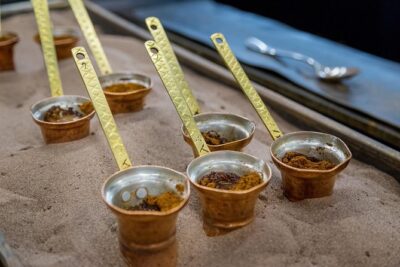
The market is also where the tour slows down for Greek coffee. This is one of the most praised details of the experience. Instead of grabbing a quick cup and walking on, you sit and take your time. That small pause shows a different rhythm of coffee drinking, one built around conversation and lingering.
You may taste additional local bites during this break, including sweets, olives, pies, and spreads. The exact selection can vary, so it is best to treat the tour as a broad introduction rather than a fixed tasting menu.
The market setting gives the food more meaning. Cheese is not just a cube on a tasting plate. Coffee is not merely a caffeine stop. Olives, stuffed vine leaves, and spreads become part of a larger picture of Greek eating.
Food variety: generous portions, but not a fixed menu
The strongest pattern in the feedback is that the tour leaves people full. Tastings include traditional pies, sweets, olives, coffee, and drinks, with references to dolmadakia, tsipouro, cheese, meat pies, and other Greek specialties.
Several people specifically advised skipping breakfast. That is useful advice, not a slogan. At 10:30 a.m., the tour begins early enough to overlap with breakfast, but the number of samples can carry you through lunch.
Still, you should understand the limits. This is not a formal sit-down meal with a guaranteed list of dishes. One person found the food selection too focused on sugar-based candies and felt that some pies were dry by the time they were served. That criticism is worth keeping in mind if you want a broad survey of cooked Greek dishes.
For me, the value depends on what you want from a food walk. If you want to sample classic everyday products and learn what to order, the variety sounds useful. If you expect generous servings of moussaka, grilled meats, seafood, or several full savory plates, this may feel lighter and more snack-based than expected.
The tour is at its best when you approach it as a guided market introduction. You are tasting many small pieces of Thessaloniki rather than sitting down to one large meal.
More Walking Tours in Thessaloniki
- Thessaloniki: Customized Private Walking Tour with a Local
★ 4.6 · 129 reviews - Half Day Food and Walking Tour with Tastings in Thessaloniki
★ 5.0 · 41 reviews - Thessaloniki Walking Tour: Explore Top Sights & Hidden Gems
★ 4.0 · 39 reviews
Aristotelous Square and the city beyond the market
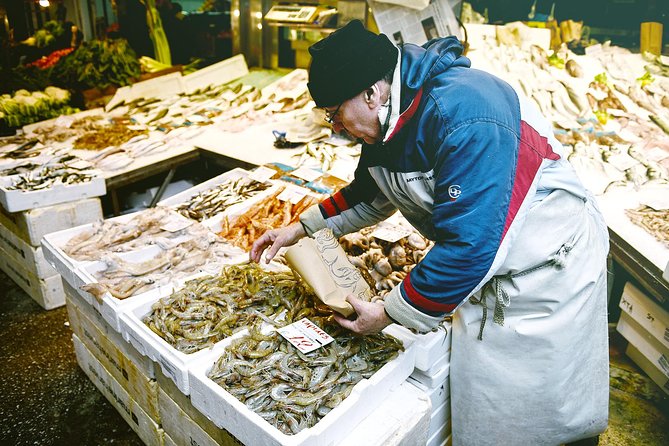
The route continues toward Aristotelous Square, Thessaloniki’s grand central public space. This gives the walk a change of pace after the close lanes and stalls of Kapani.
Here, the guide continues discussing food shops, local products, and places to eat. The square also helps connect the market district with the broader center of town. You are not only learning where food comes from, but also how the city’s neighborhoods relate to one another.
The second half of the walk is useful for orientation. If you are staying in central Thessaloniki, you will begin recognizing the areas you may return to later. If you are arriving by cruise ship or have only a short stay, the three-hour route offers a compact look at ordinary city life.
The pace appears moderate rather than athletic. One account described the walking as not too strenuous, while another praised the balance between walking, talking, eating, and sitting. You should still wear comfortable shoes because this is a walking tour through markets and central streets.
The guide also shares advice on tavernas and local bars. This may be the most valuable part of the tour after the food itself. Good restaurant advice can save you from eating in a place chosen only for its location, especially around busy central squares.
The guides make the difference
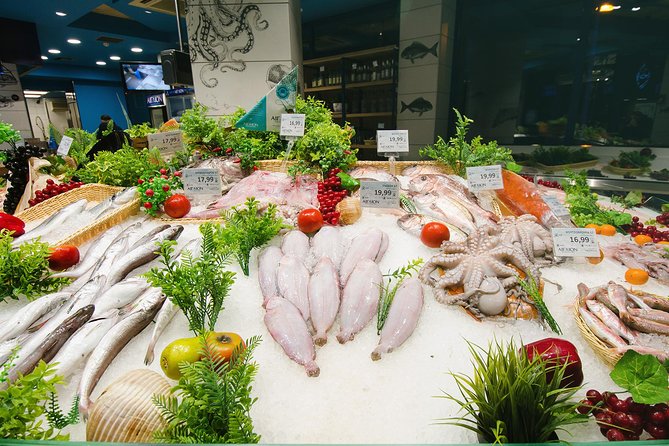
The guide is central to the experience. Eleni is praised for her warmth and for helping people feel more confident trying unfamiliar foods. Konstantina is singled out for her friendliness, historical knowledge, and practical suggestions about where to eat and what to see next.
Dina is described as engaging and good at adjusting the pace, including choosing less crowded places. Adria receives praise for spending extra time answering questions. Margarita is noted for combining Greek history, culture, and cuisine in a personable way.
Helen also appears several times as a welcoming guide who offered historical context and attentive service. The range of guide names suggests that your experience can vary somewhat depending on who leads your group, but the repeated pattern is clear: the human side of the tour is a major strength.
A good guide turns a market walk into a conversation. You can ask about ingredients, customs, coffee, local dining, and the story behind Thessaloniki’s food traditions. You are also likely to get more from the tour if you ask what to order later, not just what you are tasting at that moment.
How much value do you get for $54.31?
At $54.31 per person, this is not the cheapest way to buy Greek snacks. You could spend less by visiting a bakery, drinking coffee, and wandering through Kapani Market on your own.
The price makes more sense when you count the guidance. You receive three hours of walking, a host in English, tastings at several locations, traditional coffee, market orientation, cultural background, and restaurant suggestions. You also avoid the guesswork of choosing food from unfamiliar stalls.
For a first day in Thessaloniki, I think the value is fairly strong. The tour can influence the rest of your stay by showing you which foods to seek out and where to return for dinner. One person even found a restaurant recommendation good enough to visit twice, though that kind of result depends on your own taste.
The value is weaker if you already know Thessaloniki well or if you mainly want a full meal. It is also less appealing for someone who dislikes sweets, pastries, or small tastings. The tour includes food, but it is not marketed as lunch, and the exact balance between sweet and savory may change.
Because the experience is often booked 29 days ahead, planning early is sensible if your dates are fixed. Free cancellation is available up to 24 hours before the 10:30 a.m. start time. A cruise passenger should pay close attention to arrival timing, since missing the tour because a ship reaches port late does not necessarily result in a refund.
Who should book this tour?
I would recommend it to first-time visitors who want a quick introduction to Thessaloniki’s food and central neighborhoods. It suits people who enjoy learning the story behind everyday foods, asking questions, and trying several small portions.
It is also a good fit for families. The walk is not described as highly strenuous, most people can participate, and the group size is capped at 15. Service animals are allowed, and the meeting point is near public transportation.
This is especially useful early in your stay. You can use the guide’s advice to shape later meals, return to the market, and order more confidently at a taverna.
I would hesitate to recommend it to someone seeking a chef-led tasting menu, a guaranteed list of savory dishes, or a late-morning start. If you want a substantial restaurant meal, save your appetite for afterward and treat the tour as a long, food-filled introduction.
Practical advice before you go
- Skip breakfast: The quantity of food can be surprisingly generous.
- Wear comfortable shoes: The route lasts about three hours and includes market streets.
- Bring questions: Guides such as Konstantina, Eleni, Dina, and Adria are praised for answering them.
- Keep lunch flexible: You may be full when the tour ends.
- Ask for dinner advice: The tavern suggestions are one of the most useful takeaways.
- Plan around cruise timing: The tour begins at 10:30 a.m., and a late arrival can create problems.
- Expect changing tastings: The food is drawn from local shops and markets, so the exact mix may not be identical every time.
- Use the mobile ticket: Confirmation is provided at booking, and the ticket is mobile.
FAQ
How long does the Thessaloniki food tour last?
The tour lasts approximately three hours. The two main portions of the route are each listed as about one hour and 30 minutes.
What time does the tour start?
The start time is 10:30 a.m. local time.
Where does the tour begin?
It begins at Le Palace Hotel, Tsimiski 12, Thessaloniki 546 24, Greece.
Where does the tour finish?
The activity ends back at the meeting point at Le Palace Hotel.
What is included in the price?
The price includes an English-speaking host, traditional Greek coffee, and food tastings.
Is lunch included?
No. The cost of lunch after the tour is not included. The tastings may be filling, but lunch afterward is your own expense.
How large is the group?
The activity has a maximum of 15 participants.
Can I cancel for a full refund?
Yes. You can cancel at least 24 hours before the start time for a full refund. Cancellations or changes made less than 24 hours before the start time are not accepted for a refund.
Should you book it?
Book this tour if you want to understand Thessaloniki through its markets, pastries, coffee, and everyday food shops. The strongest reasons are the central walking route, generous tastings, welcoming guides, and useful advice for eating after the tour.
Skip it if you want a formal meal or a fixed menu heavy on cooked savory dishes. For most first-time visitors, though, $54.31 buys more than snacks. It buys a practical introduction to the city, with enough food to make breakfast unnecessary and enough local advice to improve the rest of your stay.
More Shopping Tours in Thessaloniki
- Crete: Knossos Palace, Heraklion City, Market Guided Tour
★ 4.2 · 164 reviews
More Markets in Thessaloniki
- Athens: Classic Cooking Class with Market Visit and Wine
★ 5.0 · 1,101 reviews - Athens: Food Market Visit and Cooking Class with Wine
★ 4.9 · 1,087 reviews - Athens, Greek food tour including market visit
★ 5.0 · 618 reviews - Day Trip To Heraklion City Center & Market & CretAquarium
★ 4.5 · 205 reviews
Just added around Thessaloniki
- Thessaloniki: Customized Private Walking Tour with a Local★ 4.6 · 129 reviews
- Thessaloniki Walking Tour: Explore Top Sights & Hidden Gems★ 4.0 · 39 reviews
- Half Day Food and Walking Tour with Tastings in Thessaloniki★ 5.0 · 41 reviews
- Thessaloniki: Food Tastings and Drinks tour with a Chef★ 5.0 · 181 reviews
- Thessaloniki Food Tour with a Local Chef★ 5.0 · 111 reviews
- Thessaloniki: Open Market Food Tour with Tasting★ 4.8 · 186 reviews
- From Thessaloniki: Sithonia Beaches and Scenic Villages Tour★ 4.9 · 328 reviews
- Chalkidiki: Blue Lagoon & Ammouliani Island Cruise & Lunch★ 4.6 · 269 reviews
Food & Drink, compared.
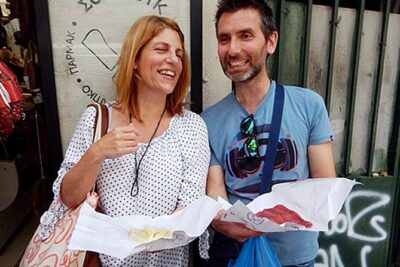
Small Group Greek Traditional Food Tour in Athens 20+ Tastings
Read our review →
Santorini Wine Stories: Sunset Tour with Tasting & Dinner
Read our review →
Food Market Visit and Cooking Class with Wine
Read our review →
Browse the lists this tour appears in